In the last installment of our limited series, Greymantle considered the tools and trained manpower that China will use to first land its forces on Taiwanese soil. The time has come to discuss the fire- and manpower that Taiwan can muster to oppose successful landings by the mainland Chinese. In this article, fourth in an ongoing series on Chinese military capabilities and the China-Taiwan conflict, we focus on exploring Taiwanese military defenses against a Chinese invasion.
WHEN WOULD AN INVASION BE LAUNCHED?
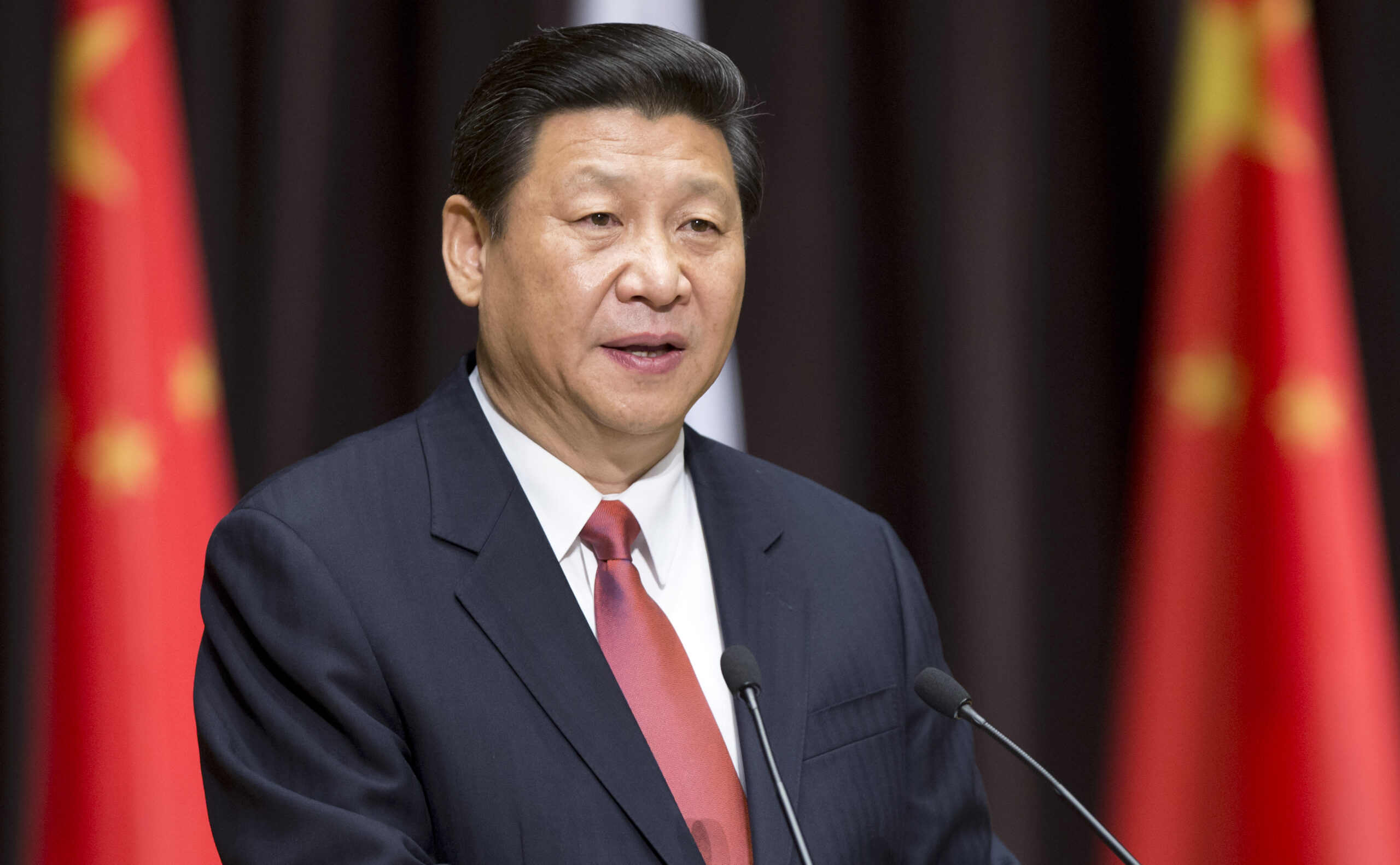
There are countless predictions concerning when the People’s Republic of China will finally decide to erase the sovereignty of Taiwan, but the date is anybody’s guess – except, of course, Xi Jinping’s.
The Chairman of China’s Central Military Commission probably has a pretty good idea of when Beijing will finally move directly against the tiny republic that it considers a mere “rebellious province.” Mr. Xi has proven unwilling to share that information with a global audience, however (no surprises there!).
Various military analysts have placed the date of China’s invasion of Taiwan from anywhere approaching ten minutes ago to the end of this decade. There is little doubt, however, that Mr. Xi’s sense of destiny and the steady drumbeat of his military preparations signal an acceleration in China’s plans.
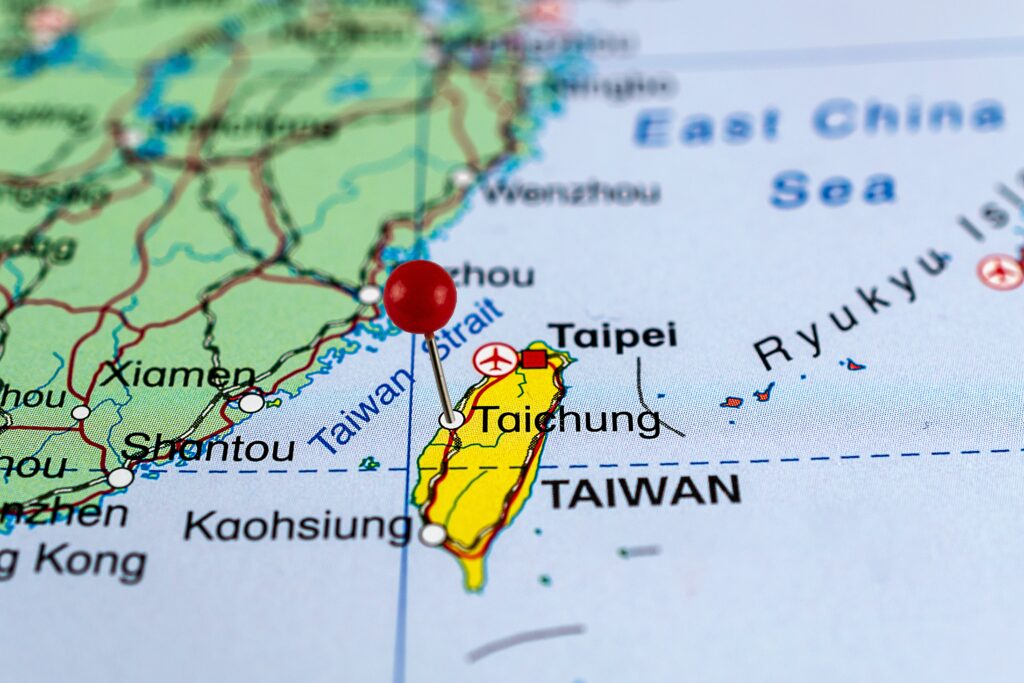
According to Admiral Sam Paparo, the senior U.S. naval officer directing America’s Pacific operations, Beijing has increased its level of military pressure on the island republic by 300% since January 2024. He particularly counts the ever-greater number of fighter sorties and Chinese ships violating Taiwan’s de facto buffer, the “median line” dividing the Taiwan Strait from the Chinese mainland.
For the Taiwanese, China’s invasion threat is now real and immediate.
In earlier articles of this limited series, China’s potent new navy was analyzed in detail, as was the likelihood that it would be deployed in a comprehensive blockade of the small island nation. In previous discussions, Greymantle also introduced a more dangerous possibility: that neither a ‘soft’ nor a ‘hard’ blockade will convince Taiwan’s government to relinquish some, or all, of its independence.
A stalemated blockade situation could then escalate into a long-dreaded amphibious invasion of the island republic by mainland forces (coupled with Xi’s gamble that the United States will not immediately intervene.)
This installment reviews the resources available for the Taiwan military response.
WHAT ARE THE ODDS OF AN AMPHIBIOUS INVASION?
Given the human wreckage, commercial disruption, sheer physical devastation, and immense geopolitical risks, what are the current chances that Xi Jinping will greenlight a Chinese invasion of Taiwan?
One think-tank, the Global Guardian, now judges the odds in favor of this fateful decision to be about 35%. Its time-frame is a bit vague; the organization only mentions predictions between this year, favored by Taiwan’s own military analysts, and 2030, when the United States supposedly achieves chip independence. Greymantle views the 35% odds as reasonable in the immediate term (2025). In our view, the odds of an invasion rise by 15% with each passing year, making an invasion a virtual certainty by 2030.
Given a month, say two, Greymantle believes that Chinese mainland forces could probably conquer the unaided island if a political solution isn’t reached. The ghastly number of dead and wounded, the immense destruction, the snarling of international commerce, and the blackening of China’s international image, however, would make the cost of victory immense.
Additionally, Taiwan could succeed in exacting such a toll on the invaders – particularly if the invasion bogs down without taking full control of the island within a few weeks — that the financial and military costs to China might well become unaffordable. Finally, the danger to China of a U.S. military intervention would grow with each day of successful Taiwanese resistance.
Defending Taiwan: Exploring Taiwanese Military Defenses
NO SURPRISES EVER: THE TAIWAN STRAIT’S TURBULENT WEATHER
China would have many advantages in any conflict with Taiwan, but surprise is not one of them.
Besides the presence of ubiquitous spy satellites that can spot the unmistakable indications of an intended assault, Beijing can only attack within two narrow time slots, both governed by the rhythms of the monsoon seasons.
The most favorable weather for an amphibious operation only occurs during April and October — and neither action window is completely predictable. October has been known to have typhoons, even late in the normal season. April is not without significant bouts of fog.
Amphibious operations can be devastated by either storms or fog. Rough seas and unruly winds can stymie troop landings, capsize lighter landing craft, or cause fire-support misfires. Fog impedes force coordination and recognition of enemy movements.
For mainland Chinese military planners, the onset of either a typhoon or several days of dense fog coinciding with an invasion launch is the stuff of nightmares.
TAIWAN’S MULTI-LAYERED DEFENSIVE SYSTEM
Over the last six years or so, Taiwan’s defensive posture has slowly been transitioning from a traditional strategy of conventional resistance to a new approach that will employ multiple layers of technologically linked defense.
Its generals will no longer attempt to match a Chinese amphibious assault with conventional legacy weapons, like tanks and land force counter attacks. The Republic of China’s (ROC – Taiwan’s official name) leaders have now embraced what its U.S. advisors call the “Porcupine Strategy.”
The emphasis of this “area-denial”-style war plan is designed to make an invader’s pathway too painful to proceed, rather than attempting to inflict defeat by direct opposition. U.S. advisors have cautioned that Taiwan simply could not survive a unit-to-unit attritional approach as the core of its resistance.
The initial components of Taipei’s defense network, however, are conventional, and will suffer for that: its navy and air Force are the first lines of defense and will bear the brunt of China’s initial assault. Despite their dedication, these valiant armed services are likely to be overwhelmed by their far more numerous Chinese rivals on air and sea.
The Taiwanese Air Force deserves particular attention here, largely because it possesses certain unusual strengths that will likely inflict disproportionate damage on its opponents under any open warfare scenario.
Clearly, the Chinese outnumber the Taiwanese in total warplanes – some 3,309 to around 761. Not all of these aircraft would be engaged in attacking and defending, however. A more precise study tallies around 285 Taiwanese planes (F-16s to Mirage 2000-5s) against the following array of Chinese equivalents (or better):
- J-8 (Interceptor): 50 (phasing out).
- J-10 (Multirole): 236 J-10A, 55 J-10B, 240 J-10C, 77 J-10S.
- J-11 (Air superiority): 245.
- J-16 (Strike fighter): 300+.
- J-20 (Stealth multirole): 230+.
- Su-27 (Air superiority): 32.
- Su-30 (Multirole): 97.
- Su-35 (Air superiority): 24.
This list does not include the People’s Liberation Army-Air Force’s (PLAAF) bombers or People’s Liberation Army-Navy’s (PLAN) hundreds of warcraft. Also absent from the tally are several hundred elderly J-6 fighters that have been turned into attack and decoy drones. Moreover, only 80% or less of planes on either side may actually be mission-capable on any given day.
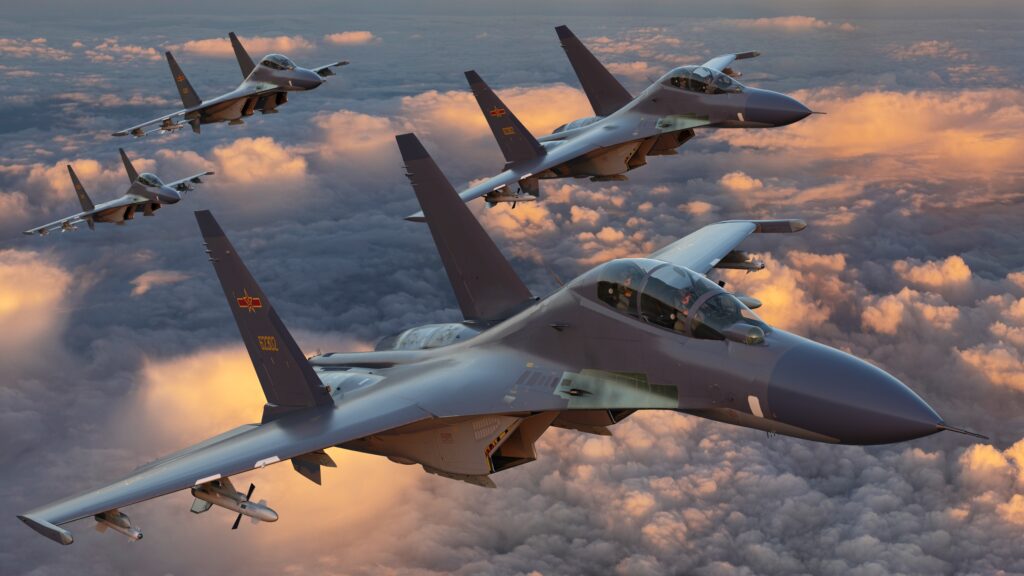
TAIWAN’S MISSILE DEFENSE NETWORKS WILL BOOST ITS KILL RATIO
Even if Taiwanese warplanes do not venture far from the island, they could still significantly boost their kill ratios by integrating their operations with robust ground-based anti-air defense networks, along with its mobile radars and electronic jamming assets. Taiwan is also investing in AI-driven target recognition and electronic warfare systems to counter cyber threats.
The command and control of the defense net is distributed, which means that it is much harder to disrupt than a centralized headquarters for such operations.
As mentioned in the last article, however, even bunker-sheltered aircraft will find it difficult to land, refuel, rearm, and initiate another sortie. A Chinese hard blockade in the days or weeks leading up to the invasion would likely have rendered all of Taiwan’s airfields unusable (more or less) by the date on which China commences its amphibious invasion.
Anti-air ground capabilities would survive longer. These include the Tien Kung III, or Sky Bow III (200 km range), which is Taiwan’s primary air defense system, capable of intercepting ballistic missiles. This is supplemented by the Patriot (PAC 3), which has a 70-km range and can also handle ballistic intruders.
Another layer of protection is the Land Sword II. This missile is designed to counter drones and low-flying threats.
Also firing during the initial stages of the invasion will be Taiwan’s coastal defense anti-ship missile systems. The two most significant cover the entire Strait, including Chinese embarkation ports: Hsiung Feng III (400 km range), a supersonic cruise missile for naval defense, and the Harpoon Coastal Defense System (125 km), which are U.S.-supplied shore-based launchers.
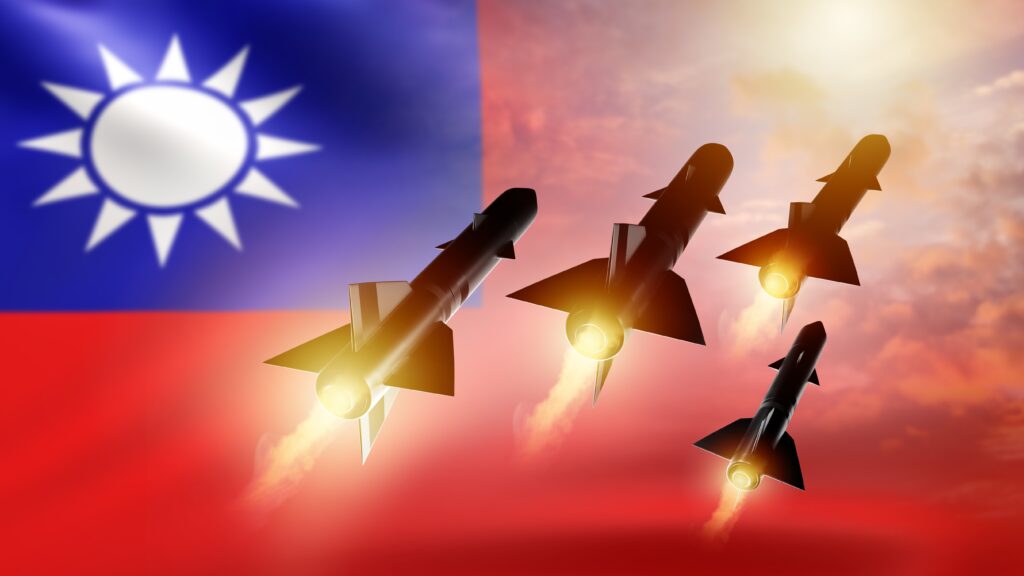
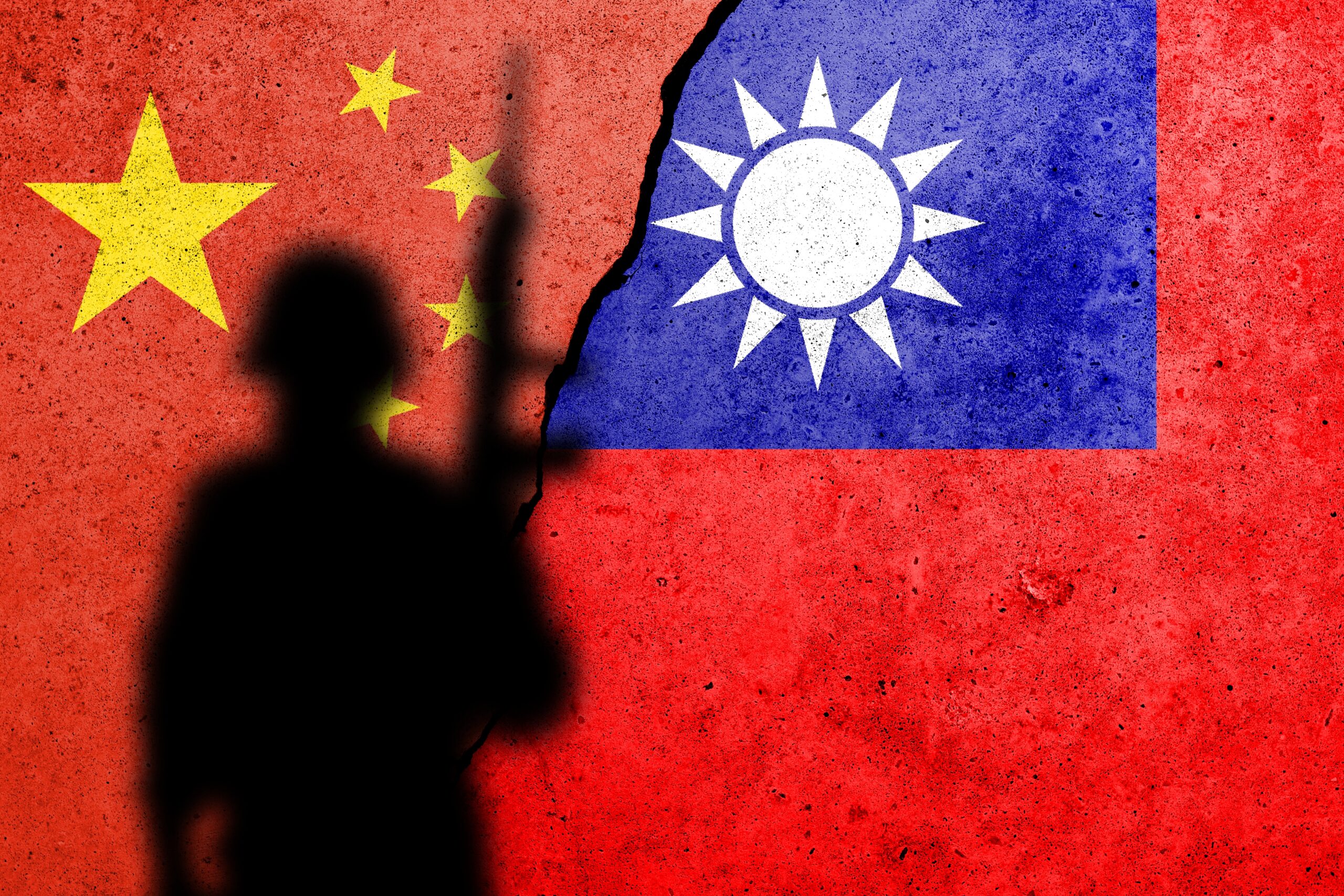
The Taiwanese flag with ballistic missiles in the foreground
Taiwan could also attack strategically. Its missile inventory holds large numbers of Long-Range Strike Missiles:
- Hsiung Sheng:1,200 km, capable of striking deep into mainland China. The famous 3 Gorges Dam, whose destruction could devastate the downstream populace, lies a little more than 1,080 kilometers away. If Taiwan is reduced to desperate straits, the dam could make an inviting target.
- Qingtian Hypersonic Missile: Exceeds 2,000 km, designed for precision strikes.
- MGM-140 ATACMS: 300 km, tactical missile for targeting PLA bases, embarkation docks, and PLAAF airfields.
Drones are, of course, the most survivable air asset in Taiwan’s kit. The nation has been boosting their production, but Taiwan’s drone production tallies still lag considerably (3,300 per year) behind China’s production rates and even Ukraine’s (currently, around 10,000 per year}.
As might be imagined, aerial drones come in several sizes and varieties, but many are suicide drones or designed for reconnaissance: consequently, the attrition rate will be high. Taiwan’s facilities to create and distribute aerial drones will also be under extreme pressure from Chinese bombardment.
TAIWAN’S VAST ARTILLERY RESOURCES HAVE BEEN UNDER-ESTIMATED
Another vital key to the island’s defense is to keep the enemy pinned to the beaches or other landing sites by incessant artillery fire. Indeed, the ROC has a disproportionate number of howitzers, mortars and rocket launches per combatant compared with much larger nations, even to China itself.
Taiwan’s total artillery equals 1,360 towed and self-mobile artillery pieces. This figure covers heavy mortar systems (120mm and above), as well as conventional artillery units deployed across the island.
Additionally, the ROC has been expanding its self-propelled artillery and multiple rocket launcher (MRL) systems, including HIMARS (11) and ATACMS, to enhance its long-range strike capabilities. Taiwan currently possesses 16 MGM-140 Army Tactical Missile Systems (ATACMS), which were delivered on January 7, 2025. These long-range precision missiles have a 300 km range and are designed to strike key PLA assets, including airbases, missile sites, and command centers.
Additionally, Taiwan is set to receive 20 more ATACMS missiles by 2027, bringing the total inventory to 36. These missiles complement Taiwan’s HIMARS launchers, which enhance mobility and rapid deployment.
GROUND POUNDERS: TAIWAN’S ARMY RESERVE POOL
Like Israel, Taiwan has an enemy perched right at its doorstep. Like Israel, Taiwan has chosen to maintain a small, well-trained regular army and a large pool of military reservists.
Economically, this system is more affordable for both small nations.
Unlike Israel, however, the citizens of Taiwan do not feel the same sense of urgency. Perhaps, the many social and business interactions with the mainland have softened any sense of danger. Perhaps, the long-standing, if ambiguous, guarantee of American protection (although less nowadays) has made many younger Taiwanese complacent.
The number of army full-time actives ranges from 94,000 to 163,000 depending on who is being counted. For instance, the larger number includes military police. At most, there are 26,000 of these troops on the vulnerable outlying islets (although some may be naval or air force personnel). This could leave 72,000 to 140,000 to act as the main island’s defenders.
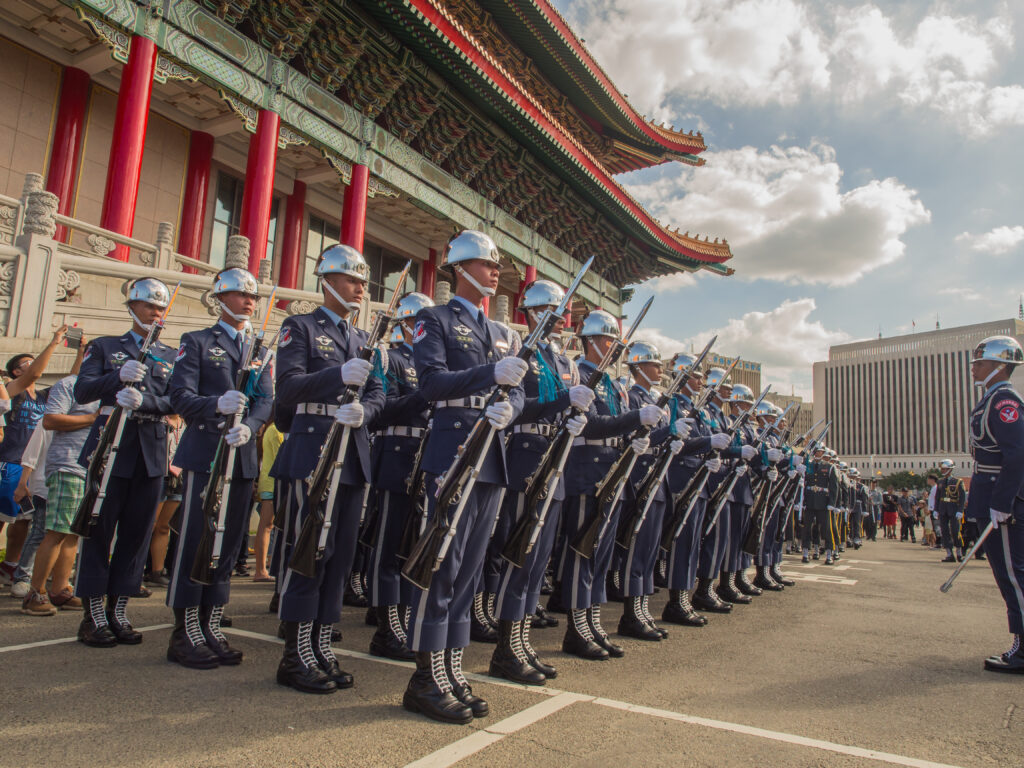
Defending Taiwan: Taiwanese reservists in parade formation, Taipei, Taiwan, October 2016
Taiwan’s army is structured into three corps, each overseeing multiple brigades specialized for different combat roles. Their command has been emphasizing elements of the “Porcupine Strategy” mentioned earlier.
Corps Structure:
Northern Corps – Defends the capital Taipei and highly industrialized and urban area of northern Taiwan. This is the largest force.
Central Corps – Covers mountainous central Taiwan and key logistical hubs. (Smallest).
Southern Corps – Focuses on coastal defense and amphibious operations. Home of the chief port, Kaohsiung.
Types of Brigades (20)
Infantry Brigades: 5
Mechanized Infantry Brigades: 3
Armored Brigades: 4
Aviation Brigades: 3
Artillery Brigades: 5
It is clear that this ground force, no matter how well-trained and motivated, cannot hold an island of 14,000 square miles and 23 million by itself for long. This is where the reserve component comes in.
TAIWANESE RESERVE ORGANIZATION AND MOBILIZATION
Taipei claims to have 1.66 million reservists, but many will be funneled into other branches or will serve in civilian rolls as firefighters, auxiliary police, or emergency other types of first responders.
The Army Reserves total 21 brigades. Every brigade typically consists of 3 infantry battalions, mustering between 800-1200 personnel. This means that ROC has around 63 reserve battalions, or between 50,400—75,600 troops to call to arms.
The Army Reserves comprise 6 Category A brigades (27,000 combatants at full strength of 4500) and 15 Category B brigades (45,000 at minimum strength of 3,000), thus ensuring a balance between immediate combat-ready forces and strategic reserves.
Category A Reserve Brigades benefit from —
Higher Readiness: These brigades maintain an active strength equivalent to one battalion.
More Frequent Training: Reservists in Category A units undergo regular drills to ensure effectiveness.
An Operational Role: Expected to integrate with active-duty forces during mobilization.
Personnel Composition: Includes a mix of active-duty officers and trained reservists.
Category B Reserve Brigades
Lower Readiness: These brigades have minimal active personnel, primarily consisting of command staff.
Limited Training: These reservists receive less frequent training cycles compared to Category A units.
Support Role: Primarily tasked with logistical and territorial defense rather than frontline combat.
Personnel Composition: Mostly administrative and support staff, with fewer combat-ready troops.
Taiwan’s reserve forces are structured to provide territorial defense and rapid reinforcement in case of conflict. Their organization and training is evolving, however, to respond to increasing threats as they undergo modernization. Mobilization times vary, but Taiwan aims to activate key reserve units within 24-72 hours in a crisis. Nevertheless, challenges remain in training and readiness.
RESERVE MOBILIZATION AND TRAINING
In response to American criticism, Taiwan doubled its reservist training period to 14 days per cycle. The aforementioned Tung Hsin annual drill tests reservists’ ability to assemble and operate in wartime conditions.
In keeping with the “Porcupine Strategy,” the Army has been expanding its military training programs, including elements of asymmetric and guerrilla warfare.
Traditional reserve units have primarily focused on territorial defense, but recent reforms emphasize familiarity with the following: urban and mountain combat, decentralized operations, small-unit ambush tactics, counter-infiltration measures, rapid mobility, and coordination with local civil defense teams.
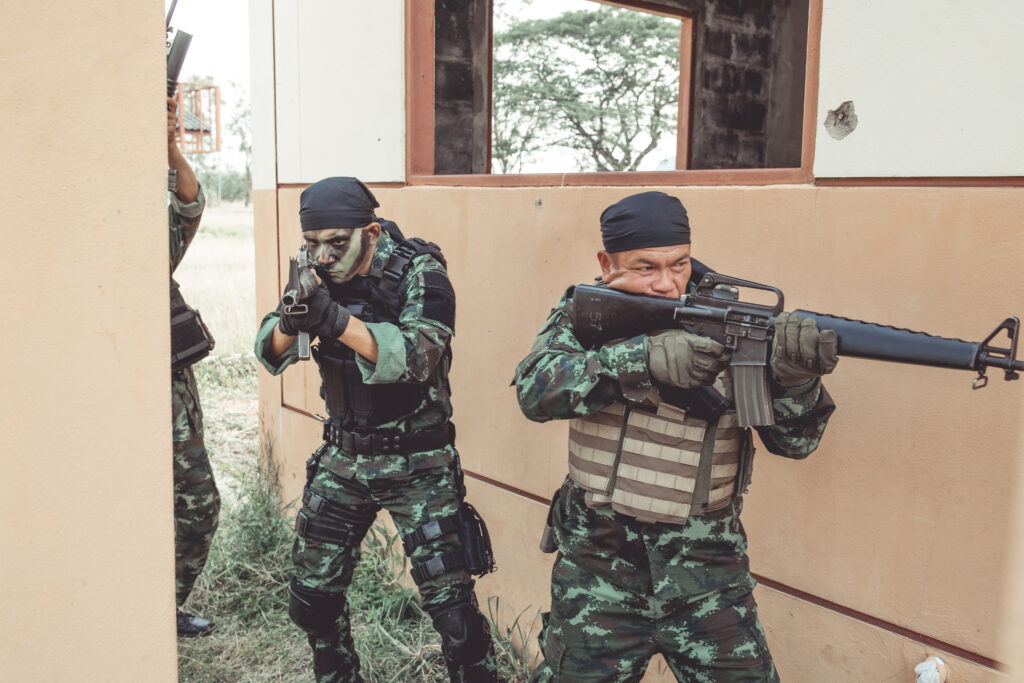
Taiwan is clearly working to adapt its crucial reserve force to plug the inevitable gaps as the regulars are worn down by China’s immense fire- and manpower. Nevertheless, the Taiwanese have a distance to go to match Israel’s impressive active-duty integration system, which insists on numerous call-ups and frequent training cycles.
Israel can showcase its highly integrated reserve system, with frequent call-ups and combat-ready units. Infantry reservists even take their weapons home with them. There is no doubt that Israel’s inactive soldiers exhibit higher readiness and mobilization rates.
To bog the invaders down, stymie their advances, and maximize their casualties as part of the Porcupine Strategy, the ground reserves are the final card for Taiwan to play. Yet, there appear to be sacrifices that the Taiwanese must eventually be willing to make, in terms of funding, training and, eventually, casualties to ensure it is a winning one.
Richard Jupa, May 28, 2025
This has been the fourth in a planned series of six articles on China’s growing military might, particularly its naval muscle, and military pressure being placed on Taiwan. The fifth article to follow will examine several likely scenarios that a Chinese amphibious invasion of Taiwan could follow. The six and last planned article will focus on a U.S.-Chinese naval dual in the western Pacific.