As discussed in earlier articles in this limited series, a full-on Chinese naval/air blockade of Taiwan would be intense and economically devastating, not just to Taiwan, but to many other nations — and even to the People’s Republic of China itself.
Under the hard blockade scenario outlined in article two in this series, the damage from incessant Chinese missile, air, drone, and naval-gunfire attacks against Taiwan would be staggering, although the casualties on either side would be relatively light compared with a kinetic, boots-on-the-sand invasion.
If China chooses the hard blockade route, then the following will likely happen: no international shipping or flights get through, harbors are mined, Taiwan’s 14 underwater data cables are cut, warplanes and suicide drones swarm everywhere. Moreover, a wave of misinformation and deepfakes flood all the island’s internal communications.
Under such a scenario, massive cyberattacks would interfere with powerlines and water distribution, among other components of Taiwan’s physical infrastructure. In addition, a broad selection of government buildings, food and ammunition stockpile areas, airfields, and transportation networks will all be targeted by missile attacks, along with Taiwan’s coastal defenses and every military installation.
These measures will only be China’s first steps in attacking Taiwan. This article, the fifth in a series, presents our view on the likely course of China’s land and sea invasion strategy for taking the island nation.
CAN TAIWAN’S WILL TO FIGHT BE BROKEN?
After several days of immense disruption, the devastation wrought by a hard blockade that is coupled with missile attacks on Taiwan would be considerable, but selective. Taiwan’s outlying islands would likely be quickly seized by mainland forces and its valiant but small navy and air force would most likely be quickly swept aside by superior numbers of Chinese craft.
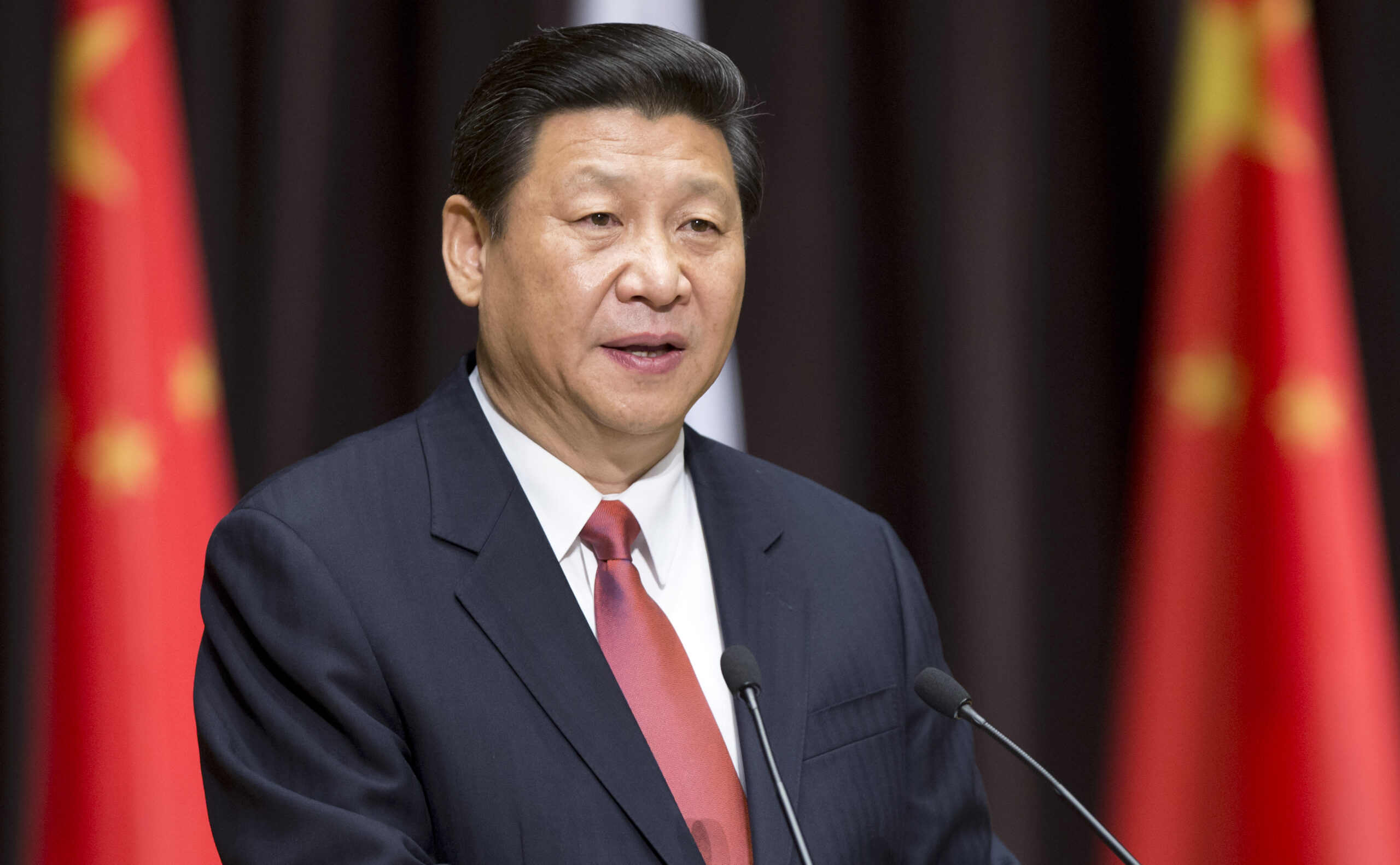
There are good reasons why Xi Jinping might choose to keep any such blockade short, to maybe no more than several days. That period should allow just enough time to measure Taipei’s tolerance for a pro-Beijing political solution. A strong element favoring China exists among the 23 million Taiwanese, but that faction does not constitute a majority of the population.
A ceasefire is therefore likely after the initial naval blockade and brief, albeit highly destructive, air-sea onslaught. Negotiations will be proffered. A collapse of the island’s government or of the citizen’s will to resist may not actually occur, however.
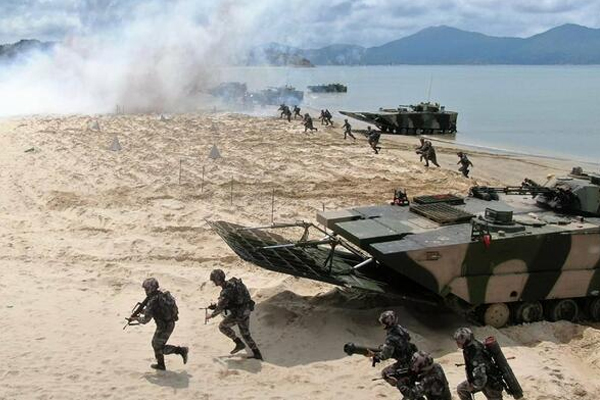
In the absence of Taiwanese concessions or a panicked populace, Greymantle believes that Xi Jinping will then rapidly transform China’s hard blockade of Taiwan into a bona fide, cross-straits amphibious assault.
This is when the real bloodshed would start.
WHAT ABOUT TAIWAN’S ERSTWHILE ALLIES?
There is a good chance, especially under the current U.S. administration, that America might not react promptly, or at all, to a hard blockade of Taiwan. Under such a scenario, America’s Pacific allies (i.e. Japan, South Korea, Australia, and the Philippines) would be most unlikely to respond to Chinese overt aggression independently, other than through diplomacy.
Taiwan might thus have to stand alone for a week or two, even if the United States does eventually decide to intervene. A recent poll showed that 60% of Taiwan’s citizens currently believe that America will not intervene against a Chinese attack on Taiwan – another factor currently undermining Taiwanese morale.
The longer the Americans delay, the easier the Chinese will have it.
For instance, China’s amphibious fleet’s first echelon will be most vulnerable to a U.S. missile attack when in the process of crossing the Taiwan Strait. Such an operation would occur during day one or two of the Chinese invasion.
To take one possibility, no long-range anti-ship cruise missiles, fired from U.S. stand-off bombers, will be available to assail that crucial Chinese first wave if the U.S. decides to hang back and just observe. Taiwan’s missiles and drones will do so, of course, but there are fewer of them, and thus greater numbers of enemy troops will stride ashore.
If the U.S. refrains from intervening during the crucial first 48 hours, then within a week multiple Chinese lodgments will be more supplied and better reinforced, and the invader’s air/ sea dominance over Taiwan all but assured.
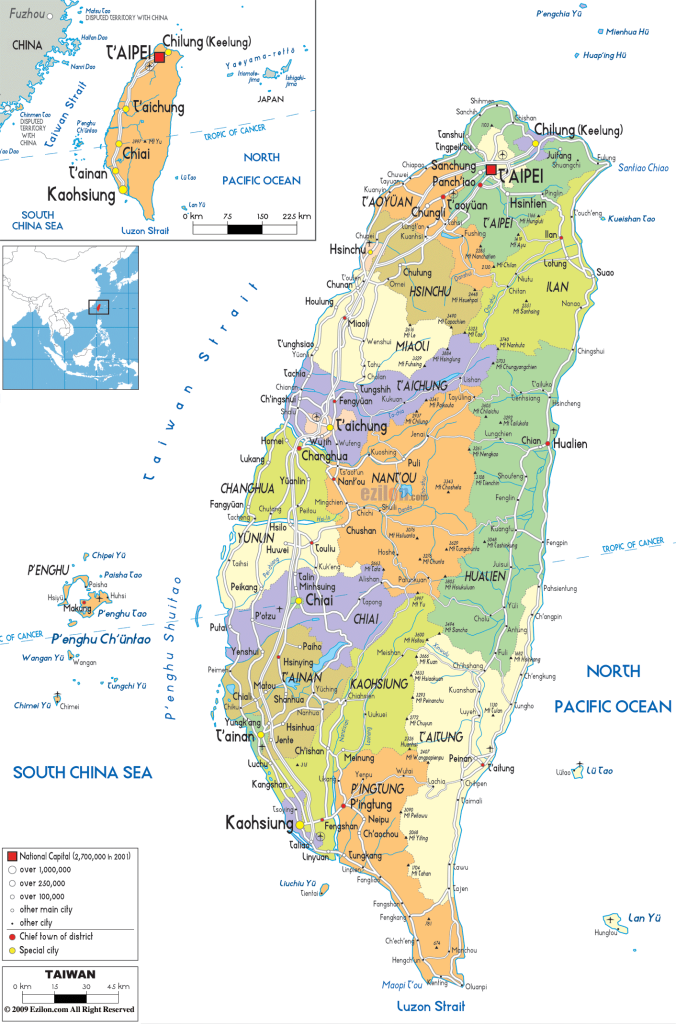
Above: Political map of Taiwan. Taipei is in the north, Taichung in center, and Kaohsiung in the southwest
THE PENGHU ISLANDS ARE STEPPING STONES TO TAIWAN PROPER
The nearby Penghu Archipelago, located just over 20 miles northeast of Taiwan, will be an inviting target for China after Taiwan’s minor, outlying dependencies are neutralized. The closest islet in this group is only 24 miles from Taiwan’s eastern coast, making Penghu a strategically inviting ‘stepping stone’ into Taiwan for an invasion force.
Penghu bristles with regular Republic of China (or ROC, Taiwan’s official name) army units, missiles, and long-range radars. These would threaten the flanks of China’s main amphibious thrusts, possibly delaying or disrupting them.
Overrunning the archipelago would be bloody, and it could take several precious days while the main invasion of Taiwan itself proceeds. From China’s viewpoint, it will be vital to take over these islands, especially if there is less danger that they will be subsequently pounded by U.S warplanes or missiles.
Once on the Penghus, the People’s Liberation Army-Navy (PLAN) would bring in numbers of Russian-designed mobile S-300 batteries, each with a range of 157 miles. Every battery contains an acquisition radar to detect aircraft, as well as an engagement radar to track targets and guide missiles to them.
These formidable defensive weapons would add another protective ring around the Strait for Chinese ships, airplanes and transported infantry. The Penghu Islands are also well situated to be unsinkable platforms for medium-range reconnaissance and suicide drones.
CHINA’S LODGMENT STRATEGY WILL FOCUS ON ONE, POSSIBLY TWO, BEACHHEADS
There is, of course, no end of speculation about the initial landing spots that China will choose along Taiwan’s coastline.
Given the relatively few beaches suitable for amphibious operations, however, the choices are limited. Moreover, even the few more suitable beaches tend to be rather constrained, either by nearby urbanization or by difficult terrain beyond them.
Air mobile assaults or paratroop drops intended to get behind the island’s defenders will be hindered by Taiwan’s central mountain range, numerous rice patties, and built-up urban areas. In other words, few clear, flat areas exist that are suitable for such operations.
Furthermore, attacking one of Taiwan’s several ports directly – which may ultimately be necessary for a Chinese victory – would combine the complex difficulties of amphibious warfare with the slow, costly slog of urban warfare.
Never to be forgotten: time is of the essence. The ROC’s reserves will be mustering every hour; meanwhile, the United States may be getting its act together to help.
Even if Chinese invasion forces can secure a good lodgment along Taiwan’s coast, the dwindling ranks of spearhead troops will desperately need reinforcements…but supplies and ammo must arrive first.
Greymantle estimates that the PLAN’s amphibious fleet could initially deliver 20,000 -25,000 combatants. This means that the small numbers of first shock troops can’t be spread too thin among several landing zones. The gains of the initial landing cannot be wasted on feints. The battalions ashore will need to be concentrated on one or two locations.
Follow-on waves of fresh combatants, ferried by vulnerable commercial dual-use ships, must be landed at secure points, but only after the supplies are landed. Consequently, beachheads can’t be stalemated for long. They will have to be expanded, pushed out by that weary first echelon, ideally bolstered by intense air and naval gunfire support.
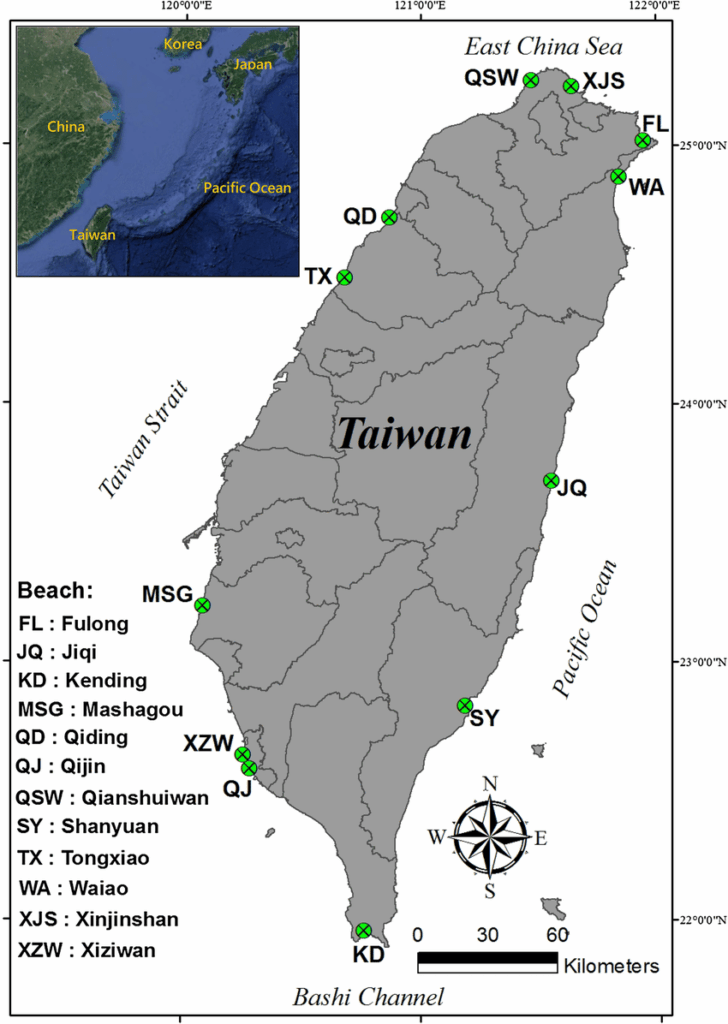
Above: A strategic map of Taiwan’s beaches most amendable to amphibious troop landings
USUAL SUSPECTS: THE SO-CALLED ‘RED’ BEACHES
The Taiwanese call both the following major target coastal areas and six or seven lesser ones “red beaches,” meaning those most attractive to the PLAN.
Tamsui Beach (Northwest Taiwan) – Near Taipei, this beach offers proximity to the capital, but it is heavily defended.
Taichung Beach (Central Taiwan) – Located in a coastal area with more favorable, clearer terrain, as well as access to key road networks.
Tainan Beach (Southwest Taiwan) – A strategic location near industrial hubs.
Kaohsiung Beach (Southern Taiwan) – This site abuts the main port city, an area with many logistical advantages.
Xishu Beach (Southwest Taiwan) – Considered a very vulnerable landing site, so it is frequently used in Taiwanese military drills.
Hsinchu Beach (Northwest Taiwan) – Close to Taiwan’s vital semiconductor industry, making it a high-value target. Beyond these, Taiwan also has six smaller red beaches. Nevertheless, many of these latter sites feature steep terrain, powerful ocean currents, or are surrounded by thick urban development. The Taiwanese military has carefully bolstered defenses and prepared extensive countermeasures at all suspected landing zones.
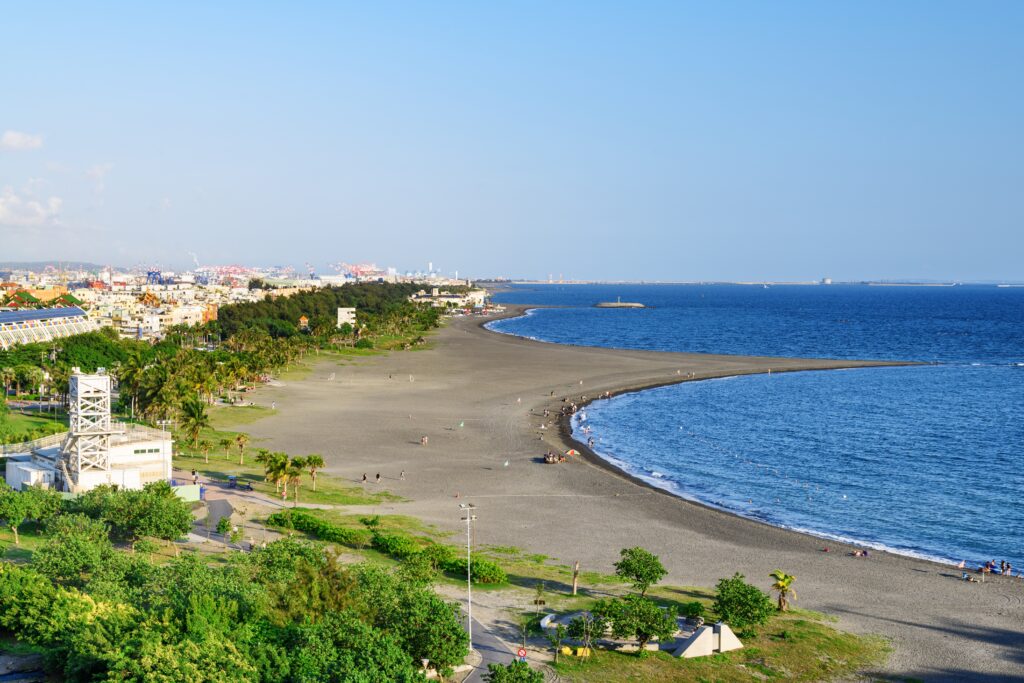
Many of Taiwan’s beaches – like this one – are directly adjacent to major urban centers
CHINA’S MAIN LANDING OPTIONS: A, B, AND C
Beijing clearly can’t try to land at all of the island’s possible sites, even if it feints toward several. Its military will have to focus on the area that: 1) can be captured most quickly; 2) will contain the most resources; 3) will furnish the most secure lodgment; and 4) will most frustrate the enemy’s counter-attacks, thus costing the fewest Chinese casualties.
The first major option (let’s call it Option A) is to decapitate Taiwan’s administrative center. Greymantle calls Option A ‘The Decapitation Option’.
Such a goal necessitates seizing the northern section of the island, home of the capital Taipei and its sprawling exurbs and suburbs. This Taipei–Keelung Metro Area has a population of 9.26 million, if Taoyuan City is included. Forty percent of the country lives in these counties.
Moreover, the administrative region comprises the ROC’s political, economic, and technological core, making it crucial to Taiwan’s national survival. This area houses Taiwan’s government, including the Presidential Office along with Taiwan’s parliament, the Legislative Yuan. Taipei is also home to major tech firms, including Taiwan Semiconductor Manufacturing Company (TSMC), which dominates global semiconductor production.
Option B would target the central port city on the island’s west coast, Taichung, and its extended metro area. We call this option ‘Severing the Midriff’. Some 4.15 million Taiwanese live in, or very near, this vital north-south transportation hub. The terrain around the city is flat and more amenable to an amphibious invasion and subsequent advance. Taichung district is also garrisoned by the smallest of Taiwan’s three regular army corps.
The last major option, Option C, involves the seizure of Taiwan’s primary deep-water port, Kaohsiung. A possible secondary goal may be the eventual capture of the closest –30 miles away — major southwestern city, Tainan, with its Port of Anping. Greymantle has labelled this option ‘The Kaohsiung Gambit’.
More than 67% of all export/import throughput and container traffic goes into and out of Kaohsiung. Interesting detail: a major state-owned Chinese company owns many of the cranes populating its wharves. A significant percentage of Taiwan’s oil and coal also enters here.
In essence, this southernmost port is a cornerstone of Taiwan’s economy. Roughly 10% to 12% of the ROC’s population inhabits the two major cities and their metro zones. The headquarters of the navy and the second-largest army corps are also based in this region.
GREYMANTLE’S PREDICTION: CHINA CHOOSES OPTION C
There is very interesting 2024 report published by the United States Navy’s Naval War College. The writers of this study suggest that the Chinese military has a clear opinion about its preferences for their island invasion:
“From the Chinese military’s perspective, beachheads (captured beaches) and airheads (captured airports) are necessary but insufficient parts of a major amphibious-landing zone. According to internal PLA studies, beaches and airports even might be considered auxiliary or supporting wings, while the core—the fulcrum of an invasion of Taiwan— is that nation’s ports.” (p.348).
So, Taiwan’s beaches are the means to a achieving a particular Chinese end – port capture – but they are far from perfect platforms for China’s amphibious assault.
The War College analysts believe that PLA’s researchers have concluded the following: “ By themselves, Taiwan’s beaches and coastal airports are too small to land enough PLA troops, tanks, and supplies to secure a solid lodgment ashore. Because these sites lack purpose-built infrastructure for unloading large transports and because they occupy inherently exposed positions, PLA researchers fear that Chinese landing forces could be encircled on the beaches, showered with defensive fire, and overrun by Taiwanese counterattacks.” (p.347)
All of Options A, B, and C involve beaches, which are vital for getting spearhead forces ashore. Those forces then need to get in a position to fight their way past multiple layers of defenses. These troops will have the support of heavy air, drone, and naval gun fire. They won’t have much time, however, to wrest control of a large, hostile city from a very prepared enemy, or at the very least, to secure its harbor district.
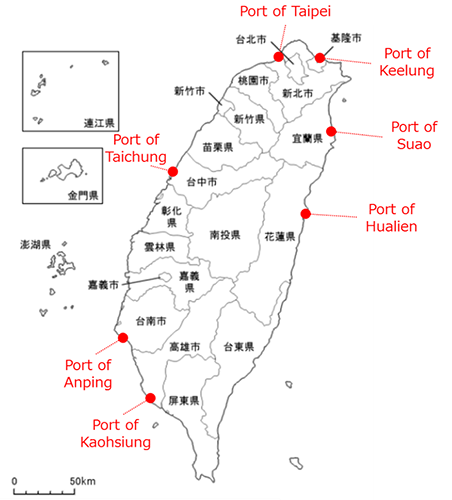
Above: Map of Taiwan’s major shipping ports
The ‘Decapitation Scenario’ (Option A) promises great rewards, but at the cost of great casualties and lengthy ground fighting. Forty-six percent of the regular Taiwanese army’s battalions and the majority of its reserves are located around the capital area.
The landing beaches near Taipei abut densely settled sites. The terrain itself is difficult: the northern tip of the mountain range cramps the southeastern border of the region, much of its flatlands are urbanized, several rivers must be crossed, and dense forests and parks complicate movement. All these features favor the defenders, not the attackers. The spearhead invaders would be engaging superior numbers of prepared troops who will utilize these natural obstacles to the fullest.
Option A is thus too dangerous and will take too long. Powerful counterattacks are likely, and they will make lodgments vulnerable to being contained.
Option B – the attack on the centrally located port of Taichung – which Greymantle has named the ‘Severing the Midriff Scenario’ would at first appear to be the better bet. Taichung is located in flatlands, the overlooking ridgeline is distant, and it is flanked by a wide beach and a river delta. In fact, the Naval War College report identifies Taichung as “the most probable location for a major PLA landing attempt.” (p. 358)
Nevertheless, this port contributes only 18% of import/export throughput to the economy. Although it straddles the main road networks leading north and south, the spearhead troops would not be able to advance very far in either direction until major reinforcements landed.
Balanced against an ever-increasing need for supplies, any major Chinese advances toward Taiwan’s capital or toward the main southern port might not start for a week or two. Then these forces would have to encounter defensive line after defensive line to proceed to their goals. Another consideration is that the lodgment must be protected against counterattacks from both flanks.
Greymantle suspects that the Chinese will decide on Option C – the Kaohsiung Gambit. There are many advantages to seizing Kaohsiung, then its Metro area, and eventually the whole southern tip up to Tainan, 30 miles to the north.
With enough troops, the task of conquering the main areas of Kaohsiung could probably be done in two or three weeks. This conquest will not be as easy as taking Taichung – but holding it will cripple the Taiwanese economy to a much greater degree. Also, the mainlanders will not have the extended suburbs surrounding the capital to slog through, all while facing the strongest elements of the Taiwanese regular army and the reserve brigades.
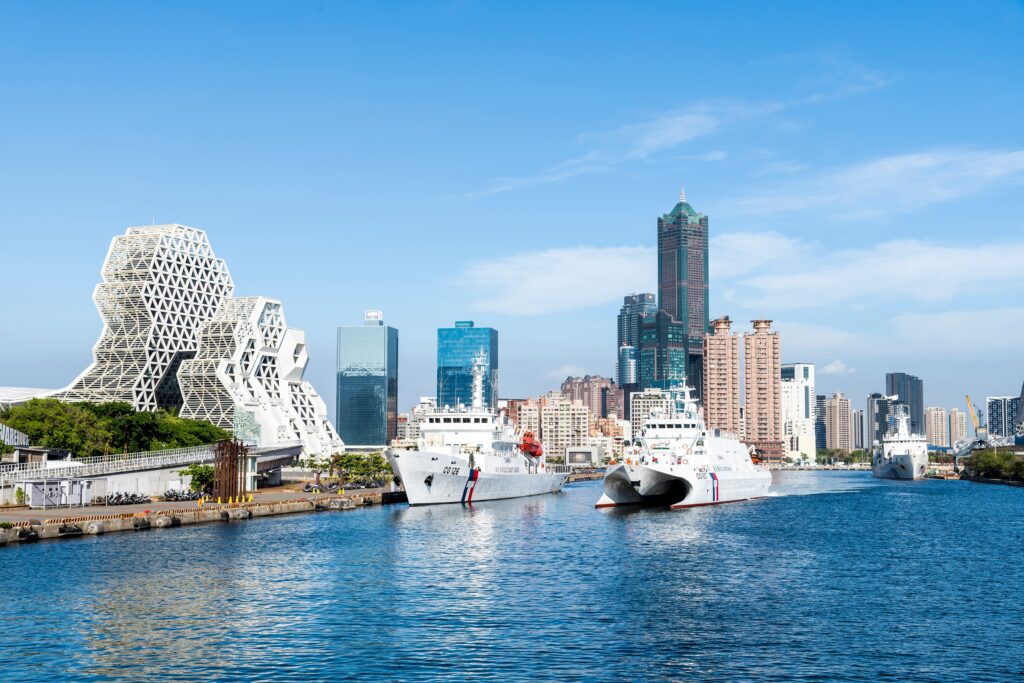
Taiwan’s Port of Kaohsiung: The nation’s largest port and one of the busiest in Asia
CHINA WILL NOT HAVE TO CONQUER ALL OF TAIWAN…AT LEAST NOT AT FIRST
After occupying Kaohsiung, Beijing would be likely to immediately declare a unilateral ceasefire, of undetermined length, and offer terms to Taipei.
Time is on the Chinese side. Why strangle this wayward Chinese province at once; why not strangle it slowly instead? After all, China is well known for its political patience and its focus in achieving long-term projects.
In the meantime, China’s hard naval blockade of Taiwan would continue, as would the steady stream of disembarking reinforcements and the establishment of a logistics headquarters in Kaohsiung. China may even partially open the Taiwan Strait to let international trade flow through, thus relieving global economic strains.
Under these circumstances, the ROC’s government will be under tremendous pressure to parlay with China. If the United States has not yet entered the war, the Americans will be forced to hesitate longer and lose popular domestic momentum. If it has already begun interfering, Washington may be reluctant to bomb a Taiwanese city – even one occupied by Chinese forces.
In the meantime, the PLA will have created a secure base for future operations. Taiwan’s reinforcements could not hope to reach the southern tip of the island while the invaders control both air and sea on either side. They could only respond with drones or missiles.
The Chinese could essentially force negotiations (to their satisfaction) because they are holding Taiwan’s entire economy hostage. PLA casualties from this course of action would be far less – at least in the long run — than they would be with either Options A or B.
TAKING KAOHSIUNG – CHINA’S SIX-PHASE PLAN
The PLA has been researching and planning how to take Taiwanese seaports for quite some time. According to the Naval War College report, one outcome of this diligent study has been the development of a six-phase operational approach for overcoming ROC defenses, then seizing the port district, and then city itself, as quickly as possible. (pgs.354-357)
Phase 1 is no surprise: “PLA units will soften up the defenders prior to amphibious landings using precision strikes and joint fires that target local centers of gravity.”
This means precise (and some not-so-precise) hits by missiles, bombers, drones, and naval fires on any coastal fortifications, early-warning radars, or other detection sites, as well as on anti-air and anti-ship launch platforms, command bunkers, artillery batteries, rear assembly areas, or military bases. Mobile reinforcements converging on the assault zones are also prime targets. To compensate for the outnumbered first-echelon’s disadvantages, China must ensure intense air and naval firepower support at all times.
Phase 2 would follow swiftly in the heels of Phase 1. Perhaps while the barrage is ongoing, or under cover of night, the PLA will covertly insert commandos by helicopters, ground-effect vehicles, hovercraft, gliders, ultralight delta-wings, or even small inflatable rafts.
These elite soldiers will be tasked with severing connections between forward troops and rear-area reinforcements, initiating disruptive raids on communication centers, and interfering with artillery posts or supply depots. They could also attempt to seize cranes or dockside warehouses before they are sabotaged.
Phase 3 would see the actual main amphibious assault. The main invasion forces will make landings from the sea along the flanking beaches and the river delta of Kaohsiung. These troops will be bolstered by air mobile units, hovercraft, and ultralights. Once ashore,amphibious-assault troops will conduct pincer movements, cutting off port zones andattempting to isolate defenders from outside support. This will mean neutralizing resistance in the five small towns, one of which holds a marine base, surrounding Kaohsiung.
Then comes Phase 4.
According to PLA researchers, once the initial amphibious landing in force is completed, it will be time to “Enter and Seize Ports…PLA amphibious-assault units will conduct sea-skimming attacks over obstacles blocking the port mouths and land squarely in the middle of port zones. At the same time, PLA units will attack into the ports from multiple angles under the cover of helicopter gunships.”
Chinese combat engineers, who specialize in removing obstacles, demolishing fortifications, defusing bombs, and blasting through walls will be embedded with them. (Note: Taiwan’s building codes demand extra resilience from its structures because of frequent typhoons.)
Securing Kaohsiung’s port district of Zuoying will be the foremost goal. Subduing the rest of the metropolis beyond this and dominating the main transportation arteries can come later, neighborhood by neighborhood. Any amphibious tanks and armored vehicles that managed to arrive will be especially useful. Suicide drones and snipers will be ubiquitous; gunfire and worse can come from any angle in urban warfare.
Phases 5 and 6: “Defeat Counterattacks” and “Safeguard and Exploit Ports”.
These two final phases are rather obvious. Kaohsiung’s citizen reservists and the Third Corps regulars stationed in the metro-area will be counter attacking frequently during the first days of the invasion. As for Phase 6, Kaohsiung’s facilities aren’t much use until all the damage – intentional and otherwise – that has been done to the docks, cranes, and other necessary unloading apparatus has been repaired, as quickly as possible. The combat engineers and the dragooned civilians under their direction will have an onerous responsibility.
As for safeguarding the new conquest, Kaohsiung was chosen by China because it will be the easiest of all lodgments to defend…once Taiwanese regional resistance in the southern tip of the island is suppressed.
CONCLUSION…IF THERE IS ONE
Taiwan’s many countermeasures to defend Kaohsiung have not been discussed. These countermeasures will make the smooth, hypothetical progression of the PLA’s phased port-capture detailed above much more uneven. Nevertheless, a concentration of Chinese forces, applied quickly and rapidly reinforced, would probably succeed in achieving the conquest of this major port. The time it takes is all important, but it is doable.
Once Kaohsiung is in Chinese hands, the subjugation of the rest of Taiwan, if it still fighting alone, is an eventual certainty. Xi Jinping has waited years for this vindication of his historic destiny. Why not wait a year or so more, if the outcome is less bloody and costly?
If the United States does become directly involved, however, the above scenario will play out differently. That is the subject of the sixth article in our limited series, which will follow later this summer
Until then, I remain —
Richard Jupa
******************************************
This has been the fifth installment in a special Greymantle limited series on China’s growing naval power and the China-Taiwan conflict. Our next installment will focus on potential U.S. responses to a Chinese invasion of Taiwan and a hard blockade of the island.
Citation: U.S Naval War College report – Digital Commons CMSI Studies in China Maritime Development China Maritime Studies Institute, Study No. 8, Chinese Amphibious Warfare: Prospects for a Cross- Strait Invasion, November 8, 2024; Authors: Andrew S. Erickson, Conor M. Kennedy and Ryan D. Martinson.
Interested in catching up on prior articles in this series? Links to all prior articles follow below: