
It has been said repeatedly and by unrelated persons that we citizens of the globalized West are presently living in ‘interesting times’, a phrase used ruefully to mean, in essence, very bad times. Greymantle won’t use these pages to argue against the ‘very bad times’ interpretation, but prefers to focus on the word interesting, even when used ironically.
Clearly, amidst the turmoil of political populism, urban riots, Wokism’s capture of key institutions, the emergence of artificial intelligence (AI) for the mass market, and new controversies surrounding sex and gender, the central conflicts of our times are, in fact, quite interesting in and of themselves, regardless of how one feels about them.
To take two trenchant examples, World War II and the Holocaust were not good events and were in fact the opposite of good, but remain topics of considerable interest and debate.
A person may be personally astonished or disgusted by the upsurge in youth transgender ‘identification’, sex change operations, and the pseudoscience (or is it an emerging science?) of ‘youth gender medicine’. But no matter how such things make one feel, these are interesting subjects to delve into.
This is true regardless of whether one debates the merits of these practices with their proponents or their opponents, or engages instead with the merely curious, confused, and/or perplexed – the ‘silent majority’ who truly don’t know what to make of such controversies. If they are being honest, they will usually admit that the less they have to deal with such matters in their private lives and their workplaces, the more relieved they will be.
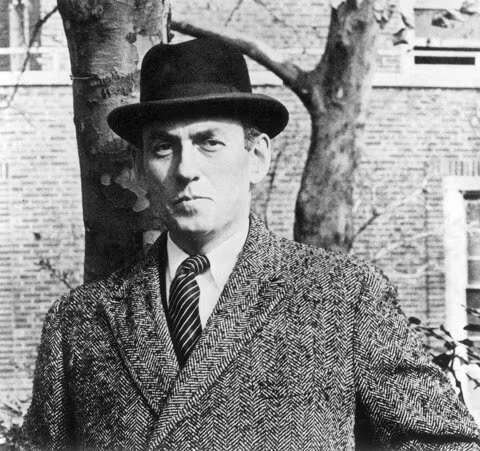
In this week’s Greymantle post, we are going to treat the contemporary ‘cluster of cultural controversies’ as the central phenomenon itself without getting lost in the weeds of any one controversy. Rather, we are going to take a brief dive into the philosophy and worldview of an obscure but influential figure in Western sociology about whom we can clearly say that He Saw It Coming: Remembering Philip Rieff, the Prophet of Anti-Culture.
You haven’t heard of Philip Rieff? That’s not surprising. Rieff hasn’t been ‘trending’ much on social media lately. Rieff would have found social media appalling, by the way, and would never have had recourse to using it.
I don’t know what Rieff thought of the internet – he lived long enough to witness its beginnings – but I expect he also viewed it with deep suspicion. Any written text subject to neither the academic peer review process or, more preferably, the authority-endowed gatekeepers of one or another sacred tradition would not pass the ‘smell test’ for Rieff or accord with his views concerning the nature of how truth is revealed.
The consultants with whom we work to promote this blog and increase its readership are not particularly enthusiastic about our decision to write this post. They would prefer that I write about something that is ‘trending’ and liable to generate more ‘impressions’, which is to say more page views and other measurable statistics of engagement.
Last week’s post on the survivability of the Iranian regime accorded with that standard of measurement. This week’s post will not – at least initially. Nevertheless, we have chosen to plunge ahead.
If Philip Rieff isn’t ‘trending’ online, then he should be. We are going to do our small and humble bit to rectify Rieff’s relative omission from popular discourse. It’s an omission that would not have troubled him in the slightest, but Greymantle views Rieff as a luminary worthy not only of being read, but as Rieff would say, of ‘being re-read’.
INTRODUCTION: THE WEST AFTER THE SACRED
When one surveys the cultural landscape of the West in the mid-2020s (and by ‘the West’ we mean those nations of Europe and the New World that went under the name of ‘Christendom’ prior to the First World War), it’s hard to escape the conclusion, or at least a certain mental picture, that the West has become deeply fragmented. Not just polarized but fragmented into mutually incoherent and warring factions.
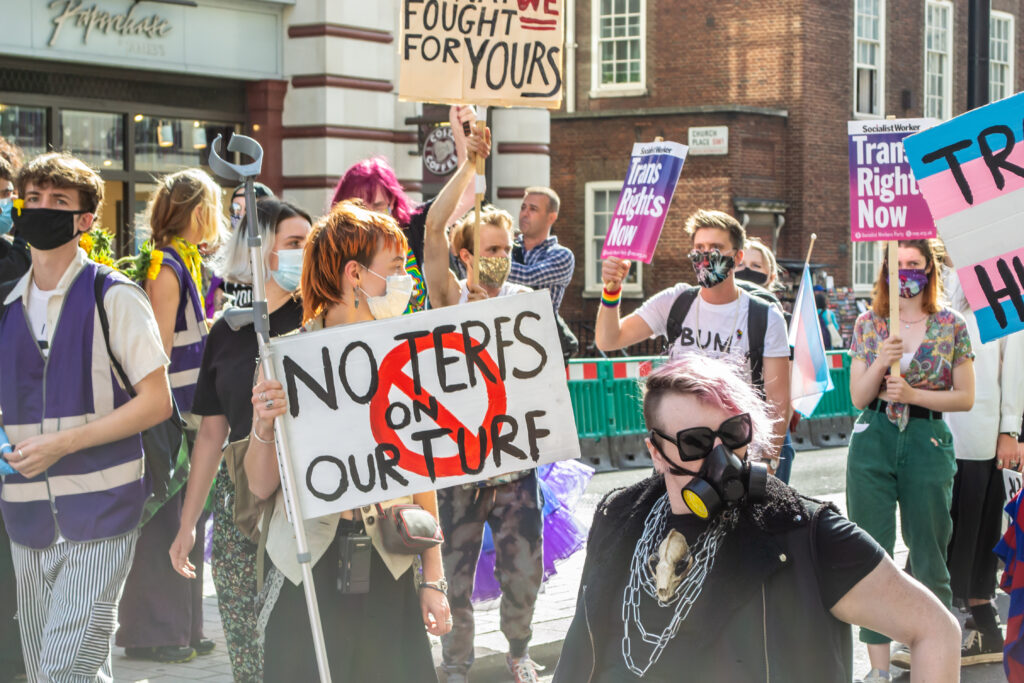
In the UK, long-time feminist writers clash with transgender activists over keeping ‘women-only spaces safe for biological women’ while their opponents denounce the same feminists as ‘TERFs: Trans-Exclusionary Radical Feminists’, which, when hurled by transgender activists, means something akin to ‘fascists’ or ‘traitors’.
Also in the UK, the British Parliament voted narrowly to approve the legalization of physician-assisted suicide for terminally ill persons after months of bitter debate. Nearly as many Labour MPs voted against the bill as for it after Labour had brought the bill to the floor for a vote. The political coalitions both for and against the bill were notable for their political heterogeneity. Hard-left Labour MPs and hard-right Tory MPs voted together against the bill, while moderate Labour and mainstream Liberal Democrat MPs voted for it.
In Ukraine, a Jewish president supported by the overwhelming majority of Ukrainian Christians, including various far-right elements (see: The Azov Brigade) is locked in a life-or-death military struggle against a Russian president who is ostensibly a traditionalist Christian, but is in reality a long-time agnostic shaped by the KGB’s culture of militant atheism. Center right and center-left politicians in the European Union support Ukraine against Russia, while many of the hardest-right and hardest-left political actors support Russia against Ukraine.
Populist actors of all political and ideological stripes are gaining ground as the very legitimacy of the old parties of the center left and center right, and of the state itself, increasingly comes under question.
Birthrates have been in a state of near-collapse for a generation. Deaths far outnumber births, which are well below the replacement rate. Young people are finding it hard to pair up and form stable marriages. The flicker of online life draws in younger generations like moths to a flame. Pornography is ubiquitous.
Western culture seems not only fragmented but exhausted. Fewer children learn to play musical instruments such as the piano before the age of 12. Music is increasingly made by computers and beat machines. Algorithms write songs. Pop music is increasingly synthetic. Synthetic music for synthetic people.
Western Man’s will to fight, create, and reproduce in ways that earlier generations would recognize also seems to be lacking in some hard-to-define way. Little boys are sanctioned by their teachers for getting into fistfights in the schoolyard. Meanwhile, young people of both sexes, tattooed head to toe like members of the Yakuza, beat each other to a bloody pulp on television in bouts organized by the Ultimate Fighting Championship (UFC). The President of the United States recently organized a UFC fight on the White House lawn to celebrate Independence Day.
If the West is fragmented and exhausted, it is also up to its ears in psychotherapy.

Everybody seems to be ‘depressed’ lately, most especially young women. The religious sensibility is out, and the therapeutic sensibility is in. Self-help gurus hawk manuals for self-care, and the commentariat openly speak of what they label ‘therapy culture,’ by which they mean a way of speaking and thinking characterized using jargon taken from various schools of psychotherapy, along with an emphasis on ‘healing trauma, ’ self-care, and a highly individualized program of self-improvement.
How did we weird Western people get here? Back in the mid-1960s, an obscure American sociologist delivered a prophecy and offered an outline of what was to come. His name: Philip Rieff.
FROM SACRED ORDER TO PSYCHOLOGICAL SURVIVAL
In 1966, Philip Rieff published the book The Triumph of the Therapeutic. In it, Rieff argued that Western culture was in the midst of a momentous cultural shift triggered by two factors: a loss of elite religious belief fed by the natural sciences (e.g. Charles Darwin) and continental philosophy (Friedrich Nietzsche, Karl Marx), and secondly by the rise of what he termed ‘the therapeutic mindset’ due to the popularization of the works of Sigmund Freud and the turn of West’s educated classes toward psychotherapy, rather than religious ritual and practice, to deal with personal crises and troubled consciences.
The ‘Religious Man’ of the Middle Ages and early Modern times was giving way to the ‘Psychological Man’ of late Modernity. Psychological men and women would usher in a new cultural phase for Mankind: a post-modern period characterized by an emphasis on ‘the self’ as the measure of all things, along with what would become a frenzied exploration of personal and group ‘identity’.
According to Rieff, the new forms of identity advocated by radical social movements in the 1960s and beyond – into which Rieff included various race and gender-based identity movements – would be less stable than the deeply rooted religious cultures of the past. These new forms of identity, while subject to ever more radical ‘exploration’ and ‘experimentation’, were destined to be unstable, capricious, and apt – like unstable chemicals – to react violently when under pressure.
Rieff saw the beginnings of ‘identity-based’ movements in the late 1960s and 1970s and predicted that these movements would proliferate and radicalize and, not being content to sit on the margins, would move into the centers of power with the aim of redefining all prior normative standards, objective truth, and traditional ethics.
By the last decade of the 20th century, Rieff was convinced that the center ground of Western culture would be held by Psychological Man and the therapeutic sensibility. The need to “feel good about oneself” and “find one’s own voice” would be core parts of this cultural zeitgeist. Much of this new sensibility would flow into art and politics.
Rieff believed politics was always downstream from culture. Political actors could try to push back against cultural trends, but were mostly bound to fail. At best, they were buying time against the inevitable. At this point, Rieff began outlining his three-part theory of human cultures to provide a framework – and a prophecy – for what the new “Therapeutic Age” had in store for the West and the world.
RIEFF’S THREE CULTURES: FROM NATURE-AS-PRIMORDIAL TO THE PRIMACY OF POSSIBILITY
Beginning in a series of articles written in the mid-1970s, Rieff began outlining a new meta-theory of human cultures. According to Rieff, there have been three distinct “cultural types” across human societies and history. These are the First, Second, and Third cultural types. At the root of each is what Rieff termed their “primordial”, by which he meant the driving force that animates each culture and figures in the translation of a culture’s vision of ‘sacred order’ into ‘social order’.
FIRST CULTURES: The Primordiality of Nature and Fate (or Nature/Fate)
For First Cultures, the primordial lies within the structures of Nature, but is best described as the workings of Fate. Whether derived from the Norse Norns, the Greek Fates, the wills of Zeus or Vishnu, or the powers of aboriginal ancestral spirits existing in communion with Nature itself, the dictates of Fate and the related taboos governing acceptable and unacceptable social behavior are the animating force underlying all First Cultures.
The First Cultures are a diverse group and include all non-Abrahamic religions, tribal cultures, and forms of shamanism, along with Hinduism and Buddhism, both of which Rieff admired. Rieff considered them to be the longest-surviving and most highly developed forms of First Culture.

Rieff spent the least time theorizing about the First Culture camp, however. Rieff’s controversial belief was that First Cultures were dying out or were already dead by the late 20th century. This is surprising given ongoing Hindu and Buddhist observance in Asian nations such as India, South Korea, and Thailand when Rieff was formulating his model.
From Greymantle’s perspective, Rieff’s reports of First Culture’s death are a bit premature, at least where Hinduism and Buddhism, and certain forms of shamanism, are concerned. In addition, the various First Cultures can seem like a grab-bag of every non-Abrahamic religion that glosses over significant differences among cultures within this group.
It will take another century of hard work by Rieff’s successors (and who are they?) to further refine the Rieffian take on ‘First Cultures’.
SECOND CULTURES: The Primordiality of the Word/Will of God
According to Rieff’s taxonomy, Second Cultures are those which have a basis in revealed religion, or in other words, religions that have been revealed to human beings through the intercession of divine powers – most commonly a single creator deity – which also provides His worshippers with a set of interdicts, or sacred laws, which the believers must follow in order to attain salvation/redemption, or at least to remain within the creator’s favor and avoid nasty things like plagues or conquests by foreign powers.
The Second Cultures include, quite obviously, the three major Abrahamic religions: Judaism, Christianity and Islam. But Second Culture category embraces a somewhat wider field than these three kindred faiths.
What might be termed ‘Israelitism’ contains not only rabbinical Judaism, but also the Karaite form of Judaism, along with Samaritanism and various Israelite-linked cultural and tribal groups such as the Bene Menashe of Ethiopia, the Bukharian Jews of Central Asia, and other so-called ‘Lost Tribes of Israel’.
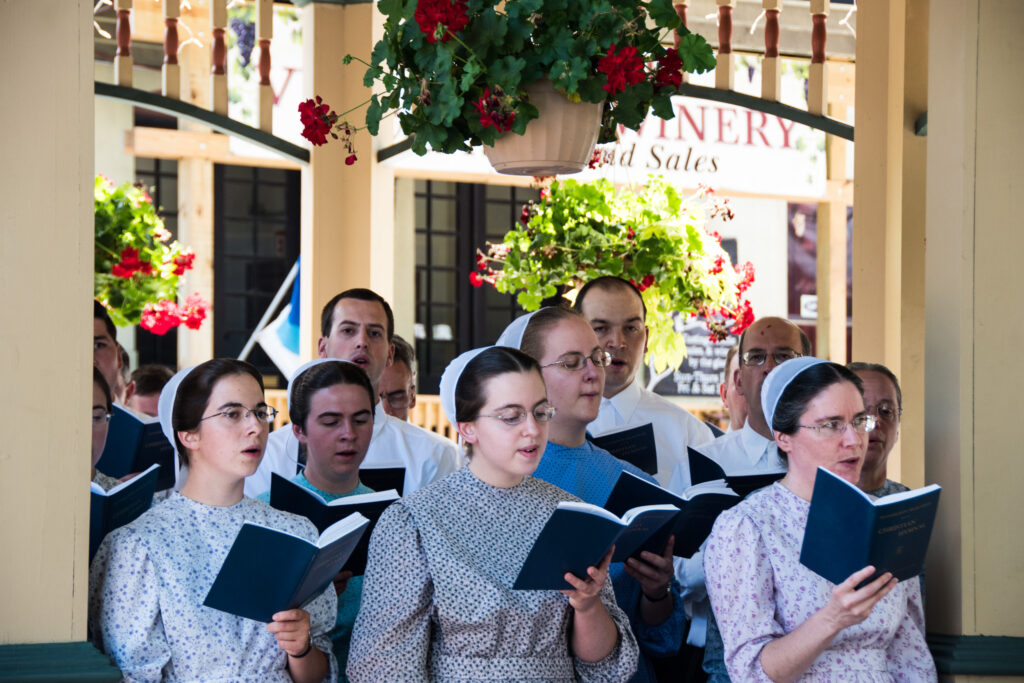
Contemporary Second Cultures at play: Mennonites singing hymns in Pennsylvania
Outside of the Abrahamic religions, Rieff identified India’s Sikhs as an innovative unit of Second Culture that had split off from Hinduism – a major First Culture – during the 16th century following a series of divine revelations made to the founding gurus of the Sikh religion.
The B’hai of Iran, an early 19th-century offshoot from Shia Islam, also figures as a Second Culture, as do adherents of the Yazidi religion, itself a possible offshoot of First Temple Judaism. The surviving Zoroastrians living in India also figure as a Second Culture under Rieff’s taxonomy. Finally, the Druze of the Levant, found mainly in Israel, Lebanon, and Syria, also meet Rieff’s criteria for a Second Culture group.
At the center of Rieff’s understanding of Second Cultures is the idea that they are built on a set of divine laws, or interdicts, often described as ‘thou shalt nots’ revealed by God and which operate as a set of binding moral obligations for the community of believers. The sacred laws of these faiths and the religious officials who promulgate and enforce the laws are supported by ‘sacred authority’ without which all Second Cultures collapse.
The turmoil in the West following the Enlightenment and resulting collapse of Western Christianity (and a part of Western Judaism, as well) was the major case-in-point argued by Rieff for what happens when sacred authority is undermined by forces emanating from within or without a culture, and those forces are not forcefully and effectively countered.
THIRD CULTURES: The Post-Sacred Primacy of Possibility (Anti-Culture)
And now we come to those new cultures that Rieff spent the latter part of his career categorizing, observing, diagnosing, and engaging in a lively polemic against.
Third Cultures are cultures not based in any sacred order but created wholly upon secular principles and the dictates of the human will. Third Cultures are unique in their rejection of all sacred orders, viewing them all as false, fictitious, or otherwise invalid.
For this reason, Third Cultures and third Culture-aligned political and social movements are engaged in a ceaseless war against all existing First and Second Cultures and seek to bring about a new era of ‘liberation’ that will commence when the older cultural types have been defeated and destroyed.
At the core of Third Culture lies what Rieff termed ‘the primacy of possibility’, which he somewhat mischievously referred to by the acronym POP. Mischievous for Rieff, because Rieff viewed almost the entirety of 20th-century Western pop culture, from Charlie Chaplin to Frank Sinatra to The Beatles and beyond, as expressions of the Third Culture sensibility.
For Rieff, beneath all the differences in styles and superficial aesthetics that separated Miles Davis from John Lennon from Leni Riefenstahl was a common underlying quest to liberate the self and break all bonds codified in sacred law. Whether they were German Nazis, British rock stars, or American jazz impresarios, in Rieff’s view, all these artists sought nothing less than a ‘triumph of the will’, not coincidentally the title of Riefenstahl’s famous 1936 documentary film of the 1934 Munich Nazi Party Conference.
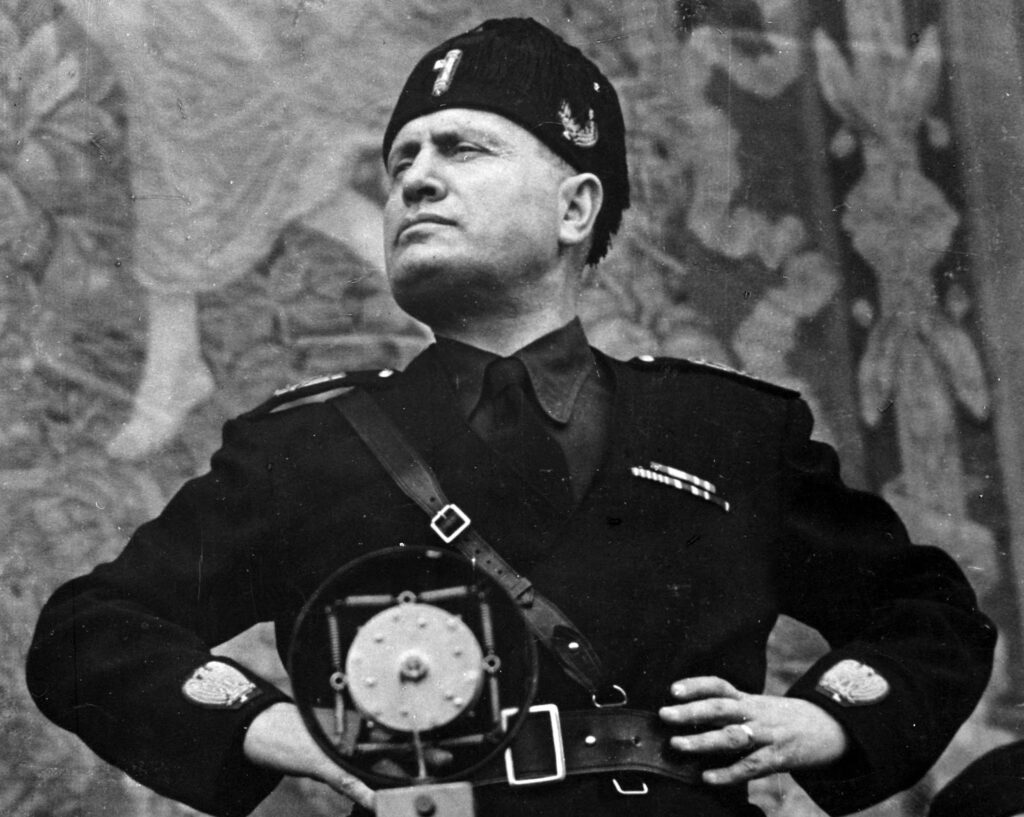
For most contemporary readers, Rieff’s thesis sounds implausible and even a little bit ridiculous. Miles Davis – an intellectual fellow traveler with…Hitler?
Rieff’s taxonomy is a bit counterintuitive when you first encounter it, but in an impressive series of books published between the mid-1970s and his death in 2006, Rieff argued tenaciously for the validity of his model, both on diagnostic and predictive grounds.
In books with titles such as The Crisis of the Officer Class, My Life Among the Deathworks, and The Feeling Intellect, Rieff argued with the mixture of erudition, calmness and severity that marked him both as a teacher and a man that what he was seeing all around him were clear patterns that demarcated the older cultures rooted in the sacred from a group of emergent cultures rooted in human will and the pursuit of choice, possibility and liberation from all structures that guide and restrain human behavior.
Cultural Warfare as the Universal Pattern in Human History
The clearest pattern that Rieff saw was warfare. Whether in shooting wars with tanks and bombs or culture wars waged in classrooms, churches, and in the public square, the three cultural types identified by Rieff’s taxonomy are engaged in a constant, active, and frequently vicious struggle against each other.
As Rieff saw it, humans are basically agonistic (i.e., conflict-driven) by nature. They are warlike creatures, constantly competing for power, prestige, and primacy. The struggle never ends – it only proceeds by other means.

By Any Means Necessary – Rieff viewed Mankind as an Essentially Warlike Species
CULTURE WARS AS PROLOGUE: A COMPRESSED TOUR
The story of the ancient and medieval worlds, in Rieff’s view, was marked by early and bloody struggles between and among First Cultures (Greece versus Persia, Rome vs. Gaul, Tang Dynasty China versus Japan, Persia versus Assyria). Early Second Cultures emerged late in antiquity to challenge the dominant First Culture paradigms. The Israelites and Zoroastrians emerged as the earliest Second Cultures with rival visions of sacred order to the prevailing schemas of the Assyrians, Babylonians, and Egyptians.
By the time of Christ, deadly culture wars had occurred between the Greeks and the Jews – see the history of the Maccabees from the Book of Chronicles – and between the Jews and the Romans, the latter of whom occupied most of Judea by 50 BC. Late antiquity saw Christianity splintering off from late Second Temple Judaism to become a separate faith. By the early Middle Ages, Islam emerged as a new Second Culture on the Arabian Peninsula and expanded outward.
By the Middle Ages, Second Cultures dominated Europe, the Levant, and Western Asia and were rapidly expanding into the New World. During this era and into early Modern times in the West, the chief lines of cultural warfare were between First Cultures retreating in the face of expanding Second Cultures, and among Second Cultures.
Warfare between Christian and Muslim powers was constant during the Crusades and Muslim invasions of Europe. In Europe, the Jews are kept a people apart and subject to intermittent, albeit quite serious, persecutions by Christians.

Above: Conflict among Second Cultures is as common as conflict between the Major Cultural Types
By the late 18th century, European Christendom was moving to become the world’s dominant culture. As it reached the apex of its power, the Enlightenment, a movement for secularism in Western Europe, triggered the French Revolution. The strains of new intellectual thought fanned by the Revolution, which included socialism, extreme secularism, and the germs of fascism, fatally weakened European Christianity.
By the early 20th century, the cultural and intellectual currents that would make up new Western Third Cultures, in utero, were in place and moving to seize political power.
THE REVOLUTION THAT BIRTHED TWO-THIRD CULTURES
The Russian Revolution and its enthronement of Marxism-Leninism as the new governing philosophy of the Russian Empire was, in Rieff’s view, primarily a cultural event. Rieff viewed the Bolshevism of the Soviet communists as the first fully-formed Third Culture to both aspire to and take political power in a major nation. Rieff regards the Soviet Empire both as a nightmare of Third Culture excess and as illustrative of Third Culture’s total rejection of and profound antipathy to sacred order in any form.
The Soviet vision was global in nature: the Soviets intended to replicate their revolution worldwide. As the weakened Second Culture empires and nation states of European Christendom opposed the Soviets, a second Third Culture arose with a claim to being Bolshevism’s chief rival and ‘protector of Europe’. This was the Nazi movement led by Adolf Hitler. The Nazis seized control of Germany in 1933 and quickly liquidated communists.
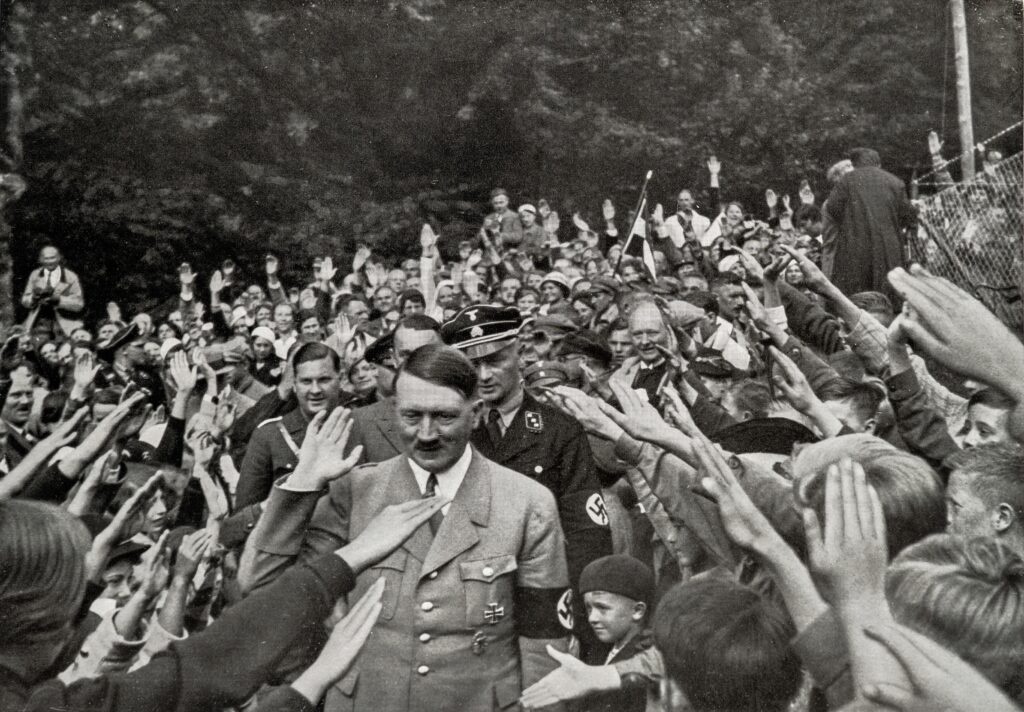
Rieff argued, however, that the Nazis saw their ‘real’ opponents as Europe’s Jews and Christians because they represented interdictory cultures opposed to the liberation from all traditional authority and morality that the Nazis espoused. They moved first to annihilate the Jews, a smaller and largely unarmed population. After unleashing a world war by invading France, North Africa, and Russia, the Nazis were defeated in 1945 by a combined military force of still-barely-Second Culture nations allied with the first Third Culture empire – the Soviet Union.
Due to their defeat, the long-term Nazi goal of annihilating Christianity wasn’t realized. But after the war, European Christianity largely annihilated itself due to the near-total, and publicly professed, unbelief of Europe’s post-war elites, Marxism’s popularity among European intellectuals, and the weakened institutional power of the Catholic and other European churches, which could no longer compel obedience.
THE BEGINNING OF POST-MODERNITY
By the mid-1960s, Third Culture movements were emerging in force—born of Marxism, deconstruction, anti-colonialism, sexual liberation, environmentalism, and the gay rights movement. But most significant for Rieff was the spread of the ‘therapeutic sensibility,’ rooted in Freud and other continental thinkers.
The sacred cultures of Christianity and Judaism had once rested on interdictions—thou shalt nots—and divine command. By contrast, the new therapeutic order emphasized personal freedom, subjective ethics, and emotional well-being. Right and wrong became private matters, or were replaced by a purely political morality rooted in Marxism and/or various philosophies of liberation. Healing replaced holiness.
In Rieff’s terms, the West was no longer forming or maintaining a culture in any true sense, but was rather becoming an anti-culture: a regime whose central purpose is to dismantle sacred authority, rather than transmitting it.
CULTURAL WARFARE IN THE POST-MODERN WEST
Philip Rieff began developing his cultural theory in the mid-1950s, at the time he was writing a biography of Sigmund Freud titled Freud: The Mind of the Moralist, while he was a young professor at the University of Chicago. In that book, Rieff argued that Freud’s creation of the new discipline of ‘psychoanalysis’ was far more significant than a turning point in medicine. Rieff argued that it was a watershed cultural moment.
After Freud, the disenchanted, post-religious populations of the West (and eventually, other parts of the world) could begin to more effectively reckon with the loss of meaning that was one result of their post-religious state. Loss of God and meaning inherent in the vocabulary of religion/sacred order brought nihilism in its wake.

Above: Analyst’s Couch: A Wax Recreation of Sigmund Freud in His Vienna Study at a Berlin Museum, 2003
Through the continuous creation of their own meaning via the process of psychotherapy, argues Rieff, Sigmund Freud gave Western populations the ability to cope psychologically with a disenchanted world by reading all meanings downward into the body in a direct inversion of the upward-directed readings contained within sacred order.
If the key to mental healing was the correct interpretation of dreams as a window into the unconscious mind, and if the unconscious was mainly populated by disguised symbols of sexual desire, bodily needs, and the lust for power, then truly the source of meaning had shifted downward into the churning vortex of individual, subjective and unbounded desire that lies at the heart of every human being.
This was a far cry from the role dreams played in First Cultures, whether they were visions sent by Athena or Odin or the spirits of departed ancestors meant to guide the dreamer on some future vision-quest or sacred errand. Similarly, Jacob’s Biblical Second Culture dream of a ladder reaching upwards to Heaven upon which countless angels were both ascending and descending has no place in Freud’s schema – unless as a disguised ‘wet dream’.
In Rieff’s view, the inversions inherent in the method of psychoanalysis turned Second Cultures on their heads and opened a door in the direction of a thousand forms of liberation.
ONE BATTLEFIELD: MANY PERSPECTIVES
The modern West has become a particularly well-contested battleground for a surprising variety of movements that extend all the way into each of Rieff’s cultural types.
In American universities and courtrooms, various sub-movements within Wokism, which Greymantle has described in these pages as a ‘movement of movements’, regularly duke it out with embattled Second Culture factions and their beleaguered officer class. Take a recent example: the Supreme Court case of U.S. v. Skrmetti.
In this recent SCOTUS case decided on June 18, the Supreme Court decided in favor of a Tennessee law banning hormone treatments such as puberty blockers for allegedly ‘transgender youth’. The case was brought by the American Civil Liberties Union against the State of Tennessee. The U.S. Justice Department under the prior administration joined the case on the side of the ACLU.

School for Scandal: Rieff believed Western universities had become incubators of Third Culture ideologies
This case featured a transgender lead attorney, Chase Strangio, who has described himself (themselves) as ‘a constitutional lawyer who doesn’t believe in the U.S. Constitution, ’ bringing the case before a conservative Supreme Court stocked with tradition-minded justices who practice Roman Catholicism.
What shared moral language existed between the parties? Essentially none, other than the dry proceduralism formulated by a fading liberal consensus. Rieff’s cultural framework helps us see that these were not merely political opponents but representatives of wholly different metaphysical establishments. And this lack of shared first principles means the culture war is not just loud—it is insoluble.
Legal conflicts between representatives of Second Cultures and the aggressively emergent Third Culture camps are common in the United States and elsewhere. In Canada and Western Europe, the Third Culture camp usually wins such fights. In the U.S. and Central and Eastern Europe, the remaining Second Culture warriors sometimes score a victory, as in the case of U.S. v. Skrmetti. Otherwise, it’s a mix.
This picture of Second and Third Culture locked in legal and social combat is further complicated by various attempts at First Culture revival.
MALFORMED ATTEMPTS TO RETURN TO THE FIRST CULTURE PAST
Beginning in the 1950s, new spiritual movements such as Wicca and other forms of neo-paganism arose that attempted, and still attempt, to recreate pre-modern folk religions defeated by Christianity’s rise. These efforts persist today among modern Druids, shamans, and race-based spiritual groups across the Western world. Some such groups are feminine-coded and center their beliefs on Nature and balance. Others are male-coded and embrace conflict, blood, and soil.
Neo-pagan religious movements occupy an equivocal place in the culture war: they sometimes support the left, and sometimes the right, at least in purely political terms. Donald Trump has neo-pagan admirers, as do Victor Orban and Vladimir Putin. Some neo-pagans are obsessed with environmental carnage and support the political left. Others are obsessed with racial essentialism and immigration and support the political right.

Above: Dance of the Goddess – Wiccans Celebrating a Recreated Pagan Ritual in the UK
Rieff viewed them all as facades—Third Culture sensibilities disguised in First Culture garb. Himmler’s dabbling in Germanic mysticism, Black nationalist ancestral cults, and European far-right “blood religion” groups all struck Rieff as spiritually hollow. In his view, they are not revivals but simulations—moral theater aimed at justifying personal power.
In his 2006 book, My Life Among the Deathworks, Rieff suggested that Third Culture movements borrow First Culture imagery, mysticism, and aesthetics to enhance the moral fervor of their followers without possessing any real belief in First Culture mythology or deities. From Rieff’s perspective, it’s all a lot of ‘show business’ in pursuit of a single object: power, without real reverence for ANY kind of divine order.
GEOPOLITICAL RESONANCE OF THE WESTERN CULTURE WARS
Rieff’s theory didn’t stop at domestic culture wars. He saw the West’s inner fragmentation mirrored in global affairs—especially in the Israel-Palestine conflict — which we have discussed at length in these pages.
The Israeli-Palestine struggle is essentially a live-action Second Culture conflict playing out before a global Third Culture audience that sympathizes heavily with the Palestinian side. This enduring struggle is a clash of Second Cultures: Judaism versus Islam. But Western audiences, increasingly formed by Third Culture assumptions, interpret the conflict through the lens of colonialism, intersectionality, and oppression.
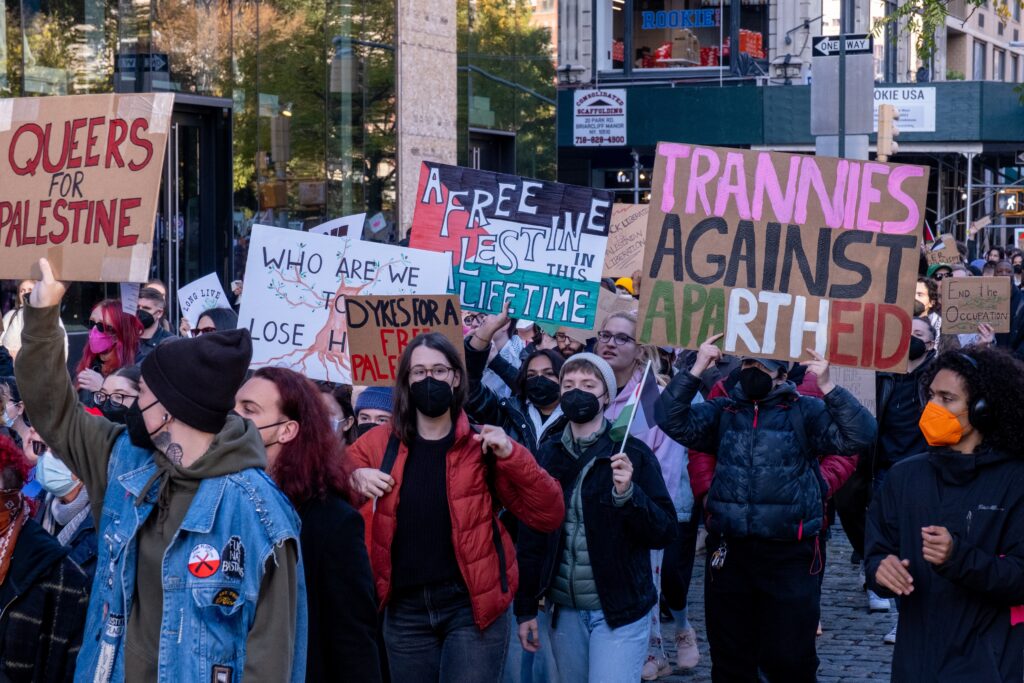
Third Culture activists project their values—diversity, queerness, anti-authoritarianism—onto sacred conflicts they barely comprehend. Their therapeutic worldview renders them unable to grasp the deep religious convictions that drive both sides in the Middle East.
It’s even more complicated than that, because in this struggle, the embattled remnants of Christianity in the West are allied with the Jewish state against its various Islamic antagonists, intensifying the tension within Western societies between both secular and Christian natives and Muslim newcomers.
Thus, Rieff helps explain not just internal division but also why Western foreign policy and discourse so often misfire.
WHY PHILIP RIEFF MATTERS NOW
Rieff’s relevance today is rooted in the clarity of his cultural map. His three-culture model explains our social fragmentation with unnerving precision. He foresaw the collapse of sacred order, the rise of a therapeutic regime, and the emergence of anti-culture—a system that defines itself by negating inherited sacred orders.
Unlike most social critics, Rieff did not call for activism. He offered no roadmap for resistance, no program for cultural renewal. His was not a prescriptive mind. But he did provide a warning: anti-culture thrives where sacred authority has collapsed.
For those resisting this cultural tide, Rieff provides a rare thing: not hope, exactly, but lucidity. To see clearly, and to live as if one remembers what sacred order was—even when it no longer binds society—could be the beginning of cultural sanity.
We may not ever be able to return to First or Second Cultures. But we can name what we’ve become—and that may be the first step toward becoming something else. A Fourth Culture may not yet be on the horizon, but it is out somewhere beyond the horizon’s edge, waiting to be discovered and formulated.
Until next week, we remain —
Greymantle
Also Read: They Thought They Owned the Future: Wokism in Eclipse







One Response