A Weakened Iranian Regime Struggles to Hold Out
Iran’s ability to wage another Middle East war has been severely compromised – its air defenses lie in ruins, its senior-most military commanders are dead, and its vast arsenal of missiles has been rendered impotent by a lack of air defenses and U.S. and Israeli satellite surveillance.
That is why, paradoxically, the regime’s survival may depend less on the Shia heartlands of Iraq, Lebanon, and Syria than on self-interested help from fellow pariah regime Venezuela. Hence the title of today’s post: “Iran’s Venezuelan Lifeline”.
Think about the difference one year can make in the life of a regime: Iran entered the summer of 2024 with the confidence of a power convinced that time was on its side. Then came a year in which Iran’s strategic proxies – Hamas, Hezbollah, and the Syrian regime – were bled white through a series of brilliant Israeli military and intelligence actions, punctuated by twelve days of direct aerial war against Iran in June 2025.
Twelve months of punishing conflict left Tehran’s proxies mauled, its strategic aura in tatters, and its enemies gloating. Hezbollah, long the pride of the “Axis of Resistance,” was hammered into abject submission by the Israelis, its command structure gutted and its arsenals reduced to smoldering craters. The Syrian regime of Bashar al-Assad is no more.
Across the region, Iran’s carefully nurtured “forward defense” collapsed under the weight of Israeli precision strikes and American intelligence cooperation. By late June 2025, Israel’s strategic dominance and Iran’s own poor military performance and tactical errors raised reasonable questions of whether the Islamic Regime could survive until September.
Greymantle was one of the voices who predicted that the Iranian regime was likely to collapse by the autumn. October is now upon us, and the Islamic Republic is apparently not quite finished, having surprisingly held out this long. Nevertheless, the Supreme Leader is hanging onto power by his fingernails. In his own view and those of his senior leaders, Khamenei has only one strong card left to play – Iran’s deep intelligence and military connections with Venezuela.
Iran’s Crisis Translates into Venezuelan Indispensability
Incredibly, the same Venezuela that Iran once kept afloat with tanker-loads of fuel and refinery engineers has become Iran’s indispensable partner and critical lifeline. Not just a friend, not just a trade partner, but the geopolitical equivalent of a bomb shelter. Caracas is the crisis firewall through which Iran’s Revolutionary Guard Corps (IRGC) can and will launder money, rearm, and relocate their most valuable intelligence assets to keep them out of harm’s way.
If Tehran is to claw its way back from defeat, or even survive into 2026 and beyond, its comeback will not arise from the back alleys of Beirut or the bunkers of Damascus, but via the cocaine smuggling corridors, gold vaults, and drone workshops of Venezuela.
Nicolas Maduro, Venezuela’s dictatorial leader, is both willing and eager to offer his Iranian friends a variety of lifelines. This is partly out of gratitude for the aid Iran provided to his regime in the past, including petroleum engineers who repaired Venezuela’s state oil sector following storms that sharply reduced oil production in the mid-2010s, and Iran’s construction of the huge El Palito oil refinery in Venezuela in 2017-18.
But the bigger reason is that Iran’s reliance on Venezuela will translate into increased intelligence and technology-sharing between Tehran and Caracas that is intended to keep both pariah regimes afloat and able to resist their mutual enemies.
Key Takeaways:
- Venezuela is now Iran’s financial back-office: The Maduro Regime’s drug trade connections and gold-for-oil swaps are keeping Hezbollah and Iran’s Revolutionary Guard Corps liquid – barely – while traditional banking channels remain shut.
- Caracas doubles as an arms depot: Drone manufacturing, weapons assembly, and proxy retraining now occur in the Western Hemisphere, far from Israeli strike aircraft.
- It is a safehouse for intelligence and fugitives: Senior IRGC and Hezbollah cadres can vanish, and have been vanishing, deep into Venezuela’s sovereign shadows, out of reach of U.S. and Israeli counterintelligence.
- The “aid” relationship has inverted: Iran once subsidized Venezuela for strategic leverage. Today, Caracas provides Iran with something rarer—an existential sanctuary.
Lifeline 1: Financial & Logistical Replenishment (Drugs & Gold)
The first and most immediate need of any regime after a military beating is cash. Rockets, drones, and militias don’t just fund themselves, and Iran’s balance sheet is hemorrhaging after June’s war. What Caracas offers is not sympathy but liquidity—the one commodity Iran cannot generate at home while its oil exports remain under relentless Western scrutiny. Indeed, hostility to Tehran and Caracas is perhaps the central lynchpin of Trump foreign policy.
A. The Narco-Terror Nexus
Cocaine has become Hezbollah’s second language and the IRGC’s third language. Both group’s long-established ties to Latin American drug cartels now provide Iran with a ready-made mechanism for cash replenishment. In the post-June War environment, when sanctions have tightened and wealthy Gulf donors are less eager to bankroll a losing team (i.e. Iran), Venezuela’s secured drug corridors are worth their weight in oil.
Shipments routed through Venezuelan ports and the porous Colombian border generate revenues at a speed and scale that even Iran’s smuggling networks cannot replicate in the Middle East. For Tehran’s clerical rulers, cocaine profits are no longer an auxiliary stream—they are the fastest infusion of hard cash to pay mercenaries, rebuild arsenals, and bribe allies back into line.
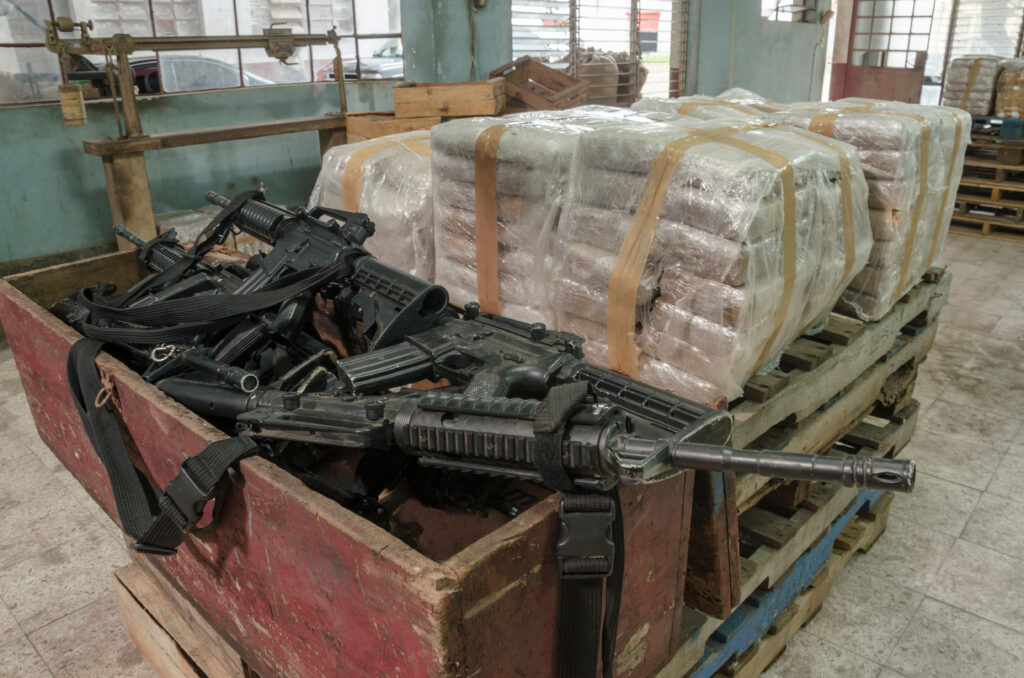
It will be very interesting to see if Iran can take over – or perhaps has already taken over – the global trade in the illegal drug Captagon, which was the Syrian regime’s primary source of revenue prior to its overthrow in December 2024.
If Iran does become the new global supplier of Captagon, it will likely do so with the logistical and chemical expertise provided by the South American drug cartels, likely using out of work Syrian chemists. The extent to which Caracas demands a piece of the action for facilitating the Iranian takeover of the Captagon trade will speak volumes about Venezuela’s power within the relationship.
B. Iran’s Gold Escape Hatch
Then there is the gold. Venezuela’s reserves have been quietly siphoned off for years, swapped for Iranian oil and technical support. What was once a sanctions-avoidance trick has become something more: a crisis escape hatch. Gold can be flown anywhere, stored anonymously, and liquidated without a SWIFT code.
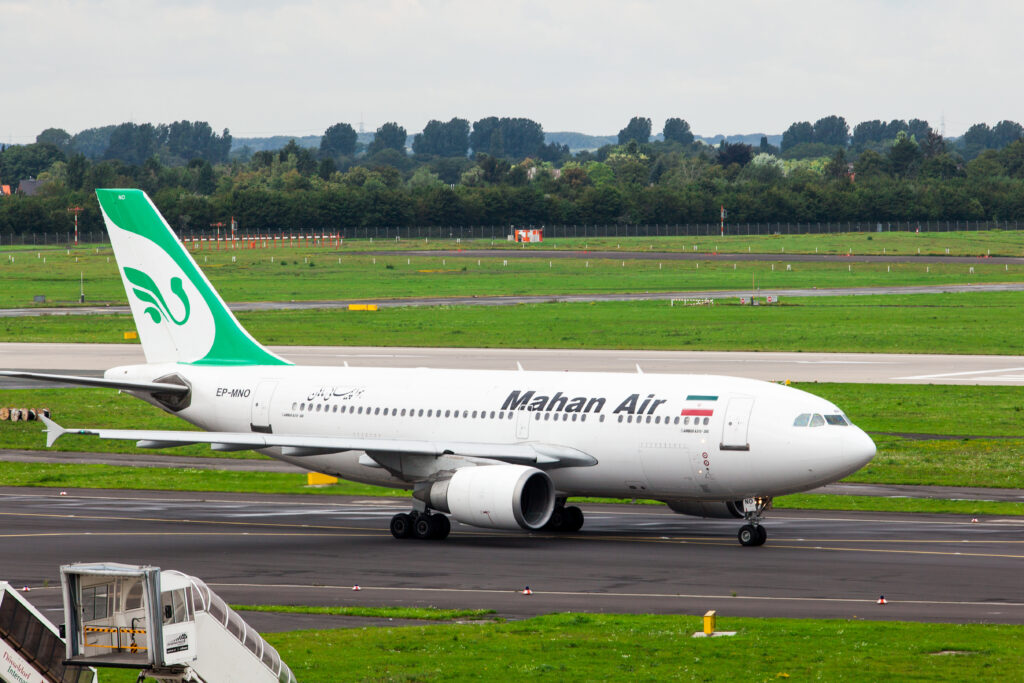
The strategic importance of Mahan Airways to both Tehran and Caracas is evident here. The privately-owned Iranian airline is the only major air carrier to offer direct flights between Tehran and Caracas, which commenced in late 2018. Mahan Airways employs the largest-bodied Airbus jets – the only ones capable of making the nonstop flight. U.S. and other Western intelligence agencies have consistently concluded that these flights are a major air conduit of gold, drugs, drone components, intelligence and personnel between the two pariah states.
For Iran, Venezuelan gold is the portable lifeblood that keeps its global networks solvent. Mercenary contracts in Africa, missile components from North Korea, or a discreet safehouse in Turkey—all of these require hard, movable assets. Gold is the oldest and most historically proven asset of this kind. And Caracas supplies it to Iran in exchange for Iranian oil and technical know-how — not as charity, but as the currency of mutually assured survival.
Lifeline 2: Rearmament and Rebuilding Depot (Weapons)
A conventional war that destroys weapons stockpiles must be followed by an espionage war that rebuilds them. Iran cannot simply ‘start over’ in Lebanon or Syria—too many eyes are watching. The answer lies thousands of miles away in the Western Hemisphere.
A. Venezuela – Drone Hub of the Tropics
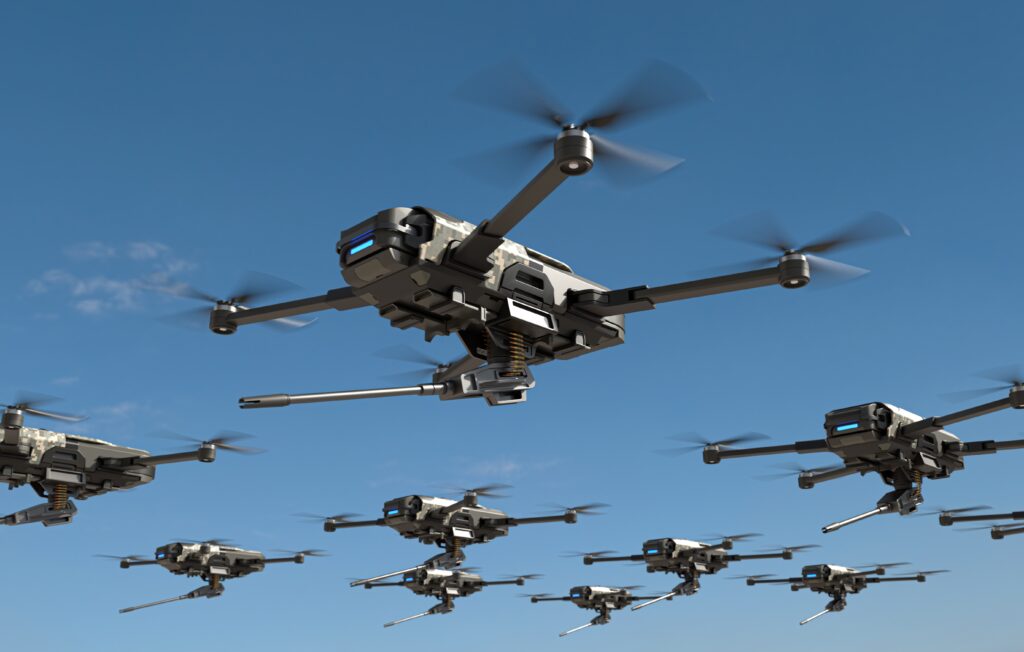
Venezuela has quietly established drone assembly sites since the mid-2010s, producing modified Mohajer-6 systems and their descendants under the auspices of its state-run military industries company, CAVIM. In 2025, these facilities have taken on new importance. They are immune to Israeli strikes, shielded by geography and political distance.
For Iran, Venezuela is now the Western Hemisphere’s production base for drones, loitering munitions, and other asymmetric weapons sought by drug cartels and anti-Western regimes. Such hardware includes precision-guided missiles, ANSU-200 advanced drones based on Iran’s Shahed-171 series and Peykaap speedboats armed with anti-ship missiles, which is a setup identical to the armaments used by Iran’s Houthi allies in the Red Sea.
These weapons can be supplied back to Middle Eastern fronts, stockpiled for Maduro’s defense, or marketed to sympathetic regimes such as those of Cuba. Myanmar or North Korea. Arms embargoes are meaningless when your production hub sits in a collapsing petro-state where arms inspectors fear for their safety or can be quietly bribed to turn a blind eye.
B. The IRGC’s Training Ground in Exile
Rebuilding Hezbollah’s command structure or retraining IRGC operatives is tricky when your strongholds are under drone surveillance. Enter Venezuela, where both the IRGC and Hezbollah can instruct, regroup, and indoctrinate without looking over their shoulders. In return for providing them with a safe haven in which to retrain and develop new tactics, Iranian military advisors have reportedly been embedded within Venezuela army and police units to teach them the Iranian regime’s techniques of cracking down on public dissent.
Caracas thus functions as both barracks and classroom. Doctrine is preserved, command integrity maintained, and loyalty reinforced. To borrow a Cold War analogy, Venezuela has become Iran’s Cuba—a hemisphere away, but close enough to matter. Furthermore, Venezuela provides Iran’s intelligence agencies with what has been termed ‘positional advantage’, defined as a place wherein espionage and influence operations against Israel and the U.S. can be planned and executed within striking distance of U.S. borders, but far enough from Israel to provide some protection from the Mossad.
Lifeline 3: Sanctuary and Clandestine Relocation (Intel)
Military defeat creates not only material losses but human liabilities. Commanders exposed, intelligence networks compromised, families suddenly at risk. For the IRGC, finding a safe bolt-hole is just as important as rebuilding arsenals.
A. Safehouses for the Compromised
Venezuela offers sanctuary. Senior IRGC-QF officers, Hezbollah coordinators, even family members of regime insiders can disappear into the sovereign shield of Caracas. Unlike Syria or Lebanon, where U.S. and Israeli intelligence can track movements in real time, Venezuela is a foggy swamp of bureaucracy and corruption—a perfect place for those needing to vanish.
For Iran, this is not just convenience but survival. The preservation of cadre and know-how ensures the regime can rebuild without having to reinvent. Furthermore, Caracas is an escape hatch and even functions as a kind of vacation get-away for the families of high-ranking Iranian officials when things get hot back in the Middle East.
Not long ago, the sons of several IGRC commanders posted videos of themselves frolicking with Latin good time girls in a Caracas nightclub – hardly virtuous behavior for the scions of a conservative Islamic religious movement. The videos were widely shared by Iranians both domestically and among the Persian diaspora.
While embarrassing to the regime, the social media clips reinforced Venezuela’s relevance to Iran as an elite escape hatch now the their former safe houses and vacation homes along the Syrian coastline have been lost forever, post-Bashar.
B. Controlling, or At Least Influencing, the Narrative
Sanctuary is also about perception. Venezuela’s media platforms—TeleSUR, aligned with Iran’s own HispanTV—offer the regime a Spanish-language megaphone to broadcast its propaganda throughout Latin America. Via these media organs, the Iranian narrative of its 12-day war against Israel is not one of humiliation but one of defiance, framed as another “imperialist assault” that failed to break the ‘Axis of Resistance’.
Narratives matter because they keep allies engaged and enemies off balance. Iran’s battered Axis can be recast as heroic survivors, not defeated pawns. And Caracas is crucial in exporting that counter-narrative to Latin America, where U.S. influence has already thinned.
Conclusion: The Price of Iranian Survival
Iran’s relationship with Venezuela was once portrayed as eccentric—a marriage of two pariah states, held together by cheap oil and rhetorical anti-Americanism. But the summer of 2025 has changed the calculus. The lifeline now flows not predominantly from Tehran to Caracas but from Caracas to Tehran.
Iran’s payments—fuel shipments, engineers, refinery parts—are no longer investments in future leverage. They are premiums paid for existential insurance. Venezuela is not just a friend, not just an ally, but the rear base that could make Iran’s eventual recovery possible.
Without Caracas, Hezbollah and Iran’s Revolutionary Guards would be broke, exposed, and scattered. With Caracas on their side, they have cocaine to sell, gold to move, drones to build, and fugitives to shelter. It is no longer an equal partnership; it is a sanctuary for survival, and Caracas is moving into the role of senior partner.
Venezuela’s state airline, Conviasa, has been linked to Iran’s sprawling and illicit arms network and even operates a joint venture with Mahan Airways. A Venezuelan cargo plan, the Emtrasur, leased to Mahan Airways, was recently detained in Argentina and sported an Iranian crew that included on prominent ex-IRGC commander, confirming the closeness of the relationship and Conviasa’s role as an illegal arms conduit from Latin America to the Middle East.
Venezuela’s spy agencies reportedly entered into a deep intelligence-sharing arrangement with the Iranians in 2022, when Iran and Venezuela signed their much ballyhooed 20-year military and industrial cooperation agreement. Venezuela’s spymasters now provide logistical support, arms, and travel documents to Iranian agents moving through Latin America. A listening post to intercept American messages is reportedly under construction.
The lesson is stark: Iran’s defeat in the Middle East might not end in the Islamic Regime’s overthrow and disappearance. But it does mean that a crucial chapter of the next phase of its shadow war with Israel and America will be staged in the jungles and ports of Latin America. When and if – and it is a BIG if – the Iranian and Hezbollah militias and their arsenals of missiles are rebuilt and restocked, they will carry the fingerprints of Caracas.
Until next time, we remain —
Greymantle
*************************************
Interested in previous Greymantle articles on the situation in Iran and the Middle East? See the below: