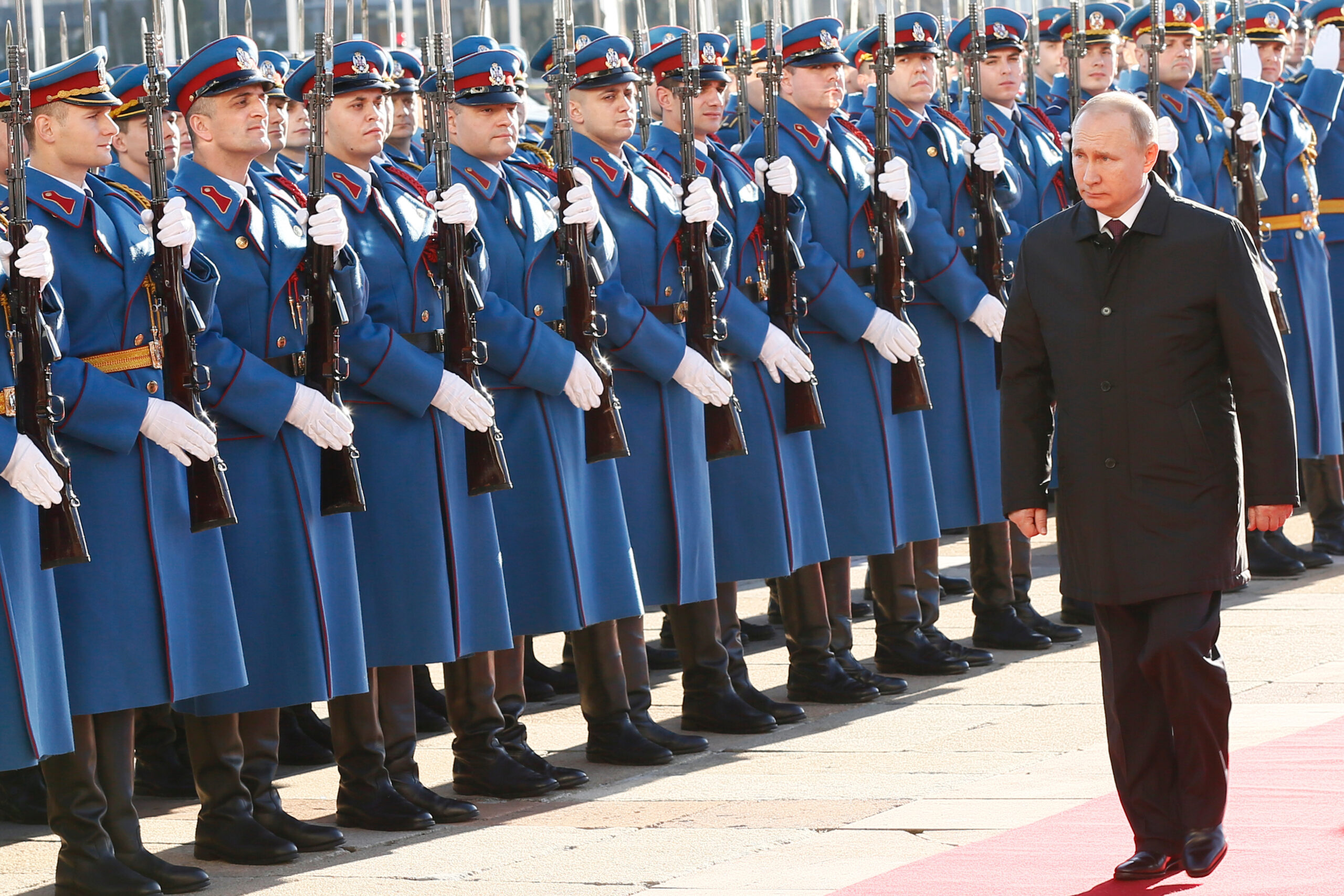
For 25 years, Russian President Vladimir Putin’s rule rested on a simple premise: that whatever else he was—autocratic, ruthless, vain—he was effective. He got things done. He restored order after the chaos of the 1990s. He put Russia back on the map. But that reputation has been slowly corroding for several years, and in September it finally began to crumble. Hence the title of this week’s post, “Dead Man Walking: Vladimir Putin’s September of Setbacks”.
Key Takeaways
- Russia’s military campaign in Ukraine stalled in September, with territorial gains collapsing by more than 50% as Ukrainian strikes hit deep inside Crimea.
- Russia’s economic strain intensified amid nationwide fuel shortages, inflation, and cuts to veterans’ benefits, even as state propaganda funding surged.
- NATO unity held firm: allied forces shot down Russian drones over Poland and intercepted Russian MiG fighters violating Estonian airspace.
- The Kremlin suffered a diplomatic humiliation when Donald Trump branded Russia as a “paper tiger” and said Ukraine had the ability to reclaim all of its lost territory.
- Inside Russia, repression deepened and competent technocrats like Dmitry Kozak departed, leaving Putin surrounded by loyalists and security operatives.
- Music icon Alla Pugacheva, the Russian equivalent of Dolly Parton, spoke out against the war, signaling cracks in the patriotic consensus sustaining Putin’s regime.
Back in March 2025, when we published “Putin Under Pressure”, Greymantle thought Putin had a good chance of staying in power until 2029. Today, we are revising our forecast to give him two years more years max – until mid-2027.
The Putin Myth Has Cracked
September 2025 will be remembered as the month in which the ‘Putin Myth’ cracked—the month when Vladimir Putin’s aura of inevitability, that carefully cultivated image of control and competence famous both inside Russia and on the world stage, finally began to dissolve – both in the minds of Russia’s elite and in the minds of ordinary Russians.
It didn’t happen via a coup, a public protest, or a single dramatic loss on the battlefield. It happened through a rapid accumulation of disasters: a slide into military stagnation, accelerating economic decay, diplomatic embarrassment, and a string of small but telling defeats that revealed the rot beneath the surface of Russian power. Each of these setbacks by itself would have been survivable, even manageable. Together, they create a vortex into which the Kremlin is being pulled.
What’s left is not the image of the omniscient strategist or the “strong hand” of Russian destiny, but the portrait of a man trapped in the logic of the system he himself has created, leading a nation that’s running out of fuel, friends and – surprisingly – fear.
The Battlefield That Won’t Budge
On the front lines in Ukraine, the latest battlefield numbers tell a story of exhaustion disguised as endurance. Russian forces gained 91 square miles of territory in the second week of September. In the next week, 28 square miles. By the last week of September, Russian forces gained just 13 square miles of Ukrainian territory. That’s a 54 percent collapse in weekly gains—and the second week in a row that the pace of advance fell by half.
The summer campaign that was supposed to deliver a “decisive breakthrough” captured no major Ukrainian cities. Kupiansk and Kharkiv, both under massive pressure from drone attacks and artillery bombardments, pugnaciously held out. The much-touted-by-the-Russian-media ‘Sumy Offensive’ never materialized.
Instead, Russian troops spent most of the month crawling forward on their bellies through cratered villages, sometimes advancing no more than fifty meters a day—half the rate of Allied progress during World War I’s terrible Battle of the Somme in the summer of 1916.
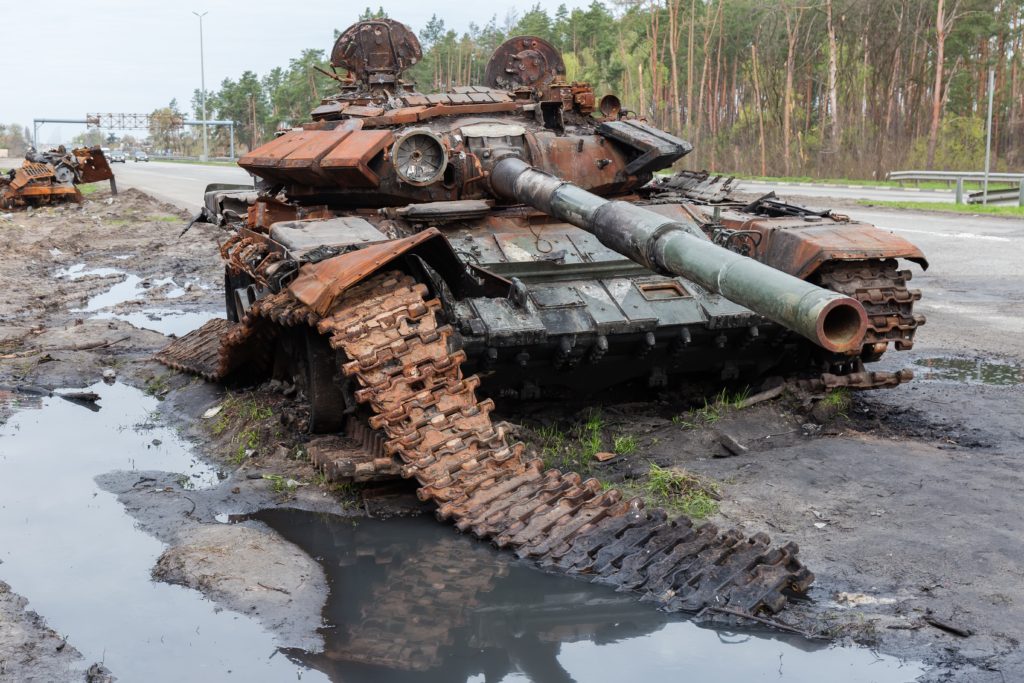
Nearly a million Russian soldiers have been killed or wounded since the full-scale invasion of Ukraine began in February 2022, and equipment losses now exceed the Russian Federation’s entire pre-war inventory of active combat tanks.
Britain’s Royal United Services Institute (RUSI), its oldest and most respected military think-tank, estimates that Russia pulled between 25% and 40% of its idled Soviet era tanks out of mothballs and redeployed them to Ukraine by April 2025. Russian tank losses since the spring have likely increased that number to between 35% and 50%. At this run rate, Russia could use up its entire Soviet-era tank surplus by the end of 2027.
To conserve men and materiel, Russian commanders have resorted to sending out small “storm groups” of four or five soldiers at a time—an innovation that mostly results in those small units being surrounded and captured – or destroyed.
This is not strategy. It’s desperation. The Russia-Ukraine war has become a grim treadmill, sustained not by momentum but by habit, with Putin unwilling or unable to step off.
The Kremlin’s continued tough posture towards Ukraine – its unwillingness to reconsider its original, maximalist war aims – is just want it appears to be. It’s a feint. Drone attacks will not bring Ukraine to its knees. Only the deployment of massive amounts of men, tanks and artillery can do that, and Russia is running out of all three.
Russia’s Economic Pain – The War Comes Home
If September revealed the limits of Russian firepower, it also exposed the fragility of the Russian economy. On September 29, Ukrainian drones struck the Feodosia oil depot in occupied Crimea, setting off massive explosions visible for miles. Russian officials denied the attack, claiming the fire was caused by a “welding accident”—a line so threadbare it barely qualifies as propaganda anymore.
The Feodosia strike was just one part of a broader Ukrainian campaign that has battered Russia’s energy infrastructure. By month’s end, fuel shortages were reported in at least ten Russian regions, including Moscow and St. Petersburg. Long lines formed at gas stations. Fuel rationing was introduced for the first time since the Soviet era.
The Kremlin blamed “seasonal demand.” Ordinary Russians knew better.
Meanwhile, inflation is rising, the ruble is sagging, and the government quietly raised the value-added tax by 2% in September to finance “defense and security.” In truth, Russia’s economic performance has been weakening since the start of 2025. After a sharp expansion in 2023 and 2024 that boosted Russian GDP above 4% in both years, GDP growth is unlikely to exceed 1.2% in 2025. The reason? Interest rate hikes made by the Russian Central Bank (RCB) as it struggles to tame Russia’s high (8%+) domestic inflation rate.
A clear-eyed report on the Russian economy published by rating agency Fitch on September 25 titled “Russia’s Economy Slows after Overheating Cycle” argues persuasively that Russia’s near-term growth will be constrained by severe labor shortages stemming from the military mobilization of 2 million men in 2022 and 2023, the emigration of another 500,000 to 1 million to neighboring nations to escape conscription, and the loss of 250,000 soldiers killed in battle.
Supply and demand swung wildly out of balance in 2022 as Russian domestic manufacturing surged in response to the cut-off of Western imports. Domestic demand was swiftly rerouted to Russian goods. But labor shortages caused by troop conscription resulted in explosive wage growth. The result: runaway inflation. Even as the RCB works to suppress inflation, short-term interest rates of 17% range are choking off credit and leading to rising loan defaults.
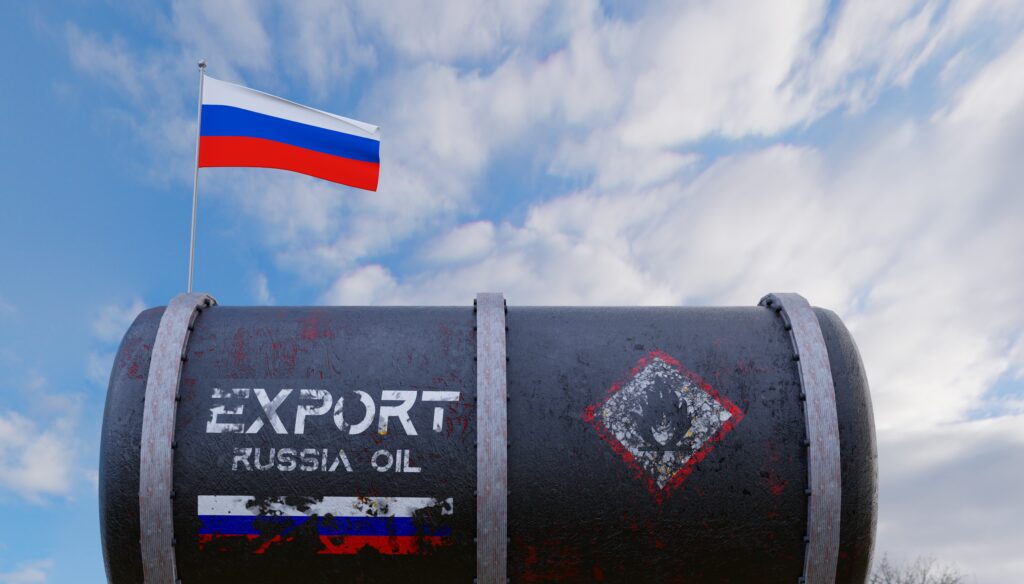
A draft of the 2026 Russian State Budget leaked to the media in late September revealed the Putin regime’s real priorities: a 54 percent increase in state propaganda spending, coupled with a 60 percent cut to veterans’ benefits. The underlying message could not be clearer—Moscow values its own myth-making more than the families of the men who die for it.
Russia’s so-called war economy is running on fumes. It produces more weapons than it did before the war, yes, but at the expense of everything else: consumer goods, services, and the small luxuries that kept ordinary Russians from noticing how little freedom they had. In fact, the short burst of Russian domestic manufacturing in 2022-23 has petered out as the military-industrial complex outcompetes peacetime industries for workers, raw materials, and credit.
What began as a project to restore Russian greatness is turning into a slow economic strangulation—Putin’s war consuming the prosperity he could once claim – rightly, in fact – to have delivered to the Russian people.
Geopolitical Humiliations – The World Pushes Back
If September was a bad month for Russia’s economy, it was worse for its image abroad.
The Kremlin spent the month testing NATO’s cohesion—sending military drones into Poland, MiG-31 fighter jets into Estonian airspace, and surveillance drones over Danish airports. The goal was to prove that the Western alliance, supposedly “fractured” by fatigue and political division, would hesitate to respond.
It didn’t.
Poland invoked Article 4 after a swarm of up to 23 Russian drones entered its airspace on September 9. NATO scrambled jets from multiple countries, shot down several drones, and launched Operation Eastern Sentry—a new joint mission to reinforce NATO’s eastern flank.
Ten days later, three Russian MiG-31s crossed into Estonian airspace and were promptly chased off by Italian F-35s. By the end of the month, coordinated drone incursions over Denmark prompted temporary airport closures and a formal statement from Copenhagen calling the operation “a hybrid attack.”
In every case, NATO responded quickly, collectively, and confidently. So much for the Kremlin’s oft-repeated narrative that Western unity was collapsing. Putin may tell his inner circle that Trump’s election has doomed NATO, but the evidence says otherwise. September proved that, if anything, the alliance has rediscovered its muscle memory—and that Russia’s power to intimidate Europe is fading fast.
The “Paper Tiger” Moment
The most devastating blow of the month, however, came not from NATO but from a single social media post. On September 23, Donald Trump—after a meeting with Ukraine’s President Volodymyr Zelenskyy at the UN—declared on Truth Social that Russia had become a “paper tiger” and that Ukraine could still “win back all its original territory.”
For the Kremlin, this was the geopolitical equivalent of a betrayal from a friend. Putin has always counted on Trump as an erratic but useful voice of sympathy in the West—a man who views Ukraine as a nuisance and admires “strong leaders” like Putin. To have Trump publicly mock Russia’s military incompetence was a humiliation that no amount of spin could erase.
Kremlin spokesman Dmitry Peskov tried to respond with humor, insisting that “Russia is not a tiger, it’s a bear…and there are no paper bears.” But the very act of rebuttal betrayed the wound. Even the loyal Russian press seemed unsure how to process it, awkwardly oscillating between outrage and denial.
Trump’s post mattered not because it changed U.S. policy—it didn’t—but because it shattered the illusion that Putin still commanded the respect of his most powerful supposed admirer abroad. For a ruler who has always equated the image of power with power itself, ridicule is the most corrosive weapon of all.
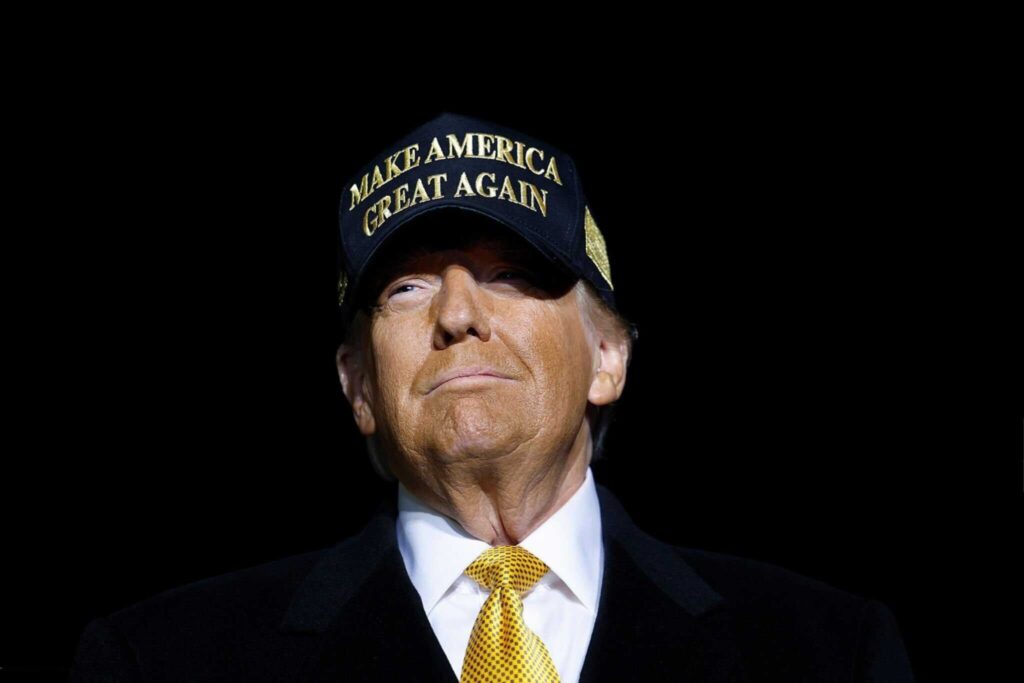
Friend or Nemesis? Putin’s Bet on Trump Appears to be Backfiring
Next to the public humiliation, Putin may have experienced a more private humiliation – unspoken, but still palpable – among his inner circle, which consists largely of other FSB veterans like himself. These are men steeped in the culture and history of the Soviet KGB.
Even as his war against Ukraine experienced undeniable setbacks in its first two years, Putin could always hint to his closest colleagues that he still had a major “Trump card”, if you’ll pardon the pun, up his sleeve. A return to power by Trump would soon ‘alter the geopolitical situation’ in ways beneficial to Moscow, he might have said. Trump was ‘really on our side’ (nudge nudge, wink wink) and would perform according to Moscow’s script.
Trump’s September 23 Truth Social post must have shattered this presumption among the highest members of the Kremlin elite. They must have asked themselves, ‘Does the Boss really know a big secret that the rest of us do not, but have always believed we can guess?’ ‘Or was there never such a secret to begin with?’ ‘Or has Trump gone rogue, as the Americans would say?’ These are questions that Putin does not want his confidants to ask themselves…or each other.
A System Without Feedback
Inside Russia, the machinery of repression has gone into overdrive. The UN’s September 22 report documented widespread torture, mass detentions, and more than 1.2 million websites blocked. The goal is no longer persuasion—it’s suppression.
The resignation of Dmitry Kozak, one of the last competent and relatively honest technocrats in the Kremlin, captures the deeper malaise. Kozak, a Ukrainian-born lawyer and longtime Putin ally, built his reputation as an effective administrator who at least pretended to believe in a legal order, however constrained. His departure marks the end of that pretense.
Putin’s government is now staffed almost entirely by men who come from his own world—the intelligence services. Civilian administrators, economists, lawyers and judges have been replaced by FSB operatives who know how to intimidate but not how to govern. The result is an echo chamber: a government that tells itself comforting lies because no one is left who dares to tell the truth.
The irony is that Putin once understood this danger. In his early years in power, Putin was careful to surround himself with competent technocrats and a handful of honest interlocutors who could counterbalance, to some degree, his repressive instincts. Now he’s replaced them with flatterers and security men. He hasn’t merely centralized power—he’s isolated it, and in doing so, isolated himself.
When the Music Stops
Even Russia’s cultural heart is beginning to show cracks. On September 13, Alla Pugacheva, the country’s most beloved singer—a kind of Russian Dolly Parton—spoke out against the war from her vacation home (in voluntary exile) in Latvia during a four-hour interview for independent Russian journalist Katerina Gordeeva.
For decades, Pugacheva has been the voice of “ordinary Russia”: apolitical, sentimental, and loyal to the idea of the homeland. Her criticism was brief, almost gentle, but its effect was seismic. Over 13 million Russians watched it on YouTube in the first week after it ran. They had to use VPNs to access the interview. Russia blocks YouTube and all other foreign media channels using digital walls. For a good analysis of the interview, see The Last Pioneer.
Unlike most Russian dissidents or other voluntary exiles, Pugacheva can’t easily be dismissed as a Western stooge. She’s too much a part of the national fabric. Furthermore, Pugacheva has tried to steer clear of politics for most of her career. She was never a dissident during communism. She never campaigned for Russian politicians in the years after the Soviet Union fell. She never tried wheedling herself into Putin’s Kremlin, or let it coopt her for any purpose.
Like ordinary Americans, ordinary Russians tend to roll their eyes when celebrities attempt to take the moral high ground and lecture them about politics. From any other Russian celebrity, this criticism could be brushed off. But Pugacheva is the reigning queen of Russian folk-pop in the same way Dolly Parton is the queen of American country music.
When someone like Pugacheva questions the war, it signals that the patriotic consensus has begun to unravel. The Kremlin’s initial reaction—nervous silence, followed by bitter, over-the-top condemnation—was itself revealing. They didn’t know how to fight a song.
Dead Man Governing
Putin is still in power and, barring an act of nature or a palace revolt, he probably will be until 2027 — give or take. But the myth of his inevitability—the foundation of his regime—is gone.
The war that was supposed to prove Russia’s greatness has become a running inventory of its weaknesses. The “strong economy” is now a rationing economy. The “mighty army” is bogged down in the mud. The “united West” is more cohesive than ever. And the one Western leader who once seemed willing to indulge Putin’s ego now calls him a “paper tiger.”
It’s not the end yet. Authoritarian systems don’t implode on command; they erode from within, slowly, until one day a small, almost trivial event—a protest, a defection, a bad rumor—triggers an avalanche. The pebbles are already shifting.
When the collapse comes, it will be framed as a shock. But September 2025 will be remembered as the month when the fall of Vladimir Putin became imaginable—and when Russia’s long illusion of strength began to look like what it always was: a mask painted on a crumbling wall.
In Summary – The Month the Myth Cracked
- September 2025 revealed the unraveling of Putin’s myth of control: military inertia, economic decline, and diplomatic embarrassment converged at once.
- The Russian economy, once a pillar of regime stability, is being sustained by rationing, easy credit, censorship, and propaganda budgets larger than its veterans’ programs.
- NATO’s swift and united response to Russia’s provocations exposed the emptiness of Moscow’s claim that Western unity was collapsing.
- Trump’s “paper tiger” remark delivered the psychological blow the Kremlin could neither deny nor repair.
- With Dmitry Kozak gone from the Kremlin and Alla Pugacheva speaking out, even the loyal voices of Putin’s Russia are turning uncertain.
- The strongman still stands—but only because no one near him dares to say what September 2025 made plain: that Russia’s ruler is now presiding over the long twilight of his own creation.
An Afterword, and a Prediction
Greymantle has been loath to forecast Putin’s staying power in the past, except to say that we didn’t believe he would last out the decade. Until he invaded Ukraine in 2022, Putin was firm for staying on the throne until 2036 or his death. Since April 2022, Greymantle has viewed his annual chances of being overthrown at about 40% – but sometimes well below.
The geopolitical and military think tanks are a bit coy about Putin’s staying power. But Alla Pugacheva said in her interview that she has a feeling ‘something will happen’ in 2027. My money’s on the singer. She knows her country better than I ever will. You can’t make it to the top in a country like Russia and stay there for 60 years without a good intuition.
Until next time, I remain —
Greymantle
******************************
For previous articles in Greymantle’s “Putin Cycle” of articles, kindly refer to the below —