Key Takeaways
*Part 3 of our series on creative leadership failures looks at the 2024 U.S. general election one year later to analyze the consistent failures of imagination that undermined the Democratic campaign
*Democratic Party leaders and activists failed to adjust their message and policies to take into account a building rebellion of near-fringe voters who had once leaned Democratic, but were attracted to Donald Trump’s anti-establishment message and unconventional style
*Vaccine skeptics, anti-processed food advocates, ‘crunchy’ liberals and moderate ‘tech bros’ shifted rightward as Trump embraced RFK Jr. and vaccine skepticism, and Elon Musk aligned with Trump
*A rejection of the liberal ‘open borders’ philosophy and the excesses of wokism contributed to the Democratic defeat, but Trump’s more visionary coalition building was the key factor in his victory
*Trump out-imagined the Democrats politically, as they remained stuck with a 1990s mental map
Introduction: A Failure to Imagine the New American Voter
In Part 1 of this series, we diagnosed deadly failures of imagination using several examples taken from global and domestic politics, banking and finance.
We began with Vladimir Putin’s failure to envision the Ukrainian people’s will to resist Russia’s invasion, delved into Sam Bankman-Fried’s mistaken belief that crypto-currency investors had a lower risk tolerance than do equities investors, and examined the investment missteps that led to the failure of Silicon Valley Bank.
Then, in Part 2, Greymantle analyzed the American conservative movement’s failure to acknowledge the reality of positive economic news under Democratic administrations – especially under the Biden Administration – and how this usually reflected a blind insistence on sticking with the ‘small-government’ narrative.
In the conclusion of Part 2 – which examined the withering fortunes of old-school conservatism – contained my own great failure of imagination, delivered with the certainty of a man (or a wolf, if you like) who believed himself endowed with a complete grasp of domestic politics: Greymantle predicted an “epochal ballot loss” for the Republican Party in the 2024 general election.
The cause of that future loss: an out of touch GOP’s insistence that the U.S. economy was performing much worse than it actually was (i.e. according to the facts, it seemed to be performing well in 2023), and their likely renomination of the scandal-ridden real estate developer, Donald Trump, as presidential candidate – a man Greymantle saw as possessing unique personal liabilities.
That prediction turned out to be gloriously, stupendously wrong. And in the failure of that analysis lies the third, and perhaps most devastating, failure of the imagination—one that I must admit I shared with the over-caffeinated operatives of the Democratic Party: a shared failure to imagine that a new political synthesis of the kind engineered by candidate Donald J. Trump could possibly exist.
Greymantle was armed with what we considered unassailable rational components: the economy was not in recession (deal with it, folks!), unemployment was low (a veritable economic miracle), and the events of January 6, 2021, represented a profound break with democratic norms (surely, that would sink him).
Our error was assuming these perfectly rational facts about the U.S. economy and Trump’s legal scandals would be primary drivers for a majority of voters in a political environment defined by generalized, visceral, and increasingly self-directed distrust against institutions of all kinds.
We could not imagine a path to victory for Donald Trump, because we could not imagine the new American voter, who, it turns out, just wanted to see the old political establishment trip over its own shoelaces.
The Feral Imagination: Architect of Unconventional Projects
The foundation of the Democratic failure was the inability to get a basic handle on the opposing political mind—specifically, Donald Trump’s highly “unfettered” imagination. His mind is unconventional, feral even, in its disregard for accepted limitations, yet often terrifyingly effective.
Trump has a mind oriented toward projects so massive they make other builders look like they’re playing with Legos, an imagination that sees past the cautious “play-it-safe” ethos of conventional builders and financiers. Trump Tower, immense in its scope and succeeding despite long odds, stands as a monument not just to steel and glass, but to Trump’s relentless, unconventional imagination—a massive, gilded middle finger pointed at New York’s city planners.
This characteristic, honed in the real estate arena, translated seamlessly into his political strategy. While other politicians rely on historical models and demographic maps (a political equivalent of using a compass in the age of GPS), Trump builds political coalitions the way he builds properties: by looking at the blank canvas and deciding where the immense, unexpected structure will go, facts and zoning laws be damned.
Crucially, his capacity for imagination is complemented by a trait often described as his political superpower: personal shamelessness. Shamelessness, when paired with an unconventional imagination and a personal relentlessness, becomes a devastating tool—a political neutron bomb. It grants him total immunity from the ethical, moral, and historical checks that would paralyze a conventional leader, who might worry about, say, appearances.

That shamelessness has allowed Trump to sometimes take colossal political risks—risks that, like his unsuccessful Taj Mahal hotel and casino venture in Atlantic City, do not always work out (and sometimes crash into spectacular bankruptcy), but which, when successful, yield gains unavailable to those who are merely cautious creatures of habit and convention.
This imaginative license allowed Trump to see a common thread running through seemingly disparate political and cultural movements, a thread that the cautious Democratic leadership was structurally blind to: the universal currency of distrust.
The Slow Death of Conservatism: Populism as Electoral Successor
Our imaginative failure was compounded by our inability to correctly interpret the death throes of the old American political order. My argument in Parts 1 and 2—that small-government, old-school American conservatism has been eclipsed and replaced by MAGA populism—remains correct in substance. The geriatric ideology finally got the sweet release of death.
Where I failed was in assessing the electoral consequences of this transition. My view was that MAGA’s electoral victories were most likely a bump on the path toward Democratic dominance, given that the Democratic Party’s generally more socially liberal attitudes are shared by the majority of American voters.
The imaginative mistake of the Democratic leadership, and Greymantle, was assuming that the death of conservatism would necessarily equate to the electoral weakening of the Republican Party.
Instead, conservatism was replaced by something far more popular, potent, and elastic: “America First” populism. This new philosophy is an electoral super-engine because it happily jettisons the very “hobby horses” that were ideological handcuffs and dead weight to traditional conservative candidates.
Trump’s willingness to break from planks like a staunch, rigid pro-life platform or the long-held conservative dream of privatizing Social Security did not alienate traditional conservative voters — it liberated them.
It allowed them to vote for the candidate who validated their distrust without having to carry the full ideological luggage of policies they might have quietly opposed or found economically destabilizing (who, after all, really wanted Social Security privatized besides a handful of think-tank policy wonks?).
Populism offered the ideological scaffolding of resentment and anti-establishmentarianism, which proved to be a far more powerful mobilizing force than any policy white paper or balanced budget proposal. The Republican Party achieved electoral success by allowing its former ideology to die a dignified (and electorally beneficial) death and be replaced by a more popular, emotionally charged, and imaginatively potent successor.
The Currency of Distrust: Stitching Together a Previously Unimaginable Electoral Coalition
The Democratic leadership, having rightly and repeatedly focused on Trump’s unprecedented assault on institutions, was blind to the creative, imaginative new coalition he was stitching together. The conventional political wisdom was that a candidate builds a base by uniting demographics and policy stances (a tedious and predictable process).
Trump replaced this with the imaginative insight that distrust of authority is the only currency that matters in modern American life—a dark, universal Bitcoin for the dispossessed.
He realized that the distrust felt by a traditional right-wing voter for the federal government was structurally identical to the distrust felt by certain segments of the historic Democratic base.
These were not voters concerned with marginal changes to the tax code; they were voters uncoupled from the official bonds of authority and community. They existed in a social world marked by improvisation, suspicion of official narratives, and a willingness to take big risks—a mood that resonated deeply with the former President’s persona.
This imaginative leap allowed Trump to target and successfully recruit groups who had been historically liberal, or at least non-conservative. We saw this in the disillusionment of some segments of the highly educated workforce, particularly tech industry workers.
Sick of perceived “wokism” in the workplace and stifling supervision by Human Resources administrators—the Big Brothers of the corporate world—these workers were receptive to a message promising to free their industry from what felt to be institutional and cultural control by the progressive left.
This was not a policy disagreement; it was an anti-establishment and anti-bureaucratic revolt wrapped in a polo shirt.
More dramatically, Trump was brilliantly unconventional in making strategic alliances with figures who had previously occupied the left flank of American politics.
The support he courted from followers of Robert F. Kennedy Jr., many of whom are crunchy, former liberals with hippy-like beliefs in alternative medicine and a deep, multi-decade suspicion of mainstream medicine and vaccines, was a stroke of imaginative genius.

By promising Kennedy a role in his administration, Trump validated a powerful strain of anti-authority sentiment that had previously been confined to the liberal periphery and a few dimly lit organic food co-ops.
Similarly, his alliance with Elon Musk—a prominent figure from the earlier Democratic-leaning tech establishment—legitimized the anti-establishment, anti-woke tech rebellion, granting his movement effective celebrity power that the Democrats were unable to match.
Trump’s 2024 voter coalition was not built on ideology; it was built on a shared anti-institutional posture and a mutual desire to dramatically restructure the federal government (see: DOGE).
Social Decoupling and the Policy Blind Spot
The ultimate failure of imagination on the part of the Democratic Party was the inability to grasp the degree to which a majority of Americans have become decoupled from traditional bonds of civic and social life.
They – and Greymantle – believe that the gravity of January 6th would hold these voters to a fundamental defense of democracy (because who doesn’t love the majesty of institutions?). Democratic leaders could not imagine that the events of that day, or the legal troubles that followed, would be viewed by a large enough segment of the population not as an outrage, but as further evidence of a broken system rigged against the average citizen—an outcome that only deepened their desire to shake the system up.
The establishment of the Democratic Party could not imagine a world where the act of voting for a man who openly defied institutions was seen by a decisive coalition of voters not as an electoral risk, but as a necessary act of social and political improvisation.
This imaginative blind spot was exacerbated by a policy blind spot: the Democrats’ drift too far to the political left.
While focusing heavily on institutional integrity and social justice (and other abstract nouns that sound good in a policy memo), Democrats failed to offer a compelling vision of national security and border management that resonated with working-class voters who felt ignored by cosmopolitan elite concerns.
The Democrats perceived embrace of a tacit “open borders” policy under President Biden had profoundly negative electoral consequences, particularly in crucial swing states. It provided the populist movement with potent, high-saliency evidence that the institutional leadership of the Democratic Party was prioritizing a globalist or abstract ideal over the tangible security and stability of the average American community.
The imagination of the Democratic leadership failed to connect the abstract policy of immigration with concrete fears of the electorate—a disconnect that cost them dearly.
Similarly, their unqualified embrace of transgenderism and ‘youth gender medicine’ simply went too far for even many traditionally liberal voters who were broadly supportive of gay rights, but for whom youth gender medicine was a bridge too far into a scary, unknown country.
Failure to Imagine the New American Voter
Just as the Republicans in 2008 were too invested in their conservative narrative to see Obama’s future-focused victory, the Democrats in 2024 were too invested in their narrative of institutional stability to see the profound anti-institutional uprising taking shape.
The Democrats’ failure was, in essence, a failure to imagine the new American voter: distrustful, cynical, fed up with the ‘donor class’ who made up the political establishment, suspicious of authority, viewing politics as a combination of blood sport and entertainment and, most of all, willing to try new things.
Trump’s willingness to embrace Joe Rogan and appear on his podcast in October 2024, while Democrat Kamala Harris steered clear of Rogan and his listeners, was emblematic of the thinking that resulted in the Democratic defeat. Trump appeared to love ‘playing it loose’, while Harris was stuck ‘playing it safe’.
Conclusion: The Imperative of Acknowledging Past Failure
All failures are indeed failures of the imagination. In 2024, the unconventional, feral imagination of one man, channeled into a coalition bound by popular mistrust, proved superior to the cautious, data-driven analysis of an entire political establishment still clinging to a political mental map from 2016.
Now, with a new political order being born (and the old Democratic establishment crying in its artisanal coffee), the imperative for the defeated party is clear.
The Democratic Party, and any ambitious third party set on competing with or replacing them, must abandon the notion that a purely rational or institutional argument can win in an age of visceral distrust. They must find a way to imaginatively reconnect with a population that views all authority—both political and social—with profound and accelerating suspicion.
The first step toward a potential return to relevance must be an act of profound self-correction, recognizing that their failure to see the opposition’s imaginative strength meant they also failed to see the underlying fragility of their own support. The only way forward is through an imaginative leap into the new political landscape.
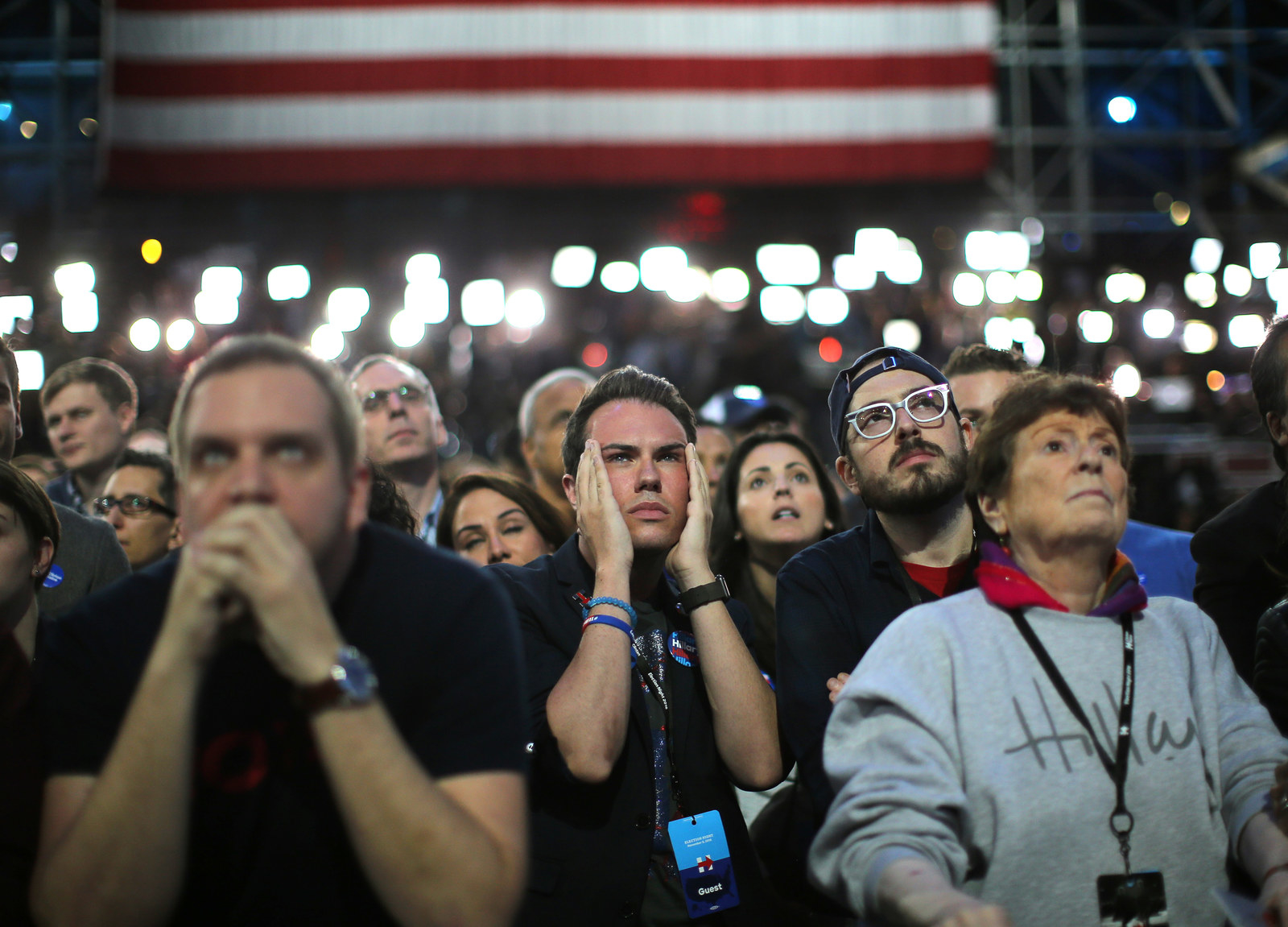
Did the Democrats’ ‘very good night’ of November 4, 2025, demonstrate that they have made that leap? Not necessarily. But we will see.
The Dems ran some new candidates and embraced a more raucous, snarkier tone in their communications and voter outreach. Gavin Newson seems intent on becoming the Joe Rogan of the political left…in part by appearing on the Joe Rogan Show multiple times.
But the signals from November 4 are mixed. In general, centrist and moderate establishment candidates won elections handily – but they did so mainly in safe ‘blue’ states where they already held considerable advantages. Local and state Democratic victories in Georgia and Mississippi are more noteworthy because those candidates were competing on unfriendly ground.
And Zohran Mamdani’s election as mayor of New York could undo all those gains in 2026 or 2028. It’s too soon to conclude what the Dems have learned from 2024.
But what Greymantle has learned is simple: don’t get hung up on statistics. Focus on people where they are mentally. Their mentality is the key – not the facts.
Until next time, I remain –
Ivor Greymantle