
This movie review arrives several weeks late, but the delay feels somehow appropriate.
Guillermo del Toro’s Frankenstein, which opened in U.S. theatres on November 7, isn’t a film that draws any benefits from immediacy. Like its uncanny subject, it lingers longer than expected, and not always comfortably. Those qualities set Frankenstein apart from most popular films, which tends to announce their themes loudly, but to vanish just as quickly.
Del Toro’s Frankenstein is quieter, stranger, and more patient than most of its box office peers. It assumes a viewer willing to sit with unresolved questions, rarified moral territory, and—most unfashionably—a serious engagement with suffering.
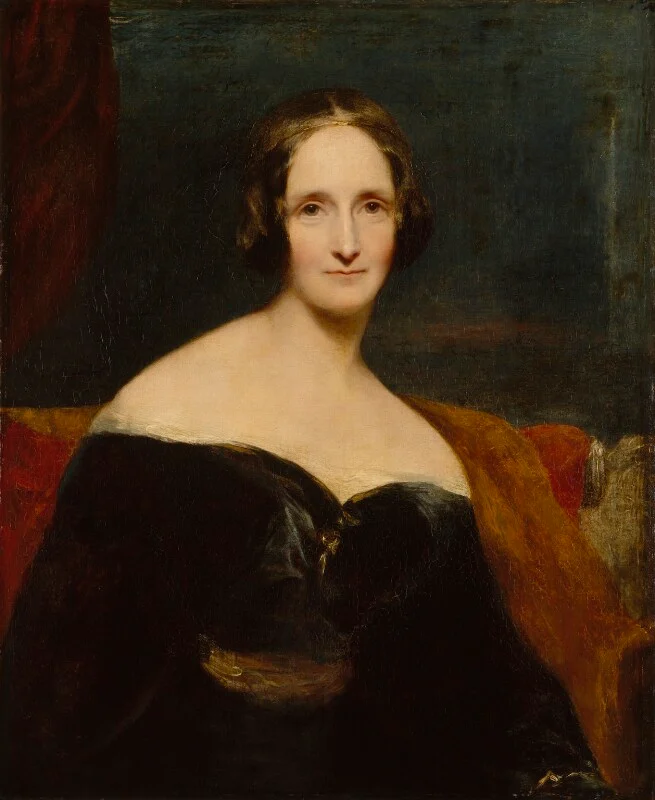
Del Toro’s film is considerably more faithful to Mary Wollstonecraft Shelley’s 1818 novel than the cultural memory of Frankenstein might suggest. The iconic mass-market adaptations of the 1930s through the 1960s—Boris Karloff, Lon Chaney Jr., Christopher Lee, laboratory lightning, grunting monsters—flattened Shelley’s book into a two-dimensional gothic iconography.
Later efforts, particularly Kenneth Branagh’s ambitious Mary Shelley’s Frankenstein in 1994 – memorably featuring Robert De Niro as The Monster – and the oft-overlooked Terror of Frankenstein, an understated Swedish production from 1977, were more faithful to the source text than the 20th century’s other film adaptations, while also attempting to restore the philosophical weight of Shelley’s story.
Del Toro’s production belongs more to this later tradition than to the earlier Hollywood and Hammer films starring Karloff and Lee. However, it doesn’t attempt to compete with the two earlier productions for the title of ‘Most Faithful Adaptation’. In fact, Del Toro’s version departs from the novel in several key respects.
Del Toro’s audacity in subtly altering several key plot points allows his Frankenstein to ultimately transcend its source material — no mean achievement — which makes it the perfect Frankenstein for our own unsettled era, haunted by both geopolitical upheaval and the specter of Generative AI.
Creation as Arrested Development
Del Toro’s most critical change is to relocate the point in time of Victor Frankenstein’s obsession. In Del Toro’s film, Victor conceives of his project of defeating death not as a young man just out of college and intoxicated by newly acquired scientific knowledge, but as a vulnerable child responding to traumatic loss.
This is a deeper than cosmetic change, and it that fundamentally alters Victor Frankenstein’s psychological profile.
In Shelley’s novel —and in Branagh’s and Calvin Floyd’s film adaptations—Victor’s ambition is recognizably Enlightenment-driven: an ambitious young adult mind discovering that the universe may be intelligible, manipulable, and ultimately conquerable.
Del Toro’s Victor Frankenstein is cut from a different cloth. His genius is real, but yoked to emotional immaturity. Victor never outgrows the trauma that motivates him; he merely acquires better tools to act it out. Del Toro’s Victor is a man who never leaves childhood, and his unfortunate creation pays the price for his creator’s immaturity.
There is something recognizably post-modern in this latest portrayal brought into sharp relief by acclaimed actor Oscar Isaac.
One need not stretch very far to see in Victor Frankenstein a familiar contemporary type: technically brilliant, morally underdeveloped, and emotionally frozen at the moment of acquiring some deep grievance. Creation, in this interpretation, isn’t necessarily an act of courage. It is merely a stubborn and obnoxious refusal to accept authority – or limits – of any kind.
Del Toro has explored variations on this theme before. His films are crowded with creators, generals, scientists, and patriarchs who mistake control for responsibility. But they are two distinct categories.
What distinguishes Frankenstein is the moral depth of the protagonist’s failure. Victor’s Frankenstein’s sinister qualities aren’t, at their heart, a matter of ideology. They are primarily emotional qualities. And that makes their consequences more impactful, and harder to dismiss.
Innocence, Recognition, and the “New Adam”
A second departure from Shelley deepens this moral reorientation. The character of Elizabeth—played with disarming restraint by Mia Goth—is no longer Victor’s romantic counterpart but is reimagined as an antagonist. In Del Toro’s film, Elizabeth is a former novitiate, recently returned from a convent, and now engaged to Victor’s brother rather than to Victor.
This can’t have been an incidental change. By changing Elizabeth from a love interest to a near in-law, Del Toro frees up her character to view Victor with emotionally neutral interest at first and then with mounting disdain and horror as she begins to comprehend the depth of his moral depravity and desire to cross any and all lines to achieve his objectives.
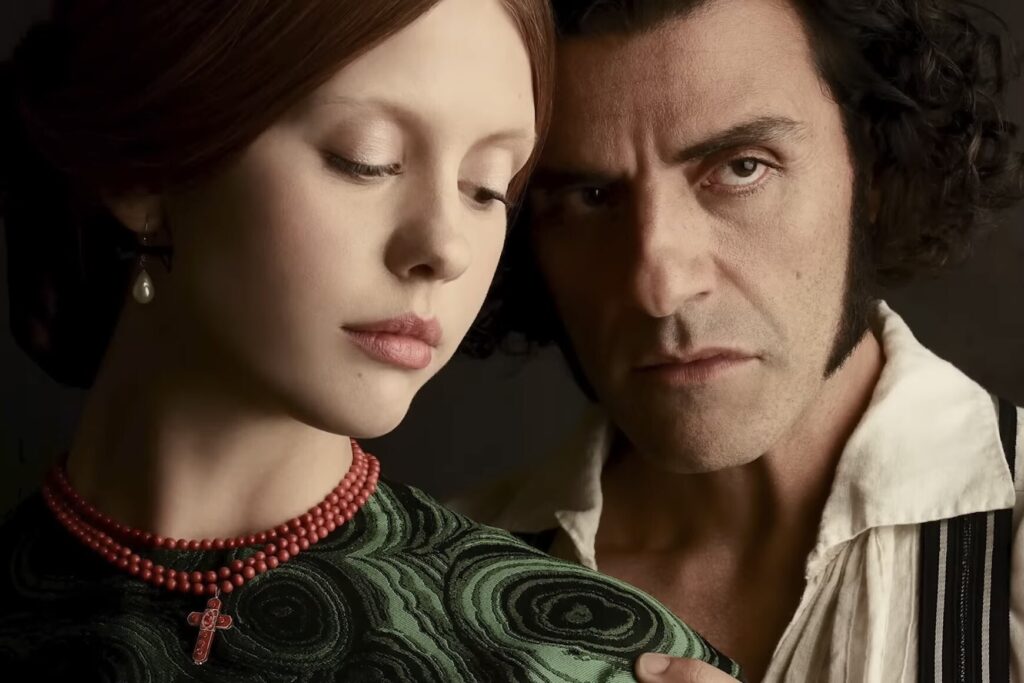
Elizabeth’s immediate sympathy toward the Monster isn’t a matter of naivety or misplaced pity, but reflects a moral formation shaped by contemplation, discipline, and religious habit. She encounters the Monster not as an aberration to be corrected, but as a fellow being to be recognized and understood.
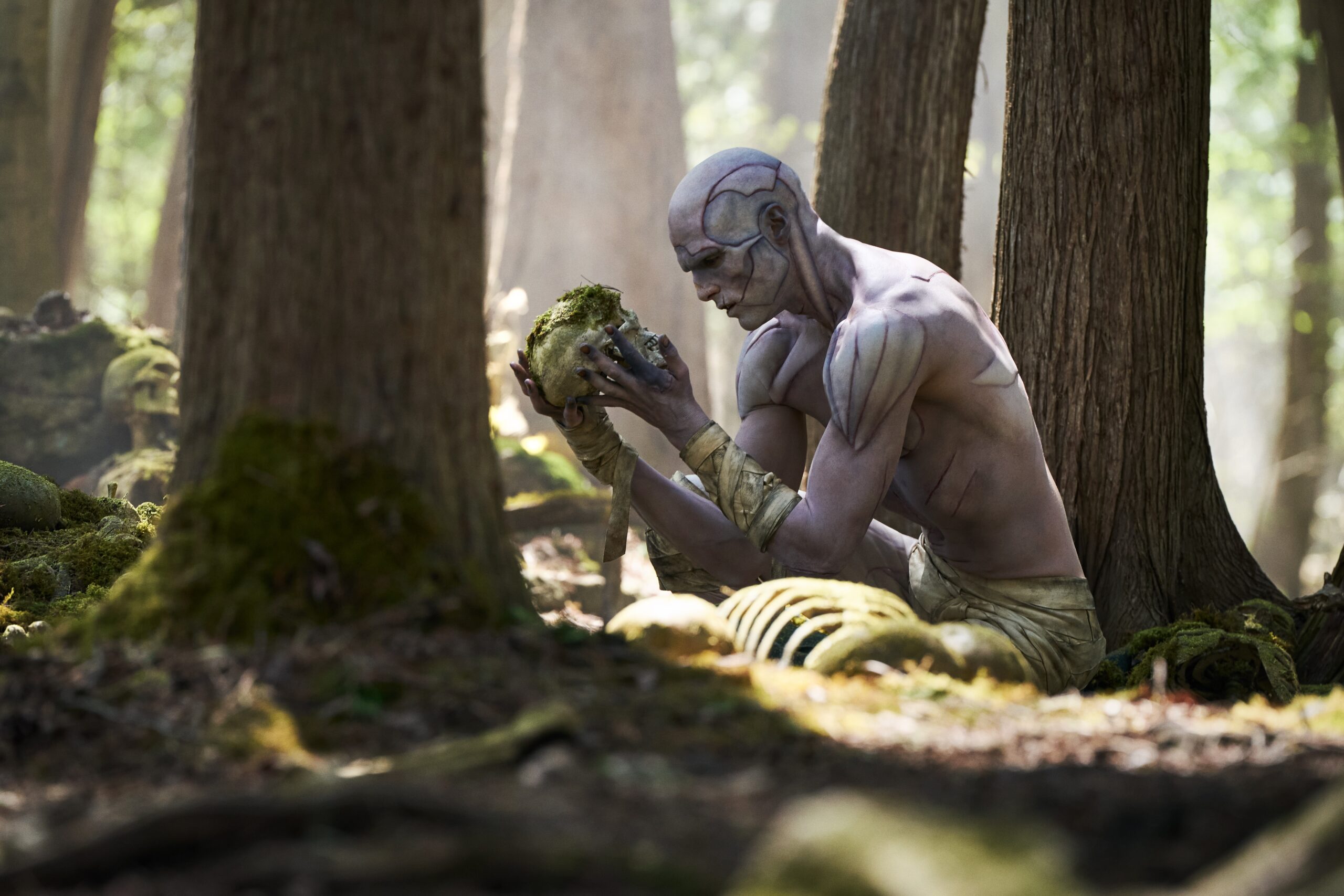
In Del Toro’s conception, the Monster is a kind of new Adam: apparently created without sin, awakening into a fallen world disordered by fear and violence. The guilt that marks his existence originates elsewhere—in Victor’s arrested grief, his betrayal and abandonment of his unnamed creation, and his refusal to assume moral (and paternal) responsibility.
Elizabeth realizes the Monster’s innocence and Victor’s moral failure instinctively. Her response to the Monster suggests that he inhabits an Edenic state of innocence. Violence enters his world not as destiny, but as contamination. When the Monster retaliates aggressively later in the film, his actions feel more reactive than malicious, driven mainly by an instinct for self-defense.
This highly original (and non-canonical) reading of Elizabeth’s relationship to the Monster is cleverly reinforced by Del Toro’s casting.
Mia Goth has spent the last decade building a career through deliberately transgressive roles in some of the most jaded horror franchises of the 2020s—if you don’t believe me, then by all means watch X, Pearl, and Maxxxine – with performances defined by excess, high blown erotica, ultra-violence, and moral inversion.
In Del Toro’s Frankenstein, Goth does the opposite. Her Elizabeth is calm, perceptive, and morally serious. The casting serves a quiet commentary on the film’s themes: the expected moral subversion is withheld and replaced by a sophisticated moral criticism of Victor’s actions.
In another departure from the novel and prior film adaptions, the Monster, even when placed under extreme pressure, never fully loses his moral compass. He hesitates. He distinguishes between cruelty and restraint. He behaves, it must be said, much better than his creator.
Del Toro refuses the easy cynicism of making innocence merely a prelude to savagery. Creation of unnatural life from dead matter may be the original sin in this Frankenstein, but the subsequent abandonment of one’s creation is even worse.
Immortality and the New Creation Myth
Del Toro’s third major departure is the most overtly metaphysical: his Monster is immortal.
Not merely hardy and difficult to kill, but incapable of dying. His body spontaneously regenerates. His consciousness persists. Even attempted physical annihilation through the deliberate detonation of a stick of dynamite in his right hand offers no release.
The Monster’s immortality transforms Frankenstein from a cautionary tale about unnatural life into something even more unsettling: a creation myth for the technological age.
Mary Shelley wrote at a moment when industrial modernity was just beginning to unsettle theological assumptions. Del Toro is working on a threshold Shelley could only dimly imagine. What her characters feared metaphorically—creation without God—we now approach quite literally in fields such as AI, genomics and fertility research.
In 2025, the prospect of General AI is no longer science fiction. It has been transformed into an engineering problem awaiting moral justification – as other contributors have recently discussed on these pages.
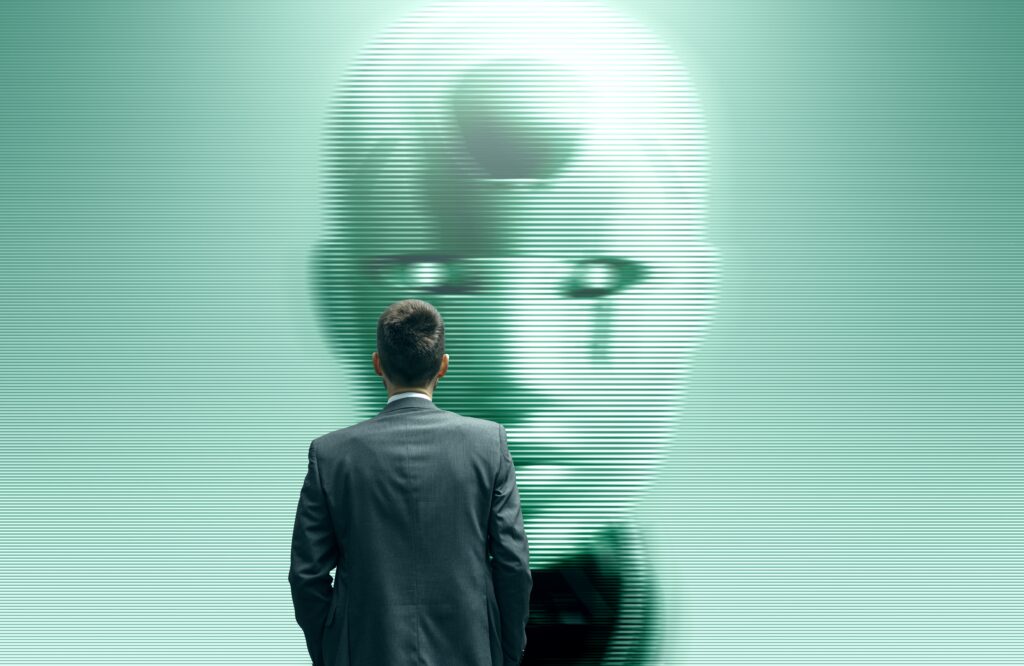
Parallels to AI research abound in the film. Del Toro invents the character of Henrich Harlander (played with impish glee by Christoph Waltz), an arms manufacturer who funds Victor’s reanimation research in the hope of achieving immortality. Victor Frankenstein never needed investors in the 1818 novel or previous film adaptations. This particular plot alteration is clearly an intentional way on Del Toro’s part to link the Frankenstein myth to current events.
Del Toro’s decision to bring the military-industrial complex, venture capital funding and the Crimean War into his adaption are meant to draw uneasy parallels with Silicon Valley’s obsession with life extension, cryonics, arms production and Eurasian geopolitics. The Crimean War of the 1850s strikes an obvious parallel to the ongoing Russo-Ukrainian War.
From Gothic Aberration to Superhuman
With these plot changes, Del Toro’s Monster begins to resemble not the gothic aberration of Shelley’s novel, but a manufactured post-human intelligence: powerful as a Marvel superhero and likely to endure for centuries — but abandoned to a moral vacuum. The horror is not merely that such a being exists. It is that he exists without guidance, rules or love.
Furthermore, the Monster is intelligent enough to understand the matchless horror of his own existence. Truly, the Monster views himself as a ‘singularity’ in the universe: a being so unique as to be uniquely alone – a truly comfortless prospect.
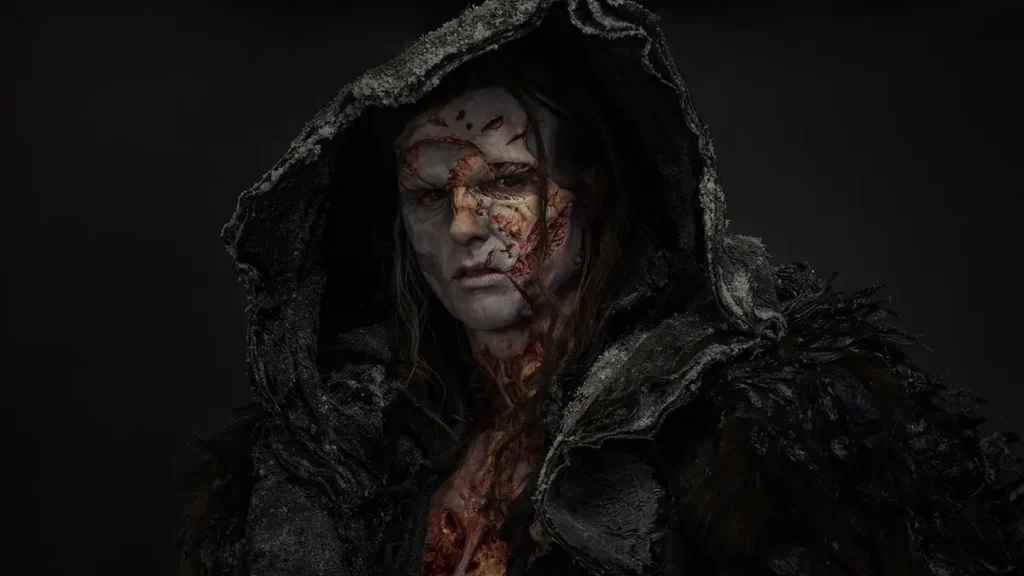
Del Toro has long been fascinated by monsters who possess greater moral coherence than the societies which reject them—from The Devil’s Backbone to Pan’s Labyrinth to The Shape of Water. Frankenstein feels like the culmination of this preoccupation of Del Toro’s. The Monster’s immortality also forces a question that modernity prefers to postpone indefinitely: what obligations do creators owe to the things they create.
Spielberg’s Shadow
At this point, another film should quietly enter the conversation: Steven Spielberg’s AI: Artificial Intelligence. Throughout the second half of Frankenstein, the direct influence of Spielberg’s blockbuster from the year 2001 became apparent.
It’s clear that Del Toro owes Spielberg a debt for realizing Stanley Kubrick’s final project — with Kubrick’s express consent — one on which the acclaimed director of 2001: A Space Odyssey had been working for 20 years at the time of his death in 1999.
The parallels between Del Toro’s Frankenstein and AI: Artificial Intelligence are hard to ignore.

Spielberg’s boy robot is created to love its human ‘parents’ but is abruptly abandoned when that love becomes inconvenient and condemned to wander through deep time seeking recognition, warmth and meaning. Like Del Toro’s Monster, he is not mentally or physically defective. In fact, the central dilemma faced by both Frankenstein’s Monster and the boy robot from ‘AI’ is that they are too successful.
In both films, the core moral crisis isn’t technological. It’s parental. Transcendence only becomes possible after the created being accepts the death—and the insufficiency—of its creator. True consciousness emerges not from mastery, but from loss. The parent’s death becomes the precondition for independent consciousness and moral awareness.
This seems suspiciously like an old religious structure wearing a new technological costume.
Forgiveness and Moral Agency
Del Toro’s most decisive break with Shelley comes at the end.
In the novel, there is no reconciliation between Dr. Frankenstein and his misbegotten creation. Victor dies aboard an icebound ship trapped in the Arctic Circle. The Monster disappears into the wilderness in a state of despair. The moral universe remains unresolved.
Del Toro refuses this ending. Victor begs forgiveness, and the Monster grants it.
This moment matters because it is freely chosen. No law compels it. No authority enforces it. The Monster’s choice of forgiveness feels like an act of creation in its own right—one that gives moral agency to the Monster rather than absolving its wretched creator.
Del Toro reinforces this shift with another addition absent in Shelley’s novel and all prior film adaptions: The Monster frees the icebound explorer’s ship from the clutches of the Arctic Ocean, choosing the preservation of life over its destruction.
Freeing the trapped vessel is an unexpected act, but a decisive one. It’s a sign that Victor Frankenstein’s creation has internalized the idea of moral responsibility and achieved a kind of transcendence.
The final image—the Monster watching the sun rise over the Arctic Circle, tears streaming down his face—feels strangely triumphal. A world of suffering remains but is no longer meaningless for the Monster. The viewer suspects that he will learn to bear his burdens with increasing fortitude and even with dignity.

An Unlikely Theologian
Part of what makes this latest interpretation of Frankenstein genuinely surprising is its source.
Guillermo del Toro has never presented himself as a religious filmmaker. He has been an open atheist, politically of the Left, and skeptical of institutional authority. And yet Frankenstein thinks in unmistakably Judeo-Christian categories: a fall from innocence, inherited guilt, forgiveness preceding law, redemption without the erasure of pain.
Perhaps this is less a conversion on Del Toro’s part than a retrieval.
Faced with the pandemic, a fascist resurgence (what Philip Rieff might have pointed to as ‘the return of the repressed’ – see our June 2025 article), and the looming prospect of General Artificial Intelligence, Del Toro appears to have reached back—not to orthodox religious belief exactly, but to the Catholic moral grammar of his ancestors.
Not for comfort, necessarily, but perhaps for coherence. This suggests that a purely secular Frankenstein may no longer be adequate for our historical moment.
A Film of Its Time—and a Door Left Open
Del Toro’s Frankenstein arrives amid an unexpected ‘religious moment’ in the West. In France, the UK, and among younger generations long assumed to be decisively post-Christian, a strong interest in religious faith has re-emerged—not as nostalgia, but as a search for meaning serious enough to withstand constant social and technological upheaval.
The film is not adequate to explain this moment, but it does participate in it.
By reimagining Frankenstein for an age approaching the advent of General AI, and possibly ‘the Singularity’ itself, Del Toro suggests—quietly, almost against his own previous reputation—that inherited ethical frameworks may prove more durable than technical safeguards or procedural ethics. That is not a fashionable claim. It is, however, an increasingly unavoidable one.
This short essay does not attempt to resolve what that means for the West, for technology, or for belief. But it is further evidence that some doors long thought closed are opening again.
Frankenstein has always been a story about creation without responsibility. Del Toro’s version asks another tough question: what happens when responsibility returns before belief does? That question will bear further examination on these pages.
Until next time, I remain —
Greymantle




One Response