The final week of the year invites a particular kind of honesty: not the performative sort that masquerades as humility, but the quieter discipline of looking back at what one actually said, predicted, and published—and comparing those statements to what actually happened.
For a site like Greymantle, which treats forecasting as an analytical tool rather than a parlor trick, this reckoning is unavoidable. Predictions don’t remain theoretical. They age — in public. Predictions are easy in January. But reality, quite inconveniently, insists on showing up by December.
Forecasting is also, by definition, a hazardous business. Outcomes rarely arrive neatly labeled right or wrong. They arrive sideways: delayed, distorted, half-realized, or undermined by events that did not exist at the time of writing. Probability is not prophecy.
With that in mind, the theme and title of this year’s 2025 Year in Review—Shades of Grey—is not an attempt to wriggle out of accountability, but an attempt to apply it honestly.
Revisiting our January 3, 2025 outlook, Resetting the Global Chessboard, the results were mixed—but revealing. On balance, we assess our forecasts as having been broadly correct 65% of the time, once partial outcomes and genuine ambiguities are accounted for.
That’s a respectable result, but weaker than our 2024 performance, when 83% of our top ten forecasts were borne out—even as our most high-profile call that year, predicting Donald Trump’s defeat, failed spectacularly.
And 2025, it turns out, was not a year that rewarded binary thinking.
The Scorecard: What Aged Well, What Didn’t, and What Refused to Settle
Some of our strongest calls for 2025 were economic. Others—particularly those tied to war and regime collapse—proved stubbornly resistant to tidy resolutions.
The U.S. Economy, Inflation, and the Birth of the “Trump Bubble”
We forecast robust U.S. economic growth in the 2.4–2.7% range. At present, consensus estimates place 2025 growth closer to 1.9%, though third-quarter GDP was revised upward to 2.4%, and retailers reported a notably strong holiday shopping season.
With data distorted by a six-week federal government shutdown in October and November, final revisions may yet surprise to the upside. This forecast belongs squarely in the grey zone: solid growth, but not quite the boom we anticipated.
Our inflation call landed closer to the mark. Price pressures remained elevated throughout the year, though the anticipated second-half acceleration was more muted than expected. Inflation largely hovered around 3%, rather than the 3.5% range we forecast—though tariff effects may still alter revised figures.
As predicted, the Federal Reserve found itself under sustained political pressure from the Trump White House and cut rates twice after August, despite inflation remaining above long-term targets.
Our third major economic call—that 2025 would mark the beginning of what we dubbed the “Trump Bubble” in financial markets—has aged particularly well.
Trillions of dollars have been poured into artificial intelligence, regulatory guardrails have been loosened, bank capital requirements relaxed, and the cryptocurrency industry effectively blessed by the administration. AI and crypto now occupy the familiar role played by housing and structured credit in the decade to 2007: engines of optimism, leverage, and speculative excess.

The Federal Reserve, under sustained pressure from the White House, has obliged by easing monetary policy at precisely the moment caution would normally be advised. On this front, we were early—but not wrong, and certainly not lonely at the punch bowl.
The Hard Cases: War, Power, and Regime Survival
If economics rewarded our probabilistic confidence, then geopolitics punished it.
Ukraine and Russia – More Shades of Grey
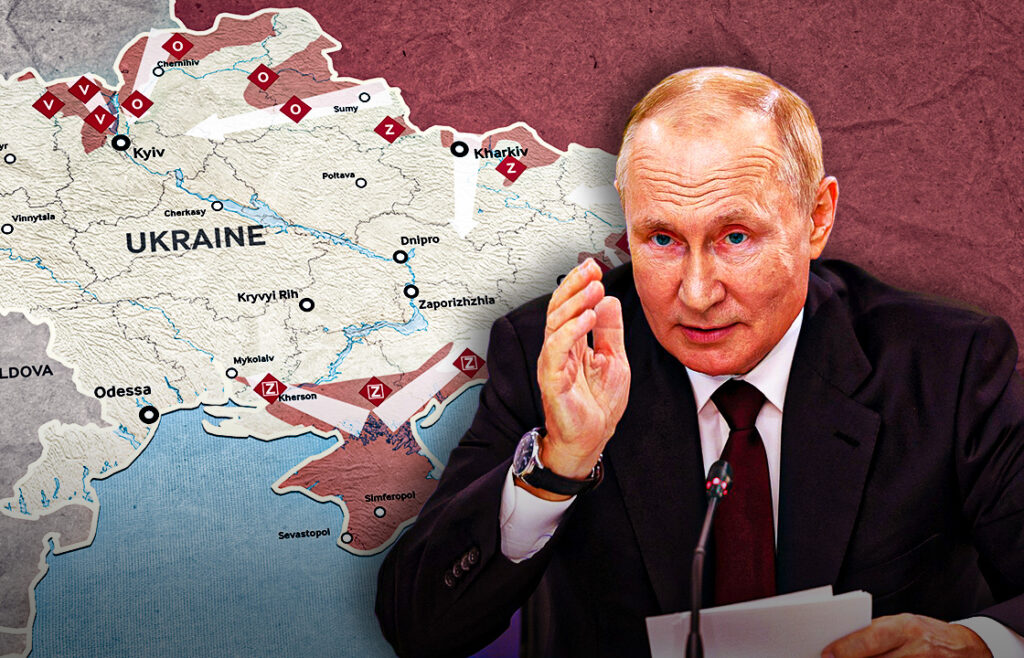
We predicted a temporary Russo-Ukrainian armistice in 2025. As of this writing, no such agreement has been signed.
The Trump administration has pursued sustained—sometimes frantic—negotiations, both public and private, with European governments assisting in the background. Pressure to wind down the war has been real and relentless, punctuated by theatrical moments that sent large portions of the diplomatic corps reaching instinctively for antacids.
With days remaining in the year, an agreement could still materialize, but for now this forecast must be scored as incorrect.
Our assessment of Vladimir Putin’s grip on power, however, sits firmly in the grey. We assigned a 55% probability of Putin being overthrown in 2025, while explicitly arguing that the more likely danger window lay in 2027–2028. Putin remains in the Kremlin—but he endured a brutal “September of setbacks,” presides over staggering casualty figures, and remains politically dependent on a war he cannot decisively win.
As observers such as Mikhail Zygar have noted, peace would likely weaken Putin’s rule. A leader who needs war to survive is not holding a strong hand.
Iran: The Most Instructive Non-Collapse
Our most ambitious forecast—and our most humbling—was the prediction of an 80% likelihood of regime collapse in Iran by the end of 2025. That collapse did not occur. The Islamic Republic remains in power.
Yet this was not a clean miss. The Iranian regime is significantly weaker than it was a year ago—militarily, economically, and politically.
Israeli airstrikes severely degraded Iran’s air defenses, military infrastructure, and nuclear program, precisely as we anticipated. Internal stress has intensified, and Tehran now faces an acute water crisis born of decades of mismanagement—a potential systemic shock with uncomfortable historical parallels. We did not assign certainty to regime collapse, and events instead delivered prolonged limbo.
The ayatollahs have survived, but badly bloodied. With Supreme Leader Ali Khamenei now 86 years old, succession alone poses existential risk to the regime. Iran, more than any other forecast category, demonstrates why serious analysis must live with uncertainty rather than deny it.
The Top Ten, Revisited
For reference, Greymantle’s Top Ten Forecasts for 2025 were as follows:
- Strong U.S. GDP growth
- Persistently high inflation
- The emergence of a “Trump Bubble” in financial markets
- A temporary Russo-Ukrainian armistice
- Likely collapse of the Iranian regime
- A political crisis in Germany with the AfD surging
- Putin’s rule placed in jeopardy
- Renewed hostilities in Yemen and weakening of the Houthis
- A new era of Middle Eastern cooperation
- Rising tensions between Israel and Turkey
Not all of these played out on schedule—or cleanly—but taken together, they framed the year remarkably well. Even where timing was off, direction often was correct.
Secondary Forecasts That Quietly Aged Well
Germany’s February election did not produce a hung parliament, and Chancellor Friedrich Merz formed a government. Yet as predicted, the AfD has surged into second place nationally, with significant support even in western Germany. The crisis is no longer hypothetical; it has arrived, even if institutional paralysis has not—at least not…yet.
In the Middle East beyond Iran, our forecasts were deliberately general—and largely borne out. Israel and Turkey entered a phase of intensified geopolitical competition, mostly behind the scenes, particularly in Syria and Lebanon. This is merely the opening act of a long strategic rivalry.

Our forecast regarding Yemen proved partially correct. Egypt and Saudi Arabia refrained from direct intervention, but Israeli strikes devastated Houthi leadership and weapons systems. By November, the Houthis effectively backed down, reopening the Red Sea to international shipping. Their pressure campaign failed.
We were also broadly correct in forecasting a new era of Middle Eastern cooperation following Iran’s setbacks and the overthrow of the Assad regime. Syria has moved decisively toward Western and Gulf-state alignment, and the momentum behind the Abraham Accords continues to build—despite Hamas’s continued and increasingly doomed efforts to obstruct it.
Two Broader Trends We Flagged Early
Beyond our top ten, two additional themes defined 2025.
First, the return of forced expulsions and mass deportations as a central political issue. From aggressive ICE enforcement in the United States to hardened rhetoric and policy across the UK, Germany, France, Russia, Latin America, and beyond, forceful repatriation of migrants has re-entered the political mainstream. This is not a transient mood; it is the opening phase of a multi-year realignment.
Second, Taiwan. As predicted, the issue moved from contingency to constant. Beijing intensified pressure on Washington to foreswear any defense commitment, and the China–Taiwan question dominated strategic discourse throughout the year.
What We Promised—and What We Delivered
In Resetting the Global Chessboard, we committed to expanding Greymantle’s coverage across a wide range of political and cultural terrain, including:
- Chinese military and naval strategy
- Campus protests and pro-Palestinian radicalism
- The fertility crisis and demographic decline
- The evolution and global spread of “wokism”
- The rise of “Sinisterianism” as an aesthetic and ideology
- Artificial intelligence risks and second-order effects
- The prospects for third parties in U.S. politics
- Broad cultural trends as reflected in horror cinema
- The deep drivers of populism in America and Europe
On every one of these fronts, we delivered.
Greymantle published 43 articles in 2025, more than doubling our 2024 output. More importantly, we expanded the range and depth of our analysis. That expansion was made possible by the addition of three outstanding contributors.
Richard Jupa brought rigor and clarity to our coverage of China, Taiwan, and naval strategy, contributing eight widely read pieces.
Robert Cox tackled campus radicalism, artificial intelligence, and the deep history of U.S. immigration policy—his AI article alone drew over 2,600 readers in November.
Gideon Evans explored corporate downsizing, legal gambling, and the podcasting industry, opening new cultural and economic lines of inquiry for the site. Gideon’s podcasting article racked up 3,300 readers between December 15 and 30 and is our most read Greymantle article to date.
Their work strengthened Greymantle immeasurably, and we are deeply grateful for their contributions.

Looking Ahead—and Thank You
Forecasting is not about clairvoyance. It is about disciplined thinking under uncertainty, intellectual honesty, and the willingness to revisit one’s assumptions in public. In 2025, Greymantle did not always get the timing right—but we were seldom wrong about direction.
To our readers and subscribers: thank you. Truly.
Your time, attention, criticism, encouragement, and curiosity are not things we take for granted. In an online ecosystem optimized for outrage, speed, and certainty, you have chosen to spend time with long-form analysis, ambiguity, and ideas that resist easy answers. That choice means more to us than page views alone—though we are grateful for those as well.
To our new contributors—Richard, Robert, and Gideon—thank you for your rigor, your originality, and your willingness to wrestle publicly with difficult subjects. Greymantle is a stronger, more interesting place because of your work, and we are proud to publish it.
It has been a demanding, often chaotic, but deeply rewarding year. We look forward to continuing this project with you in 2026, with the same curiosity, skepticism, and independence of mind that brought us here.
Our 2026 Forecast will be published shortly.
Until then, we remain with gratitude —
Greymantle