
Key Takeaways
- In a single decade, the meteoric rise of podcasting from fringe industry to arbiter of U.S. national politics has dramatically shaken up the media landscape.
- Podcasting’s core appeal stems from positioning itself as home to authentic, non-conformist voices operating outside ‘corporate media’ ecosystem.
- Flexible formatting and unconventional interviewing styles keep the public engaged.
- The emergence of ‘manosphere’ podcasters influenced by Joe Rogan has accentuated social polarization and helped swing the 2024 election to Donald Trump.
- The podcasting industry still has a very significant ‘runway’ in that large segments of the U.S. population are only starting to find their voices in podcasting.
This article is about the power of podcasting.
Writing about the power of podcasts not only helps us shed some light on the history and future of podcasting – and how it might shape the outcome of future U.S. elections – but writing this piece for me is, additionally, a shameless way to promote — wait for it…my own podcast.
So, let’s get that unabashed plug out of the way before we get started on the past and future of podcasting.
I am fortunate to have had a relatively steady career in producing and writing television shows, having worked on such award-winning content as “The Daily Show with Jon Stewart,” and “The President Show” and “Totally Biased with W. Kamau Bell.”
Those experiences have allowed me to make hay – so to speak – of our dysfunctional media and political landscape, producing lots of comedic segments that satirize the state of the nation.
I’ve even put my body on the line in certain cases. In one instance, I was detained for producing a segment about the work conditions at Disney Theme Parks and have also been forcibly kicked out of the U.S. Congress. In other words, my career thus far has been a fun romp!
With the recent viewership shift from traditional television networks and cable channels to streaming services like Netflix, the types of shows I tended to work on prior to the 2020s have been produced less frequently, especially those based in topical humor or the late night comedy shows.
The writers’ and actors’ strikes of 2023 further eroded the amount of content that both the television and cable networks, and also the big streaming services, have been able to produce annually ever since. Everyone in the entertainment industry has been waiting for things to turn around, but that has yet to happen…
Out of curiosity and – quite frankly – out of necessity, I have added the production, writing, and co-hosting of podcasts to my professional repertoire.
I had the good fortune to serve as an executive producer of Mo Rocca’s award-winning podcast “Mobituaries” in the earlyish years of podcasting. “Mobituaries” was chosen as one of the top ten podcasts of 2019 by TIME. I have also worked on audio shows for Netflix and other companies.
My current podcast project is called “Bad Elizabeth” and is co-hosted by my old friend and “Daily Show” office mate Kathy Egan-Taylor and myself.
The concept of “Bad Elizabeth” is exactly what it sounds like. Each episode is about a different person named Elizabeth in history or popular culture who is in some way notorious. There are episodes about Elizabeth Holmes, Queen Elizabeth I, Lizzie Borden, Countess Erzsebet Bathory, and many other bad – or at least highly questionable – Elizabeths.
Here is a LINK to the first episode of “Bad Elizabeth.”
The show has gotten glowing reviews and a good stream of downloads (the main metric for judging a podcast’s success).
Okay, now that my shameless podcast plug is out of the way, let’s talk about podcasts in general.
What’s New Is New: Why Podcasting Isn’t the ‘Radio Age’ Reborn
There was a certain trope popular among journalists writing about the podcasting boom when podcasts first started to get popular around 2014. “What’s old is new again” was repeated ad nauseum.
The idea behind this phrase was that podcasting was simply radio (a dusty old medium) getting popular again. But that really isn’t the case, and in my view, “what’s old is new again” was – and is – a lazy and misguided view of what podcasting can offer to audiences.
The station owners and executives who worked in radio usually chose one niche for their channel on the AM or FM dial and would make shows that fit into that narrow genre. That isn’t the case with podcasting, which is a much more technologically and socially diffuse phenomenon than radio. It allows for much greater freedom for content producers and, ultimately, for audiences as well.
Radio Days in Retrospect: It Was A Tightly Controlled World
Back in the days when radio dominated the airwaves, there were radio stations for every major niche. There were local news stations, Classic Rock stations, right wing chat stations, etc. The stations were not too different from television networks, but the various shows on each of these stations were quite monolithic in their perspective.
For example, when I was growing up, I used to listen avidly to WFAN, a local sports chat radio station based in New York City. And while I had several favorite hosts on that station – I personally loved Steve Somers – the various shows on WFAN didn’t feel too different from one another.
WFAN’s corporate bosses knew what worked and what types of topics drew listeners. They basically just created radio content clones with slight variations on their basic programming model (mostly by using different hosts to cover different sports). This was true of all radio stations. They stuck religiously to their chosen format.
I suppose you could call this a form of “branding,” but the development of a batch of shows on a radio station was essentially an example of ‘in-the-box’ thinking. I don’t mean that as an insult. The content of the shows was always highly predictable, however, and their predictability was part of what made them successful.
In addition, in old school radio the ‘Standards and Practices’ Departments held court in much the same way that they did for cable channels and conventional TV networks in the late 20th century.
So, even within the conceptual box of a very branded channel with mostly homogenous programming, there were yet other boxes present that kept the radio personalities and the talent in line. Radio stations were rather limiting places to work, in which you couldn’t take any chances from a content standpoint.
Your talent couldn’t swear on the air, for example, or your station would get a call from the Federal Communications Commission (FCC). In addition, some types of subject matter were off limits depending on who owned the station. ABC-owned radio stations would have problems if a host wanted to make fun of Mickey Mouse, to take one example.
No ‘biting of the hand that fed you’ was allowed.
Radio’s First ‘Shock Jocks’ Challenged the Dominant Paradigm
As strange as it seems, radio hosts like Howard Stern, who started to become popular in the mid to late 1980s – love him or hate him – set the stage for the world of podcasting. That is especially true of the podcast landscape we find ourselves in now. But we’ll get to that later.
Howard Stern proved, almost singlehandedly, that there was an audience of younger people who wanted to hear something “different” and “independent”. This audience wanted ‘outside-the-box’ content which the corporate-run radio stations were not offering.
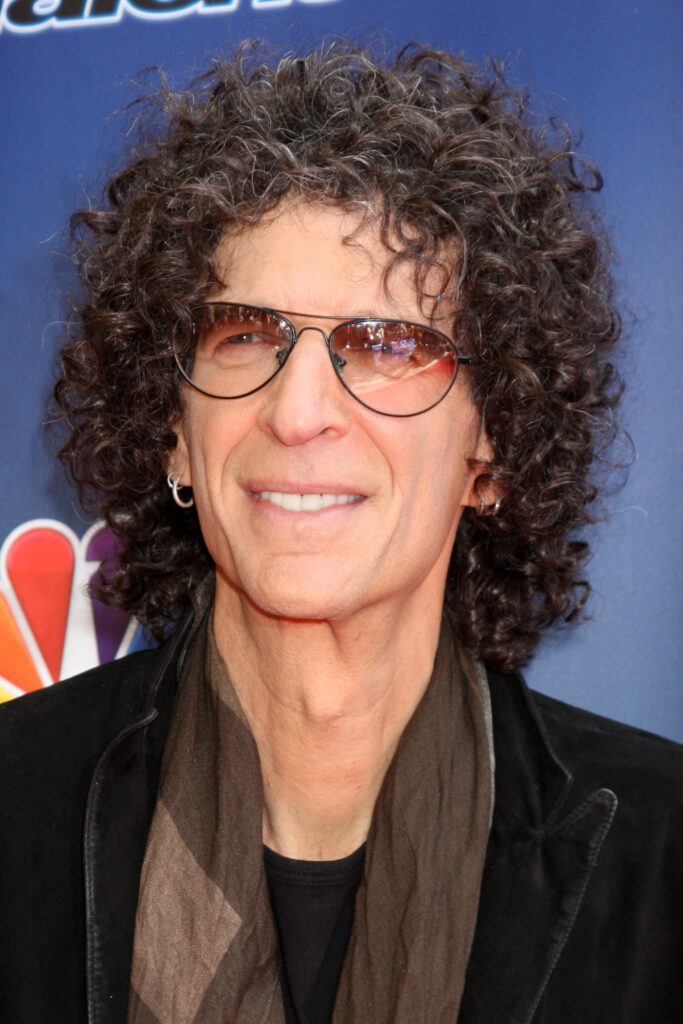
Every time that Howard Stern would say or do something to anger ‘family values’ advocates or the FCC, he knew his latest ‘shock’ to corporate radio standards was a good move for growing his listenership, which numbered in the millions by the mid-1990s.
Stern built a special space for himself in the U.S. radio ecosystem wherein he could be as independent and outrageous as possible and offer something completely different from what other stations were broadcasting. Stern was so phenomenally successful that soon, copycats began trying to capitalize on the “shock jock” brand that Stern had created.
Like Howard Stern, Early Podcasters Defined Themselves As Independent Non-Conformists
When podcasts first started to come onto the scene in 2005 or so, the model and brand for podcasting was really…that there was no model or brand. Instead of cautious niche programming, podcasters were all about audacity, independence and out-of-the-box thinking.
Early podcasts were not Howard Stern-like, exactly, with goofball characters or mascots like “Fartman.” But the prevailing idea behind a lot of early podcasts was that “the same old rules don’t apply.”
Podcasts didn’t evolve directly from people like Stern, but the lesson that Stern had offered to his listeners and to station managers – that it was possible for shows to feel different and to succeed precisely by not playing by the rules – exerted a strong influence on the podcasters of the formative 2005-2013 period.
‘This American Life’ And ‘WTF’ Scored Early Breakthroughs
“This American Life”, for example, was journalistic, but it told stories in a way that no other news show told stories. The host – Ira Glass – was not a completely detached voice, like the TV anchors most Americans were used to. The voice of the show via Ira Glass was intimate and didn’t ‘talk down’ to the listener.
Glass didn’t avoid sentimentalism, either. He would often use popular music and scoring to accentuate and heighten the vibe you might be feeling at certain points in a story. Glass’s voice sounded like the type of voice that was the antithesis of the shock jock or the morning zoo host. “Soft spoken” and “tender” are the first adjectives that come to mind when describing Glass’ delivery.
“This American Life” became a big hit, and it stood out for being different, creative, and intelligent. The show got its start as an NPR (National Public Radio) show in the 1990s and itself transformed into a podcast later. It is significant that it was one of the first shows to break out as a podcast in the early 2000s.
“WTF” was another early trailblazer in the podcast space. Most interview shows feature unbiased, detached interviewers talking to actors or politicos. But the host of WTF – Marc Maron – was fully immersed as a host and emotionally involved.
Again, WTF simply felt different, and was freed from the constraints that are present in many corporate-owned radio stations. Maron cursed within the first five minutes of the show, and his own brand of neurosis and whiny neediness informed the questions he asked his comedian interviewees.
Maron often knew the people he was speaking with from years of doing standup comedy in local clubs and on the road. So, there was often baggage to discuss. For example, when Maron interviewed Louis CK, they talked about how the friendship of the two comedians had gone cold after Louis CK became a big star.
Who was at fault? Who would blink first during the interview and apologize?
The Debut of “Serial” In 2014 Was A Turning Point For Podcasting
Podcasting began to pick up much more steam when the true crime series “Serial” premiered in October of 2014. In fact, the popularity of podcasting absolutely exploded after “Serial”.
Sarah Koenig, who cut her journalistic teeth working on “This American Life” used the ability to fully research a fascinating true crime case, interviewing the convict Adnan Syed, others who knew Syed, as well as friends of the murder victim in question.
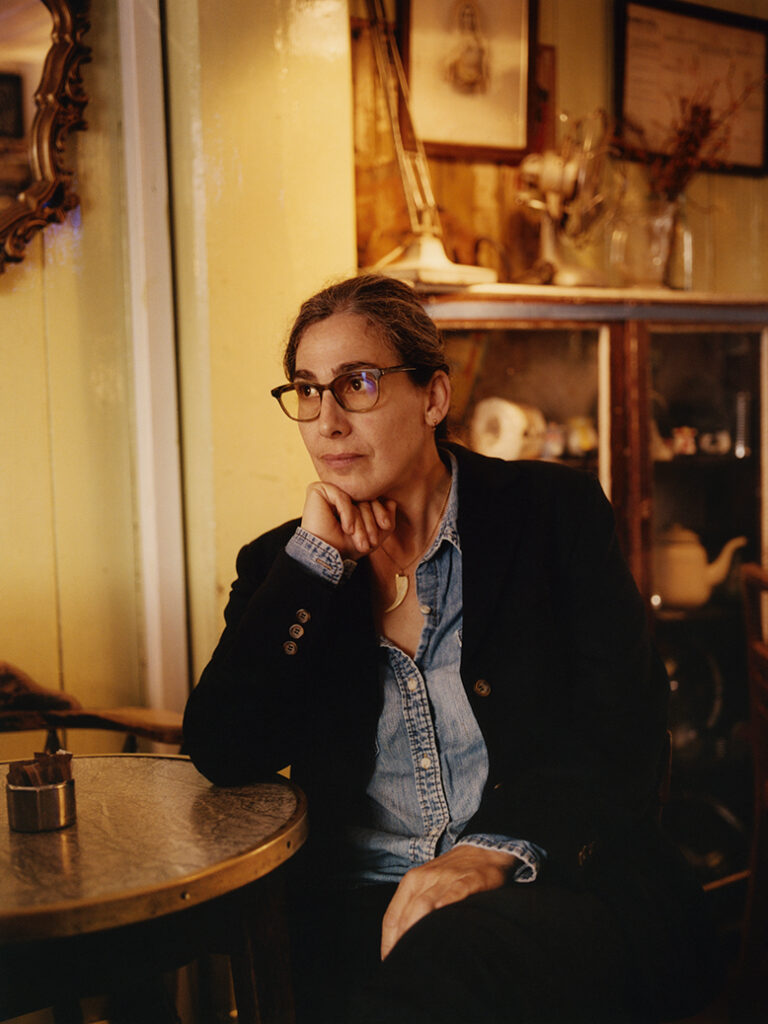
“Serial” didn’t have the usual whiff of exploitation that many true crime shows have, and it functioned at the height of its intelligence. The audience – including very intelligent younger folks – ate it up. “Serial” very quickly became the ultimate water cooler discussion: Did Sayed do it?
The incredibly catchy “Serial” theme music composed by Nick Thorburn didn’t hurt, either.
True Crime and Business Shows Were the Biggest Hits of the 2014-2016 Podcasting Surge
As the entire industry of podcasting took off in the mid-2010s, certain companies, producers, and personalities were thrust into the limelight. Producers who loved doing deeply researched, long form, narrative shows flocked to make their own versions of these types of programs. Many were also true crime podcasts, like “Serial.”
Wondery came on the scene around 2016, started by former FOX executive Herman Lopez. Wondery struck it big with its “Dirty John” true crime podcast series.
My awesome former colleague and friend Dan Taberski did “Missing Richard Simmons” in 2017, which was also a huge hit. Dan has gone on to create many other great deep dive, narrative podcast series including “Hysterical”, most recently.
Matt Lieber and Alexander Blumberg, two former Public Radio producers, caught lightning in a bottle with their self-reflective show “Start Up” which detailed the creation of a podcast company – namely, their own.
Lieber and Blumberg were determined to pull back the curtain on the grueling process of launching a new podcast company, showing in unsparing detail the challenges of naming the company, raising funds from venture capitalists, and even how the enormous stress and strain of starting a new company adversely affects a marriage.
Their company was Gimlet Media, and it went on to produce multiple hit shows including ‘Reply All’, ‘Mystery Show’, ‘Heavyweight’, ‘Homecoming’, and more. Spotify eventually swallowed up Gimlet for a hefty price tag (around $200 million).
The Joe Rogan Experience Becomes A Cultural Touchstone
One outcome of the surging popularity of podcasting in the mid-2010s was that certain podcasts that had been around for a number of years, but had relatively small audiences, began to gain more popularity. One such podcast was “The Joe Rogan Experience.”
Joe Rogan was previously known as a stand-up comedian who had a part in the Brooke Shields Sitcom “Suddenly Susan,” did UFC commentary, and hosted a hugely popular gross-out reality show on NBC called “Fear Factor”. In addition to contributing to these hit series, it turned out that Rogan had a lot of opinions about…well, everything.
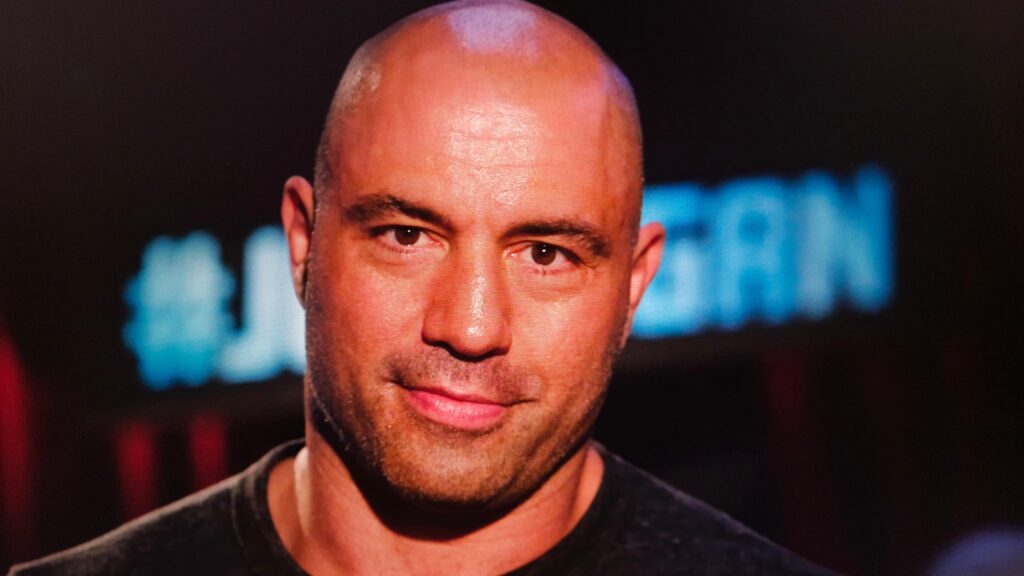
Yes, the “Joe Rogan Experience” existed for a few years prior to the 2016 election, but as America became more divided and fragmented politically, Joe Rogan started to gain millions of listeners.
Why?
To answer that question, I would point out that like many of the pioneering podcasts I’ve mentioned above, “The Joe Rogan Experience” felt, and continues to feel, very different from inside-the-box, corporate owned media.
Even back in 2016, Rogan had no time limit. His shows would often ramble on for two or three hours. There was no slick editing. Rogan sounded like a regular guy, but he had curiosity about many different and apparently unrelated subjects, including some conspiracy theories and the ideology of libertarianism.
He has also been described by some commentators as a stand-in for an audience of mostly white young men who feel alienated and bitter about trends in early 21st century America and hold a perception that achieving the American Dream is becoming more elusive.
Back in the mid-2010s, Rogan did not proclaim that he was a member of any political party. He was as independent as they come, but he would still have high profile guests on his show. Rogan would always be civil to his guests but would not hesitate to challenge them if he disagreed with what they said or praise them if he agreed with their viewpoint.
In addition to not belonging to any political movement, Rogan also benefitted from not being seen as part of the corporate owned media. He could attack any person or corporation and not come off as a hypocrite.
Joe Rogan And the Venn Diagram Of Discontent
To say Joe Rogan affected the outcome of 2016 U.S. Presidential Election is not exactly accurate.
Rogan made it pretty clear back then that he was not a Donald Trump supporter and even claimed that he rejected Trump when his campaign asked to put Trump on Rogan’s show. Rogan seemed to feel more of an affinity to Bernie Sanders at the time. But his ‘brand’ was NOT to align one hundred percent with any party or candidate.
Clearly, Trump’s electoral success in 2016 was more of a reaction to many (White) people’s exhaustion with eight years of President Barack Obama, and concerns among segments of the population with huge government bank bailouts and high levels of immigration.
That anger was not necessarily directed at anyone in particular, but Trump was able to harness this aimless anger, focus it, and capitalize on it, promising that he heard the gripes and grievances of the little guy.
So, Rogan wasn’t MAGA, but there was clearly a Venn diagram that included the views of Rogan’s listeners and the views of Trump’s voters, and those views were in close alignment. These were people who wanted to take a ‘steaming dump’ on the status quo, even if the solutions proposed were (and are) not well thought out. And yes, the Sanders voters also fit into said Venn diagram.
Attack Of The Clones (Of Joe Rogan!)
Like any successful show, The Joe Rogan Experience has produced many copycats and wannabes in the podcasting world.
It turned out that there were many other white (and other) men with microphones who thrived on talking about how the status quo needed to be ‘imploded’ and how the political class and the corporations are the direct causes of their misery – or so they said.
The proliferation of more Rogan-type shows in the late 2010s and early 2020s apparently fed the fire of the ‘angry white male’ audience.
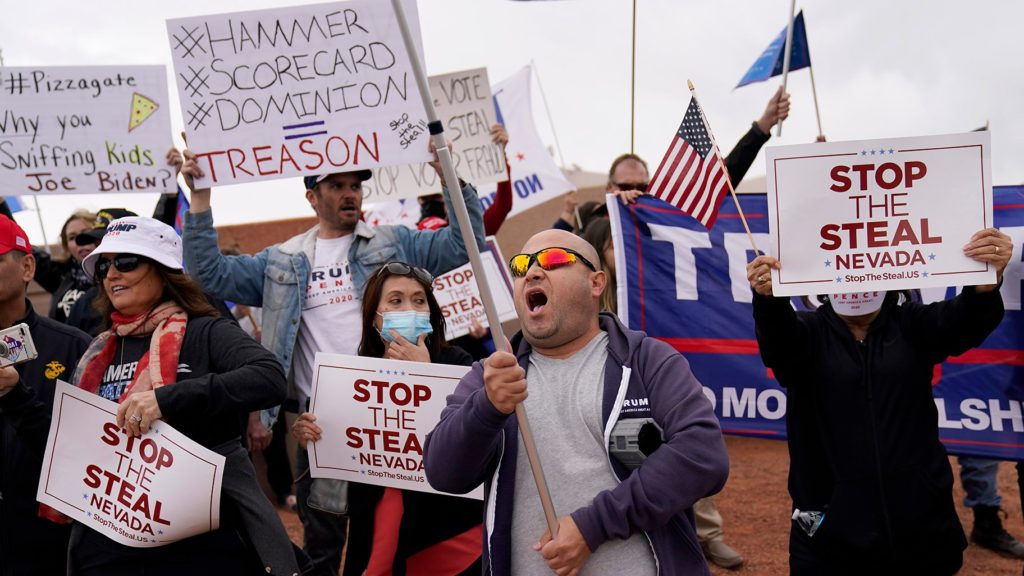
Some of these copycats have since moved towards an openly racist worldview, while many others have tried to remain more comedic and satirical in their assault on ‘the system’. But the fact remains that the podcasting landscape of the 2020s suddenly became filled with many of these types of hosts – call them “the clones of Joe Rogan”.
While Joe Rogan can’t be credited with having a direct influence on the outcome of the 2016 election, he can be credited with being one of the “founding fathers” of the so-called Manosphere.
The Manosphere now includes hosts like Theo Von, Kill Tony, Tucker Carlson, and many more. While there are manyfold stylistic and ideological distinctions between these shows and their hosts, they have become something of a “mega-brand” within podcasting, where the “special sauce” of podcasting was always that it was brandless.
Podcasting, The Anti-Brand, Begins Forming Brands
In other corners of the podcasting industry, other distinct brands have also begun to emerge since 2020.
For instance, podcasting has arguably become quite over saturated with true crime podcasts. Celebrities have started migrating to the podcasting world, as well.
There are still very original and deeply journalistic podcasts, but the development executives are becoming much more leery of outside-the-box ideas since they have figured out that they are more likely to achieve success with hosts that are standup comedians, celebrities, true crime mavens, or Manosphere types.
Podcasting is beloved due to its independence from corporate media owned companies, but the recent consolidation of large podcast platforms has lately made the podcasting industry feel more like an extension of the old TV networks.
Structural changes in the media landscape and shifting consumer tastes have clearly brought podcasting to a new crossroads.
Rise Of The Manosphere: ‘Podcast Bros’, 2020-2024
That said, the Manosphere still feels very different from what you see on the network news on any given night.
There is still a perceived authenticity, and a hard-edged humor, that makes fans flock to these types of hosts. They’ve built huge audiences and have started to book some impressive guests. This process began just before COVID and has continued ever since.
While each of the original Manosphere hosts had their own shticks, as inflation took off after COVID spending done by the Biden Administration, many of these podcasts started to unabashedly praise presidential candidate Donald Trump.
Joe Rogan himself started moving towards the Trump candidacy in early 2023. He also continued to show off his proclivity for independence in ways many viewed as dangerous then and now – like talking openly about disproven pandemic-related conspiracy theories and promoting drugs that Donald Trump claimed could be effective in treating COVID, like ivermectin.
Ultimately, Rogan declared his support for Trump, and it quickly became clear that the Manosphere was going to be a huge boon for Trump’s reelection chances leading into 2024.
The Manosphere and the 2024 U.S. Election
In 2024, Trump was no longer an incumbent president running for reelection, which made it easier for him to not run on his own record. Trump is always strongest when he can play ‘the outsider’.
Out of office, Donald Trump could hammer Joe Biden’s record. When President Joe Biden dropped out of the race in July of 2024, his hand-picked candidate – Vice President Kamala Harris – could not help but represent the hated ‘status quo’ despised by the throngs of MAGA, but also deeply distrusted by the Manosphere’s podcast hosts.
By 2024, there was also a ton of overlap now between MAGA and the Manosphere. High inflation, Biden’s low popularity, millions of dollars from billionaire Elon Musk to Trump’s 2024 campaign, and a platform of Manosphere podcasts with millions of listeners meant that Trump had many advantages in the 2024 race.
Kamala Harris inherited the campaign from Joe Biden and didn’t have much time to redefine herself as someone separate from Biden. In retrospect, Harris might’ve never had a shot to win that race. Which is not to say she didn’t make some terrible mistakes, namely by not appearing on several Manosphere podcasts.
Harris famously turned down an invitation from Joe Rogan to appear on his show. It’s possible her handlers expressed concerns to her and believed she’d have trouble staying on message during a three-hour show. They ultimately convinced her to stay away from Rogan – but in October of 2024 she had very little to lose by giving it a shot.
Kamala Harris did end up being interviewed on the Howard Stern show, ironically enough, but at that point Stern – who was once radio’s bad boy – felt like Old Media. The fact that Stern had embraced Biden and Harris didn’t make him seem as if he was his old, independent-minded self anymore. To millions of his listeners, the original bad boy of radio seemed to have ‘gone woke’.
We all know what happened in the 2024 election.
In 2024, Joe Rogan could certainly take credit – or blame – for the outcome in a way he could not have in 2016. His copycat Manosphere brethren can also take a bow (or a tomato to the face) for bringing Trump back to (what would become) the gold leaf-decorated Oval Office.
If you don’t like what’s going on in America now, it’s no exaggeration to say that Trump 2.0 was put into office, in part, by Theo Von, Ben Shapiro, Tim Pool, Tucker Carlson…the list goes on.
And for those of you asking: “aren’t there podcasters like Ezra Klein and Charlemagne Tha God who are on the other side of the political equation?,” the answer is “certainly yes” but they simply don’t have the same power of persuasion over Democratic voters.
It’s still hard to know why not.
The Future Of Podcasting Is Still Wide Open
What’s going to happen now and in the future?
Now that Trump has become the personification of a very chaotic status quo, the loyalties of the independent-minded group of podcasters known as the Manoverse is starting to shift in certain places.
Joe Rogan is openly appalled at how Trump has conducted his amped-up deportations of illegal immigrants. Ben Shapiro has also criticized Trump on tariffs, foreign policy (i.e. Ukraine), and more. And Tucker Carlson has moved far away from Trump by now talking to, and even worse, openly relating to the infamous neo-Nazi, Nick Fuentes.
It looks clear that the Manosphere is not even close to one hundred percent behind MAGA.
Like many in Congress (e.g. Marjorie Taylor Greene) the podcasting industry, and the Manosphere are consciously preparing for a Washington, DC and nation at large without Trump.
It’s coming faster than we think.
As his health is not great, even if Trump survives the four years of his second term, it is becoming clearer that he will be in full lame duck mode after 2026 when the House of Representatives will very likely flip to a Hakeem Jeffries-led Democratic majority. And in fact, the Manosphere and other MAGA denizens are finding it safer to defy and disagree with Trump.
As to the future of podcasting, well, it’s still unclear.
Podcasting used to be a landscape defined by being outside-the-box and independent. It has since become “tainted” with the same kinds of cynical inside-the-box thinking that has made lots of TV shows and films that come out of Hollywood bland and insipid.
Many podcasting companies are going from creative leaderships to corporate leadership, pursuing brands and formulas that will make the most bucks, not necessarily with creating entertaining and thoughtful, thoroughly researched, narrative podcasts as a priority in their (respective) business models. Also, podcasting has now become infatuated with video, which raises the question, “Is it even a podcast?”
But with all that said, there are still many amazing and unique podcasts out there that are well worth listening to. So, podcasting has definitely not been transformed into a thoroughly wall-to-wall monolith of an industry like its sister media industries (i.e. TV, radio, streaming).
If you look hard enough, you can find a wealth of podcast gems, and it’s clear the industry is still evolving.
If there are a handful of successful, unique, and creative podcasts that climb the charts, then they could still completely change the model of how the business is run.
And things could change for the better.
Will there be a Democratic-leaning group of podcasters (an alternative to the Manoverse) that becomes powerful moving into the 2026 and 2028 elections?
It could happen. In an industry this young and dynamic, you just never know…
Gideon Evans, Brooklyn, NY
December 11, 2025



One Response