Key Takeaways
The death of dancing in America was not accidental, but happened as the result of four converging forces that systematically dismantled the physical and psychological infrastructure of social dancing:
- A fundamental break in cultural values away from competence and coupling toward hyper-individualism and the validation of exhibitionism and the ‘social performance’ style.
- The institutional retreat of formal dance training from public education in K-12 schools.
- An economic transformation of nightlife venues from participatory dance halls into high-cost spectator platforms complete with VIP lounges and celebrity DJs.
- The digital final blow of screens, social media, and the culture of performance, which has swallowed up genuine social interaction as a byproduct of its expansion.
Hence the title of this week’s post: “Why America Stopped Dancing: The Four Critical Forces that Killed Social Ritual”.
Introduction – Dancing Has Become An Anachronism
Step onto any American dance floor today—a wedding reception, a college formal, a middle school winter dance, or even a local nightclub—and you are likely to encounter a scene of collective awkwardness.
Active dancing is mostly confined to isolated pockets of highly specialized, often individualistic movement, while most attendees stand strangely motionless, phone in hand, performing a kind of cultural voyeurism.
The attendees are physically present, but their participation is limited to spectating, drinking, or simply waiting for the moment to pass.
Scenes of this kind are particularly pronounced among the young at middle and high school dances – which increasingly don’t involve much dancing at all. They have been transformed into mere social occasions that are even more awkward due to their complete redundancy.
Dances are now simply occasions to dress up — an expensive game of make-believe for adolescent girls and boys hoping to get asked out on “a date”, which, in itself, is a kind of anachronism no longer actually practiced in the 21st century.
Dancing, particularly among young people, has been a dying social form since at least the 1970s. But the slow death of dance in America is not the result of changing musical tastes – though those have also played a role — but a more profound indicator of cultural disintegration.
From Born Dancers to Forlorn Bystanders
Our parents and grandparents were, almost by mandate, born dancers.
Whether stepping through the communal reels of the 1880s—where, as one settler noted, the entire community was expected to join the set—or navigating the terrifying, thrilling etiquette of a 1950s high school cotillion, knowing how to dance was the essential currency of socializing. Without it, you were, quite simply, socially bankrupt.
Today, that social currency has been devalued — to near zero.
We once had institutions—the school, the dance hall, the communal frolic—that compelled us to move together. No longer. The death of dance represents yet another symptom of the decay of shared social ritual and the erosion of essential forms of interpersonal competence.
What happened?
The Great Cultural Break—From Competence to Exhibitionism
The true genesis of the American dance decline lies not in a shortage of venues or technology, but in a profound shift in cultural values that began decades before the digital revolution. This shift was marked by the overthrow of the codified social dance and its replacement with a movement based on individual, uncodified expression.
For generations, the musical landscape—dominated by ballroom, swing, and Big Band Jazz—demanded a respect for rules. The cultural subtext of jazz was that civilized enjoyment depended on mastering an indispensable set of steps: the Foxtrot, the Waltz, the Jitterbug.
These were rules of engagement that facilitated structured physical intimacy and social order. As one historian said of the 1950s, the ability to “lead and follow” was the accepted currency of the social night.
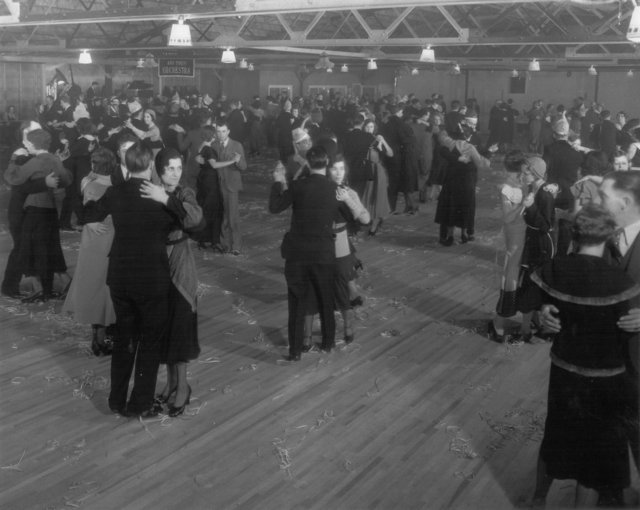
To understand the scope of this loss, consider the communal expectation of earlier eras. The dance floor was not a place for performance; it was a place for social function.
“When the fiddler struck up ‘Buffalo Girls,’ the plank floor was instantly filled. The entire community, from the grizzled prospector to the youngest girl, found a place in the set. It was not a dance of elegance, but of exuberant motion and necessity. The Caller’s voice, clear and booming above the thrumming feet, directed every movement… Everyone knew the steps, and any mistake was quickly laughed off, fixed by a neighbor, and the dance swept on.” (Account of an 1880s Western ‘Frolic’)
Then came the rupture of the early 1960s.
The Seismic Shift: ‘The Twist’ and Rock ‘n’ Roll
The immediate, cataclysmic break came with the 1960 popularization of “The Twist,” followed by the explosion of Rock ‘n’ Roll as the reigning cultural engine. Rock music did not merely offer a new rhythm — it offered an entirely new ethos.
- The Uncoupling: “The Twist” was revolutionary because it was the first widely accepted dance where partners did not touch. This single, simple step fundamentally ended the tradition of physical connection and mutual reliance that had governed social dance for centuries.
- The Ethos of Expression: Unlike jazz, which valued technical competence and respect for shared form, Rock ‘n’ Roll was fundamentally about the release of inhibition and the rejection of adult rules.
The reaction from the establishment was immediate, judgmental, and utterly helpless. As the youth gleefully shook off their cotillion training, many older observers saw the death of decorum itself.
Former President Dwight D. Eisenhower, upon witnessing the new, individualistic style of dancing, reportedly declared that the phenomenon represented a clear loss of social standards and was “a national tragedy.” If the commander-in-chief views the abandonment of the two-step as an existential threat, then you know a genuine cultural tremor of some kind is underway.
Perhaps the most mordantly humorous critique came from commentators who struggled to even define the new activity. The movements were so divorced from traditional steps that one mid-60s observer quipped:
“What these youngsters are doing is not dancing; it’s merely movement. It is an exhibitionistic form of self-expression where one person is doing something for their own personal joy, and two people doing it together are merely two people doing the same thing in the same room. The rules were simply replaced by the desire to look like you operated by no rules at all.”
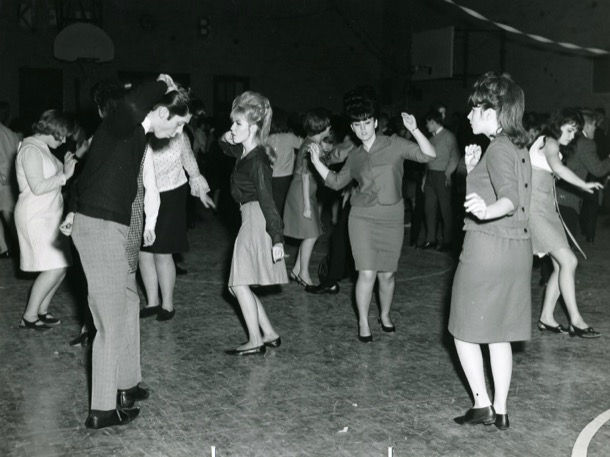
This transition from the tightly regulated, elegant couples dances of the jazz era to the free-form, separatist movements of rock and roll was the first, and perhaps the most crucial, cultural shift that devalued the social role of dancing for Americans.
After the 1960s, Americans became convinced that social dancing required no preparation, no shared language, and most importantly, no partner. The foundation of competence was shattered, making the next stage of decline inevitable.
Institutional Retreat—The End of Competence by Curriculum
If Rock ‘n’ Roll delivered the philosophical break from traditional dance, the public education system delivered the coup de grâce. The institutional retreat from teaching social dance was the mechanism that ensured the knowledge and competence gap became irreversible.
By the mid-20th century, knowing the basic steps was a necessary social skill, instilled through required Physical Education (P.E.) courses or community-based cotillion programs.
“The first formal dance in the Armory was a terrifying and thrilling ordeal. We had spent six miserable weeks in Mrs. Gable’s mandatory cotillion class learning the Foxtrot and the basic Jitterbug steps, lest we embarrass our families… Dancing was simply the currency of socializing; without it, you were socially bankrupt.” (Memoir of a 1940s High School Formal)
However, beginning in the late 1960s and accelerating through the 1980s, dance was targeted as a “soft” subject in the national “back-to-basics” movement. As budgets tightened and standardized testing took precedence, dance was among the first offerings to be cut.
From Mandatory Skill to Niche Subject
The numbers show a profound, systemic marginalization of formal dance training:
- The Vanishing Act: Historically, over half of U.S. public schools taught some form of partner dance in the 1920s. By contrast, public schools offering dance-specific instruction have plummeted, with only about 15% to 17% of high schools offering any form of it today in the 2020s. Even when taught currently, the instruction is often focused on performance styles (jazz, competition) rather than foundational social partnering skills needed for a wedding or a social club.
- The Niche Trap: Dance was successfully pushed out of the mandatory, universal curriculum and into the realm of the niche and the expensive. This created a stark class divide: children whose families can afford private studio tuition may still gain high-level technical skills, but the majority of young people—the citizens who will populate the eventual social sphere—are left with zero communal instruction.
In past generations, the embarrassment of being forced to learn the Foxtrot was eventually redeemed by the confidence of having a shared, functional skill. Now, the fear of public humiliation is compounded by total ignorance.
The true tragedy of this institutional retreat is that it leaves adolescents socially bankrupt when faced with unstructured, musical gatherings. When faced with a dance floor, the modern response is to freeze—not out of shyness, but out of a legitimate lack of vocabulary.
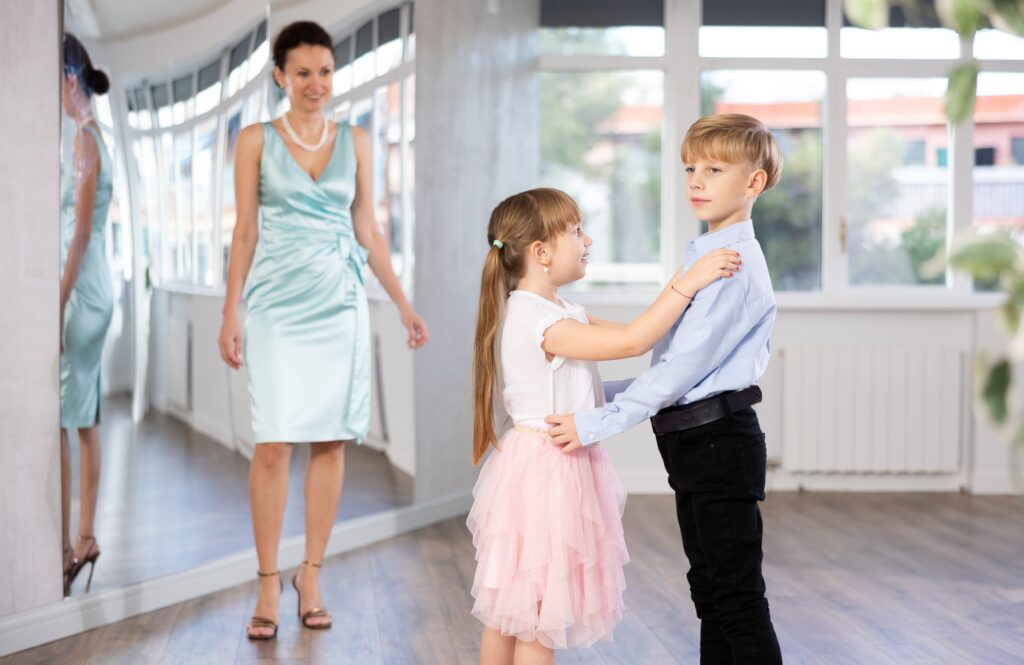
This fear is neatly sidestepped by the cell phone, transforming the uncomfortable potential of public failure into the safe, passive role of a spectator. Not knowing how to behave and succeed socially, young people pivot more deeply into the world of screens, virtually disappearing into the online world to compensate for the atrophying of the actual social world.
Our educational void creates a devastating feedback loop: because competence is not taught, people stop dancing; because people stop dancing, dancing is no longer expected; because it is no longer expected, schools feel even less pressure to teach it.
Institutions thereby wash their hands of the responsibility for creating socially competent citizens, making the decline in social skills an inescapable fixture of the 21st century American experience.
The Economic Shift — From Dance Hall to Spectator Platform
The cultural and institutional failures were compounded by a final, fatal shift in the economic function of the American nightspot. Dancing, as a social lubricant, was once the primary draw; today, it is merely an optional backdrop to a far more lucrative business: premium consumption and spectacle.
The original American dance hall, like the Savoy or the Palladium, relied on high volume and high participation. Today, that model has been systematically replaced by one focused on exclusivity, observation, and the sale of high-margin items.
The Rise of the VIP Lounge
Nightclubs have transformed from communal spaces into stratified zones of consumption:
- The VIP Economy: The key to modern profitability is the VIP section and bottle service. This model physically segregates the space, shrinking the general admission floor and psychologically reinforcing the idea that the “action” is exclusive. The focus shifts from moving bodies to expensive transactions. The people closest to the music (the VIPs) are often the least likely to be dancing, prioritizing status and comfort over physical engagement.
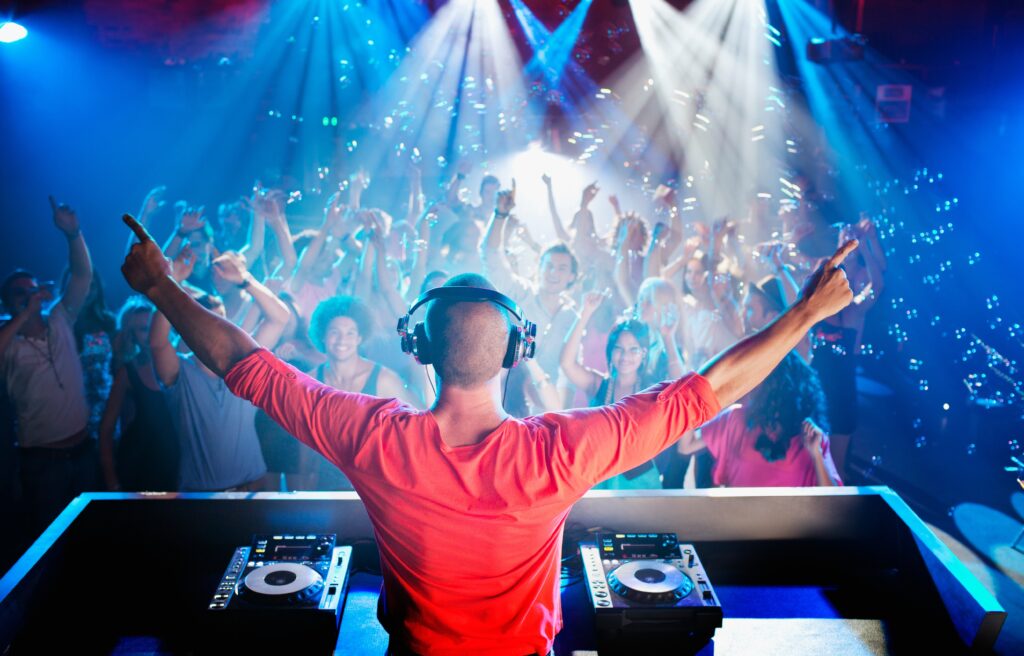
- Spectacle Over Participation: Where the 1950s dance floor was focused inward (on the couples), the modern venue is focused outward (on the DJ booth or the elevated stage). These spaces have become less like community centers and more like small concert venues, where the focus is on the performer as the object of reverence. The crowd often assumes a static, awe-filled posture, often holding up phones to capture the spectacle rather than engaging in the activity itself.
This economic pressure has led to the literal disappearance of physical dance space. The dramatic decline in dedicated venues, mirrored by the reported 31% drop in nightclubs in the UK over a decade, shows that the traditional, dedicated dance space is becoming economically unviable.
By prioritizing high-cost consumption and the spectacle of the performer, the modern venue has economically disincentivized the very activity it is theoretically meant to host.
The Digital Final Blow—From Participation to Performance
The stage was set for the collapse: the cultural mandate was gone, the institutions had retreated, and the economics were against it. The final, catastrophic accelerant arrived with the ubiquitous screen and the rise of social performance culture.
The digital age did not merely provide an alternative to going out; it fundamentally changed the psychological contract of public visibility.
Tyranny of the Spotlight Effect
Social media has transformed every public space—including the dance floor—into a potential recording studio and a public tribunal.
- The Fear of the Viral Meme: Where previous generations could make a fool of themselves anonymously (the consequence ending when the night did), today, any awkward two-step, ungraceful movement, or lapse in appearance can be instantly recorded, uploaded, and preserved forever. This reality magnifies the “spotlight effect” into a genuine, existential threat. The potential for ridicule outweighs the potential for enjoyment, a risk too high for a generation already struggling with social anxiety.
- The Pressure of Choreography: The rise of platforms like TikTok has created a paradoxical relationship with dance. On one hand, dance has never been more visible; on the other, it is now almost entirely associated with highly produced, specialized, and precisely choreographed performances. This raises the bar for competence to an unattainable level for the average person. The average person, lacking the formal training removed by schools, now compares their amateur motion to professional-grade routines seen on a small screen.
The screen has thus acted as a gravitational center, pulling people even further off the public dance floor and ever more deeply into private consumption, sealing the fate of the dance floor as a relic of a bygone, physically interactive social era.

Conclusion: Reclaiming Our Shared Ritual
We have traced the decline of American social dance across four pivotal shifts: the 1960s cultural mandate to abandon competence; the institutional abdication of dance training in schools; the economic decision to prioritize VIP consumption over participatory space; and finally, the digital pressure to turn every amateur movement into a potential viral humiliation.
The silent dance floor is not merely a sign of social preference, but the physical manifestation of a profound cultural quiet quitting, reflecting our society’s increasing preference for passive, isolated consumption over socially active, communal connection. The real tragedy is the loss of a low stakes, universally understood language of physical interaction.
To reverse this trend, communities must recognize that the solution lies not in demanding complex choreography, but in lowering the barriers to entry.
This will require local action: schools or community centers should reintroduce mandatory social ritual events—low-pressure square dances or simple, repeating-step group activities, not formal cotillions.
We must support local venues that prioritize open floor space over segmented VIP sections and institute “phone-free” dance nights to strip away the digital performance anxiety. The goal is to make social movement accessible, common, and, most importantly, non-performative again.
The ability to move together is a fundamental human expression of belonging. When a society loses its shared, physical rituals, it sacrifices a vital strand of its social fiber. The emptiness of the modern dance floor serves as a stark metaphor for the increasing isolation and atomization of American life.
It is time we recognize that the effort required to put our phones away, step onto the floor, and simply move together is not just a form of entertainment; it is an act of cultural and civic reconnection—a necessary rebellion against the forces pushing us toward quiet solitude.
Until next time, I remain —
Greymantle