
George R. R. Martin’s Tragic View of Romance
It is a truth universally acknowledged in Westeros that romantic love is a dangerous thing — more likely to topple dynasties than to secure happily-ever-after endings.
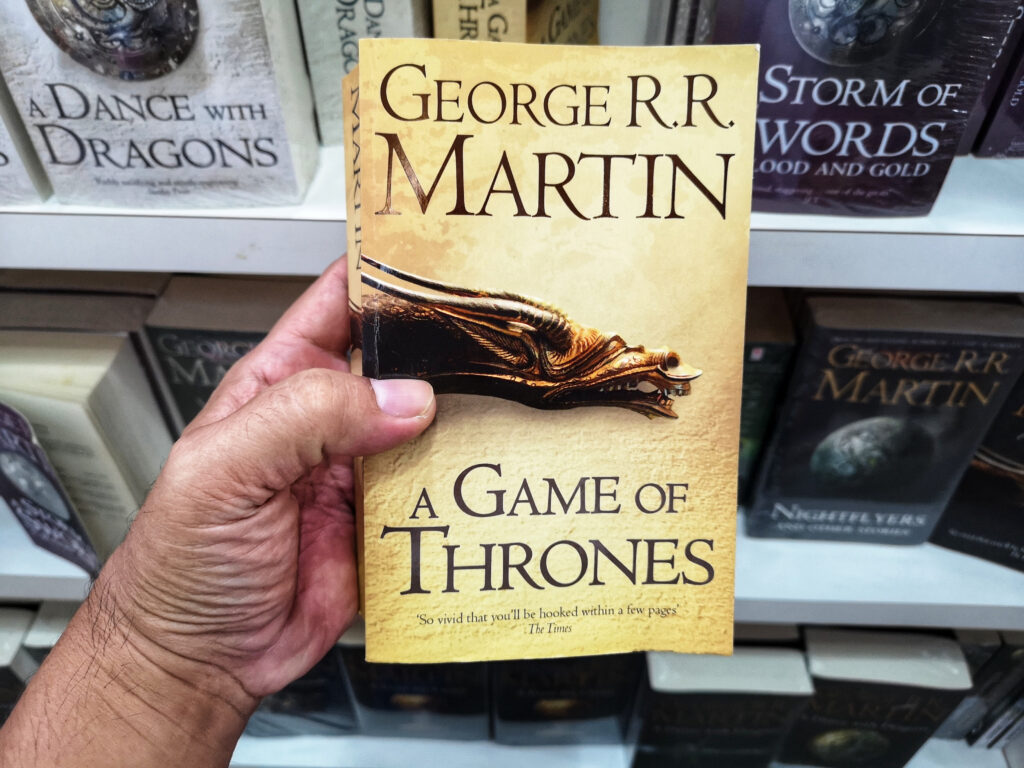
George R.R. Martin seems unusually committed to proving his point. In A Song of Ice and Fire and its television adaptation, ‘Game of Thrones’, romantic love is not merely a complication to the quest for power, but an obsessive state of mind that narrows perception, destabilizes political order, and often leads to catastrophe. There is a clear correlation between love and doom in Westeros.
Destructive romances recur with such frequency, and carry such terrible consequences, that readers have come to suspect romantic love as a harbinger of doom is central to Martin’s worldview. Greymantle finds Martin’s treatment narratively compelling but philosophically contestable — persuasive within Westeros and top ranks of medieval societies whose history Martin draws upon, but less so beyond those confines.
Taking the Outlier Position
Martin’s pessimistic take on love is unusual among fantasy writers. Frequently compared to J.R.R. Tolkien, he diverges sharply from Tolkien’s redemptive romanticism. In Tolkien’s legendarium, especially the tale of Beren and Lúthien in The Silmarillion, romantic love possesses moral and even salvific force.
Other popular authors such as Diana Gabaldon and J.K. Rowling portray romantic attachment as a driver of growth, loyalty, and family formation. Martin, by contrast, presents unchecked eros and romantic love as equally destabilizing and politically corrosive.
His influences also skew darker than those of the aforementioned. The cruel liaisons found in the works of Stephen R. Donaldson, Michael Moorcock, and Maurice Druon foreshadow Martin’s worldview. Love, in these traditions, collides with power and rarely survives intact.
A World Where Love Fails
Several lines from the television adaptation Game of Thrones frame Martin’s anthropology of love.
Maester Aemon warns: “Love is the death of duty.”
Petyr Baelish laments a world where love cannot override obligation.
Varys remarks that observing the effects of desire makes him “not unhappy” to be a eunuch.
Different characters, one message: romantic desire clouds judgment and invites disaster.
The Foundational Tragedy: Rhaegar and Lyanna
At the epic’s center lies the unseen romance of Rhaegar Targaryen and Lyanna Stark. Their mutual love — intentionally misrepresented early in the narrative as a tale of abduction and rape — sparks civil war, topples a dynasty, and kills thousands, including themselves.

Martin’s inversion is here subtle. In Arthurian myth, the violent union of Uther Pendragon and the Lady Ygraine ultimately produces King Arthur, whose virtuous life redeems the brutality of his conception.
But in Westeros, consensual love proves more catastrophic than abduction and rape – which, as an artistic statement is a position of unusual severity, even among skeptics of romantic love. Even freely chosen passion is wont to have catastrophic consequences in George R. R. Martin’s eyes.
Obsession, Not Tenderness, as the Norm
The tragic pattern of Rhaegar and Lyanna repeats itself across A Song of Ice and Fire.
Petyr Baelish’s lifelong fixation on Catelyn Stark curdles into political manipulation and war. Jaime and Cersei Lannister’s incestuous bond fuses eros with narcissism and dynastic ambition, contributing to repeated betrayals and bloodshed. Robb Stark’s marriage to Talisa Maegyr (or Jeyne Westerling in the novels) leads directly to the Red Wedding, where romantic impulse collides with broken oaths and mass slaughter.
A pattern emerges: lovers behave imprudently; those bound by oath and discipline endure. In Martin’s moral arithmetic, survival and virtue attach less to passion than to restraint.
Duty as Substitute Virtue
What fills the vacuum left by romantic transcendence is not nihilism, but duty.
Eddard Stark’s marriage is stable and affectionate, yet his defining choices are rooted in loyalty and obligation, not romance. Jon Snow’s tenderness toward the wildling Ygritte cannot survive his oath to the Night’s Watch. When forced to choose, he returns to duty — and the narrative implicitly ratifies that decision.
In Westeros, romantic and parental love ignite crisis; duty stabilizes. If anything resembles virtue in this world, it attaches to discipline rather than to desire.
Eros Without Agape
Placed in historical context, Martin’s treatment of love resembles the critiques of eros common in the ancient world more than it does the sensibility of the post-Christian West.
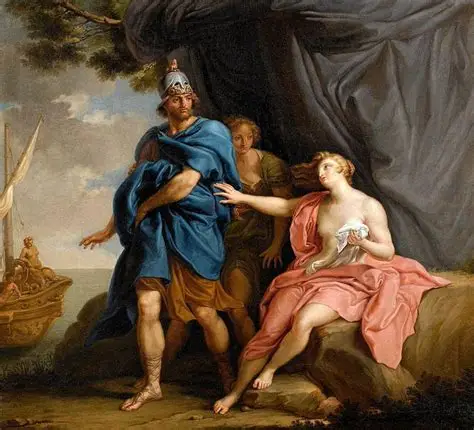
Greek tragedy offers no shortage of destructive passion — Phaedra in Hippolytus, Medea in Medea. In Virgil’s Aeneid, Dido’s love for Aeneas is tragic because it conflicts with statecraft; Aeneas must leave Dido and bring a sudden end to their passionate romance in order to fulfill civic destiny.
What altered Western expectations was Christianity’s innovative fusion of eros with agape — erotic desire intertwined with sacrificial love and covenantal permanence. Marriage became aspirationally sanctifying, rather than primarily a political union between families to produce offspring.
Martin’s world conspicuously lacks this synthesis. There is eros in abundance — lust, jealousy, possessiveness — but little evidence of agape to transfigure it. When true romantic affection appears (Sam and Gilly; Jorah Mormont’s devotion to Daenerys), it is subordinated to oath or political necessity. Eros remains vivid and intoxicating — but infinitely combustible.
A Reversion, Not a Rebellion
Modern audiences expect romance to humanize power. Martin denies this expectation. His aesthetic aligns less with Tolkienian romanticism than with prestige dramas like The Sopranos and Breaking Bad, where intimacy often becomes merely another arena for ego and manipulation.
Rather than rebelling against modern romanticism, Martin may be reverting to something older: a view of eros as biologically potent but morally unreliable. It is entirely possible, as we speculated in last weekend’s long-form version of this essay, which you can find here, that Martin’s perspective reflects both his personality type and elements of the environment in which he was raised.
Why Martin’s Vision Resonates Now
If Martin’s vision feels contemporary, it may reflect broader cultural uncertainty. In recent decades across the Western world, marriage has been delayed or relativized; permanence appears fragile; self-fulfillment often outranks covenant. In such an atmosphere, Martin’s anthropology feels less provocative than recognitional. Love untethered from transcendent obligation reverts to appetite and power.
Greymantle’s Dissent
Yet there is a difficulty with Martin’s anthropology: it does not fully accord with observable reality.
Even after decades of sexual revolution and liberalized divorce, more than half of marriages endure. Many endure not as legal shells but as affectionate partnerships. The fever of youth cools without curdling. Passion matures into loyalty.
Outside the West, in societies where marriage remains structurally central, one finds durable unions marked by warmth and shared purpose. Certainly not the stuff of fairy tales — but not catastrophes either.

This does not deny love’s volatility. History offers warnings aplenty. But to treat eros as primarily corrosive — and duty as its necessary counterforce — universalizes what may be contingent. For many, romantic attachment does not shatter the self but integrates it. It deepens obligation rather than undermines it.
Artists are acute observers of failure, but they are also participants in it. It is possible that Martin’s severity toward romantic transcendence reflects temperament as much as civilizational commentary. Worldviews emerge from lived experience.
Martin is correct that passion can destroy kingdoms. Contemporary life quietly reminds us it can also build households — and keep them standing.
That quieter truth may lack the operatic grandeur of betrayal and war. But its durability suggests that eros and obligation are not natural enemies.
Happy belated Valentine’s Day!
Greymantle