The recent Israeli and U.S. military strikes against Iran’s nuclear program have been described in the press as “crippling,” “unprecedented,” and “strategic victories.” But such language, while dramatic, misses the real story. These strikes were not an endpoint. They were a transition—away from conventional deterrence and into something far more volatile, subversive, and potentially regime-breaking. The real war is just beginning.
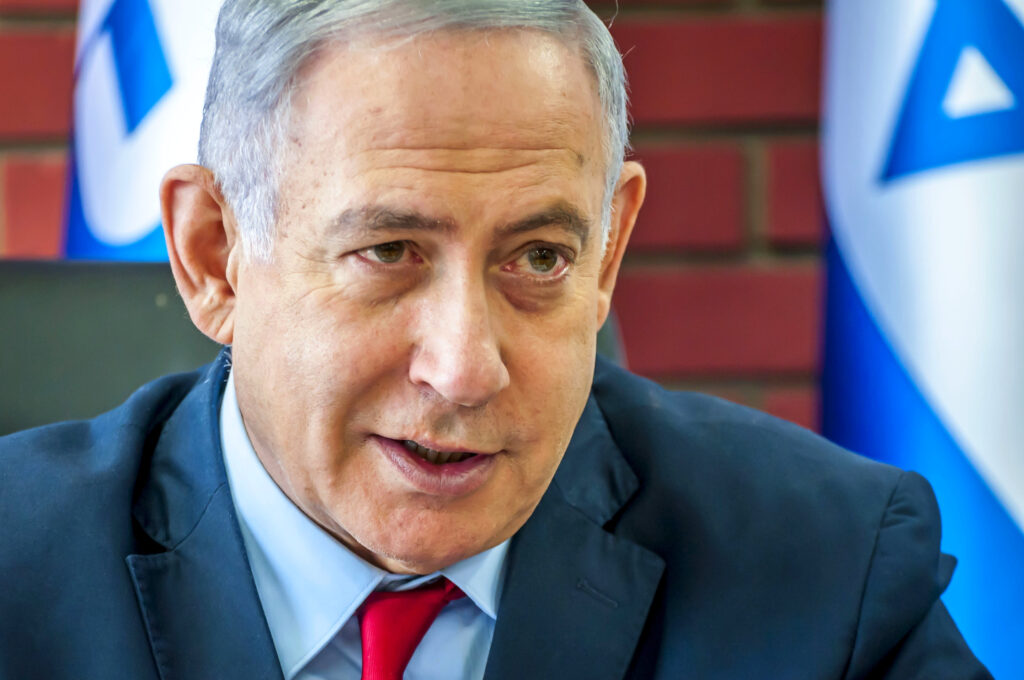
Despite the visible damage to Iran’s nuclear infrastructure, Israeli Prime Minister Benjamin Netanyahu is not finished with Iran—not by a long shot. If anything, his long-standing objective is now within reach.
It is not simply the destruction of nuclear facilities or the assassination of Quds Force generals. Netanyahu wants the regime itself gone. And he may now believe that the conditions required to topple it—externally agitated, internally hollowed out, globally isolated—are falling into place.
The question is no longer whether the Islamic Republic will fall. The question is whether the current regime survives the summer. Hence the title of this week’s post: “Weeks, Not Months: Why the Iranian Regime May Not Survive the Summer”.
THE STRATEGIC LOGIC OF THE STRIKES
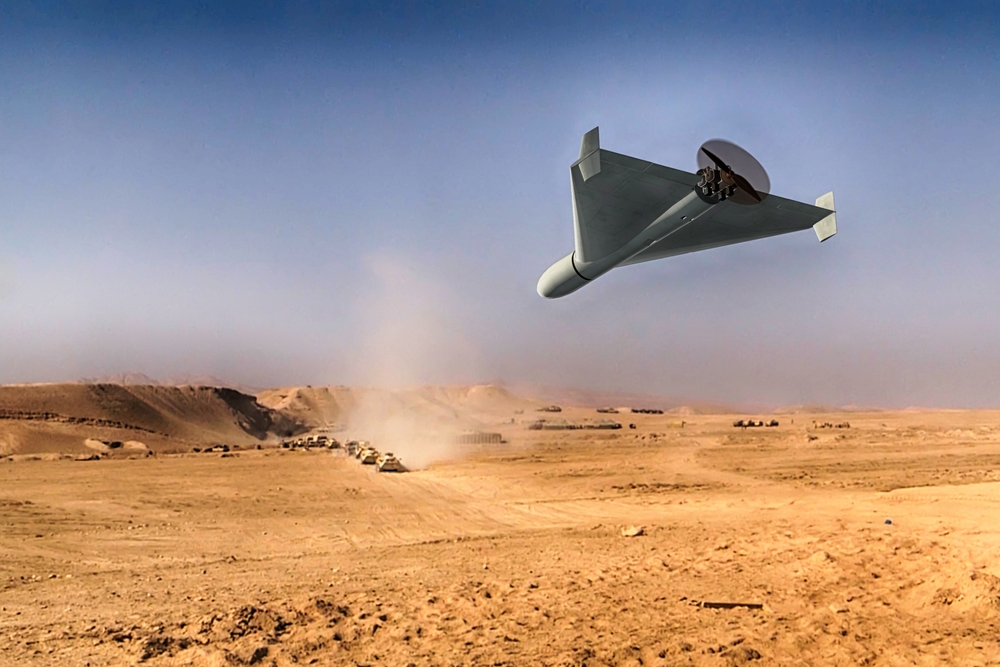
The campaign that began with limited Israeli precision operations has now expanded into something closer to a systematic decapitation of Iran’s strategic capacity. Nuclear enrichment sites like Natanz and Fordow lie in ruins. Underground bunkers once considered impervious to attack—crushed by next-generation bunker busters. Air defense radars, drone factories, fuel depots, and IRGC logistical hubs have been reduced to ashes.
But the campaign’s logic was always about more than hardware. This was psychological warfare, not just kinetic. By demonstrating Iran’s vulnerability to sustained Israeli (and American) reach, Netanyahu hopes to send a clear signal to Iran’s internal power structure: you are not safe, and your days are numbered.
Hezbollah has already absorbed the message.
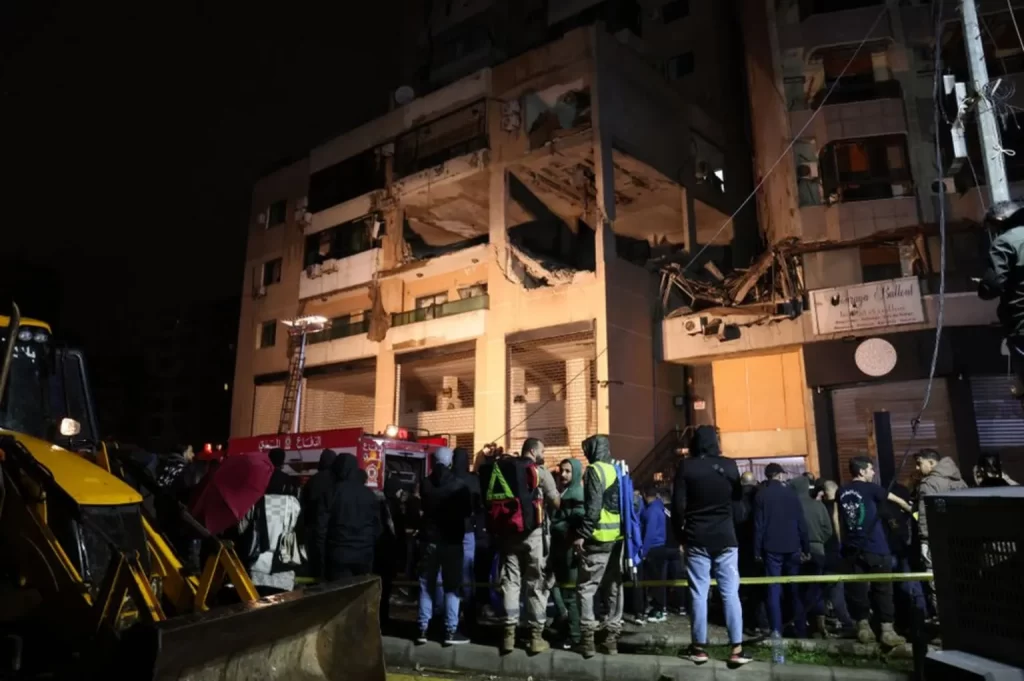
Above: The aftermath of an Israeli air strike on a Hezbollah safe house in Beirut, Lebanon, 2024
THE NASRALLAH OPERATION: A PREVIEW OF COLLAPSE
On September 27, 2024, Israel executed a coordinated strike on Hezbollah’s heavily fortified underground command complex in southern Beirut. The target list read like the leadership directory of Iran’s most powerful proxy. Among the dead were Hezbollah Secretary General Sheikh Hassan Nasrallah, most of his senior deputies, and Abbas Nilforushan, a senior general in Iran’s Islamic Revolutionary Guard Corps.
Estimates suggest over 50 high-ranking Hezbollah and IRGC personnel were killed in the single largest Israeli air operation in Lebanon since 2006.
The message was unmistakable: there are no safe havens left.
The fact that this facility was long considered “impregnable” made its destruction all the more devastating. The era of underground immunity is over. This strike did more than just kill men. It severed command networks, undermined morale, and exposed the fragility of the Axis of Resistance’s communications and defensive assumptions.
And it telegraphed Netanyahu’s broader intent: to go beyond neutralizing proxies and aim directly at the head of the snake.
BIBI’S FINAL GAMBLE
This, then, is the next chapter of what I previously described as “Bibi’s Michael Corleone Moment.” In that piece, I argued that Netanyahu’s campaign of calibrated retribution—against Hamas, Hezbollah, Iran, and their regional enablers—was not just a response to the October 7 attacks. It was the fulfillment of a doctrine: “perfect security,” as Bibi calls it, derived from the Revisionist Zionism of Ze’ev Jabotinsky and instilled in Netanyahu by his father, the historian Benzion Netanyahu.
But there’s more at work here than doctrine. There’s also legacy.
If Netanyahu can permanently cripple Iran’s nuclear program, eliminate key IRGC leadership, and foster conditions ripe for regime collapse, he will have accomplished what Israeli leaders have dreamed of since 1979: the removal of the Islamic Republic as a revolutionary power.
It would be nothing short of a geopolitical masterstroke, reshaping the strategic landscape of the Middle East, removing Israel’s most formidable and ideologically motivated adversary, and doing so without deploying a single Israeli division inside Iranian borders.
That’s the gamble. The payoff could be generational.
WHY THE AIR STRIKES ARE NOT ENOUGH
But Netanyahu understands that airpower alone won’t finish the job. Continued bombings risk provoking a nationalistic backlash—even among Iranians who oppose the regime. Iran is a civilization-state with a strong national identity. Foreign military intervention has historically had the paradoxical effect of rallying even dissenters to the flag.
So Israel will now shift tactics. The kinetic phase is likely to give way to an intensification of what’s already being called Shadow War 2.0.
Expect more assassinations of regime figures—military, political, and scientific. Expect cyber-sabotage of key utilities, communications networks, and oil infrastructure. Expect psychological operations: leaks, planted documents, whisper campaigns aimed at pitting regime factions against one another.
And above all, expect Israel to provoke the regime into doing what it has always done in moments of vulnerability—turning on its own people. That, Netanyahu believes, is how the regime will fall: not from a direct Israeli or American hand, but from within. Triggered by its own excesses.
THE INTERNAL POWDER KEG
The Iranian regime is brittle. It rules a young, frustrated, and deeply cynical population. The Mahsa Amini protests of 2022 were not a momentary eruption—they were a harbinger of systemic collapse. The security forces managed to suppress those demonstrations, but only barely, and at great cost to the regime’s legitimacy.
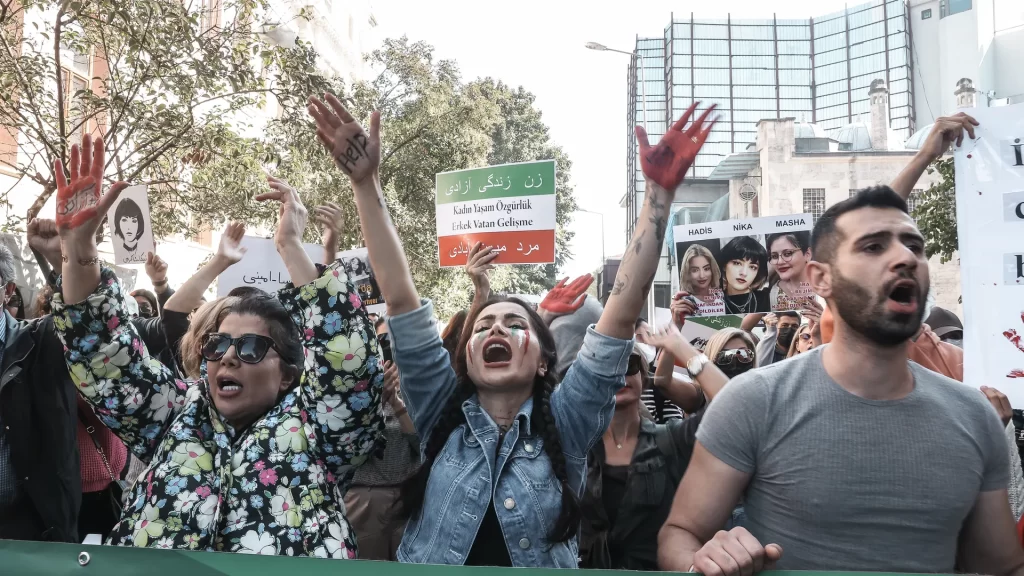
Weeks, Not Months: Why the Iranian Regime May Not Survive. Put simply, Iran is a powderkeg.
Since then, the discontent has simmered. Economic stagnation, international isolation, and daily reminders of elite corruption have eroded any residual revolutionary fervor. If Israel succeeds in goading Ayatollah Khamenei and his inner circle into a new wave of repression—mass arrests, executions, purges—it may light the fuse again. And this time, the protestors could have something they didn’t have in 2022: a credible belief that the regime can be beaten.
THE CHAOS MYTH
One of the most persistent arguments against regime change in Iran is that it would lead to chaos—civil war, ethnic fragmentation, and possible state failure. That argument is outdated.
Iran is not Syria. Its core national identity is intact. Its Kurdish, Azeri, and Baluchi minorities—while culturally distinct—have shown no strong inclination to secede, especially if the alternative is a decentralized federal state or a constitutional monarchy under Reza Pahlavi, the exiled son of the late Shah.
Pahlavi, long dismissed by foreign analysts as a relic, is in fact a visible and unifying symbol across Iran’s vast global diaspora. Though he holds no formal political power, he has earned the respect of many factions within the opposition for his decades-long effort to keep dissident groups—ethnic, secular, monarchist, reformist—aligned around the shared goal of ending clerical rule.
Pahlavi’s stature has only grown since the Mahsa Amini protests, during which he called for solidarity across ethnic and religious lines and encouraged nonviolent resistance from abroad.
To many inside and outside Iran, Pahlavi represents not a return to the past, but a transition toward a more pluralistic future—anchored by a figure who can serve as a temporary head of state while a new constitution is drafted. He is not a dictator-in-waiting, but a rallying point for post-regime stabilization.
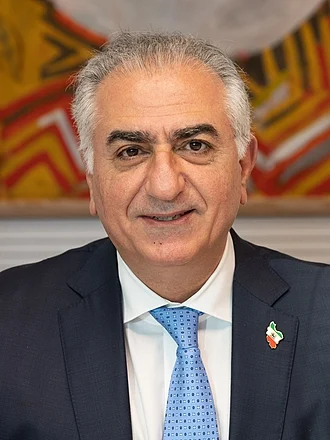
Above: His Excellency, Crown Prince Reza Pahlavi
As Pahlavi himself stated in a 2023 interview, “Our struggle is not about restoring the past; it is about building a future where all Iranians—regardless of ethnicity, faith, or political belief—can live in freedom and dignity. I see myself not as a king to be crowned, but as a servant to a free people.”
The collapse of Syria’s Baathist regime earlier this year may have de-risked Iranian collapse in several ways. Kurdish factions in northern Syria are now in negotiations to integrate into a new, post-Assad government. The Turkish-Kurdish detente, still fragile, further reduces the likelihood of cross-border chaos. And without Assad’s logistical cooperation, Iran’s ability to sustain Hezbollah and other regional proxies is fatally compromised.
Simply put: the nightmare scenario of a post-regime Iran devolving into a failed state is far less likely than Washington pundits think. The real risk is in doing nothing—and allowing the regime time to regroup.
PLAYING THE TRUMP CARD YET AGAIN
If Netanyahu has a geopolitical window, it is shaped in part by the personality of Donald J. Trump. According to credible reporting, U.S. intelligence agencies uncovered an Iranian plot to assassinate Trump during the 2024 presidential campaign. The plot was thwarted. But the insult lingers—and it struck a nerve.
Trump’s foreign policy is notoriously reactive, shaped as much by personal loyalty and vendetta as by strategy. And Netanyahu knows this better than anyone.
The recent U.S. participation in strikes on Iranian nuclear sites—the first such direct military action by Washington in decades—can be attributed in part to this personal calculus. It wasn’t just about national security. It was about payback. As Trump has expressed repeatedly in his nonfiction books on business, among his chief credos is: “If someone screws you, always screw them back.”
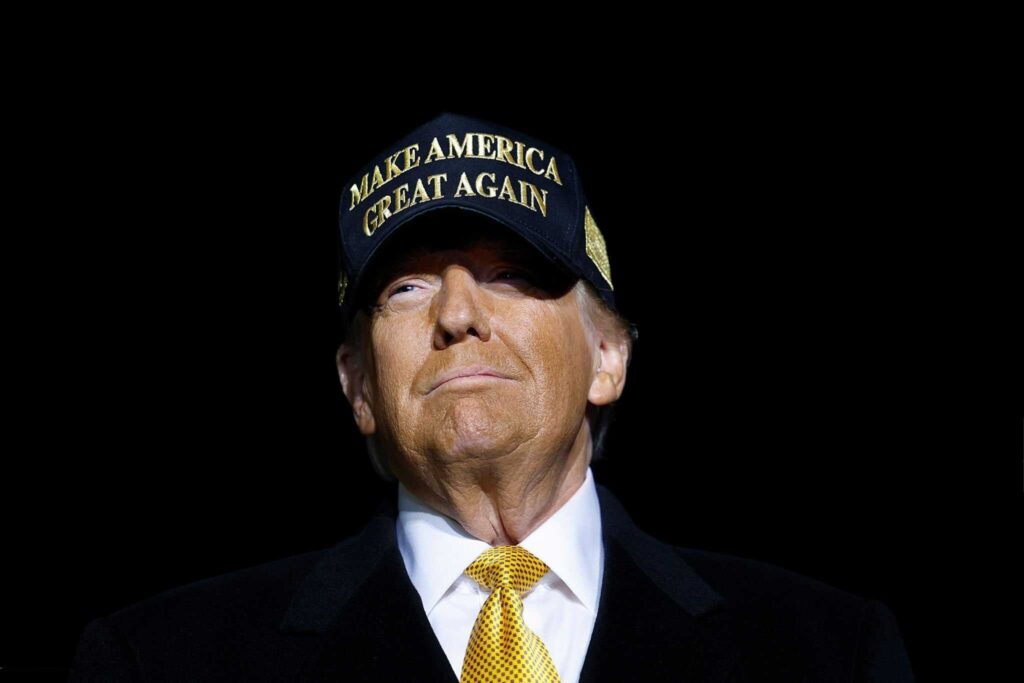
As Trump was preparing to return to office in January 2025, Israeli officials were already laying the groundwork for bolder operations. The previous administration might have allowed the first round of strikes. The next round—targeting Iran’s political and religious leadership—will be coordinated, like the strikes on the nuclear facilities, under the far more permissive Trump White House.
MORE ‘COLD SCORES’ STILL TO SETTLE
While Iran remains the central target, Netanyahu has not forgotten others.
Qatar, long tolerated by Israel for its financial support to Hamas (a support which once served Israel’s interest in dividing Palestinian leadership), is no longer viewed as a helpful manipulator. After October 7, 2023, and the suspicion that Qatari officials had advance knowledge—or at least ideological sympathy—Netanyahu’s attitude toward the tiny Gulf emirate has darkened.
Still, Bibi plays the long game. He will not jeopardize Israel’s ties with Britain and the U.S. by striking at Qatar preemptively. But make no mistake: retribution has been scheduled. Just not yet.
THIS SUMMER IS THE TIPPING POINT
What Netanyahu seeks now is pressure—sustained, unbearable, multidimensional pressure—on the Iranian regime. The summer of 2025 may become the moment of fracture. Not through another strike on Natanz or a dramatic battlefield breakthrough, but through a chain reaction of fear, factionalism, and fatal overreach.
If the regime lashes out internally, it may finally shatter the political consensus needed to keep it afloat. If Israel’s shadow war continues to destabilize Iran’s elite networks, the Revolutionary Guard may fracture. And if the people of Iran sense weakness, they may rise again—with greater clarity of purpose, and more external encouragement, than ever before.
The Western obsession with “stability” has too often served as a rationale for cowardice. But stability in the Middle East has always been a mirage. Regimes fall. Power shifts. Alliances crumble. And sometimes, a long shadow war reaches its end not with a bang, but with a quiet, internal collapse.
CONCLUSION: THE REGIME’S FINAL SUMMER?
The Islamic Republic has withstood wars, sanctions, protests, and assassinations. But every system has a breaking point. And under Netanyahu’s relentless pressure—amplified by Trump’s personal vendetta and the regime’s own paranoia—that point may be closer than many think.
Netanyahu understands history. He believes in timing. And he has long waited for the right constellation of events—regional shifts, internal weakness, American partnership—to push for regime change in Tehran.
That constellation is now overhead.
Weeks, not months. That may be all the time the Islamic Republic has left.
Until the next time, we are —
Greymantle
*************************
To catch up on Greymantle’s prior analyses of the Israel-Iran Conflict and Israel’s War against Hamas, please see the following links below: