Key Takeaways
- Sudan’s civil wars began with lopsided power. From independence, political power and patronage was concentrated in the North in Khartoum, leaving the South poor and marginalized.
- Islamization transformed the conflict. The imposition of Sharia law from Khartoum in 1983 shattered the fragile North–South settlement and escalated the ideological stakes.
- The state turned militia violence into strategy. Khartoum’s use of Arab militias to depopulate rebel areas entrenched new cycles of ethnic violence in Sudan, displacement, and enslavement.
- War became incentivized and self-perpetuating. Looting, aid incentives, and corrupt peace processes gave all sides a material stake in continued violence, prolonging civilian suffering.
Prologue: Broken from the Beginning
When Sudan gained independence from Great Britain in 1956, it had one city with a well-educated professional elite – Khartoum – and one export that made good money: just south of Khartoum, its Gezira province was producing up to 6% of the world’s cotton.
By the late 1990s, Khartoum’s dependence on cotton would be replaced by a reliance on an even more lucrative commodity: oil. Unfortunately, most of the oil fields that awaited development were in the non-Arab majority states in Sudan’s southern regions, which were soon in open rebellion against Khartoum, as they had been for all about ten years since independence.
But the country had showed signs of fissure from the very start, as we had hinted in the first part of this three-part series published last week.
Case in point: not a single individual from the Christian/Animist South attended the 1953 negotiations in Cairo that wrote the terms of Sudan’s 1956 independence from Great Britain.
Those in the South were understandably afraid that they were being handed over to people who, over the years, had done little but try to enslave them. As if to confirm their suspicions, all but eight of eight hundred government positions in the South made available as the British exited were handed over to northerners.
If one wants to try understanding Sudan’s genocidal civil wars, then this profound divide between a Muslim, Arab north and an alienated Christian/animist south cannot be emphasized enough.
In August 1955, in the southern town of Torit, southern troops raided a weapons depot and used the rifles they took to kill not only their northern officers but also northern merchants and their families residing in Torit. This was five months before Sudan formally gained its independence the following January.
In essence, Sudan’s first civil war as an independent nation began even before it had formally achieved independence. Sudan’s first civil war would go on for 17 years.
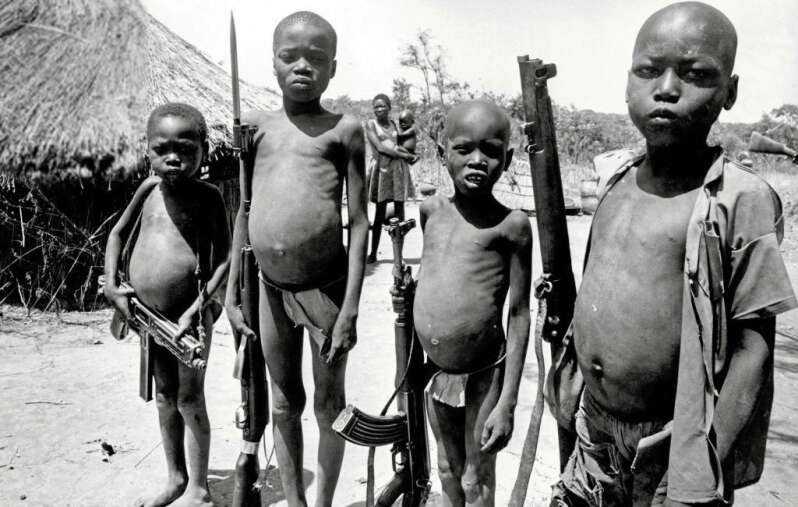
After approximately half a million deaths, the First Civil War would end in 1972 with the Addis Ababa Agreement, which granted autonomy to the South, incorporated rebel forces into the Sudanese army, recognized English as the principal language of the South, and allowed for freedom of religion.
Sudan’s Ambitious Decade: The 1970s
Just as the First Civil War was ending, it became clear that Sudan would, with peace, soon be the beneficiary of a far more lucrative source of foreign revenue than cotton: oil.
Explorations undertaken by Chevron and Shell Oil in the 1970s showed proven reserves of about half a billion barrels, and potentially as much as 10 billion barrels. Most of those oil reserves, however, were in the non-Arab majority states in Sudan’s southern region.
Because of so much unrest, however, the Western major oil companies pulled out of Sudan in the early 1980s. Sudan’s oil reserves went untapped during most of the 70s, 80s and 90s, but even while dormant became a kind of ‘sleeping monster’ beneath the country.
Meanwhile, enriched by the rise of oil prices from 1973-4 oil embargo, the Gulf Arab states invested in large agricultural development schemes in Sudan, hoping to create a “breadbasket” for the Arab world that would make it less dependent on food from non-Arab countries. All in all, the 1970s were a relatively hopeful time for Sudan after two decades of civil conflict.
From Sufism to Islamism
The Northern leader of Sudan who negotiated peace with the South was Jaafar al-Nimeiri, a colonel who had come to power in a bloodless coup in 1969.
Nimeiri started as a secular, socialist pan-Arabist in the model of Egypt’s Gamal Abdel Nasser. He would remain close to Egypt (and in turn to the United States) throughout the 1970s, including when Egypt signed its peace deal with Israel, the Camp David Accords, in 1978.
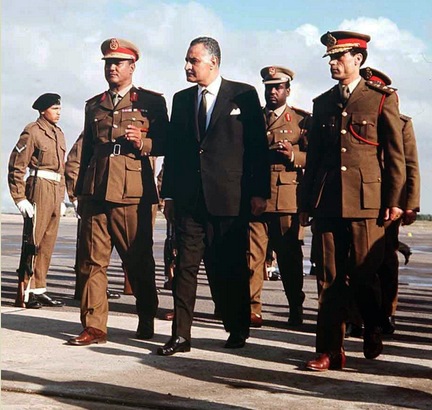
After the Egyptian leader Anwar Sadat was assassinated by a branch of the fundamentalist Muslim Brotherhood in 1981, Nimeiri would be the only head of state from an Arab-majority country to attend his funeral. By then, however, Nimeiri had started working to appease Sudan’s own Islamist faction in Khartoum.
Sudan’s nascent Islamists believed that all of Sudan should fall under Islamic Arab rule and therefore rejected the provisions of the Addis Ababa Agreement out of hand.
Perhaps Nimeiri was unnerved by a bloody coup attempt in 1976 led by soldiers with ties to the Islamists. Nimeiri’s government survived the attempted putsch, but over time, he would slowly, and then completely, capitulate to the Islamists’ demands.
Prevalent for many centuries in the region around Khartoum is a very tolerant, Sufism inspired strain of Islam introduced into the area by various Islamic saints over the centuries. As in the nearby eastern Libyan region of Cyrenaica, Sudan’s Sufis got along well with other branches of Islam, as well as with Jews and Christians.
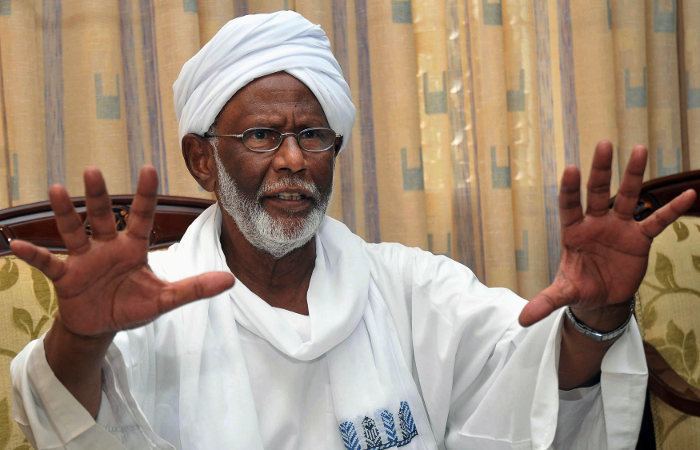
Unfortunately, as the 1970s progressed, some members of Khartoum’s Arab elite, under the tutelage of Egypt’s Muslim Brotherhood, began toying with just the opposite interpretation of Islam. Their most prominent Islamist leader was the brilliant Hassan al-Turabi, who had degrees from both the Sorbonne and the London School of Economics.
Turabi advocated for a strict Salafist interpretation of Islam; i.e. he rejected Muslim traditions that didn’t go back to the first decades of Islam. With his ties to the Muslim Brotherhood in Egypt, he had been exiled and imprisoned at various times over the years. In 1979, Nimeiri appointed this man, who supported crucifixion as one form of capital punishment, to be Sudan’s attorney general.
Four years later, in 1983, Nimeiri stripped the legislative assembly in the South of its fiscal authority. He then imposed a version of Sharia law throughout the country. It featured flogging for minor offenses like alcohol consumption, public execution by stoning, and public amputations for thievery.
Nimeiri ordered his ministers to attend the first amputation event, which was held in the Khartoum soccer stadium. Attorney General Turabi fainted.
And so the Second Civil War between North and South Sudan commenced. It would go on for twenty-two years and kill approximately two million people.
Arabs Versus Africans
Early in the Second Civil War, Khartoum’s governing elites somehow came upon the tactic of unleashing Arab nomads on southern villages perceived as being sympathetic to the rebels.
This was counterinsurgency on the cheap. For one thing, you didn’t have to pay the troops—they got “paid” by being allowed to keep what they plundered and looted. This was essentially a method of warfare borrowed from ancient times, when soldiers were often paid in plunder.
If guerrillas are said to be fish swimming in a sea of civilians, one way to kill the fish is to empty the sea — that is, get rid of the civilians. It is a tactic that human beings had used before and will undoubtedly use again to suppress violent insurgencies.
The strategy is hardly unique to Africa or Africans. The British did it to the white Boers and their Black allies in South Africa at the start of 20th century, resulting in the deaths of close to 50,000 civilians and inventing the modern concentration camp in the process.
This tactic had special resonance in Sudan because in many cases Arab nomads were being green-lighted to rampage through what had once been their traditional slaving grounds. In the Nuba Mountains of South Kordofan in the 1990s, Baqqara tribesmen started attacking Nuban villages. They’d kill the men, kidnap the children, and either enslave the women or force them into refugee camps.
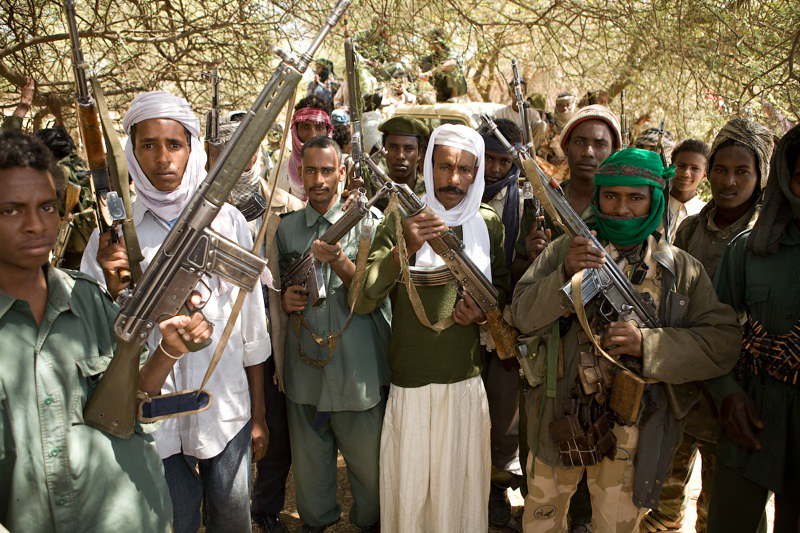
Similar actions were also taken against the Dinka, the largest tribe in the South, and the tribe with the strongest ties to the main rebel force at the time, the Sudan People’s Liberation Army (SPLA). The practice became so pervasive that enslaved young Dinka women turned up as servants in some of Khartoum’s most respectable, middle-class homes.
Such brigandage also emerged in Darfur, far to the west, although generally without the enslavement. Here, a delicate social and ecological balance between the Arab nomadic herders and the settled African farming tribes that had existed for generations was coming undone for both climatological and economic reasons.
A series of bad droughts in the mid-1980s may have contributed to the unraveling. During that period, a western journalist would meet an old and blind Arab sheik who lamented that the land in Darfur no longer seemed able to support both the herders and the farmers. The farmers were now blocking his tribe’s traditional migratory paths, he complained bitterly.
Years later, the same traveler would meet a Janjaweed leader high on the U.S. State Department’s list of suspected war criminals. He was the blind sheik’s son.
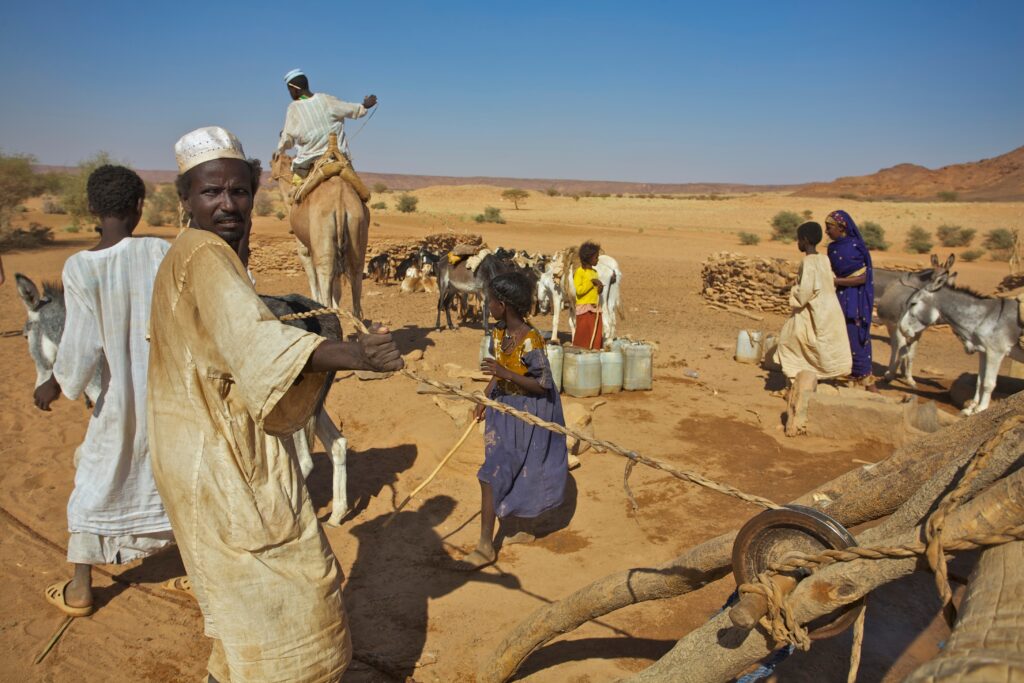
It is worth noting those pastoralists who had land rights did not, in general, participate in the Janjaweed. Instead, they remained at peace with their farming neighbors. If one is to understand the causes of the Darfur conflict, the desire of landless pastoralists identifying as Arabs to seize land from farmers identifying as Africans is central to the story. This desire for land, along with deep North-South cultural divisions, a legacy of centuries of slavery, and Islamist ambitions stoked ethnic violence in Sudan.
Violence Incentivized
Among the African farming tribes such as the Fur, armed groups formed to resist the Janjaweed militia’s attacks and their ultimate sponsor: the Sudanese government. In April 2003, rebels armed with an SPG-9 rocket launcher, one Soviet vintage DShK machine gun, and one 120 mm anti-aircraft gun destroyed every military plane in the El Fasher airport, including five helicopter gunships. Khartoum responded harshly.
With time, both government-sponsored and rebel violence would become incentivized: the more destruction a rebel faction wrought, the more likely it was to be recognized by outsiders from the international community and invited to the peace table to discuss the future of Darfur.
Peace talks promised stays in four-star hotels, as well as the possibility of sharing in the windfall of foreign aid money being dangled by the West for the purpose of “rebuilding Darfur.” At one point, rebels were being paid close to $5,000 a month to sit on a completely ineffective “ceasefire commission.”
During one series of peace talks in Abuja, Nigeria, one participant estimated, by examining the hotel guest book, that rebel representatives staying at the hotel had enjoyed the company of prostitutes approximately 8,000 times. These were not pious men concerned with spreading religious virtues to their countrymen. The story of the Janjaweed militia and genocide is one of rampant gangsterism, theft and corruption.
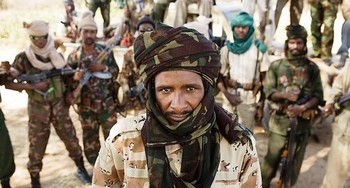
Similarly, just as in the North, economic incentives contributed to chronic communal violence in South Sudan, both before and after it achieved independence from the North in 2011.
Leaders on the ground on all sides enriched themselves by looting villages for cattle and grain. Armies turned into bureaucracies with lucrative sinecures. When South Sudan finally achieved independence in 2011, the new South Sudanese government immediately put 745 generals on its payroll.
An audit in 2013 is rumored to have discovered payments to 40,000 “ghost soldiers.” The economic incentive to keep soldiers employed – even “ghost soldiers” – did not disappear with the onset of peace.
South Sudan’s post-independence peace would not last long. In 2013, the Nuer vice president Riek Machar turned his militias against those loyal to the Dinka president Salva Kiir. Some of the Kiir-aligned militias, in turn, went house to house in the Southern capital of Juba slaughtering Nuer civilians.
A 2018 peace agreement allowed Riek Machar to return to Juba and resume being vice president. The remnants of his defeated army were supposed to be incorporated into a unified South Sudanese national army, but those units were made inoperative, denied food, and came close to starvation before they ultimately dispersed.
To be continued…
Robert Cox
The third and final part of this series will appear on April 25.
A full list of sources will follow in the final article.