“History is the Devil’s scripture” — Lord Byron
Part One: A Little History of a Very Big Place
Key Takeaways
- Sudan’s current civil war—marked by atrocities in Darfur and accusations of genocide against the Rapid Support Forces (RSF)—is not an aberration, but part of a recurring pattern of state-sponsored and militia-driven mass violence stretching back decades.
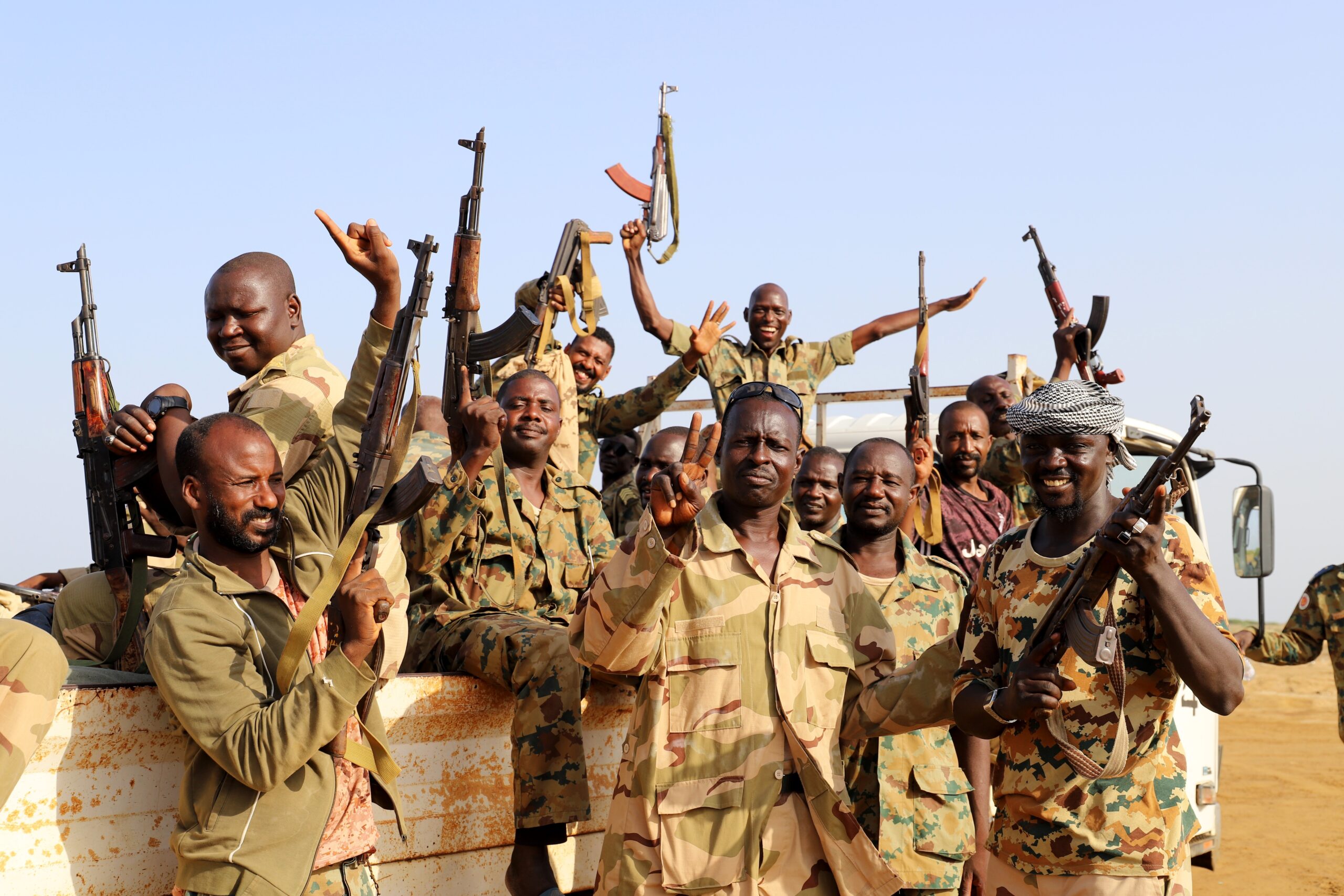
- The RSF, descended from the Janjaweed militias responsible for the 2004 Darfur genocide, now fights a brutal war against the Sudanese Armed Forces (SAF), illustrating how regimes that weaponize irregular forces can lose control of them.
- Sudan’s collapse is rooted in elite failure: Khartoum’s ruling class prioritized resource extraction, power consolidation, and militant ideology over national cohesion, leaving deep ethnic, regional, and economic fractures.
- The country’s instability has deep historical origins in imperial conquest, colonial rule, and artificial state formation, making Sudan a stark case study in how structural divisions and exploitative governance can lead to repeated state failure and fragmentation.
Prologue: From Bloodshed to Bloodshed
The United Nations recently issued a report on the fall of El Fasher, a city in the state of Darfur, Sudan, that described the violence that occurred there last October, when Sudan’s Rapid Support Forces (RSF) captured the city, as showing all “the hallmarks of a genocide.”
Tactics the RSF are said to have employed included the use of heavy artillery, howitzers, and drones on residential neighborhoods, cutting off food aid to the city, shelling refugee camps, and summary executions of captured opponents.
Using the word “genocide” to describe violence in Sudan is nothing new. The United States had labeled what was going on in Darfur a genocide as early as January 2025.
More discouragingly, the U.S. issued a similar statement about analogous events in Darfur twenty years earlier in 2004, during a previous humanitarian crisis in Sudan. That was the first time the U.S. government had ever used the word genocide to describe a conflict that was ongoing, rather than consigned to history.
Little did anyone dare to imagine that, twenty years later, the same word would be applicable again, and in the same place. This article is the first in a three-part series: “Broken from the Beginning: Understanding Sudan’s Genocidal Civil Wars”, which attempts understand the causes of Sudan’s civil wars.
Devils on Horseback
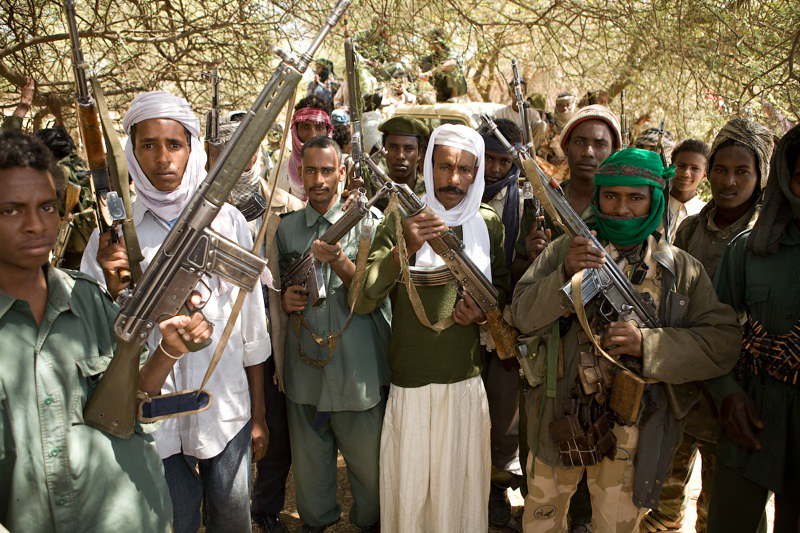
Back in 2004, the U.S. singled out the violence of the Janjaweed militias — armed bands of Arab nomads (“Janjaweed” means “devil on horseback” in Arabic) — who, with the backing of the Sudanese government, were killing, raping, and expelling non-Arab Fur, Masalit and Zaghawa farmers from their lands.
The direct paramilitary descendants of the Janjaweed, the RSF, are the forces who are now being accused of similar crimes.
There is one important difference this time, however: the RSF no longer has the backing of the Sudanese government, because the RSF is now fighting a deadly civil war against the same government that once supported and supplied it. The RSF vs Sudanese army conflict is a tale of how regimes that weaponize irregular forces can ultimately lose control of them – with disastrous effects.
As the current, and third, Sudanese civil war enters its fourth year, the toll on Sudan in human suffering has been extraordinary: approximately one-fifth of the population (of roughly 52 million people in total) has been internally displaced, a tenth has left the country, and more than two-fifths of those remaining face “acute food insecurity,” according to the UN.
Sudan’s capital city of Khartoum, once widely regarded as the safest city in Africa, lies in ruins.
Until quite recently – only a few decades ago – Khartoum was the home to a comparatively tolerant strain of Sufi-based Islam, as well as a thriving, educated elite.
Other Africans saw Khartoum as a kind of ‘Abu Dabi on the Nile’ and viewed its ruling class as sophisticated businessmen who might feel equally at home in Lagos, Riyadh or even London. This elite, at one time flush with oil money, has mostly fled the country since the start of 2023.
The decamping of Khartoum’s elite should make one wonder: has the Sudanese army, also known as the Sudanese Armed Forces (SAF), lost the core elite constituency whose interests it was designed to protect?
More broadly, how was it that a Third World elite that seemed to have everything going for it as recently as the early 2000s – a favorable location for international trade, regional allies, and a well-trained bureaucracy — could be chased out of their own country by the successors to a ragtag rural militia that they themselves had armed, funded and trained?
This article and its two follow-ups examine the causes of Sudan’s civil wars and the present RSF versus SAF conflict and place these events within a larger historical context.
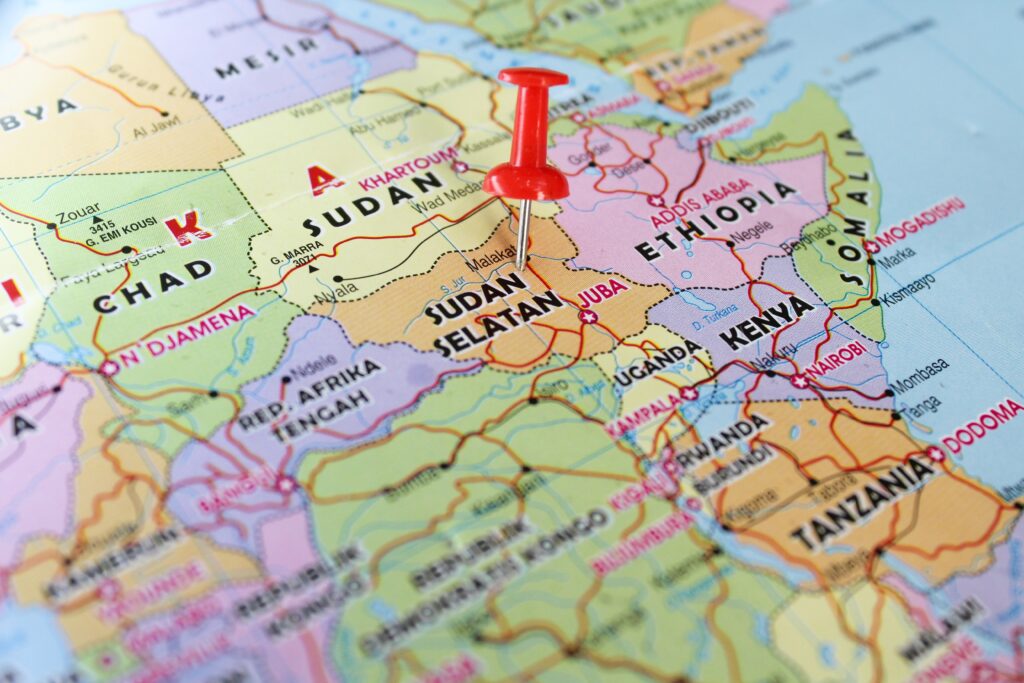
A Grim Case Study in State Failure
Since 2023, Sudan has been fissioning into two countries along predictable lines—and it will be hard to put it back together, assuming such a course is the right one. The future of Sudan after civil war is unclear.
The brutal splitting of Sudan has already occurred once before, and not that long ago.
After about fifty-five years of intermittent, and often brutal civil and ethnic conflict, Sudan’s very poor (but on paper well-endowed with oil) southern states voted to leave Sudan to create South Sudan, which became the world’s youngest country — to much fanfare — in 2011.
Less than twenty years later, similar economic and ethnicity-driven political fissures are happening again in both South Sudan and North Sudan, auguring the further fragmentation of the huge North African country.
The question is: Why?
Sudan is a grim case study and cautionary tale about how bad things can get, first, when leaders exploit the natural resources of their country for personal gain and, second, if they make the fateful choice to turn mass violence into a profitable business.
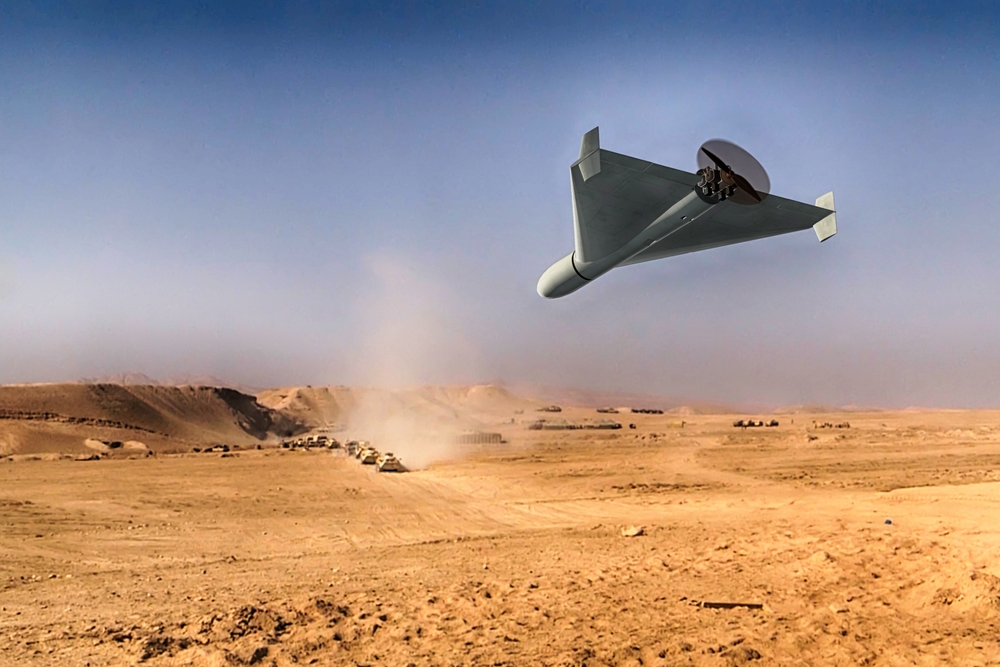
Sudan has for a long time appeared to be descending further and further into – not so much a Hobbesian ‘state of nature’ — but into an infinitely darker, post-modern hell-scape featuring helicopter gunships, Chinese and Iranian drones, up close and personal slaughter of civilians, and widespread starvation. Much like Ukraine and now the Strait of Hormuz, Sudan has become a gruesome laboratory for the drone warfare revolution.
But as one chronicler of Sudan puts it, nothing in Sudan has just happened; the catalog of disasters and death has been entirely man-made. The British journalist and academic Richard Crockett wrote these lines over a decade ago. Everybody would agree conditions in Sudan have only gotten worse in the years since.
But how did Sudan, in essence, self-destruct not once but twice? Much of the blame lies with the elite of Khartoum, who over the years demonstrated little interest in Sudan’s far-flung southern and western provinces unless they had natural resources to exploit or a rebellion to quell.
A particularly expansionist form of militant Islam—also largely confined to the elite rather than to the general population—also enters the mix.
Sudan: A Little History of a Very Big Place
Sudan was and remains a huge country, originally three times the size of Texas, bigger than Greenland and much larger than Alaska. After losing its ten southern states in 2011, the eighteen that remain still make up an area about the size of Mexico.
Sudan’s origins as a single country arose from imperial ambitions — but not European imperial ambitions, at least not at first.
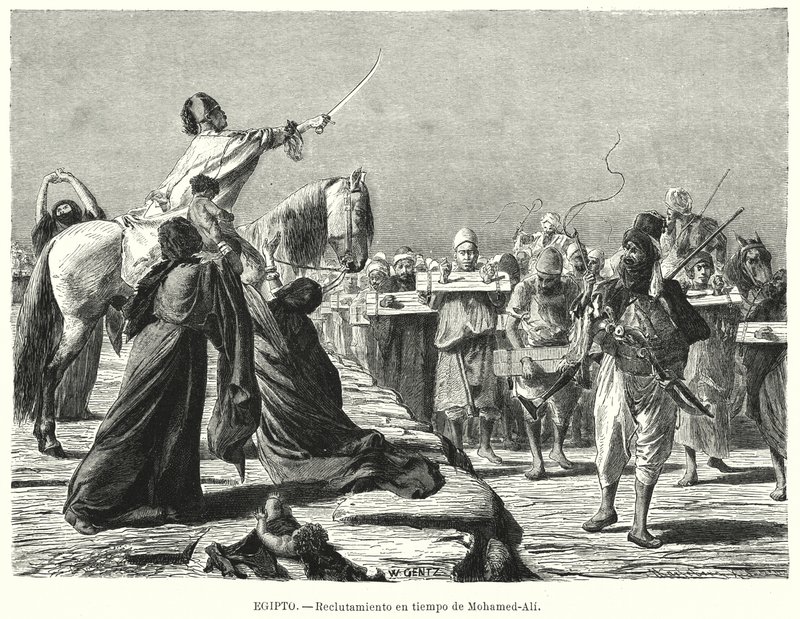
Wanting to control the upper reaches of the Nile, the waters of which the country he led depended upon, and looking for a source of people to enslave into his army, the Egyptian-Ottoman Khedive Muhammad Ali sent forces led by his son Ismail to conquer much of what later became Sudan during the 1820s.
Over the succeeding decades, Egyptian-Ottoman rule brought steamboats to the Nile, and even a telegraph line, but also taxation. The slave business was brisk, however, with perhaps 30,000 people being shipped north into Egypt each year. Then, under pressure from the British government, the Egyptian leader Ismael Pasha agreed to end the slave trade by 1880.
Although Egypt was officially still part of the Ottoman Empire, Great Britain began exerting greater control over the country beginning in the 1870s for one specific reason: the Suez Canal, which had opened in 1869 and which Britain perceived as a vital national security interest (because of its control over India).
In 1877, the English sent its famed General Charles “Chinese” Gordon to Khartoum to break up the Sudanese slave markets, which he had mixed success doing. He returned in 1884 to quell a rebellion. Unrest among the Arab tribes against the British culminated in 1885 with the fall of Khartoum, a bloody event in which perhaps 10,000 people died, among them General Gordon, who was beheaded by his captors.
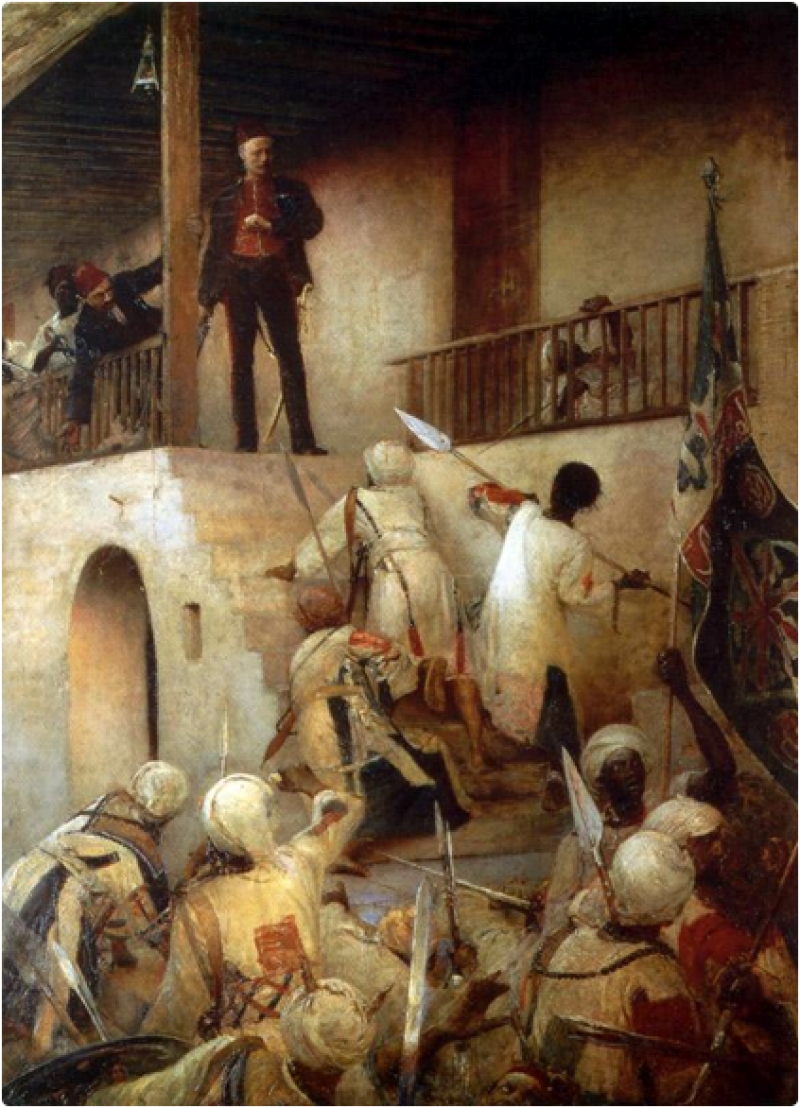
The victors of the siege of Khartoum were followers of a man named Muhammad Ahmed, the modest son of a boatbuilder until, at around the age of forty, he began claiming to be the Mahdi, or the ‘guided one’, a messianic figure in Islam said to be chosen by God to establish peace and justice as Judgement Day approaches. Muhammad Ahmed was a forerunner of the later radical Islamic groups and leaders that would crop up in Sudan in the late 20th century.
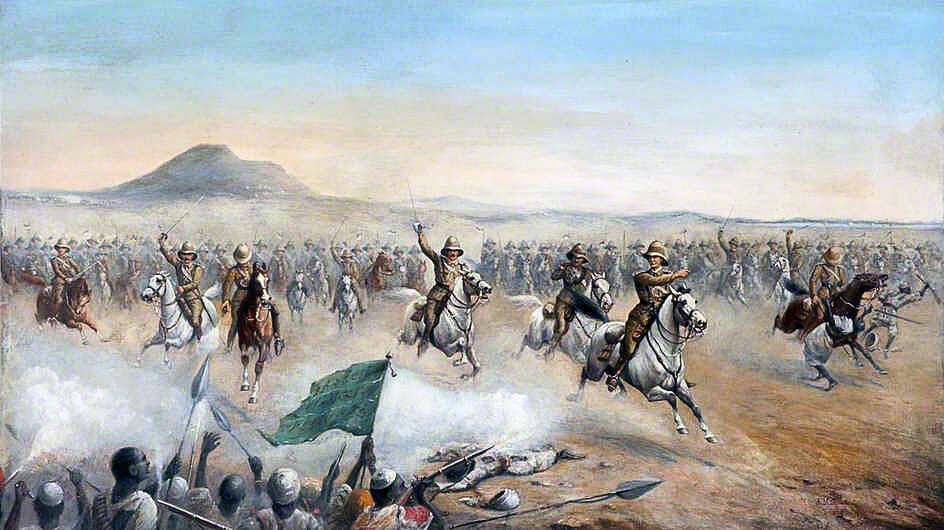
The Mahdi died of typhus only five months after his troops captured Khartoum, but his followers continued to rule Sudan until 1898, when the British sent another experienced military commander, General Herbert Kitchener, with troops equipped with maxim guns.
In the ensuing slaughter sportingly called the Battle of Omdurman, the Anglo-Egyptian army led by Kircher suffered about 500 casualties. The Mahdists, however, were completely obliterated, with about 10,000 dead and 10,000 wounded among their casualties. The slave trade was largely stopped in Sudan until British rule ended in 1956.
The capture of Sudan by the British Empire did not immediately result in a cessation of imperial conflict over Sudanese territory, however. To the south, on the other side of the Sudd, the huge Nile-fed swamp that can swell in the rainy season to something as big as the state of Maine, the European Scramble for Africa of the late 19th century was getting bogged down in a potentially explosive confrontation.
Looking to complete a continuous west-to-east empire across the African continent, the French government sent an expeditionary force into the Upper Nile region in 1898 – the same year as the Battle of Omdurman. The British, in turn, aspired to have their own continuous chain of colonies running north-south (“from Cape-to-Cairo,” they liked to say) through Africa.
French and British imperial dreams came to loggerheads in southern Sudan when a French expeditionary force, made up of eight Frenchman and 180 Senegalese, occupied an abandoned fort in Fashoda, along the Upper Nile. To ensure a pleasant stay, the invading force brought with them 1,300 liters of claret and a mechanical piano for light musical entertainment.
England and France came close to general war over Fashoda, but the French ultimately backed down and withdrew when they realized that the outpost was indefensible. Or maybe they just ran out of claret!
Anglo-Egyptian Sudan eventually settled into relative somnolence for close to sixty years, as England effectively controlled Egypt (in order to control the Suez Canal) and, in turn, Sudan. The Anglo-Egyptian condominium would rule all of Sudan until it became an independent country in 1956.
To be continued…
Robert Cox
This article is the first of a three-part series. Part Two of this article will appear on Saturday, April 18.
A full list of sources will appear at the end of the third and final article in this series on April 25.