Key Takeaways
*A “Distant Blockade” of China may be a less costly U.S. and allied response to a Chinese invasion of Taiwan than a direct military confrontation to relieve Taiwan.
*The Distant Blockade may nonetheless face serious obstacles — in terms of time, diplomacy, and logistics — not to mention PRC missile salvos aimed at U.S. forces in the Strait of Malacca
*Diplomatic framing of the blockade will be critically important for its success, particularly in light of the economic fallout to the global economy, Taiwan’s diplomatic isolation, and U.S. unpopularity following the latest Israel-Hamas War and the Trump administration’s trade and tariff policies
*The U.S. would need to deploy significant air and naval assets, coupled with those of allies, to have any hope of the blockade succeeding.
In the last article in this limited series, Greymantle synthesized the judgments of several informed military analysts: specifically, a direct American operation to interfere with China’s invasion of Taiwan would be catastrophically costly in terms of lives and material for both sides, not to mention upending the global economy.
A U.S. and allied direct naval/air/missile campaign against the People’s Republic of China (PRC) might prevent a complete conquest of the island republic. However, Beijing would be able to replace its heavy losses much more quickly given its vast manufacturing base and growing shipbuilding prowess.
Far more dangerously, the long-standing pillars of U.S. military power in the Western Pacific – America’s extensive basing system, its powerful air assets, the Seventh Fleet, and indeed, most of its Western Pacific force structure – would very likely be crippled as the result of a direct military confrontation with China, facing several years of rebuilding.
Given a shattered defensive shield and a rapidly rejuvenating PRC threat, regional allies might begin pulling away from cooperation with America. Japan, for example, might soon initiate an independent nuclear weapons program, unattached from US policies and plans.
Greymantle concludes that an alternative American and allied strategy exists that may be more likely to pressure China into abandoning an ongoing invasion of Taiwan, while incurring far less risk to U.S. and allied militaries. The more viable counterstrategy is a distant blockade of the PRC’s commercial shipping lanes, particularly at key global shipping chokepoints – all of them located far from mainland Chinese bases — and from the action in Taiwan.
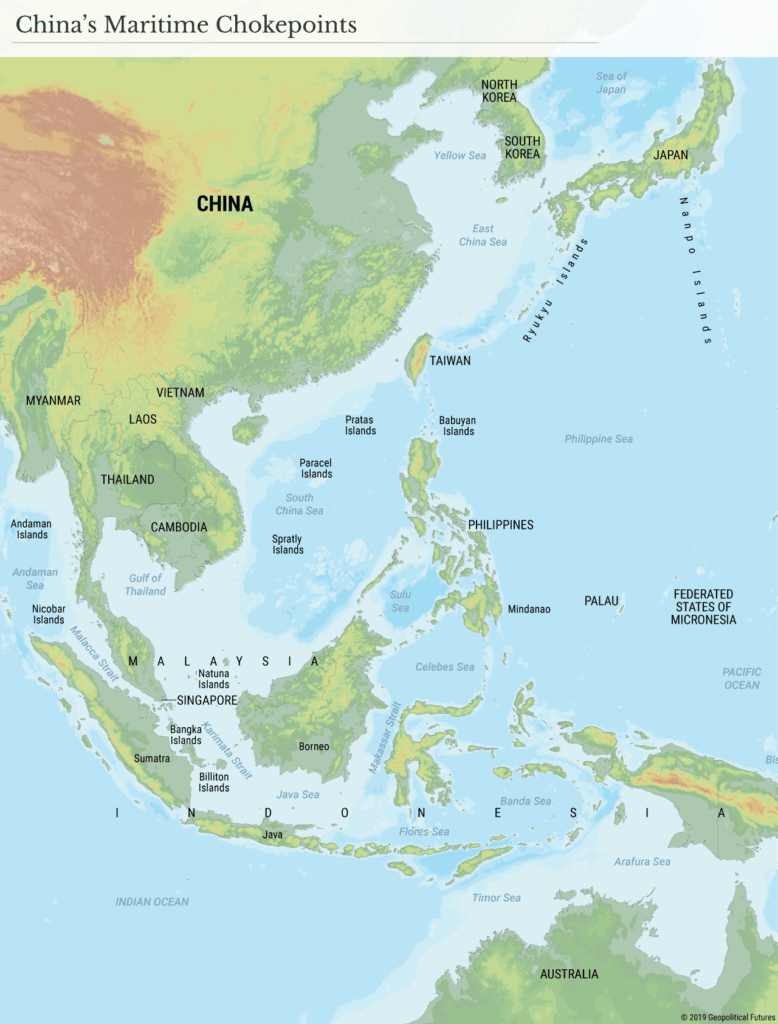
After all, about 80% of the People’s Republic’s crude oil imports and a majority of its exports must pass through several narrow maritime passageways running from east to west across the Indian and Pacific Oceans. These chokepoints include, most especially, the Strait of Malacca, the Sunda Strait, the Lombok Strait, Bab el-Mandeb, and the Strait of Hormuz.
An American and allied blockade of this magnitude would be exceedingly complicated to coordinate successfully and thus time-consuming. Meanwhile, Taiwan will have to resist constant attack, mostly on its own, perhaps for months. In the background, the upheaval in global trade will create enormous disruption to the world economy.
Greymantle noted earlier in this series that it would likely take a full-blown amphibious assault to galvanize Washington to defend Taiwan; ironically, we anticipate that the administration would not have reacted forcefully when the PRC had previously imposed a severe and even potentially violent blockade of Taiwan on its own.
WHAT A SUCCESSFUL DISTANT BLOCKADE REQUIRES
For the ‘distant blockage’ strategy to succeed, America and its allies will need to orchestrate an extensive deployment of coordinated naval/air/land power, combined with threats of sanctions, careful legal approaches, endless diplomacy, and intense high-precision cyber warfare. to cripple China’s economy and disrupt its conquest of Taiwan.
Phase 1: The Diplomatic Scramble
Energetic ‘shuttle diplomacy’ will come first, particularly regarding nations abutting the crucial Strait of Malacca. Indonesia’s cooperation will be absolutely vital. Besides bordering the length of the Strait, there are at least four sea routes that run through the country’s vast archipelago that would be tempting for Chinese blockade runners.
Ideally, Singapore’s port facilities would also be beneficial, but the city-state is not a treaty ally of the United States. Its government could choose to be neutral, as could others in the vicinity (e.g. Malaysia, Thailand). Any nation aiding the U.S. and its allies will risk being considered a belligerent by Beijing and face retaliatory measures. At best, these could manifest as cyberattacks on infrastructure or economic sabotage.
Australia’s naval port of Darwin would play a vital role in any distant blockade of China, particularly for submarine rotations and replenishment. Given the current U.S. administration’s self-induced estrangement from India, however, Greymantle believes it is unlikely that the giant, subcontinental nation would cooperate – at least initially. At present, the same situation also seems true about Vietnam.
Nevertheless, New Delhi’s long-term strategic interests align more closely with the West than with China’s or its other large Asian neighbors. Greymantle assumes a best-case scenario that counts India as an active sympathizer, if not an actual participant in the blockade.
Then there is the question of international legality. The global economy is likely to be severely disrupted by a massive blockade of Chinese shipping, so the United States and its allies must present a compelling case to the world to justify the action. There would be no way to obtain a favorable United Nations Security Council Resolution against China because the PRC holds a Security Council veto.
Once again, securing Indonesia’s cooperation will be invaluable, given its considerable influence within the bloc of countries formerly known as ‘non-aligned’ during the Cold War as well as its influence within the current BRICS group of countries.
The BRICs originally encompassed China, India, and Russia, as well as Brazil and South Africa. The latter two are likely to side with China, possibly joined by Brazil. The BRICS group expanded in December 2024 to also include Saudi Arabia, Egypt, Iran, Ethiopia and Malaysia. All of the new members with the exception of Iran would likely side with the U.S. and its allies against China.
Framing the Action: International Law Matters
The United States will likely frame its actions as a “quarantine” of fuel and weapons or their components, thus sidestepping the illegal implications of a formal and more complete blockade of Chinese shipping. This could involve a prohibition against preventing food imports, for instance, but allowing seizure or denial of weapons shipments. From this point on, the word “quarantine” will replace the word “blockade” when discussing the US/allied operation.
“Defending a sovereign nation against Chinese aggression” will be the official U.S./allied narrative. The veracity of said aggression would be apparent by this point, as the PLAN (People’s Liberation Army-Navy) would be imposing a total blockade of Taiwan. Moreover, China’s bloody invasion of the sovereign island republic would be proceeding apace.
Nevertheless, there will be serious diplomatic reverberations after third-party vessels are interdicted. The United States will have to manage the diplomatic fallout adroitly.
Pressure to comply with the quarantine will also be placed on neutrals that are recalcitrant in cooperating with economic sanctions. This will be a risky move for America — one that could ultimately backfire diplomatically and economically.
Phase 2: Putting the Military Pieces in Place
The scale of naval deployment necessary for the quarantine will be extensive, involving most of the U.S. Seventh Fleet, along with elements of the Fifth Fleet, which is normally responsible for the Persian Gulf.
The U.S. 5th, 7th, and 13th Air Forces, with major bases in Japan, South Korea, Guam, and Alaska, will also be active participants, along with the U.S. bomber command based at Diego Garcia in the mid-Indian Ocean.
Army and Marine units equipped with anti-ship and anti-air missile batteries are already stationed alongside allied militaries, in the Philippines, for instance. Its government has recently allotted nine bases to the US. These units would play a key role in responding to both the Taiwan invasion and China’s strikes against the quarantine.
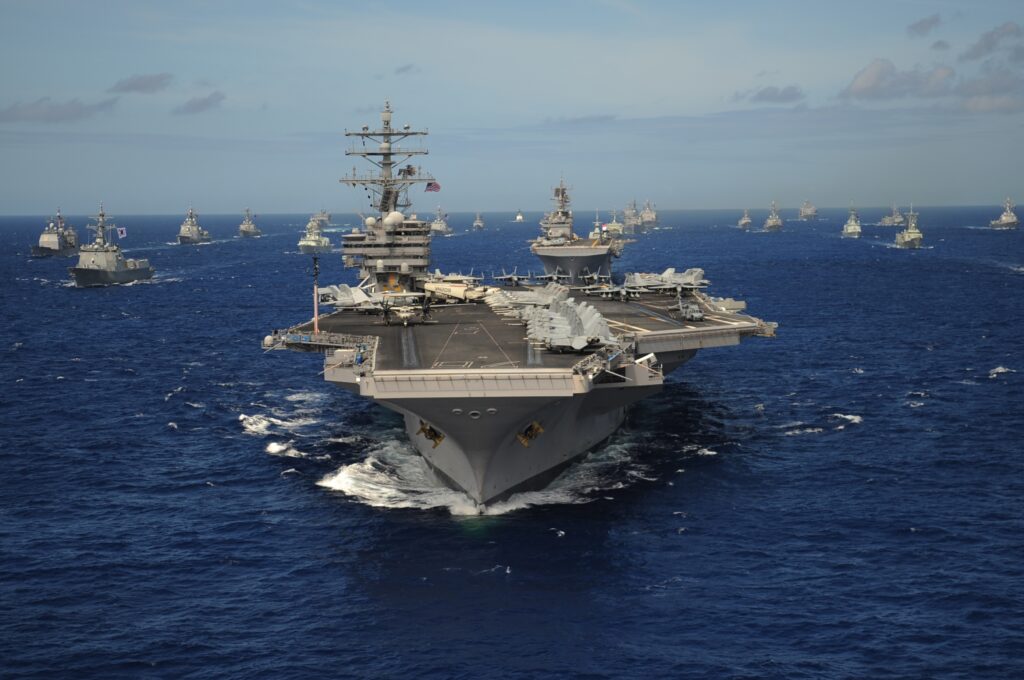
In the early stages of the blockade, U.S. carrier strike groups, submarines, and surface combatants would begin moving toward their stations near the keychokepoints, as would smaller patrol craft. Needless to say, the logistical arrangements needed to sustain this mighty array – probably for months — would be considerable, and therefore extremely complicated.
Air and space surveillance will be an essential overlay to the quarantine. Satellites, drones, and maritime patrol aircraft will need to closely monitor all relevant shipping lanes. Intelligence will identify high-value vessels—e.g., oil tankers or container ships carrying dual-use goods — that are subject to immediate interdiction.
Cyber and space operations will also be working to disrupt enemy logistics and space assets. On a practical level, this means cyberattacks on the PRC’s port infrastructure, shipping databases, and satellite communications intended to paralyze maritime and air op coordination.
These cyber and electronic warfare activities would include jamming or disabling enemy satellites necessary for navigation, intelligence, and targeting, while preventing the same from being done to US/allied space resources.
As the Taiwanese continue to resist bravely, the United States and its allies would be scurrying to assemble the military pieces needed to put its “defensive” quarantine in place.
The Complexity Will Be Daunting
The complexity of the operation will be daunting. Everyone involved will be acutely aware that sufficient economic pressure must be brought to bear on China to stymie its assault on the island as quickly as possible. It is difficult to judge how long Taiwan can continue fighting without a direct insertion of outside reinforcements.
But Washington, under the present scenario, has decided to forego that option in favor of a less risky quarantine.
After initial diplomatic and legal issues have been settled, or at least are being negotiated, the United States and its allies would declare a “maritime interdiction zone” and a “defensive quarantine” at five or six key chokepoints: the Strait of Malacca (Indonesia, and 2.8 km at its narrowest point); Lombok (Indonesia); Sunda (Indonesia); Singapore Strait; Bab el-Mandeb (at the neck of Red Sea and Gulf of Aden), and the Cape of Good Hope (South Africa’s tip).
Suspect ships bound for Chinese ports would be redirected or denied passage. Quarantine avoiders may be damaged — or even sunk. By the end of a week or two (an optimistic estimate), the U.S. Navy (USN) would have deployed carrier strike groups (CSGs) and nuclear attack submarines (SSNs), as well as dozens of lesser surface vessels, like cruisers and destroyers, as well as allied frigates and corvettes, to the key chokepoints mentioned above.
Air force assets will relocate to friendly airfields, primarily in Australia, the Philippines, and the major US/British base in the middle of the Indian Ocean, Diego Garcia, to keep them beyond the reach of most long-range Chinese missiles.
Phase 3: Enforcement Actions Begin
Boarding and inspections of commercial vessels will now be required in many cases. Suspect vessels will be hailed, boarded, and searched for contraband or sanctioned goods.
Ongoing training for the Visit, Board, Search, and Seizure (VBSS) teams will continue and would be accelerated. Numerous naval and marine personnel are being designated to perform these collateral duties, both in ports and at sea.
One analyst, Jason Glab, of War on the Rocks, proposes a pre-screening of traffic at the usual ports of embarkation. He also suggests that this process should be supplemented with Automatic Identification System scans (an automated data record installed on ships over 300 tons) to achieve greater success.
Glab adds: “A commander can use land-based VBSS teams augmented with drones, helicopters, and small boats to supplement warships in critical chokepoints, allowing precious destroyers and cruisers to assist in other efforts”.
Let’s consider what the force picture looks like at the most critical and closest (1,248 miles from southernmost China) chokepoint — the Strait of Malacca.
Key Action Point: The Malacca Task Group Deploys
Thirteen to 20 major combat vessels will be involved as part of the Malacca Task Group, as well as hundreds of warplanes, reconnaissance elements, and drones. The likely composition of the task group follows:
USS Gerald R. Ford (CVN-78): This is the flagship of the strike group. It carries around 90 planes, including F/A-18 Super Hornets and F-35Cs, which are fully capable of defending against aerial threats, including cruise missiles and drones — and this capability has already been demonstrated against the Houthi rebels in the Red Sea. The F/A-18s will also patrol the Malacca Strait and its approaches, intercepting and warning suspicious vessels.
*EA-18G Growlers will be carried on the USS Gerald R. Ford. The Growler was developed as a carrier- capable electronic warfare aircraft, using the airframe of the two-seat F/A-18 Super Hornet. This plane is designed to disrupt, deceive, and deny the enemy use of the electromagnetic spectrum, protecting friendly forces and enabling successful air operations.
*E-2D Hawkeyes are also aboard; these command-and-control planes provide surface and air surveillance ranging for hundreds of miles, as well as combat coordination and communications relay over wide battlespaces.
*U.S. Navy cruisers and destroyers: These vessels are equipped with Aegis systems for air defense (including against ballistic/cruise missiles) and surface interdiction. They are also helpful in anti-submarine warfare. Moreover, these warships can strike or intercept vessels attempting to run the blockade. Along with marines, their crews and those of allied frigates and corvettes will supply most of the assigned boarding teams and interdictions.
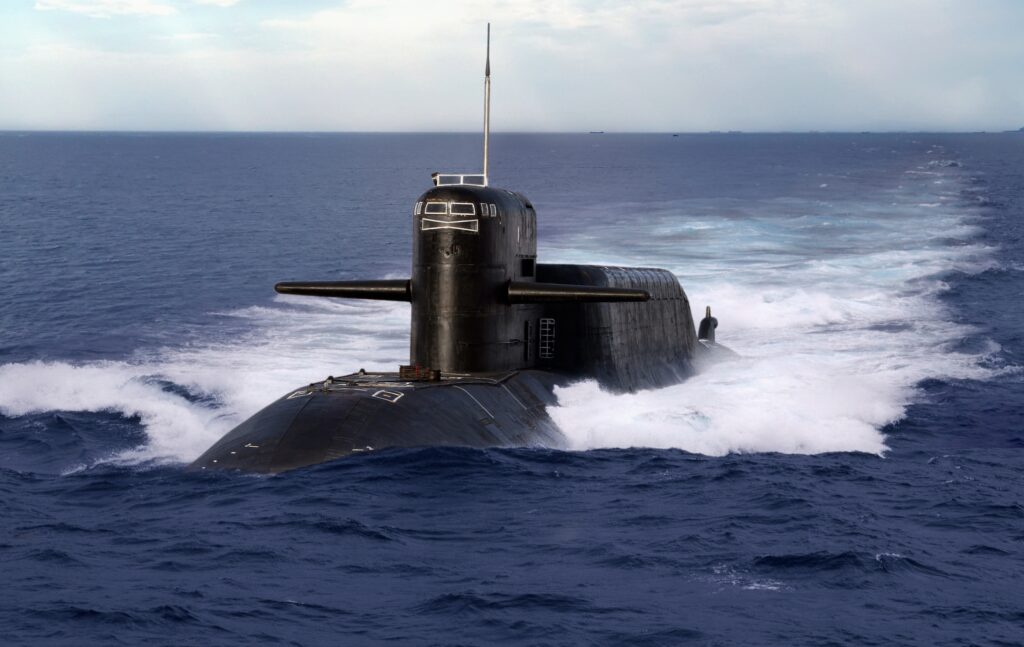
*Virginia-class nuclear submarines (SSNs): Besides guarding the task group, these nuclear submarines will be responsible for the following: a) covert patrols in the Indian Ocean and South China Sea; b) undersea surveillance, including tracking Chinese merchant and naval vessels; c) frustrating enemy sub activity and fleet-breakout attempts; and d) firing Tomahawk missiles for precision land or ship targets.
*Amphibious Assault Ships (LHA/LHD) and Transport Docks (LPD). These vessels carry marine contingents and their equipment. The former can act as small aircraft carriers, capable of launching helicopters, MV-22 Ospreys, and F-35Bs. They also have well decks (for landing craft) and hospital facilities. The latter (LPDs) can also launch landing craft and helicopters, which are valuable short-distance assets for the marine VBSS teams boarding oil tankers or quarantine runners.
*Land-Based Aircraft: These will fly from bases in the Philippines, Singapore, Australia, and (maybe – just maybe) India.
P-8A Poseidon: Maritime patrol aircraft to track shipping and submarine activity.
KC-135 tankers: These extend fighter range for persistent air cover.
MQ-9 Reaper drones: Used for Intelligence, Surveillance, and Reconnaissance (ISR), as well as precision strike capability on high-value targets.
Dispersed and Mobile Assets: The primary Indo-Western Pacific operational strategy that the U.S. military services have been adopting lately in the region is one of dispersal: spreading naval and air units out to complicate People’s Liberation Army-Navy (PLAN) targeting.
This strategy involves:
Agile basing: Aircraft operate from multiple dispersed runways (e.g., Tinian, Palawan, Indian islands).
Maritime mobility: Ships constantly reposition to avoid predictable patterns.
Logistics Ships and Bases: Scores of supply vessels will be needed to furnish replenishment support organized by the U.S. Navy Military Sealift Command. Replenishment ships (T-AKE, T-AO) are vital to sustaining carrier strike groups at sea.
Despite these vast operational assets, some sage critics believe that the distant blockade strategy may simply be too logistically intensive for the U.S. to manage. Unfortunately, the dispersal strategy vastly complicates logistical solutions and dramatically reduces efficiency, according to analyst Zachary S. Hughes writing in National Defense University Press.
Hughes points out: ‘Modern high-tech weapons require specialized maintenance equipment, and a small quantity of such equipment can service multiple units at a single location. Once those units disperse, however, they must accept increased risk of critical equipment failure or must acquire, transport, and sustain equipment sufficient for each dispersed site—all of which imposes additional logistics logistical costs’. (October 22, 2024 NDUP article)
Examining the logistical underpinnings of the distance quarantine would require an entirely separate study. Mr. Hughes, however, also presents excellent suggestions for reform in this area; ultimately, he places his hopes on the still-classified and evolving Joint Warfighting Concept (JWC) and the Joint Concept for Contested Logistics (JCCL) to address some of the most severe logistical problems.
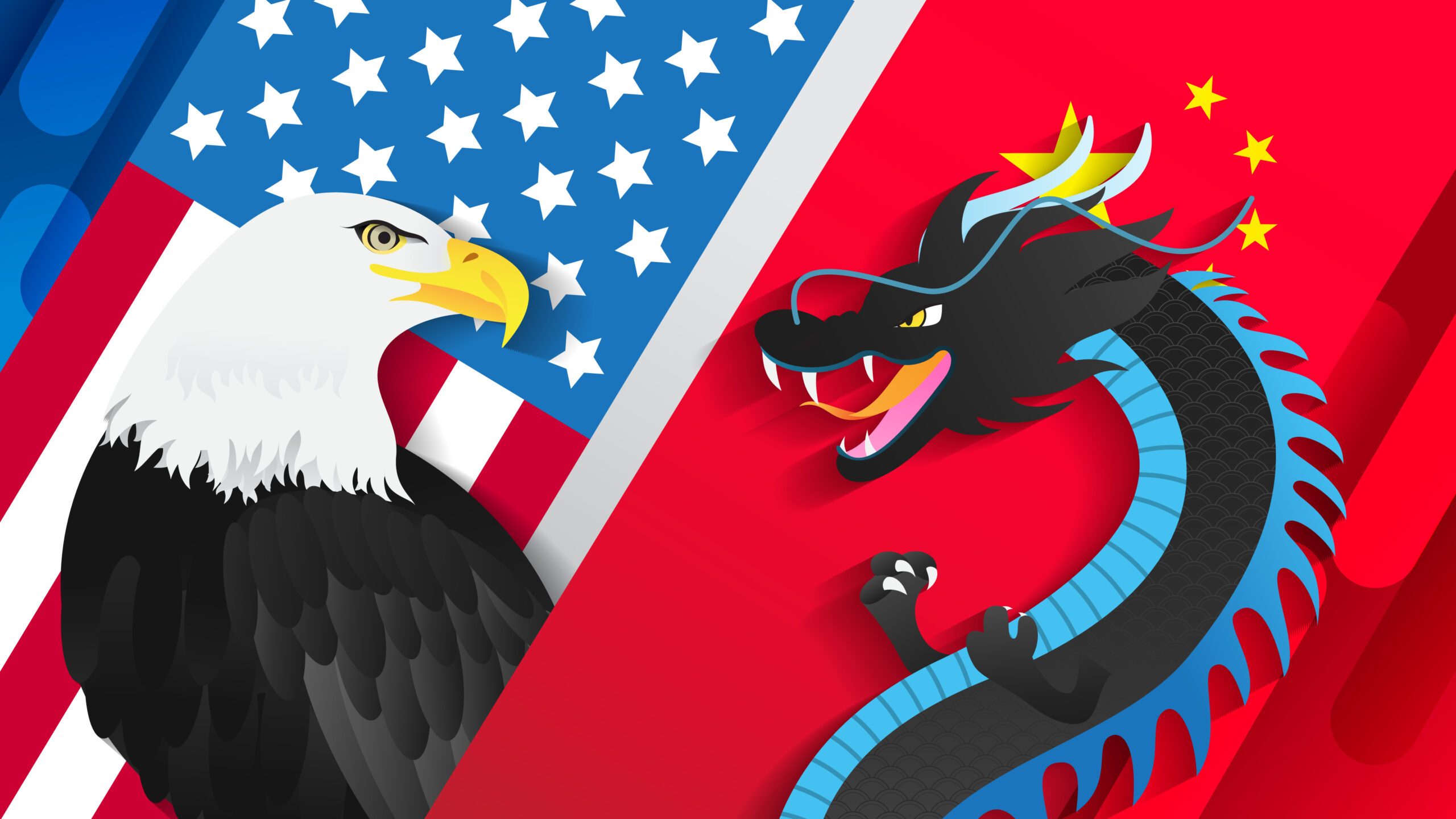
We will turn to the likely scenarios for a Chinese military response to the quarantine in the final part of this limited series, “The Eagle Versus the Dragon”.
Until then, I remain —
Richard Jupa
*********************************
Part 3 of this series will describe the Chinese response, will model their likely attack on the Malacca Quarantine Task Force, will estimate the possible outcomes of this attack, and will weigh the odds for the quarantine’s success in stymying the PRC’s assault on Taiwan.
For a list of prior articles in this ongoing series, please see the below: