2026 is going to be a dark year. There – we’ve said it. We are not going to pull any punches in this first post of the new year — our annual forecast for 2026 is a gloomy one.
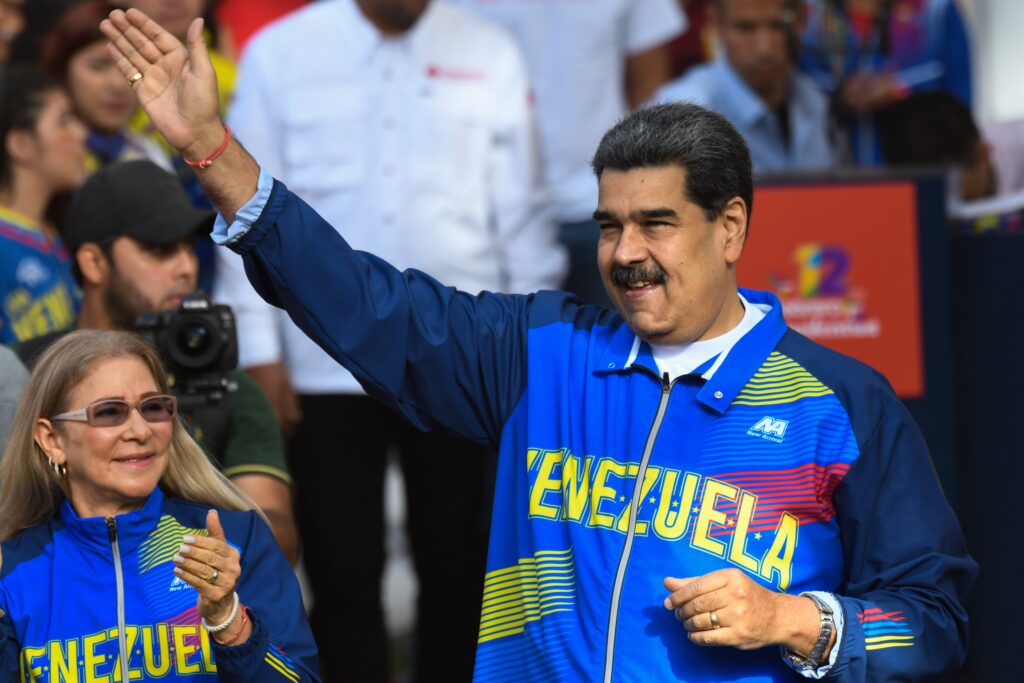
If it feels like the global system and the Western democratic order are falling apart, it’s because they are. We are only four days in, and 2026 has already seen a U.S. military action to depose and capture a foreign head of state – Venezuela’s President Nicolas Maduro – in a major exercise of strategic muscle. It’s a tale of big dog eats little dog to establish its dominance in a specific territory (i.e. the Americas).
Not that Maduro is some kind of sweetheart. He’s an authoritarian thug who stole his country’s 2024 presidential election. And some tangible good may arise from his removal from power. That being said, President Trump’s motive for his latest police action appears to be the naked desire for the U.S., and possibly Trump and his close associates, to seize control of Venezuela’s oil sector.
President Trump hasn’t pulled the United States out of NATO yet, but he is making noises about seizing Greenland from Denmark in a return to the bellicose statements he made in the early weeks of his second administration. Trump’s success in removing Maduro from power so (comparatively) easily is likely to whet his appetite for further “conquests”. So really, anything is possible.
We are titling our 2026 Forecast ‘Calculus of Fear’ because our baseline view is that the coming year will be defined by fear of many kinds and, most critically, by the cold calculations of several key global actors whose intention will be to intimidate strategic antagonists and domestic opponents alike, rewrite global norms and defy multilateral organizations, and carve the world up into spheres of influence.
Calculus of Fear
The expanding wave of fear unleashed by the world’s authoritarians is being felt in many ways. The Trump Administration’s trade war against…the entire world…is grinding on with no end in sight, the U.S. is slowly but surely gearing up to betray the Ukrainians and their heroic President, Volodymyr Zelensky, and the People’s Republic of China is in the advanced stages of preparation for a blockade-cum-invasion of Taiwan.
Our naval strategy contributor, Richard Jupa, says 2029 is the most likely year for a Chinese invasion of Taiwan, and I must defer to Richard’s superior expertise. However, my gut is telling me that 2027 will be the year…not only for a blockade of Taiwan, but for sundry outbreaks of various specimens of mayhem in the South China Sea and elsewhere. Expect tensions in the Taiwan Straits to mount further in 2026.
In many ways, we are living through a grim time in history as societies fracture under the pressure of demographic, economic and technological change and the centuries of the Western Ascendancy give way to a world that feels as if it is returning to the older norms of civilization states and warring kingdoms.
No wonder the television series ‘Game of Thrones’ remains so popular on streaming services six years after its last episode aired on HBO. Crown Prince Mohammed bin Salman of Saudi Arabia apparently loves it and watches it for relaxation. That anecdote, published in The Atlantic in 2022, says much about our times.

These strategic calculi will continue moving the world in a direction that will have less in common with the norms that were in force in the 30 years between the fall of the Berlin Wall and the COVID-19 pandemic of 2020 than it does with the forms of 19th century ‘Great Power’ politics.
The Key Players and Their Core Calculations
- U.S. President Donald Trump – He will seek to conclude an armistice between Russia and Ukraine and find a means to break China’s monopoly over rare earths. His scheme to seize Greenland is part of the latter calculation. Trump has greatly expanded U.S. presidential power in the past year, but is becoming deeply unpopular outside his base, which is also showing signs of fracture and disarray.
- With three years left to his term, and occasional hints that he may attempt to stay in power by running for reelection in 2028 (in contravention to the U.S. Constitution), Greymantle believes that Trump’s core motivation is to fabulously enrich himself and his family and to ensure that he will not be prosecuted for his actions in office once he has retired from the presidency. Assuming he does retire.
- Russian President Vladimir Putin – He will seek to press his present military advantages – which are all eminently reversable – against Ukraine, look strong, and remain in power. He may agree to a temporary armistice in 2026 if Ukraine is willing to accede to key demands, but Putin will swiftly break any truce. He will continue the Russian hybrid war campaign against the EU as a means of exerting pressure on the Europeans, but his pressure campaign will only lead to more European resistance and support for Ukraine, plus possible counterstrikes on Russia. His core motivation is remaining in power.
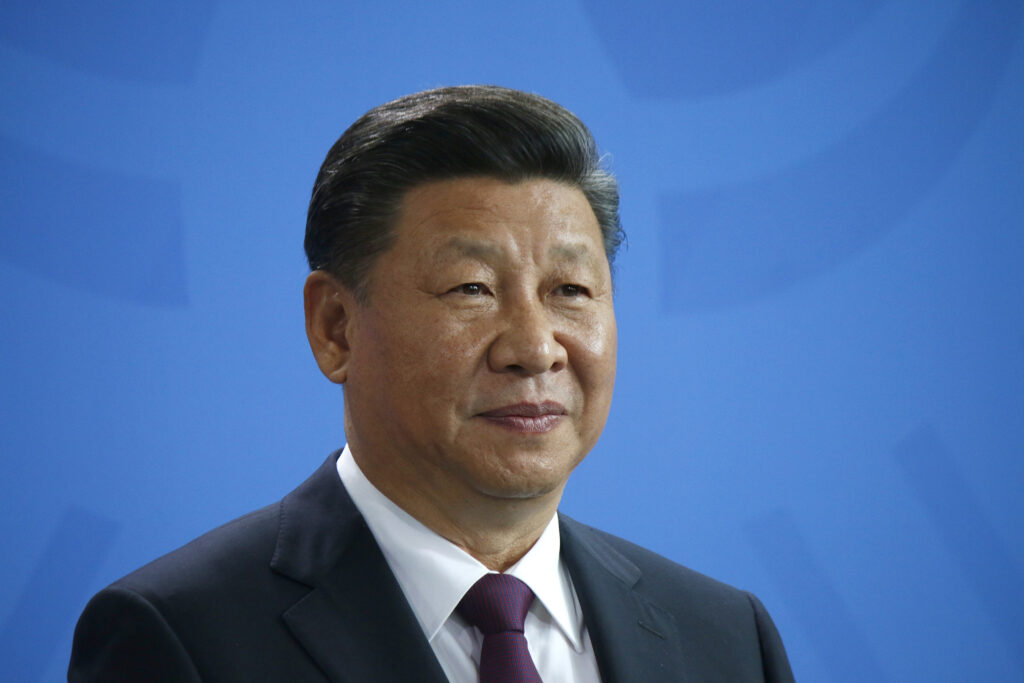
- Chinese Leader Xi Jinping – He will seek to extend China’s advantages in a growing list of industries to solidify the Global East and portions of the Global South behind China as he prepares to invade Taiwan. His ultimate goal is to humiliate the U.S. Navy with the aim of shattering U.S. power in the Pacific sphere, unraveling America’s Asian alliances and replacing America as Pacific hegemon.
- Saudi Crown Prince MBS – He will seek to use U.S. and Israeli power as a battering ram to destroy Saudi Arabia’s regional rival, Iran, the regime of which is under great pressure and hovering on the verge of collapse. MBS will exert his power more openly in 2026 than he did in 2025, when he preferred to work behind the scenes. The recent Saudi strikes in Yemen against UAE backed separatists (Dec. 29-30, 2025) is a first sign of more confident muscle-flexing by Saudi Arabia abroad.
Top Ten Predictions for 2026
Greymantle considered not including predictions for specific events in our forecast, given our somewhat patchier record for 2025 compared to 2024 and our interest in addressing broad trends rather than providing discrete forecasts for a narrower set of situations.
However, Greymantle remains a site devoted partly to forecasting, in addition to commentary and analysis, so we will offer our Top Ten predictions, all weighted by likelihood of outcome.
- A Chinese blockade of Taiwan – 55% likelihood. We believe the chances of a blockade will mount by 10% with each passing year, rising to 65% in 2027, 75% in 2028 and 85% in 2029.
- Israel’s ruling coalition and Prime Minister Netanyahu loses the 2026 general election to the opposition – 70% likelihood. But we have learned to never count Netanyahu out. Even weakened and despised by a majority of Israelis, we believe Bibi still has a roughly 30% chance of winning the scheduled Israeli general election. The man has more lives than a cat.
- The Israel-Hamas Peace Plan negotiated by the Trump Administration with the combatants collapses into renewed fighting in the early stages of Phase 2: 80% likelihood. With an election looming, Bibi would rather lob bombs than negotiate, and he has been lobbing quite a few bombs already.
- Iran’s Islamic Republic collapses – 80% likelihood. This is a rerun of last year’s prediction with the same likelihood assigned. We continue to believe that the Islamic Republic led by the ayatollahs and the Iranian Revolutionary Guard exists in a late-regime stage and is at risk of imminent collapse. If the collapse occurs, it will present countless opportunities for the U.S., Israel, Turkey, and Saudi Arabia. Even India stands to benefit. China and Russia will be the losers.
- The Democratic Party wins a Congressional and state election near-sweep in the November 2026 midterms, recapturing the House of Representatives and placing Democratic governors in power in blue and purple states. Likelihood: 85%. The most dangerous outcome will be how Trump responds to a Democratic sweep. He could nationalize the U.S. voting system – currently administered by the states – or could attempt to do so. Or he could engage in more serious forms of repression. We expect the U.S. Senate to remain narrowly in Republican hands.
- Russo-Ukrainian armistice signed: Likelihood: 66%. While Vladimir Putin needs either an ongoing war or outright victory to remain in power, he may opt for sign a brief armistice if he believes Russia draws clear strategic advantages, and to give him time to rebuild and retool the Russian military for Round 2.
- Vladimir Putin is removed from power by his inner circle: Likelihood: 62%. We continue to believe Putin is act risk of being overthrown by a palace coup and that he has lost control of some factions within Russia. We see the chances of a coup against Putin rising to 70% in 2027 and 78% in 2028.
- United States Gross Domestic Product (GDP) will expand between 1.7% and 2% in 2026, which is even with the most recent forecasts for 2025 U.S. GDP. 2025 forecasts are likely to surprise on the higher end. We think 2026 GDP growth will be even or slightly weaker than revised 2025 numbers. Our best guess: 1.7% growth supported by AI and data center spending. Likelihood: 80%.
- Luiz Inacio Lula da Silva, President of Brazil, will be reelected in 2026. We assess the likelihood of Lula’s staying in power at 67%. We believe Lula derives notable political benefits from his opposition to U.S. President Trump’s diplomatic pressure campaign to release former Brazilian President Jair Bolsonaro from prison, a campaign that has included punitive U.S. tariffs on Brazilian goods. There is a chance of a downside surprise here – Lula decides not to run or is electorally defeated.
- Donald Trump will proceed further down the path of Orban-style mixed autocracy (i.e. not an outright dictatorship but in essence one-party rule dominated by a strong executive with some vestiges of an independent judiciary and press) in 2026 even as his approval ratings remain stuck between 36% and 40%. Trump’s weak popularity will make him irritable and more dangerous. Likelihood of Trump’s approval rating staying below 40% in 2026: 90%

Wild Cards for 2026
Greymantle terms the following situations to be possible ‘wild cards’ that could substantially change the flow of events in 2026, with the potential to materially alter some of the outcomes and likelihoods identified above:
- President Trump experiences a serious health issue (e.g. a stroke, heart attack or diagnosis of cancer or some other very serious illness) that leaves him incapacitated or severely weakened for days or weeks.
- Syrian President Ahmed al-Sharaa is assassinated or overthrown.
- A major terrorist attack on U.S. soil conducted by Islamic militants or domestic terrorists of the political left incentivizes President Trump to take extreme repressive measures including an attempt to ‘suspend the U.S. Constitution’.
- The Chinese People’s Liberation Army-Navy and the U.S. Seventh Fleet engage in an overt naval clash in the South China Sea, with one or more vessels (e.g. a destroyer or aircraft carrier) badly damaged.
- Vladimir Putin is overthrown by the Russian intelligence agencies or military, causing serious unrest within Russia and providing Ukraine breathing space.
- President Trump orders the U.S. military to remove Nicolas Maduro by force, leading to an Iraq style situation of instability within Venezuela and a brief US. occupation of the country. The latter draws domestic and worldwide condemnation. Oh, wait! That’s already happened…
- President Trump orders the U.S. military to occupy Greenland, leading to a major diplomatic rift with Denmark and other NATO countries.
- Generative AI is achieved faster than expected and combined with some kind of disturbing incident involving AI taking its own initiative in the area of private data or the remote use of military hardware.
- Nicolas Maduro’s downfall, with the likely weakening or collapse of the regime staffed by his inner circle, could accelerate the Islamic Republic’s collapse, as we argued in this September 30 post.
Major Patterns or Themes to Watch in 2026
- The effect on the job market and corporate workforces from expanding use of AI by employers. Further sizable layoffs such as at Verizon would lead to rising unemployment and social instability.
- The U.S. Supreme Court’s ruling on the legality of the Trump Administration’s ‘Liberation Day’ tariffs. This SCOTUS ruling will be the most significant U.S. legal event of 2026. Prepare for its ripple effects to be almost as great as the Dobbs decision in 2022.
- Watch for any developing Russian military advantages against Ukraine. If Russia appears to be gaining decisive battlefield advantages, particularly via drone use, then this could result in a destabilization of the entire front line and renewed Ukrainian refugee flows into the EU.
- The persistent rise of MBS and Saudi Arabia as the Crown Prince’s internal reforms to Saudi society, assemblage of U.S. military assets, and more assertive diplomatic posture have decisive effects on the regional pecking order of the Red Sea and Persian Gulf regions.
- Spreading instability and demonstrations in several EU countries. Mass demonstrations are already frequent in Serbia and Romania and are spreading in Germany. Expect more of these in the UK and in Turkey on the EU’s doorstep.
- British government weakness – Weakness of the current Labour government with a rising chance that PM Keir Starmer will resign before the end of 2026.
- Upheaval and media circus in New York City as new Mayor Zohran Mamdani attempts a very energetic and revolutionary governing style, threatening many established constituencies and drawing the ire of MAGA supporters, conservatives and many traditional liberals and centrists.
- The fate of millions of refugees should figure in the efforts of philanthropists and humanitarians worldwide. As mentioned in last year’s forecast, Greymantle believes that ‘expulsion’ is swift becoming a watchword politically. Syrian refugees in Germany and Venezuelan refugees and Chila, Peru and the United States are going to be asked – then forced – to pack up and ‘go home’.
Other Topics We’ll Cover in 2026
- Sudanese Civil War: We’ll delve into the deep historical roots of the current civil war in Sudan – the world’s cruelest and bloodiest by number of civilians killed – and the strategic prospects for each side, and the chances of outside powers brokering some kind of eventual ceasefire.
- Indian and Pacific Ocean Naval Strategies: After covering the buildup of the Chinese navy and China’s designs on Taiwan in 2024 and 2025, we will shift toward new discussions of Japanese naval strength and strategic priorities, how Japan views Chinese naval power, Russia’s Pacific fleet, and provide an overview of the Indian Navy and Indian naval strategy in the Indian Ocean.
- Trump 2.0 – Year Two: We’ll provide an update to our December 2024 forecast for the likely decision pathway of the Second Trump Administration.
- The Fertility Crisis – New Developments: We’ll provide an update on ‘demographic politics’ in the developed world in the second half of 2026, along with an overview of new reproductive technology developments that are ‘breaking the wheel of flesh’.
- Studies in Democide: A report on the long-term demographic effects on Europe and Russia of Soviet economic and cultural policies, including the Holodomor, forced movement of populations and rapid industrialization, and two World Wars paying clear attention to demographics in Germany and Poland.
- Continued Focus on Horror in Popular Culture: Horror continues to rule the big and small screens driven by widespread social anxieties. We’ll begin with a deep dive pop culture analysis of the recently wrapped TV series ‘Stranger Things’ and dive into what the latest trends in horror communicate about America.
- The Evolution of Sinisterianism: We will continue our series on the aesthetic of ‘Sinisterianism’ with focus articles on Marilyn Manson and Genesis P-Orridge that open windows into the genesis and spread of this amorphous ideology.
- Understanding Crypto: We’ll provide a primer on the definition and nature of cryptocurrencies for our avid readers.
- Major Iran Update: If the Islamic Republic falls in 2026, we’ll launch a new discussion on ‘Iran after the Ayatollahs’ and even if the regime stays in place, we will provide incisive commentary on the latest developments.
- Putin’s Game: How Vladimir Putin managed to stay in power in Russia for more than a quarter century, how his unique system of governance works in practice, and how Putin and ‘Putinism’ have affected Russia’s view of itself.
- Focus on the UK: Don’t Cry for Me, Westminster! Why Great Britain is unlikely to follow the United States into either dictatorship or civil war.
- Leo XIV’s First Year in Office: We’ll provide a recap of the major decisions taken by the first American-born Catholic pontiff in his first year in the Holy See.
As always, a big and hearty ‘thank you’ to our faithful Greymantle readers for their continued support! Your positive comments, interest and subscriptions kept our engines humming in 2025.
Stick with us for more timely forecasts, trenchant insights and fascinating discussions in 2026. We promise that the next year won’t be boring in the least!
Until the next time, we are —
Greymantle