There was a time—not so very long ago—when learning that a sizable minority of Americans believed the U.S. government was run by a secret cabal of Satan-worshipping pedophiles elicited genuine disbelief and even ridicule.
You might have laughed when you first heard this story. Or you might have cried. You might have wondered aloud how a supposedly advanced society could produce so many adults who appear to have mistaken internet fan fiction for serious political analysis.
Sadly, those reactions now feel a bit outdated.
Back in 2021, Greymantle argued — somewhat unfashionably — that the American entertainment industry was not merely reflecting a growing taste for conspiratorial thinking, but was actively cultivating it. We termed these types of narratives ‘paranoid entertainment’.
Conspiracies were by then ceasing to be the preserve of pamphleteers, short‑wave radio eccentrics, or the occasional barroom crank. Instead, they had expanded outward from the fringes to become an integral part mainstream entertainment: prestige‑coded and well‑acted. In fact, the television and movie studios seemed to be executing a conspiracy of their own that could go by the moniker: ‘mainstreaming paranoia’.
Greymantle’s 2021 article excavated the roots of high-concept conspiracy entertainment in an attempt to diagnose the point at which Hollywood “went wrong” by treating conspiracies as subjects fit for a night out at the movies.
My argument – then as now – wasn’t that every conspiracy theory is total nonsense, or that people in positions of power never lie. It was that when a culture repeatedly tells stories in which institutions are hollow shells, official explanations are always cover stories, and moral clarity belongs only to those willing to operate outside the law and democratic constraints, it should not be surprised when shared reality begins to dissolve.
Four years on that thesis has, if anything, held up all too well.
Rise of the Conspiratorial Worldview
When we wrote about the rise of conspiratorial entertainment back in 2021, we argued that Hollywood and the television studios had played a nontrivial role in eroding shared reality by treating conspiracy theories as a source for dramatic plots starting in the early 1990s.
That argument was treated by some of our readers as overreach. Movies were just movies. Surely social media was the real culprit!
Events since then have been clarifying. QAnon has faded from the headlines, but the worldview that sustained it has not. Conspiratorial thinking has become normalized and ambient. It arrives via narrative habits absorbed from years of TV watching: tone, framing, and expectations about how power “really” works.
Trust in institutions has continued to collapse. Official explanations are treated as prima facie suspect. And a political figure who openly mocks expertise, intelligence agencies, and the very idea of objective truth has once again proven electorally viable.
None of this suggests a society that is merely misinformed. More alarmingly, it suggests a society that has grown comfortable with the idea that nothing official is real. Which brings us back, once again, to the subject of entertainment.
This piece is not a warning. That stage has passed. Think of it more as a sequel.
In it, we’ll journey from where we left off five years ago in our discussion of how the films of the 1990s set the stage of what we termed ‘paranoid entertainment’. Then we’ll dig into the the story of how and when conspiracy-themed films and TV shows really took off – in the early 2010s.
But first, a brief recap.
The 90s, Or How Hollywood Discovered Conspiracies
Movies and television have always shaped American public attitudes. That fact has been accepted without much controversy since the middle of the twentieth century.
Americans watch a great deal of television. They binge-watch, and then rewatch, their favorite movies and TV shows. They internalize characters, moods, and moral frameworks whether they intend to or not. The idea that these habitual behaviors have no effect on how people think about power, authority, and responsibility has always been implausible.
In the early 90s, what began to change was not the level of influence of the entertainment industry, but the narrative orientation of its products. With films like JFK and Eyes Wide Shut, and television series like The X-Files, the film industry discovered that suspicion of the rich and powerful sold extremely well.
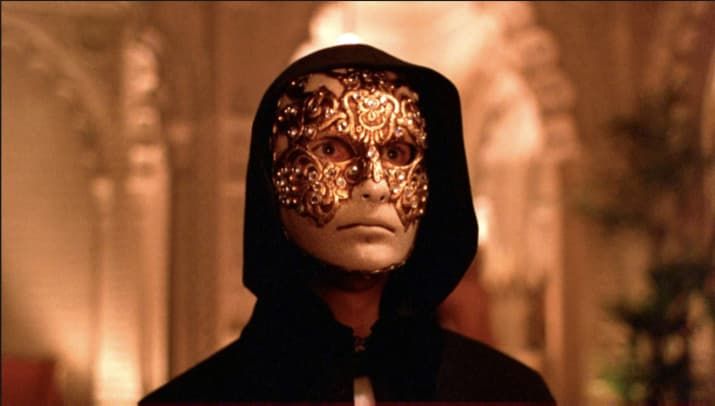
These moves didn’t just entertain; they trained audiences to see institutions as masks, elites as predators, and official explanations as carefully constructed lies.
They neither ironical nor B-grade. Eyes Wide Shut, for example, was lavishly produced, critically celebrated, and enormously profitable. Eyes Wide Shut, JFK, The Net and Conspiracy Theory – along with The X-Files created a template—a narrative grammar—that later generations of writers and producers would inherit without needing to question its assumptions.
Even George Lucas got into the act. His Star Wars prequels (Episodes I-III) dating from 1999 to 2005 follow a conspiratorial plotline from the first scene. The entire story arc and big dramatic revelations center on a conspiracy by the Dark Lords of the Sith – enemies of the heroic Jedi Knights – to destroy the Galactic Republic from within by ensuring that their leader becomes Chancellor (i.e. President of the Republic).
By the time the big streaming services arrived in the late 2000s and early 2010s, the emotional groundwork for conspiracism as a form of popular entertainment had been laid. The public had spent years being conditioned to feel that the most interesting explanation is always the hidden one, that power never acts openly, and that social trust is a form of naïveté. They were ready to start streaming conspiracy shows en masse.
The Lure of Suspicion
By the early 2010s, conspiratorial storytelling underwent a transformation from a subgenre of the thriller to simply being how a lot of serious television worked. This shift was especially visible on network television (i.e. ABC, NBC and CBS), where shows are designed for broad audiences who do not imagine that they are consuming subversive or radical content.
Person of Interest (2011-2016) was an instructive early example. Its central premise is elegant and dangerous: there exists a machine that sees everything, the U.S. government uses it badly, and therefore a small cadre of principled outsiders must secretly take control of godlike surveillance powers and deploy them more ethically.
The problem is never mass surveillance itself. The problem is simply who wields it.
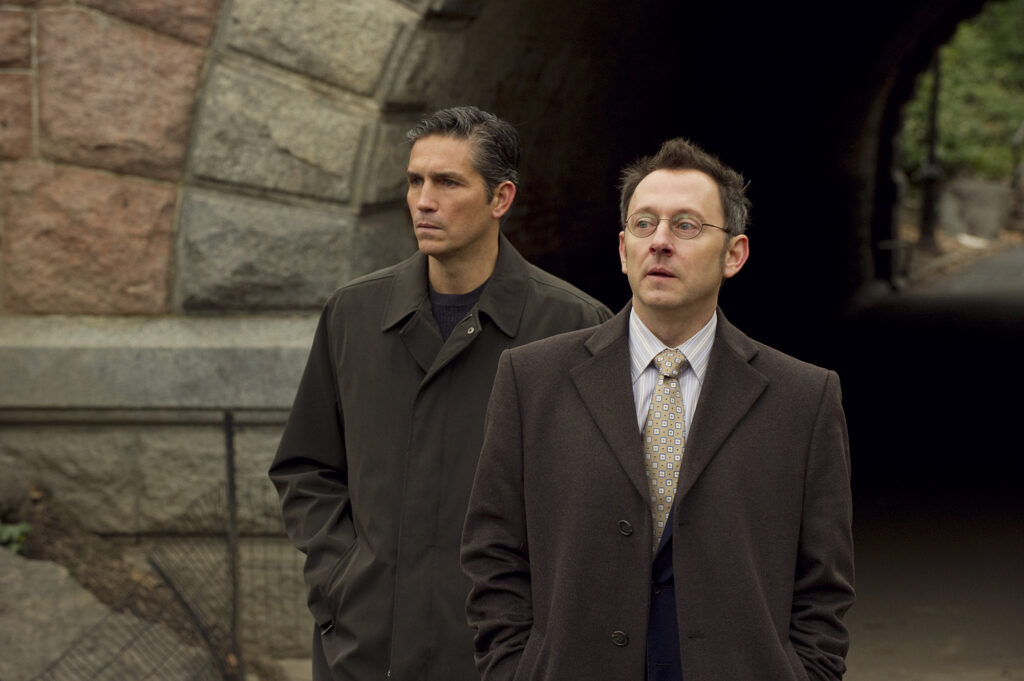
Week after week, Person of Interest trained viewers to distrust democratic oversight while rooting for unaccountable power in the hands of the “right” people—traumatized men with exceptional abilities and superior moral intuition.
In this conception of power, institutions are not merely flawed; they are obstacles. Legality is a nuisance. The audience is invited to feel smarter than the system, aligned with those who truly understand the darker, truer architecture beneath the official one.
Blindspot (2015-2020) dispensed with even this restraint. In Blindspot, the American state is riddled with hidden cabals, and the truth is literally written on the body of an amnesiac super‑operative whose tattoos encode a vast secret plot.
Meaning, however, is hidden everywhere, waiting to be decoded by the initiated. Revelations arrive not through deliberation or accountability, but through puzzles and shocks. This is conspiracism as initiation myth. The viewer is flattered not as a citizen, but as a member of the ‘knowing few’.
Even more seminal to the development of the paranoid entertainment genre, however, is The Blacklist (2013-2023). The Blacklist is the most important example here, not because its individual episodes were particularly original, but because it was relentlessly repetitive, enormously successful and featured a central character who epitomizes the nihilistic conspiratorial anti-hero.
For a solid decade – the decade that began with the Snowden/Wikileaks revelations in 2013 and proceeded through the first Trump presidency and into the COVID-19 pandemic – viewers of The Blacklist were invited into a world where the U.S. government, intelligence agencies, multinational corporations, and political leaders were almost uniformly corrupt or morally compromised.
The only character in The Blacklist who understands how power actually works is Raymond Reddington—a criminal sociopath with ‘a code’, a flair for monologues, and a seemingly limitless supply of insider knowledge.

Reddington is not merely an antihero. He is also the show’s epistemic authority. Everyone else—FBI agents, bureaucrats, elected officials—existed to be manipulated, exposed, or humiliated. Rules were for fools. Institutions were facades. Moral clarity belongs exclusively to the outlaw.
These shows did not ask viewers to believe in any specific conspiracy theory. But they did ask them to accept a broader proposition: that hidden control is the default state of modern life.
The Default State of Modern Life?
Prestige television refined the aesthetic that network television had first adopted.
Mr. Robot (2015-2019) dressed conspiracism in the language of mental illness, alienation, and late-capitalist despair. Killing Eve (2018-2022) transformed conspiracism into a stylish cat-and-mouse game populated by intelligence agencies so morally vacant that murder seemed like a rational career choice. Greymantle calls it ‘conspiracy chic’.
Both Mr. Robot and Killing Eve were smart shows, well-acted and thoughtfully produced. They flattered their audiences. They did not preach. And they simply assumed, as a starting point, that power is both malign and totally opaque in its very nature.
In Killing Eve intelligence agencies are not just compromised; they are morally indistinguishable from the criminal networks they claim to (and occasionally do) oppose. Assassins are playful, stylish, and emotionally vivid. Bureaucrats are gray, disposable, and faintly ridiculous.
Power itself is the villain of Killing Eve, and transgression is the only honest response. What matters here is not realism, but mood. Institutions dissolve into atmosphere. Accountability evaporates. Violence becomes expressive rather than tragic. Conspiracism no longer needs secrecy; it becomes a way of seeing the world.

And whereas The Blacklist, Person of Interest and Blindspot were somewhat ‘right coded’ in their plotting, i.e. their villains, plots and heroes were written to appeal more to conservative, middle American audiences than coastal ‘blue’ demographics, Mr. Robot and Killing Eve pulsed with ‘left coded’ characters, themes and values and reflected a kind of hip, postmodern sensibility at odds with the earnestness of the prior shows.
By the time these stories had become cultural background noise, the Trump years had arrived. Not as an immediate rupture — but as an outward expression of the underlying mental shift that was already underway among the American populace.
One need not argue that television caused any particular election outcome. It is enough to observe that a political environment saturated with conspiratorial storytelling was uniquely receptive to a figure who treated official knowledge as a joke and institutional legitimacy as a con.
The populist vibe, be it coded left- or right-wing, had become familiar.
Heroes Without Ethical Restraints
One of the most corrosive elements of the style of conspiratorial storytelling that took hold in the 2010s was not only its suspicion of institutions, but its moral solution to that suspicion.
If power is always corrupt, then accountability becomes a nuisance. If elites are irredeemably bad, then process is merely theater. And if truth is permanently hidden to the many, then the only meaningful actors are the few who possess the unique ability to see it, and are willing to operate outside the law.
Characters like Ray Reddington, Villanelle, and Elliot Alderson are not just entertaining. They are fantasies of unaccountable clarity. They see what others cannot. They act when others hesitate. Their lack of moral restraint is not a flaw but is in fact the source of their power and insight. Audiences are invited to share their form of moral clarity and embrace their vigilante solutions to political problems.
This is an intoxicating idea, and a deeply anti-democratic one.

This kind of moral framing teaches viewers that norms and rules are obstacles, that institutions exist only to be bypassed, and that violence or coercion are regrettable but frequently necessary tools in a corrupt world. The mythic conspiracist worldview encourages a posture of permanent suspicion without offering any plausible alternative to nihilism.
Over time, this posture becomes habitual. People don’t need to believe any single conspiracy theory, e.g. government collusion with aliens, control of the ‘deep state’ by Satanist pedophiles, globalist plots to create a One World Government, to absorb its inner logic. Viewers of these shows simply learn that nothing official deserves trust, and that anyone claiming otherwise is either stupid or a liar.
A Few Words in Defense of Reality
It would be dishonest to pretend that this cultural turn occurred in a complete and utter information vacuum. Some distrust of corporate and governmental authority has clearly been earned since the turn of the century.
The Wikileaks revelations surrounding mass surveillance during the Bush II and Obama administrations demonstrated that the U.S. government has at times systematically misled the public about the scope of its surveillance activities.
More recent disclosures regarding unidentified aerial phenomena have also confirmed that official silence sometimes reflects ignorance rather than reassurance, but in other instances appears to hide a genuine wish to obscure the truth.
Edward Snowden is a criminal and a traitor, but the government secrets that he leaked nevertheless paint a disturbing picture of a U.S. federal government that is comfortable breaking its own rules regarding the collection of private data without legal authority to do so. The U.S. military and intelligence agencies clearly know much more about UFOs than they have let on for decades.
These events matter. They complicate any simplistic call for a reestablishment of social trust. They also illustrate an important distinction that conspiratorial entertainment routinely obscures.
The distinction is this: Real corporate and government abuses are bound to happen at times, and they eventually surface. Big corporations and governments rely on detailed documentation that tends to make its way into the public square eventually. Their actions provoke consequences. Scandals have endings.
But conspiracies never end. They are infinite by design. Fictional conspiracies, like real conspiracy theories, convert ambiguity into proof and secrecy into omnipotence. When entertainment collapses these categories, it does not sharpen public skepticism to any healthy end—rather it transforms it into permanent mistrust.
A population trained to expect total deception cannot distinguish between scandal and system, between limited wrongdoing and cosmic betrayal. Everything becomes evidence. And if everything is evidence, then nothing is evidence. And nothing is ever resolved.
Greymantle’s Verdict: Stop Producing This Junk
The leading lights of the entertainment industry will insist that the various conspiracy subgenres merely reflect the public’s appetite for conspiracy and suspicion. That, in effect, they are just giving people what they want. “Fiction should not be blamed for reality!”
These defenses ring hollow.
Hollywood and television studios spent years discovering, refining, and saturating conspiratorial storytelling because it worked. It simplified complexity. It traveled well. And most importantly — it flattered audiences in exactly the way successful demagogues do.
Furthermore, back in the early 2010s, it appeared to carry no obvious societal cost.
That is no longer true: the long-term cost is becoming visible. A culture trained to expect hidden hands behind every event eventually loses the ability to recognize reality when it is staring them in the face.
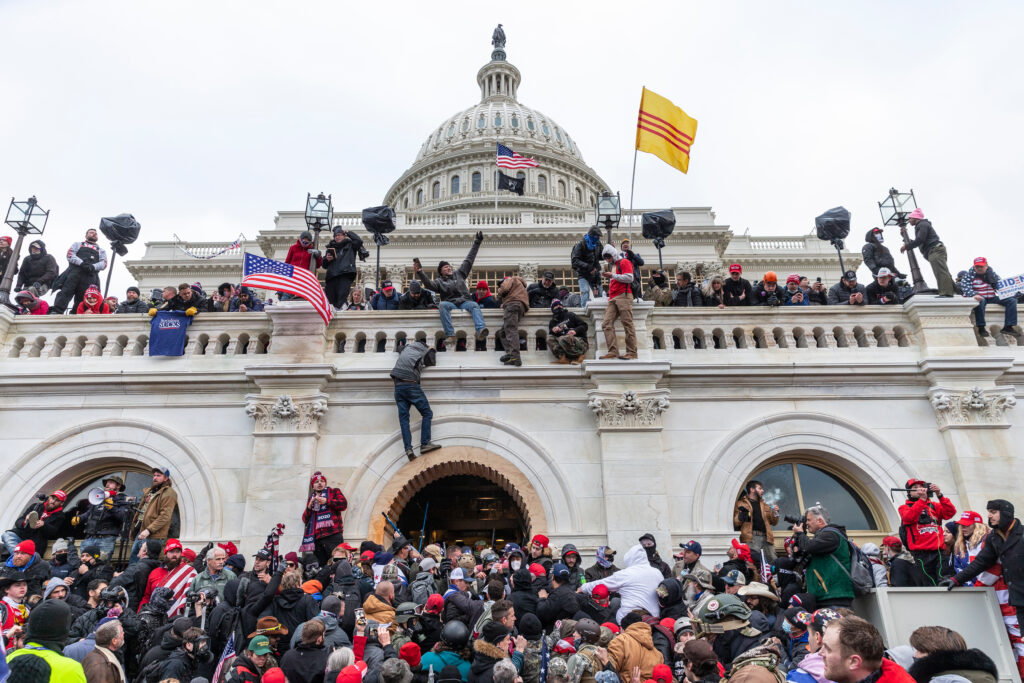
A citizenry that believes power is held exclusively by hidden cabals becomes impatient with process, hostile to evidence, and contemptuous of restraint. It does not collapse into madness overnight. It simply drifts—away from trust, away from proportion, away from shared understanding.
In 2021, that verdict seemed like a warning.
In 2026, it looks more like an invoice.
Until next time, we are –
Greymantle