Key Takeaways
- Hollywood’s dependence on existing IP is crowding out originality, as studios increasingly favor sequels, remakes, reboots, and franchise extensions over new stories.
- Risk-averse corporate decision-making has transformed film production, with major studios prioritizing recognizable brands over creative experimentation.
- The short-term profits of franchise filmmaking may be weakening the industry’s long term prospects, as audiences show signs of fatigue with repetitive content.
- A healthier future for American cinema likely requires renewed investment in original ideas, mid-budget films, and filmmakers willing to take creative risks.
Of all the books of the Bible, the Book of Ecclesiastes contains some of the most quotable, and frequently cited passages from scripture. For example, Ecclesiastes is where we find the oft-quoted saying “to everything there is a season and a time for every purpose under Heaven…a time to be born, and a time to die…a time to reap, and a time to sow.”
These lines are so lyrical and pensive that they have become part of our shared cultural inheritance and can’t help but move us every time we hear or read them. And, let’s face it, the lines from the Bible that don’t contain any proper names (like Jesus, Solomon, or Bathsheba) also seem to be the ones that get brought up most frequently in today’s secular spheres. Again, the Book of Ecclesiastes contains a number of these passages.
For example, for years I wrongly believed that “there is nothing new under the sun” was a line from one of William Shakespeare’s plays, but that phrase also happens to be found in Ecclesiastes. It’s a simple statement, but it’s powerful because it can be interpreted in at least two provocative and illuminating ways.
In one interpretation, it can be said to describe the repetitive nature of history and the world. But it can also be interpreted as meaning that all the raw material we have available to us as human beings to create new things is already here on earth before us.
If you are a creative artist, performer, or writer, this line therefore contains great potency.
Nothing New Under the Sun
People who romanticize the notion of ‘creativity’ writ large tend to believe that a highly creative person can come up with an infinite number of ideas all by themself if provided with enough time and opportunity; but that just isn’t the case.
There are only twenty-six letters in the English language, and a finite number of words. Yes, we add words to the English lexicon every year, but we also drop certain words with equal frequency. When was the last time you used the word “strumpet,” or “rapscallion?”
If you are a pianist, there are only eighty-eight piano keys, and if you are using an electric keyboard, you very well might have even fewer notes to play with. If you are a musical lyricist like the late Lorenz Hart, then you have the added constraint of having to use words that rhyme. No wonder Lorenz Hart, recently referenced in this Greymantle article on the 2025 Oscar awards, was so depressed!
Even Shakespeare, who many consider the greatest playwright in the English language, and possibly the greatest who ever lived, derived many of his most successful ideas from earlier works of art.
The plot of “Romeo and Juliet” came directly from a contemporary 16th century source called “The Tragical History of Romeus and Juliet” – a popular poem written by Arthur Brooke in the year 1562. The key dramatic elements of this great drama didn’t come out of thin air or from the depths of Shakespeare’s mind: Shakespeare pretty much stole the idea and didn’t give Brooke credit or a share of the profits.
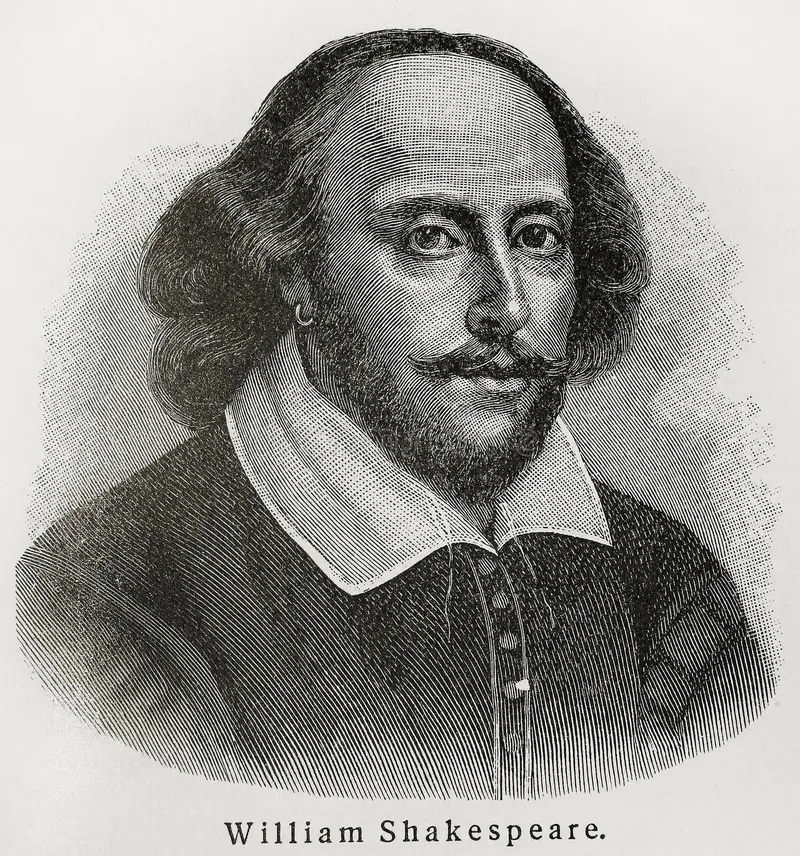
To be fair to William Shakespeare, the legal concept of “copyrights” and “copyright protection” didn’t exist in the late 1500’s or for some time thereafter. Additionally, Brooke died shortly after his poem was published, so he wasn’t around to lodge a lawsuit against Shakespeare – assuming he could have done so.
Not only were the plots of most Shakespeare’s plays derived from earlier sources, but consider the various modern works that have been adapted from Shakespeare. Their debt to The Bard is not always acknowledged front and center in, for instance, the many Hollywood films loosely based on Shakespeare’s plays.
It’s not like Shakespeare has benefitted from the box office receipts for movies like “The Lion King” (based on Hamlet), “West Side Story” (Romeo and Juliet), “10 Things I Hate About You” (The Taming of the Shrew), “Kiss Me Kate” (The Taming of the Shrew again) “She’s The Man” (Twelfth Night) “My Own Private Idaho” (Henry IV, Parts 1 & 2) or “Rosencrantz and Guildenstern are Dead” (Hamlet again).
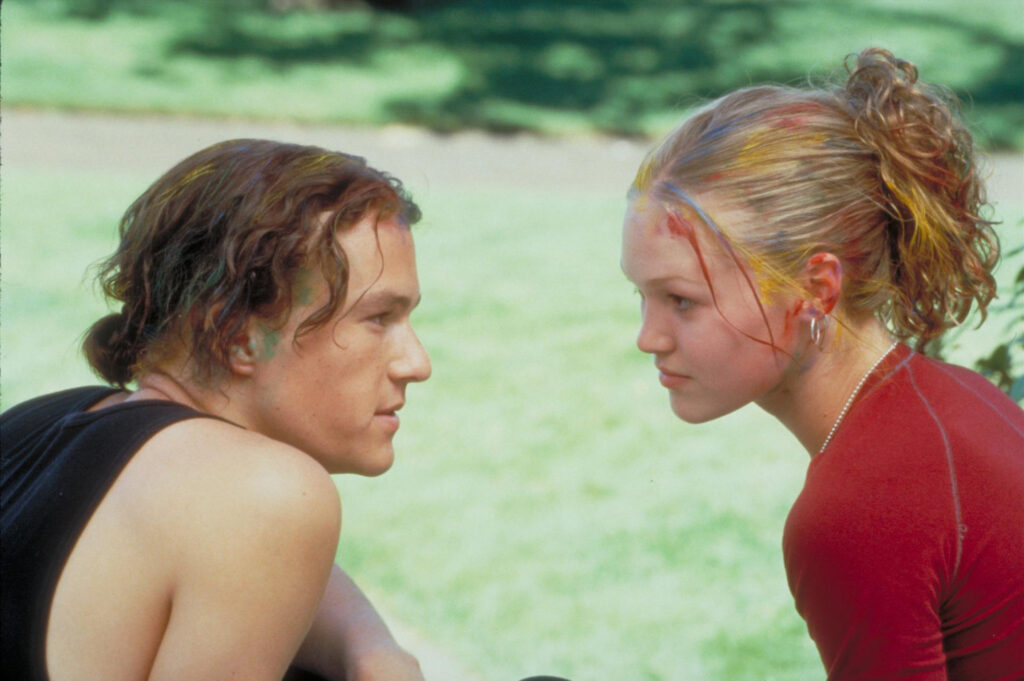
I could go on and on…
The purpose of this meandering preamble to what will eventually (I hope) turn into a fun comedic piece, is to agree that, yes indeed, there really is nothing new under the sun.
But that seems to be especially true these days.
‘Only Pitch IP’
Filmmakers and producers in Hollywood used to create large numbers of both completely original projects and projects adapted from earlier source materials. But something began to change during the 2010s. Now, writers and producers are constantly told to only pitch material that is I.P. (the abbreviation for “Intellectual Property”), i.e. to only pitch stories that are derived directly from existing movies or television shows.
This recent trend of only using “IP” to create films and TV shows is everywhere in the 2020s.
The easiest way to see examples of it is to peruse offerings from the Disney + streamer. Practically everything on offer on Disney+ is some variation on a different fictional “Universe.”
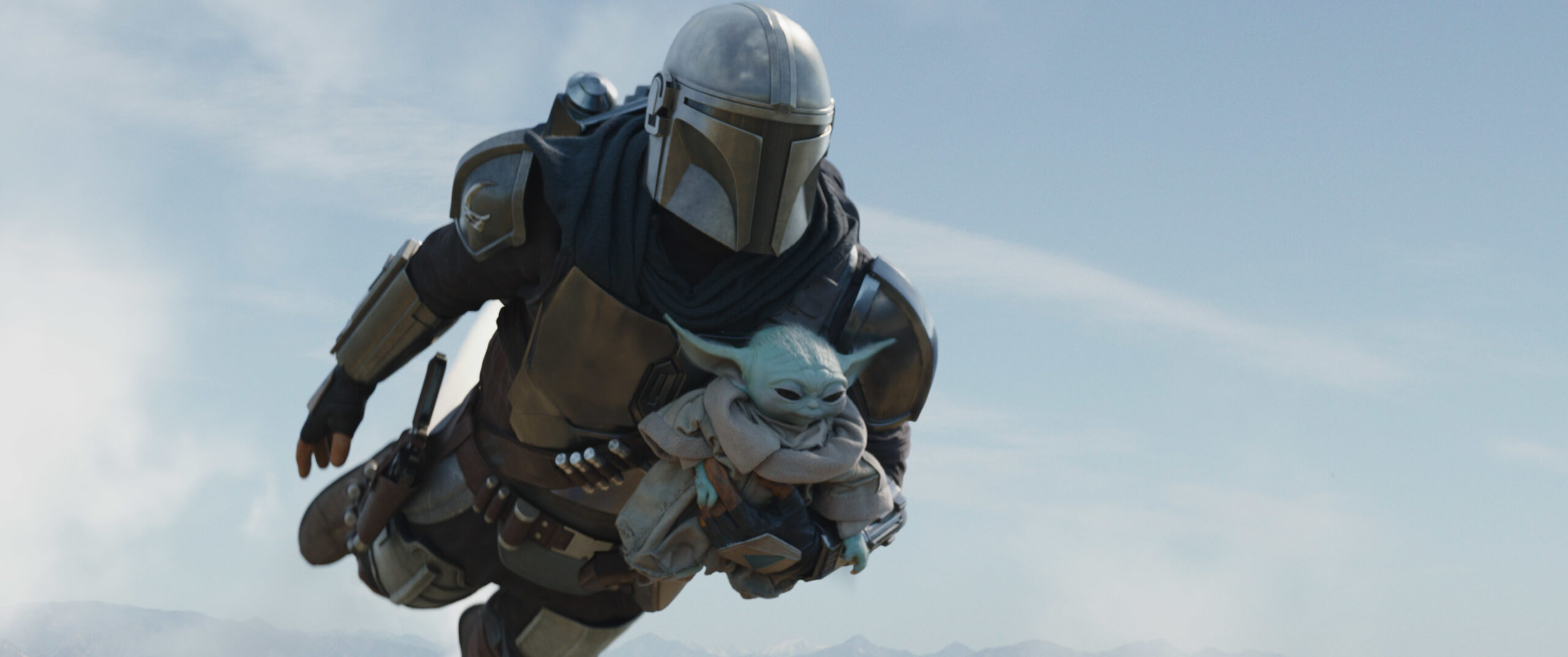
For example, there are series that are created out of the Marvel Universe (like Lokie or Mrs. Marvel), and there are also series spun off from old Disney animated films (Cruella DeVille), as well as the Star Wars Universe (like Andor and The Mandalorian) the latter of which was spun off from the Boba Fett character in the original Star Wars films to become its own streaming series. Having become a huge success, The Mandalorian now will be spun off a second time to become a feature film later in 2026.
Why has the film industry become so reliant on using IP these days? It often seems as if the industry is engaged in an endless exercise of beating a dead horse – so to speak. The phrase used in the film industry is ‘Hollywood franchise fatigue’. Understanding why this has happened requires us to take a step back and examine how Hollywood’s IP obsession got out of hand.
It’s the Expense, Stupid
Hollywood film studios have always tended to be risk averse. This has been true through much of cinematic history, even during the ‘Golden Age of Hollywood’ in the 1930s and 40s.
But the economics of producing films have changed dramatically since the 1990s.
In the age of inflated lead actor salaries and advanced special effects, the cost of producing new content has become so excessive – effects-laden summer blockbusters commonly cost over $100 million to produce – that creating original high-concept movies seems to have become too big a risk for the studios’ accounting departments to countenance, or even consider.
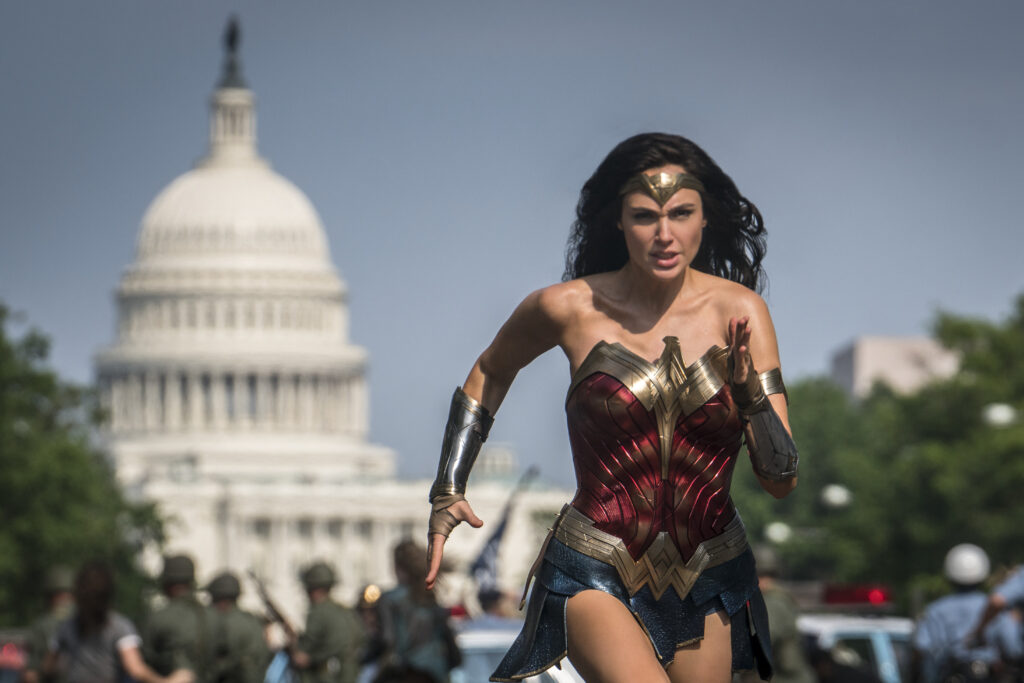
For a film to attain the status of a bona fide international hit, even having two or three of America’s biggest movie stars in the cast won’t necessarily guarantee financial success.
Using material that is already well known and well-loved, however, and which contains a dramatic roadmap that has already been tested – and has a prior track record of financial success — has become the much-preferred route for movie studios obsessed with creating successful content.
Now, to be clear, creating derivative works (new films or TV programs based on pre-existing material) isn’t necessarily lazy or hack-y in and of itself.
To some extent, doing this is simply the way the Hollywood film and TV industry works these days. Some of the most respected artists and auteurs in American cinema (not to mention the film industries of other countries) have themselves engaged in numerous sequels and spinoffs (Guilleromo del Toro’s adaptions of ‘Frankenstein’ and ‘Hellboy’ to name just two by a well-respected auteur). Many of these spinoffs have, as well, been very successful both critically and financially.
Here are a few examples of existing spinoffs from recent decades:
Better Call Saul came from Breaking Bad
Frasier came from Cheers
Young Sheldon came from The Big Bang Theory
Creed came from Rocky
Andor is a prequel to Rogue One, which is, itself, a spinoff of Star Wars.
Melrose Place was from Beverley Hills 90210
Elsbeth is a spinoff from The Good Fight, which was a spinoff from The Good Wife
Annabelle and The Nun came from the film The Conjuring
Agatha All Along was spun off from WandaVision which was itself a spinoff.
Buzz Lightyear of Star Command was spun off from Toy Story
Timon & Pumba spun off from The Lion King
Joker and Joker: Folie a Deux are part of the Batman DC Universe
Ocean’s 12, Ocean’s 8, and Ocean’s 14 all spun off from Ocean’s Eleven
The Trouble with Spin-Offs
Now, I can hear what you are saying. “But, I liked Creed!” And, “Those Joker films are f**king great!”
“What exactly is your problem with this IP stuff, Gideon? It really seems like a non-issue”.
Now, to be clear, I like some of the films and TV shows listed above, too. There’s some solid artistic work included in that list, and most of the above were legitimately entertaining.
But the virtues of some IP-based creative content can’t, and shouldn’t, disguise the fact that the film industry’s over-reliance on IP is starting to become a serious issue. The sequel and reboot problem in Hollywood is only the tip of the iceberg. Hollywood’s IP obsession is becoming a worrisome problem in a number of other respects.
First, risk aversion is feeding more risk aversion – a veritable doom loop of risk aversion, in fact – until film executives are becoming unable to take the kind of healthy risks that are essential to any artistic enterprise that is also a business enterprise.
Where did the original Star Wars film come from, you may ask? It was an original pitch made by a young filmmaker named George Lucas to 20th Century Fox in 1974. Star Wars was based entirely on a 50-page treatment that Lucas himself had written.
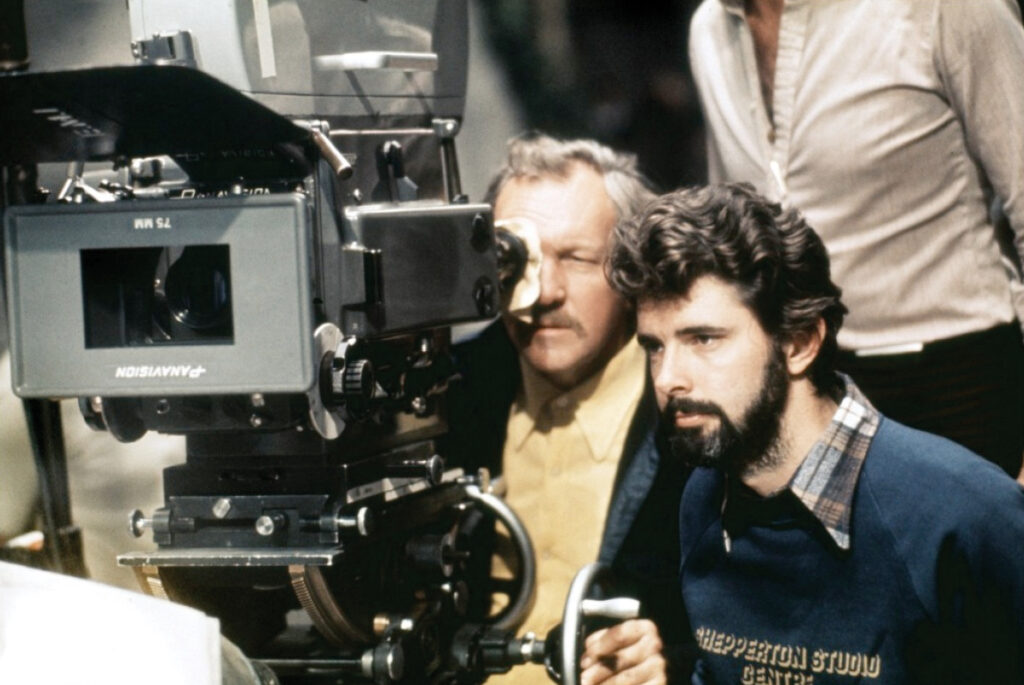
George Lucas had a very hard time getting 20th Century Fox to agree to finance Star Wars in the mid-1970s. His brilliantly original pitch, which has given rise to over a dozen films and TV shows that have been among the most financially successful of all time, would never see the light of day if it was pitched to a studio in 2026.
As a producer in the industry myself, I have seen how the IP trend has become not merely a convention, but a strict mandate. Pitches that aren’t IP simply aren’t accepted at many studios and networks – no matter how exciting or original the pitch.
Are we really becoming THIS risk averse as an industry, and as a country?!
Immersion in Alternate Universes Is Bad for Young Minds
The second problem with IP content is that, as it proliferates, viewers – and particularly young viewers – can easily become immersed in a set of fictional universes that lack many features of the real world. This can lead young people to lose touch, or never really develop, a solid relationship with real-world characters, stories and struggles. Or even to develop an emotional attachment to the real world itself…
Psychologists like Jonathan Haidt of NYU have clearly demonstrated that the consequences of young people being saturated with media and screens 24/7 has led resulted in a so-called “Anxious Generation” and a full blown youth mental health crisis in America.
I’m not going to go full Tipper Gore here, but we do need Gen Z and future generations to re-discover the Real Life world, rather than continuing to be lost in fictitious and virtual ones.
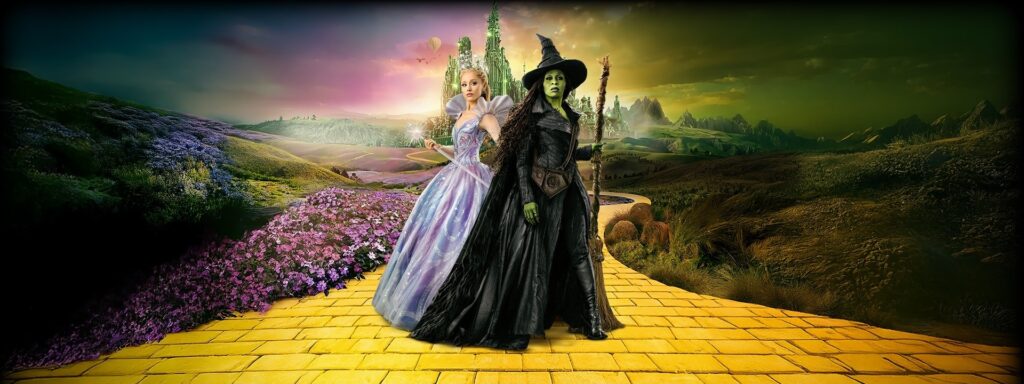
I mean, the film version of Wicked was enjoyable, but are you ready for ten more films and streaming series set in the Wicked Universe? I can promise you, they are coming, and the avalanche of derivative content that is upon us is soon going to become unpalatable.
Wicked itself wasn’t even original material. It’s based on the Wizard of Oz fictional universe – sorry, “Universe” – by L. Frank Baum. There were fourteen books written in the series! Only three of them have been made into films. Are you ready for 11 more? Plus the dozens of sequels and spin-offs they will spawn?
The new Harry Potter TV series is just launching and the visuals look indistinguishable from the visuals of the eight Harry Potter films. We already have a Harry Potter theme park, Broadway show, a Wand shop, not to mention the Fantastic Beasts spin-off series.
This pattern is resulting in a third major problem for the entertainment industry: the decline of originality in Hollywood. Who are the Martin Scorsese’s and Peter Bogdanovich’s of Gen Z? Where are the Kathryn Bigelow’s and George Lucas’s of my kids’ generation? Of 21st century America?
Surely, the young generations include people of genius endowed with the divine spark of creativity – people who can represent the dreams of their generation with integrity, truth and authenticity.
That being the case, why do we need this much derivative content? We are beating a dead horse over and over! It’s getting too much.
Okay, I’m calming down…
Spielberg’s Thoughts on the Coming Avalanche of IP
Since I began writing this article, my position has been bolstered by a very prominent voice in the U.S. entertainment industry.
Steven Spielberg, the legendary director of Jaws, E.T., and Raiders of the Lost Ark, recently spoke forcefully against this industry-choking IP obsession during an appearance at CinemaCon. Even though Mr Spielberg has himself directed sequels to some of his own works, he realizes the long-term dangers to the film industry from its growing dependence on derivative content.
Spielberg was quoted as saying: “If all we make is known, branded IP, then we’re going to run out of gas as an industry. There is nothing more important than giving the audience visual stories, and they can be in any form, but we need to tell more original stories.”
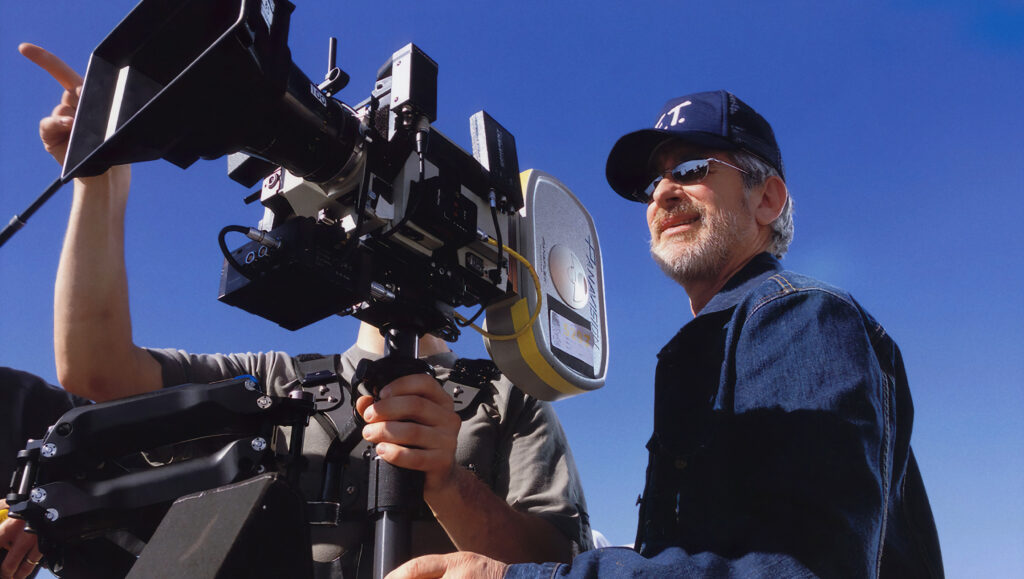
When prominent industry leaders like Steven Spielberg speak out like this, you can be sure that we are reaching some kind of a tipping point. The industry needs to undergo a course correction soon to escape turning into a factory for the endless recycling of earlier generations’ dreams.
As Jason Hellerman of the NoFilmSchool.com website and author of the article recounting Mr. Spielberg’s remarks best summed it up: “Originals, like spec scripts, are the most accurate depictions of what is inside our hearts, and it’s cathartic to share them with an audience.”
IP Universe Shows & Films We Can Expect Soon
For your amusement and edification, and to show the true scope of ridiculousness in this IP madness, I’ve compiled a list of hypothetical new TV series that we could very well expect over the next few years.
My sincere hope is that satire will demonstrate to humans the true extent of their folly. I’m fine with beating dead horses once in a while, but there needs to be a sensible limit.
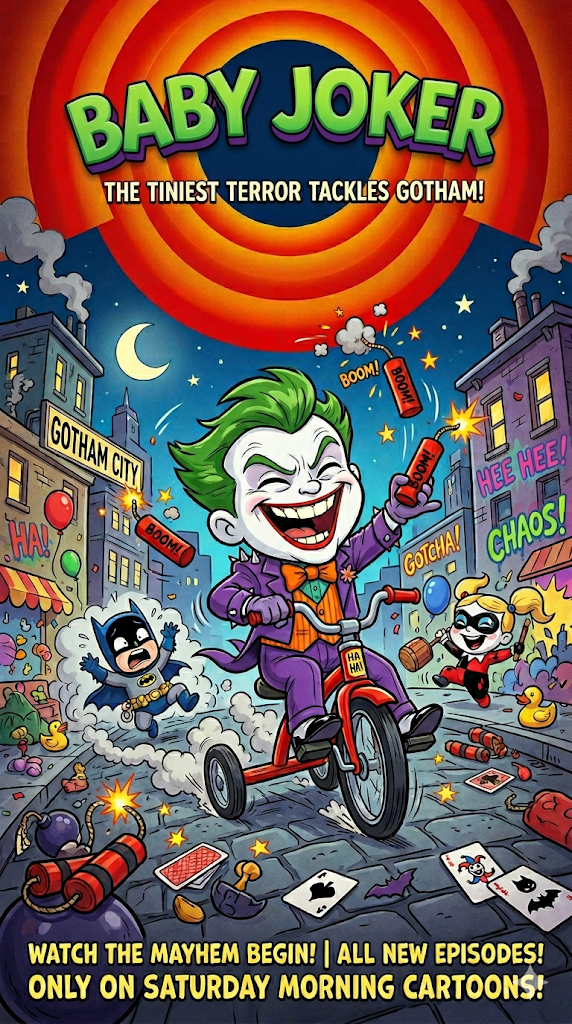
BATMAN UNIVERSE
Baby Joker
Catwoman: The Musical by Andrew Lloyd Weber
The Real Housewives of Gotham City
The Riddler, shiny floor quiz show
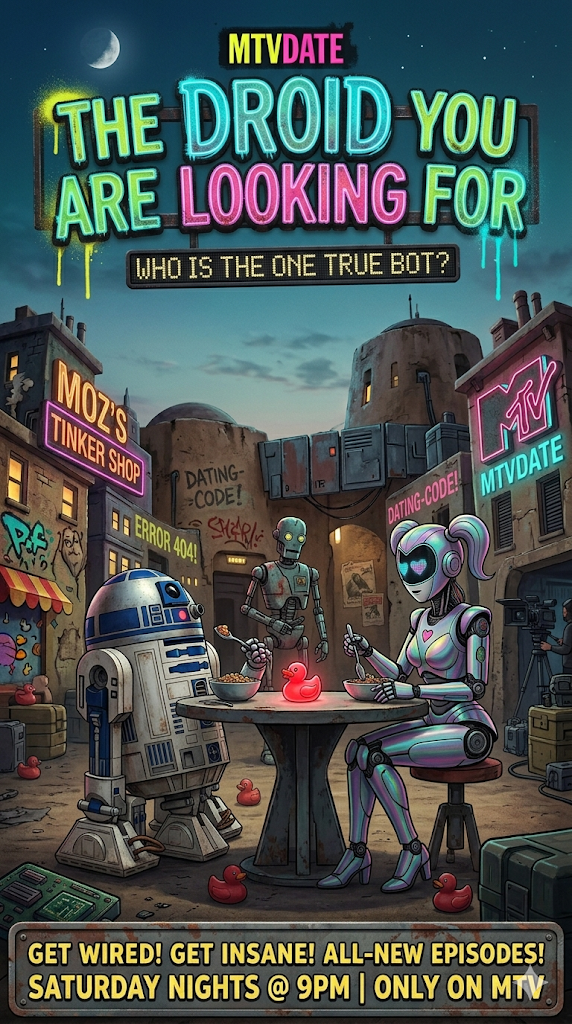
STAR WARS UNIVERSE
Jaba Upgrades your Hut on HGTV
Princess Leia Hair Stylin’ YouTube Channel
The Droid You are Looking For – Robot dating show hosted by R2D2 and C3P0
Vader Knows Best
SEINFELD UNIVERSE
Dancing (Badly) with the Stars with Elaine Benas
Kosmo and Family sitcom
The Summer of George – Teenage CW series
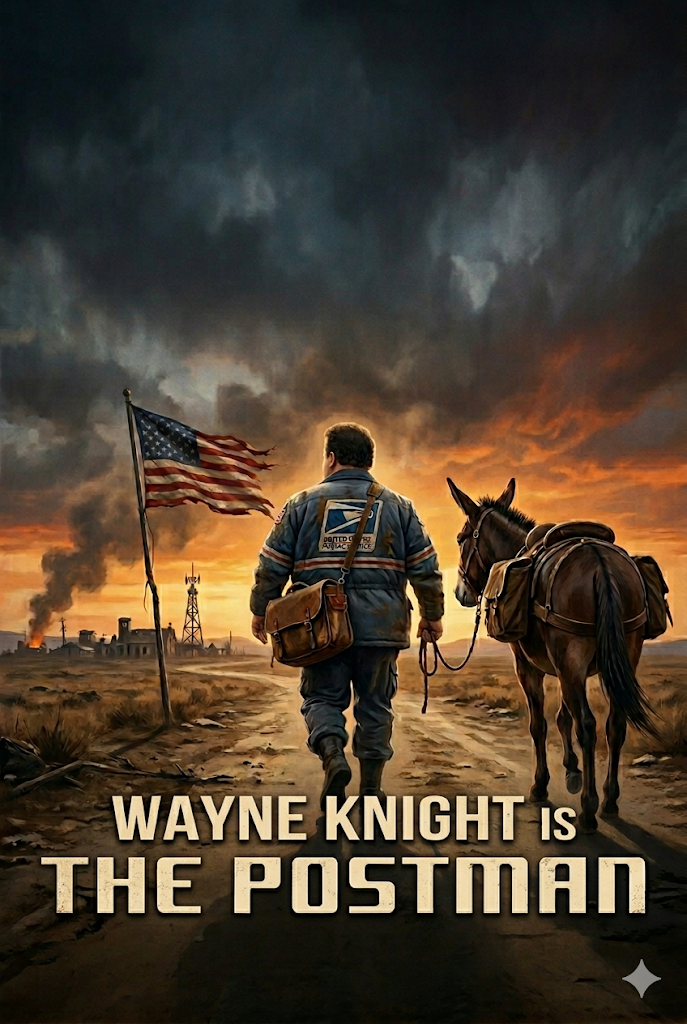
The Postman: The Newman Chronicles – remake of the Kevin Costner film, starring Wayne Knight.
THE PITT UNIVERSE
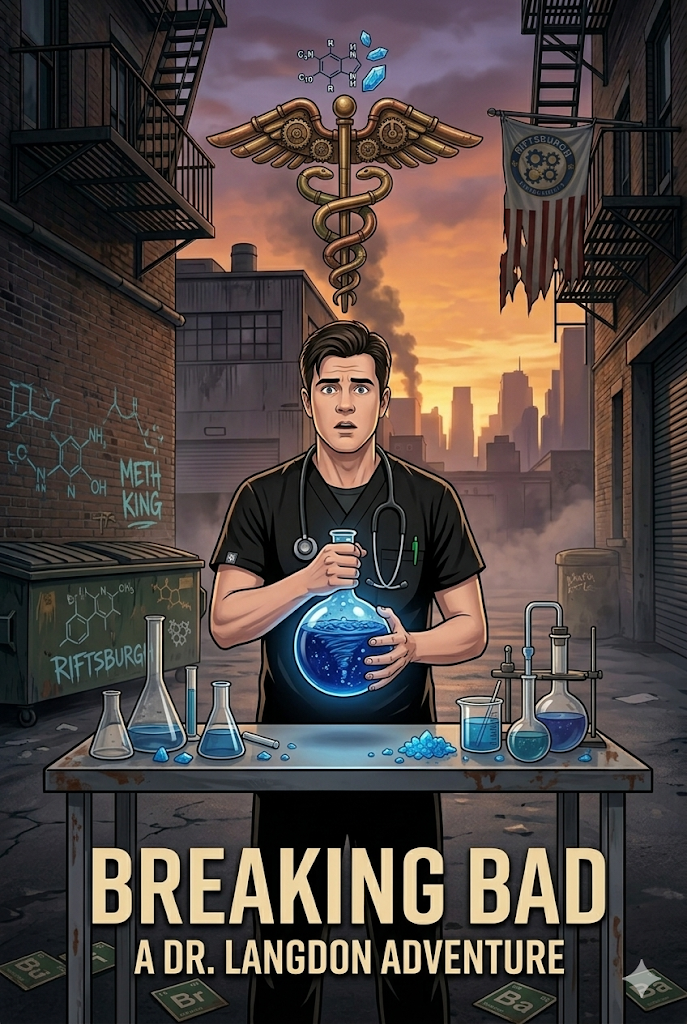
Breaking Bad with Dr. Frank Langdon
Victoria Javadi’s Tik Tok show
Easy Rider reboot with Dr Michael Robinavitch
Fantasy ER League, ESPN show about sports betting with paramedics from the Pitt, sponsored by DraftKings
LOONEY TUNES UNIVERSE
Yosemite Sam Teaches Hunting
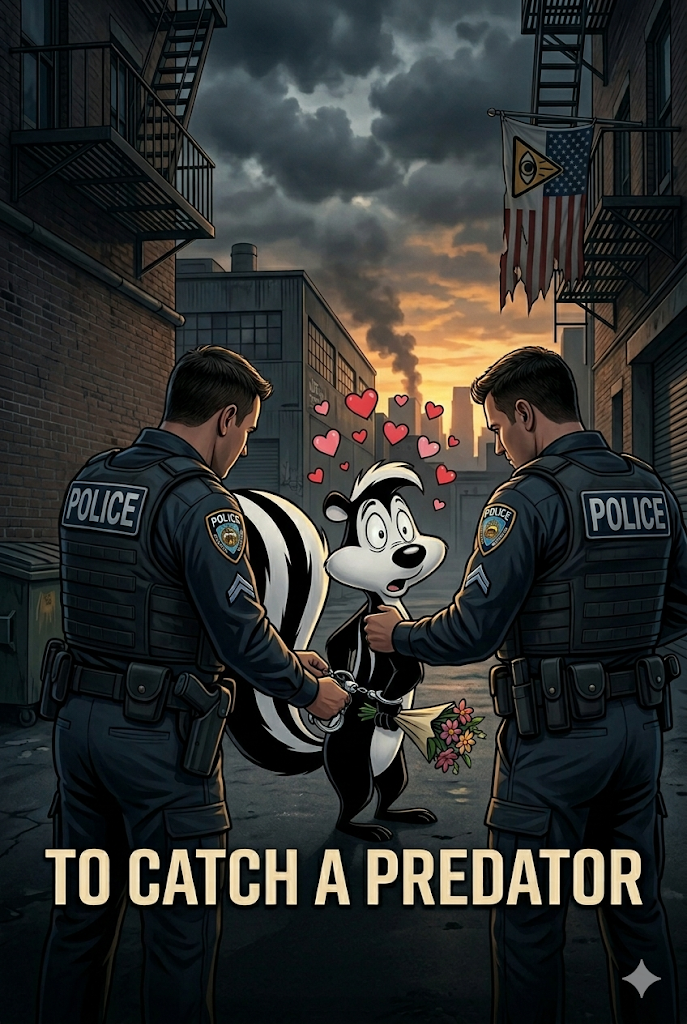
To Catch a Predator, Pepe Le Pew Edition
Cooking with Carrots, with Bugs Bunny
Crossfire with Wil E. Coyote and Road Runner
THE BIBLE UNIVERSE
Carpentry with Jesus on DIY Network
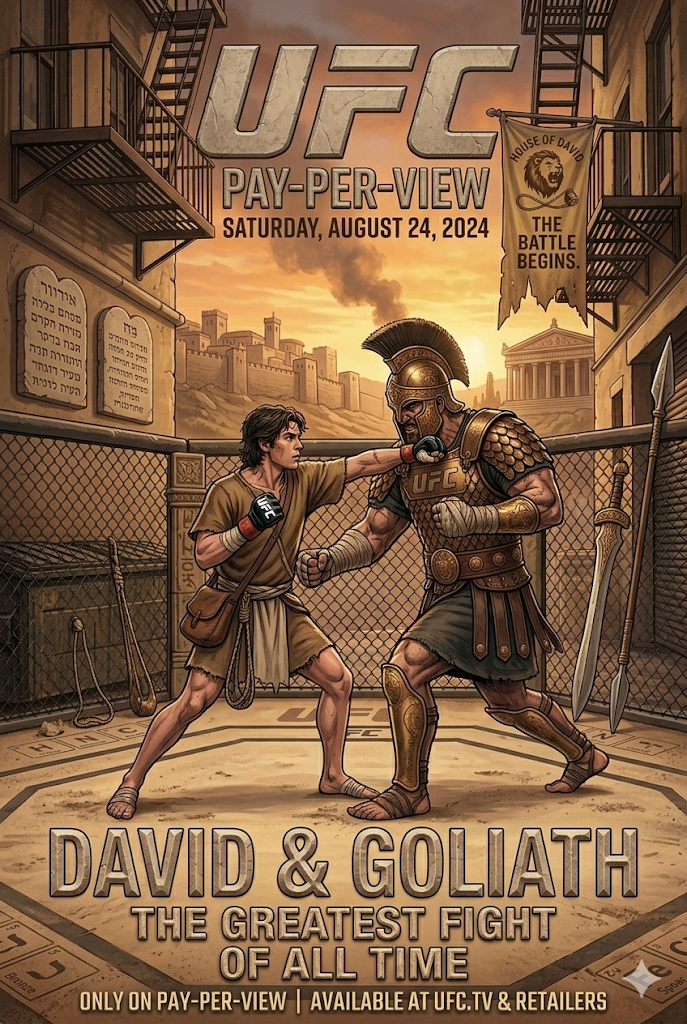
David & Goliath UFC steel cage match
Sodom and Gomorrah Executive Produced by Ryan Murphy
Exodus – Mark Burnett-Produced reality show where contestants spend 40 days and nights trying to survive in the desert.
Pimp My Chariot
The above are offered purely in the spirit of humor and the absurd, but don’t be surprised if at least one or two of them find an eerie realization in the not-too-distant future.
My money is on ‘Sodom and Gomorrah: The TV Series’ to be executive produced by Ryan Murphy, creator of American Horror Story. The idea is just grotesque enough to come true!
Until next time –
Gideon Evans