Key Takeaways
- Natural resource wealth has deepened, rather than resolved, Sudan’s instability.
Oil and later gold revenues fueled militarization and corruption, enriching elites while leaving state institutions hollow and civilians unprotected. - The Janjaweed evolved into a rival state force—and then turned on the state.
The RSF’s rise from militia to co-equal power culminated in open war with the Sudanese army, bringing large-scale urban destruction to Khartoum itself. - Foreign backers and black-market economies sustain the war.
Gold smuggling, arms flows, and external sponsors—particularly the UAE—have entrenched a conflict in which neither side has incentive to seek a decisive peace. - International disengagement has enabled Sudan’s collapse.
With the U.S. and other powers largely absent, Sudan has drifted into de facto partition—leaving civilians to endure a deepening humanitarian catastrophe.
…continued from Part 2 last week.
The Curse of Oil Comes to Sudan
Despite being in the midst of a second civil war, and after heavy investment by the China National Petroleum Corporation (CNPC) during the 1990s, major oil revenue began flowing into Sudan in 1999.
Most of the oil came from the South, but after the creation of South Sudan the North still received hefty transit fees. This was because the lion’s share of Sudanese oil left Sudan via pipelines routed through the North to Port Sudan on the Red Sea coast, from whence it was exported – mainly to China.
These funds essentially dried up in 2024 following the destruction of much of the oil infrastructure through which South Sudanese oil was transported to the North. The oil pipelines became the casualties of shelling and sabotage, mainly by the RSF, as cutting off the SAF’s oil revenues was one strategy employed by the RSF to starve its opponents of funds they needed to purchase weaponry (from China and Ukraine).
In the South, oil money had been used largely to fund South Sudan’s new military, while most social services – such as they are – have been left in the hands of foreign donors, who funded those services through a combination of USAID grants, European Union and British aid, and private contributions.
All is not lost in South Sudan, however. South Sudan’s basketball team made it to the 2024 Olympics. Also, as a land where many of the people are strikingly dark, tall, and out-of-this-world thin, South Sudan currently claims nine of the top 50 fashion models on Earth as its native daughters.
Meanwhile, South Sudan’s President Salva Kiir was recently found to have appointed a man who had been dead five years onto the panel that was meant to prepare for long delayed elections.
South Sudan’s own civil war (2013-2018) that began shortly following independence – essentially a struggle for political supremacy between its two largest ethnic groups, the Dinka and the Nuer – is estimated to have killed over 400,000 people. But at least the capital of South Sudan, Juba, does not lie in ruins.
For all its manifold faults, South Sudan exists today in a state of tenuous peace. But without its portion of Sudan’s oil revenues, South Sudan’s economic prospects are presently bleak.
The RSF Comes for Khartoum
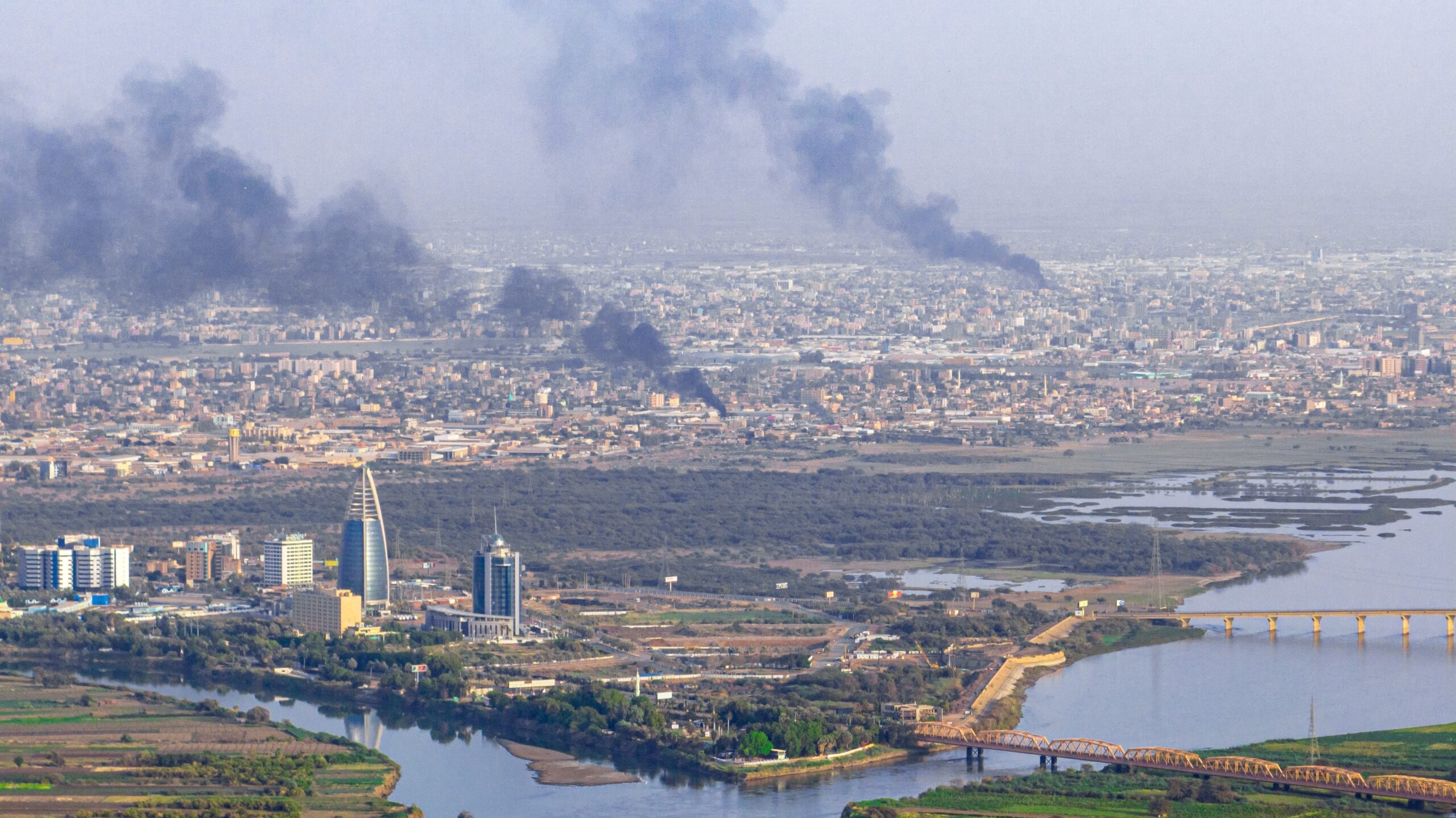
In Khartoum, the smoldering fire the elite had long been playing with consumed them quickly after they lost control of it in 2023.
Over the many years of Sudan’s Second Civil War, Sudanese leaders had gradually beefed up the rag-tag Janjaweed militia, transforming what began as groups of semi-organized raiders into a fully equipped adjunct to the Sudanese military, called the Rapid Support Forces, or RSF, as mentioned in Part 1.
Indeed, when the Sudanese military took control of Sudan’s government again in 2021, after a disappointingly brief period of civilian rule that began in 2019, the head of the army (i.e. the Sudanese Armed Forces, or SAF) and the head of the RSF became co-leaders of the country.
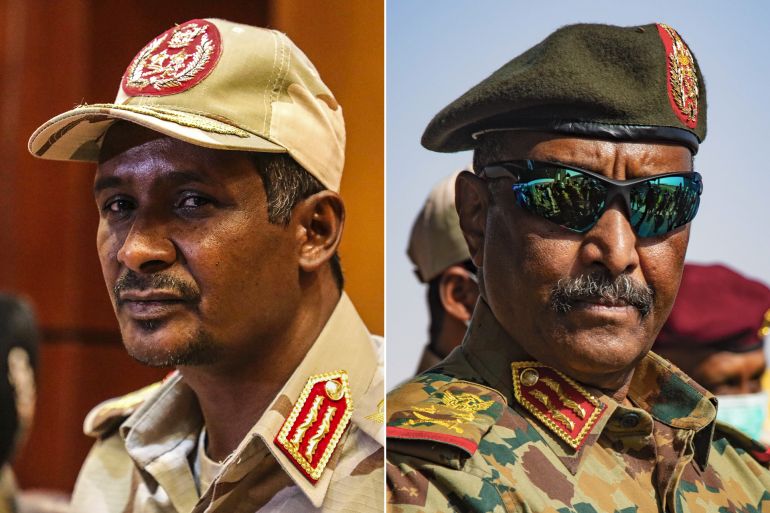
The alliance between the SAF and RSF proved to be short-lived. Apparently, the RSF had grown too big for its proverbial britches. After decades of making war and expanding its operational capabilities, its leaders decided that they wanted to be more than the tail that wags the dog.
In April 2023, the RSF unleashed its bid for power by launching a surprise attack on the headquarters of the SAF in Khartoum. It also laid siege to the presidential palace, encircling Sudan’s then co-leader, General Abdel Fattah al-Burhan. He is rumored to have escaped from the besieged palace only with the help of Ukrainian commandos hired to perform the extraction.
General al-Burhan went on to lead a government in semi-exile in the Red Sea oil exporting hub of Port Sudan, located 400 miles east of Khartoum. But for two years, the SAF struggled mightily to prevail against the well-trained and highly motivated RSF cadres, who had set their sites on controlling all of North Sudan.
The Khartoum battle of 2023 was merely the beginning of Sudan’s Third Civil War. With both sides being almost evenly matched in terms of equipment, training, and ruthlessness, the Sudan RSF vs. SAF conflict transformed the country’s north into a series of pitched battles involving aerial drones, combat aircraft and airstrikes, tanks and savage house-to-house gun battles.
The SAF finally managed to retake Khartoum from the RSF in May 2025. By then, months of bitter fighting in and around the city had resulted in the deaths of over 60,000 Khartoum residents.
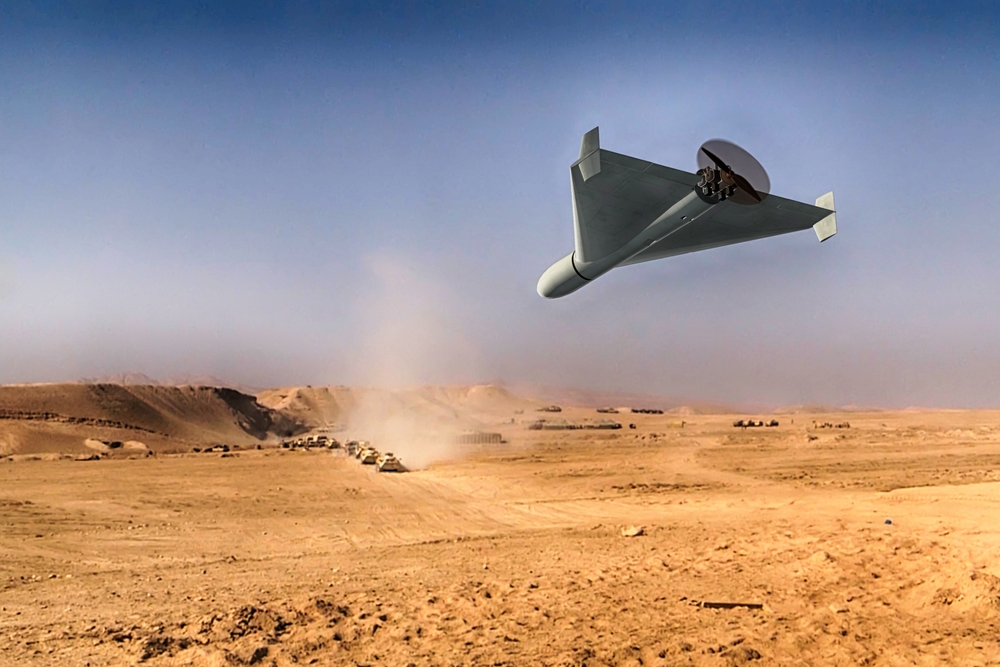
Weapons the RSF employed against the SAF included Chinese 115mm howitzers, as well as Chinese drones and guided arial bombs. For their part, and to overcome the RSF’s considerable qualitative edge in artillery and drone warfare, the SAF conducted more-or-less indiscriminate airstrikes on the city in their repeated attempts to dislodge the RSF and retake the capital.
From the Curse of Oil to the Lure of Gold
The devastation caused by North Sudan’s ongoing third civil war is compounding severe economic dislocations caused by the loss of most of its oil revenues.
In 2011, following the departure of the southern provinces to form South Sudan, North Sudan lost 75% of its oil fields, two-thirds of its foreign exchange earnings, and half its government revenues.
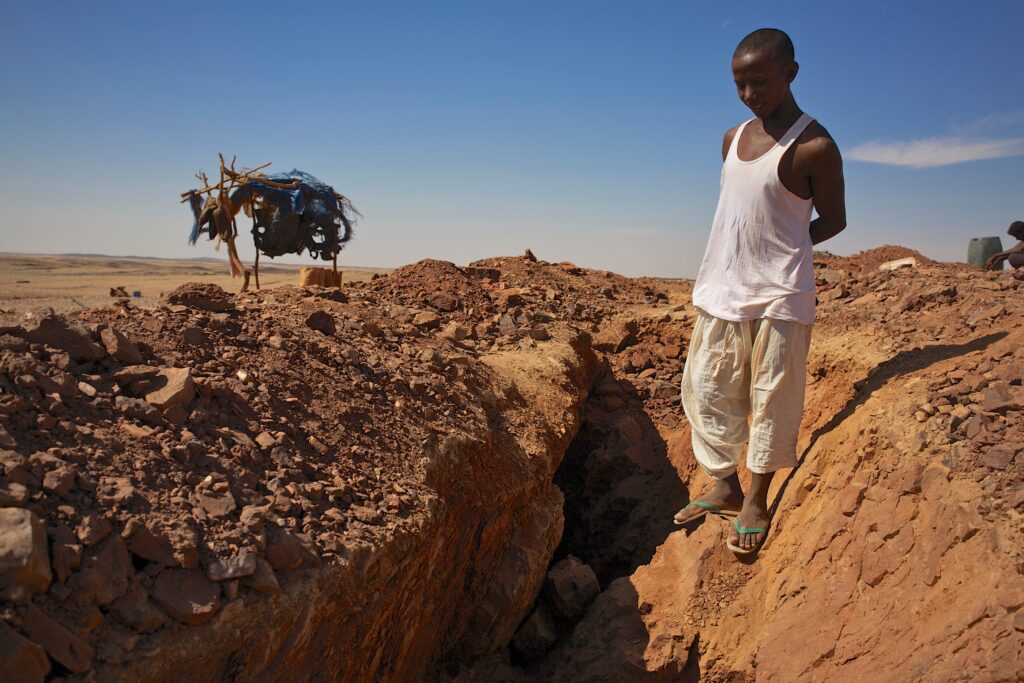
To compensate for the loss of oil, the North’s government invested in another commodity to take the place of raw petroleum: gold, which now makes up 70% of Sudan’s exports. Estimates place the value of gold extracted in Sudan in 2024 at $860 million.
Unlike in more developed parts of the world, the vast majority of Sudan’s gold is extracted from small, local, “artesian” mines that render gold from other ores using poisonous arsenic and mercury. Both are dangerous methods officially outlawed in Sudan — but who cares when there’s a war going on and both sides need to fund themselves?
Gold has also apparently made the leader of the RSF, Mohamed Hamdan Dagalo, known as “Hemedti,” a very rich man, by all accounts. Most of the gold gets smuggled to the United Arab Emirates, which pays for it — when dealing with the RSF — largely by trading arms. Or so it is widely rumored.
The latest epic story of the Sudan gold trade and conflict forms a new and lamentable chapter in the history of Sudan’s civil wars and the role of ‘blood diamonds” and “war gold” in African armed conflicts.
The RSF Tries for ‘Respectability’
With extensive land interests in and around Darfur (which the Gulf Arab states still intend to be an Arab “breadbasket” one day much as it was in the 1970s) and concerned with the tendency of the official Sudanese government to go, in its eyes, “too Islamic,” the United Arab Emirates has become the RSF’s main supporter, both militarily and diplomatically.
Meanwhile the RSF has worked to make itself more ‘respectable’ on the international stage. How does a rampaging militia credibly accused of genocide attempt to win foreign support, you may ask?
In February 2025, its leaders gathered in Nairobi to pen a charter that offered a rosy vision for Sudan if they ever have the chance to govern the whole country. Under them, a post-war Sudan would be secular, democratic, decentralized, and supported by a unified army, or so the RSF has pledged.
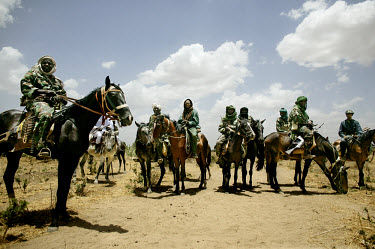
The RSF’s political ‘charter’ document was made public right before the RSF began its siege of El Fasher, which had been the last SAF stronghold in Darfur. This makes the charter read, in hindsight, more like a sophisticated propaganda document drafted to keep the UN off its back during the siege than a serious political proposal for North Sudan’s future.
At the present time, (North) Sudan faces de facto partition: The SAF government holds Khartoum and the eastern states, while the RSF holds Darfur and the other western ones. Control of the middle states such as Kordofan is being contested. People are returning to Khartoum, reports say, despite the ruins and lack of working civilian infrastructure.
American Leadership Is Absent in Sudan
Where have the Americans been in all this?
Ties between the US and Sudan have a long and complicated history: Sudan, after all, was the home of Osama bin Laden during the early 1990s, where he became very engaged in agricultural projects and seemed to enjoy the challenge of growing large sunflowers. Mr. Bin Laden would memorably go on to describe Sudan’s Islamic regime of that era as “a mixture of religion and organized crime”.
Bill Clinton dropped a cruise missile into Khartoum’s sister city of Omdurman in 1998, targeting a pharmaceutical plant the U.S. claimed was making chemical weapons for Al Qaeda. Later, the U.S. would admit that what had been destroyed was just a civilian pharmaceutical plant. The airstrike, it appears, had been a mistake blamed on ‘faulty intelligence’.
Realizing its exposure to U.S. strikes, Sudan began to engage more actively with the United States beginning in the late 1990s under the government of General Omar al-Bashir, who was himself accused of numerous war crimes during his time as Sudan’s head of state.
Because many of the second civil war’s victims were Christian, and because some were being enslaved, ending the second Sudanese civil war became an important U.S. evangelical Christian cause in the 2000s.
The George W. Bush administration did much of the work towards negotiating South Sudan’s independence. The issue of Darfur also became a celebrated cause among a subset of the Hollywood elite during the same era, with movie stars such as George Clooney working to raise awareness of the Darfur genocide.
The 2000s were the only period of Sudan’s post-colonial history in which foreign involvement in Sudan’s wars helped bring about a good, if qualified result: South Sudan’s independence and a temporary pause in the pace and scale of ethnic violence in and around Darfur.
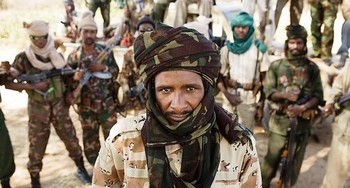
In any event, two decades later in 2023, U.S. embassy personnel left Khartoum soon after the fighting broke out between the RSF and SAF. But fear not — the Navy Seals who came to the rescue made sure diplomatic staff could evacuate their pets, as long as Fido or Miss Kitty could fit inside a carry-on bag. We are happy to report that no American dogs were left behind.
This last is a curious anecdote, but one worth considering in the context of Sudanese humor and folklore.
We are reminded of an old South Sudanese saying we heard many times when we traveled through Sudan in the years just prior to the Second Civil War: “Better to be born a dog in the United States than a man in South Sudan”.
This curious, and depressing, adage applies to all of Sudan these days and is, amidst seemingly endless scenes of terror, tragedy and human heartbreak, getting truer all the time.
Until next time –
Robert Cox
April 24, 2025, New York, NY
List of Sources
[1] See Richard Cockett’s superb Sudan: The Failure and Division of an African State, copyright 2016, p. 121 and p.138.
[2]. See Julian Barnes The Man in the Red Coat, p. 31.
[3] See Andrew S. Natios, Sudan, South Sudan, and Darfur: What Everyone Needs to Know,” Oxford 2012
[5] See Stephan Faris, “The Real Roots of Darfur,” The Atlantic, April 2007.
[6] See Julie Flint, Beyond the ‘Janjaweed,’ 2009, p. 19.
[7]. See Rose TROUP BUCHANAN AFP,
[8] Mar 12, 2026 Updated Mar 13, 2026 https://www.nbcrightnow.com/national/south-sudan-models-dominate-global-catwalks-but-visas-a-problem/article_2849f3b3-6ae2-57af-b8fa-36cd604cc9f9.html
[9]. See “South Sudan Appoints Dead Man to Election Panel, in Sign of Political Crisis, The New York Times, Feb. 18, 2026. https://www.nytimes.com/2026/02/18/world/africa/south-sudan-dead-man-election-crisis.html
[10]. Figure given in “South Sudan Appoints…” above.
[11]. See BBC “Sudan death toll far higher than previously reported – study” https://www.bbc.com/news/articles/crln9lk51dro.
[12] See Sudan: Advanced Chinese weaponry provided by UAE identified in breach of arms embargo – new investigation, Amnesty International report, May 8, 2025.
[13]. See Omni Saed and Fred Pearce, “In War-Torn Sudan, a Gold Mining Boom Take a Human Toll,” Yale Environment 360, March 26, 2025. https://e360.yale.edu/features/sudan-war-gold-mining
[14] See Tyler Hunt’s The Gulf in Africa: Examining Possible Motivations Behind UAE Involvement in the Sudanese Civil War, Prospect Journal, Jan 20.
[15] See Civil War in Sudan, Council for Foreign Relations, https://www.cfr.org/global-conflict-tracker/conflict/power-struggle-sudan.
[16] See Jessica Donati, “Leave No Pet Behind: Returning U.S. Soldiers, Diplomats Work to Bring Home Furry Friends,” Wall Street Journal, July 30, 2023.