Key Takeaways
- The state-level contests of November 2026 will help shape the conditions under which the 2028 presidential election is conducted. Governors, secretaries of state, attorneys general and other election officials all have a role to play.
- Forward Party-endorsed independent candidates offer a potentially significant test of whether voters are prepared to look beyond the two major parties.
- Four possible midterm outcomes carry sharply different implications for the administration and the country. The greatest institutional risk may arise if Democrats win narrowly and Trump challenges the legitimacy of a handful of decisive races.
- Greymantle does not expect President Trump to slip quietly into lame-duck status. He will use every available lever of presidential power to shape conditions for the 2028 election for as long as he remains in office.
In the second part of this two-part series, we pick up where we left off in Part 1: with an examination of how the state-level races will shape both the 2026 midterm results and conditions for the 2028 U.S. general election. Then we examine the stakes beyond the 2026 midterms.
The States That Will Administer the Next Election
The midterms aren’t only about Congress. They will also determine who occupies a collection of state offices that could prove consequential when Americans vote for president in 2028. Governors, secretaries of state, attorneys general, state legislatures, and local election officials all have roles in the process, though their respective powers vary considerably by jurisdiction.
A governor cannot dictate how every ballot is counted. A secretary of state cannot disregard state law or the Constitution. But officials who oversee elections, certify results and adjudicate disputes will help determine how the next presidential contest is administered—and how the system responds if the result is challenged.
Three states deserve attention: Colorado, Michigan, and Georgia. Texas also belongs in the discussion given its political importance.
Colorado: The County Clerk versus the Election Denier
Colorado has one of the most consequential Secretary of State races in the country. Democrat Amanda Gonzalez, the current Jefferson County clerk and recorder, faces Republican James Wiley, a technology consultant who has made election integrity the theme of his campaign. Three other candidates are on the ballot, including Celeste Landry of the Forward Party.
Gonzalez and Wiley’s differences are substantial. Gonzalez supports maintaining Colorado’s mail-in voting system, which she regards as secure and accessible. Wiley advocates a major overhaul: reducing the use of mail-in voting, requiring voter ID, moving toward in-person voting on Election Day, and replacing Colorado’s existing voter registration rolls with a new registration process. He want to eliminate voting machines.
These are not marginal adjustments to election administration.

There is a more troubling dimension to Wiley’s candidacy. States United Action explicitly identifies him as an election denier, citing his promotion of claims that the 2020 presidential election was stolen. His proposals to restructure Colorado’s election administration deserve scrutiny in that context.
There are no reliable public polling sources for the Colorado Secretary of State contest. One forecasting model projects Gonzalez ahead by approximately 20 points, but that is an estimate – not a voter survey. The presence of Landry on the ballot complicates any attempt to infer the result from a two-party projection.
Michigan: Familiar Disagreements
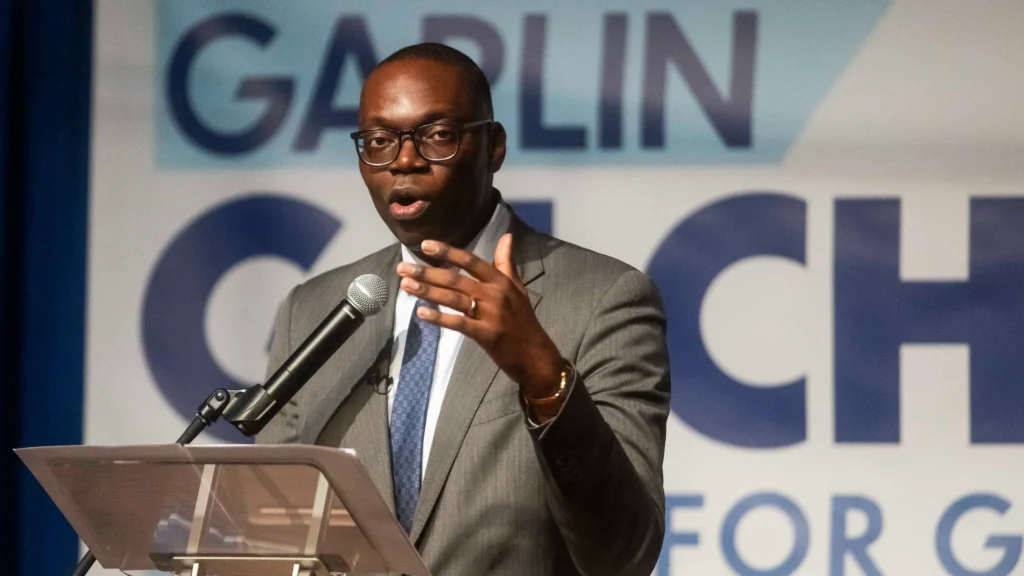
Michigan offers a different kind of test. Secretary of State Jocelyn Benson, a Democrat, is running for governor, leaving an open contest between Democrat Garlin Gilchrist II and Republican Anthony Forlini. Gilchrist, currently Michigan’s lieutenant governor, has a background in software engineering and community organizing. Forlini served as Macomb County clerk and has experience in election administration.
Their recent debate exposed a familiar disagreement about election integrity. Gilchrist criticized Forlini for accommodating election-denial activists, pointing to his employment of a January 6 protester in his county clerk’s office. Forlini rejected the accusation, saying that he had never denied the 2020 election result and acknowledging that Joe Biden was certified as president.
The distinction is important – available reporting doesn’t establish Forlini as an election denier in the same sense as Wiley. His approach to election-security concerns is legitimate subject for scrutiny, but should not be confused with evidence that he promoted Trump’s claim of victory in 2020.
Georgia: Picking Brad Raffensperger’s Successor
Georgia may be the most consequential of the three races. Republican Secretary of State Brad Raffensperger, who resisted Trump’s demand to find enough votes to overturn Biden’s victory in 2020, is leaving the office. His successor will help oversee a state whose election procedures are a national political flashpoint.
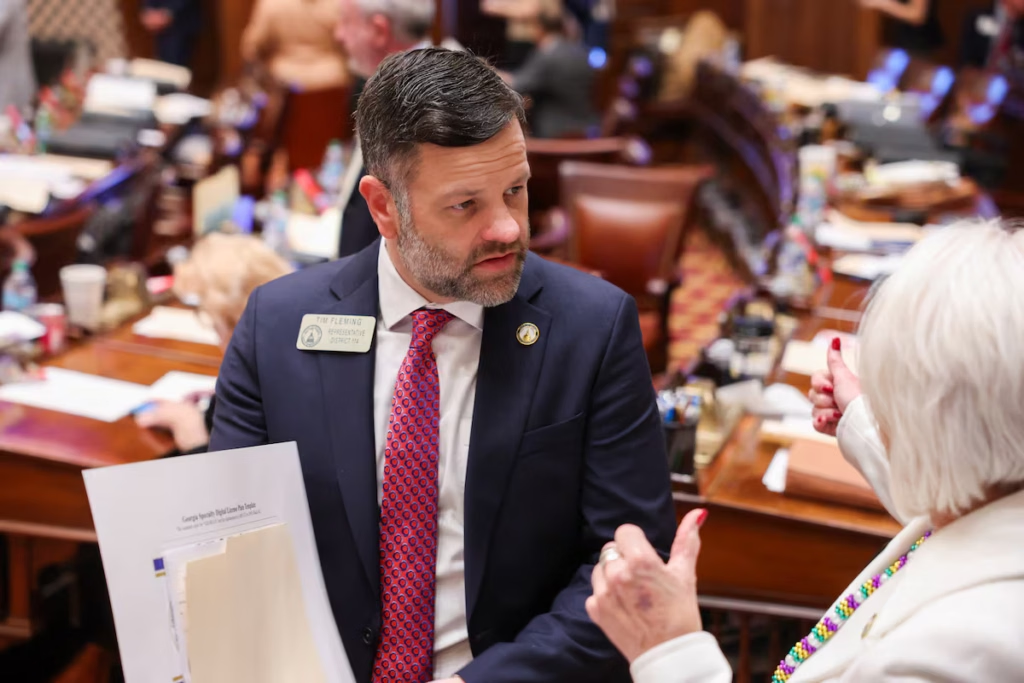
The candidates are Democrat Penny Brown Reynolds, a former Fulton County judge, and Republican Tim Fleming, a state representative and former chief of staff to Governor Brian Kemp. Reynolds emphasizes voting rights, public confidence in elections, and voting equipment that produces a paper record. Fleming favours hand-marked paper ballots printed on demand and counted by scanners.
Georgia expects to adopt a new voting system before the 2028 presidential election, and the secretary of state will have an important role in certifying that system for use.
Fleming’s statements call for close examination. He has said he believes there were irregularities in Georgia’s 2020 election but hasn’t repeated Trump’s claims of widespread election fraud. In the GOP primary, voters rejected the explicit election denier Vernon Jones in favour of Fleming. But that does not make Fleming’s statements about 2020 inconsequential — given the office he seeks.
The latest Atlanta Journal-Constitution poll, conducted by the University of Georgia’s School of Public and International Affairs among 1,000 likely voters from October 7–15, characterized the secretary of state contest as tied, but did not provide a numerical topline for the race. We should therefore describe it as a dead heat.
Texas: Bigger Than Ever
Texas operates under a different institutional arrangement. Its secretary of state is appointed by the governor, and responsibility for election administration is distributed among state and local institutions. Governor Greg Abbott’s political influence is substantial, but a gubernatorial victory would not give him control over every stage of the voting process.
Texas matters because its political weight makes even a narrow contest consequential. If the Senate race is close, the conduct of election officials, the application of state law, and the handling of any legal challenge could become national issues.
Governors influence appointments and the broader political climate in which those decisions are made. But the important question is not which party wins the most governorships. It is who will occupy the key offices that administer elections, defend the rules, and respond when political pressure intensifies.
Who those officials are could matter enormously if the 2028 election produces a close or disputed result.
Who Decides Which Votes Count?
As mentioned in Part 1, the Trump Administration’s efforts to influence election procedures have produced several high-profile legal disputes. Trump’s March 2026 executive order on citizenship verification and election integrity contemplated new federal mechanisms for compiling citizenship data and changing certain voting procedures. States challenged the order, arguing it infringed on their authority to administer elections.
The Supreme Court’s August 24 action in Trump v. California focused on the administration’s request to stay a lower-court injunction while its appeal proceeded. The action was granted. However, the SCOTUS’s action didn’t resolve the legality of the executive order.
The administration is also seeking access to state voter rolls and to use federal immigration data to identify potentially ineligible voters. On October 9, a federal district judge ruled that the administration’s effort to obtain state voter rolls and check them against the SAVE database was unlawful under the circumstances. The judge cited concerns about the request’s legal basis and a risk of wrongly identifying citizens as noncitizens.
The decision represents a major setback to the administration’s effort to expand federal oversight of voter eligibility. But let’s be precise: it concerned a particular legal and administrative process, not every conceivable federal role in enforcing voting requirements.
Mail-in voting is also being contested. In September, the Supreme Court declined to allow a new Postal Service rule restricting mail-in voting to take effect before the midterms, leaving a lower-court order in place. The dispute concerned mail-ballot processing. Taken together, these cases show that Mr. Trump has tried to alter procedures through executive orders and litigation—and is being met with heavy resistance.
The U.S. constitutional structure is decentralized for a reason. States administer elections under their own laws, subject to constitutional and statutory requirements. The federal government has limited powers in this area. It doesn’t amount to a general presidential authority to dictate how states conduct elections.
Independents: No Longer at the Margins?
There is another related story worth following, but we are careful not to overstate its significance. As previous Greymantle analyses have argued, America appears to be finally ripe for the emergence of a true third-party challenge to the U.S. political duopoly.
For the November 2026 elections, the Forward Party has endorsed candidates for several state offices and legislative contests, including Celeste Landry for Colorado secretary of state, Bob Chew for the U.S. Senate in Colorado, and a substantial slate of Forward candidates in Utah. These candidates don’t share an ideological program, and their campaigns should be judged individually.
What connects them is an effort to compete outside the familiar Democratic-Republican framework with an emphasis on institutional independence, practical administration, and a rejection of strict party-line politics. In a political environment increasingly dominated by struggles over institutional power, that message deserves more than a passing mention.
Celeste Landry — Colorado Secretary of State
Celeste Landry’s candidacy is particularly relevant because she is running for an office directly involved in administering Colorado’s elections. She has spent more than two decades working on voting rights, electoral reform, and civic participation through the League of Women Voters. Her platform combines support for paper ballots and risk-limiting audits with proposals to expand participation. She also supports establishing rules for communities that wish to adopt ranked-choice or approval-voting systems.
Landry’s platform is far more substantive than a generic appeal to moderation. Landry is arguing that election administration should be insulated from partisan interests while giving communities greater latitude to experiment with new voting systems. Voters may agree or disagree with her proposals, but her candidacy provides a concrete test of whether an independent can compete on the issue of election administration. Her candidacy is worth watching.
Bob Chew – U.S. Senate Seat, Colorado
Bob Chew presents a different test. A former Navy nuclear submarine officer and engineer, Chew spent three decades building a company from four employees to approximately 700 before selling it to his employees through an employee stock ownership plan.

Chew’s Senate campaign emphasizes fiscal responsibility, support for those in need without punishing work, and a foreign policy grounded in strength and integrity. He presents himself as a problem-solver rather than a politician, arguing that the two major parties have failed to address important long-term problems like the national debt.
Chew’s background demonstrates competence and a perspective distinct from most politicians. But it does not answer the main question facing an independent: whether enough voters will support him when the choice may affect control of the Senate chamber. Polling evidence is sparse. Major election-rating platforms classify the contest as safely Democratic, but those ratings concern the likely outcome — not Chew’s level of support.
Jay Reeves – Minnesota State Auditor
Minnesota provides tangible evidence that a Forward-endorsed candidate can attract a measurable constituency. Jay Reeves, the party’s candidate for state auditor, is a U.S. Army veteran who worked in data integrity and analytics for the Defense Health Agency. His campaign proposes modernizing financial oversight, improving public access to government information and using data tools to identify irregularities.
The auditor’s office isn’t responsible for administering ballots. But it is a key oversight position whose work exposes waste, misuse of public money, and failures of internal control. Reeves’s background in data analysis gives his proposals a practical dimension.
The latest SurveyUSA poll, conducted October 8–12 among 718 likely voters, placed Reeves at just over 5% support, with 14% of voters undecided, suggesting that his campaign has attracted real interest.
Utah – 21 Forwardists on the Ballot
Utah offers a broader test of the Forwardists’ ambitions. Forward has announced 21 candidates across legislative and county offices, including seven Senate candidates and eleven House candidates.
The highest profile is State Senator Emily Buss, who is running against Republican Brooks Benson in Senate District 11 after the Democratic candidate withdrew. Buss is a rare bird in U.S. politics: a sitting state legislator who is a member of neither major party.
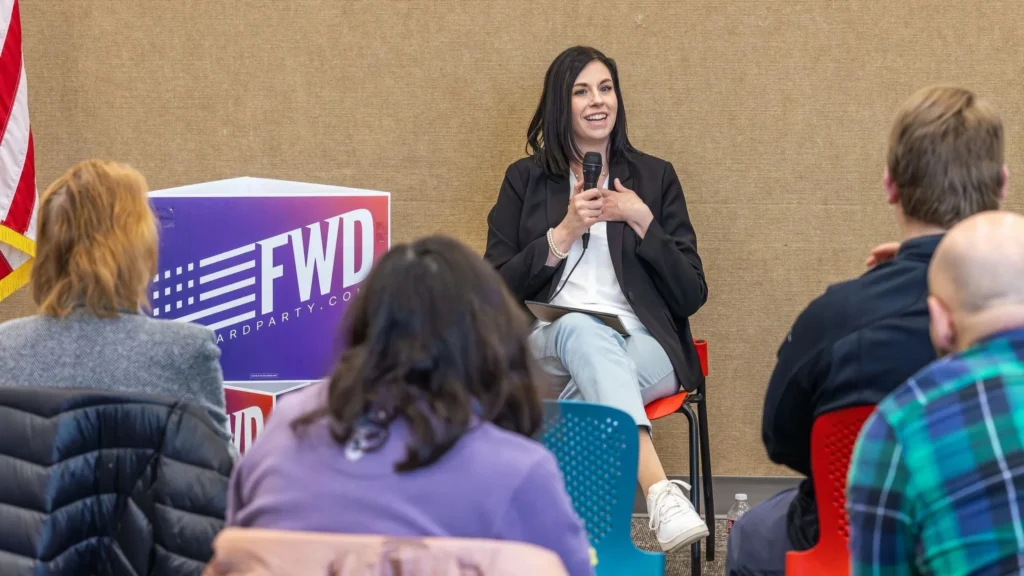
This is a more substantial undertaking than a handful of protest candidacies. It gives the party an opportunity to demonstrate whether it can recruit candidates, build a statewide organization, and compete in districts where voters may be receptive to alternatives. Its priorities include electoral reform, redistricting, judicial independence, and affordability.
Forward, or Bust?
The Forward Party’s candidates are competing in an environment shaped by intense partisanship, gerrymandering, and disputes over election rules. If Landry makes a credible showing in Colorado, Reeves builds on his support in Minnesota, and Buss and other Forward candidates win in Utah, the party will have demonstrated it can secure more than symbolic attention.
None of this would herald the imminent collapse of the two-party system. But independent candidates may prove they matter in wider spaces than at the margins, particularly for offices where competence and independence from partisan pressure are central to the job.
Four Possible Outcomes: What Happens Next?
The final question is what the administration might do if the midterms produce a result it dislikes. President Trump’s preferred outcome is clear: Republicans retain both chambers of Congress and win as many governorships and secretary of state positions as possible. But four plausible outcomes would produce very different political environments for the final two years of his presidency.

Scenario 1: Continued Republican Trifecta (10% Probability — Medium Confidence)
If Republicans retain both chambers of Congress, Trump will have greater freedom to pursue his legislative agenda and little reason to expect sustained congressional investigations. The ongoing legal disputes over election administration will not disappear, but one major source of institutional friction would be reduced.
Continued Republican control would also embolden the president in several policy areas, particularly trade and tariffs, and foreign policy toward Russia and Ukraine.
More consequentially, Trump and his most loyal advisers might conclude that the administration’s strategy of using executive orders, redistricting, litigation, and political pressure to influence the 2026 midterms had worked. Why not use the same playbook again in 2028, they might reason, to help ensure that Trump is succeeded by someone prepared to protect him and his legacy?
This outcome remains possible if polling again underestimates support for Trump and his allies, as it did in 2016 and in 2024. Nevertheless, Greymantle assigns it only a 10% probability, with medium confidence.
The most extreme potential consequence could be a renewed attempt by Trump to remain in office beyond the constitutionally permitted two terms—whether through an effort to amend the Constitution or an attempt to disregard the 22nd Amendment altogether. Such a move would face formidable legal and political obstacles. But the fact that it would be extraordinary does not mean the possibility can simply be dismissed.
Scenario 2: A Split Congress (50% Probability — Medium Confidence)
If Democrats win the House while Republicans retain the Senate, the White House will face a substantially more difficult oversight environment. House committees could investigate executive conduct, demand documents, and pursue disputes over compliance with congressional requests.
The Senate would remain a potential ally on nominations and other matters within its constitutional authority, although Republican support could become more conditional, particularly where the president’s demands conflict with senators’ political interests or institutional responsibilities.

Under this scenario, Trump would be constrained but not paralysed. He would have to negotiate selectively, defend himself against congressional scrutiny, and calculate which political battles were worth fighting. He might seek to exploit divisions among Democrats or appeal directly to his political base to discourage Republican defections.
A split Congress would produce friction rather than paralysis. Trump would retain considerable executive authority, but the political environment would become less accommodating, and the administration would have fewer opportunities to translate presidential preferences into legislation.
Scenario 3: An Uncontested Democratic Sweep (20% Probability — Low Confidence)
If Democrats retake both chambers by substantial margins—say, winning more than 20 net House seats and securing a two- to four-seat majority in the Senate—the White House will confront a sustained congressional challenge. Investigations, appropriations disputes, legislative gridlock, and confirmation battles would become prominent features of political life in 2027 and 2028.
President Trump would retain significant executive powers, but he would face a Congress considerably less inclined to accommodate him. A third impeachment attempt would also become a possibility.
Under this scenario, Trump would respond with defiance, lashing out at perceived enemies and, potentially, at allies he considers insufficiently loyal. He would seek to mobilise his base against individuals he regards as persecutors, while portraying congressional investigations as politically motivated attacks on his presidency.
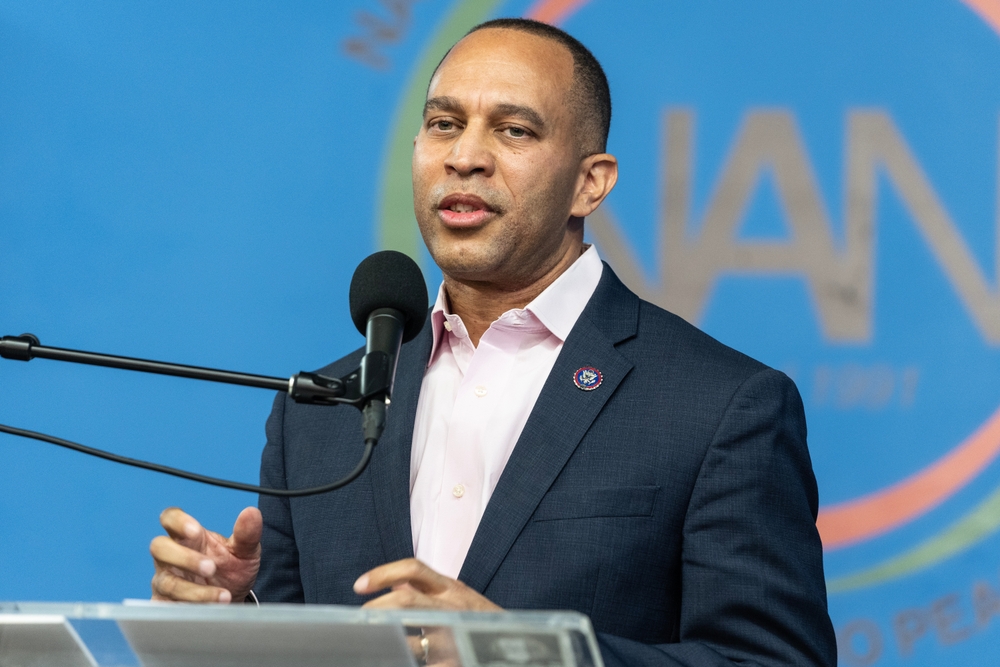
Expect particular attention on the likely new Speaker of the House, New York Congressman Hakeem Jeffries. As Speaker, Jeffries will become the public face of the Democratic majority and a target for conservative media and GOP criticism. His identity as a Black American with an Arabic first name will also become a focus for those right-wingers inclined to personalise politics through racial or cultural grievance.
The important distinction is that a decisive Democratic victory would give the opposition considerably more institutional leverage, but it would not necessarily produce moderation in the White House. Trump could interpret the result as a mandate to change course—or as evidence that the political system was conspiring against him. The latter interpretation would make the ensuing two years considerably more volatile.
Scenario 4: A Contested Democratic Sweep (20% Probability — High Confidence)
The most volatile possibility may not be a broad and decisive Democratic victory, but a narrower result that hinges on one or two high-profile, disputed contests.
Consider Texas. Suppose James Talarico defeats Ken Paxton in the Senate race by just 3,000 votes. Would Trump accept the result? Perhaps. But a narrow margin could provide an opening for allegations of irregularities, demands for investigations, and pressure on Republican officials to challenge the outcome.
A more troubling possibility is that Trump might pressure Texas election officials and Governor Greg Abbott to find a pretext for excluding ballots cast for Talarico. He could publicly denounce the result, demand certain votes be rejected, or insist that the state had failed to conduct a legitimate election. These are hypothetical possibilities, not claims that any particular official would comply.
This scenario is consistent with Greymantle’s congressional-election analysis in Part 1 of this series, published last weekend. We assign it a 20% probability. Yet this is the outcome our instincts identify as the most fateful, and the one potentially pregnant with the most malign possibilities.
Lawful Challenges versus Unlawful Tampering
The distinction between a lawful election challenge and an attempt to overturn a result without evidence is fundamental. A close margin isn’t proof of fraud. The president doesn’t possess unilateral authority to decide who is entitled to a Senate seat.
State law will govern the initial counts, recounts, and certifications. The Senate, meanwhile, has its own constitutional authority to judge the elections, returns, and qualifications of its members. These are distinct stages, each governed by its own rules and procedures.
A serious dispute would require scrutiny of the evidence, relevant state law, the jurisdiction of the courts, and the Senate’s constitutional role. It would be wrong to assume that every challenge would produce a constitutional crisis. It would be equally wrong to assume that every challenge could be resolved without considerable institutional strain.
The administration will have lawful options if it disputes an election result: litigation, public argument, and advocacy for changes to election law. It can comply with an adverse result while continuing to criticise it. The line separating those options from an effort to subvert the result is not a technicality. It is the line between political contestation and an assault on the rules that make political contestation possible.
A Lame Duck Who Refuses to Limp
The Electoral Count Reform Act of 2022 established procedures intended to clarify the submission of electoral certificates, provide expedited judicial review in specified circumstances, and limit the grounds on which Congress may object to electoral votes. The Act’s purpose is to repeat a rerun of January 6, 2021.
These safeguards matter. So do the people who apply them.
The big question here is personal as much as it is political: what happens when President Trump encounters an institution—or official—who refuses to comply with his wishes?
A second-term president normally begins to enter lame-duck status during the final two years of his administration. Allies start looking beyond him. Potential successors develop their own political identities. Legislators calculate their futures. Officials become less inclined to take risks on behalf of a president whose tenure is approaching its end.
No Ordinary President
Trump, however, is no ordinary president, and he is likely to resist the transition to lame-duck status more fiercely than most. His relationship with his political base has often taken on the character of a personal movement rather than a conventional party coalition.
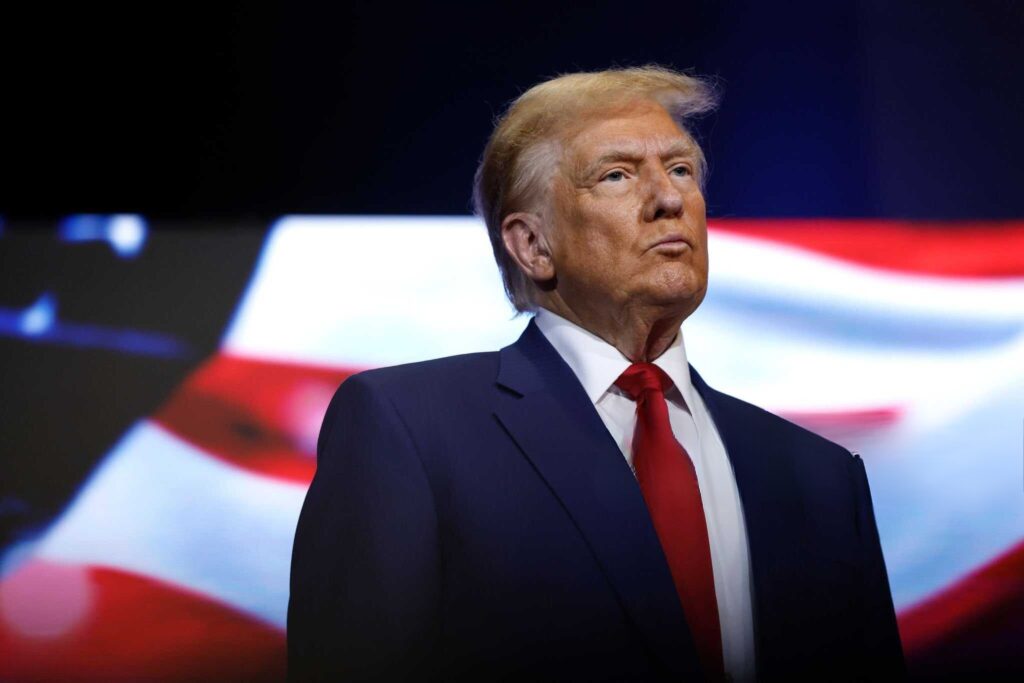
He has also demonstrated a willingness to use public intimidation, threats, and political retaliation against perceived opponents and dissenters. He has every incentive to keep Republican politicians dependent on his approval and to ensure that his successor does not threaten his interests or legacy.
But personal loyalty has limits. Trump’s recent foreign-policy decisions, including his approach to Russia and Ukraine, have generated opposition among Republicans. A bipartisan group of senators is pressing for a reversal of Trump’s approach. Those disagreements could become consequential if a Democratic Congress investigates the administration or if Trump makes demands that some Republicans regard as unconstitutional.
The post-midterm period is therefore likely to be tense and unpredictable.
Brace Yourselves
Trump’s position would weaken following an electoral defeat, but it would not collapse. He could continue to command the loyalty of many Republican voters, and that loyalty could deter elected officials from breaking with him.
Conversely, a substantial Democratic victory might encourage Republican legislators to distance themselves from the president, particularly if they conclude that continued alignment with Trump threatens their own political survival.
Trump might absorb a setback and change course. Or he might interpret defeat as further evidence that the system is unfair to him and conclude that more aggressive measures are justified. That second possibility is the more dangerous one—not because every threat would succeed, but because repeated attempts to test institutional limits will gradually alter what officials regard as permissible.
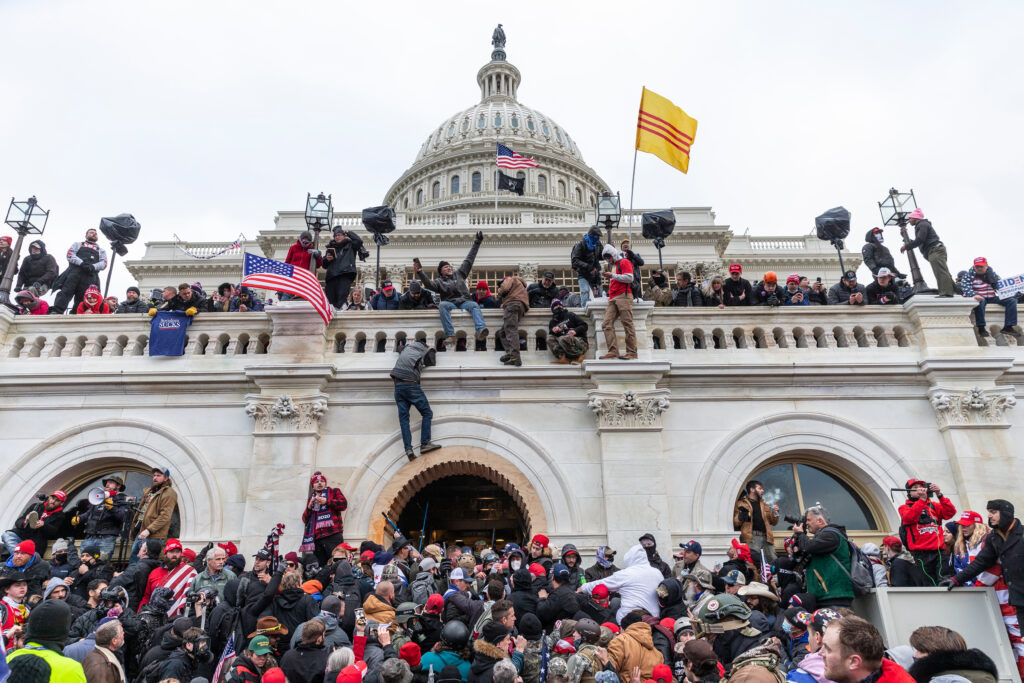
The 2026 midterms will not, by themselves, determine the fate of American democracy. But they will establish the conditions under which the next election is held—and the degree to which institutions and officeholders are prepared to withstand political pressure.
The question is not simply whether Trump enters his final two years weakened or emboldened. It is whether the institutions around him remain capable of imposing limits when those limits are again tested.
And they will be.
Until next time, we are—
Greymantle