Key Takeaways
- The Trump administration has engaged in a sustained effort to influence the U.S. midterm elections using executive orders, litigation, and mid-decade redistricting.
- Courts and state governments have resisted many federal initiatives, but some legal and redistricting battles are unresolved, making the outcome hard to predict.
- Despite Republican gains from redistricting, Democrats are well positioned to retake the House, while the Senate remains a more competitive contest.
- The midterms will test not only the parties’ electoral strengths, but the extent to which Trump’s attempts to reshape the U.S. political landscape have succeeded.
The Dog That Wasn’t Barking
In December 2024, shortly before Donald Trump returned to the White House, we published an article titled “No More Mr. Nice Guy: Three Possible Paths for Trump 2.0.” The premise was straightforward. The second Trump administration might follow one of three paths: a reprise of the chaotic dysfunction of Trump’s first term, a more ambitious effort to reshape American institutions, or an outright dictatorship.
We considered the second possibility the likeliest: a concerted attempt to transform the U.S. into a “conservative democracy” like Viktor Orbán’s Hungary.
Under the Orban Model, elections continued. Opposition parties remained legal. Voters cast ballots. But the governing party worked to reshape institutions, electoral districts, voting rules, and the media landscape to make retaining power easier. The distinction between holding elections and holding genuinely competitive elections is critical.
In January 2026, when we reviewed Trump 2.0’s first year, the administration’s conduct appeared consistent with the second pathway. There was one qualification: An ambition to reshape institutions and the media was evident, but whether it could be translated into durable advantages was unclear. Litigation, bureaucratic inertia, political resistance, and ordinary governing friction were impeding several Trump initiatives.
One crucial component hadn’t emerged: Would Trump attempt to federalize American elections?
U.S. elections are administered by state and local authorities under a complicated arrangement of constitutional provisions, federal statutes, and state law. Our system is decentralized and cumbersome – and intentionally so. It was designed to present an obstacle to any president who would wish to exercise direct control over elections.
If the administration intended to move towards an Orbán-style system, the states’ electoral machinery was an obvious place to go. Back in January, we called that possibility “the dog that hasn’t barked yet.”
Well, that dog sure is barking now. Hence our title for this article: “This Dog Is Barking”. In Part 1 of this article, we will examine the factors shaping the 2026 midterm elections, and provide our readers with Greymantle‘s 2026 congressional election forecast. In Part 2, we’ll examine some of the key state-level races, and provide an analysis of the different scenarios that might shake out after November 3.
The Election Federalization Dog Is Barking
Since January, the Trump administration has pursued executive actions and litigation intended to influence state election procedures. Its efforts have included citizenship-verification initiatives, demands for access to voter rolls, attempts to change mail-voting procedures, and a broader push to expand the federal government’s role in election administration.
The mid-decade state redistricting battles opened another front in the struggle.
Some Trump initiatives have encountered legal obstacles; others have been allowed to proceed while litigation continues. State governments have resisted most federal demands, but the administration hasn’t let up.
The distinction between intention, implementation, and results is key, however. Evidence of an attempt to exert federal influence over elections is stronger than it was in January. But whether the attempt will succeed is very much an open question.
The administration’s present confrontation with California shows the stakes. On October 15, the U.S. Justice Department sued the state to stop it from counting more than 20,000 mail-in ballots associated with people the administration alleges may be noncitizens. California officials are challenging the government’s data and legal basis for intervening.
The underlying principle isn’t complicated: noncitizens are ineligible to vote in federal elections, but not every person flagged in the government’s database is a noncitizen. Errors in citizenship records can affect naturalized citizens. An allegation isn’t proof.
The first concern is practical. Could eligible votes be excluded by a process whose accuracy and legality are in dispute? Might threats of federal prosecution intimidate state officials responsible for counting ballots?
Greymantle believes that Trump Administration hasn’t achieved anything approaching total control over election administration. But it is demonstrating a willingness to push the boundaries of federal authority, and those efforts are creating real uncertainties.
That’s enough to make the House and Senate outlook for 2026 a big deal. The question is not merely who will win the 2026 midterms and control the U.S. Congress. It is whether the attempt to alter electoral conditions has produced a durable advantage—and how Trump will respond if voters deny him the outcome he wants.
The Redistricting Wars: Winning a Map Is Not the Same as Winning an Election
Congressional redistricting usually follows the 10-year U.S. Census. Mid-decade redistricting therefore provides a rare opportunity for parties to alter the electoral map.
Trump’s call in early 2025 for Texas Republicans to redraw their congressional districts initiated the current round of redistricting. Republican efforts in several other states followed. Democrats responded in California and other states. There was a flood of litigation. The status of district maps will depend on state law and court case outcomes.
The basic idea: a party that can draw more favorable districts can improve its chances of winning more House seats even without increasing its share of the vote.
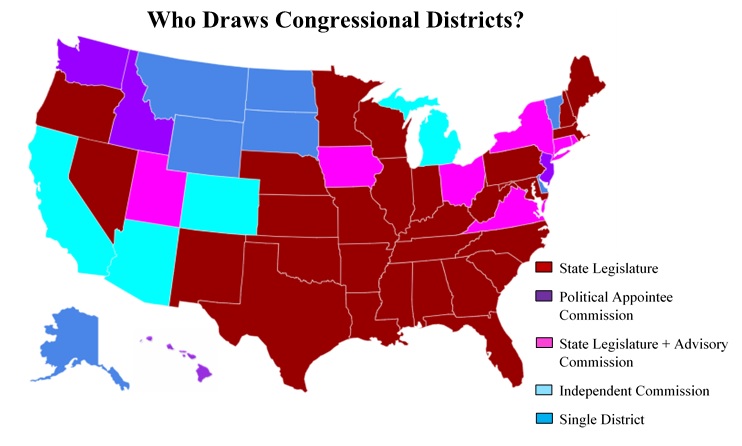
The redistricting push has led to revised maps in nine states: Alabama, California, Florida, Louisiana, North Carolina, Ohio, Tennessee, Texas, and Utah. Some maps advanced through the courts; others have faced major push-back.
But estimates of the political consequences vary. One analysis suggests that Republican-led efforts could lead to roughly 16 more GOP-controlled House seats, while Democratic efforts might yield around six. The Cook Political Report’s assessment put the Republican advantage at only four seats. These are estimates — not predictions.
A favorably drawn district can’t guarantee that voters will behave accordingly. Politicians can rearrange district boundaries, but they have no reliable method of rearranging the opinions of the people who live in them.
The House of Representatives: A Democratic Majority Within Reach
Republicans entered the campaign with a two-seat House majority. Democrats need a net gain of only four seats to take control, leaving them well positioned to exploit a favorable political environment, given high inflation and the president’s unpopularity.
Cook Political Report’s October 16 assessment moved eleven more House races towards Democrats. Five races previously rated Likely Republican shifted to Lean Republican, while Montana’s First Congressional District moved from Lean Republican to Toss Up. The changes reflect a tough environment for Republicans, particularly on economic issues.
The Silver Bulletin’s election model also shows Democrats with an advantage, giving them a 93 percent chance of winning House control in its FLIPR Deluxe forecast. The probability reflects the model’s assessment of the available evidence. That can change as polling, turnout, and the campaign environment evolve.
The main point is that Democrats don’t need to win by a landslide to regain the House of Representatives. They just need to convert a modest number of competitive districts, some of which have shifted in their direction despite recent Republican-led redistricting.
The California ballot dispute bears directly on House control. If the Justice Department’s effort to block ballots associated with alleged noncitizens affects the counting process, the fallout could extend beyond a debate about federalism and become directly entangled with the partisan balance of the House.
These legal proceedings will merit close attention. For now, the House is the more straightforward part of the electoral equation. Democrats are favored to regain control, though the size of their majority is uncertain. The Senate is where matters are becoming much more interesting.
The Senate: A Republican Fortress with Several Open Drawbridges
Republicans begin with a 53–47 Senate majority, counting the two independents who caucus with Democrats. Democrats need a net gain of four seats to take control.
That is a more difficult task than winning the House. The Senate map is less forgiving, and Democrats must defend their own vulnerable seats while winning several Republican-held contests.
Nevertheless, the outlook has changed substantially since July. On October 6, Cook Political Report revised its estimate of potential Democratic pickups to a range of two to six seats. Kansas moved into Toss Up territory, New Hampshire shifted to Lean Democratic, and North Carolina moved to Likely Democratic. That range includes the four-seat net gain Democrats need to achieve a majority.
North Carolina: A Republican Defensive Retreat
North Carolina is one of the most consequential contests of the cycle. Democrat Roy Cooper, the state’s well-liked former governor, has maintained a strong position against Republican Michael Whatley, the former Republican National Committee chairman.
Cook’s move from Lean Democratic to Likely Democratic reflects Cooper’s strength in the available evidence. Reports that Republican-aligned spending has been redirected elsewhere suggest that party strategists are concerned about their chances in other states.
A Democratic victory here would be an important pickup. North Carolina’s recent federal voting history has favored Republicans, making the contest an illustration of how candidate quality can place hard-to-win states within reach.
Greymantle expects Cooper to win with 53% of the vote with high (80%) confidence.
Maine: Susan Collins Faces a Serious Challenge
Republican Senator Susan Collins has repeatedly survived elections that have proved fatal for other Republicans. Her long experience, devoted personal following among Mainers, and record of winning close elections make her a truly formidable opponent.
But Democrat Troy Jackson has made the race genuinely competitive. A Washington Post–Schar School poll conducted from September 30 to October 5 placed Jackson at 50 percent and Collins at 46 percent among likely voters. A single poll cannot settle the question, but it adds to the evidence that Collins faces an unusually tough contest.
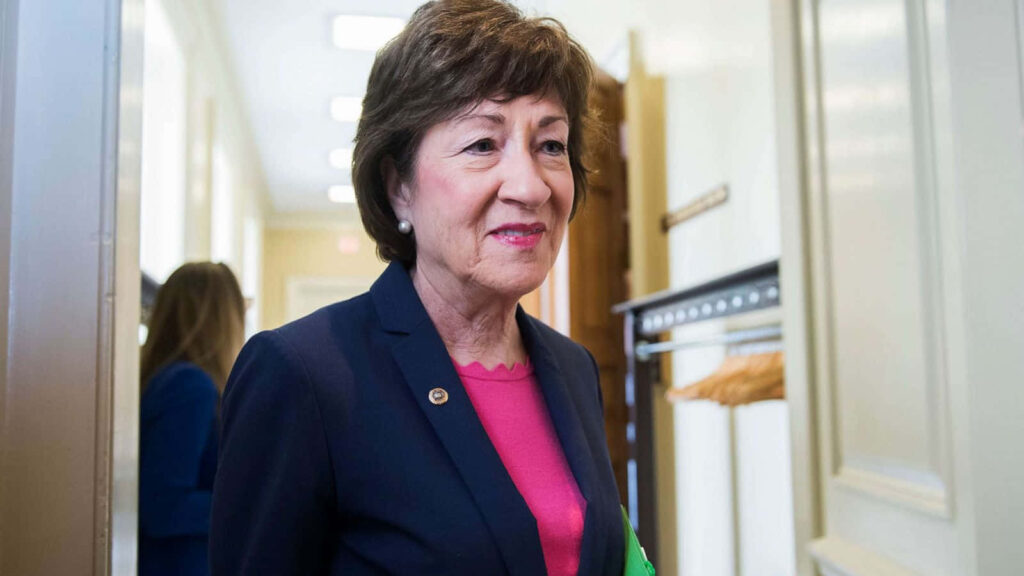
The Democratic nomination has also undergone a turbulent transition. When the initial Democratic nominee, oysterman Graham Platner, left the race in August after allegations of sexual misconduct, Jackson became the party’s nominee at some surprise to himself! Platner’s abrupt departure introduced another variable into a contest that was already being shaped by ideological divisions and the national political climate.
Maine is a plausible Democratic pickup. Greymantle gives Jackson a 60 percent chance of defeating Collins, with the expectation that a Jackson victory would probably be relatively narrow – probably by a margin of less than 10,000 votes.
Kansas: An Unexpected Battleground
Kansas is the most intriguing battlefield in the latest polls. Republican Senator Roger Marshall is defending his seat in a state that has not elected a Democrat to the Senate since 1932. Democrat Adam Hamilton, a megachurch pastor and former moderate Republican, has nevertheless made the contest competitive enough for Cook to move it into Toss Up territory.
Political geography matters but is not immutable. Candidate-specific issues, the national climate, and the prospect of a broader midterm swing make this race closer than expected. A Democratic victory in Kansas would be a massive upset, shaking the White House.
Greymantle remains skeptical that Hamilton can pull it off. Marshall has a stronger partisan foundation, and the Republican gubernatorial campaign led by former Kansas Senate president Ty Masterson – a name well-known to Kansans – will help turn out voters who might otherwise be less engaged.
We expect Republican Roger Marshall to win with about 52 percent of the vote. Adam Hamilton’s chances of winning are real, but we place them at no more than 40 percent.
New Hampshire: An Open Seat in Play
New Hampshire presents a different problem for Republicans. The Senate seat is open as sitting Democratic Senator Jeanne Shaheen is retiring. Democrat Chris Pappas faces former Senator John E. Sununu Jr.
The Cook Report’s move from Toss Up to Lean Democratic reflects the evidence available in mid-October. Recent polling shows Pappas ahead, but the size of his lead varies. Pappas’s standing in the state and the political environment favor Democrats, but Sununu’s strong name recognition and his family’s political brand in New Hampshire will help him.
A Democratic loss here would complicate the Democratic arithmetic: the party must protect its own vulnerable seats while seeking four net gains elsewhere. We expect the Democrats won’t hold this seat, despite polls showing Sununu trailing Pappas by 5 to 7 percentage points. We suspect poll numbers hide considerable support for Sununu.
Michigan: A Race Democrats Must Defend
Michigan is a key contest, with Democrat Abdul El-Sayed facing Republican Mike Rogers for the seat being vacated by retiring Democratic Senator Gary Peters.
The race is close, and polling has bounced around a lot. In Michigan, in particular, Greymantle is very wary of the public polling averages. Michigan also illustrates the main difficulty of the Democratic strategy: a party cannot rely solely on Republican-held seats becoming vulnerable. It must also defend open Democratic seats exposed to the same national forces that create opportunities elsewhere.
Greymantle expects Rogers to win narrowly, with roughly 51 percent of the vote, despite polling that shows El-Sayed ahead of Rogers by 3 to 5 percentage points. Greymantle believes the polls are understating voter opposition to El-Sayed given his strident criticism of Israel, strongly held left-of-center views, and Muslim religious background, all of which have stirred deep conservative unease.
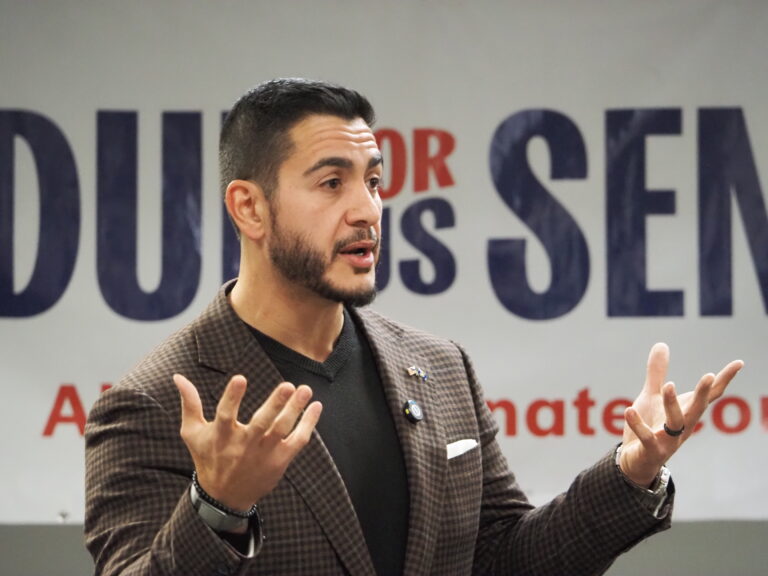
Our confidence in this prediction is modest, however, as high voter engagement among Democratic constituencies in Michigan — particularly younger progressives and Arab Americans in the Detroit region — could push El-Sayed over the top. If the Democrats can hold this seat, their broader pickup effort gets easier.
Alaska: A Plausible but Difficult Democratic Pickup
Former congresswoman Mary Peltola is challenging Republican Senator Dan Sullivan. Peltola’s previous electoral success and broad personal appeal make this a contest one worth watching, even though Alaska has been difficult terrain for Democrats.
A Democratic victory would be significant, particularly if the party wins North Carolina and Maine. The state’s unusual electoral dynamics and the presence of multiple candidates add uncertainty, making it unwise to treat the contest as an easy pickup.
Greymantle nevertheless expects Peltola to win a narrow plurality, around 47 percent of the vote, with moderate-to-high confidence. Alaska is one of the races that could transform a narrow Democratic Senate victory into a comfortable one.
President Trump’s admission on October 23 that he ordered the U.S. Justice Department to bring a lawsuit against the state to preemptively disqualify the election speaks to his concern that a Peltola victory could hand control of the Senate to the Democrats.
Ohio: The Return of Sherrod Brown
Former Democratic Senator Sherrod Brown is seeking to return to the Senate against Republican Jon Husted, who has held Ohio’s junior Senate seat since 2025. Ohio has moved Republican in recent elections, but Brown has a record of winning races in a state that does not always follow the national pattern.
Recent polling shows a competitive contest, with some surveys placing Brown ahead. His personal appeal and long history as a relatively well-liked Senator may help him overcome the state’s Republican lean.
The Ohio gubernatorial race adds an interesting dimension.
Republican Vivek Ramaswamy has been repeatedly wrongfooted by Democratic candidate Amy Acton. Rural concerns about the effects of data-center construction on utility bills, as well as fracking on groundwater, have created openings for Acton traditionally GOP-leaning areas. Ramaswamy also appears to have made a severe misstep the week of October 19 by running a controversial ad featuring Amy Acton’s estranged mother that garnered fierce public criticism – even from Republicans.
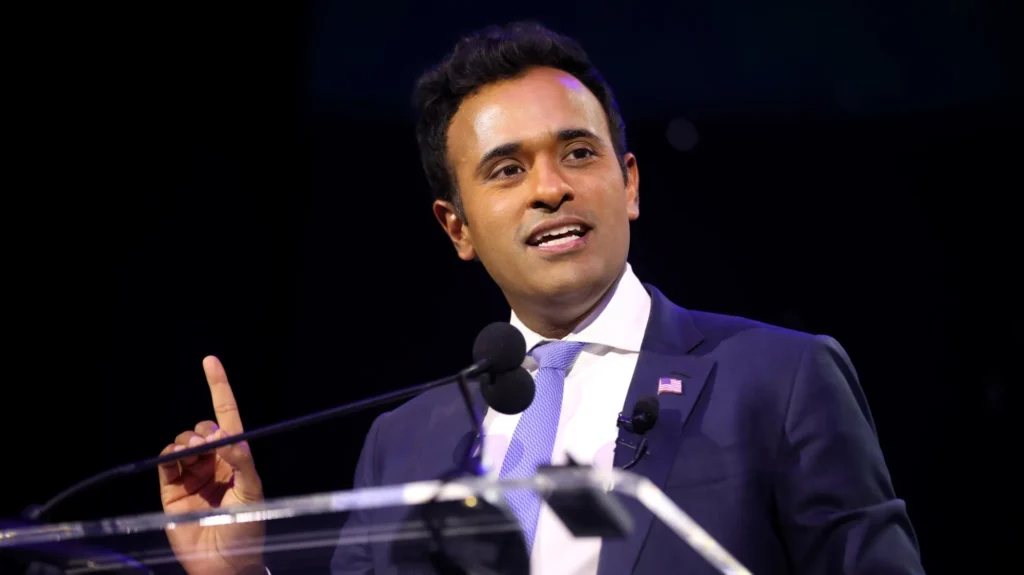
Racialized rhetoric around Indian professional success by the online right (i.e. “the Indian Question”) has also become part of the conversation and may motivate young “Groyper” influenced conservatives to withhold their votes from Ramaswamy. These factors may help Democrats, but Ohio shouldn’t be counted as a Democratic victory in advance.
Greymantle expects Sherrod Brown and Amy Acton to win their races, albeit narrowly.
Iowa and Texas: The Edge of the Democratic Map
Iowa and Texas are the most ambitious Democratic targets.
In Iowa, Republican Ashley Hinson faces Democrat Josh Turek. The race is competitive, but the state’s voting patterns make it a difficult target. Greymantle expects Hinson to eke out a slender victory. The governor’s contest may be different: Democrat Rob Sand has held a poll lead over Republican Zach Lahn for months, suggesting ticket-splitting is possible.
Texas is the more consequential gamble. Republican Ken Paxton faces Democrat James Talarico in a state that has not elected a Democrat to the Senate since 1988. A Talarico victory would be a system shock, and recent polling places him in striking distance.
We expect incumbent Republican Governor Greg Abbott to defeat Democrat Gina Hinojosa with about 52 percent of the vote. Abbott remains a formidable political figure in Texas, with strong statewide networks and the advantages of incumbency.
Yet we expect Talarico to defeat Paxton narrowly, with just under 51 percent of the vote. Paxton’s history of scandals and personal controversy may prove costly. Some Texas conservatives may split their tickets, backing Abbott while rejecting Paxton.
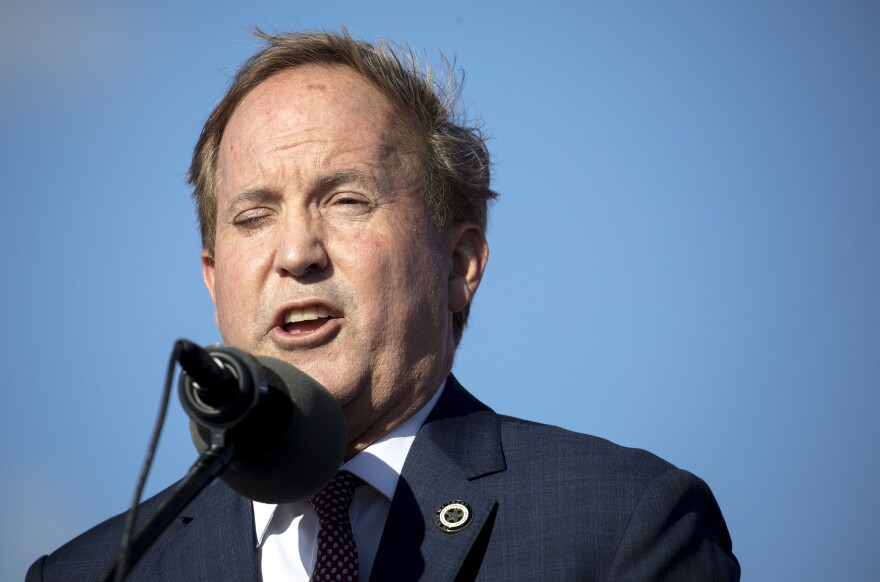
This forecast is not a claim that Texas will become a Democratic state. It is a judgment that Paxton may be a sufficiently weak candidate, in a sufficiently unsettled national environment, to make a Democratic victory possible.
Our 2026 U.S. Senate Election Forecast
Greymantle expects Democrats to win North Carolina, Maine, Alaska, Ohio, and Texas, while losing Michigan and New Hampshire to Republicans. We expect Republicans to retain Kansas and Iowa.
That would produce five Democratic pickups and two Republican pickups: a net Democratic gain of three seats, resulting in a 50–50 split Senate with Vice President J.D. Vance having the tiebreaking vote in the chamber.
This is Greymantle’s forecast, not a declaration of certainty. Several races could break the other way with Democrats picking up as many as 7 net Senate seats in the most optimistic scenario. The margin for error here is big. But the Senate is clearly in play.
Next week, we’ll continue with Part 2 of “This Dog Is Barking”, turning our attention to the state-level races that will have a major impact on the 2028 general election, presenting a forecast-decision tree for how the Congressional elections might pan out and how that will influence how the Trump Administration will respond, should the midterms not yield a result that is…to the president’s satisfaction.
For Trump, all options will be on the table.
Until next time, we are —
Greymantle