Key Takeaways
- The 2026 midterm results realized the third scenario outlined in Greymantle’s October 31 post: a Democratic sweep of U.S. congressional seats, to which we had assigned a 20% probability of occurring.
- The Democrats’ uncontested sweep of the midterms was the best possible election outcome. The wide margin of victory left the Trump administration without any factual basis to challenge a Democratic victory. As early as 11:30pm Tuesday evening, Trump indicated he would not contest the results.
- The Blue Wave ensures that several fearful possibilities we had outlined last week, including a tense post-election environment marked by legal challenges, pressure on election officials, and civic unrest, will thankfully be avoided.
- Consistent with our pre-election assessment of Oct. 25, the Trump administration’s attempts to influence the election using executive orders, DOJ lawsuits, gerrymandering and threats to use the U.S. military to seize ballots broadly failed to dissuade opposition-minded voters and galvanized opposition.
We can all breath a huge sigh of relief. All of us, that is, except for Republicans, and particularly MAGA-oriented Republicans, who have been stunned into near-silence (an achievement in and of itself) by the outcome of the 2026 U.S. midterm elections.
Republican candidates, especially Trump-picked candidates, suffered a series of staggering defeats at the ballot box on Tuesday, November 3, 2026, which will surely be remembered as a momentous day in American history.
The Blue Wave is the best of all possible outcomes. It fundamentally changes the calculus of U.S. political power for the next two years and arguably through 2032.
An Historic Shift in the Popular Will
This is not news to anyone not living under a rock.
The Democratic sweep of the U.S. midterm elections has reverberated around the world. The vast extent of the Democratic victory – predicted by practically no one – has confounded the expectations of forecasters and voters alike and serves as a jolt of hope and optimism to millions of people in the U.S. and internationally.
Half of America and most of the world believed the U.S. was sliding into autocracy as recently as one week ago. That belief has been rolled back – to a considerable extent.

Beyond that is the realization that the U.S. electoral map is much more malleable than was believed before last Tuesday. And the election’s main takeaway – the big power shift that it has made possible – is that the Blue Wave has sharply limited Donald Trump’s ambition to transform the U.S. into an “illiberal” democracy like Viktor Orban’s Hungary, a dream of which he had spoken eagerly as recently as last February.
The Trump administration’s failure to intimidate opposition voters, suppress the Democratic vote, and gerrymander, sue, and outspend the Democrats into oblivion has failed, and failed massively.
Along with surging consumer and fuel prices, the levying of massive tariffs on foreign goods, a deeply unpopular war against Iran, rampant corruption by the president and his family, the visibly out-of-control development of artificial intelligence by Silicon Valley software companies, and the president’s obnoxious attempts to rewrite election rules and redraw voting districts have triggered an historic shift in the popular will.
Entire voting blocs that had re-elected Trump in 2024 – Hispanics, independent voters, white women without college degrees, and young men – swung hard against the president and his party on November 3.
The resulting Democratic victory is so huge – more than 50 U.S. House districts swung to the Democrats, along with seven Senate seats (with two more in the balance as ballots are still being counted), three key governorships (possibly four) and hundreds of statewide offices, including the secretaries of state who oversee U.S. election administration at the state level – that the president openly admitted his inability to challenge the outcome on procedural or legal grounds on election night.
That must have been a bitter pill for him to swallow. Good. Greymantle hopes it is the first of many such bitter pills. But we hesitate to count Donald Trump out. He’s still the world’s most powerful man. Think on that, dear reader, and shudder.
What the Blue Wave Spared Us
Greymantle outlined four midterm election scenarios in last week’s post. These were:
- The Republicans hold on to both chambers of Congress (10%)
- The Democrats capture the House by a fair margin, but not the Senate (50%).
- The Democrats achieve a major sweep of both chambers of the U.S. Congress by such a convincing margin that the president cannot challenge any of the close races and would likely have to accept the results (20%).
- The Democrats win both chambers of Congress by narrow margins and only a few races, leaving the results open to legal challenges, forced recounts, or invalidation by pressure on state election officials and a refusal of the outgoing Republican-led Congress to certify certain election results (20%).
It was this fourth scenario that we viewed as most ripe for mischief on the administration’s part, given the high level of pressure it would place on U.S. government institutions including state governors, attorneys general, secretaries of state and the state and federal courts. Not to mention the broader American society.
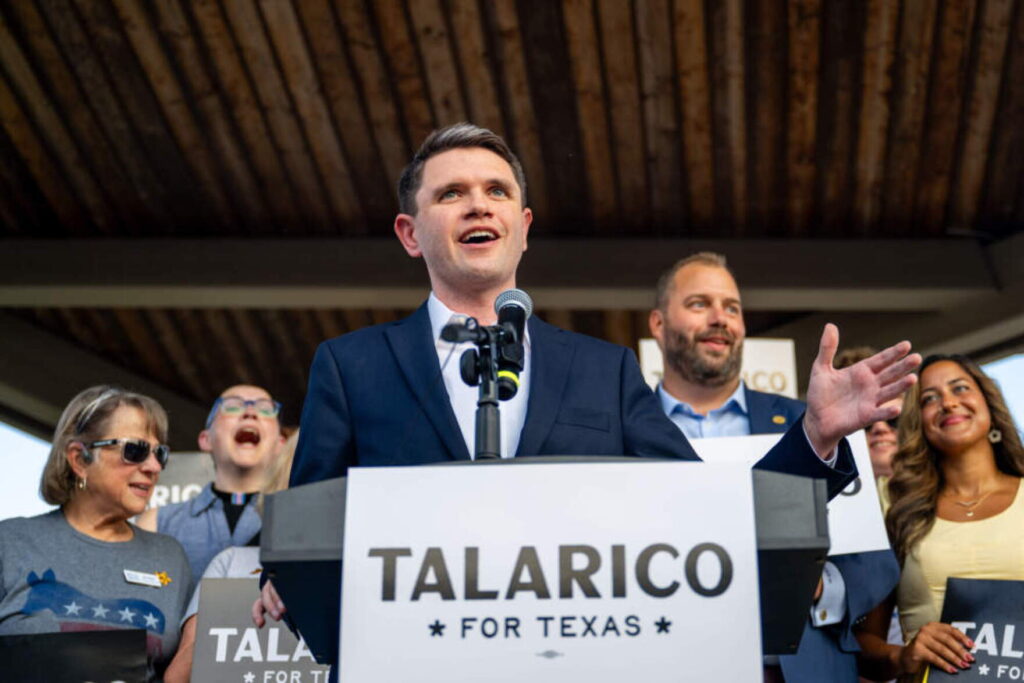
For example, we posited that if Democratic Senate candidate James Talarico won his Texas race by only 7,000 or 8,000 votes – a thin margin in a state as large as Texas – then President Trump might pressure Governor Greg Abbott to invalidate a sufficient number of ballots under one pretext or another to overturn the licit result, leading to a victory by Trump’s hand-picked GOP candidate, Texas Attorney General Ken Paxton.
Greymantle feared that the risks of such mischief would be highest if the Texas Senate race was key to maintaining Republican control of the Senate. For instance, if the Democrats picked up three Senate seats by winning elections in Maine, North Carolina and Alaska by strong margins, then a Talarico victory would have put the Democrats over the top with a 51st Senate seat – unless Trump challenged a narrow result.
In fact, Talarico’s margin of victory on Tuesday was so large – over 1.1 million votes – that Trump could clearly find no plausible pretext for having the result invalidated.
Furthermore, the Democrats won four additional U.S. Senate seats by such convincing margins in Ohio, Kansas, South Carolina, and Iowa (the Alaska result is still pending), that the Democrats did not even need Talarico to win his race in order to take the Senate.
Greymantle’s default forecast for the U.S. Senate in our October 25 post was that the midterms would result in a Senate tie with 50 seats controlled by each party. I figured likely Democratic Senate victories in Maine, North Carolina, Ohio, Alaska and Texas, offset by Democratic losses in New Hampshire and Michigan, for a net gain of three seats. But I also believed the legal challenges or a refusal by officials to certify tight races in one or more of those seats could keep the Senate in Republican hands.
How wrong I was! And how happy to be wrong – as I have been on one or two other occasions, most memorably in 2022 when Russia did NOT use a nuclear weapon against Ukraine to break the successful Ukrainian fall offensive, as I had feared.
As it turned out, all Democratic victories certified by state officials thus far have been decided by margins in the tens of thousands or hundreds of thousands in all seven Senate races that swung Democratic. The still-undecided Senate races in Alaska and Mississippi (incredibly in the latter case) are likely to come down to a few thousand votes, and could still be challenged by the administration.
But what would be the point? The GOP has already lost the Senate.
President Trump has much bigger problems to deal with now.
A 22nd Amendment Runaround Squelched
Another great benefit of the Blue Wave, as far as the stability and civic peace of our republic are concerned, is that any thoughts the president may have had of doing some kind of runaround of the 22nd Amendment and running for a third term in 2028 have been put to paid.
A 22nd Amendment runaround was one of the biggest risks associated with Scenario 1 – a continuing Republican trifecta in Congress in the event that opinion polls had grossly underestimated the public’s support for President Trump and his agenda. A continuation of that trifecta would have greatly emboldened Trump and his ghoulish advisors.
All sorts of mischief would have been in the offing in that event, and the president would surely have contemplated a continued stint in the White House for a third term, regardless of what the U.S. Constitution states.
This possibility was barely mentioned in the media in the months leading up to the midterm elections, though it was something Trump joked about frequently on the hustings this autumn. The president often uses jokes as “trial balloons” for actions that he is contemplating.
Now, a weakened president, an embolded and empowered opposition, and a restive Republican party will make such a move prohibitively difficult. Put simply, Trump lacks the political capital for such a move.
Playing Defense
Because Trump can’t play offense with the presidential office, he is going to be forced to play defense. That will necessitate concentrating on the presidential succession; namely, ensuring that he is followed in office by a hand-picked successor who will be committed to preserving his legacy and protecting Trump himself once out of office.
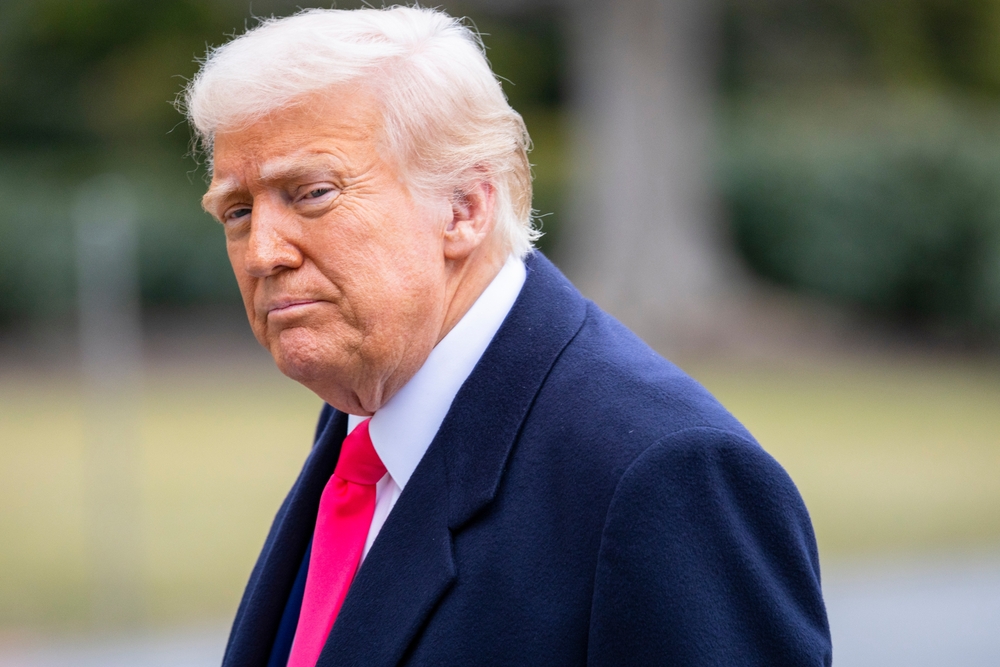
Republican losses and discontent will ensure that the 2028 Republican primaries are going to open up – wide open – to a variety of potential successors both from the MAGA and “Normie” wings of the party.
Alongside Vice President J.D. Vance and Secretary of State Marco Rubio, other potential candidates are likely to include Florida Governor Ron DeSantis, former South Carolina governor Nikki Haley, outgoing Oklahoma governor Kevin Stitt and outgoing Georgia governor Brian Kemp.
Trump will regard none of the aforementioned, outside of possibly Rubio, as sufficiently reliable to protect his interests once he is out of office. Any signs that one or more of these potential successors are gaining in popularity at the expense of either Vance or Rubio will prompt Trump to viciously attack candidates he doesn’t like and use his accumulated super PAC funds to back preferred successors.
Father to Sons?
But if Vance or Rubio, or both, lose favor with Trump, then Trump will be motivated to pick one of his sons as a successor and work to elevate him to the Republican throne. Trump’s second son, Eric, has already floated some trial balloons to this effect.
Such a decision by Trump would likely boomerang against him. The public, and a growing number of Republicans, are repulsed by Trump’s self-dealing and his family’s visible corruption and profiteering (by his son-in-law Jared Kushner in particular).
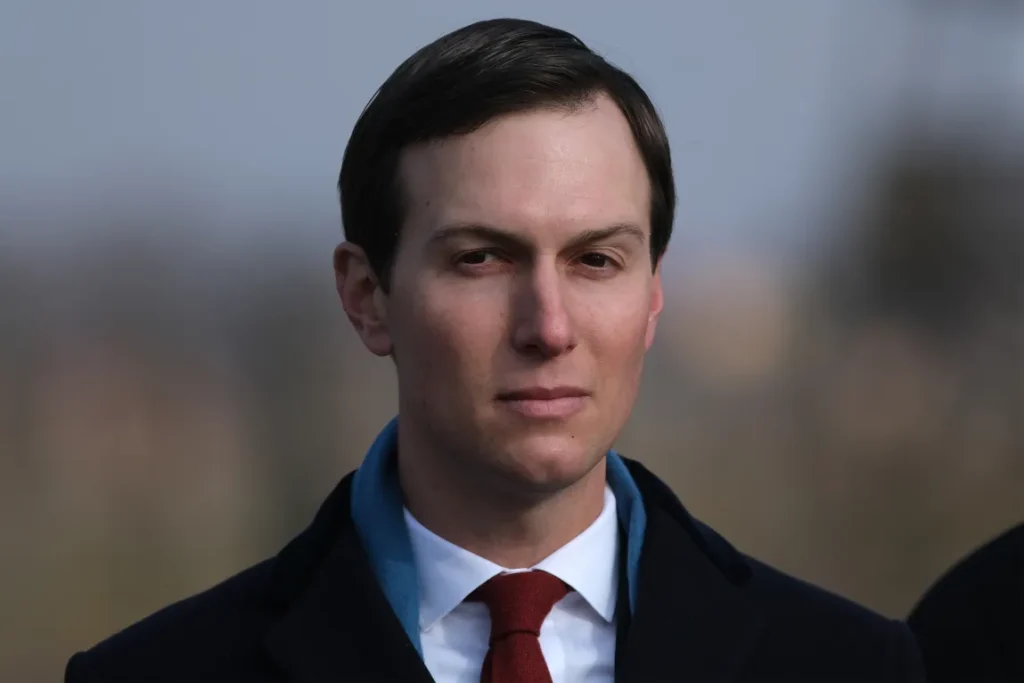
Trump will invest much political capital, time, money and effort to elevate one of his sons to the Republican nomination in 2028. But even if he succeeds, it will surely doom any chance of a Republican victory in the general election. Americans had enough of presidential successions after George W. Bush and implicitly rejected a husband-to-wife succession in 2016 when Hilary Clinton ran for president.
An unpopular Trump trying to place one of his sons in the Oval Office would all but ensure a Democratic landslide in 2028. Especially if the Dems are smart and pick a broadly appealing candidate such as Kentucky Governor Andy Beshear.
Buffered, But Still Hugely Dangerous
The November 3 Blue Wave marks the end of the ‘autocratic phase’ of Donald Trump’s presidency. A new Congress sworn into office on January 3, 2027 will move swiftly to clip his wings and check his power to the greatest extent possible.
Moreover, the outgoing ‘lame duck’ Congress is likely to exact a measure of its own revenge on Trump, firstly by impeaching the completely incompetent Secretary of War, Pete Hegseth, and forcing his removal from that powerful office.
But don’t fool yourself into believing that Trump doesn’t have more tricks up his sleeve.
As we warned in our last post appropriately published on Halloween, Donald Trump isn’t going to fade calmly into “lame duck” status like presidents before him. He is no ordinary president or ordinary man. He mainly resembles a criminal sociopath like Al Capone: a person with no respect for rules other than the rules he makes minute by minute to promote his own power.
He is a “Chaos Magick President” and one of a kind in that office.
Loss and humiliation tend to make him more reckless, more aggressive, and more desperate, as we saw in late 2020. This is a man with the nation’s nuclear codes at his disposal, and the most powerful military on Earth at his beck and call.
He just appointed the crazed ‘fringer’ Deputy White House Chief of Staff, Stephen Miller, to replace Susie Wiles as the Chief of Staff. Miller won’t be advising Trump to back down or play nice. Quite the opposite.
I’ve said it before and will say it again: brace yourselves.
This roller coaster ride isn’t over yet. We’ve got 2+ years to go.
Hang in there.
Until next time, we are –
Greymantle