
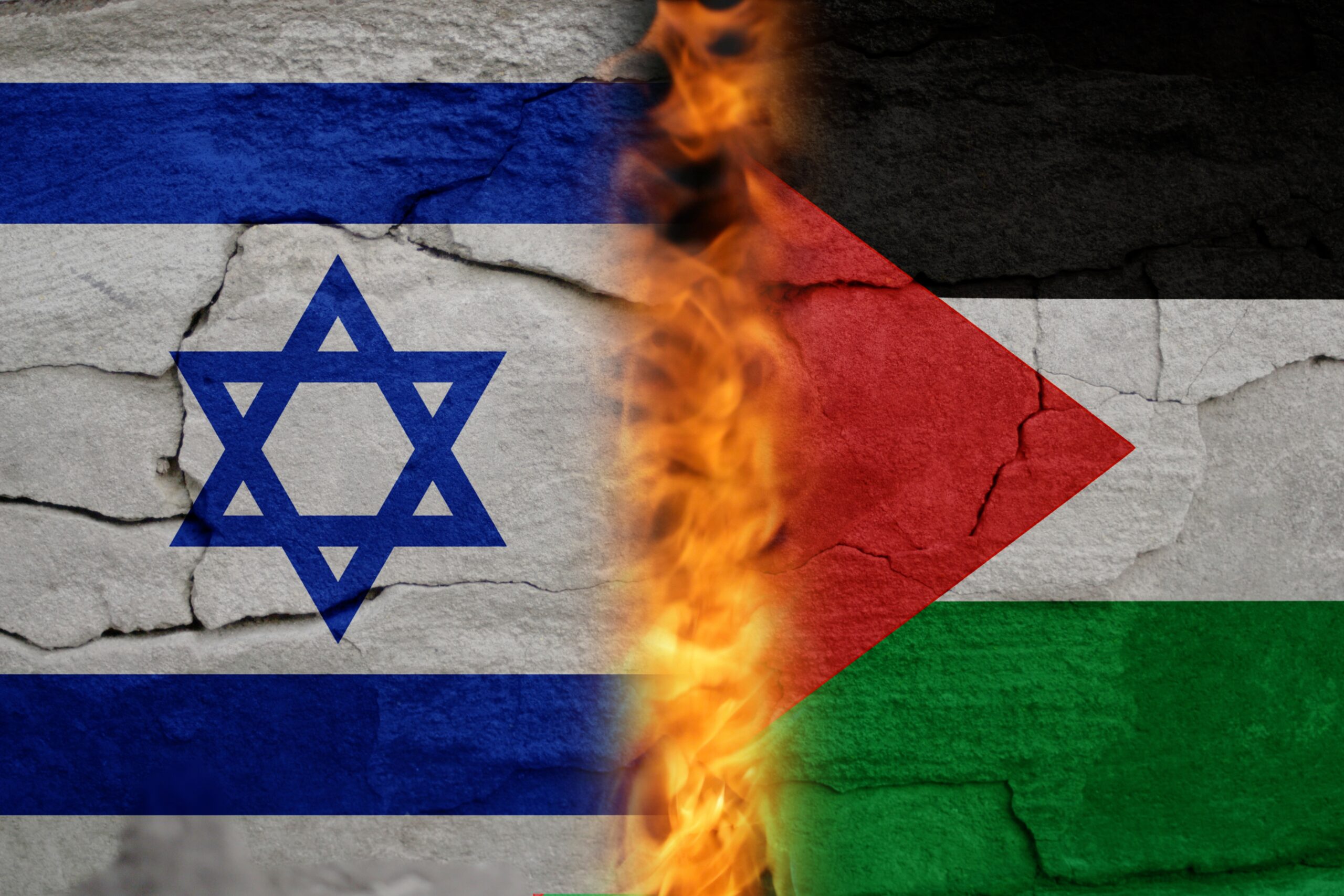
Twenty-two months in, the war in Gaza has become a monument to paralysis. It grinds on — not with the fury and fire of its opening weeks, but with a more disturbing rhythm: the slow logic of siege, starvation, and the calculated refusal to yield. If the Gaza War of 2023 and 2024 was marked by relentless gun battles and airstrikes, the Gaza War of 2025 is marked by the dull grind of occupation, siege and starvation.
The headlines no longer report on the violent fates of slain terrorist leaders, shifting frontlines or military breakthroughs, because there are none to report. Instead, the headlines chronicle the march of famine, the toll of disease, and the continuing political theater of stalled negotiations over hostages, aid convoys, and postwar “day after” plans that seem to exist only in PowerPoint presentations at foreign ministry conferences.
But international attention has hardly waned. On the contrary, the global focus has intensified as the Gaza crisis has metastasized into something far more than a war — it has become a humanitarian catastrophe with a distinctly man-made signature. The war is no longer just about Gaza or the Israeli-Palestinian conflict. It is about the credibility of international norms, the limits of Western resolve, and the endurance of political narratives that no longer seem to serve the interests of anyone, least of all the civilians trapped beneath them.
We wrote in November 2023 that the war in Gaza was not just a military conflict, but an ‘elemental contest of wills’ — something closer to a Nietzschean test of resolve than a Clausewitzian conflict governed by rational objectives. In today’s post, “The Gaza War Revisited: A Contest of Wills, a Crisis of Humanity,” we return to that analogy.
Greymantle believes that the original characterization still holds, but now feels even more bleakly appropriate.
Hamas and the Israeli government are no longer maneuvering for battlefield advantage so much as refusing to concede what they regard as the moral or psychological high ground. The war has become a death grip: a mutual refusal to blink, no matter the cost. And the cost, increasingly, is borne by the most vulnerable, who are simply unable to pay that terrible price.
Gaza War Revisited — TWO UNANSWERED — AND UNANSWERABLE — QUESTIONS
There are two questions that hang over this war like a fog no airstrike can disperse:
Why won’t Hamas sign the terms and release the hostages?
Why won’t Israel ease the blockade and allow more food to flow freely into Gaza?
At first glance, these questions might appear to have practical answers.
For Hamas, the hostages are bargaining chips — the last leverage they possess after 95% of their leadership has reportedly been killed and their remaining fighters are reduced to operating in fragmented cells or hiding beneath the rubble.
For Netanyahu, withholding food — or rather, ‘strictly controlling’ its distribution — is a military tactic meant to deny Hamas precious resources, prevent aid from strengthening the remnants of their military infrastructure, and keep the pressure on for a total surrender by the armed group.
But these explanations are too neat. They miss the real story: both sides are trapped in a war of perception, not just territory. Hamas is playing to a global theatre and razor-focused on generating images and perceptions of Palestinian victimhood and Israeli perfidy to a world audience that tends to sympathize with the Palestinians over the Israelis. Netanyahu, for his part, is playing primarily to the Israeli far-right, which has the power to collapse his government if they think he’s ‘gone soft’.
For Hamas, Releasing the Hostages Would be Tantamount to Admitting Defeat
Hamas won’t release the hostages because, for them, it would mean acknowledging the scale of their defeat. They no longer control Gaza in any meaningful sense. They cannot govern, cannot fight conventionally, and cannot protect the people they claim to defend. But by holding on to the hostages — and to the psychological warfare that comes with them — they can pretend, at least symbolically, that they are still in the fight.
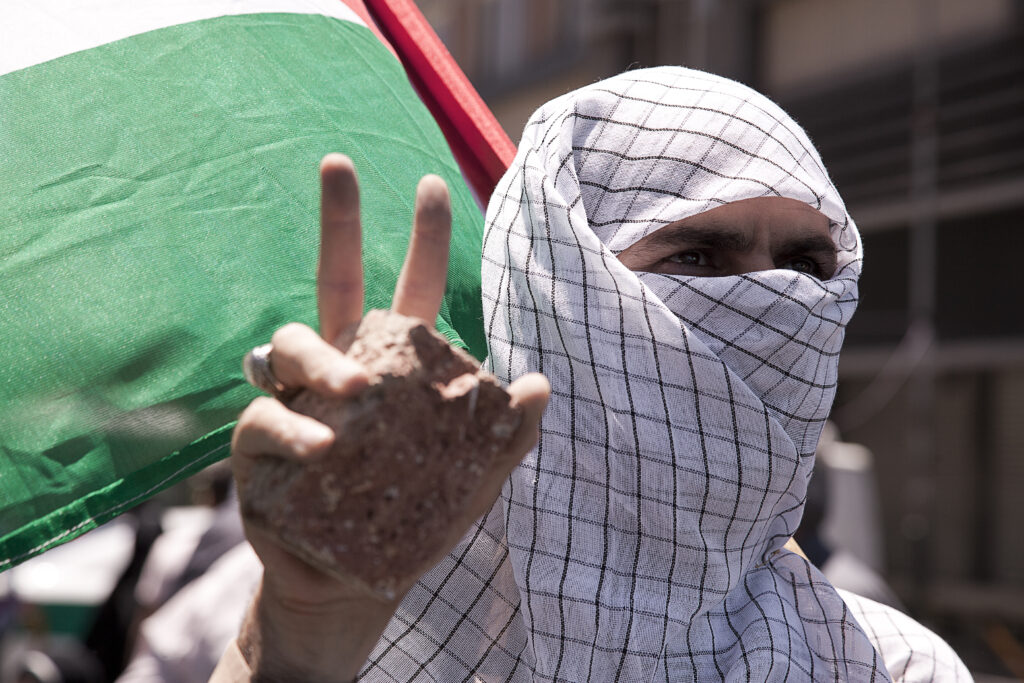
Moreover, the ongoing starvation and collapse of Gaza’s civilian infrastructure has, perversely, become Hamas’s last weapon. Hamas is cynically betting that the images of skeletal children and mass graves will shift the international consensus in their favor — that the spectacle of collective suffering will fracture Israel’s relationships with the United States and its other Western allies.
Their goal is to force Israel to abandon maximalist demands and settle for lighter ceasefire terms in exchange for the hostages. In this sense, the famine is not merely an unfortunate byproduct of war — it is a strategy of last resort. For Hamas, surrendering the hostages and accepting Israel’s core demand — total disarmament — would amount to ideological suicide. Hamas would become, in essence, a defeated militia signing the terms of its own liquidation.
Greymantle has forecast a high likelihood for exactly this outcome in our November 2023 post. In that article, we concluded that the Israelis viewed the Gaza War as a war for national survival at least as much as Hamas. A failure to reestablish Israeli deterrence against its enemies and to rescue the hostages would be viewed by Israelis as the first steps in a quick march to Israel’s destruction. Only a complete victory would be acceptable – whatever that looked like.
Greymantle argued then, and still believes now, that the leaders of Hamas badly underestimated the will of Israel’s political leaders and, more importantly, Israeli society to suffer through a long war and inflict more damage on Hamas and Gaza than in any of their previous wars against Hamas. Operation Cast Lead was going to be child’s play, by comparison. To rescue the hostages and avenge October 7, the Israelis and Bibi himself would be unrelenting.
As we foresaw then, the leaders of Hamas stood a good chance of being entombed underground in their bunker network like some ancient Egyptian pharaoh in a lost pyramid, with the lights slowly growing dim as fuel for their generators dwindled and their confident belief in waiting out the siege giving way slowly to hunger, thirst, and nihilistic despair.
That is about where Hamas is now. We don’t expect that their stores of food and water were sufficient to withstand a siege of this length. The Palestinians of Gaza are starving, but so are the 20 or so remaining Israeli hostages and, very probably, the few hundred Hamas fighters still holding out. That is how we read the Israel-Gaza conflict’s latest news.
No matter how decimated Hamas may be in practice, however, they cannot – will not – acknowledge defeat as a matter of principle. Their entire raison d’être depends on projecting continued resistance and defiance. Caught within a paradigm of their own making, they are taking tens of thousands of their own people down with them, slowly, via starvation. Hamas’s intent may be to keep “All Eyes on Rafa” so that their cause may prevail, but the terrible sights the global community is witnessing discredit Hamas as much as they do the Israelis.
Israel’s Negotiating Position Isn’t Governed Primarily by Strategic Concerns
And here is where Israel’s own rigidity becomes just as illuminating. In the most recent negotiations — which the U.S. and Israel walked away from — Hamas’s refusal to agree to complete disarmament was the final sticking point. From a purely strategic angle, Israel could have softened that demand in exchange for the hostages. After all, Hamas’s capacity to wage organized warfare has been largely annihilated. A practical compromise might have saved both Israeli and Palestinian lives and brought home the remaining captives.
But compromise would have undermined the message Netanyahu and his American negotiating partners — now led by Trump envoy Steven Witkoff — want to send to their domestic political bases: that Hamas has not just been defeated, but broken. Anything less than total disarmament risks puncturing that narrative.
And yet, this position isn’t just political. It’s also deeply personal.
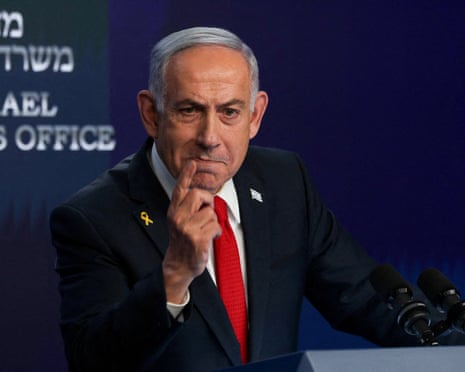
BIBI’S REVENGE
For most Israelis, the war’s primary goal has narrowed to one urgent priority: bring the hostages home. The country believes — with some justification — that Israeli deterrence has been fully re-established.
Hezbollah stayed on the sidelines and was subsequently decapitated by Israel when its leaders least expected an attack. The Arab world has largely avoided direct confrontation. The Abraham Accords remain in place. Iran, for all its bluster, initially held back, and its missile and drone attacks ultimately proved ineffectual against Israel’s Iron Dome missile defense system and the technical and military assistance provided by Israel’s Western and regional (i.e, Jordan) allies.
In essence — and like we predicted in November 2023 — Israel has won a complete victory over its regional enemies. It entered the fight as one enters a fight for one’s life, and because of this attitud,e it has overcome every obstacle.
But Israeli Prime Minister Netanyahu seems unable — or unwilling — to see the situation with that same clarity. For Bibi, October 7 wasn’t just a national trauma – it was a personal humiliation. The events of October 7 undercut the central premise of Netanyahu’s political career: that he, and he alone, could guarantee Israel’s security through strength.
Bibi’s failure to anticipate or prevent the Hamas attack completely shattered that illusion. And like a man trying to restore his honor through endless duels, he now seems driven less by reason than by revenge.
For Bibi, it’s not enough simply to defeat Hamas in the narrow, military sense. Instead, he wants to grind them into the dust in order to to avenge the wound to his legacy.
This is not the cool, calculating Netanyahu of previous Mideast conflicts. This is Bibi as Captain Ahab — dragging the nation behind him in pursuit of a personal reckoning. And that emotional fixity is one of the key reasons the war refuses to end. Netanyahu’s inability to accept anything less than total military, strategic, symbolic, and perceptual victory has created a political trap: he cannot walk away without seeming vulnerable, and vulnerable is how October 7 made him appear.
FROM FIRESTORM TO STALEMATE TO DEATH GRIP
The early months of the war were defined by speed and shock: the horror of Hamas’s initial massacre, the swift and devastating Israeli counterattack, and the frenzied debates in Western capitals about proportionality, morality, and alliance. But as the months passed, the strategic terrain shifted. Hamas’s tunnels collapsed, their leaders killed, their arsenals depleted. Israel’s objectives grew fuzzier: full military victory? Political decapitation? Permanent occupation?
Now, we find ourselves in a kind of strategic limbo. The Israeli Defense Force (IDF) holds most of Gaza. Hamas operates in fragments. Civilians are dying not from bombs, but from disease, hunger, and the collapse of every civic institution. Netanyahu has offered no concrete postwar plan because there is no postwar. There is only “during.”
And “during” has become completely intolerable, on a purely humanitarian and human level, to the Palestinian population living in the hell that has become the Gaza Strip.

THE LOGIC OF TOTAL WAR, TURNED INWARD
In December 2024, we wrote that Netanyahu was entering his “Michael Corleone moment”: isolated, feared, surrounded by hardcore loyalists and sycophants, and haunted by the ghosts of October 7. That moment has now calcified into something more enduring. He has built a wartime posture that does not require victory — only perpetual motion, perpetual defiance, and perpetual fear. And like Michael Corleone, Bibi cannot leave the world he has helped create. It is the only thing protecting him from his rivals, his political partners, his critics, and perhaps from history itself.
But Netanyahu is not alone in his entrapment. Hamas, too, has lost the ability to negotiate, compromise, or recalibrate. Its leaders — what few remain — are ideologically locked into the same Manichaean worldview they embraced on October 6. To bend is to break. And so they hold on, not to hope, but to martyrdom.
Each side has weaponized the fear of appearing weak into a political doctrine. For Hamas, to surrender is to vanish. For Israel, to relent is to invite another massacre. But in this mutual rigidity, something essential has died: the capacity for humanity, for pity, for grace under fire.
The siege of Gaza is no longer just military — it is spiritual. The Gaza humanitarian crisis isn’t primarily about logistics and supplies. Conditions in the strip are a symptom of a deeper moral and spiritual crisis affecting the actors on all sides.
CONCLUSION: WHAT IF THERE IS NO VIABLE ENDGAME?
Among the editors of Greymantle, we keep asking how the war ends.
But perhaps that is the wrong question. Perhaps the more accurate question is: what if it doesn’t?
What if the present conditions merely signal that this is the new normal — a semi-permanent state of war-famine-negotiation-gridlock, where Hamas holds a handful of hostages underground, and Israel continues a brutal occupation aboveground, with the international community trapped between moral outrage and geopolitical caution?
The Israeli government’s new plan to take control of Gaza City – a Netanyahu-directed initiative approved by Israel’s war cabinet over the objections (apparently) of its military chiefs – is unlikely to drastically alter conditions on the ground. The Gaza City offensive may allow for increased food shipments into the enclave over time, but Greymantle views Netanyahu’s latest plan as an attempt to play for time and keep his far-right coalition partners in the Knesset aboard for a few more months, as well as throw his pal, Donald Trump, an argument to justify continued U.S. support for the war effort.
A modest increase in food shipments that keeps Palestinian civilians on the edge of starvation, rather than in outright starvation and a full-blown famine, is better than nothing. It will probably save hundreds or even thousands of lives. But it is no substitute for an acceptable conclusion to the Gaza War. It isn’t the start of “the day after”.
Wars built on revenge, retribution, and the desire to humiliate rarely end cleanly. They do not culminate in signing ceremonies, but in exhaustion — in the slow, degrading collapse of purpose, identity, and the illusions that once animated them. This is the future that now threatens to become the present in Gaza. A place where strategy has given way to symbolism, and where suffering itself has become the last language spoken.
We are beyond geopolitics now. We are watching a morality play with no heroes, only endurance artists. And the audience, the so-called “international community,” may yet discover that watching — like waging — such a war comes at a high cost.
Until next time, we are —
Greymantle
Also Read: Breaking the Wheel of Flesh: Reproductive Technology Takes Aim at the Fertility Crisis


One Response