Key Takeaways
* China has feared a Distant Blockade by the U.S. for decades and now believes it has the material and military means to counter it.
* Chinese weapons development to challenge a Distant Blockade is both extensive and impressive and will form the core of the Chinese response.
* Even utilizing a strategy of holding distant chokepoints, U.S. naval assets could still suffer significant damage from Chinese missile attacks that may oblige them to withdraw for repairs.
* Despite decades of preparation, China would also incur major economic and diplomatic risks if Taiwan holds out, its own naval assets are damaged or significantly underperform, and the U.S. and its allies are able to maintain the blockade against long odds.
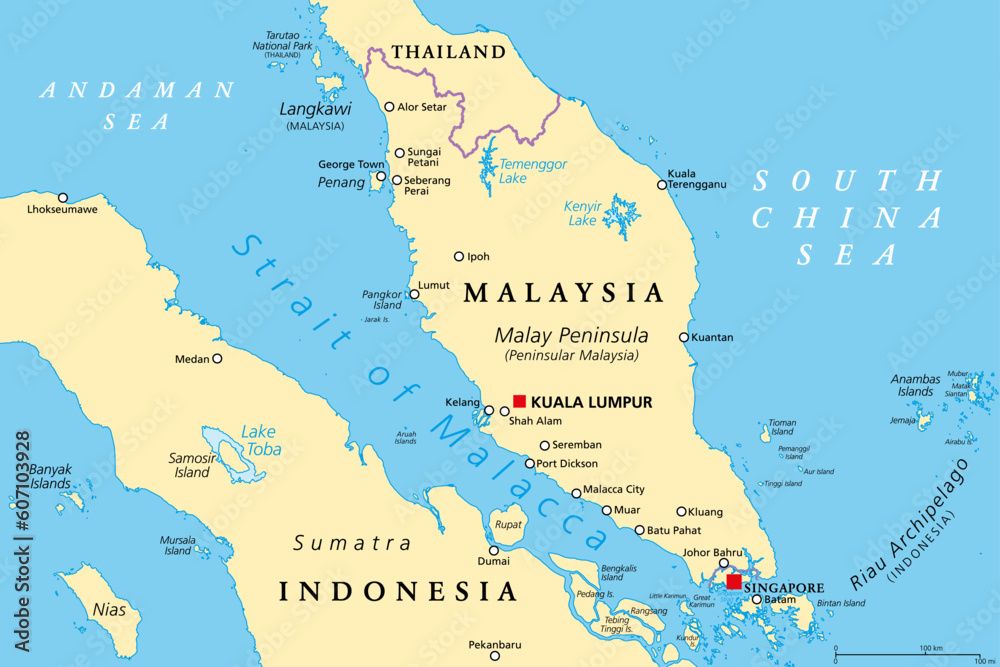
In Part 2 of ‘The Eagle Versus the Dragon’, we discussed the U.S./Allied deployment in the Malacca and Singapore Straits as if it were proceeding without interference from a determined enemy.
In fact, the ‘distant blockade’ threat is a scenario that Beijing’s war planners have been mulling over for decades. It would accurate to attribute the rapid expansion of its navy since the year 2000 to a deep concern over this danger.
To thwart a distant blockade, as well as for other grand strategic reasons, Beijing has undertaken several mammoth endeavors:
a) Establishing two overseas naval bases near potential chokepoints – Djibouti on the Horn of Africa and Reem in Cambodia;
b) Steadily steering its economy away from reliance on fossil fuels;
c) Assembling the Belt and Road Initiative, an elaborate cross-continental trading network; and
d) Constructing both the China-Pakistan Economic Corridor and the China–Myanmar Economic Corridor, each designed to sidestep the Malacca and Singapore Straits.
Most significantly, the armed forces of the People’s Republic have developed and deployed layers of offensive systems that can reach enemies thousands of miles from its shores. Note: The Strait of Malacca is 1,242 miles from the southernmost maritime province in the People’s Republic (and its large naval base), Hainan Island.
China’s Multi-Layered Offensive Strategy
China now fields a dizzying array of ballistic and intermediate-range anti-ship missiles. The nation also boasts several delivery platforms to bring shorter-range missiles (and now drones) ever closer to far-flung enemy fleets and bases.
Most significant of these are the roughly 230 long-range Xian H-6 bombers, as well as its own missile ships and submarines. Obviously, the four (at present) carriers in its fleet can also be of service in this regard, as well as the PLAAF’s stealth fighters.
So far, little concrete information is known about certain Chinese advanced weapons, many of which were showcased in the recent September 2025 Beijing parade. Always suspicious, Greymantle assumes that some of these wonder weapons were mock-ups or not yet fully operational.
The large, unmanned torpedoes appear to be quite real and formidable, probably based on Russian designs. The laser and microwave weapons, which are likely prototypes, could someday be useful against future drone swarms. However, their present operational capabilities are likely to be limited.
The ones that provoked the most interest from naval warfare analysts, however, were four new model prototypes of anti-ship missiles, three of which were hypersonic.
The term ‘hypersonic’ means that they can move at least five times the speed of sound, or Mach 5, which is 3,705 mph in dry air at sea level. An F-22 Raptor can only hit Mach 2, by contrast.
Some newer hypersonic missiles can also maneuver or accelerate during their approach to evade defenses. The Chinese clearly intend to fire salvos of several missile types at once, including the advanced hypersonics, bearing down on the enemy at different speeds, times, and angles. Obviously, such intricate assaults will make it much harder for even mobile targets to avoid or counter them.
In fact, no fleet in history will have ever experienced an onslaught like the one the PRC is preparing to unleash on the U.S. Navy and its allies.
PLAN Missile Inventory
| Missile System | Type | Range | Target Profile |
| DF-21D / DF-17 | Anti-ship ballistic; hypersonic MRBM; hypersonic glide | 932–1,243 miles 932 –1,243 miles | Carrier strike groups |
| DF-26D | Dual-use ballistic | 1,864-2,485 miles | Guam, Indian Ocean chokepoints, large ships |
| CJ-10 / CJ-20A | Land/air-launched cruise | 932 – 1,243 miles | Ports, logistics hubs, radar sites |
| YJ-18 / YJ-12 YJ-19 | Anti-ship cruise Hypersonic anti-ship cruise | 249 -497 miles/ 621 — 746 miles | Surface ships, launched from air/sea/sub |
| YJ-21 | Hypersonic anti-ship ballistic | 621 — 932 miles | Carrier group, surface ships from air/sea/sub |
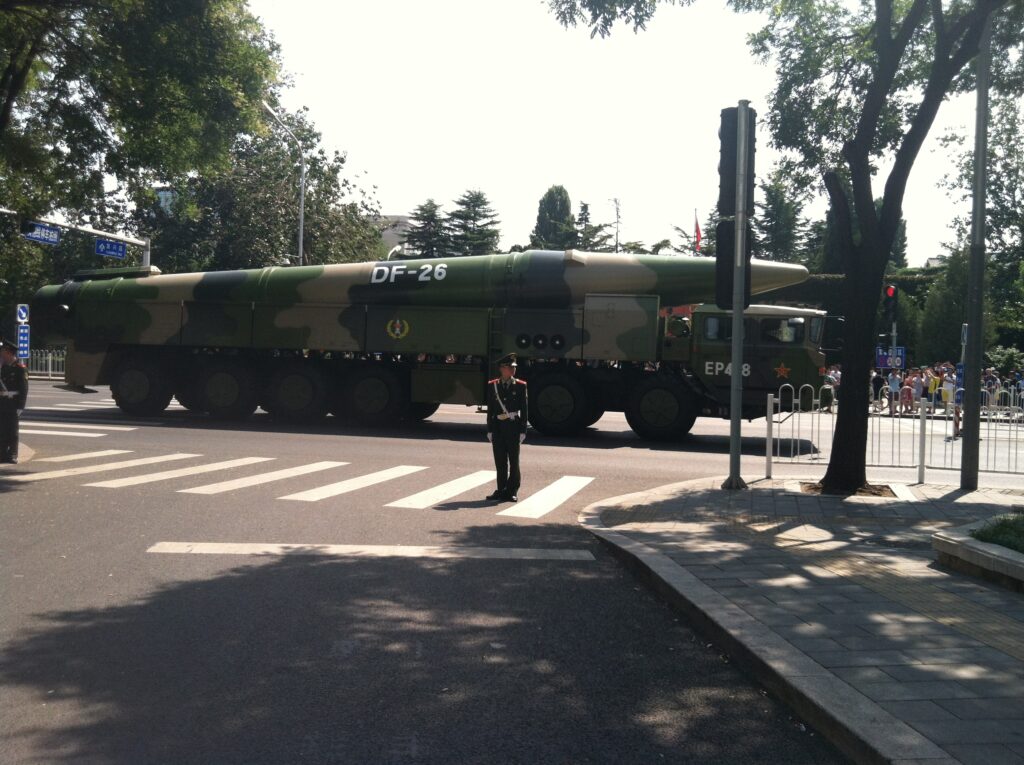
Operational Readiness: Typically, 30–60% of a missile force will be operational at any given time. The rest require maintenance, relocation, or targeting updates.
Numbers:
- YJ-21: Estimated <100 units, with submarine integration ongoing: Deployment began around 2022–2024. According to a 2023 People’s Liberation Army Strategic Support Force article, the missile has a cruise speed of Mach 6, and a terminal speed of Mach 10. The rocket could be launched from China’s Type 055 destroyer or the H-6 bomber.
- YJ-19: Newly unveiled in 2025, likely in an early deployment phase. Estimated <100 units, with continuing submarine integration
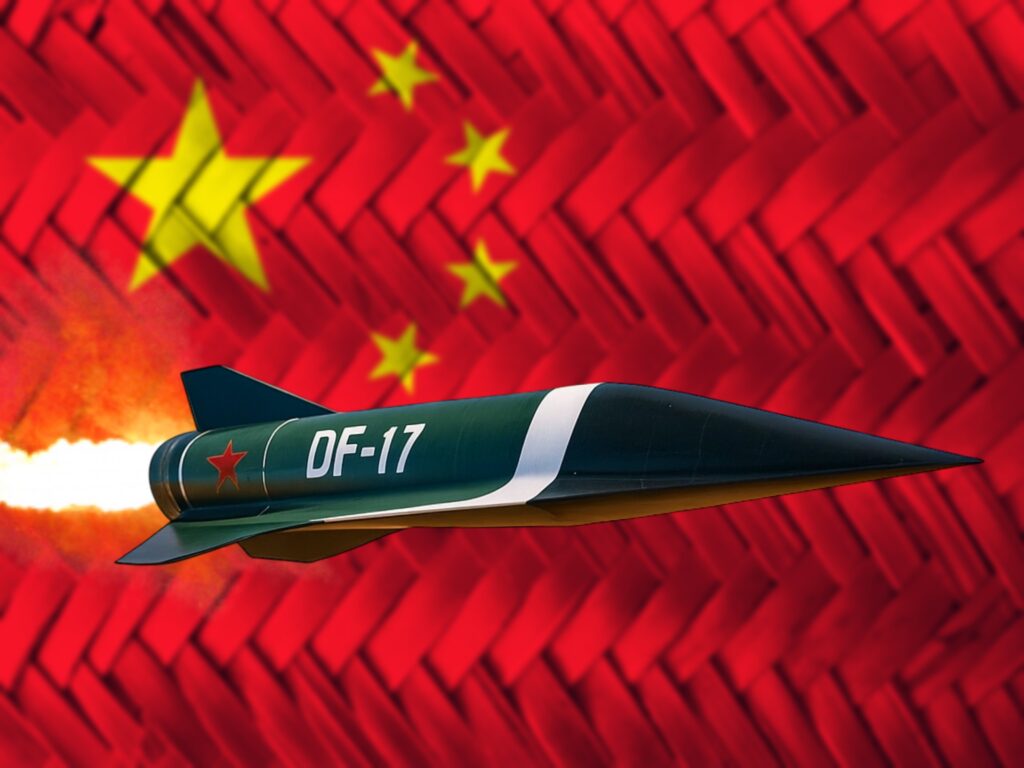
- DF-17: Operational since 2019, widely showcased and tested. An estimated 200–300 launchers are available, with possibly more missiles due to reloads.
Note: These systems reflect China’s layered hypersonic strategy: YJ-21 for naval denial, YJ-19 for stealthy undersea strikes, and DF-17 for regional deterrence.
Non-hypersonic numbers
| CJ-10 | 200–500 missiles |
| CJ-20 | Unknown (likely 100–300) |
| YJ-18 | Unknown (widely deployed) |
| YJ-12 | Unknown (air/land/sea variants) |
The Dragon Strikes Back
The following describes in a decision chart flow format how a coordinated Chinese missile strike against a U.S. carrier strike group is likely to proceed. The carrier group would be moderately dispersed, operating in and around the Malacca Strait, performing quarantine duties, but on alert against probable attack. China’s countermeasures would focus on denial and disruption, not direct fleet confrontations.
Scenario Setup
- Target: U.S. Carrier Strike Group (CSG) centered on USS Gerald R. Ford, with 2 cruisers, 5 destroyers, and support vessels.
- Location: Around 1,300 miles from mainland China.
- Chinese Assets: DF-26 IRBMs, H-6K bombers with CJ-20 cruise missiles. (The bombers’ reach could cover Diego Garcia, Guam, and even parts of the Arabian Sea.) Also, Type 093B SSNs (range – 3730+ miles). Last, but not least, satellite/cyber elements for Intelligence, Surveillance, and Reconnaissance (ISR).
Chinese Kill-Chain Activities
- Detection & Tracking
- Satellites: Gaofen and Yaogan series provide optical and radar imagery.
- Cyber ISR: Attempts to breach U.S. logistics and comms for location data.
- Undersea sensors: Passive sonar arrays supply movement data if enemy ships are within range
— Target Fix
- Real-time updates from satellites and drones.
Note: Meanwhile, the US Navy will be attempting to disable China’s remote-sensing satellites.
- Data flows to PLA Rocket Force command centers.
2. Strike Package Composition
| Asset | Quantity/ | Payload | Launch Point |
| DF-26B | 24 | Conventional warheads | Inland China (Gansu, Qinghai) |
| H-6K Bombers | 6 | 6× CJ-20 each (36 total) | Launch from Shaanxi, possible refuel over South China Sea for longer missions |
| Type 093B SSNs | 12 | YJ-18 cruise missiles | Patrolling east of Luzon |
| Cyber/EW | N/A | GPS spoofing, comms jamming | Global, synchronized |
3. Timeline of Strike
T+0: Launch
- DF-26B missiles fired in staggered waves.
- H-6Ks release CJ-20s from ~1,000 km (610 miles) out, then retreat.
- Submarines fire YJ-18s from ~400 km (244 miles).
T+15 min: Midcourse
- DF-26s arc into space, guided by satellite updates.
- CJ-20s fly low, terrain-following, subsonic.
- YJ-18s cruise then sprint at Mach 2.5 in terminal phase.
T+30 min: Terminal Phase
Note: The US Navy and Air Force are also reportedly developing techniques to disable China’s remote-sensing satellites.
- U.S. Aegis ships engage with SM-2, SM-3, and SM-6 interceptors. The U.S. Navy has quietly upgraded ABM defenses that use short-range Rolling Airframe Missile/RAM and long-range SM-2 missiles, which have proved very effective against the ballistic threat. The Navy is more secretive about its growing array of electronic devices that focus on disabling or degrading the enemy’s terminal guidance systems ensuring accuracy. Multiple attacks on Chinese satellites and ballistic missile sensors are part of its “layered” defenses.
- Carrier air wings equipped with F/A-18s and F-35Cs are fully capable of defending against cruise missiles and drones. In December 2023, F/A-18E/F Super Hornets from a carrier strike group on the Red Sea station successfully shot down 12 one-way attack drones, 3 anti-ship ballistic missiles, and 2 land-attack cruise missiles launched by Houthi forces. (Of course, Chinese missile salvos will be far more intense, frequent, and sophisticated.)
- Intercepting anti-ship cruise missiles requires rapid reaction, precise tracking, and high-speed engagement — all within the capabilities of both the F/A-18 and F-35C aircraft. Against drone swarms, fighters may use a mix of missiles and electronic warfare, although their limited magazine depth and cost-per-kill are ongoing concerns.
- CIWS and ESSM engage surviving cruise missiles.
Potential Outcome
Estimated Missile Survival Rates
- DF-26B: ~70% intercepted or miss due to targeting lag.
- CJ-20: ~50% intercepted; low altitude makes detection harder.
- YJ-18: ~40% intercepted; terminal sprint stresses defenses.
Estimated Hits
- DF-26B: 5–7 reach vicinity; 1–2 near misses cause shock damage.
- CJ-20: 10–15 penetrate; 2–3 hit escorts, 1 disables carrier flight deck.
- YJ-18: 3–5 penetrate; 1 hits destroyer, 1 damages radar on cruiser.
Carrier Strike Group Status (Probable)
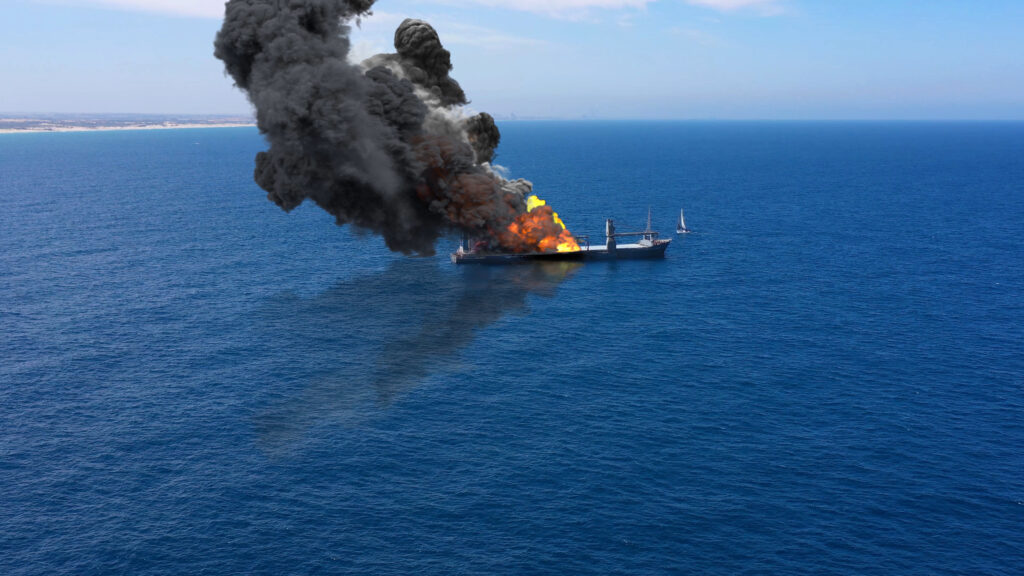
- Not sunk, but mission kill likely: flight deck damaged, radar degraded, three escorts lost or inoperable.
- Strike group withdraws for repairs; air operations suspended.
Strategic Implications
- PLA success: Demonstrates ability to threaten U.S. carrier strike groups (CSGs) beyond the First Island Chain
- U.S. adaptation: May shift to even more dispersion and more stealthy platforms (subs, drones, stand-in forces).
- Coalition impact: U.S. allies reassess risk posture; may demand hardened logistics and missile defenses
How Can Long China Hold Out?
Fuel Reserves
Let’s assume that the U.S./Allied quarantine is successful in curbing all or most of the 80% of the crude oil that China imports by sea. As mentioned earlier, Beijing has been preparing for such a hostile operation for a long time.
To that end, analysts estimate that the nation’s strategic energy reserves are between 280 and 400 million barrels—an impressive store by any measure. The nation’s daily peacetime usage is reckoned to be roughly 14 million barrels/day.
In war or under quarantine, China would ration its consumption —potentially stretching national endurance to three to four months. Of course, ongoing military demands would siphon off a considerable, if unknown, portion of these reserves.
Greymantle believes that storage sites or distribution nodes will remain free from U.S. attack because neither combatant wants to risk nuclear escalation by attacking the enemy’s homeland.
Minerals and Industrial Inputs
China has also stockpiled numerous strategic minerals, including rare earths, copper, and lithium, which are crucial for defense and manufacturing. Likewise, the PRC maintains surge production capacity for coal, with a 300 million tons/year expansion approved in 2022.
Analysts estimate that Industrial operations could continue for several months, especially with domestic mining and reduced export obligations.
Food Reserves
Food supplies may be deemed off-limits for the quarantine due to humanitarian reasons. In any case, China has quietly amassed massive grain reserves, particularly of rice, wheat, and corn. Some analysts believe that Beijing has stockpiled over 50% of the world’s grain reserves.
These grain reserves are intended to support food security for over a billion people during disruptions. With rationing and domestic production, the PRC could likely sustain its population for six months or more, though rural areas would be more vulnerable to supply chain breakdowns.
Overall Strategic Endurance
- Best-case scenario: partial blockade, continued Russian imports, rationing: 6+ months.
- Worst-case scenario: total blockade, no imports, full consumption: 2–4 months before critical shortages emerge.
How Long Can Taiwan Hold Out?
In a previous article, Greymantle explored the potential duration of Taiwan’s resistance if it were to fight a PRC invasion alone. This period could be as long as two months.
In the scenario discussed here, the United States and its allies are supporting Taiwan’s defense from a distance, while avoiding a direct attempt to break through China’s hard island blockade. Such limited aid might prolong the struggle for a few months more.
Also described in the earlier article was a “strangulation strategy.” In this approach, Beijing takes its time. It focuses most invasion assets on capturing and securing the main port, Kaohsiung, and its hinterlands in the island’s southern tip.
The invasion is then halted, although the PRC blockade remains in place. China may even offer terms to Taipei. The mainlanders would choose to wait, confident that the republic’s army would be unable to reconquer what was seized.
Eventually, Beijing believes the government would be overthrown or capitulate as the remainder of the Taiwanese economy withered. Such an approach would greatly extend the quarantine’s duration.
A Near-Run Thing: Both Sides Display Weaknesses
“The nearest-run thing you ever saw in your life” was the Duke of Wellington’s succinct assessment of the Battle of Waterloo’s outcome.
Greymantle would say the same about the Malacca ‘distant” quarantine’s’ chances of success: It really could go either way.
China’s advantages in this particular struggle for the Malacca/Singapore chokepoint, however, are considerable. As mentioned, Beijing has been planning for this scenario literally for decades and has prepared accordingly.
The PRC’s greatest strengths are its impressively large stockpile of missiles, delivery platforms, drones, fuel, food, and industrial operations – all of which are much closer to the Strait of Malacca than are the U.S /Allied sources of supply, repair, and replenishment (except for Australia and possibly Singapore).
Damaged U.S. warships – especially a carrier — may even have to return to Hawaii or the West Coast for repairs, effectively taking them out of action. Unless a new carrier rotated in, the quarantine would lose its main shield and coordination center. Then, any new carrier will have take its chances against China’s ample long-distance arsenal.
Another PRC advantage may well be time. The U.S./Allied assembly of an effective quarantine could optimistically take two weeks; more pessimistically, it could take a month or longer.
None of the participants will have had any actual training for this type of logistically complex, diplomatically sensitive mission. Its goal will be to apply enough pressure on the PRC to convince its leaders to call off an invasion of their “wayward province.” Yet, a review of the mainland’s stocked reserves suggests that such pressure would not be felt for four to six months.
In the meantime, questions exist among American and Taiwanese military strategists about how long the Republic could continue to fend off a mainland amphibious invasion, or make it too costly to continue. If the attackers are satisfied with gaining a major foothold – i.e., taking and holding Kaohsiung and its environs while continuing a blockade – then the distant quarantine could stretch on for months.
At some point, Greymantle believes the operation would become unsustainable for the U.S./Allied coalition – both logistically and operationally…and also diplomatically.
China Must Fight Along Many Fronts
Nevertheless, China’s vulnerabilities cannot be ignored, either. For one, China will be fighting on two fronts. Its untested armed forces must accomplish the most difficult task in warfare – an amphibious invasion of a defended shore – while simultaneously fending off the only other military in the world that can challenge it.
Moreover, the Straits of Malacca and Singapore are not the only places where the quarantine would be applied, just the closest. Some of the other chokepoints are too far away for Beijing’s forces to realistically interfere with, at least as powerfully.
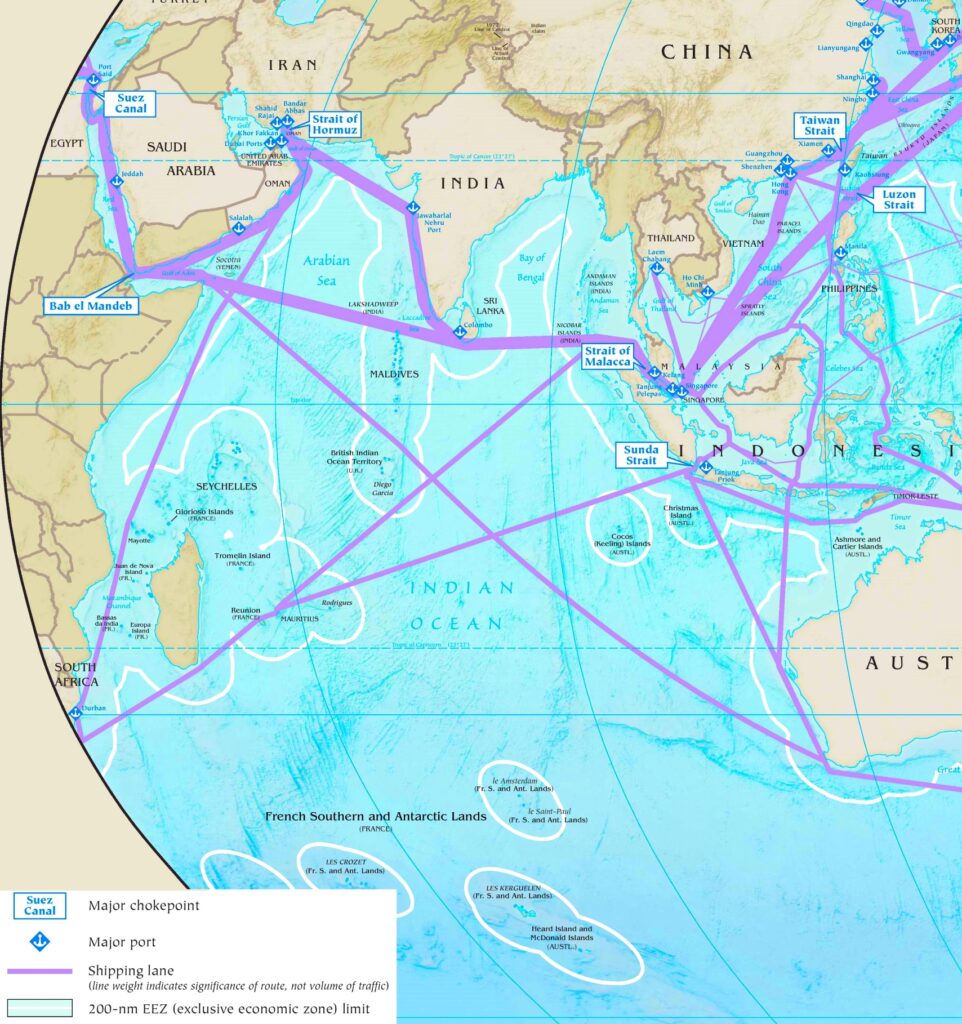
For instance, China has built an isolated naval base on the Horn of Africa, in Djibouti, meant to overlook Suez Canal exit traffic.
In all likelihood, this establishment would be quickly neutralized by U.S. and allied forces; it makes little strategic sense to station a large fleet there to defend it, so it may be abandoned. The quarantine would continue at the entrances of the Red Sea and Persian Gulf (although Iran won’t be cooperating).
China’s long-range bombers will be able to fire stand-off missiles at the nerve center of US force in the mid-Indian Ocean – the highly fortified U.S-British base on Diego Garcia. China might also launch some of its ICBMs. It is unlikely, however, that these strikes would put the Diego Garcia facility out of action.
Ships and planes there would still be able to patrol the Indo-Pacific sea lanes for suspicious China-bound oil tankers and container ships. It would be quite risky for Beijing to send its warplanes too far from its shores to protect them, however.
The same logic applies to China’s shiny new, but inexperienced, fleet. Chinese naval assets that aren’t engaged around Taiwan would be courting real danger if they ventured out into blue water, perhaps to escort friendly ships or to clash with the enemy far from its shores. Beijing is therefore likely to confine all its critical naval assets — except submarines — to missions within the First Island Chain.
All the while, the world’s sea commerce will be snarled and economies devastated. America and China alone account for 43% of this traffic. Under these circumstances, the PRC will likely bear most of the blame, as it has clearly been the initial aggressor with its invasion. How long this opprobrium can be tolerated is an open question. Like Russia, however, China may shrug off external criticism.
Conclusion: We All Lose
In the end, a distant blockade of China represents not only a test of military endurance but of political and economic resolve on both sides. The United States and its allies could, at great cost and coordination, impose real pressure on Beijing’s war economy, enough, perhaps, to make the costs of a Taiwan invasion unbearable.
Yet pressure alone does not guarantee victory. The longer such a confrontation persists, the greater the strain on the alliance network, the global trading system, and domestic political patience within the democracies that initiated it.
For China, the calculus is equally perilous. Its leaders would face the slow suffocation of trade and energy lifelines while their own citizens endure the privations of rationing and economic contraction. What the distant blockade withholds in firepower, it compensates for in attrition — the gradual tightening of a noose that threatens the very growth model underpinning China’s rise.
Whether Beijing yields before the blockade becomes unsustainable, or doubles down out of nationalist pride, is the question upon which the entire Indo-Pacific order could hinge.
A war fought without decisive battles but with devastating consequences for all participants may ultimately prove the most characteristic conflict of the twenty-first century — long, indecisive, and economically ruinous.
All signs suggest that this conflict, if it flares into being, appears to ensure that everyone loses… and we mean everyone.
— —
Richard Jupa
*************************************
KEY SOURCES
(https://missilethreat.csis.org/missile/df-17/
https://www.deagel.com/Weapons/YJ-21/a004225
https://missiledefenseadvocacy.org/missile-threat-and-proliferation/todays-missile-threat/china/dong-feng-17/
https://www.armyrecognition.com/news/navy-news/2024/yj-21-missile-underscores-chinas-hypersonic-
weaponry-leadership
https://en.wikipedia.org/wiki/YJ-21
‘We’ll See How Frightened America Is’: China Made Veiled Threat to Sink Navy Aircraft Carriers
‘We’ll See How Frightened America Is’: China Made Veiled Threat to Sink Navy Aircraft Carriers
Other Sources available upon request…