Key Takeaways
- President Trump’s decision not to openly challenge the 2026 midterm results is nearly as consequential as the results themselves. It reveals a fearful and vacillating Trump who is mostly talk, incapable of acting decisively. Call it TACO Tuesday.
- The president missed his final chance to invoke the Insurrection Act on November 4 and take the maximalist road outlined by Greymantle: a move toward direct dictatorship by declaring a national emergency and deploying troops internally.
- With Congress set to be in opposition hands by a wide margin, Trump’s chances of anointing a handpicked successor have greatly diminished.
- MAGA politicians and their financial backers and media enablers have been much-weakened for the short-term, likely through the 2028 election cycle.
- The U.S. electoral infrastructure is in good hands through 2030. Election deniers were defeated and Democratic officials sit atop the election administration apparatus in all U.S. swing states. Absent a major shift in popular sentiment by 2028, Republicans will face a Democratic trifecta in 2029.
- Third parties performed poorly in the midterms, suggesting that the road to a viable U.S. third party remains a long, difficult and uncertain one.
Before the 2026 U.S. midterms fade into the rearview mirror, and while some critical mass of people is still talking about them and interested in reading about the outcome and its implications, we are following up on last week’s midterm reaction to provide our final thoughts about “the meaning of the midterms” — to put it in media-speak.
Put simply: we think Trump blew his last chance of becoming America’s first dictator. Just to be clear: we are very happy with that outcome. Greymantle believes it’s necessary to declare our position in such a fraught social and political climate, and so we are doing.
On the evening of Tuesday, November 3, 2026, President Donald Trump pulled his biggest TACO ever.
What is a TACO, you may ask, other than a delicious Mexican lunch dish? If you have been living under a rock, you may not know that the acronym TACO stands for “Trump Always Chickens Out”. Greymantle isn’t sure who coined this clever acronym, but it’s both a true and an accurate one.
It stems from the observation that President Trump tends to fold when someone with sufficient force or willpower calls one of his many bluffs. The president is a serial maker of threats of one kind or another, whether it be invading Greenland, declaring war on Denmark, or making Canada the 51st state.
But it appears that even modest military powers like Canada and Denmark have the wherewithal to stand up to the bullying of America’s chief executive. And if these Lilliputians can, then why not the American opposition itself, particularly when its power has been amply validated and confirmed via the ballot box?
The outlines of the Democratic victory and Trump’s tendency to TACO when the going gets tough started to become apparent in late February 2026, when the president blinked in his battle of wills with the stiff-necked residents of Minneapolis, Minnesota.

After weeks of steadfast resistance, protests and circumventing ICE agents, and the violent deaths of two American citizens at the hands of ICE, the president pulled his goons out of Minneapolis. Facing what would most likely have been the same level of resistance, but in dozens of U.S. states and cities rather than one midwestern metropolis, Trump must have decided that to TACO was the better measure of virtue!
The Ultimate TACO
Nevertheless, President Trump spent eight months laying the groundwork for contesting the 2026 midterm results, directing the U.S. Justice Department (or “his justice department” as he tells it) to file lawsuits willy-nilly against ‘blue states’ while demanding copies of their voter rolls to check them for fraud.
As we have discussed in two recent articles, these attempts mostly failed in the run-up to the midterms as they were stymied by the U.S. court system and state legislatures. In America, we still have many mostly honest judges, fortunately.
That being the case, President Trump might have ramped up the threat level in the weeks prior to the midterms and readied the secretaries of the U.S. federal government’s ‘power ministries’ (i.e. War, Justice, Interior, FBI, Homeland Security) to move with overwhelming force to seize ballot boxes (mainly in Democratic-led states) with the aim of ‘proving’ by way of manufactured evidence that Democratic Party-aligned officeholders had engaged in a massive fraud to steal the 2026 midterms.
He did not take this path of action, however, despite some occasionally heated rhetoric and threats to this effect in the summer and early autumn.
Instead, the president appears to have convinced himself that a combination of DOJ lawsuits, outspending the Democrats by five-to-one in some states, aggressive gerrymandering in Republican-led states, and his own charisma (e.g. “Vote as if I was on the ballot”) would prevent a ‘blue wave’.
It didn’t. Not even in reliably Republican-led states such as Texas and Georgia. Texas tilted blue. So did Georgia, and Michigan, and Wisconsin. Even Kansas, Mississippi and South Carolina elected Democratic senators by wide margins.
Big Pussy Isn’t Just a Character on ‘The Sopranos’
What was Mr. Trump to do? The main problem was the totally unforeseen scale of Democratic victories in the ‘red’ regions of the country, and presumably the Republican governors’ of those states refusal to countenance claims of fraud. Greymantle is certain that Trump must have called Greg Abbott and other Republican governors to apply some pressure on the evening of Tuesday, Nov. 3, before he spoke to the New York Times.
Republicans tend to cave when the pressure on them is public. But when it’s private, they are very occasionally known to show some backbone.
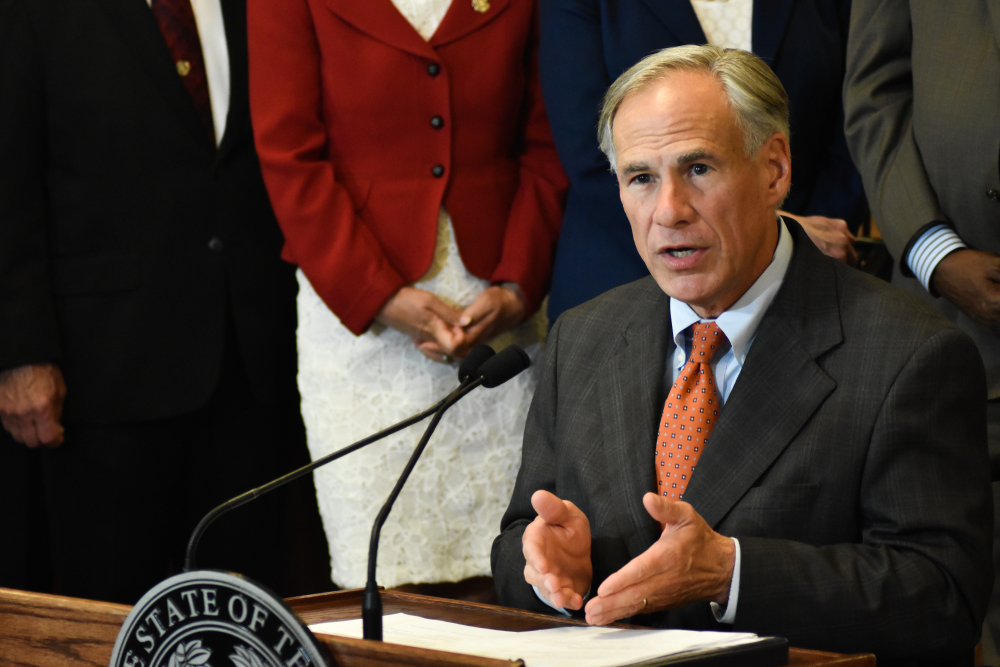
Whatever Republican governors like Greg Abbott and Mike DeWine said to Mr. Trump over the Oval Office telephone the night of November 3, a more decisive and ruthless Trump would have taken to the airwaves to declare that ‘a socialist coup’ against America was underway and that he was declaring a national emergency and invoking the Insurrection Act to stop it (regardless of Congress’s role in approving such a declaration).
Tanks could have been rolling in the streets on the morning of November 4.
Mr. Trump could have ordered Secretary of War Pete Hegseth and FBI Director Kash Patel to move in their forces to seize ballot boxes in all 50 states at gunpoint, whisking them to a large warehouse on the outskirts of Washington, D.C. to be examined and “counted” by the likes of these thugs and other varied and sundry Trump administration trolls and ghouls such as Todd Blanche and Stephen Miller.
By the evening of November 4, Senator Ossoff and Senator-elect Talarico might have been tied to chairs in some undisclosed military base with black hoods over their heads and several of Stephen Miller’s assistants beating them with rubber truncheons.
But nothing doing!
Bedtime for Post-Liberalism
Mr. Trump chose to ‘pull a TACO’, most likely because the results on the Democratic side were so completely overwhelming. Also because he loves to play golf uninterrupted by things like uprisings.
It appears that Mr. Trump is a ‘pretend caudillo’ in much the way that he portrayed a ‘pretend businessman’ on the television show, The Apprentice. By playing make-believe with the 2026 midterm situation, Trump has essentially torpedoed whatever real chance right-wing post-liberalism in the U.S. had of seizing power for real and remaking American society via fiat and force.
And now, Mr. Trump is in a hell of a fix. He would dearly love to have one of his sons or some other lacky succeed him in office, but does not have the political capital or administrative control over U.S. election administration to make that a reality.
Talk Tough and Act Natural
Donald Trump has always been a bit of a pussy, to be blunt. Citizen Bonespur was not man enough to serve in the U.S. military during the Vietnam War, securing a draft deferment for specious health reasons.
He chickened out of running for president in 1988, 1996, 2000 and again in 2008 because he was either enjoying the high life and an assortment of mistresses too much to run for public office, or because he had serious business problems, such as non-performing casinos and unpaid debts (see 1996) to contend with that were simply taking up too much of his precious time. Not to mention providing him with bad optics.
But Greymantle surmises that the Kremlin finally demanded that their frustrating ‘Agent Krasnov’, if that is truly how Trump is known by Russia’s Federal Security Bureau (FSB) get serious about running for high office in the wake of the 2008 Financial Crisis – a real blow to American prestige and stability – and the election of America’s first Black president, Barack Obama.

Likely following some Duginesque playbook of the FSB, Trump lost no time in becoming a one-man petri dish of conspiracy theories about America’s 44th president, becoming the godfather of ‘Birthism’ and other grotesque fantasies within a few months of Mr. Obama’s election in November 2008.
Trump’s political aspirations began with a conspiracy theory, and it appears that they were going to end with another conspiracy theory (‘rigged midterms’!), except that Trump lacked the guts and the ruthlessness to go through with the plan. So now he’s appointed crazy fringer Stephen Miller as his White House Chief of Staff in an attempt to project ruthlessness and craziness. Ditto with supporting Ohio Rep. Jim Jordan for becoming the new minority leader for the GOP in the new Congress.
It’s all tough-talk. Trump is going to spend his last two years in office talking big and mean, acting as charming as he can under the circumstances (he does have that talent), and pretending that things are really, really normal even as the new U.S. Congress launches dozens of investigations into his business dealings, the conduct of his cabinet secretaries, possible war crimes ordered by Secretary of War Pete Hegseth, and further examples of grotesquery in high places.
To Whom Might the Crown be Passed?
Then there is the matter of who will succeed Trump. In his first 18 months in office, the president seemed to strongly prefer Secretary of State Marco Rubio over Vice President J.D. Vance, reportedly once asking Rupert Murdoch which one of the two he preferred when Murdoch was visiting the Oval Office in late 2025.
Trump asked this question to Murdoch while Rubio and Vance were in the room, and sitting next to each other in armchairs before the Resolute Desk, no less.
Murdoch reportedly praised both Republican grandees, but had kinder words to say about Rubio given his much greater experience with politics and diplomacy at the national and international level.
Vance must have eaten shit with a smile on his face, as he always does. The slick Florida Senator preferred over the arriviste rube from southern Ohio: it’s a logical choice, and an operator as canny as Murdoch would have known to face it head-on.
Recent weeks have carried indications that President Trump is not completely satisfied with either of his two preferred successors. Relations between the boss and the secretary of state are reportedly so strained that, in the wake of the Republicans’ midterm drubbing, Rubio is considering stepping down from his role and leaving government.
Or these rumors could just be clever leaks put out by the vice president and his team to create a situation that may take on momentum of its own, psyching out the secretary of state and prompting him to resign from the administration in a fit of pique or disgust. Greymantle strongly favors this explanation. It’s how J.D. Vance operates.
But Vance himself is in none too secure a position himself where the president is concerned. In the wake of any personal or political defeat, Trump is wont to lash out at lackeys far and near, and Vance is the nearest lackey to him in terms of the chain of command.
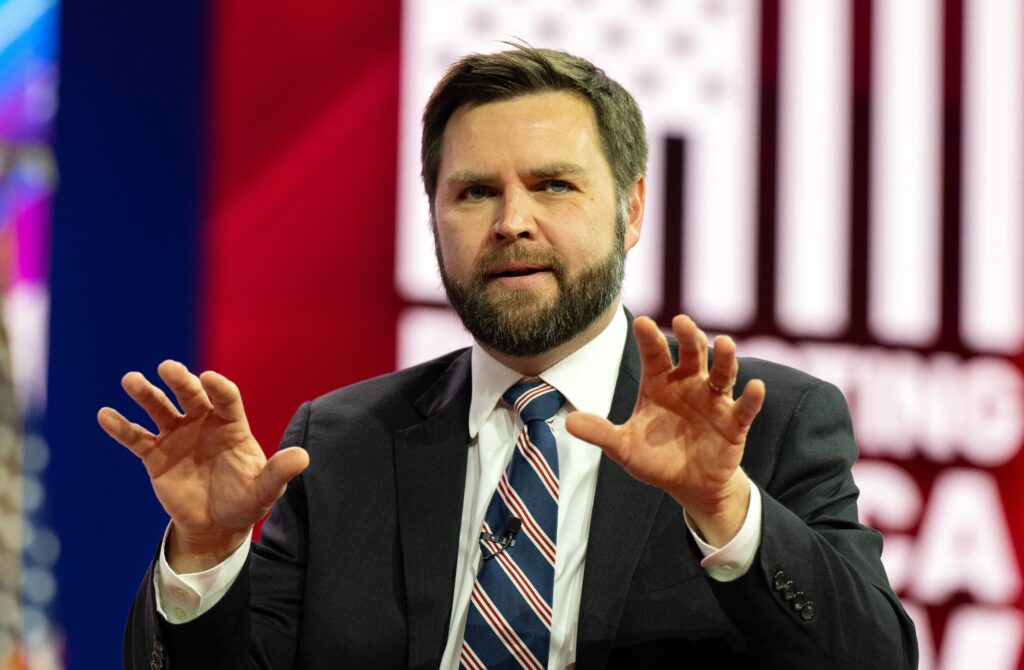
News that Trump had removed Vance from his role as lead mediator in U.S. negotiations with Iran to end the war in Hormuz suggest that Trump has lost patience with Vance, and been disappointed with his performance in that role. Not to mention with his performance on the campaign trail. Despite stumping aggressively for Ohio gubernatorial candidate Vivek Ramaswamy and Ohio Senator John Husted, both men went down in defeat on Nov. 3 with the Democrats seizing both offices by healthy margins.
With Trump, nothing succeeds like success and nothing fails like failure. And Trump has about as much use for failed lackeys as Ernst Stavro Blofeld. Good thing the Oval Office doesn’t contain a trapdoor with a slide feeding into a tank full of ravenous piranhas. Vice President Vance would be fish food in that case!
As it turns out, Trump has tasked Vance with the job of unearthing fraud in the 2026 midterm elections by leading up a new ‘Electoral Fraud Task Force’. Good luck, Mr. Vice President!
This seems like a job that Trump has given Vance as a kind of political headstone. Vance is being sent to dig his own political grave. Because, even if he finds that 400 voters cast their ballots illegally in 2026, that will say nothing about the 80 million who cast theirs legally.
A Son Also Rises?
But if both Rubio and Vance are on the outs with the president, who does that leave him with as a possible successor?
Not the recalcitrant Georgia Governor Brian Kemp, who Trump despises for certifying the 2020 Georgia vote count in Joe Biden’s favor. Not former UN ambassador Nikki Haley (or “Nimrata” as he makes sure to call her in public), who he bears a grudge against for daring to run against him in the 2024 Republican primaries. Ditto with outgoing Florida governor Ron DeSantis, who is guilty of the same sin — as Trump defines sin.
With the GOP bench shrinking remarkably quickly because of its Nov. 3 drubbing, the most likely preferred successors to Trump are two men that the president has literally known since the moment of their birth: his two elder sons, Don Jr. and Eric Trump.
In fact, the president has been keeping these two options, which are really variants of the same single option, in his back pocket since Day 1 of his second administration. The first year was short on successor speculation because Trump was in the midst of storming back to power and “flooding the zone” with every manner of right-wing lunacy cooked up by the chefs at the Heritage Foundation as part of their Project 2025 menu.
But since early in 2026, the whispers have been growing – and have been actively stoked – by personalities within the Trump clan and their media facilitators. Eric Trump publicly mused about the chance that he might run for U.S. president to succeed his father in an interview with the storied Financial Times in April 2026. Eric’s statements during the FT interview were an obvious ‘trial balloon’ about his intentions.
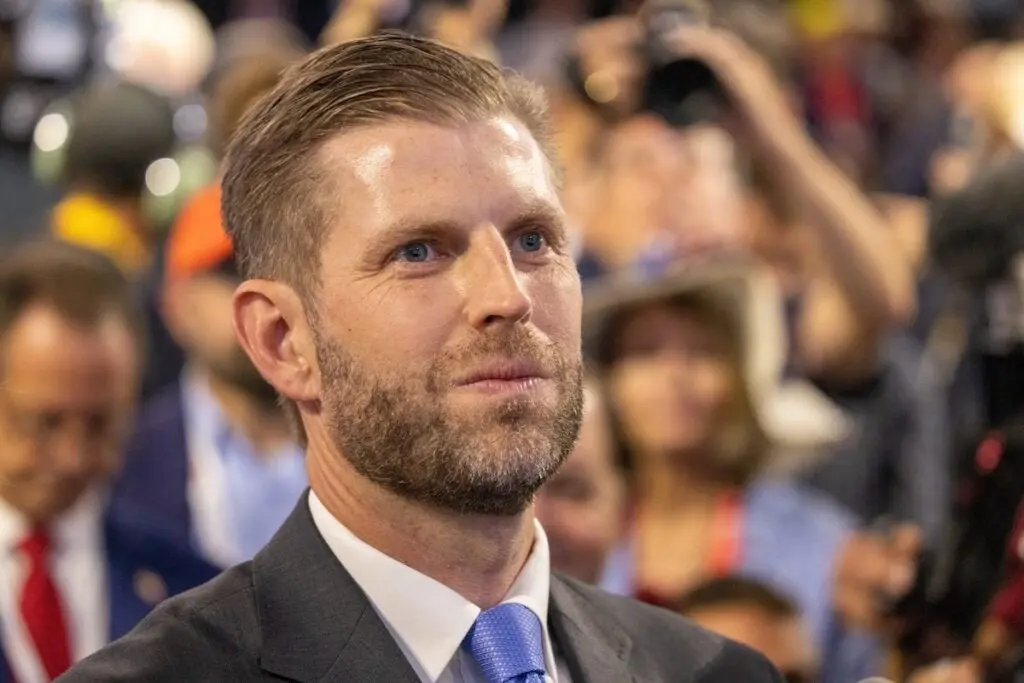
Eric’s older brother, Don Jr., also hasn’t shied away from succession rumors since his father was returned to office. But Don Jr. seems more inclined to succeed his father as head of The Trump Organization when the elder Donald shakes off this mortal coil.
Don Jr. is heavily involved in the family business’s cryptocurrency and real estate endeavors from memecoins to investments in Saudi Arabia and the Trumps’ U.S. casino and hotel operations, and has commented less about politics during the 2025-26 period than he did during his father’s first term. These omissions suggest someone keen to promote the Trump family office, rather than someone fixing on a run for the White House.
The minor scandal – in any other era of U.S. history it would have been a MAJOR scandal – of having his wedding afterparty bankrolled by a Russian oligarch close to Vladimir Putin, and Don Jr.’s complete nonchalance concerning the event suggests someone who isn’t keen to cultivate a populist, “everyman” image.
So, if Greymantle absolutely had to place a bet (and I am not a betting wolf), he would bet on Eric Trump as the likely intended successor for his father.
The Longest of Longshots
But just because President Trump may be leaning toward designating his son Eric as his preferred successor, and might be willing to spend a vast amount of political capital and hoarded campaign slush funds to ensure, or attempt to ensure, that Eric prevails in the 2028 Republican primaries and wins the GOP nomination in 2028, does not mean that it will happen.
An Eric Trump candidacy to succeed his father would be the longest of longshots in American political nomenclature. Greymantle isn’t saying that Eric couldn’t win the Republican nomination with total support from his father, who the majority of Republican voters are still besotted with.
Thousands of Republican officials and the machinery of the GOP are at the president’s beck and call, and America’s right-wing media complex would surely anoint Eric as his father’s successor given their slavish devotion to his father and all reactionary causes.
It’s the winning of the office that would be the tricky thing.
American voters are finally growing tired of the Trump brand in politics. With the president’s approval ratings in the mid-30s and likely to be even lower by the summer of 2028, it is hardly a sure thing that Eric Trump could be elected. In fact, there is a far greater chance that Eric Trump would be defeated in an electoral landslide in 2028 if the Democrats were to nominate a strong candidate like Pennsylvania Governor Josh Shapiro or Kentucky Governor Andy Beshear.
Next to these experienced and charismatic pols, Eric Trump would appear as the ultimate ‘nepo baby’ and a rank amateur, and he will not carry that seductive ‘outsider status’ that his father war like impregnable armor during his first two presidential runs.
In fact, if Eric Trump is the GOP nominee, Greymantle thinks we may count on a second ‘Blue Wave’ washing through the polls on November 5, 2028.
State-Level Results: The Blues Have It
The Republican presidential candidate in 2028 will hold a weak hand for several reasons. These are:
- Their party affiliation with President Trump (aka ‘Trumpstink’)
- Association with official corruption in the administration, even if they have not played a direct role in it.
- Hostility from the president if they are not his preferred choice
- Instant dislike if they are a member of Trump’s family, who have benefited immensely from his wheeling and dealing while in office
Moreover, Trump’s 2020 game plan for winning by pressuring state election officials like Brad Raffensperger in Georgia and others in Arizona and Michigan will not work in 2028 regardless of whether a son of his or some other Republican pol is on the ballot, for the simple fact that the election officials in all of the swing states, and all major states with the exception of Florida, are going to be Democrats on November 5, 2028.
Trump will have no natural ability to pressure election officials from the opposing party, who will have no incentive to cave to his pressure. Quite the opposite!
So if Trump and the Republicans can’t outspend, out-campaign, or out-demagogue the Democrats, and if Trump has already proved that he is too chicken to invoke the Insurrection Act to seize ballot boxes in 2026, then there is no chance he will take that route in 2028. Any such attempt would blow up in his face, and likely leave him with no alternative but to flee to Russia, the way Jair Bolsonaro just fled to America!
And the Winners Are…
Let’s revisit some of the state-level candidates for governor and secretaries of state – who administer elections within the states – that we touched on in our October 31 article. How did they fare on November 3?
Very well, it turns out.
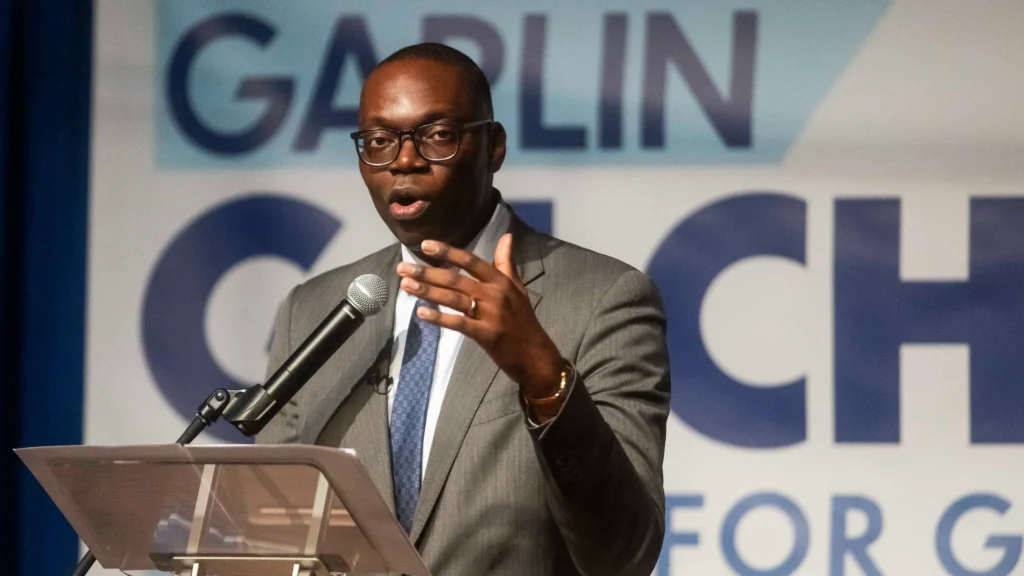
Garlin Gilchrist II won his face to succeed his colleague Jocelyn Benson as Michigan’s secretary of state, defeating Republican challenger Anthony Forlini by about 485,600 votes, or a margin of 53.8% to 43.5%. Mr. Gilchrist will be Michigan’s first Black secretary of state. Jocelyn Benson won the race for governor, keeping Michigan’s statehouse in Democratic hands.
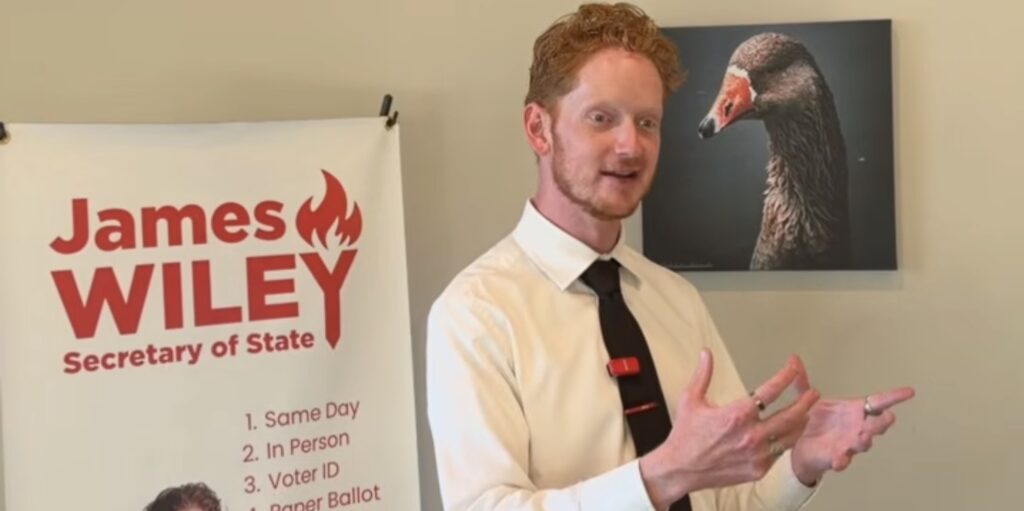
In Colorado, Democrat Amanda Gonzalez defeated her Republican opponent, James Wiley, with nearly 60% of the vote – a smashing victory. Colorado will not have to endure an election ‘denier’ in its secretary of state role for the next four years, thankfully.
In Georgia, Brad Raffensperger will be succeeded by Democrat Penny Brown Edwards, who defeated her Republican opponent Tim Fleming by approximately 474,000 votes with 55.7% of the total. Ms. Edward’s victory is part of Georgia’s own ‘blue wave’, which saw all statewide offices and the Georgia House of Representatives shift to Democratic control.
Blue waves at the state level in Arizona, Pennsylvania, Texas and Wisconsin have placed the electoral machinery in all of those swing states – and Greymantle still considers Texas to be largely a ‘swing state’ for the time being – in the hands of Democratic officeholders, effectively shutting out any pressure from the White House, which would have been exerted through party channels had the winners been Republicans.
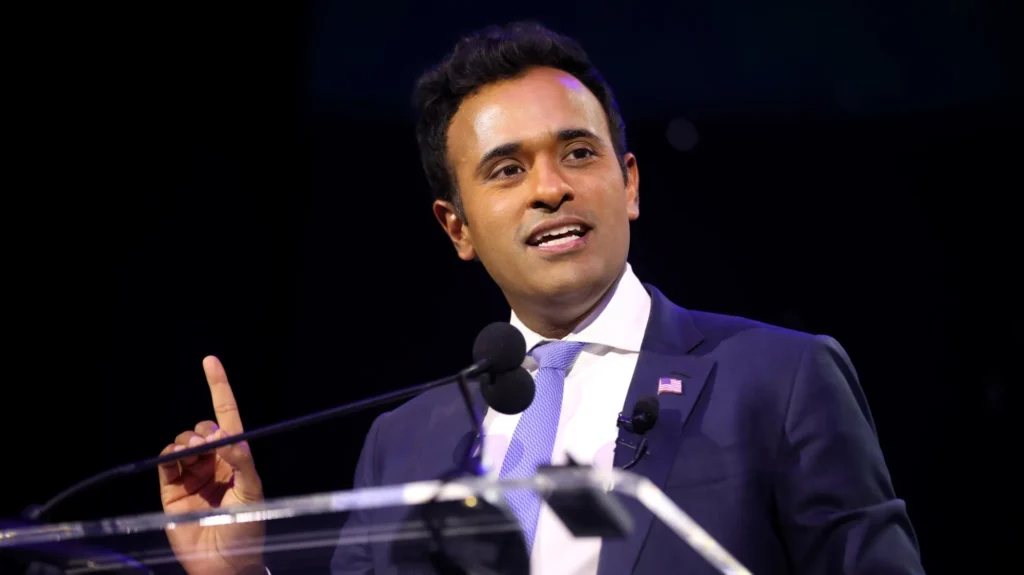
The most surprising upset was likely in Ohio, where Democrats captured the governor’s mansion, a federal Senate seat, and the Ohio secretary of state office with Democrat Allison Russo defeated Republican Robert Sprague for the position. Democrat Amy Acton’s defeat of Republican candidate Vivek Ramaswamy made national news.
Rebuilding the Democrats’ Blue Wall
Post-midterms, the Democrats have effectively re-erected their traditional “Blue Wall” across the U.S. midwest stretching from Pennsylvania into Ohio and then through Michigan and into Illinois and up into Minnesota and Wisconsin – skipping only GOP-held Indiana.
In addition, the Democrats may have succeeded in erecting a second “Blue Wall” in the southwest running through Arizona and New Mexico into Texas, and north from New Mexico into Colorado, while expanding their reach into the South with their capture of new seats in Virginia and North Carolina.
For 2028, the electoral map looks daunting for any would Republican presidential candidate.
Third Parties: One Step Forward, Two Steps Back
One final note on the 2026 U.S. midterms: third party and independent candidates did not perform especially well and lost ground in a few instances. November 3 was clearly the Democrats’ day. While between 3% and 5% of U.S. voters cast their votes for independent candidates, this result was in line with recent history. Nothing exceptional about it.
This result was not entirely unexpected, but it is certainly disappointing, particularly for candidates affiliated with the young Forward Party, which made its strongest push so far to win state-level and select national offices in 2026.
The Forwardists’ best chance of picking up state legislative and Senatorial seats was in Utah, where 21 Forward-backed candidates contested state level offices. All 21 were defeated by members of the two major parties. Forward’s only member of the Utah senate, State Senator Emily Buss, was narrowly defeated in her reelection bid by Republican Brooks Benson.
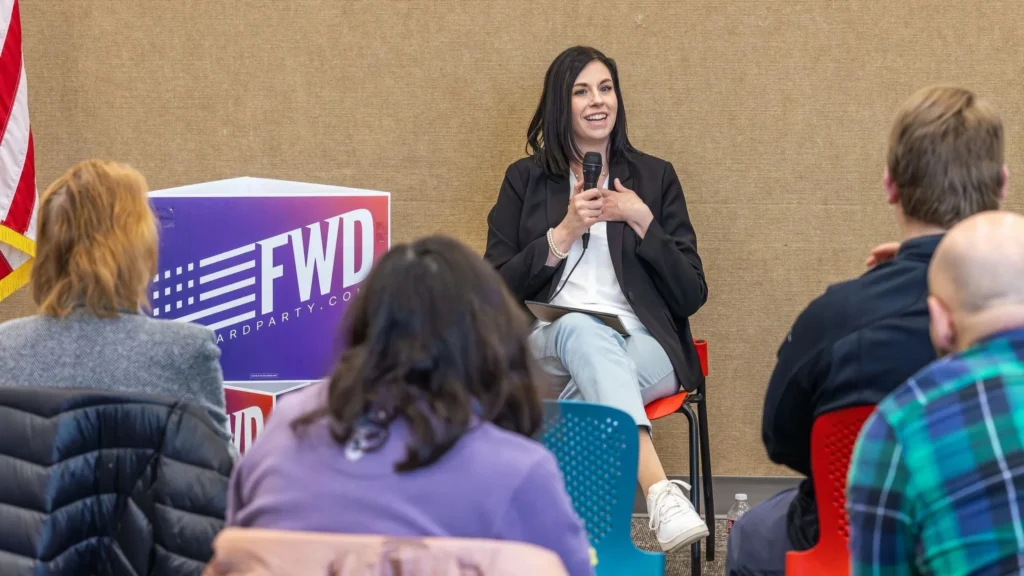
Buss lost her race by only 411 votes as her opponent won 50.6% of the vote to Senator Buss’s 49.4%, a narrowness that must have been especially bitter for the Forwardists.
Other Forward-affiliated candidates mentioned by Greymantle in our October 31 midterms preview likewise lost their statewide races and, in some cases, badly underperformed.
U.S. Senate candidate Bob Chew picked up only 2.6% of the statewide vote (70,794 votes), only slightly ahead of Libertarian candidate Blake Huber at 1.8% (33,136). The winning candidate, former Gov. John Hickenlooper, cleaned up with 60% of the vote (1.6 million votes).
For Chew and other third party candidates running in Colorado, this was a disappointing result, as Forward in particular had hoped that Bob Chew would advance beyond the 5% threshold, possibly indicating some competitiveness for federal Forward Party candidates in the West.
Colorado Secretary of State Forward Party candidate Celeste Landry likewise badly underperformed, winning only 0.7% of the statewide vote — far less than the Libertarian Party candidate Sean Vadney (1.6%). Democrat Amanda Gonzalez was the clear winner in Colorado’s secretary of state race taking 60.2% of the popular vote, and leaving her Republican opponent James Wiley in the dust with 36.7% of the vote.
It’s likely that voter fear of Gonzalez’s Republican opponent (Wiley is an election denier who campaigned on dramatically overhauling Colorado’s voting system) and resistance to President Trump boosted Democratic turnout and made left-leaning and independent voters less likely to take a chance on Landry as the stakes for Colorado seemed too high.
Likewise, Minnesota state auditor candidate Jay Reeves picked up only 2.8% of the vote in his statewise race, coming in less than Forward’s 5% target. Democrat Zack Filipovich clinched the state auditor race with 53% of the vote on a night that, in retrospect, was the Democrats’ to lose.
On balance, we can say that the Forward Party and other third parties and independent candidate combined fielded far more statewide, federal and state legislative candidates than is usual for any midterm election year. Across all 50 states, independent options sprouted and some did reasonably well, including Nebraska’s Independent Senate candidate, Dan Osborn, who captured an impressive 44% of the vote.
But even as Forward Party backed, Libertarian, Green and other third party candidates became more visible and organized, they failed to prove that they represent a viable alternative to the two major parties on any level of U.S. government.
For the independents, it was one step forward and two steps back. A bit discouraging, perhaps. But the results of Nov. 3 hardly prove that a different outcome isn’t possible, given sufficient time, patience, grit and funding – and an American electorate that has grown impatient with safe choices.
Until next time, we are –
Greymantle