Key Takeaways
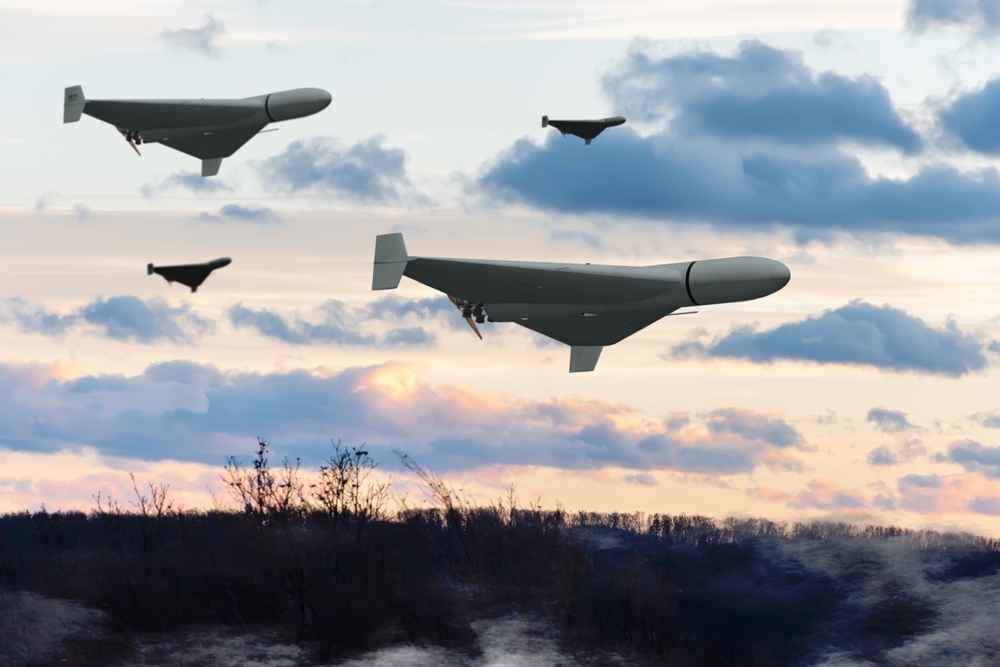
- Russia has expanded its deployment of jet-powered attack drones, introducing faster, more flexible UAVs that are tougher for Ukrainian air defenses to intercept.
- Moscow’s upgraded Geran series drones represent a big technological leap, with greater speed, range and survivability — but at higher production costs.
- Ukraine is racing to build a new wave of inexpensive interceptor drones by upgrading existing platforms and building new systems to counter jet-powered UAVs.
- The escalating drone arms race highlights a challenge for modern warfare: the ability to manufacture effective weapons at scale while maintaining a favorable cost balance.
Over the last several months, new drone warfare strategies, tactics, and technologies have emerged in the Russo-Ukrainian War that invite close attention. After all, many consider this conflict to be a research lab for future wars.
Today, we provide recent updates from the war in Ukraine to bring you up to speed on how long-range drone strategy and combat has evolved over the six months to November 2026. Most notably, there has been a dramatic mutual escalation, with ferocious drone/cruise-missile attacks deep (1,000-2,500 miles) into the rear areas of both countries.
The array of targets has also widened, with more concentrated force directed against infrastructure, such as bridges, and energy assets, like oil refineries. Moreover, drone production—certainly in Russia—has reached a level where hundreds of unmanned aerial vehicles (UAVs) may now be launched for a single attack wave.
In this article, the second in Greymantle‘s ongoing series on the evolution of drone warfare, we focus mainly on how Moscow has boosted the effective deployment of its new jet-powered drones since June 2026.
| Month (2026) | Jet-powered drones launched |
| June | ~350 |
| July | ~1,500 |
| August | ~2,850 |
| September | ~3,500 |
| October | ~4,000 |
The above figures were recently cited by a Ukrainian Air Force spokesman, Yuriy Ihnat, who pointed out that Russia’s use of jet-engine UAVs had increased dramatically over the late summer. This upsurge has continued into the late autumn.
During the week of September 28, President Volodymyr Zelenskyy stated that the enemy had launched more than 2,200 attack drones, 1,630 aerial bombs and 38 missiles so far that month. Some of those attacks probably included decoys or scouts to mislead Ukrainian air defenses. Russia was able to launch even more attack drones and glide missiles at Ukraine during October.
The enhanced speed and maneuverability of Russia’s upgraded warcraft have significantly reduced Ukrainian defenders’ reaction time.
According to the New York Times (09/03/2026), “The air-defense measures Ukraine has worked to develop — including mobile anti-drone groups using machine guns and short-range interceptor rockets — are not very effective” against Russia’s jet-powered drones.
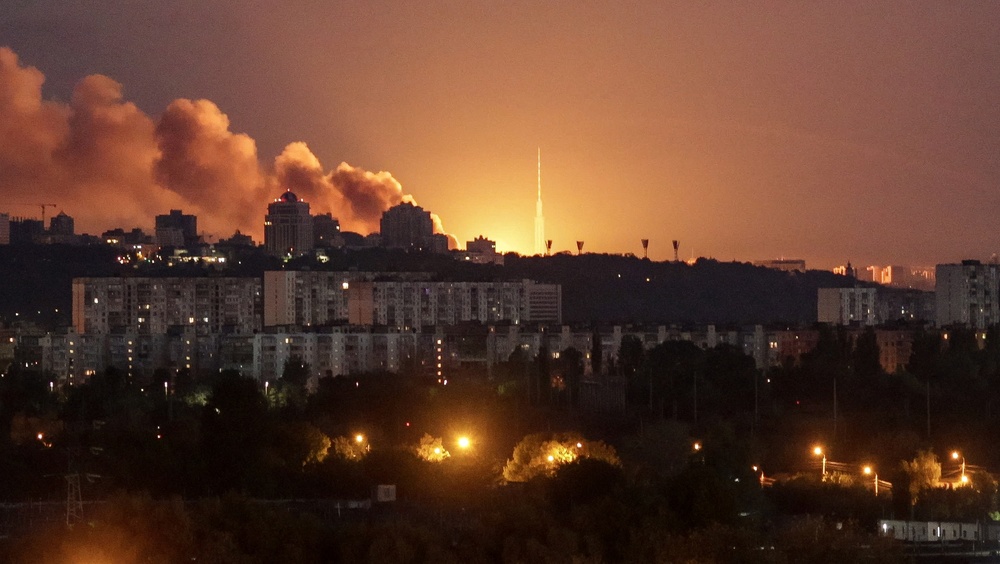
Reportedly, Kyiv’s military can only intercept 60% of jet-powered drones on average, compared to over 90% of conventional, piston-powered Russian drones.
Russia’s Latest Upgrades to Jet Drone Tech
The first batch of the new Russian drones appeared in the spring of 2026. Based on the Iranian Shahed design, the latest jet-powered Geran series drones can fly up to three times faster than their propeller-powered predecessors.
Kyiv launched a provocative 40-day air offensive against Russia that began on June 25th; however, Moscow quickly responded by upping the ante. It launched a massive number — 1,500 — of these deadly new UAVs during the month of July alone by way of retaliation.
Geran-4 and Geran-5 series jet drones form the core of Russia’s counter-attack and air pressure strategies. The Kremlin is now claiming that it can manufacture about 3,000 Geran-4s/Geran-5s a month.
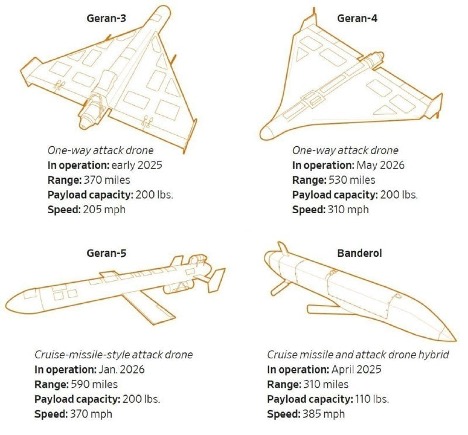
Above: Updated Russian jet drone specs circa July 2026
Note: Much of the published data on Geran-4 and Geran-5 comes from Ukrainian intelligence assessments and defense-analysis sites rather than official Russian specifications, so their exact performance figures remain somewhat uncertain.
Geran Series Drones Are the Tip of Russia’s Aerial Spear
The Geran-3 was the first suicide jet drone, replacing the earlier piston engines common to Russian Geran-1 and Geran-2 series drones with a Chinese Telefly JT80 turbojet. This upgrade allowed the Geran-3 to achieve a speed of around 200 mph, and immediately boosted its survivability.
Designed as jet drones from the start, the Geran-4 and Geran-5 need reinforced airframes and integrated wings. But their turbojet engines are capable of speeds of up to 310-370 mph, respectively, and both drones have mission ranges beyond 500 miles. The Geran-4 can perform evasive maneuvers, and has an operational ceiling of about three miles.
Essentially a cheap cruise missile with the same flight characteristics, the Geran-5 measures a bit more than 21 feet in length. For some of its missions, it can fly up to four- and one-third miles high to avoid low-altitude air-defense systems. Both the Geran-4 and -5s can also be mounted on planes and helicopters, extending their attack ranges.
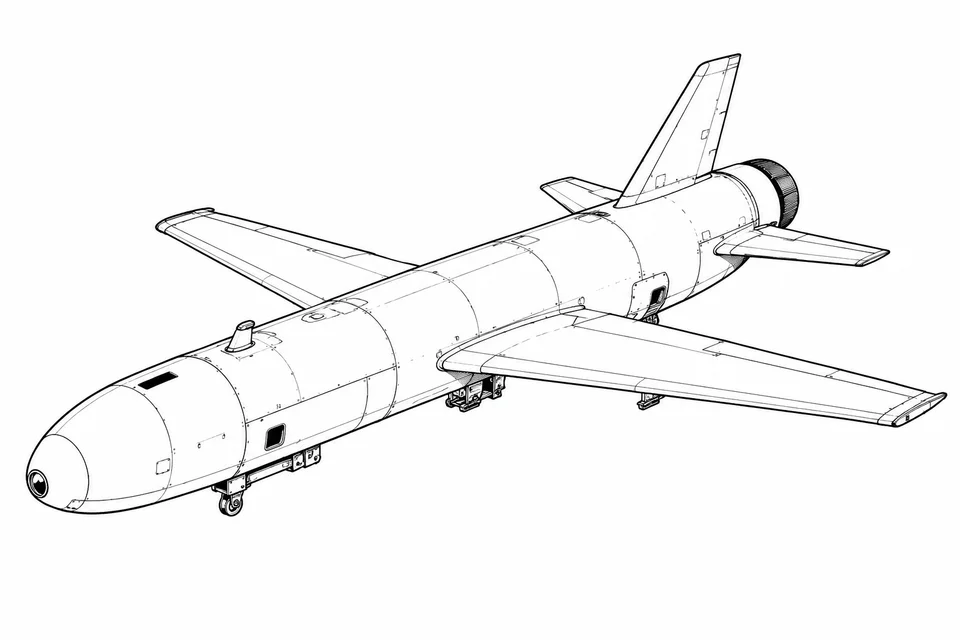
Chinese Micro-Turbojet Engines Support Geran-Series Designs
Moscow has clearly been purchasing a variety of Chinese micro-turbojet engines for use in its new drone armada. China is the only possible external source for such technology open to Russia at present. Obviously, these imports are far more costly than piston engines— several times more on average.
Besides that, the Geran 4 and 5s also need stronger airframes for high-speed flight, as well as electronic and navigation components that must be protected from both the elements and enemy counterattacks.
These models were also enhanced in other ways. SIM cards enabled navigation with cell phone signals.
One military analyst, James Dunnigan, describes what this allows: “Gerans could communicate with each other, operate in preplanned clusters, and cooperate in a mesh network to limit the impact of jamming and other electronic warfare techniques”.
Consequently, the new Geran jet drones are estimated at $100,000-$115,000 each — a big jump over the price of the older Geran 2/Shahed-136m models, which cost on average about $15,000-$20,000. Basically, these autonomous UAVs can cost four to six times as much as earlier models. The higher cost mainly reflects the inclusion of Chinese micro-jet engines in the Gerans.
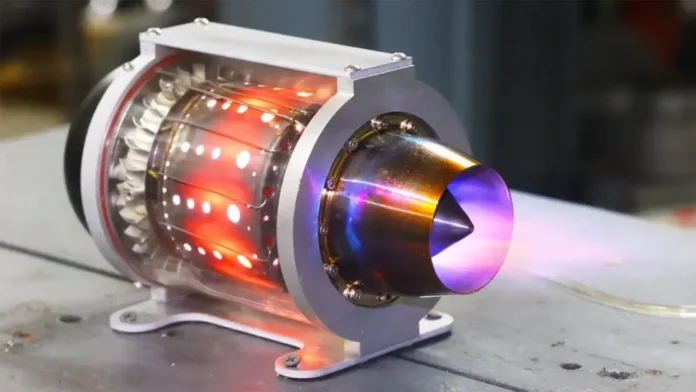
Russian President Vladimir Putin must consider the extra outlay justified, however, because his enemies have been handicapped by their inadequate jet-drone defenses, as well as the scarcity of foreign anti-ballistic missile interceptors, like the Patriots. As of this writing, they are also struggling with their U.S.-controlled SkyShield satellite signaling and warning systems.
Kyiv’s Countermeasures
Kyiv is now scrambling to introduce faster, cheaper drone interceptors to contend with Russia’s Geran-3, Geran-4 and Geran-5 series jet drones, and then produce them at scale.
In his address to the UN General Assembly on September 23, 2026 President Zelensky asserted that his military had successfully tested four new interceptor drones against Russian jet UAVs and that production was being increased.
According to a recent article in Drone Warfare, the four models in frontline testing use both jet and electric power plants. The article also exposes the Ukrainian frustration at lagging behind the Russians in this newest evolution of UAV combat.
It quotes a deputy corps commander, Maksym Zhorin, who wrote that “with the jet drones, we completely screwed up the initiative….”
Response 1: Enhance What You Have
Kyiv’s response to the likes of the Geran-3/4/5s has taken two main pathways. The first has been to copy the enemy’s model: i.e., upgrade existing interceptor drones.
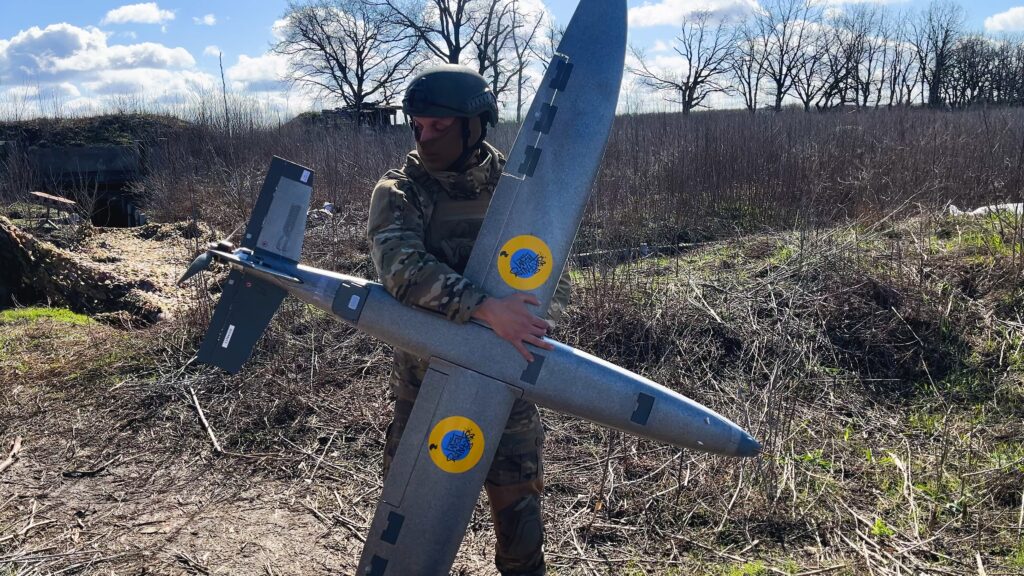
For example, the battle-proven P1-SUN (Skyfall) was originally designed to destroy Russia’s Shahed-type attack and reconnaissance UAVs at a fraction of the cost of missile interceptors. It is fairly small, weighing about 17.6 lbs, with a length of about 4 feet and a slightly shorter wingspan. The drone delivers a proximity-fused fragmentation warhead and features autonomous terminal homing.
A specialized point-defense version of the P1-SUN called JetKiller is being introduced by Ukraine to counter jet Geran variants. This model is reported to fly at 230 mph, operating within an 18-mile radius. Note: Below about 217 mph, a drone killer UAV cannot close on a Geran-4 from astern.
Another new Ukrainian drone, the Sting, uses four rotors, and it can hit a top speed of 174 mp/h. The operational ceiling is 4.35 miles. The UAV is described as a 3D-printed quadcopter interceptor rather than an entirely new aircraft category. The most recently upgraded version, the Sting S, was designed specifically to counter jet-powered drones. On the 20th of September 2026, this model destroyed a Geran-5. The exact specifications ‘specs’ of the Sting S have not been released.
The Zirka builds on Ukraine’s existing interceptor-FPV experience. It only costs about $2000. The manufacturer (NOCTIS) points out that “this is the lowest price among similar systems equipped with automatic detection and guidance systems.” The Zirka’s speed exceeds 211 km/h, and its operational flight altitude reaches 3.73 miles.
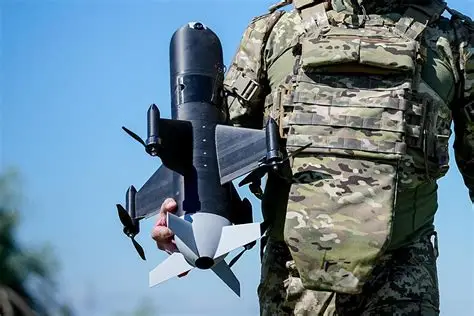
According to Oleksiy Komlichenko, Director of Development at NOCTIS, the Zirka version 2.0 will be focused on higher-end targets.
To aid its mission, it will feature “enhanced thermal imaging optics for machine vision-based target detection at a range of 2 km (1.25 miles). The algorithms for detection, communication, positioning, and automatic detonation of warheads will also be updated.”
Response 2: Design Brand-New Interceptors
The second Ukrainian reaction to the Russian jet-drone threat has been to design models of UAV interceptors from scratch.
Added officially to the UAV arsenal in late August, the Alexa Spatium is a jet-powered drone interceptor with a unique capability: it can return if a mission is aborted, thus reducing overall costs. The craft’s entire catapult-launch system is compact enough to fit into the back of a small truck.
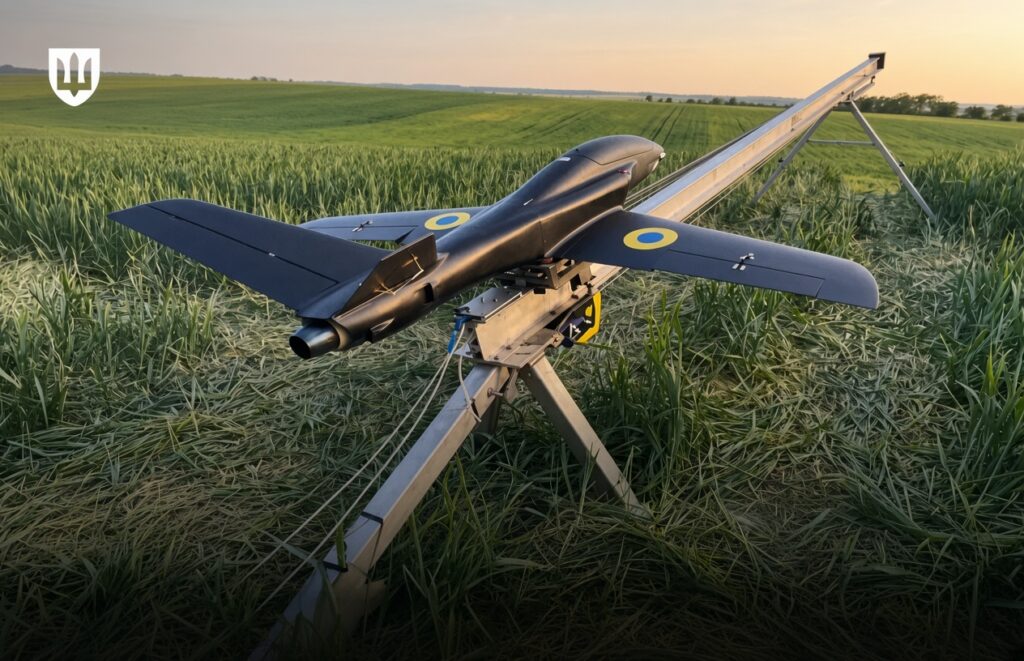
Built to counter Gerans 3/4/5s, as well as helicopters and ground targets, it can carry interchangeable warheads: e.g., shaped-charge, thermobaric, and fragmentation for various missions. The drone operates with either pre-programmed coordinates or direct operator control.
Notably, Ukraine’s Ministry of Defense has not released details concerning its speed, range, combat radius, or production rate publicly.
Another recent Ukrainian interceptor is the Griffen, a purpose-designed warcraft. It is not a modification of an existing propeller-driven FPV drone. Rather, the Griffen is described as a fixed-wing interceptor launched from a catapult, capable of attaining speeds above 217 mph and altitudes of around 24,000 feet.
Ukraine’s Overworked Fleet of F-16s
So far, Ukraine’s most effective riposte to the Russian jet-drone scourge has been Kyiv’s small fleet of F-16s (estimated at 38-50 planes).
“Ukraine is rushing to develop other interceptors, but for now, U.S. designed and built F-16s are among the few weapons Kyiv has that can keep up with jet-powered drones and shoot them down without burning through costly Patriot missiles,” according to The New York Times.
Ukrainian Air Force spokesman Col. Yurii Ihnat claims that these high-end jet fighters have downed up to 90% of incoming drones in some attacks. Nevertheless, constant use of such an expensive asset against masses of much cheaper weapons is a severe cost imbalance that the beleaguered nation can ill afford.
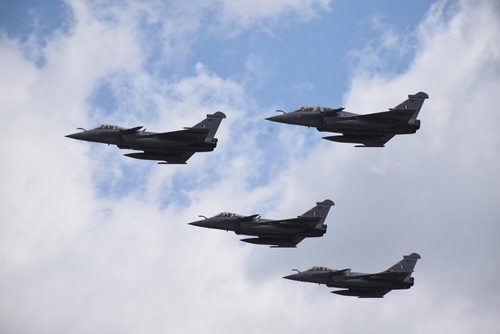
Firing an AIM-9 Sidewinder means expending a $500,000 missile on a Geran drone that costs, at most, around $100,000-$125,000 to build. Besides, Col. Ihnat notes that there are many other important tasks the fighters could be performing other than drone-swatting.
Winter Is Coming. Ukraine Must Adapt Fast.
Russia’s steady improvements to its Geran drone systems show a clear commitment to UAV upgrades in the back-and-forth weapons race that has so characterized this conflict.
The tit-for-tat struggle between these two advanced, technologically sophisticated nations has clearly signaled to other world militaries the kinds of battles that they must now be prepared to fight.
From Iran’s Shahed chassis, Russia boosted drone capabilities with jet engines, extended ranges, and unique warheads fashioned for specific targets, such as suspension-bridge and power-line cables.
Moscow has made good use of its access to China’s manufacturing prowess. (Beijing had earlier cut Ukraine off from such supplies). This advantage has enabled Russia’s defense economic base to quickly expand production at the same drone factories that were already in use.
And numbers do count. As winter approaches, Russia appears to be flooding the skies to overwhelm its enemy’s hobbled defensive network and create unbearable living conditions for Ukrainians living in the country’s major urban centers.
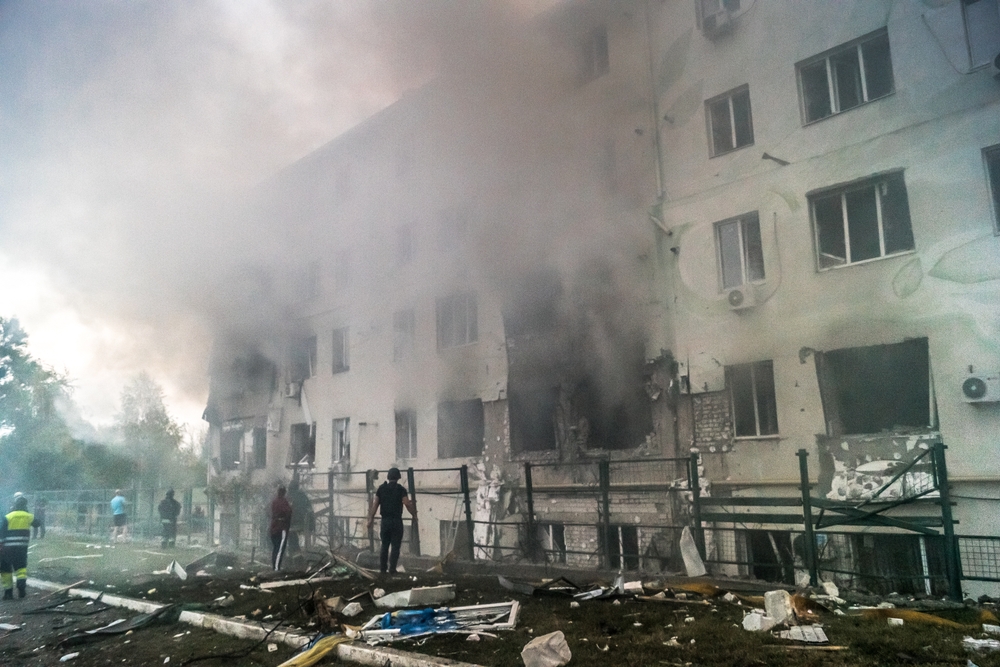
As discussed above, Ukraine is valiantly experimenting with cheaper, faster interceptor models, but no variant has yet emerged as the clear winner. This probably means lower production numbers in the months ahead than Russia can achieve.
Nevertheless, the proven ingenuity and relatively flexible opportunities of Ukraine’s highly competitive drone marketplace may eventually prove capable of blunting this latest threat.
The next part of this UAV/Future War/ progress review will examine the shift to long-range weaponry and the wider bandwidth of economic –particularly infrastructure and energy-related — broader targeting that characterize the strategies of both combatants in the Russo-Ukrainian War.
+++++++++++
Alexander Stavropoulos, Phd is a professor of European military history at the City University of New York (CUNY) in New York City, USA. Has has written extensively about the Napoleonic Wars in Europe during the early 19th century, as well as about 18th and 19th century military tactics. He has also published on the evolution of drone technology and military tactics.
Richard Jupa is a former U.S. naval officer and writer with more than 50 published articles to his credit. He also wrote the book Gulf Wars, about the U.S.-Iraqi conflicts of the 1990s and 2000s. He is Editor of Greymantle’s ‘Blue Water’ page devoted to global naval strategy and geopolitics.