Key Takeaways
- Unmanned aerial vehicles have evolved from guerrilla spy platforms and grenade-dropping toys into advanced weapons that are changing how wars are fought.
- The war in Ukraine is the world’s laboratory for drone innovation. Russia and Ukraine continue to develop new tactics, countermeasures, and technologies at an unprecedented pace.
- Cheap drones are challenging expensive military hardware. Low-cost FPV drones, fiber-optic guidance systems, AI, and swarm tactics are forcing militaries to rethink the value of traditional tanks, aircraft, and other high-priced weapons systems.
- The drone revolution is only beginning. As artificial intelligence, mesh networking, and autonomous systems mature, drone warfare will reshape military doctrine.
Understanding the Drone Warfare Revolution
Amidst the military conflicts of the past two decades, and particularly the major wars of the past five years, the use of unmanned military drones – remotely controlled aerial and marine vehicles –- has moved from the periphery to the center of 21st century warfare. The impact of drone warfare on modern conflicts is now a major preoccupation of political pundits and military strategists.
Much uncertainty — and even hype — surrounds the rise of drones as combat tools, as well as the question of their ultimate battlefield significance. There are even suggestions that we are seeing another “Revolution in Military Affairs”, as we did with the widespread use of precision weapons in the 1970s.
If true, this would mean the expanded use of unmanned aerial vehicles (UAVs) and other drone types represents the leading edge of a crucial, worldwide shift in war-winning tactics. As such, understanding the drone warfare revolution is an essential exercise in bringing strategic thinking up-to-date.
This is the first of a series of articles on the rise of drones in warfare for Greymantle’s Politics and Culture. In this series, we will present data illustrating the principal ways in which UAVs are being used, and we will review the machines’ impact both on battlefield operations and broader military and geopolitical strategies of great powers and smaller, non-state actors.
We will focus mainly on the largest armed conflict that is currently employing combat drones on a mass scale – the Russo-Ukrainian War – to provide an overview of how drones are used in combat.
Silent and Deadly Infiltrators
Since the mid-2000s, drones have been adapted for many military uses. They can now perform the following crucial combat missions:
- UAVs can quickly move across most types of terrain, often undetected because of their small size and relative silence;
- Drones are able – depending on the model — to attack deep inside an enemy’s territory. They can glide across the battle zone at low altitudes, making them difficult to detect by radar.
- UAVs make the movements of men, vehicles, and supplies extremely vulnerable to aerial attack.
- UAVs can provide real-time intelligence from the battlefield with low latency to troops on the ground.
Drones are much cheaper to produce than missiles, warplanes, and helicopters. Moreover, these aerial weapons can strike with great precision because they are guided via satellite links to remote operators who control them directly and/or by means of sophisticated software enhanced by human participation.
Most significant to military planners is the fact that effective countermeasures against drones are still being developed. Standard countermeasures are of limited effectiveness given the inability of electronic warfare systems to affect the workings of the fiber optic cables that drones utilize for navigation and targeting.
As modern military drone technology advances, the next step appears to be development of semi- or fully-autonomous machines, which invites new and serious ethical questions.
From ISIS to Ukraine
Before 2022, the first reported use of “bomber” drones — which are UAVs used to deliver explosive payloads against ground targets — were operations by the Islamic State of Iraq and Syria (ISIS) armed forces in northern Iraq around the year 2016.
Bomber drones are typically small, jury-rigged hobby aircraft, fashioned with over-the-counter materials. They are used principally to drop grenade-sized explosives on enemy positions from above. Such hobby machines proved quite effective in urban warfare and in clearing trench defenses…and still do.
ISIS forces developed this tactic and deployed the earliest known bomber drones during the fighting for control of the city of Mosul, Iraq in 2016 and early 2017. During that time, ISIS held the city and was engaged against the combined forces of the Iraqi military, Sunni tribal militias, and Kurdish forces armed and trained by the United States military.
The U.S. military, however, was the first military force of a nation-state to deploy aerial drones, which took place during the Global War on Terror, particularly from 2001 to 2011.
America’s fairly large, unmanned aircraft ruled the skies unchallenged in this period, notably in Afghanistan against Al Qaeda forces and Taliban insurgents and also against targets in Pakistan and Somalia.
These UAVs performed well against a dispersed, highly mobile enemy. The Taliban lacked air defenses to effectively counter American drones during that period. However, the U.S. used drones primarily for surveillance purposes rather than to drop explosives, though some were equipped to fire small missiles.
For our purposes in this series, however, it will be more useful to examine UAV performance on the Russo-Ukrainian front, where the scale of drone operations has been the greatest, where their tactical development has been the most rapid and innovative, and where the number of human casualties inflicted by drones has been stunningly high – in the tens or even hundreds of thousands.
Russia Versus Ukraine: The Drone Warfare Lab
Sophisticated descendants of the ISIS bomber drones are now commonly used to attack enemy-controlled trench networks held by the belligerents of the Ukraine-Russia conflict. The most well-known drone type now being operated by both sides, however, is the First Person View (FPV) drone.
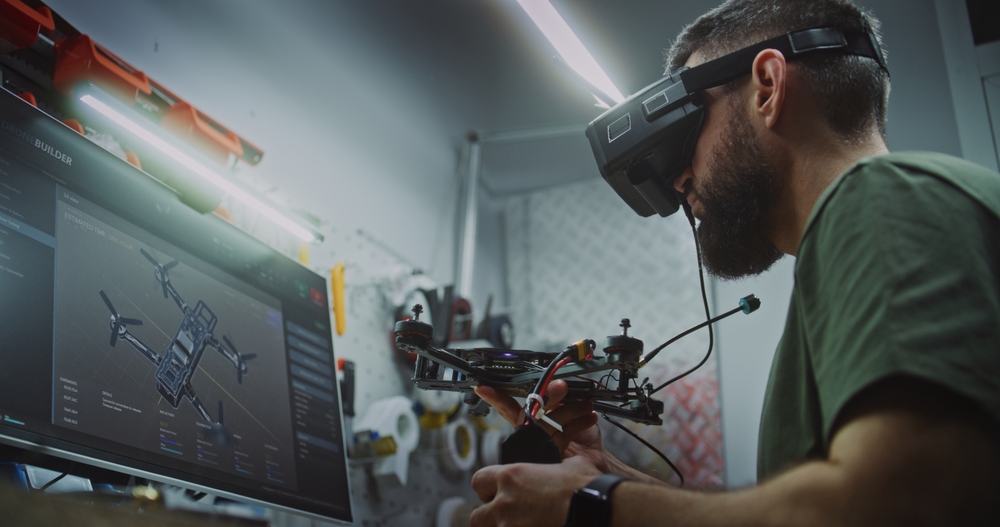
FPVs are generally cheap to fabricate, costing between $20,000 and $50,000 in U.S. dollars. When FPVs are deployed, a remote operator employs a virtual reality helmet to guide a short-ranged air vehicle. Users can attack a target visible through the device’s internal camera, usually with a small, rocket-propelled (RPG)-sized warhead attached to the front.
The Ukrainian battlefield is so saturated with UAVs on both sides that individual soldiers can be jumped (and killed) by multiple FPV drones in the “gray zone”, or “No-Man’s-Land”, between the opposing lines.
This deadly area initially extended about 3 miles in each direction from the line of combat during the early months of the war in 2022. By late 2025, however, the “gray zone” effectively ranged 17-19 miles in each direction, an expansion effectuated entirely by the expanded use of UAVs.
Use of Fiber-Optic Cables Stymies Electronic Jamming
First introduced by the Russians, a major advance in drone tactics has been the large-scale use of FPVs with a long spool of fiber-optic wire leading back to the operator. Such an arrangement prevents jamming by electronic countermeasures. This upgrade makes the machines, reportedly operating out to 9-18.5 miles, more immediate, more precise, and more responsive.
On occasion, the Russians have also used what have been termed “repeater-drones”. Such ingenious craft extend fighting ranges by connecting their spool of fiber-optic to a second drone, which in theory can double the range of the first FPV.
It is easy to conclude that each UAV advance made by one side tends to quickly prompt copying or countermeasures by the opposition, making it hard for either side to gain a lasting advantage. Rapid innovation has been known to lead to short-term advantages, however.
The Russians, for example, have also been known to use FPVs to create broad kill zones in areas where they intend to advance, systematically attacking any troops or vehicles being used to defend the position. These types of massed drone attacks can severely degrade the reinforcement and logistics of any defense.
High-Altitude Reconnaissance Drones Boost Surveillance
Various types of long-range reconnaissance drones are also being used, enhancing the combatants’ ability to monitor the deployments and actions of the opposition, as well as enabling assaults on strategic targets in the enemy homelands like refineries, weapons and munitions plants, or national capitals.
These types are categorized as Group 3 drones, which generally weigh between 56 and 1,320 lbs and operate at altitudes below 18,000 feet (speeds under 250 knots). Reconnaissance and strike drones can fly hundreds of miles into hostile territory. More recent Ukrainian models have even attacked high-value strategic targets in Moscow itself.
The idea of the Kremlin’s neighborhood facing direct drone assaults would have been considered a joke just a few years ago by the Russian leadership. They are not laughing now.
Russia’s Orlan and Geran-5’s Counter NATO Targeting Ops
Ukraine relies upon NATO/US aircraft, such as the RQ-4 Global Hawk, to fly over international airspace and relay logistical data about Russian force deployments. These data relays provide critical intelligence and targeting data whenever the Ukrainians intend to make large-scale drone attacks against enemy positions.
In response, the Russians have developed the very effective Orlan series of UAVs that can also fly high over the battlefield. These drones are relatively inexpensive to produce compared to the RQ-4s or MQ-7 Reapers, which each cost in the millions of U.S. dollars. Integrating the Orlans into Russia’s overall command and control systems has been a complex undertaking, however.
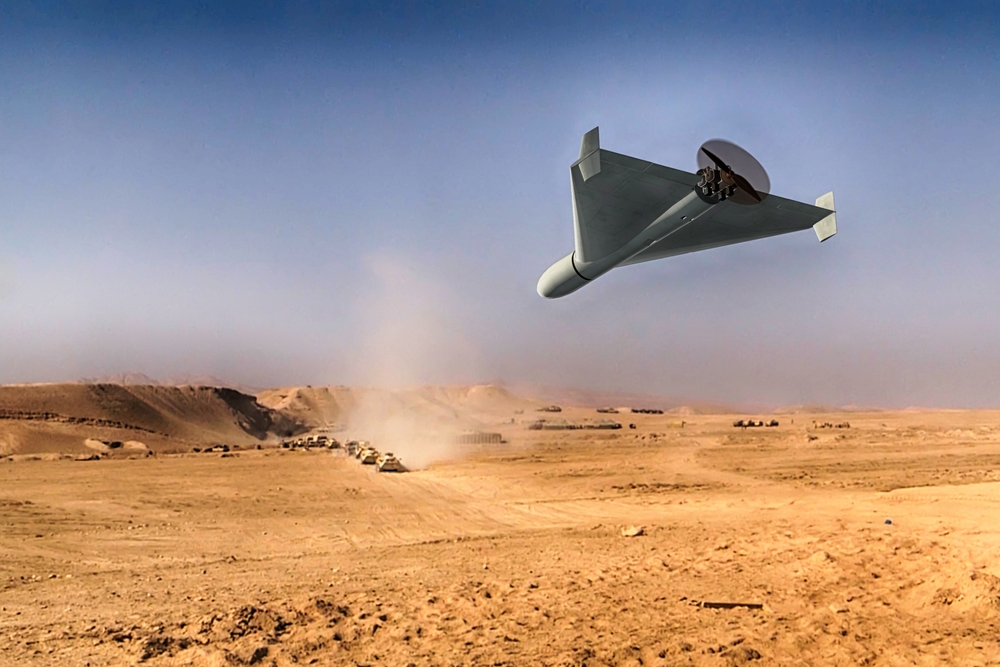
Originally, the Russians developed the Orlans simply by refining the Shahed-class craft sold to Russia by the Iranians. Orlans often carry a laser seeker that precisely targets the artillery and glide bombs launched against targets from friendly aircraft.
Recently, Russian reconnaissance UAVs have reportedly been carrying missiles as well, turning them into dual-function, high-altitude, reconnaissance and attack drones like those once used by U.S. forces in Afghanistan.
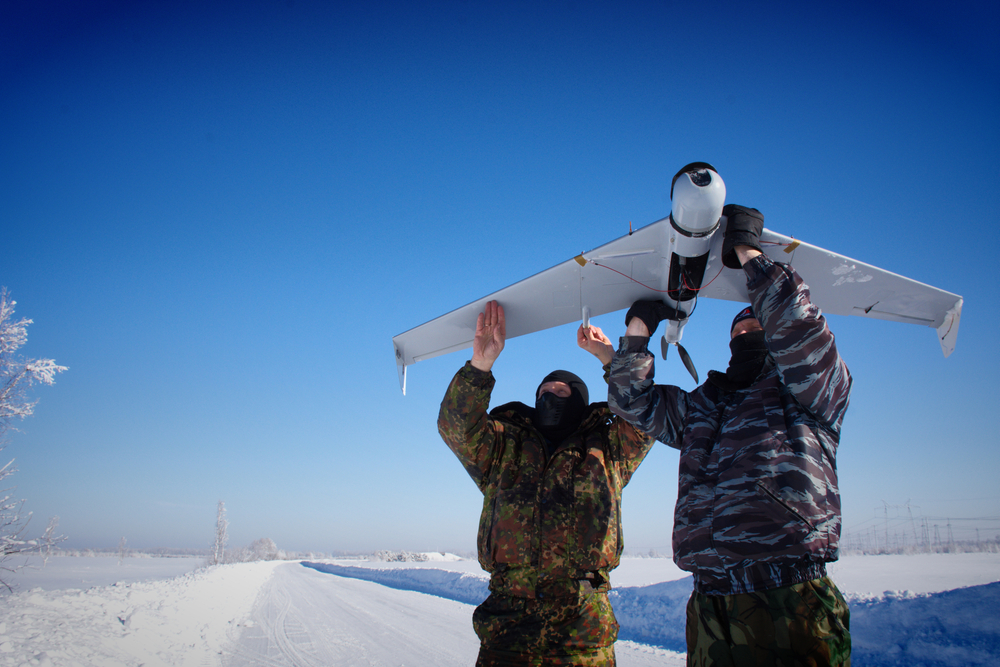
The latest high-altitude Russian drone model, the Geran-5, is essentially a low-cost cruise missile with a jet engine. It is too fast to be intercepted by most Ukrainian missile interceptors. Potentially, Gerans could be placed on the pylons of Russian combat aircraft with the intention of launching then from the air, rather than from the ground, which would extend their strike range.
Ukraine’s ‘Mother’ Drones Release Swarms of UAVs
Mothership drones, or “mother drones” are another kind of UAV that has been introduced in the latest stages of this conflict. Mother drones are large enough to carry several smaller FPVs that can be released near a target and, in turn, guided to attack.
The most noteworthy example of this type of drone is the Ukrainian Baba Yaga class. The Baba Yaga class drones are sizeable multirotor unmanned aircraft (quad-, hexa-, or octocopters), with a payload capacity of about 65 pounds at most.
These UAVs can range up to 20 kilometers, and some are suitable for night ops. They can lighten the loads of advancing infantry, for instance. They are so useful that any machines that are captured are quickly repurposed by their Russian captors.
The Expanding Role of Artificial Intelligence (AI)
Artificial Intelligence (AI) is widely considered to be as the next force multiplier of drone warfare.
Artificial intelligence software can identify targets (tanks, trucks, artillery pieces, etc.), and it can then send in an appropriate drone (or dozens) to the designated objective.
More advanced models of military AI can also allow a group of UAVs to coordinate a swarm attack – a likely source of recurring nightmares for the hapless ground pounders on each side of the war. On the other hand, this enhancement is a boon for the tactical planners of both belligerents.
Drone swarms appear likely to add a whole new dimension to battlefield assaults.
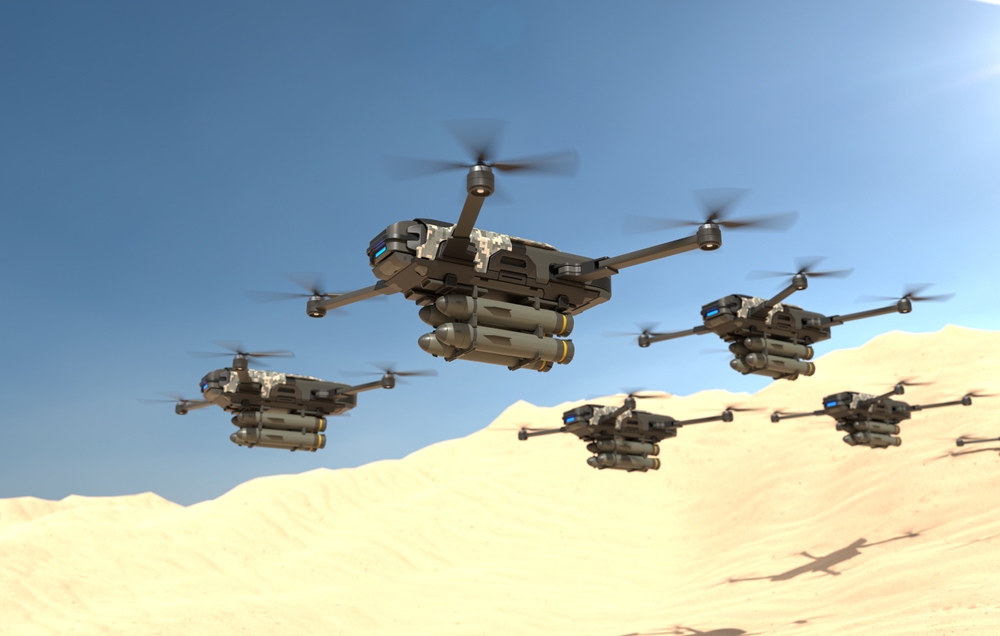
In a recent development, craft with markings that allow other AI-directed drone groups to coordinate swarm actions have been identified by the Israel Defense Force (IDF). These are some of Hezbollah’s aerial machines in Lebanon. If confirmed by third-party sources, this information would mean that even non-state actors have been able to weaponize AI (perhaps with help from Russia or Iran).
Enmeshing the Enemy
Apparently, such coordination has been advanced by the Russian introduction of mesh networks. A mesh network — Chinese network systems are generally used — puts a modem on most, or all the UAVs in a group, which allows them to transmit signals among each other.
In one case, a mesh network supposedly allowed a group of hundreds of Russian strike drones to fly down a narrow corridor over a particular Ukrainian city. The UAVs then were dispersed to attack different targets, which made it much more difficult for air defenses to anticipate where the attacks would ultimately be focused.
SpaceX’s Starlink system has also been an important means of coordinating drones because the system provides network coverage anywhere around the world. The Russians were able to use Starlink terminals effectively for some time before being cut off by Starlink’s owner, Elon Musk, in early 2026.
More recently, Russia has begun to deploy its own, homegrown version of the system, but obviously it is not yet reaching the same worldwide extent of Starlink.
Conclusion
As the above should make clear, the drone revolution in warfare is only beginning. As artificial intelligence, mesh networking, and autonomous systems – developments all in their infancy — develop further, it is clear that drone strategy will significantly reshape the warfighting doctrines of the world’s major militaries.
Additionally, the strategies of powerful non-state actors such as Hezbollah and the parties to Sudan’s ongoing civil wars, the latter of which has already witnessed significant drone operations (as discussed previously on this site), are quickly adapting to the widespread availability of cheap drones.
It is evident that drones are expanding the scope and effectiveness of asymmetric warfare across the globe.
Non-state actors such as terrorists and rebel groups once had much to fear from the most technologically sophisticated militaries of the 20th century, which deployed tanks, helicopter gunships and jet fighters by the thousands against foreign and domestic enemies.
In the 21st century, the drone warfare revolution is accelerating the ability of smaller and less well-funded groups to punch far above their weight in conflicts against economically and technologically advanced foes. The effective use of drones eliminates many of the advantages previously held by ‘the big powers’.
Ukraine’s stubborn resistance to the Russia’s much larger military and the recent examples of the Iranians and Hezbollah successfully holding off the U.S. military and IDF, respectively, are windows into a near future when wars fought by large, state-backed armies against smaller adversaries are no longer guaranteed to end with the defeat of the smaller party.
Greymantle will provide a prospective view of this dynamic at play in the case of Taiwan’s preparations to resist a possible Chinese invasion in our next article, scheduled to be published on August 1.
The next installment in this series, ‘Understanding the Drone War Revolution’, will focus on defenses against attacks by drones such as anti-drone UAV ‘interceptors’ and the development of advanced anti-drone systems such as Leonidas, and the prospects for such countermeasures.
Alexander Stavropoulos, PhD is a lecturer in 18th and 19th century military history at the City University of New York in New York City, USA.