Key Takeaways
· Political scandals are nothing new—but today’s seem darker.
· Social media and iPhones have made political misbehavior harder to hide.
· The decline of shame seems to be changing the rules of scandal.
· Voters have the power to show that character still matters.
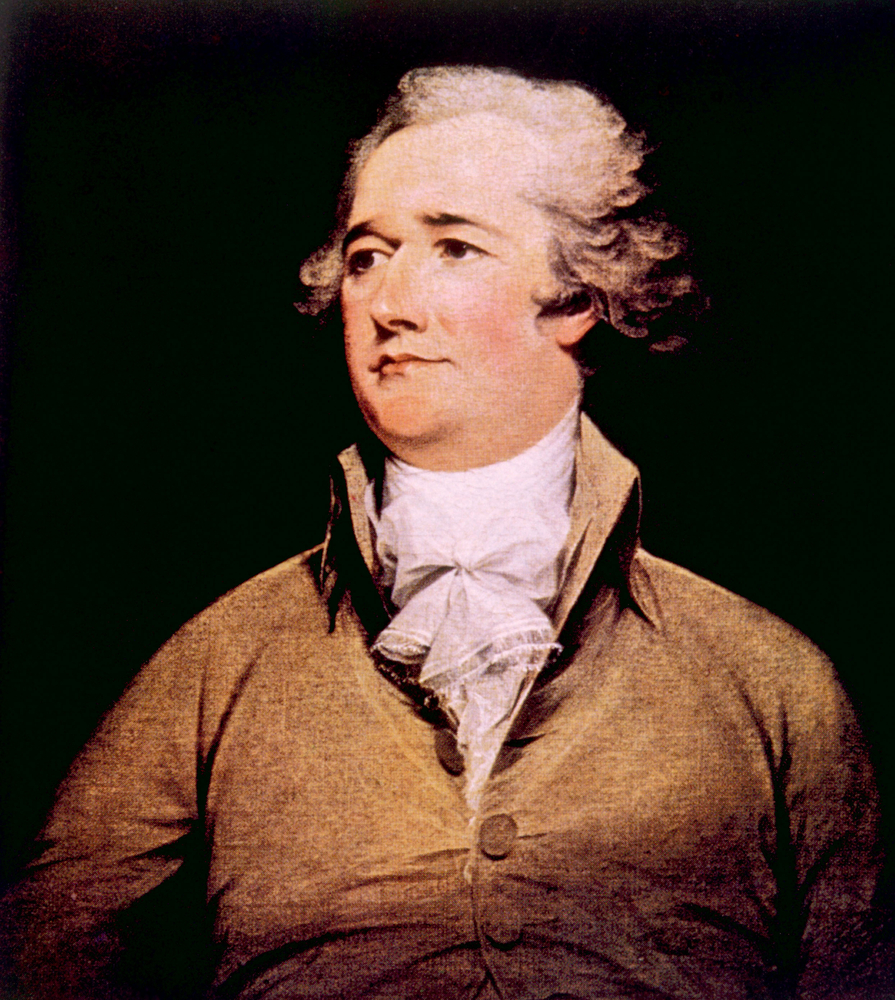
Scandals are hardly new to U.S. politics. As early as the 1790s, the Hamilton-Reynolds scandal – America’s first true political scandal – titillated the Establishment. Then-Treasury Secretary Alexander Hamilton was accused of having an affair with a married woman named Maria Reynolds. Her husband, James, exploited the affair in an attempt to blackmail, and nearly ruin, the founding father.
As Alexander Hamilton said in response to the scandal, “I have no other apology to make than the sincerity of my confession.”
The Hamilton-Reynolds Scandal soon subsided, but was a dicey situation for our country’s first treasury secretary. To paraphrase the musical based on his life, he almost DID have to give up his ‘shot’! Hamilton survived the political and personal ordeal long enough to be (spoiler!) shot and killed seven years later by then-Vice President Aaron Burr in a duel in Weehawken, New Jersey on July 11, 1804.
One could say that shooting and killing Hamilton was Aaron Burr’s own great political scandal, or at the very least baggage that he would carry around with him for the rest of his life (and which sank his future political prospects).
Adultery. Blackmail. Murder. These elements have been part of political scandals since the nation’s founding. The question is, even if the main elements have stayed consistent, why do political scandals seem to be getting so much uglier?
Political Scandals Are As American as Apple Pie
Regardless of what period of American history you look at, you will be able to find examples of politicians getting caught in serious personal scandals: sexual, financial, and other types.
My late parents shared with me and my siblings their remembered rumours of John F. Kennedy cavorting with Marilyn Monroe and other women in the White House to the great consternation of First Lady Jacqueline Kennedy. They also related to us the sad reality of Richard Nixon getting caught after sending his goons to break into the Watergate Hotel. The subsequent fallout doomed his presidency.
As a member of GenX, I have my own reference points for scandals that I probably share with many of you. Chief among them were Bill Clinton’s cheating controversies involving numerous women, among them Paula Jones, Gennifer Flowers, and of course “that woman” (as Clinton called her): Monica Lewinsky.
I also remember Democratic presidential candidate John Edwards’ affair with Rielle Hunter around 2007 and Gary Hart’s infamous “Monkey Business” with Donna Rice 20 years earlier (1987). Even George Bush Sr., as square as he seemed, was rumored to have a mistress named Jennifer Fitzgerald who would allegedly visit him at the White House (circa 1992), though the truth is unclear.
About 25% to 30% of U.S. presidents have either admitted to or been accused of sexual indiscretions. And – in the case of our fifteenth President, James Buchanan, his lack of a spouse or partners, led to (later) rumors about his own sexual proclivities.
Clearly, it’s fair to say that American political scandals are as old as the country.
Our Current Crop Of Scandals Seems Uglier Than Usual. Why?
So, given that American history is full of these sordid chapters, why does it feel like our current slate of candidates is behaving much worse than in the past? Is this a misperception? Or is there truth to it?
Additionally, is there anything that voters should consider to place these events in perspective, rather than just wanting to shield our eyes?
First, let’s examine some contemporary scandal-prone characters and their misdeeds.
A Rogue’s Gallery of 21st Century Scandal-ists
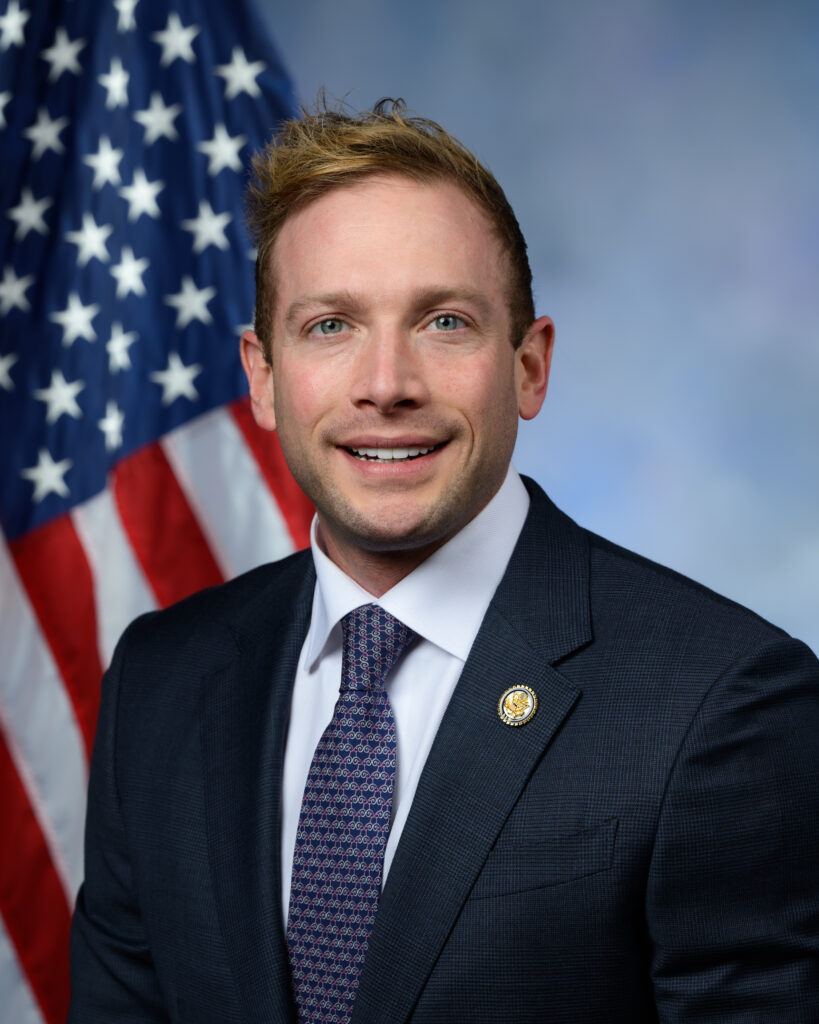
- Graham Platner: The gravely-voiced former Democratic candidate for U.S. Senate from Maine. The drip, drip, drip, of ugly revelations about Platner would not stop during his 2026 Senate primary campaign against Maine Governor Janet Mills. For starters, Platner had a Nazi tattoo (a ‘Totenkopf’) on his chest that he claimed to not know was a Nazi tattoo. There were also sexting scandals, accusations of physically menacing former girlfriends, and even accusations of rough sex and rape.
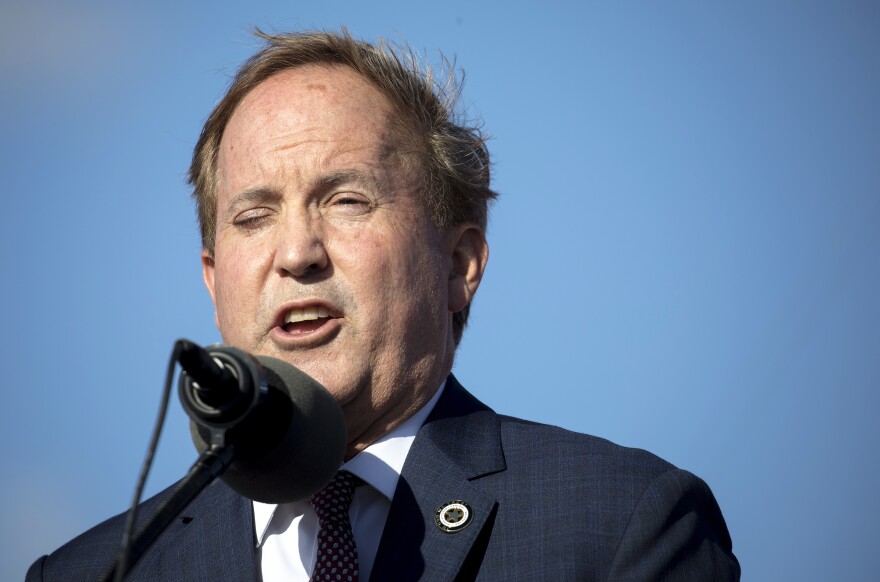
- Current Republican Senate candidate for Texas Ken Paxton, who is currently the state’s Attorney General. Everything is bigger in Texas, seemingly, including Paxton’s scandals. He was indicted for securities fraud in 2015, was impeached by his own political party in the Texas legislature in 2023, and is openly having an affair with a woman connected to a political donor. The latest: Paxton’s Democratic opponent, James Talarico, is running a political ad that chronicles Paxton stealing an expensive Mont Blanc pen from a bank. Paxton’s theft of the pen was caught on security camera.
- Eric Swalwell was a Democratic congressman and noted Trump detractor who was a media darling, charismatic and well-spoken, and a favorite to replace California Governor Gavin Newsom in the November 2026 California gubernatorial election. Swalwell had a history of scandals, including being accused of sleeping with a Chinese spy named Fang Fang. Recently, Swalwell faced new sexual misconduct accusations and was forced to drop out of the race for Governor and quit his seat in the House of Representatives.
- Then there is Ohio Republican Congressman Max Miller, who has been credibly accused by numerous women of physical abuse, including by a woman he dated (Stephanie Grisham) and by his ex-wife Emily Moreno, who has accused him of physically harming their two year-old daughter. Miller’s former father-in-law Bernie Moreno, an Ohio Senator, has described Miller as a danger to his granddaughter and called for Miller to drop out of his congressional race.
- While he’s not running for office in 2026, President Donald Trump is possibly the most scandalous politician of all time. Not only are there accusations galore against him by many parties and thousands of mentions in the Epstein Files, but he was convicted on 32 counts in a sexual assault case in the Southern District of NY. Nobody quite knows what’s going on now with Natalie Harp – a stalker-type presidential aide who will stop at nothing to be close to the POTUS. There are whispers, but who knows? Trump, like a post-modern Harry Houdini, is adept at escaping any consequences from his scandals.
The casual reader might look at these cases and agree that they are appalling, but remain skeptical that political scandals are getting nastier. So, let’s move on to an argument as to why the current crop is worse.
Two Reasons The Latest Scandals Are Uglier: Polarization and Outsider Candidates
Is it possible that the latest scandals, particularly those relating to candidates’ personal lives, are worse than the scandals of the past? In my less than completely scientific analysis, I think the answer is clearly: “Yes.” Not only are extramarital affairs being exposed with unseeming frequency, but more incidents of violent personal behavior by politicians are coming to light.
Congressman Max Miller’s and Senate candidate Graham Platner’s scandals don’t just involve the revelation of extramarital affairs. In each case, there’s much darker stuff going on: photos of domestic abuse, the menacing of ex-lovers, alleged physical violence, sexual assault – bad stuff all around.
Before we go too far down the road of declaring the scandals of 2026 worse than the scandals of decades past, there are several trends that might help to explain this shift.
In A Polarized Time, the People Going Into Politics Are Naturally More Depraved
Let’s assume that scandals are getting worse. One explanation for the change is that there is so much polarization in society and politics that well-adjusted people simply don’t want to get involved in politics.
Perhaps the fact that scandals are getting uglier is a symptom of the type of people deciding to run for office. Many seem to be doing so for the wrong reasons, i.e. seeking the limelight, attention, fame, power, etc. rather than wanting to serve their country.
In other words, because the public has become more cynical and hostile, the folks who would traditionally get involved in politics – the public service-minded Kiwanis Club types – are avoiding the political career path and doing other things like practicing law, working for non-profits or volunteering their time elsewhere.
To be sure, many of the remaining people in politics have good intentions, but a larger percentage than normal appear to be entering politics simply as a means to make money, gain raw power or simply – to put it crudely – get laid. Seriously.
Whether we’re talking about Eric Swalwell, Max Miller, or Graham Platner, there seems to be a common denominator to their behavior: all have used the attention and notoriety of office-seeking as a way to meet and seduce multiple women. Should we call it the ‘Hugh Hefner effect’? Or would that date us a bit?
To paraphrase my late grandfather, the average person getting into politics is getting to be pretty below average – at least in terms of their ethics.
The Thirst for ‘Outsider” Candidates is Leading Dodgier People to Step Forward
It’s also possible that a public thirst on both sides of the isle (i.e. MAGA and Democratic Socialists) for candidates that are not status quo, but are instead “disrupters”, is fueling the rise of political actors who not only feel empowered to behave badly, but come to politics with dodgier resumes.
The politicians cutting through the noise in the 2020s aren’t soft-spoken, middle-of-the-road types: they have loud voices and hard edges. Some have lived unconventional lives. They might have been considered fringe candidates 25 years ago, but are now seen as viable office-seekers because of how society has changed.
These people are attractive to the public – especially the extreme Right or Left – because they aren’t seen as experienced politicos, and don’t wear the “deep state” labels seen as liabilities by populist voters.
You were president of the student body at Yale? No, thanks! You served 20 years as a CIA officer? Step back, Mr. Deep State! You used to work for Goldman Sachs or the World Bank? No globalists wanted here, thank you very much!
It is shocking to realize how many voters choose candidates simply due to their outsider status, and regardless of their experience or a lack thereof. The simple fact of being an “outsider” or a member of an outsider group (e.g. “The Dirtbag Left!”) is preferable to anyone seen as an ‘insider’.
Imagine wanting to hire an airplane pilot who has LESS experience than one who is qualified, but who can scream and rile up the emotions of the passengers. The shouting and screaming – the ‘performativeness’ if you will – is what makes the passengers trust the less experienced pilot, because their behavior is more ‘authentic’. That is what is happening to American politics in the 2020s!
The Rush to Anoint Political Outsiders Has Downsides
It is also fair to say that some of these “outsider” candidates haven’t been properly vetted in the traditional sense; which is to say that party functionaries have been less successful at finding skeletons in their closets – they don’t have years of public service to scrutinize. There is a danger with “outsider” candidates that tremendous personal scandals will pop up with greater frequency, as happened with Graham Platner.
In Platner’s case, Democratic Party functionaries were tripping over themselves to complete Platner’s background check in their rush to bless the Democrats’ “Great White Hope” (i.e. a left-leaning candidate who could relate to America’s white working class). In their haste to complete a due diligence process that should have taken months, they missed the worst accusations against Platner from former girlfriends (e.g. rape).
Perhaps situations of this kind are inevitable with candidates who have never run for office on the national stage. Scandals of similar magnitude as Platner’s may not emerge for all candidates of the “outsider” variety, but it’s reasonable to expect that they will happen more often.
Alternate Take: Scandals Always Been Around, But Many Were Never Discovered
The other side of this argument, namely whether recent scandals are worse than the ones in the past, is that this is not the case – it only appears that scandals are getting worse because scandals are now hyped on 24-hour cable news, podcasts and social media.
It can be easily argued that there were as many ugly scandals going on fifty years ago, but they were never uncovered. There once was a time when the so-called “Mainstream Media” had a gentlemen’s agreement with Washington, D.C. that personal scandals in politicians’ lives would not be reported on.
But let’s face it, the dawn of the Information Age and everyone walking around with a camera in their phone has made it harder to conceal any type of scandal.
Even Mark Sanford, popular former Governor of South Carolina, couldn’t hide his love affair by leaving America for Argentina in 2009. And that was 15 years ago, well before AI came on the scene, along with flock cameras and drones. Scandals like Sanford’s are impossible to hide in today’s tech-saturated atmosphere.
To bolster this point: there were always rumors about certain candidates in past decades, but many of those rumors (like those about JFK and LBJ’s affairs) were never confirmed. They were simply scurrilous rumors that were passed around for years as urban legends.
The ugly scandals we are seeing today might have happened with random congressmen in the 1950s or 1960s, but without RING cameras and iPhones those incidents just never came to light.
We are still waiting for half of the Epstein Files to be released, so we don’t know anything about many of the sex crimes committed by Jeffrey Epstein, Ghislaine Maxwell, and their powerful house guests. And those crimes are recent in the grand scheme of things!
So to repeat and clarify this point, there is a case to be made that ugly personal scandals similar to those of 2026 have happened in the past, and nothing has changed other than the fact that these incidents weren’t getting onto Page Six of the New York Post decades ago.
What Role Does Shame Play In Political Scandals?
Let’s move in a different direction. Perhaps another reason political scandals seem to be getting so much worse is due to the lack of shame that politicians seem to feel now.
In the past, politicians caught in scandals seemed to feel, or at least express, feelings of shame about their actions, mainly due to societal pressure. But that societal pressure appears to have lessened since the early 2000s, or at least since Donald Trump first won the presidency in November 2016.
From the Access Hollywood tape, through countless media firestorms caused by his incendiary statements, and on through several public trials and the latest “Travels with Natalie” scandal of Summer 2026, President Trump has weathered more scandals that would have been career-ending for dozens of Senators combined. Trump has moved the needle on scandal – decisively.
It may be that more politicians are getting into serious personal trouble because they see that it’s possible to survive a personal ordeal caused by their own bad actions unscathed. In July of 2025, I published an article in Greymantle about how a lack of public shaming has led to the explosion of legal gambling (online, and otherwise) in America. The concept of shame also applies to scandals.
In a civilized society, certain acts should be met with condemnation. Serial philanderers and predators like Graham Platner and Max Miller are being met with less public opprobrium. The women who accuse powerful men of sexual misdeeds are often shamed more than the accused.
Back in the 1950s, the bar for shame was much lower. You couldn’t even say the word “pregnant” on a TV sitcom. Americans were prudish when it came to sex, drugs, and rock ‘n’ roll. The types of scandals we see today would have been met with extreme disapproval. Imagine if it was revealed in the 1950s that a Senate candidate had a Nazi tattoo on his chest — the candidate would have been tarred and feathered!
The fact that having a Nazi tattoo wasn’t a deal breaker for Platner getting out of the race is still shocking to me. To the Democratic Party’s credit, they eventually pushed Platner out of his Senate race. Similarly, Eric Swalwell was forced out. Their scandals were too extreme – at least by the standards of Democrats.
Perhaps it is simply harder to shock the American public than it was in the days of Watergate or the 1999 Bill Clinton impeachment. After Trump’s six-plus years as president, the public may be numb to the endless firehose of scandal. And think of this: we only know what the news media reports. God knows what is happening that isn’t making the news.
President Trump has proved that it is possible to act like a scoundrel while serving in the highest office and not get punished. While it’s not yet true that political leaders outside of Trump himself can survive infinite scandals with impunity, there are hordes of mini-Trumps out there who want to put this to the test.
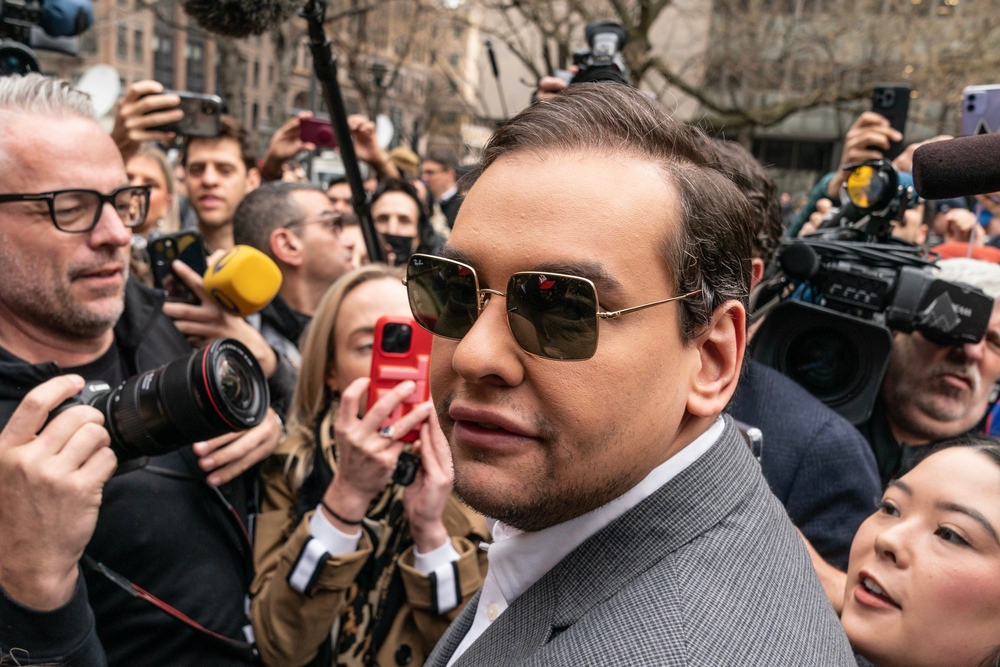
George Santos thought he could succeed in politics with Trump’s tactics, but he couldn’t. At least not yet. Perhaps we should wait another five years…
How Should We Rank Scandals in Terms of Ugliness?
We have explored whether political scandals are getting uglier and why. Regardless of the answer, it’s evident that terrible acts by elected leaders contribute to a jaded and depressed public. We feel helpless to do anything about the rot we see spreading across America. I’ll end this piece with a list of tips for regular folks to help put these scandals into perspective, and suggest how we might respond as voters.
- Affairs are bad, but violence is worse. An illicit liaison and a ruined marriage is sad and can be ugly, but such affairs should remain private and are issues for the couple to work out. If a scandal involves sexual assault, rape or other violent behavior, however, then that is much worse.
- People in powerful positions who are prone to dalliance take a chance that they will be blackmailed by those who know about the indiscretions. David Letterman serves as an example. In 2009, Letterman had to reveal an affair he was having with a staffer on the air because someone was trying to use it to blackmail him. In politics, marital cheaters leave themselves open to blackmail…or worse.
- Some scandals reveal more about a politician’s character. Does an affair show an abuse of power? Did the politician’s affair happen with someone they met in a bar, or is it with a staffer? To some degree, an affair with a staffer is a worse act since there is an abuse of power at work.
- When scandals pop up in politics, we should ask the question “is this a one-time mistake, or part of some larger pattern of behavior (like Bill Clinton or Ken Paxton). We all make mistakes, but when you make 25 of the same mistakes, it says something about you. In other words, is this a scandal that is interrupting a promising political career, or does the career basically consist of a series of scandals?
- When some political pundits defended Graham Platner before he exited the Senate race, they cited the candidate’s biography as a ‘redemption story’. People love a redemption story. But we should ask whether the politician’s redemption only happened when they got caught in a scandal. If someone apologizes because they got caught, that’s NOT redemption.
- I’m not a person who thinks every accuser is reliable. There have been rare cases of accusers with bad intentions, and some have misidentified their assailants. Due process should be followed for all sides. That said, there’s no benefit to a person who comes forward to accuse someone else of committing a crime. There are often unpleasant repercussions. The media and public should give the accuser the benefit of doubt. Events like the public shaming of Monica Lewinsky shouldn’t happen again.
- Character matters! There has been a lot of noise about how our nation is about to fall off a cliff. Because the stakes are so high, many voters believe the only thing that matters is the views of a candidate. Are they on the right side of the issues? Are they conservative enough? Are they progressive enough? Yes, the nitty gritty of policy is important. But political goals take guts and follow-through to get done. If you put into office people who engage in graft, cheating, and violence how could they possibly have the moral fiber to build consensus and push through a complex agenda?
There are ethical reasons to not support candidates who are embroiled in scandals. But there are also practical ones. Scandal-prone leaders will not come through for their constituents. They are too self-seeking.
Conclusion: It’s Up to Us Voters to Punish These Scoundrels
Mistakes happen, but pathologically scandalous behavior by political leaders shouldn’t be tolerated. We can’t normalize or become numb to this type of behavior. If we do, then we place our democracy in peril.
Some degree of shame is needed when politicians commit disgraceful acts. We shouldn’t automatically shame the accusers, but more shame on the guilty would be good. It’s positive that Graham Platner and Eric Swalwell are no longer running for office, but Ken Paxton and Max Miller appear undaunted by their own scandals.
It is up to the public on both sides of the aisle to get to those voting booths come November 2026 to show our elected leaders that, yes, character does still matter.
Gideon Evans
Mr. Evans is a television producer, comedy writer and podcasting host based in Brooklyn, NY. He has served as a producer of “The Daily Show with John Stewart”, “TV Nation”, “The President Show” and “Mobituaries” and currently co-hosts the podcast Bad Elizabeth.