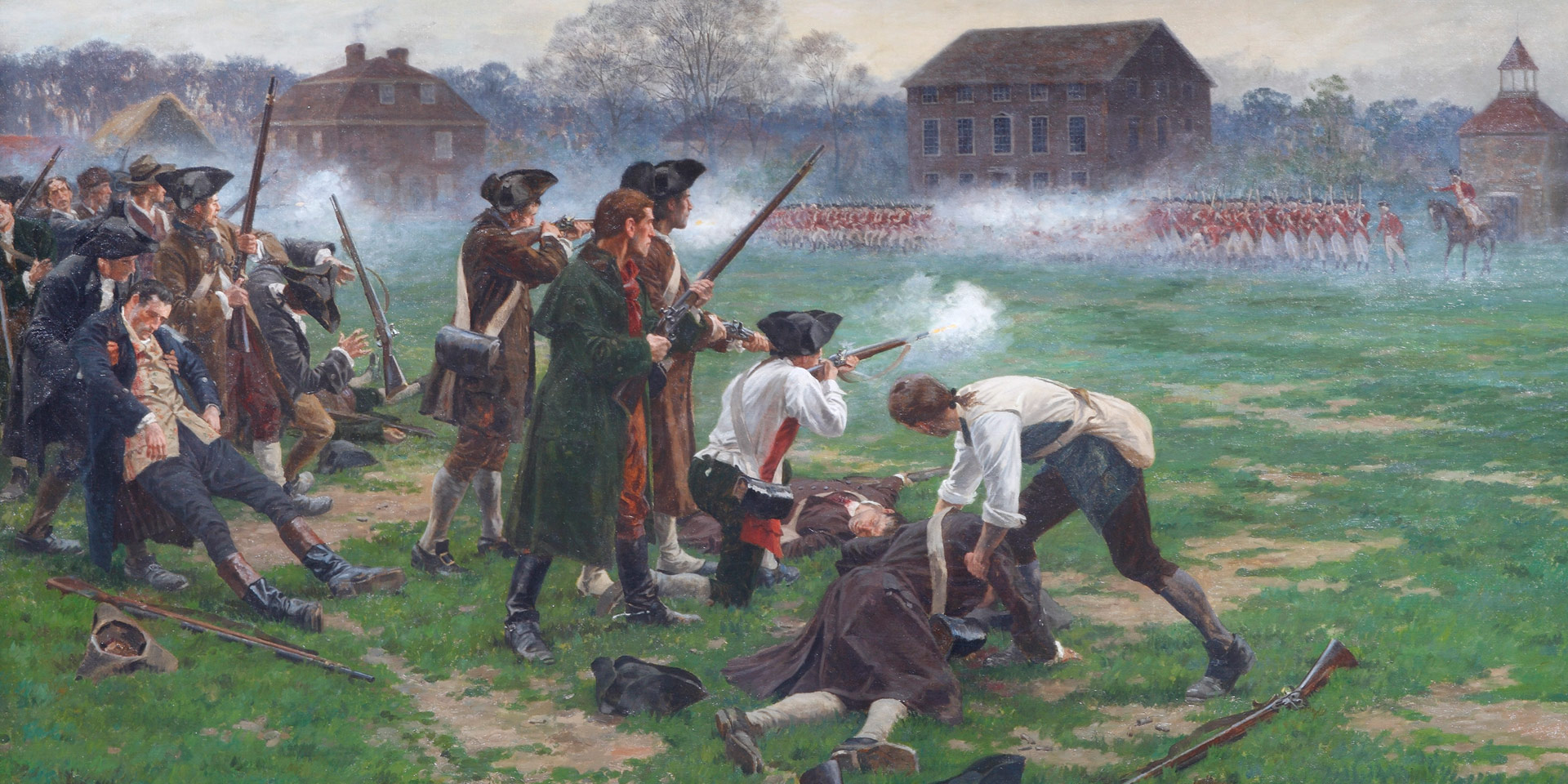
Note: These are the ‘recollections’ of an anonymous British junior officer who was present for the very incident that ignited the American Revolt against the Crown.
T’was supposed to be so easy… at least, that is what all who were chosen to take part in the recent Lexington and Concord expedition had originally conjectured. But who in the weeks before those events could have imagined shots fired in Lexington?
And why shouldn’t it have been easy? We were the elite companies of the Boston Garrison. Six Light and six Grenadier companies. The fast and nimble joined with the steady and strong. Over 650 bayonets in total. The best of The King’s Troops in North America.
What could possibly oppose us? A gaggle of Yankee Doodle’s motley militia!?
Major John Pitcairn of the Marines and Colonel Francis Smith of His Majesty’s 10th Foot were the top officers for our little excursion. One was a firebrand and the other a duffer! Both had served in the colonies for extended periods.
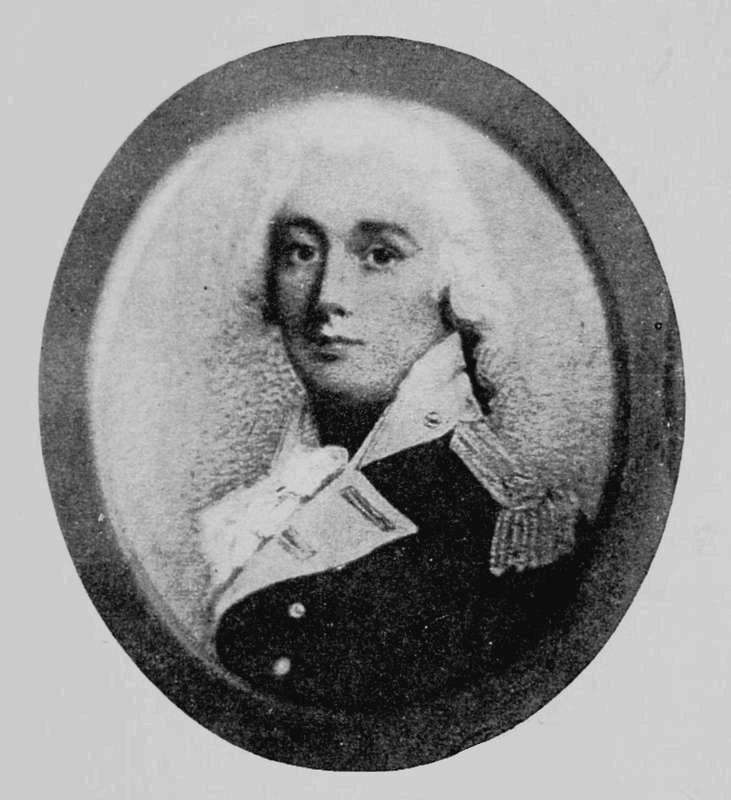
Perhaps they were not the best pair to command this type of endeavor, which required more than a smidge of diplomacy, but who would have thought that anything fraught might occur?
It was to be an easy business. A quick jaunt of 16 or so miles to seize suspected colonial supplies stockpiled in the aforementioned rural townships. Nothing more.
Surely, we could manage this without much trouble.
Why, the whole affair could be concluded before the sleepy colonists were even made aware, as it was intended that we should march at night and arrive in early morning!
As for myself, I had recently purchased an Ensign/Cornet commission in His Majesty’s 4th Foot (The King’s Own), and had arrived in Bostonport to assume my duties half a year earlier.
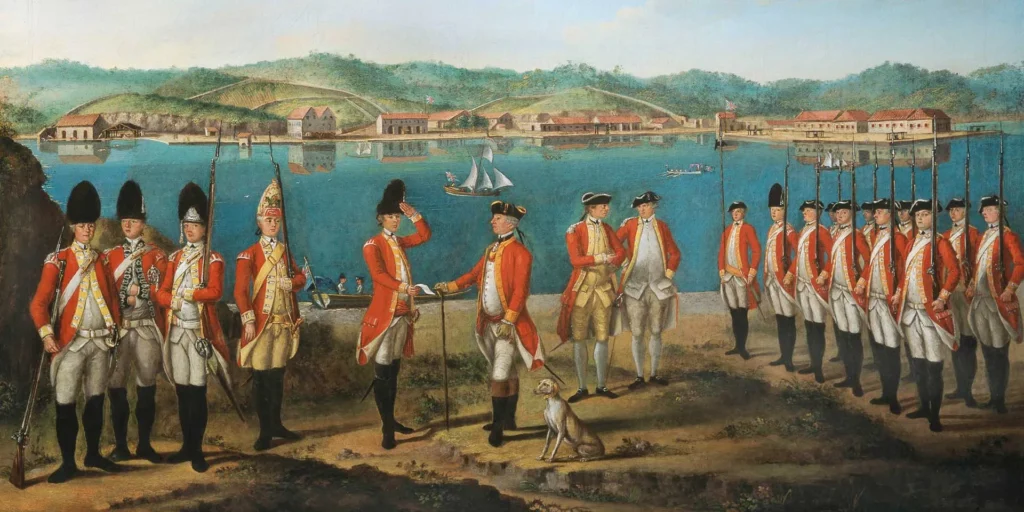
To serve in The King’s American colonies had certainly not been my first choice! The New England menfolk were crude; their women crass. The whole crowd was a surly lot, recently riled up by various agitators.
Needless to say, the awkward ex-dairy maids and fishwives comprising Boston womenfolk were mostly dour representatives of their sex, although generally tall and healthy. The rumors about their iron virtue were sadly correct. There wasn’t a decent brothel worth a farthing in this settlement that pretended it was a city!
In the brief time I had been stationed there, I had seen the atmosphere turn from bad to worse. Constantly stirred to boiling by the likes of Samuel Adams, John Hancock, and others, they were eager for a fight.
Adams, or “Smelly Sam” (as we named him) was a brewer of foul ale, which I confess to oft imbibing for lack of anything better. Like so many agitators, he was a failing tradesman. He undoubtedly hoped that some chance fortune might drop his way by agitation alone. Or at least it would make us all thirstier!
*******
On the night of April 18th, 1775, the expedition was to be put into motion. Though I was not attached to The Light Company of the 4th, a junior officer who was down with the fevers availed me the opportunity to partake. Little did this wide-eyed subaltern know what he was undertaking!
As the companies were forming late that night on Boston Common, I managed to overhear a brief exchange between our two intrepid commanders.
Pitcairn: “If we move with alacrity, this business can be concluded before they are aware”.
Smith: “Yes, but we must proceed with caution and check closely the locales in question for the suspected munitions, which I am sure they’ve hidden. The militiamen are nothing without them.”
Pitcarin: “Understood. But we don’t want to dally out there for too long.”
Smith: “As long as required, sir.”
Pitcarin (with evident annoyance): “Very well, I shall command The Light Companies and move with all speed. You can follow with the slower Grenadiers.”
Smith merely nodded in accord. Though senior to Pitcarin, Smith seemed reluctant to challenge his subordinate’s rough manner.
Although not aware of it at the time, I later realized the fatal difference in command here. One wished to move with speed, the other with deliberate caution. The expedition would be divided not only in opinion, but also in power.
********
At midnight, all was put into motion. Most of us were blissfully unaware that our every move was being monitored by the ever-curious Bostonians. Too many had learned already of our destinations.
Some whispered that such privileged information originally might have escaped the comely lips of the American wife of our good General Thomas Gage.
Nevertheless, we soon noted lanterns oddly hanging in the Old North Church. probably a signal of sorts. Some sentries spotted riders hastily leaving town at this ungodly hour, likely with the purpose of alarming the countryside.
********
Near dawn, we neared the first suspect hamlet, Lexington. It consisted of a couple of dozen rough-hewn houses and a few rickety barns set upon the edges of an open field.
Sure enough, drawn upon the King’s Green was a ragged line of individuals in various modes of brown and black civilian dress…awkwardly bearing their arms.
They appeared to be less than a company, but more than 50 in number. I suppose they fancied themselves a militia. They might have scared away an Indian raiding party.
“What be this”? uttered Pitcairn in disgust.
Quickly, he turned about in his saddle and motioned for the Lights to deploy.
The colonial who was in command made some effort to respond, but Pitcairn, not the most diplomatic at the best of times, cut him off. “Disperse ye rebels! Get off the field at once!”
There was a long silence. They hadn’t really rebelled. That was a hanging offense, I recall thinking. If they left, they would be as innocent of that condemnation as we were.
Pitcairn quickly turned to us and spoke thus: “Advance in slow time and disarm them”.
The bugle sounded, and our advance was deliberate and measured, giving those assembled ample time to move off. I had drawn my smallsword, holding it upright as I moved ahead with my company.
It was a chilling moment. All knew the gravity of the situation.
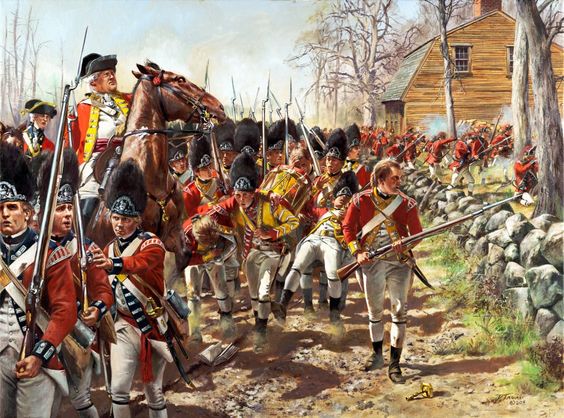
As we strode with steady steps, it looked to me as if the nervous colonists were about to back off and trot back to their homes. Some in the back rank began to edge away.
Then from nowhere, a single shot rang out.
Who fired remains unknown to this day. I was there, and I could not discern who the fool was who did it. It could have been a misfire by a skittery individual on either side.
Our Light Infantry, who had been well ordered up to that moment, suddenly shed all discipline and began to fire. First, a few off-handed shots, and then a ragged volley on the move. Several Yankees fell to the earth, and the rest scattered in fright, with only a few stopping and returning our fire.
********
Why did our men fire in haste? I have oft considered that question. So much turned upon that fleeting moment.
For months, our chaps had been subjected to vociferous scorn and the constant antagonisms of the Boston populace. Daily insults and innumerable threats of violence take their toll over time.
And we were there at our King’s bidding, after all, which made all the calumny even more galling. The locals had never forgotten a fatal suppression of one of their silly mobs some four or five years back.
Soldiers are simple creatures, and their nerves can only take so much. When that shot rang out, all their simmering anger burst forth.
They shouted with glee as they ran forward, halting only to aim and fire. Some even tried bayoneting any fleeing colonists that they were able to catch up with. Such was the effect of shots fired in Lexington!
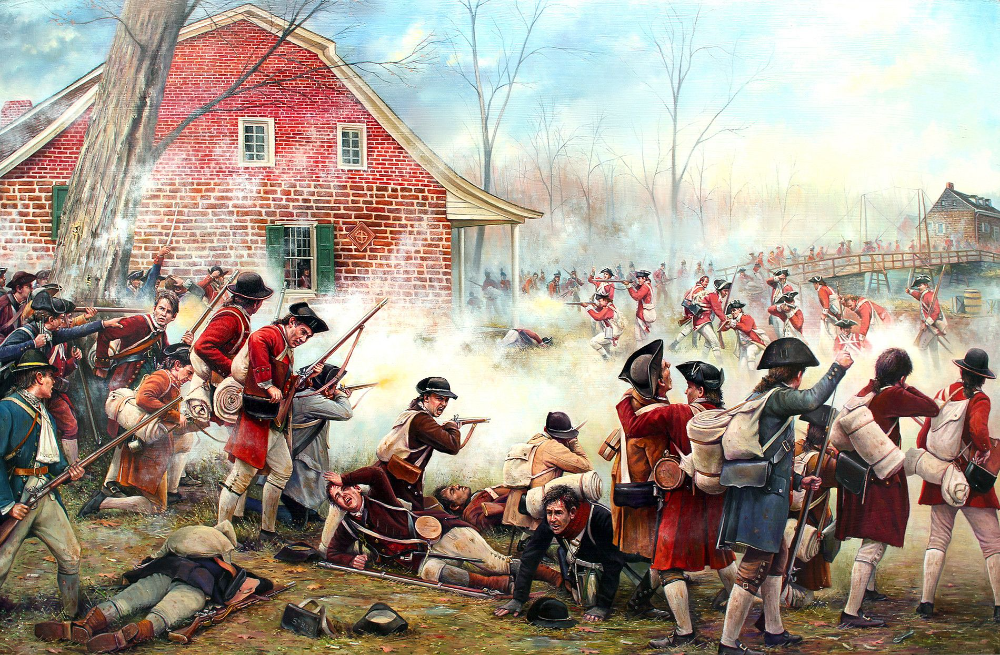
Pitcairn was astonished at the collapse of discipline. In vain did he try to halt the slaughter, moving thither and thon on his horse, shouting commands to deaf ears. “Light Infantry!” “Reform!” “Cease fire at once!”
The firing continued none the less. Many shots were not even aimed at this point, but discharged wildly into the air. Again, Pitcairn shouted. “No, do not kill them! Reform immediately!”
But the chaos continued for a while until Colonel Smith and The Grenadiers arrived and restored some order. I could see him riding up, clearly dismayed, saying to his subordinate:
“What has happened here, Major?”
Pitcairn appeared confused and angry. He looked at Smith fiercely. “I know not. A shot was fired and all order was lost.”
*********
The march to Concord was not interrupted. We reached it before noon, I reckoned. Pitcairn moved ahead with the Lights as before, while Smith followed with the slower Grenadiers. Again, a gap appeared between our two elements, which became all too frequent during this operation.
There was no hindrance, but church bells were ringing away in nearby towns. Out of the corner of the eye one could discern brisk movement in the woods about.
All were wary of what awaited us, and each Light and Grenadier moved with notable trepidation whilst passing a wall or house on either side of the road.
Concord seemed at peace. The green was vacant. Instead, the village appeared deserted, although its church bell was sounding loudly.
Maybe the inhabitants had heard what happened to their neighboring village to the east, and they decided that discretion was the better part of valor. After all, their families and homes were here. And did they really think that they could oppose us?
With the place calm, Colonel Smith again employed the Grenadiers in the delicate task of knocking on doors and searching barns for hidden contraband. Again, little was found as before; a few old muskets and the like, but Smith was determined to have something to show for our efforts.
Pitcairn was anxious to start back, but – veteran that he was — he realized that some precautions should be taken while the men were dispersed for the search.
To this end an additional Light Company, under the command of a Captain and me, was dispatched to secure the Old North Bridge just outside of town, a likely route for any arriving groups of malcontents who might wish to interfere with us.
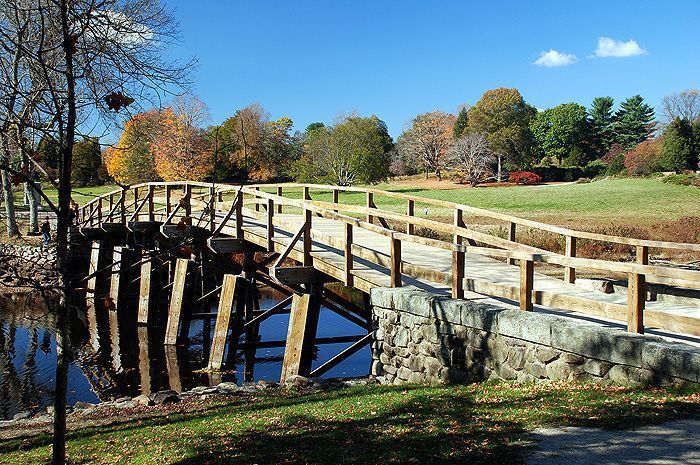
Once we arrived, we gradually deployed into an open line facing the bridge. Within minutes of our disposition, however, a crowd of Yankees appeared on the treeless hillside pasture, which was just to the right on the other side of the river.
There seemed to be at least a couple of companies’ worth, and, disturbingly, their numbers kept increasing as we watched.
Both young and old, all armed, dressed in various shades of brown, black and buff. They began to slowly surge toward us in a decidedly menacing fashion, hurling insults.
Their angry demeanor was immediately apparent, and it dawned upon us that their intent was our destruction. I suddenly deeply regretted leaving my fusil, or light officer’s short musket, behind in my lodgings.
Note: Part 2 of “Kickstarting a Revolution: A British Officer’s Point of View” will follow next Saturday, July 4, 2026 – America’s 250th Independence Day.