Key Takeaways
· Cryptocurrency has evolved from a technological experiment into a political symbol, attracting supporters who share a deep skepticism of governments, banks, and other centers of authority.
· The alliance between crypto advocates and the Populist Right reflects a crisis of trust in institutions rather than a traditional economic or ideological coalition.
· As Bitcoin gains acceptance among governments, banks, and corporations, it faces a paradox: success may require integration into the very systems it was created to bypass.
· Blockchain, cryptocurrency, and tokenization are related but distinct phenomena, and understanding the differences is essential to evaluating their long-term potential.
· The most likely enduring legacy of the crypto era may not be digital currencies themselves, but the continued development of blockchain-based technologies and tokenized assets.
VI. Crypto and the American Right
Cryptocurrency was born as a technological experiment. Over time, it evolved into something more: a political symbol. And perhaps even a political…sigil.
This transformation was not inevitable. But it says much about the development, as well as the future of crypto.
In its earliest years, Bitcoin attracted an eclectic coalition of supporters. Libertarians embraced it as a challenge to government control over money. Technologists admired its elegant engineering. Privacy advocates saw it as a tool for protecting individual autonomy in an increasingly surveilled world. Some simply viewed it as a fascinating intellectual puzzle.
From Libertarians to Populists
As cryptocurrency entered the mainstream during the late 2010s, however, it began to attract a different audience. Growing distrust of political institutions, central banks, major media, and large corporations created fertile ground for crypto’s underlying message. Bitcoin was no longer merely a new form of digital money — it was also becoming a vehicle for expressing dissatisfaction with the existing order.
Few political movements in contemporary America are more skeptical of institutions than the Populist Right. The aftermath of the 2008 financial crisis had already damaged public confidence in banks and regulators. The COVID-19 pandemic accelerated that distrust dramatically.

Government lockdowns, vaccine mandates, social media censorship controversies, and unprecedented levels of monetary stimulus convinced millions of Americans that political and financial elites wielded too much power over everyday life.
To many of these individuals, particularly those attracted to a nativist, right-wing form of populism, cryptocurrency appeared to offer an alternative to ‘the swamp’.
The Politics of Distrust
The appeal was philosophical as much as financial. Bitcoin’s decentralized architecture seemed to embody values long cherished by conservatives and libertarians: individual responsibility, limited government, personal sovereignty, and resistance to centralized authority.
The fact that no central bank could create more Bitcoin at will was particularly attractive to critics of inflationary monetary policy. This connection between crypto and anti-establishment politics grew stronger as governments around the world expanded their ability to monitor digital transactions – a topic that we touched on in Part 2 of this series.
Concerns about financial surveillance, central bank digital currencies, and the growing power of technology companies fueled fears that the cashless societies of the future would eventually grant governments unprecedented control over economic life.
Whether these fears are wholly justified remains a matter of debate. Yet the concerns themselves are real, and cryptocurrency emerged as one response to them.
By the early 2020s, many prominent conservative commentators, entrepreneurs, and political activists had embraced cryptocurrency. Conferences that once focused primarily on coding and cryptography increasingly featured politicians, media personalities, and ideological activists.
Bitcoin was becoming part of a larger political conversation about freedom, power, and the future of Western societies. No political figure better illustrates this shift than U.S. President Donald Trump.
Donald Trump Discovers Bitcoin
Donald Trump was initially dismissive of cryptocurrency. During his first administration (2017-21), Trump loudly and publicly criticized Bitcoin and other digital currencies, arguing that they threatened the dominance of the U.S. dollar. Yet as crypto’s political constituency expanded, Trump’s position began to, shall we say, ‘evolve’.
During his successful 2024 presidential campaign, Trump openly courted cryptocurrency investors and entrepreneurs, portraying himself as a defender of innovation against what many in the industry viewed as hostile regulatory oversight by the Biden administration.

The political alliance between Trump’s MAGA movement and the ‘crypto bros’ was mutually beneficial. Crypto advocates gained a powerful champion within the Republican Party. Trump gained support from a rapidly growing community of investors, technologists, and activists who increasingly viewed cryptocurrency as part of a broader struggle against centralized authority.
This development reflects a larger pattern in recent American politics: 21st century political coalitions in the United States are often formed less by traditional economic interests than by shared attitudes toward institutions.
In this respect, cryptocurrency fits naturally into a political movement defined by skepticism – if not outright hostility – toward government agencies, multinational corporations, academic experts, and established media organizations.
Yet crypto’s relationship with the American Right is not without tensions.
Both A Symbol and a Source of Tension
Many of the original cryptocurrency pioneers envisioned a borderless, decentralized world that would transcend national politics altogether. Their aspirations were often global – MAGA devotees would say ‘globalist’ – rather than nationalist.
Some crypto pioneers imagined cryptocurrencies eventually replacing governments’ control over money entirely in a borderless, stateless world of the near future.
By contrast, its right-wing supporters view cryptocurrency not as a path toward a post-national future, but as a tool for protecting individual liberty within existing nation-states. Their goal is not necessarily to abolish government, but to constrain it.
These competing visions remain unresolved.
As a result, cryptocurrency today occupies a curious position. It is simultaneously a technological innovation, a speculative asset, a political symbol, and a cultural movement. Its supporters include venture capitalists and anti-bank activists, software engineers and populist politicians, libertarians and ‘national conservatives’.
What unites them is not a shared ideology, but a common belief that existing institutions have become untrustworthy.
VII. The Cypherpunk’s Dilemma
One of the more intriguing questions surrounding cryptocurrency is whether its greatest success may also represent its greatest failure.
To many observers, the growing acceptance of Bitcoin and other digital assets represents a remarkable achievement. What began as a fringe experiment conducted by programmers, cryptographers, and libertarian idealists – so-called ‘cypherpunks’ – has become a recognized part of the global financial system.
Governments regulate it. Major financial institutions offer crypto-related products. Publicly traded companies hold digital assets on their balance sheets. Politicians openly court cryptocurrency investors and entrepreneurs. Measured by conventional standards, cryptocurrency has won.
Yet some of its earliest supporters view these developments with a degree of ambivalence.
When the System Embraces the Revolution
The original cypherpunk movement that inspired Bitcoin was motivated by a profound skepticism toward centralized authority. Its members sought to create technologies that would allow individuals to communicate, transact, and store value without relying upon governments, banks, or other powerful intermediaries.
Bitcoin emerged from this intellectual environment. Its decentralized architecture was designed to solve a problem of trust without requiring traditional institutions to stand in the middle.
From this perspective, cryptocurrency’s incorporation into the existing financial system raises an uncomfortable question: if Bitcoin was created to operate outside the system, what does it mean when the system embraces it?

That tension is becoming difficult to ignore.
Over the past several years, governments have developed regulatory frameworks for digital assets. Large investment firms have created cryptocurrency products for institutional and retail investors. Public companies have accumulated vast holdings of Bitcoin as part of broader investment strategies. Stablecoin issuers have become significant participants in conventional financial markets.
The cryptocurrency ecosystem has become increasingly intertwined with the very institutions it originally sought to bypass. To many investors, this evolution represents maturity. The chaotic frontier years of cryptocurrency are gradually giving way to a more stable and legitimate market.
A number of cryptocurrency exchanges, such as Gemini, which was founded in 2015 and is owned and operated by the Winklevoss twins, have both survived the early years of the crypto boom to become respectable institutions in their own right.
The Trump Administration, for example, has generally pursued a notably more permissive approach toward digital assets, emphasizing light regulations, innovation, and market growth. Supporters argue that clearer rules will boost investment, reduce uncertainty, and maintain American leadership in emerging technology.
But others see something quite different. They argue that cryptocurrency is increasingly being transformed from an alternative monetary system into merely another speculative asset class. Where some observers see Stablecoins such as Tether and ‘mature’ cryptocurrency exchanges like Gemini as evidence of industry maturation, others see them merely as speculative vehicles – nothing more and nothing less.
The Financialization of Crypto
Rather than functioning primarily as a medium of exchange, Bitcoin today is more commonly treated as an investment vehicle whose value depends upon future appreciation. Trading, leverage, speculation, and institutional participation increasingly dominate the industry’s public profile.
Several prominent developments illustrate this trend.
Companies such as MicroStrategy, under the leadership of Michael Saylor, have built business strategies heavily centered upon acquiring and holding large quantities of Bitcoin. Stablecoin issuers such as Tether have accumulated enormous holdings of conventional financial assets, including U.S. Treasury securities.
Cryptocurrency entrepreneurs continue to develop new digital assets, exchanges, and investment vehicles designed to attract both institutional and retail capital. None of these developments are inherently illegitimate. Indeed, supporters argue that they represent evidence of cryptocurrency’s growing acceptance within the global financial system.
Yet they also raise a question that would have sounded familiar to Bitcoin’s earliest advocates: If cryptocurrency’s primary function increasingly becomes speculation, investment, and integration into conventional financial markets, how different is it from the system it originally sought to circumvent?
Has Bitcoin Succeeded – Or Surrendered?
Critics of the current regulatory environment worry that lighter oversight may encourage excessive risk-taking and contribute to the formation of new speculative bubbles. Supporters counter that innovation inevitably requires a degree of freedom and experimentation, and that overregulation would merely drive investment and technological development elsewhere.
Both sides raise entirely legitimate concerns.
The irony, however, is hard to miss. A technology created to reduce dependence on centralized institutions now derives much of its value from their participation. A monetary system designed to operate independently of governments increasingly depends upon government-approved regulation. What began as an attempt to create a new form of money now often functions as just another investment vehicle.

In this view, cryptocurrency has not overthrown the existing financial order. It has, to a considerable degree, been absorbed by it. Whether this represents a betrayal of Bitcoin’s founding vision or simply the inevitable evolution of a useful technology remains a matter of debate.
But the question itself is revealing.
For all the discussion surrounding cryptocurrency’s future, perhaps the most important question is not whether Bitcoin succeeded: it is whether Bitcoin succeeded at what it originally set out to accomplish.
VIII. The Road Ahead: Blockchain, Tokenization and the Future
By the middle of the 2020s, the public conversation surrounding cryptocurrency had become noticeably more restrained. The fever dreams of the previous decade had faded. Gone were the confident predictions that Bitcoin would soon replace national currencies, that decentralized finance would make banks obsolete, or that blockchain technology would reinvent economic life.
The collapse of numerous crypto exchanges, lending platforms, and speculative ventures forced both investors and enthusiasts to confront a more difficult reality: technological innovation and financial speculation are not the same thing.
Yet the skeptics were not completely vindicated, either. For years, critics dismissed cryptocurrency as little more than a scam, a Ponzi scheme, or a fad. But Bitcoin survived repeated crashes. Ethereum continues to operate. Blockchain remains in active development.
Major financial institutions that once scoffed at digital assets began exploring ways to integrate blockchain-based systems into their own operations.
The truth, as is so often the case, lies somewhere in between the extremes.
Three Distinct, Yet Overlapping Phenomena
Part of the confusion arises from the tendency to treat blockchain technology, cryptocurrencies, and tokenization as if they are interchangeable concepts. But they are not.
Blockchain is a technological architecture: a distributed ledger that allows information to be recorded and verified across a decentralized network.
Digital, or ‘crypto’ currencies are but one application of blockchain technology. Bitcoin, Ethereum, and thousands of other digital assets use blockchain systems to facilitate the creation, transfer, and verification of units of value.
Tokenization is a third, distinct concept. It refers to the process of creating digital representations of assets, rights, identities, or ownership claims that can be stored and transferred on a blockchain network. In theory, almost anything can be tokenized: stocks, bonds, real estate interests, intellectual property rights, event tickets, contracts, or even identity credentials.
These phenomena overlap, but are not identical. One can believe blockchain technology has valuable applications while remaining skeptical of cryptocurrencies. Likewise, one can see promise in tokenization without believing that Bitcoin will become the world’s dominant currency.
Speculative Manias Do Not Invalidate the Underlying Innovations
The history of innovation offers many examples of speculative manias attached to genuine technological breakthroughs.
The railway booms of the nineteenth century created fortunes and bankruptcies alike. The internet bubble of the late 1990s destroyed trillions of dollars in market value while simultaneously laying the foundations for the modern digital economy. It is instructive to point out that the collapse of countless dot-com companies did not invalidate the internet itself.
Something similar may ultimately prove true of cryptocurrency.
The speculative frenzy surrounding digital assets revealed genuine weaknesses in human nature. Greed, fear, herd behavior, fraud, and wishful thinking appeared in abundance. The rise and fall of crypto exchanges, meme coins, and dubious investment schemes demonstrated that revolutionary technology does not eliminate age-old patterns of human behavior. If anything, it can amplify them.

But speculation and fraud do not necessarily invalidate the underlying technology.
Today, blockchain systems continue to find practical applications in areas ranging from supply chain management to financial settlement systems. Banks and financial institutions increasingly explore tokenized assets and blockchain-based transaction networks. Governments experiment with digital identity systems and distributed ledgers.
Some of these efforts will fail. Others may become invisible parts of everyday life. The more difficult question concerns cryptocurrency itself.
What is Cryptocurrency Good For?
The central question is: what, exactly, is cryptocurrency good for?
The answer to that question has changed over time. When Bitcoin was introduced in 2009, its creators envisioned a decentralized electronic cash system that could operate independently of governments and financial institutions.
In practice, however, relatively few people use Bitcoin or other cryptocurrencies as everyday forms of payment. Price volatility alone makes them poorly suited for routine commercial transactions. Mining Bitcoins and completing transactions using Bitcoin are also expensive. Instead, cryptocurrency’s primary use has increasingly become investment and speculation.
Millions of people now buy digital assets not because they intend to spend them in routine transactions on common goods, but because they hope their value will increase. In this respect, cryptocurrencies function less like currencies and more like highly volatile speculative assets.
That does not mean they have no practical use.
Cryptocurrencies can facilitate certain types of cross-border transfers, provide financial access in countries with unstable banking systems, and serve niche roles in decentralized digital ecosystems. But these use cases remain limited compared to the enormous volume of speculative activity that drives the cryptocurrency market. Whether that situation changes is uncertain.
Perhaps future generations will look back on the early twenty-first century as the awkward infancy of a revolutionary financial technology. Or perhaps cryptocurrencies themselves will retreat to the margins while blockchain and tokenization become the enduring legacy.
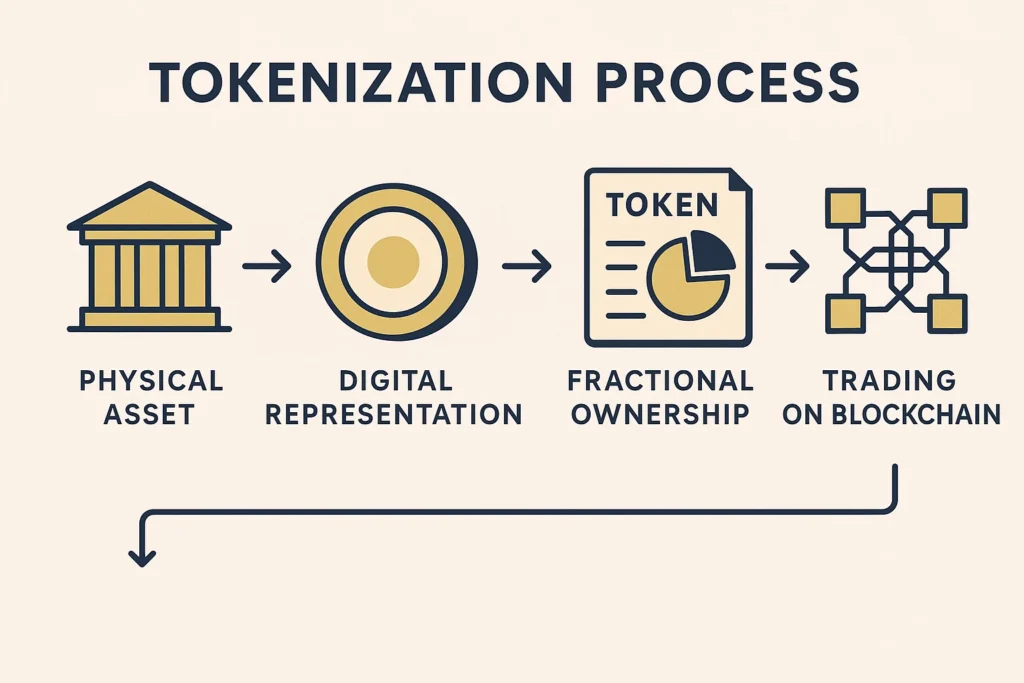
The one prediction that appears relatively safe is that blockchain technology, in some form, is likely to remain with us. Too much intellectual effort, institutional investment, and practical experimentation have already occurred for the concept to disappear entirely.
Whether blockchain ultimately transforms society or simply becomes another specialized technological tool remains to be seen. The future of tokenization is only beginning.
Conclusion: Revolution, Bubble, or Something In Between?
For most of the public, cryptocurrency remains a source of confusion.
Some see it as the future of money. Others regard it as a speculative bubble wrapped in technical jargon. Both perspectives contain elements of truth, but neither fully captures the story.
Cryptocurrencies have become what many other transformative technologies eventually became in their times: a mixture of genuine innovation, exaggerated promises, spectacular successes, costly failures, and unresolved questions.
The lesson of the past 18 years may be that technologies and the social movements surrounding them should be judged separately. Speculative bubbles eventually burst. Investment fads come and go. Political coalitions rise and fall. Yet useful technologies often outlive the excitement that first brought them to public attention.
Whether cryptocurrencies themselves flourish or fade remains an open question.
The larger experiment, however, continues.
Until next time, we are –
Greymantle