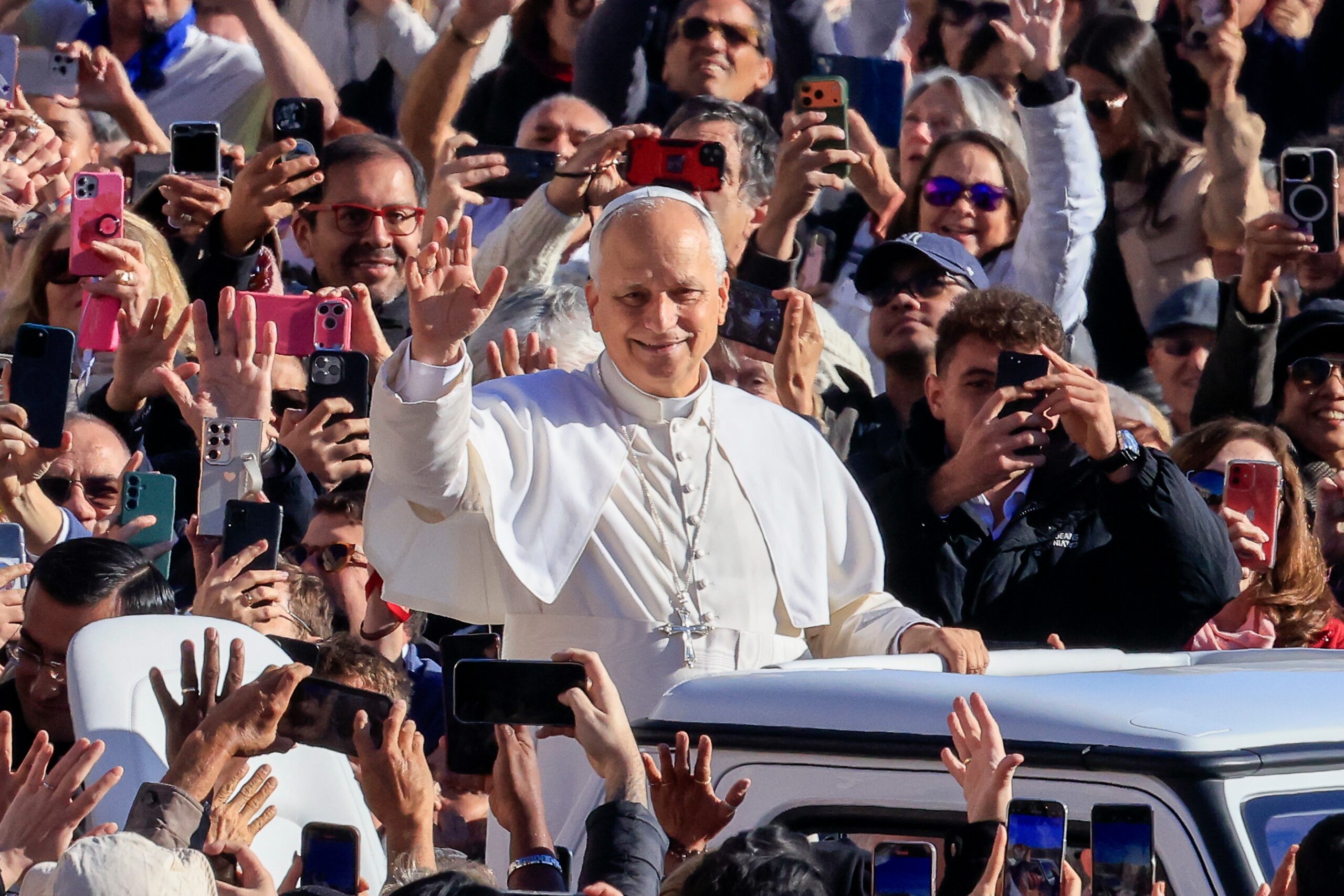
In the year since the white smoke rose above the Sistine Chapel on May 8, 2025, the Catholic Church has undergone a transformation that is as profound as it is quiet. Vatican leadership under Pope Leo XIV has offered a striking but instructive counterpoint to that of Leo’s immediate predecessor, Pope Francis, who liked to stoke controversy and enact change quickly, eager to – in his words – “make a mess”.
The Catholic Church’s direction in 2025 and 2026 has been more measured and subtle, but no less profound, a striking contrast to both Francis’ papacy and the actions of other major world leaders.
While the “chaos magicians” of the secular world—men like Donald Trump and his authoritarian ilk—attempt to bend reality to their profane wills through the raw power of ego and misdirection, Pope Leo XIV has spent his first year exercising a very different kind of authority. Where a “Chaos Magic President” seeks to fill every room with his sinister presence, Leo XIV (Robert Prevost) instead seeks to empty himself out.
Leo’s papacy is not a performance; it is a grounding. By centering the Church on its foundational truths and administrative integrity, he is attempting to heal internal factions that many thought were beyond repair, while serving as a rare anchor in a world that has lost its moorings.
In Greymantle’s view, His Holiness has made an excellent beginning. In his first 12 months, he made all the right moves. In this post, we examine Leo XIV’s first year as pontiff.
The Architecture of Authority: Small Moves, Great Weight
In the opening weeks of his pontificate, Leo XIV signaled a return to what might be called “Institutional Realism.” After 12 years of Pope Francis’s more informal, almost “folksy” leadership style that often blurred the lines of authority – and weakened them, in the eyes of Francis’ critics – Pope Leo’s first acts were a quiet reclamation of the Papal aura.
This began with the Mozzetta—the short, elbow-length cape that had been largely abandoned in recent years by Pope Francis. By donning the traditional red velvet and ermine-trimmed garment for his first audiences, Leo wasn’t indulging in vanity; he was signaling a return to the dignity and continuity of the papal office.
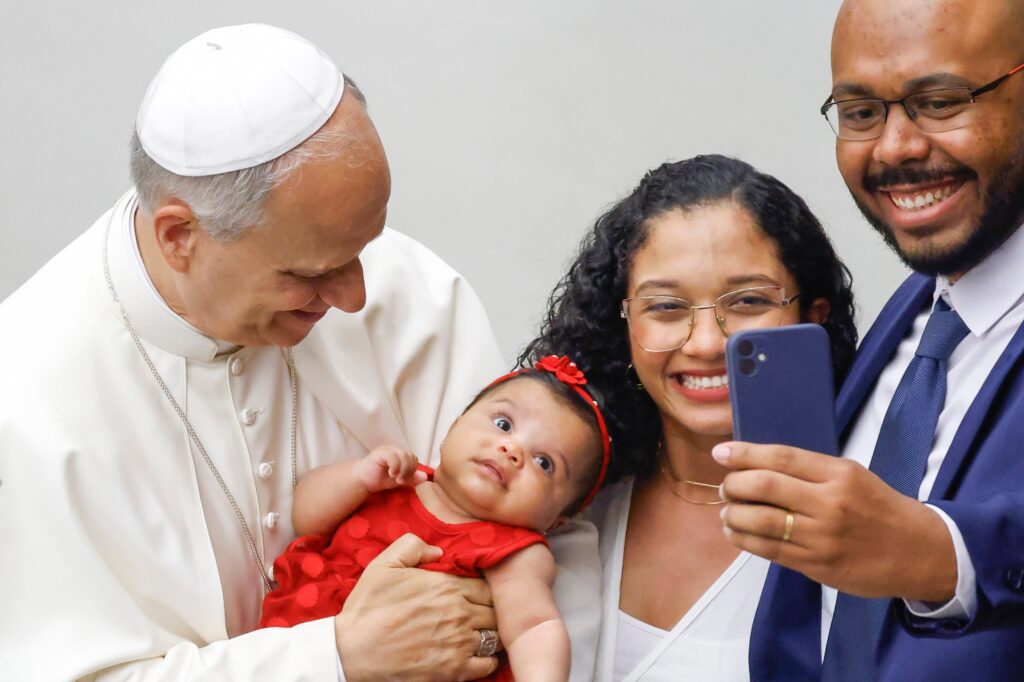
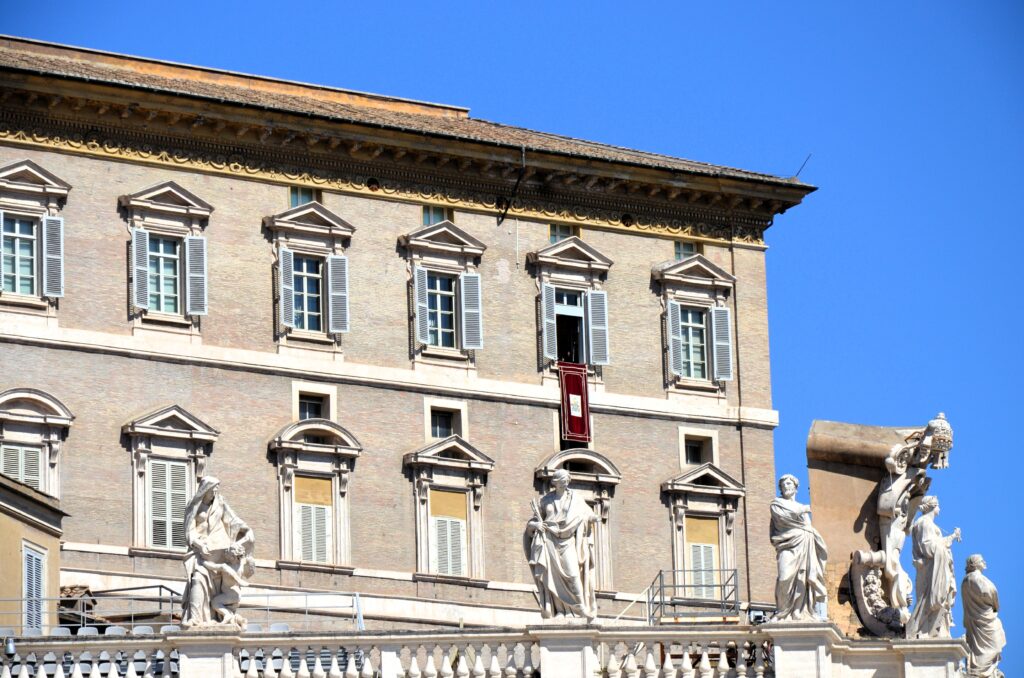
This reclamation of continuity continued with an expression of a return to a well-recognized space: Leo’s move out of the guesthouse of Santa Marta and back into the Apostolic Palace. While critics initially questioned the “move back to the fortress,” the deeper intent was clear: Leo wanted to de-personalize the Papacy.
By inhabiting the historic papal apartments and resuming the traditional summer stays at Castel Gandolfo, he signaled that the Pope is not a private individual living a personal lifestyle, but a successor to a two-thousand-year-old lineage.
These were the first “Right Moves”—understated, elegant, and designed to reassure the faithful that the Church is not a platform for any one personality to express its uniqueness, but an anchor for the world.
In the stark contrast between the “Chaos Magician” who fills every room with his ego and a Pope who retreats into the solemnity of his office, we see the fundamental conflict of our time: the battle between the performative self and institutional truth. Pope Leo XIV’s first year as pontiff starkly illustrated that divide.
The Augustinian Bridge: Healing the Liturgical Wars
Leo XIV is the first Augustinian to sit on the Chair of St. Peter since the 16th century, and that spiritual heritage is the key to all the “right moves” he has made in his first year as pope. St. Augustine famously spent his life attempting to reconcile a Church fractured by the Donatist schism, and Leo has adopted this mediator’s mantle with clinical precision.
One of his most significant gestures of internal reconciliation occurred in October 2025, when he authorized a traditional Tridentine Mass to be celebrated in St. Peter’s Basilica by the theologically conservative American Cardinal Raymond Burke.
This was no mere procedural update; it was a high-level olive branch to “Latin Mass” Catholics who had felt increasingly marginalized within the Catholic Church, particularly under the reign of Leo’s predecessor. By allowing the Latin rite back into the heart of the Vatican, Leo signaled that he does not view the liturgy as a zero-sum game.
This move perfectly illustrates his governing style: he is proving that one can be culturally traditional—restoring the use of the Apostolic Palace and the summer residence at Castel Gandolfo—while remaining firmly committed to the missionary synodality of Vatican II.
Leo is not rolling back the reforms of the last 60 years; rather, he is expanding the room in the house so that every faction, from the most traditional to the most progressive, can feel comfortable that they have a seat at the table.
The İznik Pilgrimage and the Common Foundation
Leo’s November 2025 pilgrimage to Turkey remains the symbolic high-water mark of his first year. Standing in the ruins of İznik (ancient Nicaea) to commemorate the 1,700th anniversary of the first ecumenical council, Leo pointed the Church toward a time before the Great Schism.
By praying the Nicene Creed alongside Orthodox leaders, Leo was speaking directly to the internal factions of his own Church. He was reminding them that their spiritual and theological “floor” is the same.
Leo’s clear emphasis on institutional continuity and the proper transmission of ecclesiastical authority was echoed recently in his April 2026 meeting in Rome with Sarah Mullally, the new Archbishop of Canterbury.
The meeting was fraught with potential controversy, as Archbishop Mullally is the first woman to lead the Church of England, and her authority is not recognized by all diocese – and indeed by all other bishops – within the Anglican communion.
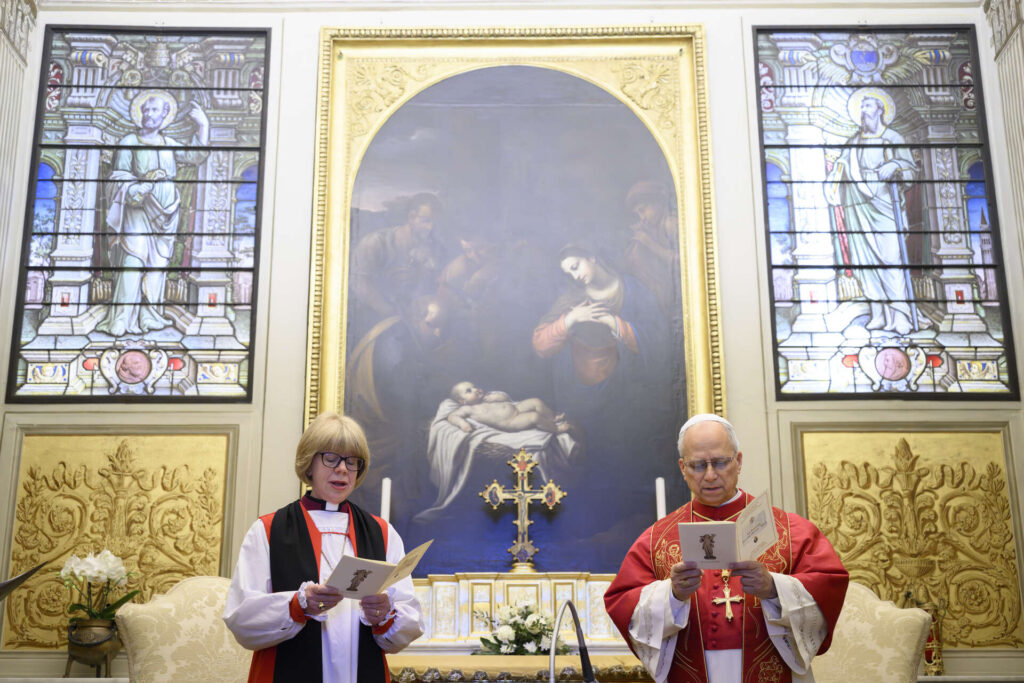
Yet Leo pulled off the meeting with an understated elegance. By praying with her in the Chapel of Urban VIII, he emphasized a shared Christian foundation and the urgency of peace in a world at war, specifically referencing the ongoing conflict in the Persian Gulf.
Pope Leo’s meeting with Archbishop Mullally balanced the interests of Christianity’s liberal and conservative branches across all denominations — acknowledging the reality of modern leadership and the social changes that have occurred over the past century, while staying rooted in the Catholic requirement for a common theological floor.
It was a move that prioritized reconciliation over the “culture war” optics that define secular politics and was – in its own way – a master stroke.
The American Realist: Accountability as a Path to Unity
Leo XIV understands that internal unity cannot be achieved through spiritual rhetoric alone; it requires radical honesty. His background as a “realist”—a trait sharpened by years of missionary work, pastoral leadership and curial administration—was on full display in the May 1, 2026, announcement of an $800 million abuse settlement in the Archdiocese of New York.
By supporting this level of transparency, Leo is attempting to heal the most dangerous division in the Church: the breach of trust between the pews and the pulpit.
Leo has reinforced this through his public appearances to various religious orders, from the Brothers of the Christian Schools to the Sovereign Military Order of Malta, where his message has been consistent: “You are a channel, not a filter.”
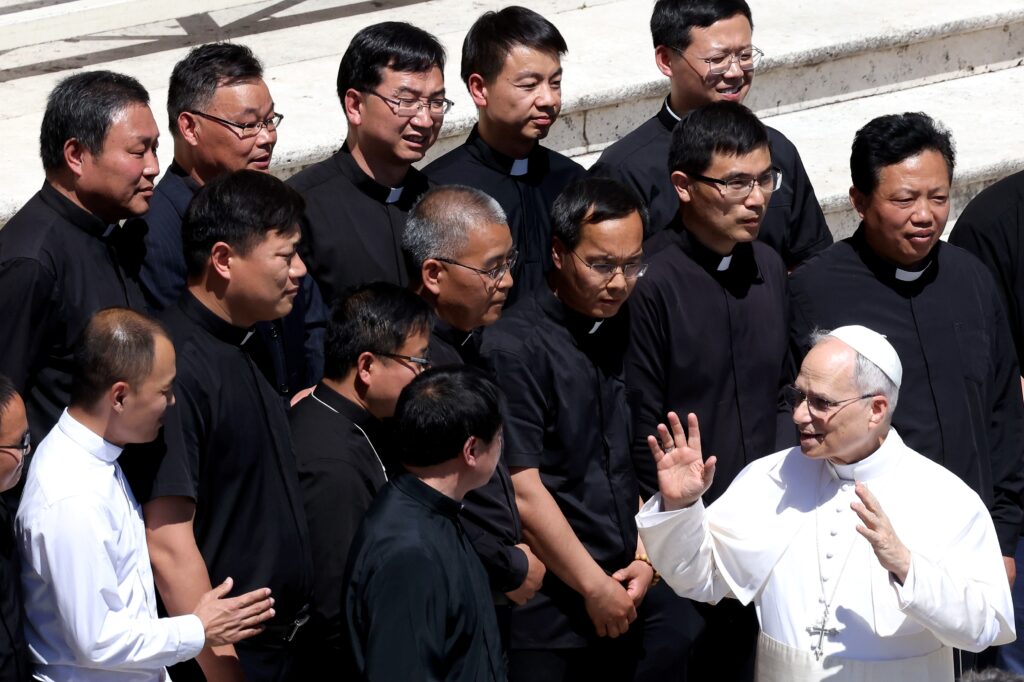
Leo XIV is demanding that the Church’s hierarchy open their ears and work constructively with the laity so that the institution can function as a vessel for the divine.
His recent appointments of “bridge-building” bishops, like Evelio Menjivar-Ayala to the rural diocese of West Virginia, further underscore this strategy. By placing a Latino missionary in a traditionally Appalachian setting, Leo is forcing a constructive encounter between different segments of the American Church, insisting on a unified, multicultural Catholic identity.
Conclusion: The Anchor in the Storm
Leo XIV’s first year suggests a papacy of Recenterment. While the “Chaos Magician” in the White House uses “bullshit” and blasphemous imagery in a vain attempt to manufacture a reality that serves his ego, Leo XIV attempts merely to inhabit the Truth.
In his inaugural Mass, Leo spoke of “moving aside so that Christ remains.” This kenosis—this self-emptying—is the ultimate counterpoint to the profane narcissism of our age.
The “right moves” of Robert Prevost have not been flashy, but they have been deep.
He is anchoring a fractured Church so that it might, in turn, anchor a fractured world. In a time of shifting shadows and reality-warping rhetoric, Pope Leo XIV’s first year is a reminder that there is still such a thing as solid ground.
Until next time, we are —
Greymantle