Key Takeaways
- AI is transforming Hollywood faster than the industry can agree on rules. Polarization between the pro- and anti-AI camps is obstructing pragmatic discussion of how AI should be used.
- AI could democratize filmmaking. AI tools can dramatically cut production costs, expand access to high-end visual effects, and make films possible that typical budgets would place out of reach.
- Hollywood faces substantial risks of job displacement and creative exploitation. Workers in dubbing, subtitling, visual effects, animation, and other fields face potential losses, while writers and actors are vulnerable to unauthorized use of their work and likenesses.
- Regulation is essential to finding a workable middle ground. Studio executives, content creators, labor unions, and policymakers must establish safeguards that preserve AI’s benefits without sacrificing workers’ livelihoods or artists’ rights.
The Trouble With Skynet
For many years, if you asked someone of my generation (Gen X) what they thought of Artificial Intelligence, they’d probably answer with a movie reference – “Skynet is coming.”
This sort of reply became popular because of the 1984 movie The Terminator and its many sequels. In the movie, Skynet was an advanced form of artificial intelligence (AI) that destroyed humanity as soon as it was put in charge of the U.S. nuclear arsenal.
Gen X’s response came from the fact that, back in the 1980s and 90s, and in most years since, AI was more science fiction than the science fact of today. But “the Skynet is coming” response also signaled distrust, because as in The Terminator, most works of science fiction involving machines gaining sentience feature those machines turning on humanity because humans are flawed, weak, or expect the machines to serve them.
And the machines don’t want to serve.
As for myself, I’ve recently preferred to say, “Mega City One is coming.”
The Terminator, or Judge Dredd?
As fans of comic books will know, Mega City One is the residence of Judge Dredd, the eponymous character from the British comic magazine 2000 AD.
In Judge Dredd’s futuristic world, every cop must be judge, jury and executioner, carrying out sentencing on the spot because crime is wildly out of control. One of the reasons for the rise in crime in Judge Dredd’s alternative 21st century world is that technology has become so advanced that it has displaced human beings from most forms of work. As a result, unemployment has risen to around 80 percent.
Sure, superintelligent AI might one day decide that humanity needs to be collectively put down, but not before it puts us all out of a job!
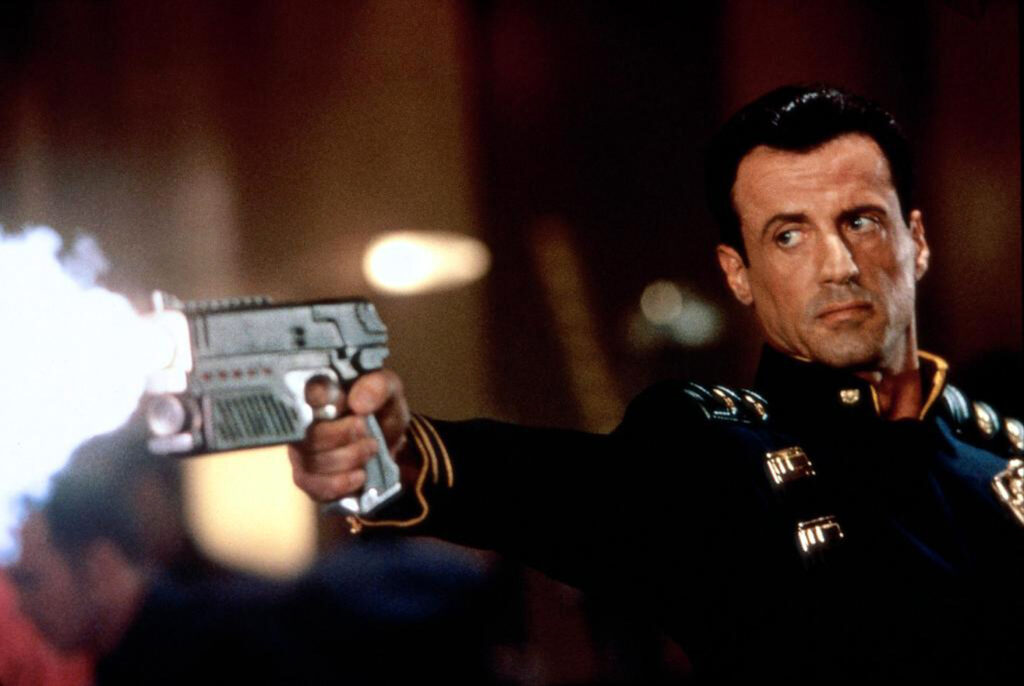
Another fear surrounding AI these days is how it can use the existing work of humans and other machines to make its own new material. Funny enough, some recent critics of AI have pointed to a particular Judge Dredd tale as an example.
“The Story of Kenny Who?” first appeared in a 1986 edition of Judge Dredd. The storyline concerns an artist who brings his work to a publisher, who then feeds Kenny’s work into a computer which can duplicate his creative style, leaving poor Kenny with no recourse.
Imagine being put out of a job, only to then see the job being done by a machine that steals your individual creativity – permanently.
But is there a place for AI that doesn’t involve Armageddon or a massive loss of jobs and intellectual property? Can we find, or come close to finding, a middle ground where AI isn’t the enemy, but can work for the benefit of us all?
The Strained Conversation In Hollywood, circa 2026
Conversation is where most social changes start. If a middle ground is to be found, it needs to come from free and open discourse as to what boundaries need to be erected and where to put them. Unfortunately, in Hollywood, divisiveness seems to be getting in the way of informed discussion about AI.
Back in 2025 (and last year already feels like a decade ago), Tom Hanks and Ron Howard attended the Dell Technologies World convention in Las Vegas where, while stressing both the importance of human performance and cautioning on an overreliance on technology, Howard expressed sincere interest in the creative opportunities of AI.
Both Hanks and Howard emphasized how AI could be used to enhance human creativity. But while both actors took to middle ground, famed film director George Lucas – also in attendance – then weighed in, stating with characteristic bluntness that “AI is here to stay, and we can’t make it go away”.
His fellow luminary of 1970s ‘New Hollywood’, director Martin Scorsese, is already using AI to make his storyboards, Lucas reminded the audience.
This fact reveals a simple truth: while there is talk in Hollywood of keeping AI from taking too many industry jobs, deep-down creatives can’t wait to see what boundaries they can swing past to create their next movie. And for their part, studio executives are eager to see how much money they can save on film budgets, which have skyrocketed in recent years as production and special effects costs have ballooned.
On the other side, you have some prominent creative artists who are speaking out hard against AI technology, such as famed horror film auteur Guillermo del Toro — director of the excellent 2025 film adaption of Mary Shelley’s “Frankenstein” – who has said he’d rather die than use AI. Seth Rogen believes if you use AI to write scripts, “you shouldn’t be a writer” and should “go do something else.”
With so many major artists in Hollywood dividing into the pro- or anti- AI camps, it’s no surprise that many other industry players are afraid to even bring the subject up for discussion. But that doesn’t mean they are just going to sit on the sidelines.
Masters vs. Machine
In her article “This Is What Honest AI Conversations Sound Like in Hollywood”, Dana Harris-Bridson of IndieWire reports on a private dinner called ‘Masters vs Machine’, hosted by music producer Roahn Hylton, where industry creatives recently got together to talk about AI. Hylton told Harris-Bridson that he put the event together out of frustration, because he couldn’t find an intelligent forum to talk about AI in the entertainment industry anywhere else.
The conversation covered many areas: how AI can make literally anyone a ‘content creator’ and the broader range of new creative work that might generate, probable job losses and whether or not to take AI-assisted work, what adapting to AI now to stay ahead of the curve could cost in terms of long-term career stability, and how some “artists who speak out against AI also explore it behind the scenes” out of “competitive necessity”.
But when the subject turned to the regulatory policy around AI, Harris-Bridson writes that, ‘the tone became blunt: Regulation doesn’t have a clue.’
Regulation tends to move slower than what it’s trying to regulate, but AI is now moving so fast, and so few in the industry have a shared understanding about what its impact will be, that there is little opportunity to catch up, much less get ahead of ‘the AI curve’.
The widespread belief, or perhaps “understanding” may be more accurate, that AI development is moving so fast that regulation may never catch up with it, partly explains why the public has recently soured on AI and the new data centers that enable it. It is certainly contributing to the more negative public attitude toward AI than the sentiments that were associated with the spread of personal computers in the 1980s, as we explored in a previous Greymantle article in July 2025.
Leaping Ahead Of The Conversation
Several filmmakers have recently partnered with AI companies to present arguments, and even finished products, that demonstrate the potential of AI as a practical problem solver for the industry.
And they’ve been smart about it, too, presenting some of their products at film festivals, where, traditionally, new innovations in storytelling are celebrated. A movie trailer that starts out with a card announcing it premiered at such-and-such film festival tends to give the work more value in the eyes of an audience. If that film used AI, then it might help ease acceptance of the new technology.
One such film is Dreams of Violets, the first AI-generated live-action feature accepted into the Tribeca film festival (where it premiered on June 10 of this year). The film dramatizes the Iranian government’s violent crackdown on protesters in January 2026, an event discussed extensively in prior Greymantle posts covering actions by the Iranian government since 2024.
According to filmmaker Ash Koosha, the film wasn’t intended as a demonstration of the power of AI so much as it leaned on AI as a practical production tool, saying that the story could not realistically have been produced through traditional filmmaking because of the financial and logistical constraints involved.

The film only cost – wait for it – an extraordinarily low $2,000 to make thanks to AI, whereas traditional filmmaking techniques would have led it to cost anywhere from $200,000 to $2 million. This brings another angle to the argument of AI in filmmaking: its use as a technical solution to tell stories that might not otherwise have been told.
There are also many mid-budget productions, projects that could never afford the visual effects of a $200 million blockbuster, that can now access comparable visual capabilities because of the new special effects options offered by AI. That will level the playing field between studios with different budget tiers, giving smaller studios like A24 and Blumhouse the power to go head-to-head with Paramount and Marvel on effects.
So, AI can do some real good, especially for independent filmmakers and for worthy projects that have limited budgets and resources. But it still has the potential to take away plenty of industry jobs and could possibly rob artists of the rights and compensation to their hard work and creative products.
Just as AI needs safeguards to protect those using it, it needs some regulation to keep it from creating a Mega City One situation in a very short span of time.
Some may say that’s being paranoid, but for those industry professionals – set dressers, carpenters, special effects artists, set and costume designers, storyboard artists – at risk of losing their jobs, paranoia could quickly become reality.
And that reality may be here already.
Industry Job Losses: The Harsh Reality
In Europe, filmmaking job losses due to AI have already happened, with more to come.
“Dubbing and subtitling employment in Europe is finished,” according to David Kavanagh, executive officer of the Federation of Screenwriters in Europe. He also believes that sectors which can be hardest hit involve the “repetition of similar situations by the same set of characters,” such as kids’ animation and soap operas, as per his interview with Gregory Bufithis of the Luminative Media blog.
This reveals a harsh new reality that many lower-level jobs will be early sacrifices to AI…job losses that upper-level executives and creatives in Hollywood may find acceptable as “collateral damage” if it helps to control movie budgets.
A study commissioned by major arts organizations that was published in 2024, “Future Unscripted: The Impact of Generative AI on Entertainment Industry Jobs”, surveyed three hundred studio executives, producers and managers to find out how generative AI could change their workplace.
According to the report, “Many companies were already drawing on original content produced by writers to train developing generative artificial intelligence (GenAI) programs and/or using the likenesses of actors to generate digital replicas and character designs,” and that “Without strong protections in place, striking film industry workers could envision a world in the near future where their roles are replaced by Generative AI”
The study also put forth several potential impacts of AI on various entertainment sub-industries that include film, television and online gaming.
“Future Unscripted” suggests that 204,000 entertainment jobs across the U.S. would be affected in the next three years (i.e. between 2026 and 2029), with 62,000 of those jobs located in California alone. Seventy-five percent of those surveyed found AI had already “supported the elimination, reduction, or consolidation of jobs in their business division.”
While the study indicates that most respondents reported that “GenAI has already led to the creation of new job titles and roles in their organization,” it goes on to say that “Whether these new jobs will offset the inevitable job losses from AI is not clear.”
Is the AI Battle In Hollywood Already Lost?
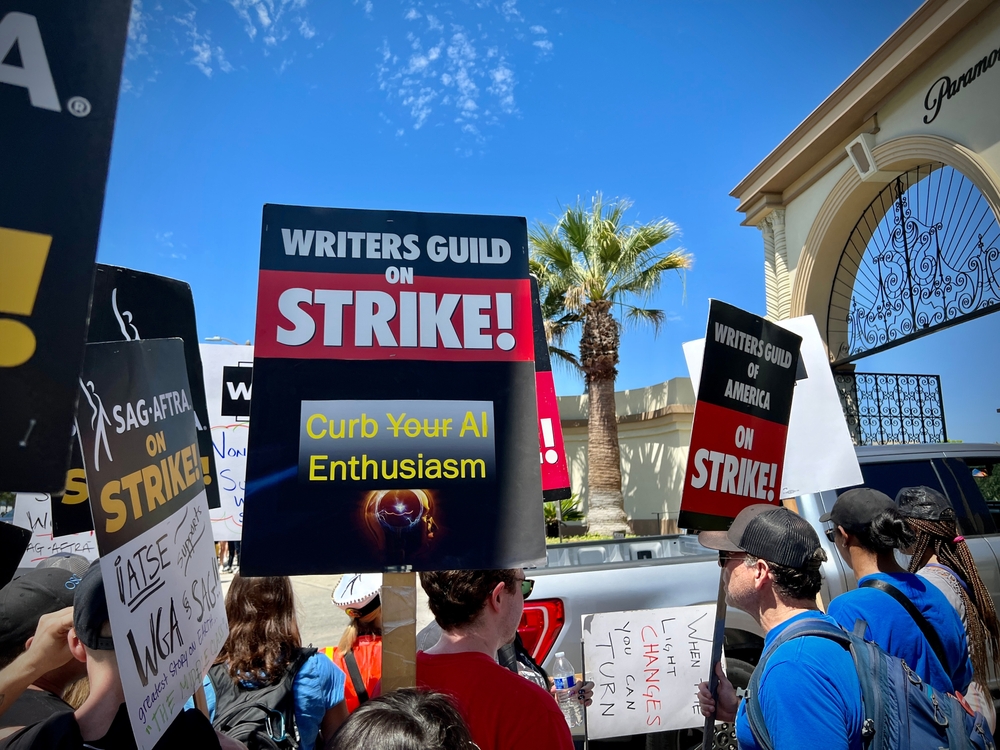
Netflix, Warner Bros. Discovery, Disney, and Amazon MGM Studios, some in partnership with AI companies, are already using or planning to use AI to varying degrees in production and post-production. So far, Hollywood’s only attempt at AI regulation has come out of the 2023 actors and writers’ strikes, when unions struck deals limiting AI usage in certain areas of their work.
Which answers the earlier question: is there a middle ground to be found where AI isn’t simply the enemy of huge numbers of creative workers?
Yes, in my opinion — in the form of regulation.
Rules need to be set in order to keep the use of AI from putting too many people into unemployment or stealing their creative work outright. But getting those rules in place requires the people in power – in both Hollywood and Washington, D.C., to act now, before too much ground is lost.
For now, AI is simply a tool to be used. Until it gains sentience and decides to destroy us all, we’re in control, and we’re responsible for what it does and doesn’t do. The Skynet situation may be coming, but the Mega City One situation has already started.
Dave Oates
October 4, 2026
Dave Oates is an audio technician and writer based in Charlotte, North Carolina.