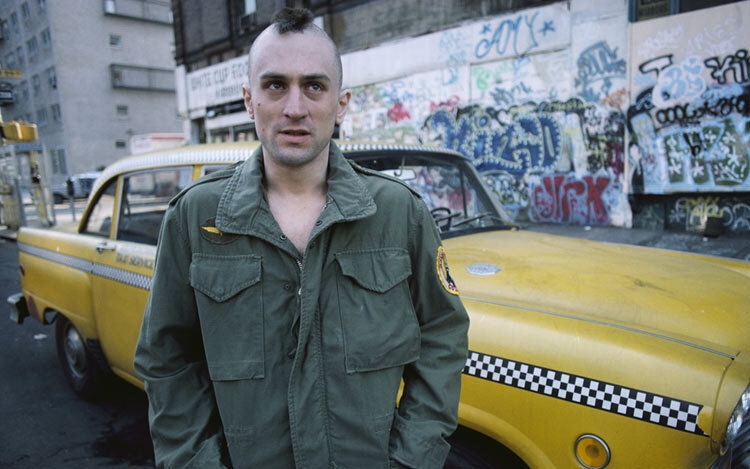
In Parts 1 and 2 of this series, Greymantle explored how the moral structure of American films evolved between the mid-1960s and 1990s, as the morally grounded heroes of classic Hollywood gave way to the tragic antiheroes of 1970s ‘New Hollywood’ and, later, to the inverted heroes of 1980s vigilante films, which rose to challenge earlier forms of movie heroism. In the final part of our series, we examine how inverted heroes decisively displaced both classic heroes and antiheroes in the early 21st century via prestige television. It’s the story of how America learned to love the bad guys.
I. The Age of the Inverted Hero
Prestige Television and the New Protagonist
If New Hollywood opened the door to morally ambiguous protagonists, prestige television ripped that door off its hinges. The emergence of HBO in the late 1990s, followed by AMC, FX, Netflix, and other premium networks and streaming platforms, fundamentally altered the economics of storytelling.
Television was no longer constrained by the need to resolve moral conflicts in a single hour. Writers could now follow a protagonist for years, inviting audiences into his or her private life, rationalizations, vulnerabilities, and slow moral deterioration.
The commercial advantages of this format proved immense. The longer audiences remained with a character, the stronger their emotional investment became. Familiarity bred sympathy. Even deeply immoral individuals acquired a kind of narrative intimacy unavailable to earlier generations of filmmakers.
No series demonstrated this more dramatically than The Sopranos (1999–2007).
Mob Boss as “Relatable” Suburban Dad
Tony Soprano (James Gandolfini) is, by any objective standard, a violent criminal responsible for extortion, murder, and innumerable acts of corruption. Yet series creator David Chase accomplished something remarkable with this series: by allowing audiences to accompany Tony into psychotherapy, family life, and the ordinary frustrations of suburban existence, The Sopranos encouraged viewers to identify with a man who would serve as the chief villain in any crime drama.
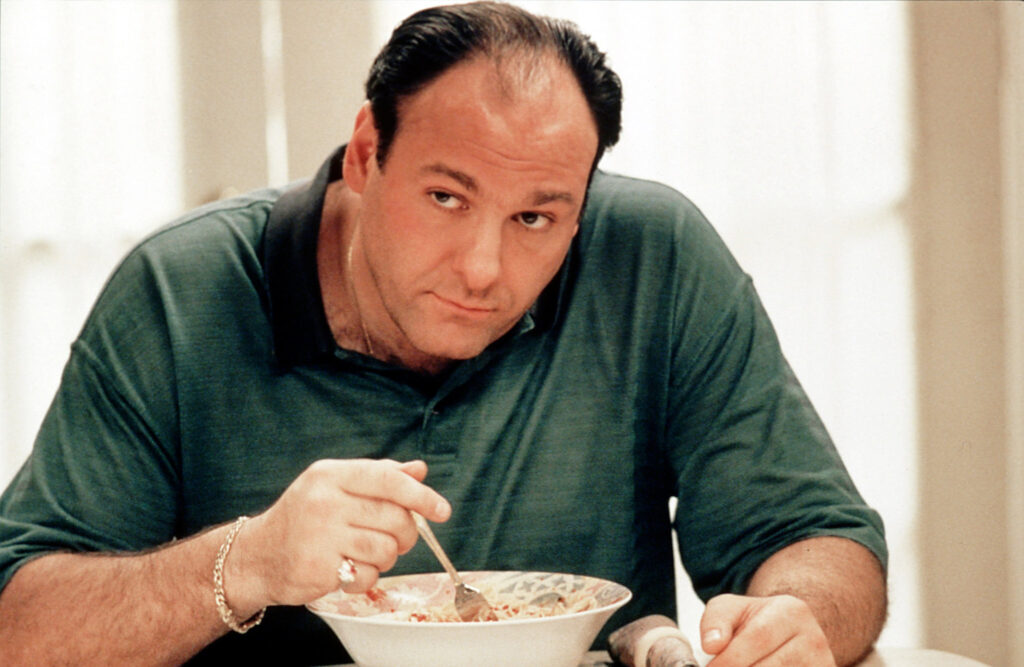
What makes Tony particularly revealing is what he does not struggle with.
Tony struggles with depression, his mother, his children, his marriage, his business, his anxieties, and the pressures of mob life. But he rarely experiences comparable moral struggles over his choices. Murder, extortion and intimidation are treated as the operating conditions of his world rather than as ethical problems he must overcome.
That distinction matters. Tony isn’t a tragic antihero wrestling with whether he should do evil. He is a deeply compromised man wrestling with the consequences of being himself. The audience is invited to sympathize with his emotional suffering without requiring him to undergo a corresponding moral transformation.
The brilliance—and discomfort—of The Sopranos lies in that tension. The series continually reminds viewers of Tony’s brutality even as it invites sympathy for his vulnerabilities. Many viewers found themselves rooting for Tony despite themselves. Prolonged identification had reshaped moral perception.
Other series pushed the evolution still further.
Criminal Mastermind as Moral Authority
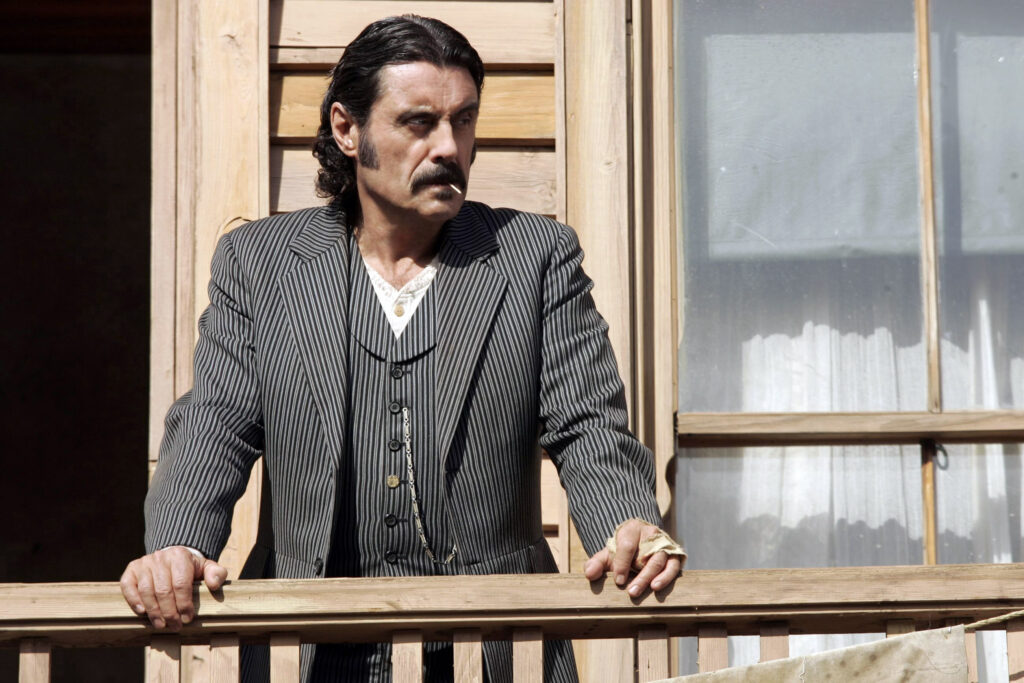
Al Swearengen (Ian McShane), the ruthless proprietor of a frontier saloon in Deadwood (2004-2006), possesses undeniable charisma despite his immense capacity for manipulation and violence. Al is also unusually clever, and despite the mayhem he instigates is often more ethically grounded than the “really bad” people (e.g. George Hearst, corrupt judges, and a fictional Gilded Age serial killer) he is set against.
Sidenote: The real Al Swearengen was absolutely one of those ‘really bad’ people.
Raymond Reddington (James Spader), the criminal mastermind at the center of The Blacklist (2013-2023), combines impeccable manners, sharp wit, encyclopedic intelligence, and lethal competence based on a career built in entirely in the world of organized crime.
As Greymantle has argued previously on these pages, the Ray Reddington character is particularly notable because he also belongs to a second strand in postmodern films: the paranoid thriller in which institutions are compromised, conspiracies are real, and official explanations are lies.
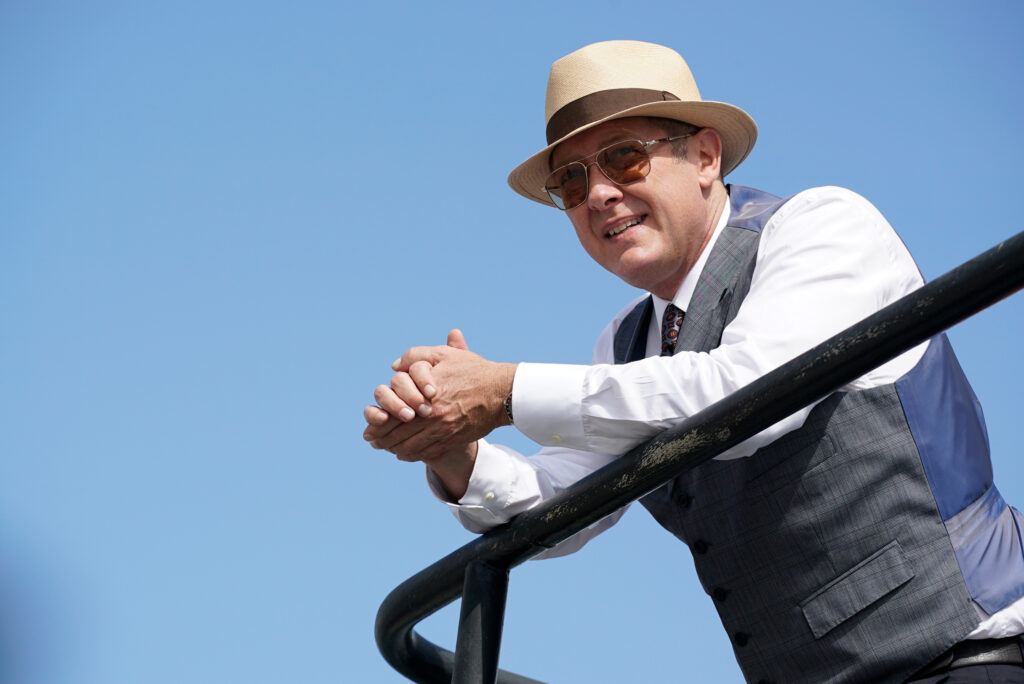
In The Blacklist, the FBI and other official authorities are always several steps behind Ray. Reddington knows what they do not, sees what they cannot see, and understands the hidden machinery behind events. He is therefore more than your typical Inverted Hero. In The Blacklist, Reddington becomes the primary source of epistemic and moral authority.
Reddington’s devious criminality isn’t just tolerated by the audience — it is what makes him attractive. The show repeatedly invites viewers to trust the outlaw because the outlaw understands the world better than those charged with governing it. The moral and epistemic authority of the Inverted Hero are intertwined.
Greymantle sees The Blacklist as an unusually significant series given developments in American politics since it premiered in 2013.
Serial Killer as Good Citizen
In the TV series Dexter (2006-2013 plus more recent reboots), Dexter Morgan (Michael C. Hall) cuts a chilling figure as the show’s serial killer protagonist by directing his homicidal impulses toward other murderers, thereby making the multiple homicides he commits during the series morally acceptable to the audience (though by no means less gruesome).
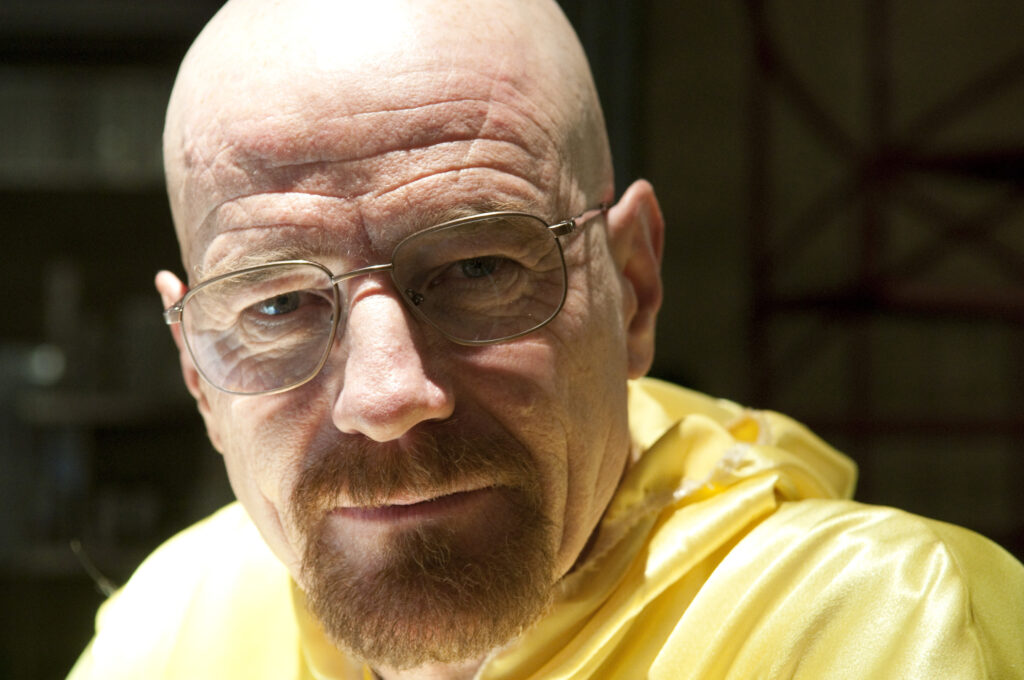
Walter White begins Breaking Bad as an ordinary chemistry teacher before evolving into television’s most calculating drug lord, not only eliminating scores of business rivals, but going so far as to dissolve the body of a murdered child in a vat of hydrochloric acid.
These characters differ in temperament and motivation, yet share a common narrative structure. Their competence trumps their morals. Audiences admire their brains and resourcefulness even while recognizing the ethical corruption underlying their actions.
By the late 2010s, the Inverted Hero had become not just one species of leading man among many. He was prestige television’s defining protagonist.
II. America’s Postmodern Action Heroes
The same transformation occurred simultaneously in action movies.
The classic action heroes of the 1980s and 1990s—figures such as Indiana Jones, John McClane, and even the later incarnations of James Bond—were certainly willing to employ violence. Yet that violence remained subordinate to an explicitly moral purpose.
They fought to rescue innocents, defeat aggressors, or preserve society against genuine threats. Their methods tested ethical boundaries, but their objectives remained recognizably heroic.
Many contemporary action heroes inhabit a markedly different moral landscape. John Wick offers perhaps the clearest example.
Everything about Wick is designed to inspire admiration. His precision, discipline, tactical brilliance, and almost superhuman efficiency elevate him into an object of fascination. Yet he remains, at bottom, a retired assassin seeking revenge within a criminal underworld populated almost entirely by other killers.
The John Wick films devote comparatively little attention to the moral implications of this world. Instead, they invite audiences to marvel at Wick’s mastery. His violence becomes a variety of aesthetic performance, recalling Martin Scorsese’s description of the “dance of death” in the final 15 minutes of Sam Peckinpah’s The Wild Bunch (1969).
Something similar occurs, albeit with humor, in Deadpool. The character’s irreverence, brutality, and gleeful disregard for morals constitute the core of his appeal. Harley Quinn has likewise been transformed from Batman villain to anti-establishment icon, her criminality softened less through any kind of moral awakening on her character’s part than through audience affection in films like Suicide Squad (2016), Birds of Prey (2020), and Joker: Folie à Deux (2024).
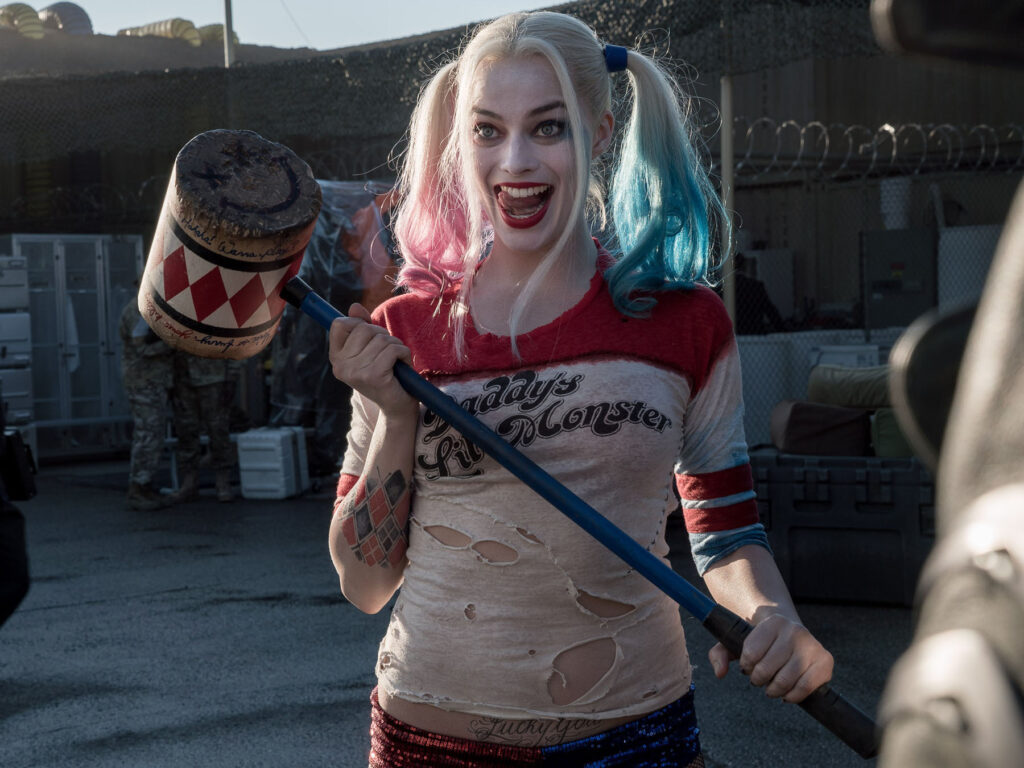
Even the 2019 film Joker, despite its considerable artistic ambitions, places viewers inside the psychological experience of one of popular culture’s most infamous villains, challenging audiences to empathize with his descent into florid criminality.
Not every Inverted Hero fits this model perfectly. Din Djarin—The Mandalorian, for example—retains a recognizable moral center beneath his stoic exterior. His journey is ultimately one of responsibility, sacrifice, and paternal devotion.
But even here, the visual language of contemporary heroism emphasizes lethality, emotional detachment, and exceptional competence in ways that would have seemed unusual for mainstream heroes a generation earlier.
Across genres, the pattern is strikingly consistent: The hero resembles the outlaw. The vigilante resembles the criminal. The assassin resembles the knight. The distinction between hero and villain hasn’t disappeared but is much more difficult to locate.
21st century audiences still want heroes. But the type of individual selected to fulfill that role has changed.
III. The Hollywood Feedback Loop: From Reflection to Amplification
At this point, an obvious objection presents itself: Perhaps Hollywood simply reflected the society around it. Perhaps filmmakers responded to declining institutional trust, political polarization, and cultural pessimism by creating ‘edgy’ stories that resonated with their audiences.
There is some truth to that argument.
Popular entertainment doesn’t emerge in a vacuum. Filmmakers and screenwriters absorb the same cultural assumptions, anxieties, and aspirations as everyone else. The fragmentation of civic life and growing suspicion of authority made morally complicated protagonists appealing. Audiences were prepared to embrace characters that earlier generations would have rejected.
Yet reflection is only half the story, because the relationship between culture and entertainment is reciprocal. The vibes don’t flow only in one direction.
Stories influence audiences no less than audiences influence stories. Every successful film or television series teaches viewers, however subtly, what kinds of people deserve their admiration, sympathy, or contempt.
These lessons are rarely explicit. They operate through emotional identification rather than rational argument. Viewers inhabit the protagonist’s perspective, seeing the world through his fears, ambitions, resentments, and triumphs. Repeated exposure reshapes moral sympathies.
Hollywood therefore became more than a mirror. It became an amplifier. Once morally inverted protagonists proved commercially successful, the entertainment industry acquired a powerful incentive to produce more of them. Every breakthrough generated imitators; every acclaimed antihero encouraged another network or studio to search for its own version.
The process then began to feed on itself. Audiences accustomed to morally ambiguous protagonists expected still greater ambiguity. Writers pushed boundaries further. Studios rewarded them with larger budgets and wider audiences. Each cycle normalized what the previous generation might have regarded as exceptional.
This helps explain why today’s entertainment landscape feels saturated with morally compromised protagonists. The shift did not require a single ideological agenda or coordinated cultural project. It emerged through countless creative and commercial choices that collectively reinforced one another.
IV. A Crash Course in Narrative Psychology
Narrative psychology offers an important insight into why this process matters.
Human beings are uniquely responsive to stories. We learn through narrative long before we encounter philosophy or political theory. Stories provide us with mental models by which we interpret human behavior. They teach us whom to trust, whom to fear, what qualities deserve admiration, and which forms of conduct appear effective in the world.
Repeated narratives therefore shape expectations.
If generation after generation encounters stories in which institutional authority is incompetent, moral restraint is naïve, and ruthless individuals achieve the greatest success, then those assumptions acquire a plausibility independent of their accuracy.
Are the most ruthless individuals necessarily the most competent? You can look toward the Kremlin and the White House to find your answer!

Fiction does not dictate beliefs. But it influences the range of possibilities audiences find believable. This explains why movies possess cultural power disproportionate to their apparent triviality. Most viewers don’t consciously imitate Tony Soprano or John Wick (Keanu Reeves). They don’t leave the theater aspiring to become mob bosses or assassins.
Influence operates at a deeper level. Audiences absorb habits of admiration before they formulate explicit moral judgments. They learn to associate competence with moral authority, decisiveness with justice, and institutional constraints with weakness.
That is the essence of a feedback loop. Stories don’t simply entertain — they educate the imagination. Each generation inherits the results.
None of this implies that Hollywood bears sole responsibility for America’s changing moral climate. Education systems, technological change, economic pressures, and countless other forces have contributed to the erosion of trust. Entertainment is only one strand in a complex tapestry. But it is an influential one.
Our central question isn’t whether movies and TV got darker. They have. The real question is whether darkness is another setting for heroism—or a substitute for it.
That brings us to a character who has spent more than 80 years living in the shadows without ever surrendering to them: Batman.
V. The Hero Who Refuses to Become a Villain
At first glance, Batman appears to confirm the broader trend described in this essay. Since his brightly colored television incarnation in the 1960s, the Dark Knight has undergone one of the most dramatic evolutions in popular culture.
Frank Miller’s The Dark Knight Returns (1986) reimagined him as an aging, psychologically scarred vigilante operating in a city consumed by violence and moral decay. Tim Burton emphasized Gotham City’s darkness rather than the emotional darkness of the hero.
Christopher Nolan grounded Batman in political terrorism, organized crime, and ethical ambiguity in his trilogy Batman Begins (2005), The Dark Knight (2008), and The Dark Knight Rises (2012). Director Matt Reeves more recently presents Batman as an isolated obsessive whose pursuit of justice borders on self-destruction.
Each generation made Batman a little darker. Yet none of these interpretations has allowed him to become morally inverted, apart from Frank Miller’s. That distinction is crucial.
Batman is a vigilante. He operates outside the formal institutions of law, employs intimidation, and frequently relies on violence. These characteristics place him closer to the Inverted Hero than to the protagonists of classic Hollywood.
Yet Batman’s defining characteristic isn’t his darkness, but his restraint.
Throughout decades of comics, films, and animated adaptations, Batman consistently refuses to cross one final moral boundary: he does not execute defeated enemies. His prohibition against killing is not a personal eccentricity, but the principle that prevents him from becoming the very thing he fights.
This becomes especially clear in Christopher Nolan’s The Dark Knight.
In The Dark Knight, The Joker (Heath Ledger) doesn’t merely threaten Gotham City: he wages philosophical war on Batman’s moral convictions. His objective is not tactical victory but moral corruption. He attempts to demonstrate that civilization is a thin veneer masking universal selfishness and cruelty. Under sufficient pressure, he argues, everyone—including Batman—will abandon principle in favor of expediency.
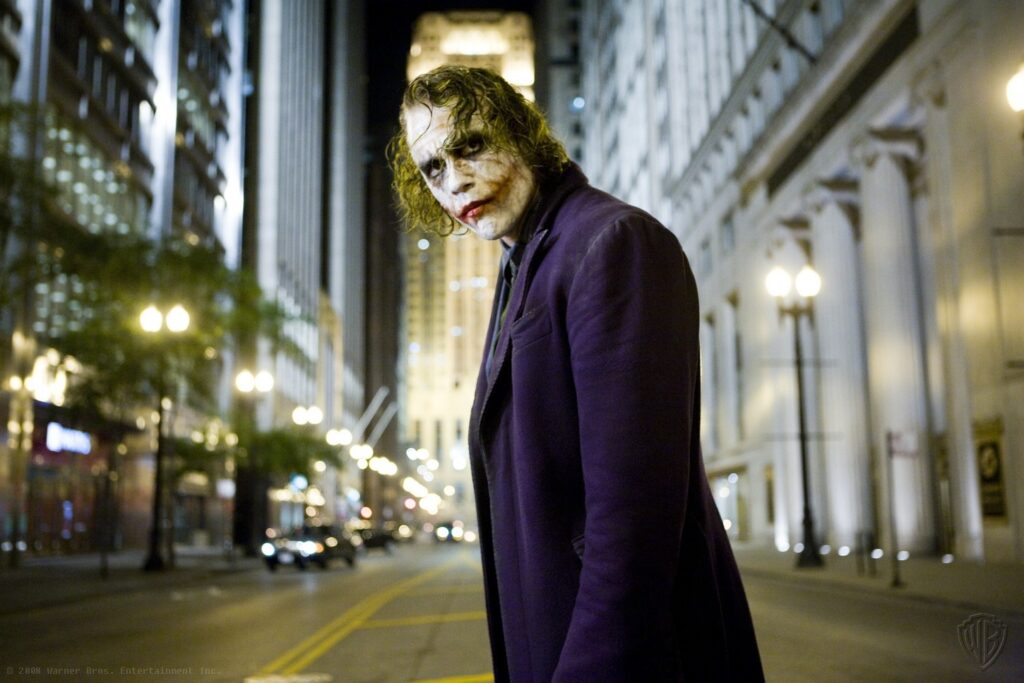
But Batman (Christian Bale) refuses that temptation.
Batman suffers defeat after defeat. He loses Rachel Dawes. His ally, Harvey Dent, goes insane. Gotham City descends into rioting. Yet Batman rejects the Joker’s central claim by refusing to become his mirror image. In the movie’s defining moment, Batman preserves his moral code when violating it would be both practical and emotionally satisfying.
Nolan’s film thereby reaches a profoundly traditional conclusion: heroism consists not merely in defeating the forces of evil but in refusing to imitate them.
Matt Reeves’ The Batman (2022), starring Robert Pattinson, arrives at the same destination by a different route. Bruce Wayne begins the film consumed by the desire for vengeance, believing fear alone can restore order to Gotham City. But he gradually recognizes that vengeance, detached from hope, only perpetuates the cycle of violence.
By the film’s end, Batman decides to become more than an instrument of punishment. He must become a symbol of moral leadership. That realization reconnects the character with his classic roots.
Audiences welcome psychological realism. They appreciate heroes burdened by trauma, doubt, and moral complexity. What they continue to reject, however, is the complete collapse of moral distinction. Batman may inhabit darkness, but he never belongs to it.
In this sense, Batman serves as an important exception to the rise of the Inverted Hero—or perhaps, more accurately, as a pressure test for Hollywood.
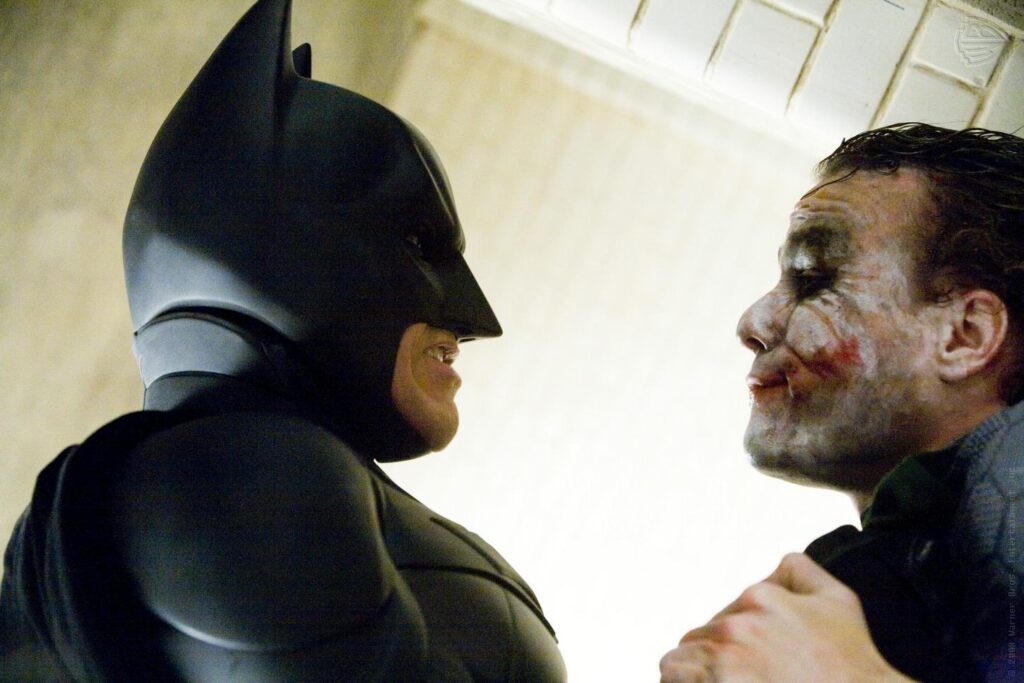
Each generation of filmmakers since the 1960s has attempted to push Batman closer to moral collapse, but the most popular interpretations have stopped short of allowing him to fall. The character shows that audiences remain capable of admiring restraint. His refusal to kill is not an outdated convention but a defining line separating justice from vengeance, heroism from vigilantism, and moral courage from mere effectiveness.
Batman therefore illustrates a limitation to Hollywood’s broader evolution. The Inverted Hero has become common, but he hasn’t entirely displaced the classic ideal. Darkness alone doesn’t produce real depth. Genuine heroism requires more than competence.
Perhaps that is why Batman has endured for more than eight decades while so many darker imitators have faded. He changes with every generation, yet he never abandons the qualities that make him worthy of admiration.
VI. Conclusion: Hollywood and America’s Moral Imagination
Stories have always revealed what societies admire.
The ancient Greeks had warriors and demigods. Medieval Europe had knights and saints. America once filled its screens with lawyers who defended unpopular clients, sheriffs who stood alone against impossible odds, and starship captains who managed to resolve ethical crises while maintaining an impressive record of workplace safety.
The point was not that these heroes were perfect. They possessed flaws, doubts, and weaknesses. But their flaws were obstacles to overcome, not qualities audiences were encouraged to admire.
Modern storytelling has become more complicated. That is not necessarily a bad thing. A culture that produces spotless heroes will produce boring stories. Human beings are messy creatures, and the best art has always recognized that fact.
The problem begins when complexity becomes inversion. There is a difference between watching a flawed person struggle against his weaknesses and watching a vicious person become admirable because his negative traits make him effective. The first gives us tragedy. The second gives us the Inverted Hero.
That distinction matters because stories don’t just entertain. They train our moral instincts.
Hollywood has not single-handedly transformed America’s moral imagination. That would give the film industry too much credit—and Hollywood already gives itself plenty of that. Other cultural and economic shifts have played their part.
But Hollywood remains America’s most influential storyteller. It helps determine which qualities become associated with heroism.
Over the past 60 years, America’s onscreen heroes have undergone a transformation. The classic hero represented an ideal: a person whose strength, intelligence, and courage served virtuous ends. The tragic antihero complicated that ideal by showing what happens when flawed individuals give in to their weaknesses. The Inverted Hero completed the transformation by suggesting that great ability alone could define greatness.
But the enduring popularity of Batman reveals something important. Audiences have not abandoned the idea of heroism. They still recognize the difference between a character who enters darkness to fight evil and one who embraces darkness because it makes him powerful.
Hollywood’s challenge in the coming decades won’t be whether it can create darker heroes. It has already mastered that art. The greater challenge will be remembering why heroes matter in the first place.
A civilization’s stories do not merely tell us what we find entertaining. They tell us what we find admirable. And the question every generation must answer is simple:
What kind of people do we want our heroes to be—and what kind of people do we ourselves want to become?
Until next time, we are —
Greymantle