How Washington Is Trying to Clear the Geopolitical Chessboard Before the Coming China Crisis
To many observers, Donald Trump’s foreign policy appears to follow no consistent logic. Washington lurches from creating crisis after crisis. In one month, American forces are striking Iranian assets in the Middle East. In another, the administration is escalating pressure on hostile regimes in Latin America.
Trump himself alternates between threatening long-time allies and negotiating with adversaries. Even some members of Trump’s own coalition struggle to make sense of the pattern. Critics often describe his diplomacy as impulsive or theatrical, driven less by strategy than by instinct.
Yet when the past 14 months of American foreign policy are viewed together, a different possibility begins to emerge. Beneath the noise and bluster, the Trump administration may be pursuing a broader geopolitical strategy—one shaped by Trump and a small circle of advisers who have spent years thinking about the future balance of global power.
Hence this week’s post: “The Method to Their Madness: Trump, Rubio and America’s Lightning Wars”.
Trump, Rubio & Kellogg’s Geopolitical Mind-Meld
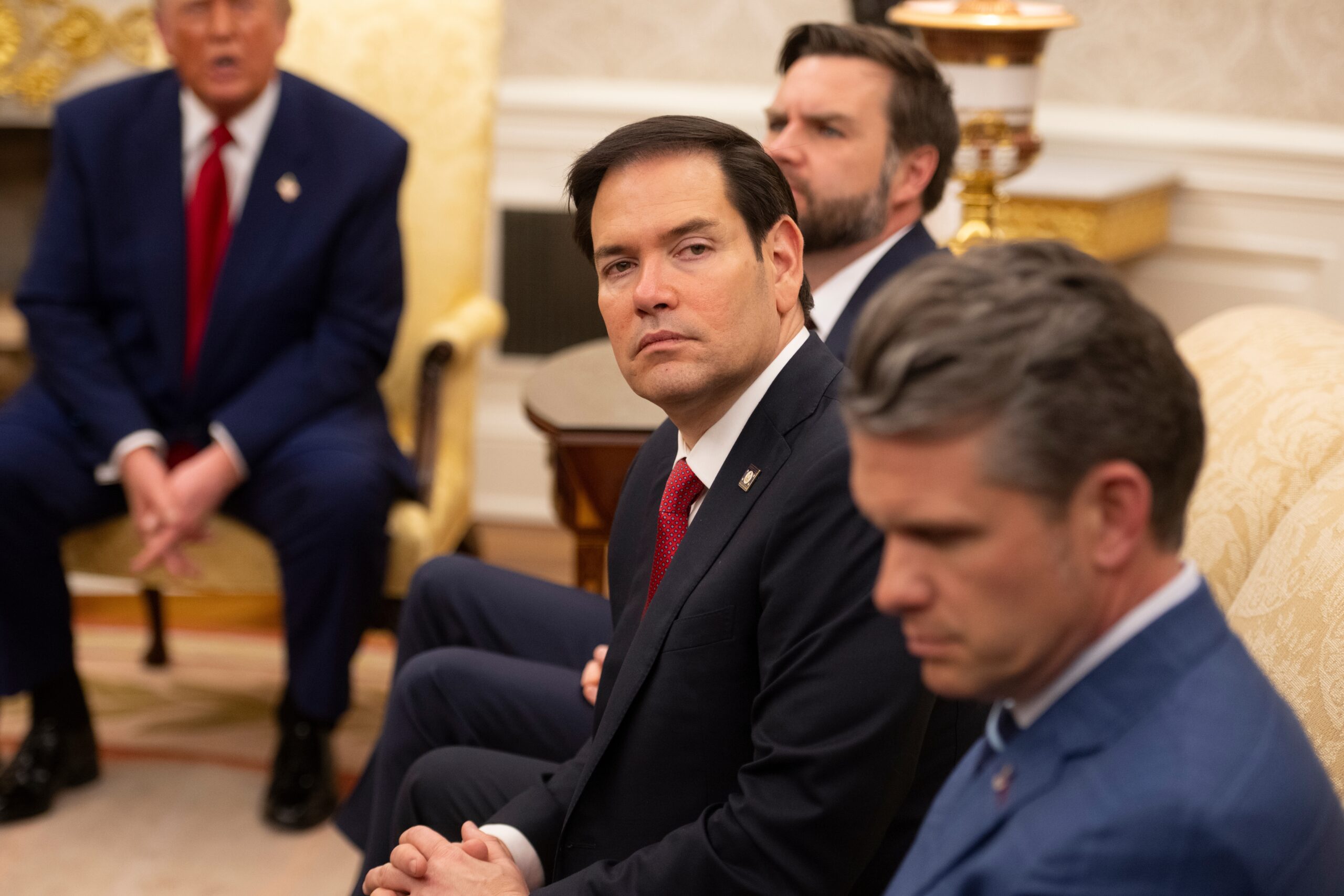
At the center of this effort stands Marco Rubio, who occupies the unusual position of serving simultaneously as both Secretary of State and National Security Advisor. Alongside him are figures such as the retired general Keith Kellogg, who spent nearly a decade advising Trump on foreign policy before leaving the administration at the end of 2025.
Taken together, their thinking appears to revolve around a stark strategic premise: the United States is entering a period of geopolitical rivalry that will culminate in an overt military confrontation with the People’s Republic of China. Since that confrontation is coming quickly, they believe Washington cannot afford to remain entangled in a half-dozen smaller regional conflicts.
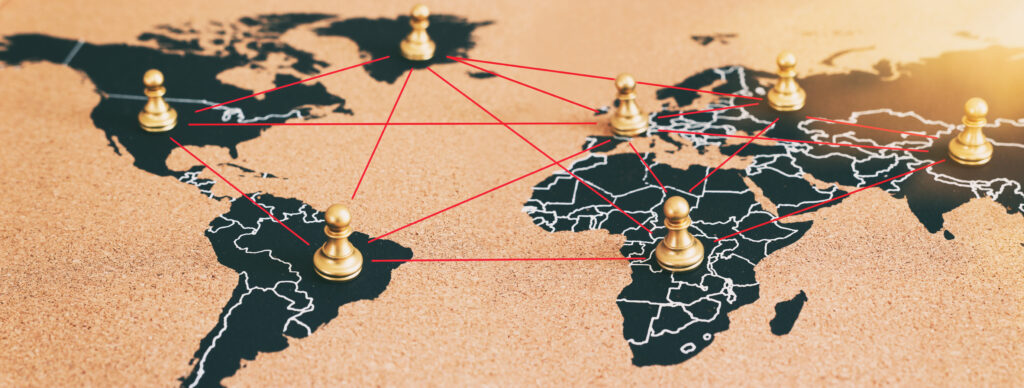
The solution they appear to have chosen is brutally simple: Before the larger struggle begins, the United States should neutralize as many secondary adversaries as possible. Seen from this perspective, the Trump administration’s recent sequence of conflicts begins to look less like chaos and more like a deliberate effort to reshape the global chessboard before the decisive contest of the twenty-first century arrives.
The Strategic Premise: Clear the Chessboard
At the core of the Trump administration’s foreign policy thinking lies a controversial assumption: that American power, while still formidable, is no longer unlimited.
For decades after the end of the Cold War, the United States operated as if it could manage multiple global crises simultaneously. American forces fought long wars in Afghanistan and Iraq while simultaneously deterring rivals in Europe and Asia. But Trump and many of his advisers believe that era has ended.
Their argument rests on two related concerns. The first is industrial.
After decades of globalization, large portions of the American manufacturing base have been hollowed out. Rebuilding the defense industrial capacity needed for sustained great-power competition could take years – if not decades.
The second concern is strategic.
The United States faces multiple adversaries—some large, some small—across several different regions of the world. In the event of a direct confrontation with Xi Jinping and the leadership of China, Washington might suddenly find itself stretched dangerously thin.
If that assessment is correct, the logical conclusion is clear. The United States must reduce the number of simultaneous threats it faces before the confrontation with China arrives. That idea—prioritizing the primary adversary while neutralizing lesser ones—appears to have become the organizing principle behind Trump’s increasingly aggressive foreign policy.
Trump’s Philosophical Heritage
Although Trump often presents himself as a revolutionary figure in American politics, many of the strategic ideas shaping his foreign policy have deep roots in earlier debates within the U.S. national-security establishment.
One influence appears to be the so-called “madman theory” associated with the presidency of Richard Nixon. During the early 1970s, Nixon and his national-security adviser Henry Kissinger attempted to convince adversaries such as the Soviet Union and North Vietnam that the American president might be unpredictable enough to escalate conflicts dramatically if provoked.
The goal was not actual recklessness but the strategic cultivation of uncertainty. If opponents believed the U.S. president might behave irrationally, they might be more willing to compromise in negotiations.
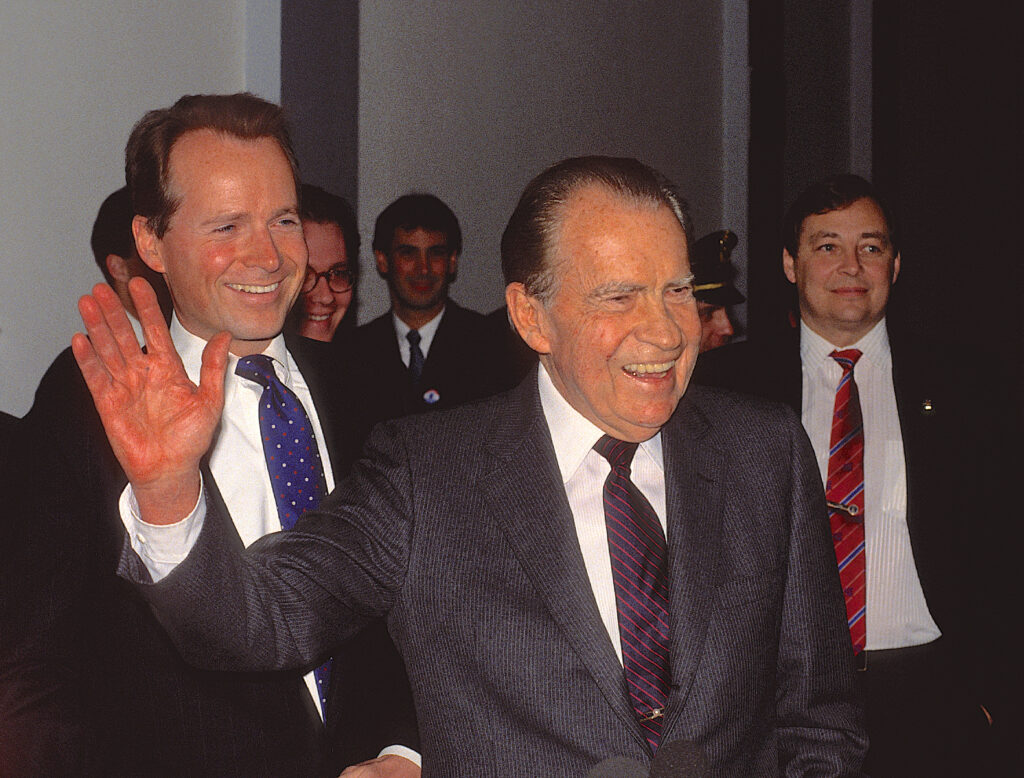
Trump appears to relish playing this role. His rhetorical style—threatening sudden escalation, praising adversaries one day and condemning them the next—often leaves both allies and rivals uncertain about what he might do next. The performance may be theatrical, but it also serves a strategic purpose: keeping opponents off balance.
Another intellectual influence lies deeper in Trump’s personal history.
Trump grew up in the 1950s in a political milieu that was deeply skeptical of the Cold War doctrine of containment developed during the presidential administration of Harry S. Truman. Containment, which sought to limit the spread of communist influence rather than destroy communist regimes outright, was always controversial among American conservatives.
Figures such as Douglas MacArthur and the hard-right activists associated with the John Birch Society argued that containment represented an unnecessarily timid strategy. Instead, they favored more aggressive policies – including contemplating the use of nuclear weapons against China – aimed at decisively rolling back communist regimes.
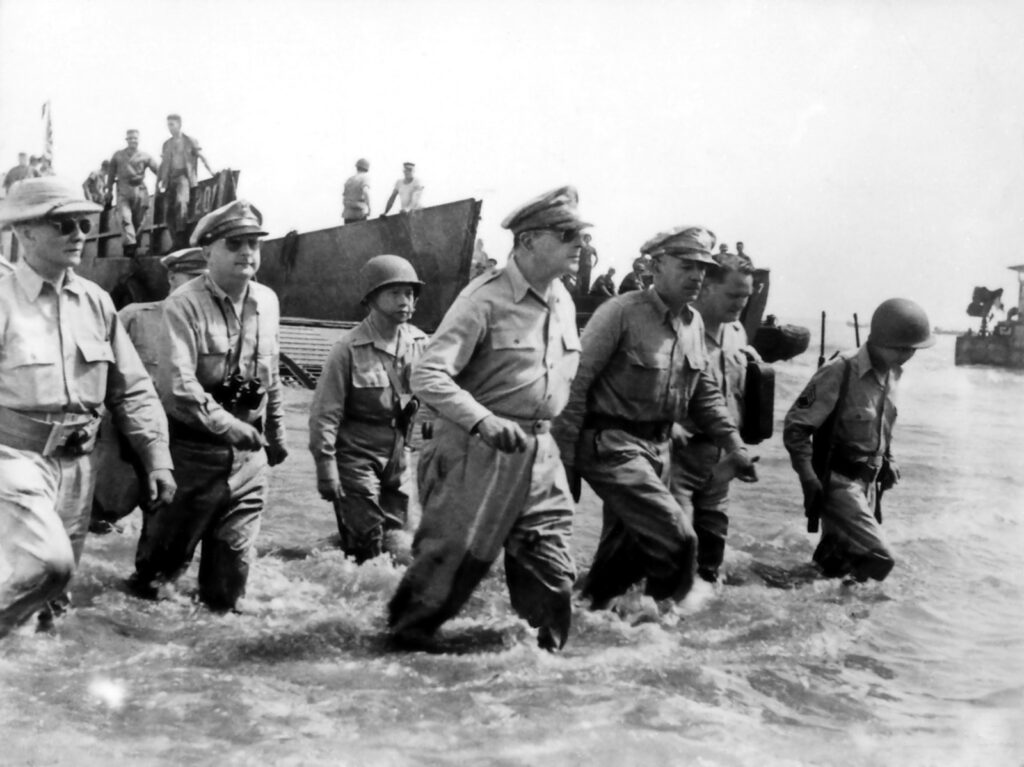
Trump’s family environment during his youth exposed him to many of these arguments. While the Cold War backdrop that produced those debates has largely disappeared, the instinct behind them—the belief that adversaries should be crushed rather than merely contained—appears to have left a lasting impression on Donald Trump.
That instinct helps explain the administration’s willingness to pursue the outright destruction of hostile regimes such as those in Cuba, Venezuela and Iran rather than merely managing their behavior.
The Kellogg Doctrine
One of the figures most closely associated with shaping the Trump administration’s strategic worldview is the retired lieutenant general Keith Kellogg.
Kellogg first became involved with Trump’s political movement just prior to the 2016 campaign and subsequently served in several senior national-security roles during the first Trump administration, including as chief of staff of the National Security Council and acting national security adviser.
Over the following decade, Kellogg remained part of Trump’s informal advisory circle, helping to shape the broader strategic thinking that would emerge in the administration’s second term.
In many ways Kellogg represented the bridge between Trump’s instinctive political style and the more traditional strategic thinking of the American national-security establishment. A veteran of the Cold War era, Kellogg has long advocated what he describes as a policy of “peace through strength,” emphasizing deterrence and, most particularly, strategic prioritization.
Although Kellogg left the administration at the end of 2025, his influence on Trump’s worldview appears to have been significant.
Unlike some of Trump’s other advisers, Kellogg has often been regarded as relatively sympathetic to Ukraine and skeptical of Russian intentions. His departure from government therefore fueled speculation that internal disagreements over Ukraine policy had played a role.
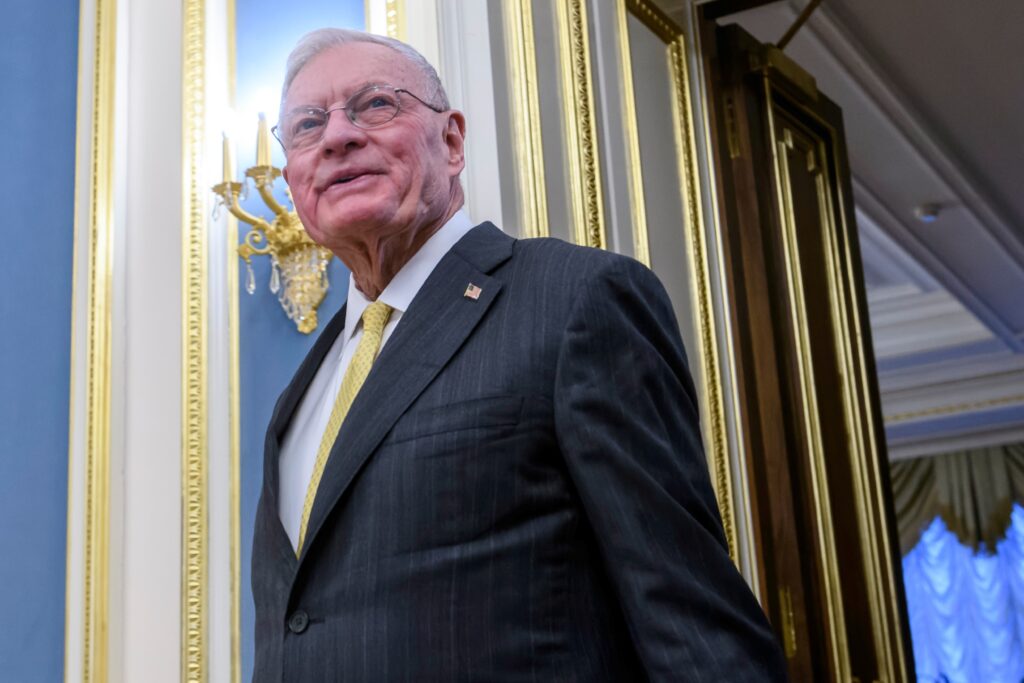
Yet even if Kellogg no longer occupies a central role in the administration, the strategic framework he helped articulate may continue to shape its thinking.
That framework rests on a basic geopolitical insight: the United States must prioritize its most dangerous rival while preventing smaller adversaries from distracting or weakening it.
“If a confrontation with China is coming, the United States cannot afford to remain entangled with half a dozen smaller adversaries scattered across the globe.”
Marco Rubio and the Western Hemisphere
If Kellogg helped articulate the strategic logic behind this approach, it has largely fallen to Secretary of State Marco Rubio to implement it.
Rubio’s dual role as both Secretary of State and National Security Advisor gives him an unusual degree of influence over American foreign policy. In effect, he serves simultaneously as the administration’s chief diplomat and its principal strategic coordinator.
For Rubio, the Western Hemisphere represents a particularly important theater of operations.
As a Cuban-American and a conservative Roman Catholic whose family fled the communist revolution in Cuba, Rubio has long viewed the survival of the Cuban regime as one of the great unresolved questions left over from the Cold War. From his perspective, bringing about the collapse of the Cuban communist government would represent the final settling of a historical account that has remained open for more than six decades.
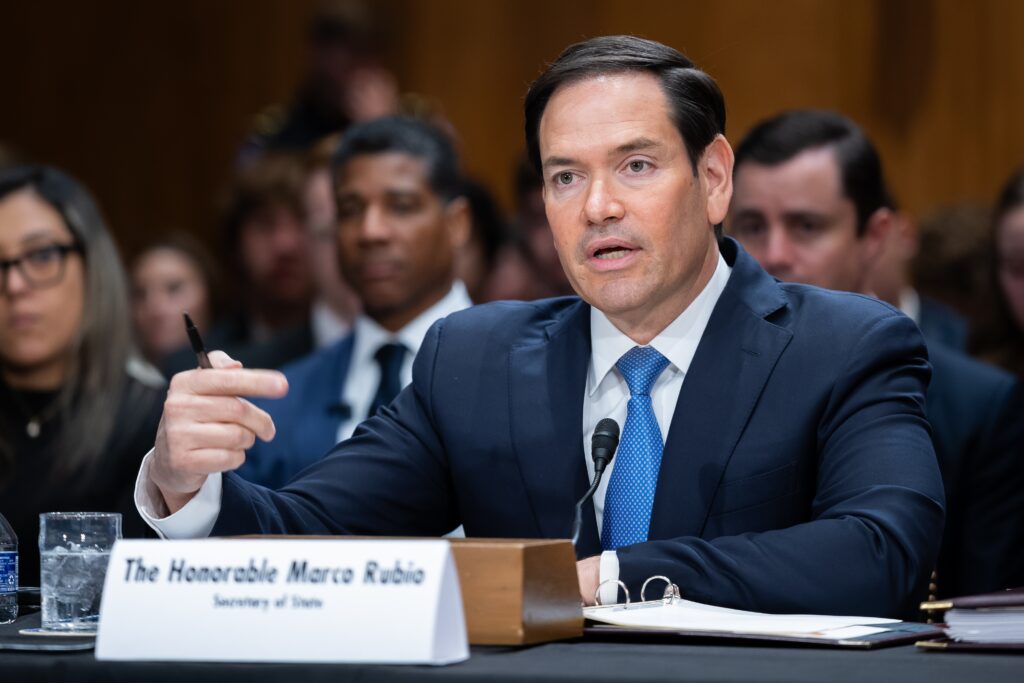
The same logic applied, in Rubio’s mind, to the regime of Nicolás Maduro in Venezuela.
Both Trump and Rubio view the Maduro government as a particularly toxic combination of Marxist authoritarianism, regional destabilization, and geopolitical opportunism. Prior to Maduro’s ouster by U.S. special forces in a lightning raid on January 3, 2025, Maduro’s government had maintained close ties with Iran, Russia, and China while simultaneously presiding over the collapse of Venezuela’s once-prosperous economy.
But the Venezuelan regime also played, and may continue to play, a more direct role in the wider geopolitical struggle unfolding today.
According to various intelligence assessments, Venezuela has served as a logistical partner for Iran, providing financial channels, gold transfers, refined petroleum products, and even safe houses and training facilities linked to the Islamic Revolutionary Guard Corps and Hezbollah – as this publication explored in this September 30, 2025 article.
From the perspective of Trump’s national-security team, neutralizing Venezuela served two purposes at once.
First, American intervention removed – or perhaps co-opted is more accurate – a hostile regime from the United States’ own hemisphere.
Second, it helped to weaken the broader network of alliances that sustain Iran’s regional influence prior to the present U.S-Israeli attack on Iran. In this sense, the campaign against Venezuela was not merely about Latin America. It was also a preparatory move to the larger confrontation now unfolding in the Middle East.
The Iranian Front
If the Western Hemisphere represents one front in this emerging strategy, the Middle East represents another.
For decades, the Islamic Republic of Iran has served as one of the United States’ most persistent adversaries. Through a network of proxies and allies stretching from Lebanon to Yemen, Tehran has built what it describes as an “axis of resistance” aimed at challenging both American and Israeli influence in the region.
From the perspective of Trump’s advisers, dismantling that network would dramatically simplify the strategic environment facing the United States.
It would also serve the interests of one of Washington’s most important regional partners: Benjamin ‘Bibi’ Netanyahu.
For Netanyahu, the struggle against Iran has been the defining geopolitical issue of his 40-year-long political career. He has repeatedly argued that Tehran’s nuclear ambitions and regional influence pose an existential threat to Israel.
Over the past two decades, successive Israeli governments have conducted a shadow war against Iranian interests, ranging from covert sabotage operations to targeted assassinations. Now, however, Netanyahu appears to believe that the strategic moment has arrived for a decisive and open confrontation at full throttle.
Netanyahu’s Narrow Window
The Israeli prime minister’s calculations are not identical to those of the Trump administration, but they intersect in important ways. For Netanyahu, timing is of the utmost essence.
Within the United States, support for Israel has historically enjoyed strong bipartisan backing. Yet in recent years that consensus has begun to fray, particularly within the younger generation of the Democratic Party.
Many Israeli leaders now fear that the era of automatic American support may soon come to an end, possibly as early as 2029 if there is a new Democratic administration after Trump leaves office. If a strategic de-coupling with America happens, then Israel’s ability to confront Iran without American backing would be significantly constrained.
Netanyahu therefore appears to believe that the present moment represents a closing window of opportunity. At 77 years old, he is also thinking about the legacy he will leave behind.
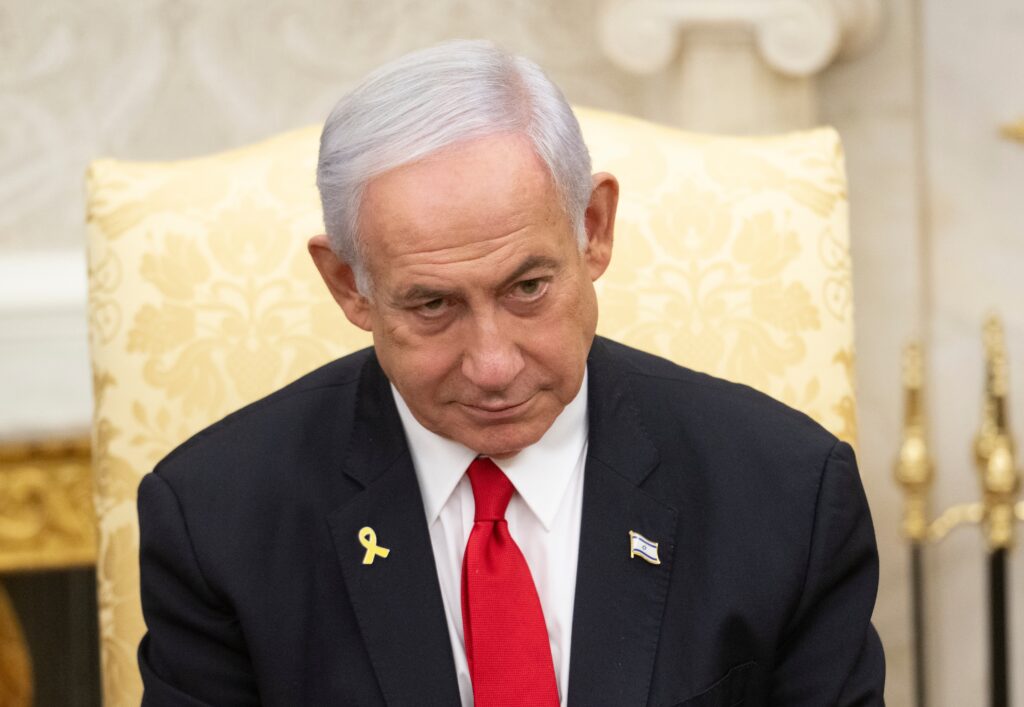
Few leaders in Israeli history have dominated their country’s politics as completely as has Netanyahu has – only David Ben-Gurion comes to mind. Yet the ultimate judgment of Bibi’s career may depend on whether he succeeds in neutralizing the Iranian threat.
If he can cripple Iran’s regional network and halt its nuclear ambitions, Netanyahu could plausibly claim to have reshaped the strategic balance of the Middle East.
Trump’s foreign-policy team appears to share that goal—albeit for their own reasons.
For Washington, defeating Iran would eliminate one of the most persistent sources of instability in the Middle East while freeing American resources for the larger geopolitical competition with China. For Israel, it would remove the most dangerous adversary the country has faced since its founding. The alignment between the two strategies is therefore nearly perfect – for the moment.
The Russia Gambit
One of the more controversial elements of Trump’s foreign policy is his apparent desire to end the war in Ukraine and normalize relations with Vladimir Putin. At first glance, this objective seems difficult to reconcile with the administration’s otherwise confrontational posture toward authoritarian regimes.
Yet within the broader strategic framework described above, the logic becomes clearer.
Trump appears to believe that the United States should avoid pushing Russia permanently into China’s geopolitical orbit. If Moscow could instead be persuaded to adopt a neutral—or even friendly—stance toward Washington, the strategic balance in Eurasia would shift dramatically.
Whether such a realignment is, in fact, even remotely possible remains an open question.
Many analysts believe that Russia’s long-term interests now align more closely with Beijing than with Washington. Years of sanctions and political hostility have driven Moscow toward deeper cooperation with China, and the bitterness in Russia created by Washington’s strong support for Ukraine through four bloody years of war has only hardened Russian attitudes.
From that perspective, Trump’s hope of drawing Russia away from Beijing may ultimately prove unrealistic. Nevertheless, the attempt itself reflects the administration’s broader strategic priority: concentrating American power against China.
The China Endgame
All these conflicts—whether in Latin America, the Middle East, or Eastern Europe—appear to point toward a single geopolitical horizon.
At some point in the coming decade – and possibly as soon as this summer – the United States may face a direct confrontation with China over the status of Taiwan. Within Trump’s strategic inner circle, that possibility looms over every major foreign-policy decision.
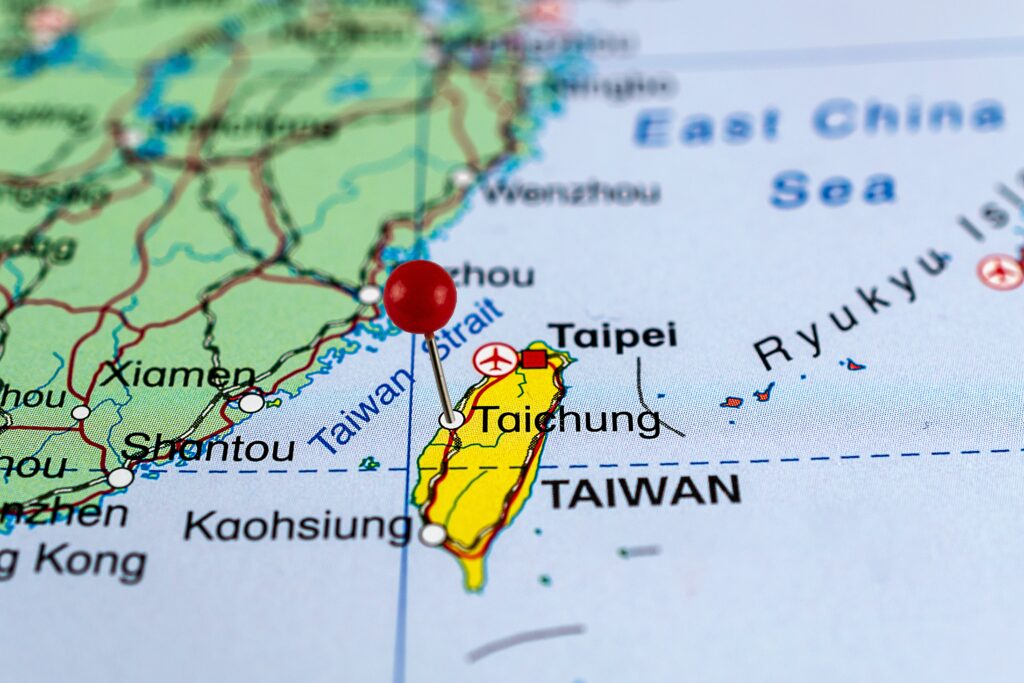
If a crisis in the Pacific erupts while the United States is entangled in multiple other conflicts, the results could be catastrophic. American military resources would be stretched thin, while adversaries in other regions exploit the distraction. See our ‘Blue Water’ series of articles about the Taiwan situation.
The logic behind Trump’s “lightning wars,” as critics have begun to call them, is therefore straightforward: Clear the global chessboard. Neutralize weaker adversaries now, while the United States still enjoys a decisive military advantage. Then focus on the one rival capable of challenging American power globally.
Conclusion: A Series of Huge Calculated Risks
In the end, the most striking aspect of Trump’s foreign policy may be the gap between its appearance and its underlying logic. On the surface, the administration’s actions often look erratic, even reckless. Trump himself seems to revel in that perception, embracing the role of the unpredictable strongman who might escalate a crisis at any moment.
But beneath the theatrics lies a more calculated strategy—one shaped by advisers such as Marco Rubio and Keith Kellogg and rooted in older debates within American strategic thinking. Their premise is straightforward: the United States cannot afford to fight everyone at once.
If a great-power confrontation with China looms on the horizon, then smaller adversaries must be neutralized beforehand. Hostile regimes in the Western Hemisphere, Iranian proxies in the Middle East, and lingering geopolitical conflicts in Eastern Europe all represent distractions that could weaken the United States at the moment of greatest danger.
Whether this strategy ultimately succeeds is another question entirely. History offers many examples of states that attempted to reshape the international system through a series of rapid, decisive conflicts—only to discover that war has a way of producing consequences that no strategist can predict.
For an overview of the cascading series of consequences to U.S. defense production capabilities stemming from the present war against Iran, we recommend this excellent Substack article by Phillips O’Brien. His is a perspective not often seen on cable television. A second article published by Jahara Matisek of the Modern War Institute at West Point provides further analysis of impacts to the U.S. military supply chain.
For now, however, the overall pattern of Trump’s military actions is becoming difficult to ignore.
What looks like chaos may in fact be preparation. If Trump and his advisers are correct about the trajectory of global power, the conflicts unfolding today may represent the opening moves of a much larger geopolitical struggle yet to come.
Until next time, we remain —
Greymantle