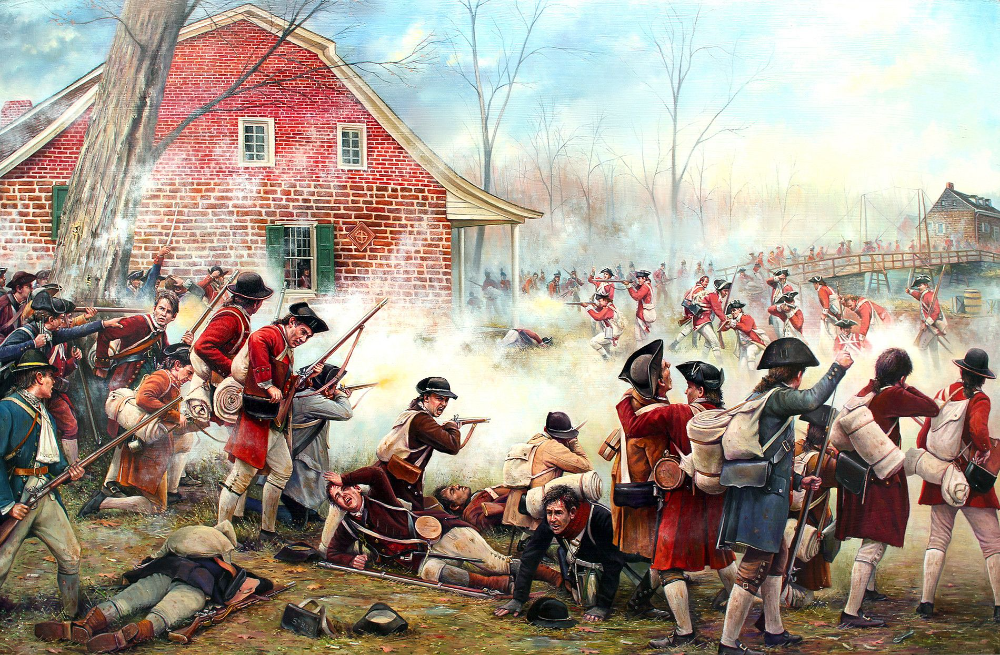
Note: We pick up our narrative on the late morning of April 19, 1775, in the town of Concord, in the Crown Colony of Massachusetts, as British armed forces face a mixed group of hundreds of armed American colonists across the Concord River. Our narrator remains the unnamed British junior officer who authored Part 1 of this series, who recounts what followed in ‘memoirs’ published some years after the events.
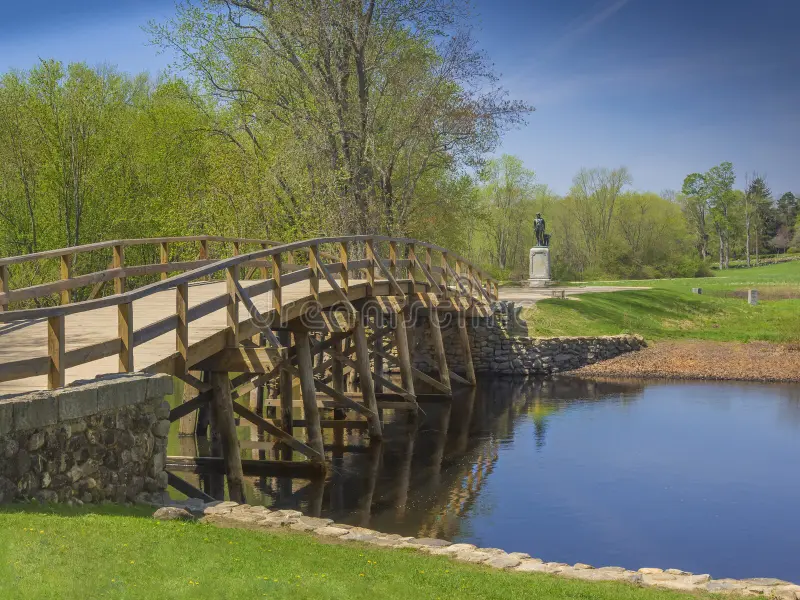
Our choice at the Old North Bridge in Concord was stark: Stand aside or resist.
If we let the colonial militia cross the Concord River, there was no telling what they might do. Any false move on our part might be kickstarting a revolution.
Still, both sides were reluctant to fire first. Each group eyed the other from the opposite ends of the bridge. The colonial mass, now hundreds, spilled out to either side of it.
The deciding factor was a rising column of smoke from a burning rebel Liberty Poll, which was a symbol of defiance seen all about the towns. Our men had likely set it alight inside Concord just as the crisis at the North Bridge arose.
The timing was unfortunate to say the least! At the sight of smoke, a shout rose from the Yankee mass.
“Look! They burn the town!”
As we turned our heads to notice, the colonial mob began to move onto the bridge. The Captain, suddenly panicked, then shouted:
“Order the men to fire!”
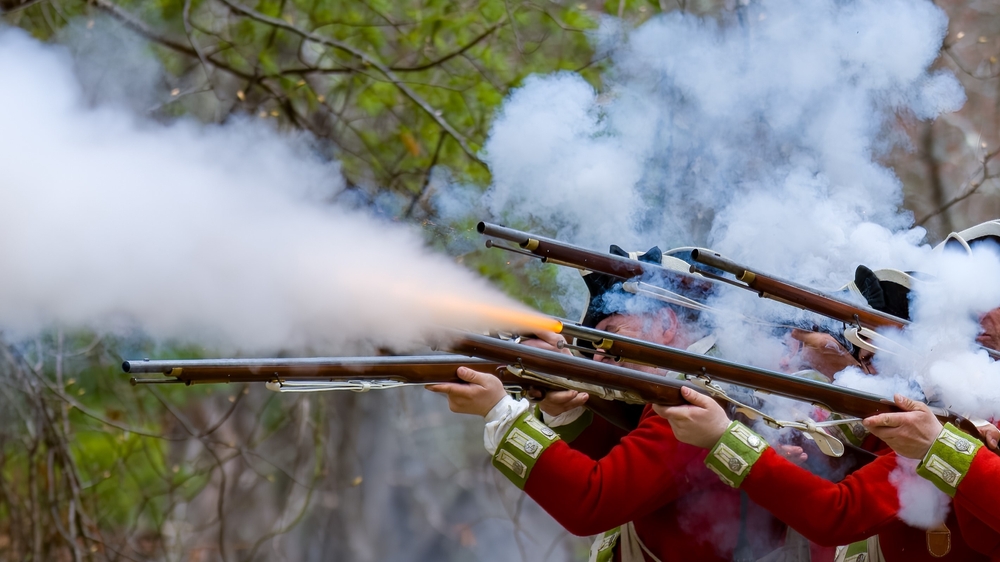
Before I had echoed his command (unwise, too hasty, as I thought it then), the Lights discharged a half-aimed volley toward the crowd. Several went down, and a cry of indignation roared out.
“In God’s name fire back!” came their cry. Within moments a thick, if scattered, fusillade of musketry erupted.
With the odds so hopelessly against us, our lads broke. They streamed back down the pathway toward the town green, leaving several stricken comrades to the tender mercies of the enemy.
I raced to follow them, shouting useless commands to rally. What became of our lost, I know not. The Yankee Doodles continued to shout insults and fire indiscriminately, but they did not press their advantage or follow us closely.
Neither my admonishment nor the Captain’s could arrest our Lights’ careening rout. I even struck one poor fellow with the flat of my smallsword on his back, but the fear in his eyes conveyed to me the futility of the task. There was no stopping his rush to get away.
*******
Reaching the town, Pitcairn, Smith and the Grenadiers, after hearing the shots, started out to help us. “What is the meaning of this?” Pitcairn roared at the fleeing troops. ”Stand and form at once.”
Chastened, our men turned about and instinctively formed a line. They were good fellows, but frightened by the severity of the moment. The Light Infantry had much to learn from this day as their performance had been very uneven at best.
There was no time for recriminations, however. All of us knew that the countryside had been roused; at this moment, hundreds, nay thousands, of angry colonists – now rebels indeed — were clearly intent upon our destruction.
There was not a moment to lose.
Colonel Smith, annoyed that his careful search for arms had been interrupted, shouted confused orders to evacuate the town. Pitcairn had quickly turned his ragged line into march formation and already started off on the road from whence we had come.
A gap thus appeared –- yet again — between our two elements. Colonial marksmen would soon take advantage of this error.
**********
There we were, stretched out in a column beset on all sides. It was a military axiom never to be caught in such fashion. Yet, we were and had to keep moving.
Musket balls and assorted lead objects, later described as ‘buckshot’, came at us from all sides. I could hear the zing, zing of the balls as they flew about my ears. My coat would acquire several holes from such.
At one point, my sword’s scabbard was bent from a deflected ball. Again, I longed for my absent fusil.
How I survived, I know not. Many were not so fortunate. Loud cries and grunts arose all along our progress. Officers like myself shouted orders to return the fire which we did.
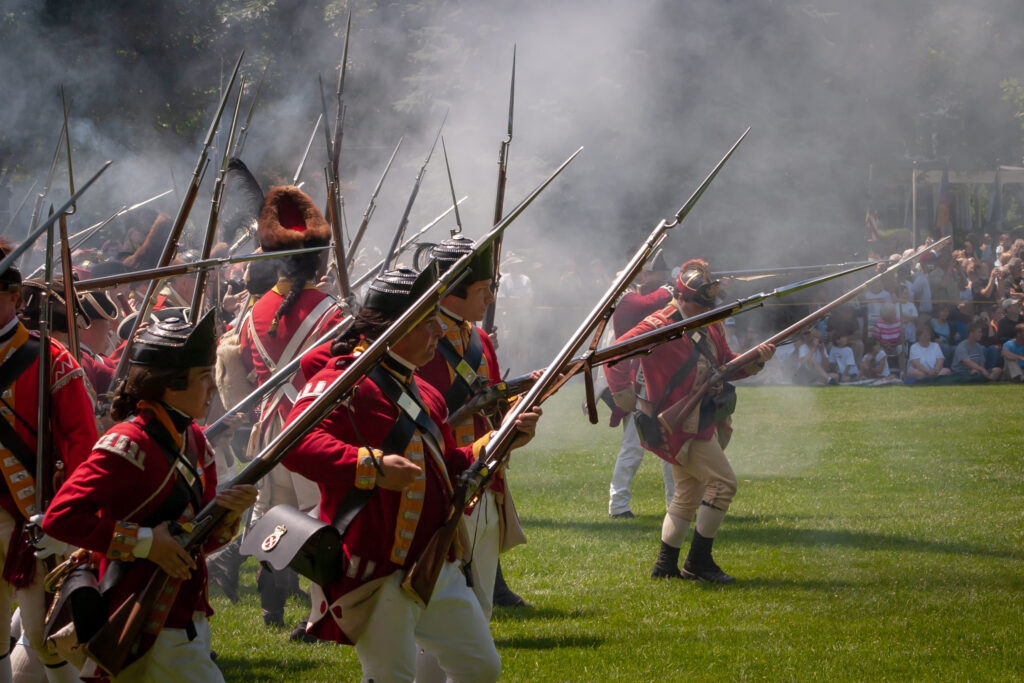
We destroyed many who came too close, but such were the numbers of the enemy that he could easily replace any and then some.
We managed to reach Lexington somehow.
Colonel Smith, a somewhat rotund individual, was actually out of breath on his horse. I was close enough to hear him wheez a bit before he addressed his subordinate:
“Per…hapzz…perhaps… we… should make a stand here…. and await succor from…Boston”.
Pitcairn turned and faced him, responding sharply. “To do so would invite our complete destruction. Our only salvation is to make haste out of here and link up with Lord Percy’s relief column”.
To support our expedition, Lord Percy, an able officer, had been placed in readiness with a brigade of 1,200 in Boston. If he received word that assistance was needed, he would march out to meet us.
It was a sound contingency plan, and perhaps the only part of our foray that was well thought out.
To await him in Concord might have been prudent, yet we could have been surrounded with less and less ammunition. To head back quickly to join with Percy’s brigade was a plan that had much more merit.
With the Yankees gathering around us every moment, our natural inclination was to move on and get away.
********
So we headed directly out of Lexington back onto the King’s Thoroughfare. At a bend in the road, there stood several brick and wood structures that we had passed earlier.
I had noted earlier how easily they could be used against us. Now, they were filled with locals who shot from both levels of the buildings.
Some rebels were bold enough to spill out onto our path to take advantage of the gap between our Lights and the Grenadiers. We were being fired at from all sides.
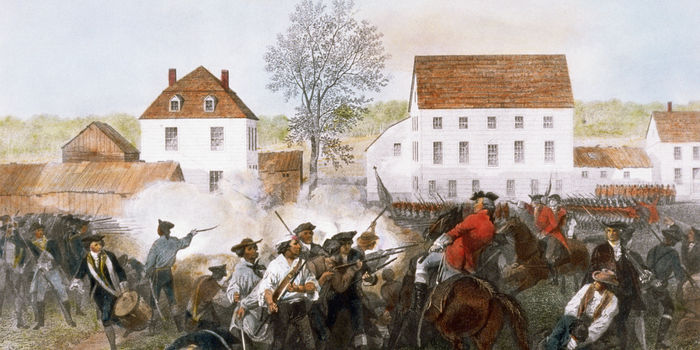
Several men near Pitcairn were struck down, and the Major’s horse was wounded. He was furious, his face red with anger. Screaming at the top of his voice, he ordered us to assault the houses and drive the enemy out.
The Yankees started to flee the dwellings as the tired Lights rushed upon them. A strenuous struggle ensued as our men entered the buildings just as the last colonials tried to run out.
Anyone caught was bayoneted repeatedly. No quarter was given. Indeed, I had to push several of our fellows aside as they continued to skewer several lifeless Yankees with their reddened blades.
On our harried retreat went. Colonial gunfire pecked at us ceaselessly, while our chaps swatted back, often without effect because we were in such haste. It seemed to go on forever with hardly a pause.
In my fevered brain I vaguely recalled that there were originally 16 or so miles of road separating Concord from Boston, but who could reckon where we were now? Yet, we all knew that we could not last much longer as our numbers were dwindling rapidly.
At length, the dusted, weary eyes of our frontmen finally discerned, through the blur of smoke and mayhem, glimpses of scarlet and white coming towards us.
Lord Percy’s brigade had arrived!
********
Percy proceeded to deploy his first battalion, which included a section of two six- pounder cannon on a wide clearing just beyond a small wood.
We managed to swiftly clear this obstacle (with further sniper losses) before reaching our mates. They parted ranks to allow us to stumble through.
Lord Percy rushed up to me, the first officer he encountered, his expression full of alarm. “Good heavens, Ensign, what has happened to your regiment?” I could only salute tepidly. Then I just shook my head wearily, too exhausted to stop and explain.
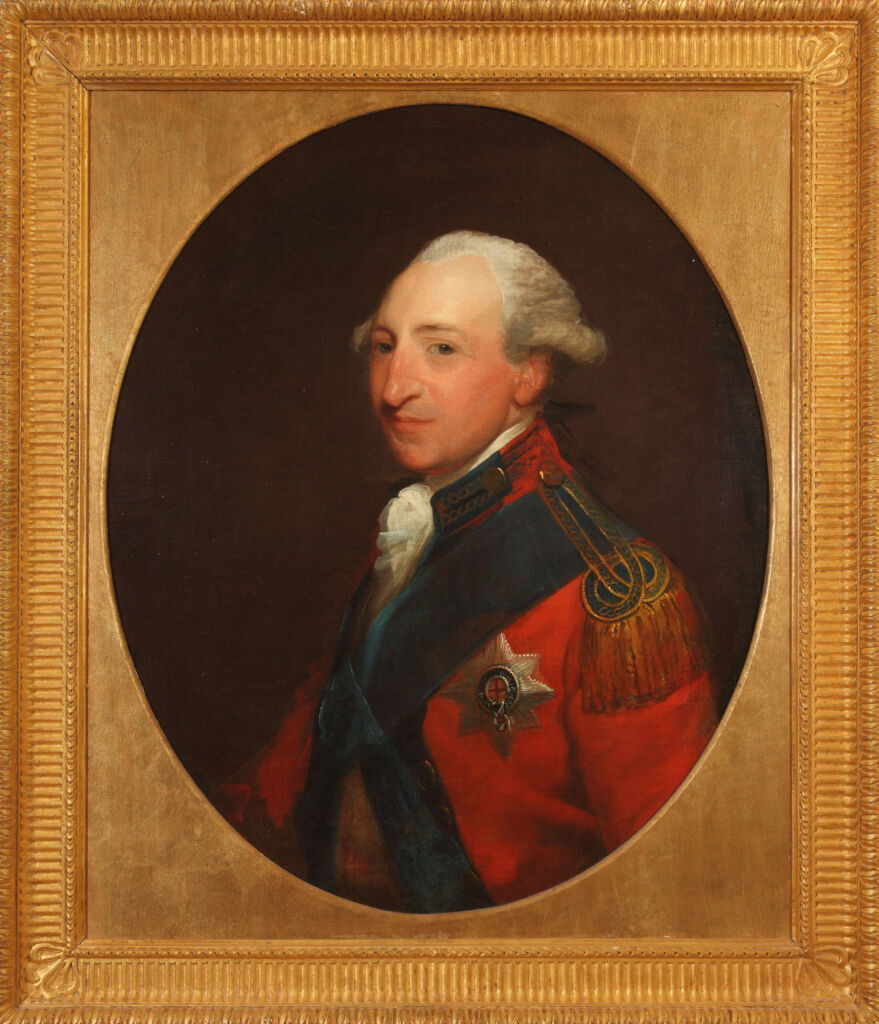
The Yankees were somewhat dismayed at the sight of our reinforcement. They held back just enough to gather more numbers, then they continued their encroachment, sniping at us all the while.
Instead of withholding fire, our fresh battalions, which included the venerable 23rd (Royal Welch Fusiliers), surprisingly let forth a dense volley at long range. Perhaps, Percy thought such a display of firepower would chase the colonials back.
All who know their business, however, understand that the first fire of a battalion is the most effective. The men have had time to load and prime their weapons correctly. One does not throw away that fire at long range, but rather husbands it for closer work.
Then the artillery added several loud booms. This action was sheer folly, born of an underestimation of the enemy on our part.
Our fire was completely wasted. The Yankees, a few caught out in the open, merely scampered back to the protection of the trees and continued popping away, moving around us farther out.
******
Lord Percy, who originally thought relieving us would be a mere matter of show, realized with shock that he had a running battle on his hands.
This broad open field we now occupied, which allowed our extensive deployment, could not be maintained by a stop-gap reserve if the rest of us were to continue back towards Boston.
The march column, now longer, had to be resumed with additional flankers and what was left of our Light Infantry thrown out to deter the enemy. Still, the Yankees swirled around us, firing wildly as before.
Additional loss was sustained until we finally came back under the protection of Bostonport itself.
By nightfall, we were totally wrung out with fatigue. Had not the distant urban lights shone in the gathering darkness, it is doubtful many of us would have made that Promised Land – wretched Boston – our substitute for Heaven.
The motley mob of colonists made for a laughable military presence, but far too many of them were practiced hunters and thus damned good marksmen.
And there simply were far too many. The Yanks bred like rabbits!
*******
When at last we collapsed on the open field of Boston Common upon which we had formed the night before, it was close on ten o’clock in the evening. Only then could we begin to take stock of what had transpired.
While Lord Percy had saved us and conducted the remaining retreat with skill, there was no escaping the fact that a dreadful toll had been taken on our thrown-together regiment.
The operation was supposed to have been a simple raid to snap up militia supplies and perhaps grab agitators like Samuel Adams and John Hancock. Instead, it had resulted in the loss of some 70 killed, and nearly two hundred wounded.
Almost half of our expeditionary regiment were made casualties!
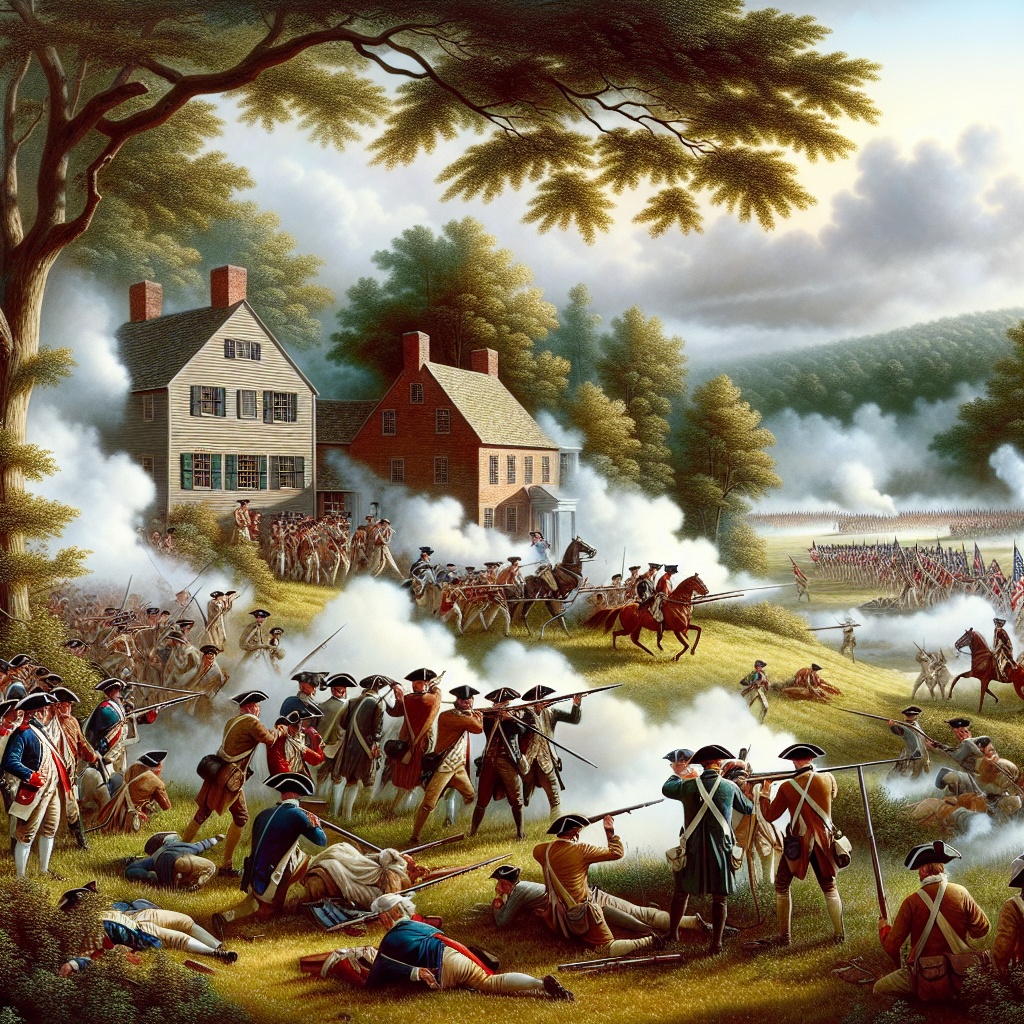
There were also plenty of men missing, which sparked horrific rumors that some of our wounded helpless had been scalped by the savage country folk. I would not dispute the idea; their fierce fury was palpable, surrounding us. Many had not recognized just how deep these angry waters ran in the colonies.
The colonials — or rebels as they genuinely were now—must have lost an unknown number. Whatever their casualties, they were not nearly enough, by my lights. Moreover, they did not appear discouraged in the slightest.
I lay on my back in the field, breathing deeply, trying to recruit enough energy to gather my men and head back to our lodgings with some dignity.
In truth, there wasn’t much dignity to be had. Our famed discipline had broken more than once. Even the multitudes of stars in the blackness above seemed to sneer.
My own role in the chaos of April 19, 1775 was – not to be denied – an embarrassment. Twice I was unable to rally my panicked command. I could only hope that this colonial fracas would last long for me to snatch back some honor on a worthy battlefield.
I doubted that this ‘liberty’ commotion would continue for long, however. Everyone knew that the revolutionary fever burned hottest in Massachusetts.
Surely, none of the other colonies would support further defiance of the King…especially when reinforcements arrived to bolster our ranks. We’d thrash them thoroughly when the Yankee Doodles had to fight in the open!
As I pulled myself to my feet, I reckoned that this vicious incident at the humble hamlets of Lexington and Concord was an opening Allegro; I hoped mightily that the symphony that followed would not have many more movements.
Just enough to restore my honor…or, perhaps, merit a promotion!
Note: The “recollection” has been a fictionalized account of the precipitating event of the American Revolution, which took place over two days in April 18-19, 1775.
Until next time —
Roger Kennedy
About the Author: A lifelong Manhattanite, Roger Kennedy recently retired from a 30-year career in the New York City public library system. A keen student of military history, he has taken a particular interest in the British Army. Roger has given lectures on the American Revolution and reviewed several books on the topic for various publications. Roger is currently the Administrator of the Facebook Military Music Society.