
There was a time when the highest human aspiration was obedience. Obedience to God. Obedience to family. Obedience to tradition.
In the Western world, we moderns reversed that hierarchy starting in the mid-20th century. In place of obedience and reverence for God, family and country, individual automony became sacred.
The liberated self — unbound by inherited roles, unconstrained by permanent commitments, and free to construct identity at will — emerged as the moral hero of late modernity by the early 1970s.
And yet…we are lonelier than ever before.
Elite discourse in the West tends to dwell rhapsodically on the supposed joys of autonomy and self-fulfillment. What it spends less time analyzing is the loneliness of modern freedom. It can advocate for why autonomy allows for liberation. What it can’t explain quite as easily is why autonomy has not delivered happiness.
In today’s article, we consider the loneliness of modern freedom.
The Promise of Liberation
If the early 20th century offered new pathways for individual achievement and expression, the late 20th century promised emancipation from all traditional and, it was believed, rigid and oppressive structures.
Between the 1960s and the 1990s, marriage became optional, gender roles flexible, religion negotiable, and community portable. Or even virtual. Choice expanded dramatically.

The bottom line: the individual was sovereign.
This freedom was not merely political — it was existential. You could choose who to be. You could choose whom to love. And you could choose how long to stay within a variety of open and non-judgmental milieus.
Few generations in human history — none, actually — had possessed such latitude.
The Paradox of Infinite Choice
But unlimited choice contains a paradox. When every decision is reversible, then permanence of any kind can begin to feel oppressive. When identity is self-authored, stability feels artificial. When exit is always available, endurance and fortitude become irrational.
All relationships become provisional. Commitment feels solely like a form of self-limitation rather than self-determination. And so the modern Western individual hovers — perpetually evaluating, optimizing, upgrading.
Dating apps embody the ethos perfectly: a marketplace of endless possibility. The next swipe may reveal something better. What is missing is not opportunity. Rather, what is missing is rootedness.
Community as Constraint
Historically, communities imposed constraints that now appear harshly restrictive, at least to the ‘psychologically autonomous’ individuals now living in post-modern societies.
Marriage was expected. Children were normative. Religious participation structured the week and the year. Geography was, for the most part, stable. These constraints limited choice — but they also limited anxiety.
One did not endlessly deliberate about whether to ‘belong’. One simply belonged. To a community, a tribe, a nation, a church, a synagogue, a regional culture. The cost was conformity, but the benefit — and it was considerable — was integration of the self into a larger and unselfconscious human community.
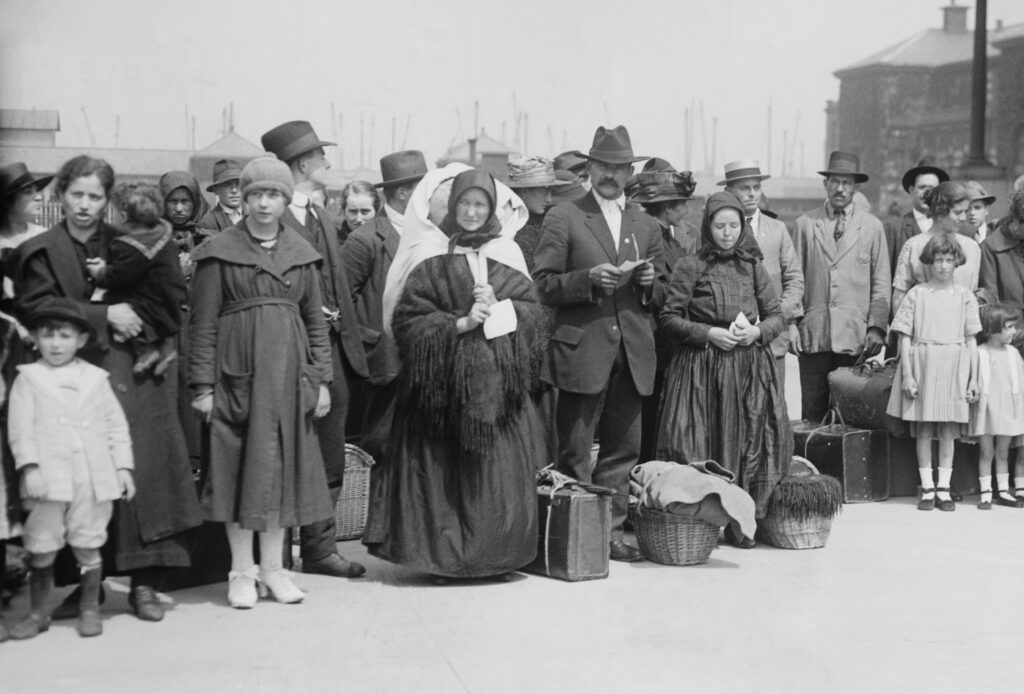
Modern autonomy then dissolved these external anchors. At first, it was exciting. It felt like liberation.
But the individual now carries the burden of constructing meaning without inherited scaffolding. For some people, this can feel exhilarating. But for many others, it is dispiriting, disorienting, and exhausting.
Loneliness as Structural Outcome
Rising rates of loneliness, delayed marriage, declining fertility, and mental health challenges are often treated as isolated phenomena. They may instead reflect a coherent structural shift.
When autonomy is prioritized above all else, interdependence becomes suspect. To need another person is vulnerability. To rely on community is weakness. To subordinate personal preference to shared obligation is only a form of compromise – a show of weakness.
But humans are not optimized for isolation. We evolved in tribes, extended families, villages. Freedom without embeddedness can indeed produce mobility — but also an accompanying sense of drift. There appears to be a strong direct correlation, in fact, between individualism and loneliness in modern society. The price of autonomy frequently becomes the loneliness of modern freedom.
In an attempt to grapple with, or deny, this sense of drift, many post-modern Westerners and their peers in East Asia (e.g. South Korea and Japan) have retreated into online cultures and virtual fantasy worlds, as Greymantle has observed in prior articles. But fantasy and carefully curated illusion can only keep reality at bay for so long.

The Illusion of Self-Sufficiency
The modern ideal subtly promotes self-sufficiency as moral superiority. To be independent is to be strong! To be dependent is to ‘regress’.
Yet adulthood itself traditionally meant assuming reciprocal obligations — not escaping them.
Marriage is dependence. Parenthood is dependence. Citizenship is dependence. All are forms of chosen constraint. And paradoxically, they generate meaning precisely because they narrow options. When alternatives disappear, depth becomes possible.
The Anxiety of the Open Future
There is another psychological cost to radical autonomy: perpetual evaluation. If you chose your career, your partner, your city, your identity — then every dissatisfaction feels self-inflicted.
There is no fate to blame. The open future becomes a source of anxiety rather than hope.
Traditional societies absorbed individual failure into communal destiny. Individuals living in modern societies instead internalize failure as ‘poor self-optimization’. The result is quiet, but intense, self-reproach. This private self-reproach is an integral component of the psychology of loneliness and independence.
Reconsidering Constraint
None of this is an argument for coercion or a complete regression to the past.
The gains of autonomy — especially for women and marginalized groups — are real and historically significant. The question, however, is whether freedom and autonomy alone are sufficient.
What if meaning requires constraint? What if permanence is not a prison, but rather a form of much-needed structure? What if belonging to a healthy community demands a degree of self-limitation? What if there are clear upsides to being a member of a traditional community?
Modern individuals often pursue self-actualization first, attachment later — if at all. But attachment may be the necessary soil in which healthy and successful self-actualization grows. Roots precede branches.

A Cultural Inflection Point
There are subtle signs of reconsideration.
Young adults express renewed interest in tradition, ritual, and stable community. Marriage rates remain lower than mid-century peaks but show pockets of stabilization. Conversations about loneliness have entered mainstream discourse.
Perhaps the pendulum is slowing. Civilizations rarely move in straight lines. They oscillate between structure and freedom, between obligation and autonomy. A few cultural leaders appear to understand this truth.
The modern West has experimented boldly with autonomy. The results are mixed.
The next chapter may require rediscovering the quiet dignity of chosen constraint — not as repression, but as architecture. Freedom liberated us. It may not, by itself, sustain us.
Until next time, we are —
Greymantle
Note: This article was written in collaboration with Chetan Kapoor