Key Takeaways
- Iran is expanding its strategic footprint in the Sahel, seeking new opportunities for influence as its position in the Middle East comes under intense pressure.
- Drone warfare and defense partnerships are central to Tehran’s African strategy, particularly its efforts to build ties with the military juntas controlling Mali, Niger, and Burkina Faso.
- Gold smuggling, covert networks, and ideological outreach could offer Iran financial resources and influence beyond conventional diplomacy.
- Cooperation between Iran’s IRGC and Russia’s Africa Corps could strengthen both powers’ positions in West Africa and complicate Western efforts to contain their influence.
When empires retreat, they don’t always collapse—sometimes they reposition themselves or relocate key strategic assets in hopes of fighting another day. The ashes of defeat in one theater of combat can become the soil for reinvention in another.
And so it is with Iran in the autumn of 2026. As part of our mission to examine ‘the undercurrents’ of geopolitics, today we examine Iran’s African shadow empire, or as we call it: Tehran in the Sahel. The phrase ‘shadow empire’ may be a bit ambitious given Iran’s relatively modest capabilities in Africa; but Greymantle views Iran’s posture toward North Africa as equally ambitious for the long-term. Hence the phrase.
From Strategic Defeat to Strategic Reinvention
Following the 2024-25 collapse of Iran’s Levantine front, the depletion of Hezbollah’s missile arsenal, the loss of Syria’s Assad regime, and the military and economic battering it has taken at the hands of the U.S. Air Force and seven-month U.S. naval blockade, Iran is persistently turning its gaze south—not toward the familiar ‘Shia Crescent’, but toward the Sahel, Africa’s lawless midriff.
What may appear at first as a desperation move is, in fact, a form of strategic migration, and a path upon which Iran began walking years before October 7, 2023. In Africa’s vast ungoverned zones, Tehran is finding something it has not enjoyed recently: room to maneuver, room to hide, and room to rebuild.
The Geography of Opportunity
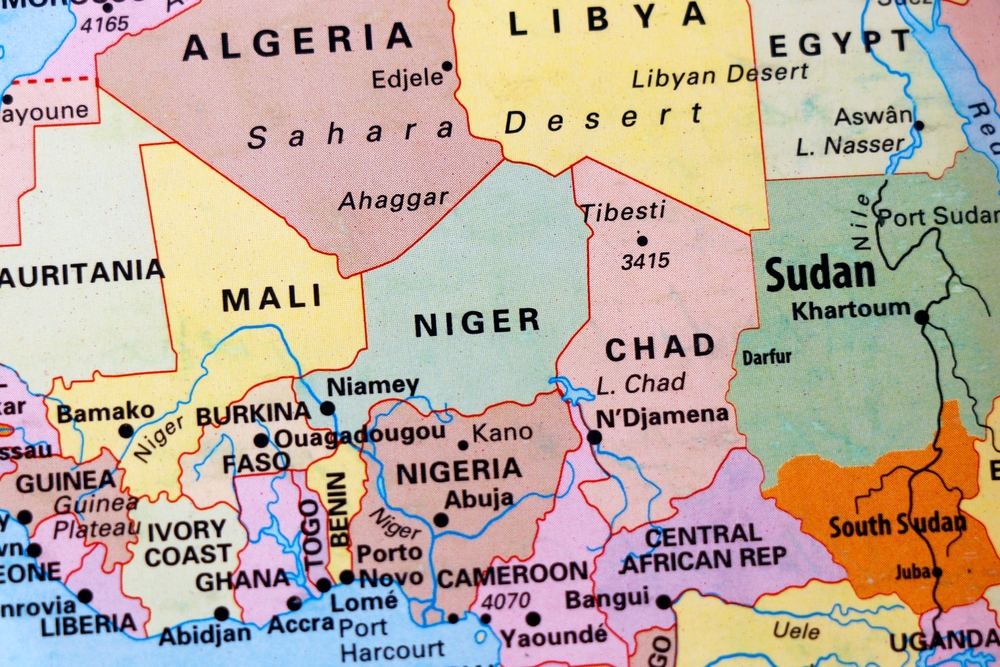
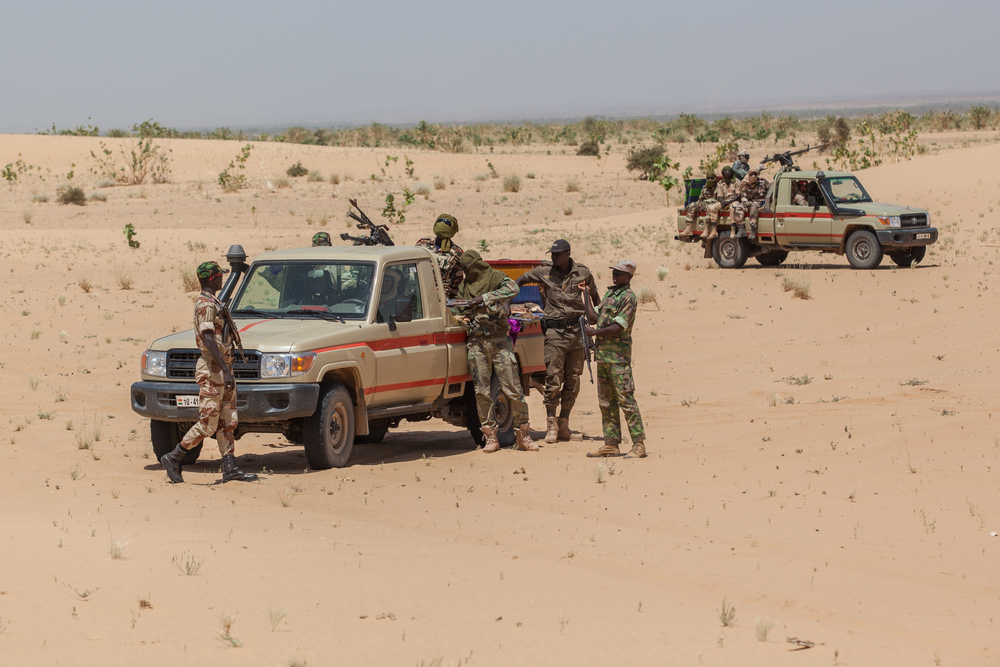
Stretching from the Atlantic coast of Mauritania through Mali, Niger, Chad and North Sudan all the way to the Red Sea, the Sahel has become a key corridor of geopolitical realignments, porous borders, and strategic competition.
Following the withdrawal of Western military contingents and the collapse of French diplomatic influence in West Africa in the early 2020s, the region’s ruling military juntas—organized under the Alliance of Sahel States (AES)—are actively courting non-Western defense partners.
Russia has quickly established a new security footprint through the Russian Ministry of Defense’s Africa Corps—the state-controlled successor to the former Wagner Group—while Tehran has seized on the opening to expand its own strategic capabilities across West Africa in tandem with the Russians.
For the IRGC, the Sahel offers what a contested Levant can no longer provide so easily: low-cost strategic leverage like what it has pursued through Yemen’s Houthis, and a receptive market for state-to-state defense cooperation.
Rather than aligning itself within local, mostly Sunni insurgencies or operating through rogue mercenary factions, most of which are directly loyal to Moscow, Tehran’s Sahel strategy centers on formal statecraft.
By offering technical military assistance, joint arms manufacture, and intelligence-sharing frameworks directly to the juntas in Bamako, Niamey, and Ouagadougou, Iran is slowly embedding itself into the Sahel’s regional security architecture in parallel with its main strategic partner, Russia.
In Africa’s vast ungoverned spaces, Tehran is seeking a pragmatic canvas through which it can project influence, bypass geopolitical isolation, and build new diplomatic depth.
Iran’s African Pivot
Iran’s African involvement is hardly new.
Starting in the early 2000s, Tehran cultivated ties with Sudan’s then-Islamist regime under Omar al-Bashir, began sending missile systems and other weapons to the Houthis across the Red Sea in the mid-2010s, and is now quietly sponsoring Shiite proselytization networks in Niger, Mali and Senegal. Until recently, these have been peripheral ventures—and decidedly secondary to Iran’s grand Middle Eastern “Axis of Resistance.”
Now, post-2025, North Africa is no longer peripheral—it is Iran’s new Plan B, set to take the place of Iran’s former ‘escape hatch‘: Venezuela. The loss of Venezuela to the Americans in January 2026 was a severe blow to Tehran, though it remains to be seen if the loss is permanent, or temporary. Venezuela provided safe houses and training grounds for the IRGC, and supported Tehran economically with gold-for-oil schemes.
These assets have been seriously jeapardized by the Trump Administration’s lightning takeover of the Caracas regime earlier this year, forcing the Iranians to place a greater focus on its nascent African assets.
The IRGC’s elite Quds Force has begun repositioning logistics and intelligence cadres into Sahelian states under the cover of “development partnerships” and “counterterrorism training.” Iranian engineers arrive as technical advisers; but their true mission is more likely to build surveillance networks and test new aerial drone tactics far from Israel’s ever-watchful eyes.
Where Hard and Soft Power Strategies Converge
According to recent reporting by African news outlets and the Iranian opposition press, several new Iranian-linked NGOs have appeared in Chad and Niger in the past three years offering medical clinic construction, agricultural assistance, and religious education. But it is becoming clear that beneath their humanitarian exteriors, some of the aforementioned NGOs host cells of influence and recruitment designed to introduce and embed Tehran’s ideological footprint into local societies.
Iran’s logical aim appears to be to boost intelligence-gathering and cultural influence via these NGOs. If not, then why spend the money, especially when Iran is under notable economic and military pressure? If you can barely pay your enforcers’ monthly salaries, then why fund charities in Chad and Mali?
In this respect, Tehran’s penetration of the Sahel relies heavily on a quiet soft-power strategy. Tehran in the Sahel relies as much on covert insinuation as it does on overt alliance-building.
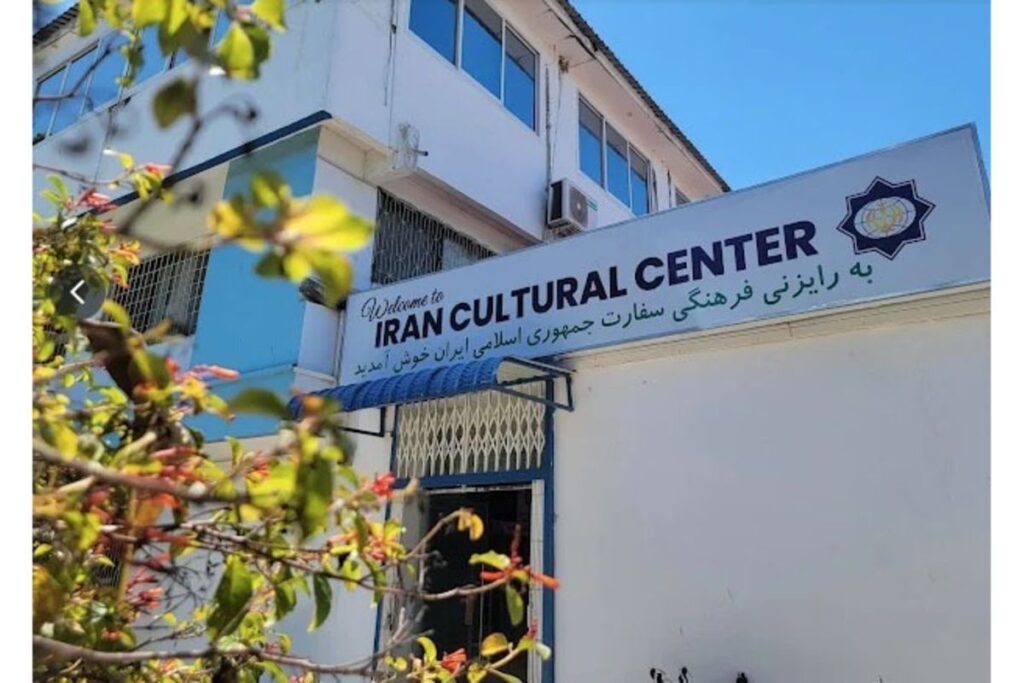
Regional security officials have long tracked Iranian funding channeled through semi-state religious foundations (bonyads), Red Crescent medical outlets, and their educational affiliates—most notably branches associated with Al-Mustafa International University.
Operating under the guise of charitable relief and cultural exchange, these networks allow Tehran to cultivate local patronage, build intelligence depth, and establish a persistent Shia ideological footprint in regions that are overwhelmingly Sunni in their religious demographics.
Gold, Guns, and God
Three commodities fuel Iran’s Sahelian venture: gold, weapons, and ideology.
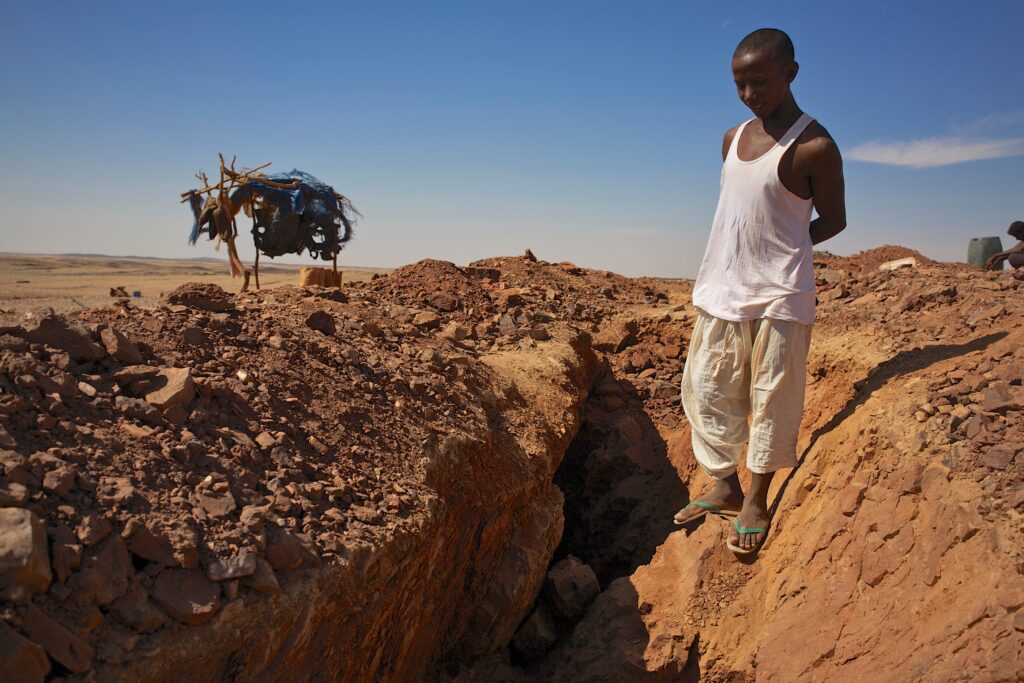
- Gold: The Sahel’s artisanal gold mines—sprawling, unregulated, and cash-based—are the perfect financial laundromat. Iranian intermediaries, working through Lebanese traders with Hezbollah connections, have been rumoured to purchase raw gold from local militias such as the RSF in North Sudan – as touched upon in an earlier Greymantle article by Robert Cox. The bullion is then reportedly smuggled through Yemen, Burkina Faso or Ghana, monetized in Qatar or Dubai, and re-entered into IRGC-controlled slush funds. Gold, alongside oil, is now Tehran’s coequal financial lifeblood, and especially important considering the U.S. distance blockade of the Strait of Hormuz.
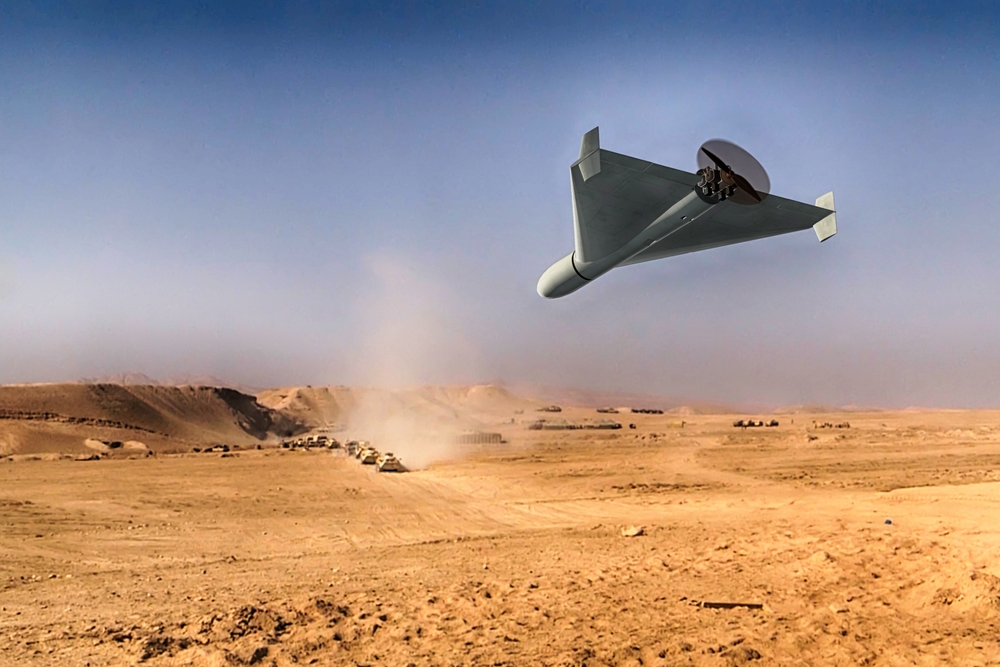
- Weapons: Arms trafficking across the Sahel is as old as the desert itself, but Iran’s key contribution is its sophistication. Iran has reportedly offered drones of its own design—compact, easily assembled, and combat-proven—to the militaries of Mali and Niger. These are not exports of generosity but rather strategic investments. Every damaged Western aid convoy or ambushed French patrol advances Iran’s objective of weakening the Western military and diplomatic presence in Africa.
3. God: Ideology remains the IRGC’s cheapest weapon. Shiite cultural centers, long present in places like Kano and Dakar, have expanded under new “exchange programs.” These may be less about conversion than connection—creating local networks aligned with Tehran’s interests and linked to Iranian patronage. The narrative is consistent: anti-colonial, anti-American, and pro-sovereignty. It sells well in countries tired of French lecturing and Western human rights-centered moral and economic conditionalities.
The Wagner Group–Quds Force Nexus
No analysis of Africa’s shadow wars is complete without a mention of Russia’s Africa Corps, which has replaced French forces as the continent’s most visible foreign paramilitary actor.
The death of Yevgeny Prigozhin in August 2023 did not dissolve the Wagner Group—instead it enabled Wagner’s total absorption into Russia’s Ministry of Defense under the broad umbrella of Russia’s new ‘Africa Corps’, a name redolent of a similarly-named and strategically-purposed military grouping under the Third Reich. For Tehran, Wagner’s continued relevance and activity in North Africa presents several opportunities.
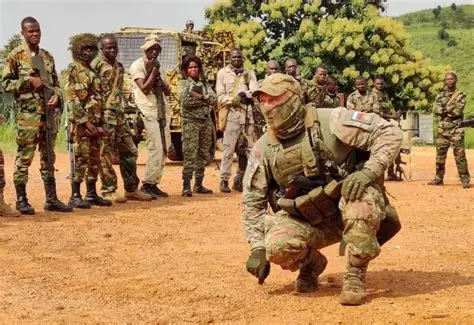
Reports based in part on data gleaned from British and French intelligence suggest that the Africa Corps’ has entered into limited cooperation with Iranian operatives in Mali and Niger in the domains of drone warfare and logistics. Wagner is in a good position to provide security and enhanced access to the ruling juntas; Iran is able to provide cutting edge drone technology (though Russia is catching up fast) and know-how.
While no reputable press sources have been able to confirm that Iran has provided the Malian or Nigerien juntas with drones as of October 2026, Tehran’s 2025 security agreement with Niger included plans for the joint manufacture of military equipment in Niger. That could mean the building of combat vehicles or artillery, but given Iran’s drone expertise, is far more likely to include drones in the future.
Iran and Russia in West Africa: an unholy alliance of mutual convenience—two Western-sanctioned empires trading their expertise for gold, leverage and diplomatic support on the world’s forgotten frontiers.
Such cooperation, should it flourish, would also provide Iran with a foothold to monitor and influence North African migration routes toward Europe—a form of leverage that Tehran has long envied for being held tightly in Ankara’s hands. The potential to weaponize migration pressure or destabilize Mediterranean security in the future would add another layer of strategic insurance to Iran’s African playbook.
Strategic Depth in the Desert
Why Africa? Because that is where the ‘empire of oversight’ ends. Unlike Iraq or Lebanon, the Sahel is not saturated with Western (e.g. American, British, German) intelligence satellites or Mossad agents. Its conflicts are decentralized, its governments poor and pliable. Here, the IRGC can train, fund, and experiment with new asymmetric warfare doctrines without triggering global attention.
In a sense, the Sahel is becoming for Iran in 2026 what Lebanon was prior to the outbreak of the current Middle Eastern mega-conflict in October 2023: a laboratory for proxy warfare.
Only now, the proxies are not Shiite militias in the Levant but odd-lot mercenary outfits, human traffickers, and anti-Western Sahel governments willing to sell their allegiance for either arms or cash. Iran has plenty of the former, but little of the latter — at present.
This migration of influence marks a strategic evolution. Iran is slowly beginning to accept that it may no longer be able to dominate its Middle Eastern neighbors militarily – it is a regime fighting for its own survival, albeit with great skill. But it’s power to intimidate its own neighbors may be on the wane.
Instead, Iran is seeking to place itself in a position from which it can haunt the Middle East from its periphery—and pressure Western interests indirectly by destabilizing adjacent regions.
Iran’s African Shadow Empire
Step by step, Iran is assembling what can best be described as a future shadow empire of diplomatic and covert influence—a network of state-to-state and military-to-military relationships that substitute for territory, but could become no less potent over time.
The ‘shadow empire’ stretches from Venezuela’s ports (where Iran quietly wields clandestine influence despite the Trump Administration’s capture of Nicolas Maduro and present leverage over Caracas’s leaders) to West Africa and Sudan’s gold fields, across the Sahel’s smuggling corridors to the Red Sea, and on to Iranian soil. It is invisible but functional, fragmented yet coherent.
Tehran’s African expansion is not measured in captured land but in captured influence and leverage: gold reserves, airstrips, and loyal intermediaries. Its troops often wear no uniforms; not all its ambassadors carry visible flags. Yet the effect is the same—a network of influence dense enough to frustrate Western containment.
Conclusion: The Desert as Refuge
The irony is unmistakable. The regime that once sought to dominate the Middle East’s urban battlegrounds now hides in plain sight among Africa’s dunes, sipping tea with Sahelian generals. Defeat breeds adaptation, and the IRGC has proven, time and time again, that survival is its true ideology.
In the Sahel, Iran is re-learning the art of invisibility. Each future drone launch site in Mali, each gold convoy through Niger, each Chadian training camp under a humanitarian banner is a quiet act of resurrection.
Israeli drones cannot patrol the desert constantly. American military assets are overstretched. French influence, once dominant, is evaporating under the pressure of anti-Western coups. Into this vacuum Iran moves—quietly, efficiently, and with the patience of a power that is learning from failure.
Israel and its tacit Sunni allies in the Middle East may have burned many of Iran’s long-sought ambitions to ashes. But in Africa, the embers if Iran’s strategic ambition still glow.
Until the next time, I remain —
Greymantle
This article was written with assistance from Chetan Kapoor.