In Part 1 of this series, Greymantle proposed a theory as to why American cinematic heroes underwent a striking change in the late 20th century. Out went square-jawed sheriffs, devoted fathers, and principled attorneys defending ‘the little guy’. In their place came flawed, morally conflicted antiheroes like Michael Corleone and Travis Bickle who enlivened on-screen drama, but came with ethical complications.
In Part 2, we argue that late twentieth century antiheroes were an intermediate step between classic heroes of ‘Old Hollywood’ and twenty-first century ‘inverted’ heroes. We start by describing the qualities that define the inverted hero and then chart movie heroes’ evolution from tragic antiheroes to inverted heroes.
I. Qualities of the Inverted Hero
Every civilization elevates certain human qualities above others, and the heroes – both real and fictitious – elevated by a culture reveal what that culture admires. Heroes embody its aspirations, its ideals, and its understanding of human excellence.
Stories therefore perform a function extending beyond entertainment. They quietly answer one of the oldest questions in moral philosophy: What type of people deserve our admiration?
During the mid-twentieth century, American popular culture answered that question with remarkable consistency — as we argued in Part 1. The ideal cinematic hero possessed both courage and integrity – and courage was inseparable from duty. Adherence to duty was the measure of a hero’s integrity.
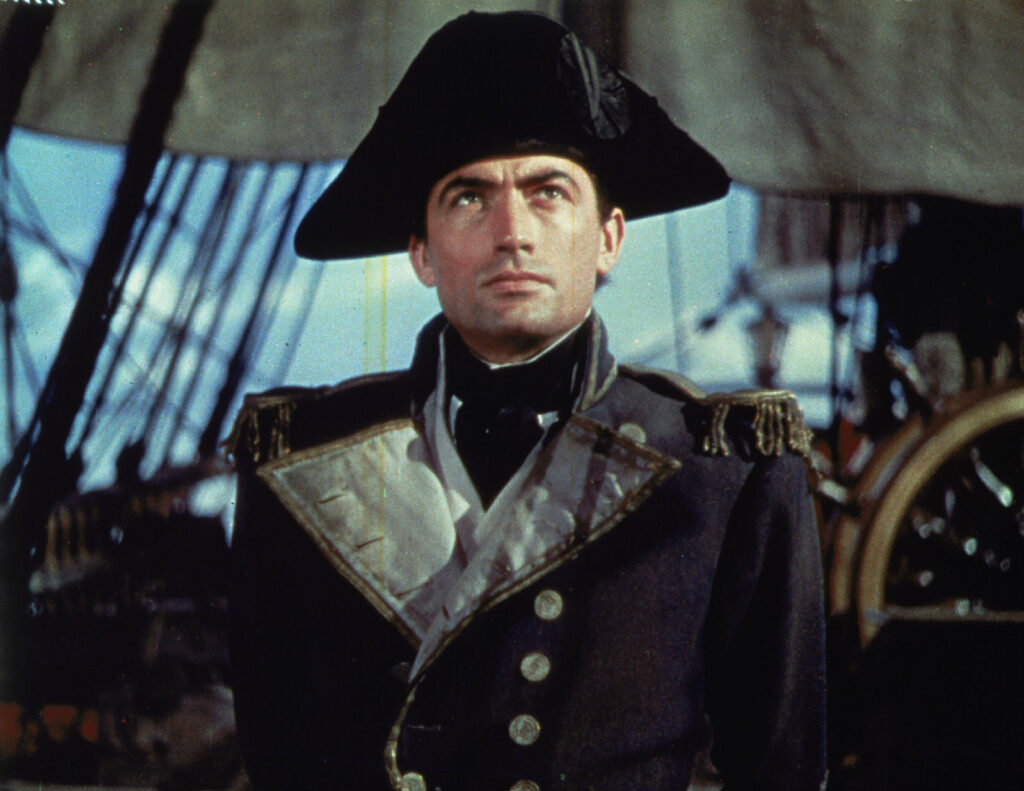
A hero displayed strength, but strength restrained by justice. He or she exercised authority, but that authority was accountable to broader religious and civic principles. Competence mattered, but competence derived its legitimacy from the ends it served. Competence without integrity was viewed as profoundly dangerous.
The Tragic Reversal
That understanding came undone in the late 1960s and early 1970s with the anti-hero protagonists of films like The Wild Bunch, Bonnie and Clyde, Chinatown, The Godfather, Taxi Driver, and Death Wish. Anti-heroes like Michael Corleone and Jake Gittes possessed a high degree of competence, but their actions occupied moral grey areas and these heroes were clouded in terms of their methods and motives.
Fifty years later, contemporary audiences remain attracted to characters who possess exceptional abilities. What has changed is the relationship between those abilities and the protagonist’s moral character. Competence is now sufficient unto itself.
The 21st century film protagonist doesn’t need to be decent. He or she needs only to be effective. Willingness to violate moral limits is presented not as a defect but as evidence of the clarity and resolve needed to accomplish difficult tasks.
In other words, virtue has ceased to legitimize competence. Competence now legitimizes vice. This is the defining characteristic of the Inverted Hero.
The assassin earns admiration because she is the finest assassin in the world. The criminal mastermind commands respect because he outwits everyone around him. The vigilante becomes compelling because he accomplishes what weak institutions cannot.

Notice how different this is from the classic hero.
Atticus Finch deserves admiration because he acts justly, even at considerable personal cost. His legal ability matters only because it serves justice. Superman’s immense power becomes heroic because it is governed by self-restraint. Captain Kirk’s decisiveness earns respect because it is exercised on behalf of his crew and the principles of the Federation of Independent Systems.
In each case, competence remains subordinate to character. By contrast, the Inverted Hero reverses that hierarchy through a moral character that is totally subordinate to his/her competence.
What Do We See as ‘Authentic’?
Why is this new model so attractive?
Part of the answer must lie in the collapse of institutional confidence that has characterized the modern West. Trust in governments, corporations, universities, the media, organized religion, and countless other institutions has eroded. As confidence in institutions declines, audiences naturally become more receptive to individuals who bypass rules altogether.
The lone operator appears more effective than the bureaucracy. The vigilante appears more decisive than the courtroom. The outlaw appears more ‘authentic’ than the politician.
Hollywood did not invent these sentiments, but it learned how profitable it could be to cater to them. This doesn’t mean that 21st century audiences have ceased believing in morality. Rather, they have come to believe that morality and effectiveness are incompatible.
That may be the most consequential lesson that the movies of the last quarter century have taught. Whether consciously or not, American popular culture has shifted the object of admiration from goodness to effectiveness.
Audiences no longer ask, first, whether a protagonist is worthy of their admiration. They simply ask whether he or she is capable.
II. From Tragic Antiheroes to Inverted Heroes
Not every morally compromised protagonist represents a decline in the moral imagination. Indeed, some of the greatest works of literature and motion pictures have centered upon deeply flawed individuals. Shakespeare understood this. So did Dostoevsky. So did the filmmakers of Hollywood’s second Golden Age in the 1970s.
Like the classic hero, the tragic antihero descends from much older traditions. But unlike the classic hero, the tragic antihero is burdened by serious moral failings.
The antihero may be proud, violent, selfish, or consumed by obsession. Yet he remains recognizably tragic because he inhabits a moral universe in which both right and wrong continue to exist. Think of Shakespeare’s Coriolanus or Richard II.
The tragic antihero’s flaws produce genuine moral conflict, not merely external obstacles. Whether the antihero acknowledges his or her failures openly or suppresses them beneath layers of self-deception, the story never loses sight of their destructive consequences.
Audiences may sympathize with such characters without being tempted to imitate them (even if a film’s portrayal of the antihero subtly suggests the audience ‘try on’ such imitation).
Michael Corleone as Antihero Par Excellence
Michael Corleone from The Godfather (1972) remains the finest example of this type of antihero in American movies. Director Francis Ford Coppola invites us to understand Michael’s intelligence, loyalty, and devotion to family, along with his deep moral qualms about the ‘family business’ and desire to escape the world of organized crime.
We witness the pressures that draw Michael into criminal activity and the terrible burdens of leadership within the Corleone mafia clan that he ultimately assumes.
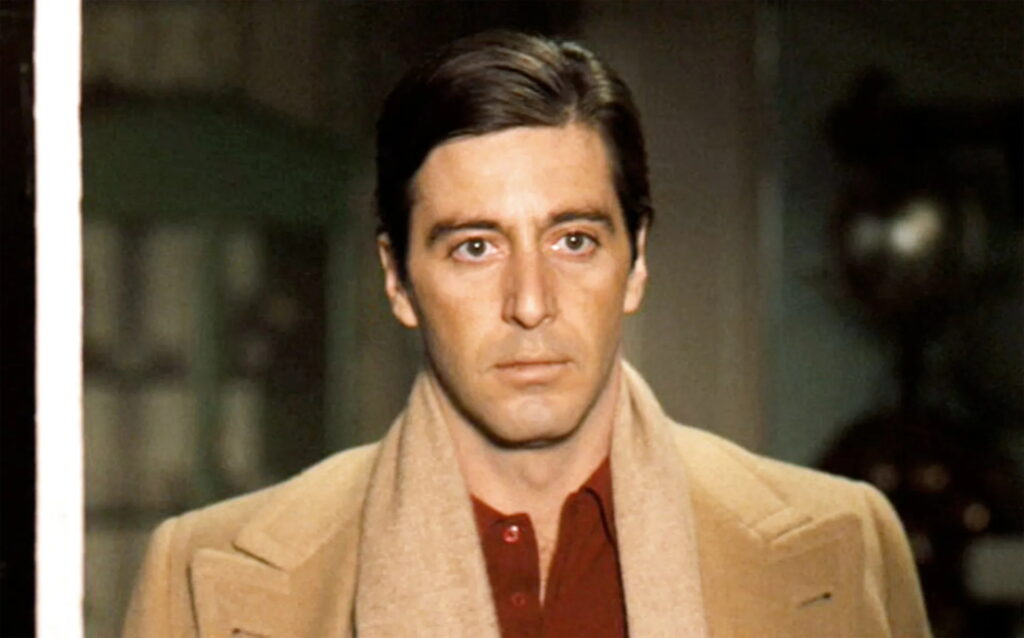
Yet The Godfather trilogy never presents Michael’s moral descent as a triumph. On the contrary, each successive moral compromise Michael makes isolates him further from his own ideals and from his family, destroys his capacity for loving intimacy, and leaves him spiritually desolate. Michael’s extraordinary competence only serves to deepen his personal tragedy.
America’s Tragic Antiheroes of the 1970s
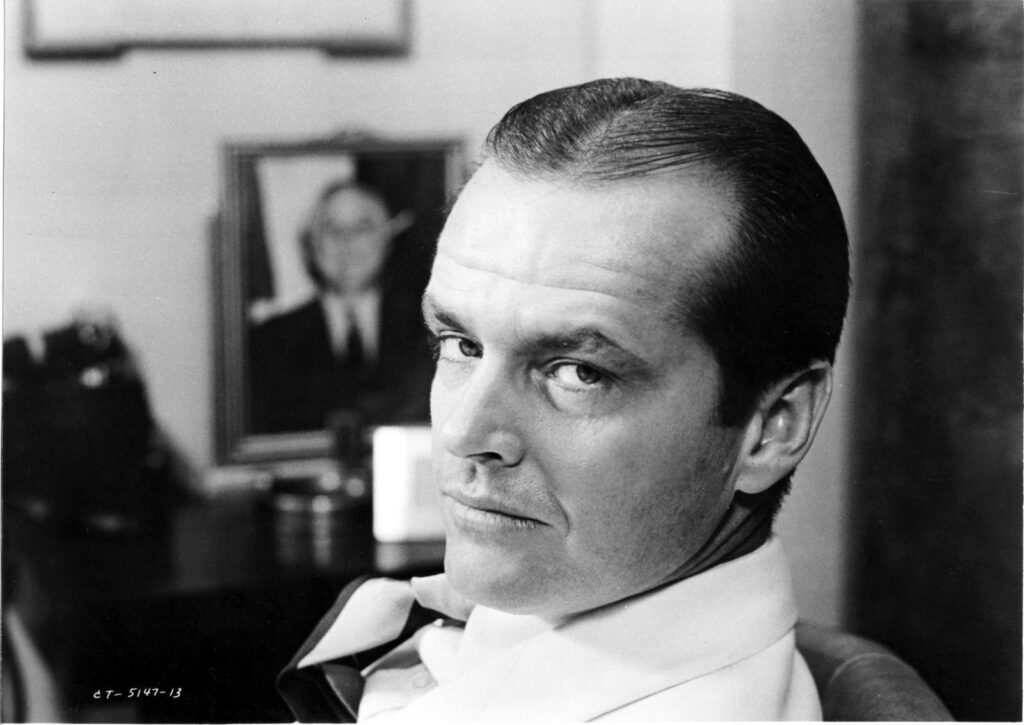
In the movie Chinatown, the protagonist, Jake Gittes (played by Jack Nicholson), offers a different variation on the antihero theme.
An intelligent and resourceful private eye, Jake uncovers staggering corruption beneath the apparently smooth surface of Los Angeles. A corruption that reaches far beyond Jake’s ability to remedy. Jake is likewise unable to bring the chief villain — Noah Cross, played with malevolent charisma by John Huston — to justice.
Jake’s limitations are not merely personal, which is to say that the scale of corruption is far beyond Jake’s capacity to rectify, but also existential. The film’s famous closing line—”Forget it, Jake. It’s Chinatown.” – is famous for what it is meant to convey.
The line is taken to mean that the moral condition of Los Angeles proper is identical to that of its ethnic Chinese district, at least in terms of how LA’s Anglo residents perceive the enclave: murky, unknowable and unchangeable by any outside power – particularly one intending to deliver transparency and accountability.
The line is devastating precisely because justice, in the case of Los Angeles and Noah Cross’s wronged and murdered daughter, Evelyn (also Jake’s lover), is unattainable. Jake will never be allowed to reveal, much less defeat, the shadowy forces he has locked horns with.
Jake doesn’t become a villain himself, but neither is he permitted the moral victory granted to the classic hero. Like all antiheroes, Jake both wins and loses — as a private eye, he cracks the case, but he fails to bring the villain to justice or to protect the woman he loves.
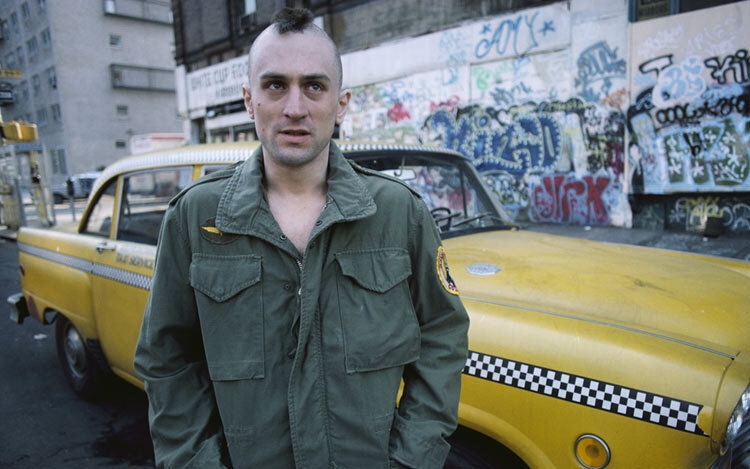
Travis Bickle from Martin Scorsese’s Taxi Driver presents a far more ambiguous – perhaps the most ambiguous – 1970s antihero, and one who serves as a dramatic bridge to the inverted heroes of later decades.
Alienated, psychologically unstable, and increasingly violent, Travis Bickle (Robert De Niro) nevertheless experiences an intense moral reaction to the social decay around him in the crime-ridden New York City of the 1970s. Scorsese deliberately unsettles his audience by allowing Bickle’s acts of horrific vigilante violence – occurring at the film’s climax – to produce massive public acclaim.
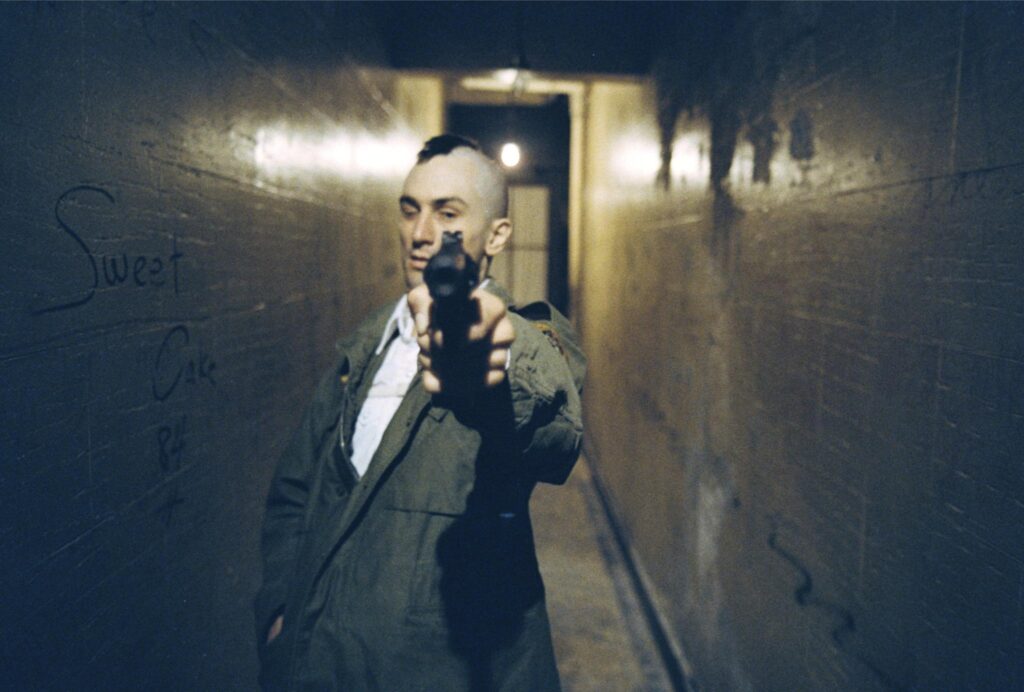
Yet part of the Taxi Driver’s dramatic achievement lies in its refusal to resolve this contradiction by either participating in, or condemning, the public’s adulation of Travis. Rather than celebrating Travis’s vigilantism, Taxi Driver leaves viewers questioning whether they have witnessed heroism, insanity, or some disturbing combination of both.
He Wins, but He Loses
These three characters differ notably from each other, but they share essential characteristics.
Actor Al Pacino, who played Michael Corleone in The Godfather series, said of his character’s story arc that, ‘Michael wins, but he loses. He defeats his enemies in the other mafia families and avoids being accountable to the law, but Michael loses his family in the process, even as his entire motivation was to save them’.
As mentioned above, Jake Gittes in Chinatown also loses, even as he wins. In a strange way, so does Travis Bickle in Taxi Driver.
Travis rescues a young girl named Iris (played by a teenage Jodie Foster) who was lured into prostitution by an abusive pimp and fatally shoots several gangsters who try to interfere. Travis also escapes any legal repercussions from his actions, as the police and public view Travis as a hero. But at the film’s end, Travis remains as isolated as he was at the start, an anguished human time bomb primed to explode again.
All three stories acknowledge moral law even when their protagonists violate it. Wrongdoing carries consequences and tactical successes often prove hollow. The audience may pity these men, fear them, or even recognize aspects of themselves in the actions of these characters, but the audience’s admiration is always qualified by the awareness of human tragedy.
The tragic antihero therefore deepens our understanding of moral complexity without abandoning morality itself.
III. Dawn of the Inverted Hero
Something different began to emerge onscreen during the last decades of the twentieth century. Several characters from that era were no longer tragic figures whose flaws invited reflection. Rather, their moral failings constituted the core of their appeal. They were the first inverted heroes in American cinema.
As argued above, the Inverted Hero is neither a villain with some sympathetic motivation, nor an antihero with big flaws. Rather, he is a protagonist whose violations of morality and civic norms serve to enhance his status in the eyes of the audience.
A notable early example of this type – one that we identified in Part 1 of this series – is the fictional vigilante, Paul Kersey, as portrayed by Charles Bronson in the film Death Wish (1974) and its numerous sequels.
Death Wish’s Paul Kersey as Foundational Inverted Hero
Much like Travis Bickle in Taxi Driver, Paul Kersey is a vigilante responding to the urban crime wave of the 1970s. Unlike Bickle, however, Kersey begins by seeking revenge for specific crimes committed against his loved ones. These crimes, which occur early in the first Death Wish film, provide Kersey with an up-front moral justification for his vigilantism.
But once Kersey sets off down the road of vengeance, he quickly becomes remorseless and unstoppable, taking down dozens of anonymous criminals, often on quick-trigger impulse. Moreover, Kersey’s form of one-man justice is uniformly lethal – he kills every one of his targets, not unlike the hitman Bronson portrayed in his earlier film, The Mechanic (1972).
Additionally, having lost his family, Kersey begins to detach himself from normal social ties and from his profession, transforming himself into a ‘lone assassin’ of criminals. He also develops a mordant sense humor regarding his new occupation, signifying a lack of moral qualms about his actions. By the opening of the first sequel, Death Wish II (1982), Paul is simply a murderous hunter on the prowl.
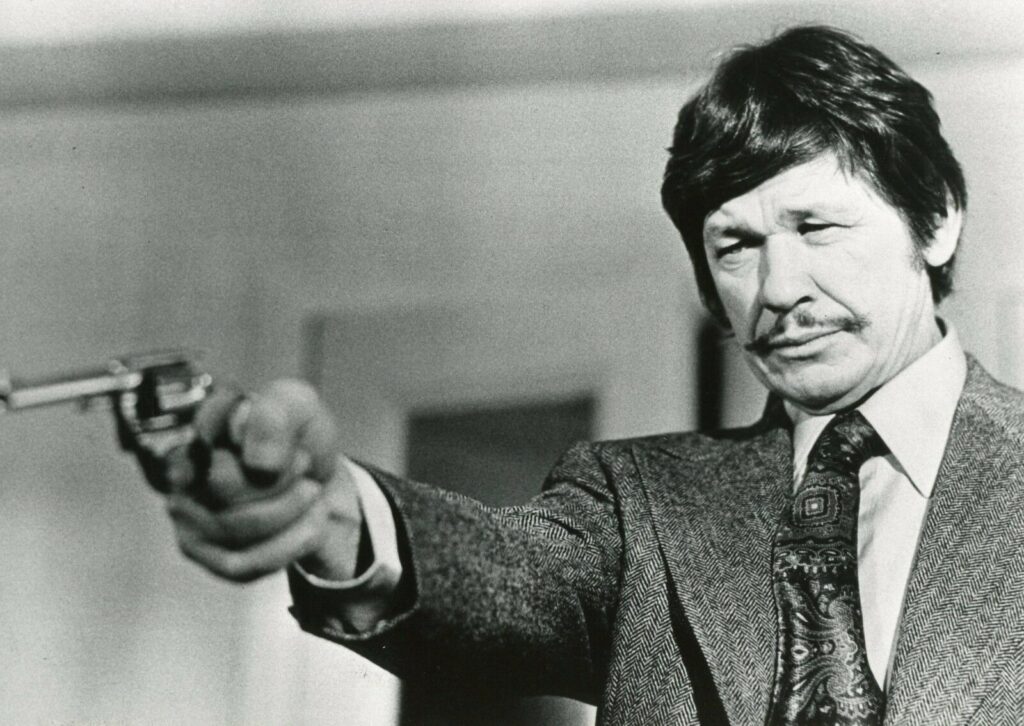
In Paul Kersey and similar vigilante characters from the 1970s and 80s, qualities long associated with villainy—ruthlessness, deception, lawlessness, emotional detachment, and calculated and sadistic violence—became transformed into markers of exceptional competence.
We cite a few notable examples to illustrate the evolution of vigilante-action films and crime-revenge melodramas during that era and how they defined the qualities of an inverted hero.
Cold Calculation and Moral Atrophy
Alongside Paul Kersey, a new breed of cinematic vigilantes sprouted up on American movie screens in the 1970s, including police detective “Dirty Harry” Callahan (Clint Eastwood) in the self-titled crime franchise starting with Dirty Harry (1971). Other notable screen vigilantes were former CIA agent Mike Locken in Sam Peckinpah’s The Killer Elite (1975), Major John Rane in Rolling Thunder (1977), John Eastland in The Exterminator (1980) and Dr. Jonathan Hemlock (Clint Eastwood, again) in The Eiger Sanction (1975).
Aside from Dirty Harry, the protagonists of these films act in a uniformly selfish, calculated and callous manner, snuffing out real enemies and civilian “collateral damage” with equal coldness and a complete indifference to the broader societal costs of their actions.
In The Killer Elite, former CIA operative Mike Locken (James Caan) is double-crossed and critically injured by an old comrade, Hansen, during a mission. Locken’s sole motivation in the film, besides regaining his physical capacities, is to take revenge on the friend who betrayed him.
Locken exhibits no sense of civic duty or patriotism. He casually uses civilians in his schemes, shows complete unconcern for human life – even the lives of his allies, and treats combat as a job. In the end, when he realizes that he and Hansen were just pawns in a corporate-intelligence shell game, he doesn’t seek justice or to expose the truth — he simply takes a payout, shoots his way out, and sails off, totally indifferent to the chaos he leaves behind.
Lone Wolves Turning Their Backs on Society…
In Rolling Thunder, former POW Major John Rane (William Devane) returns from years in a Vietnamese prison camp emotionally deadened. When a local gang murders his family during a home invasion, he doesn’t seek justice — he plans a slaughter.
Rane doesn’t possess a desire to ‘clean up the streets’ or protect anyone. He uses the murder of his family as a pretext to return to the only state in which he feels functional: violent combat. He and a fellow veteran (Tommy Lee Jones) execute everyone involved in a detached, robotic fashion. Rane’s actions are indistinguishable from those of a drug cartel enforcer.
In a similarly conceived revenge drama, The Exterminator (1980), another Vietnam veteran, John Eastland (Robert Ginty) whose best friend is paralyzed in a mugging, initially targets the street gang responsible. But the scope of his activities soon widens.
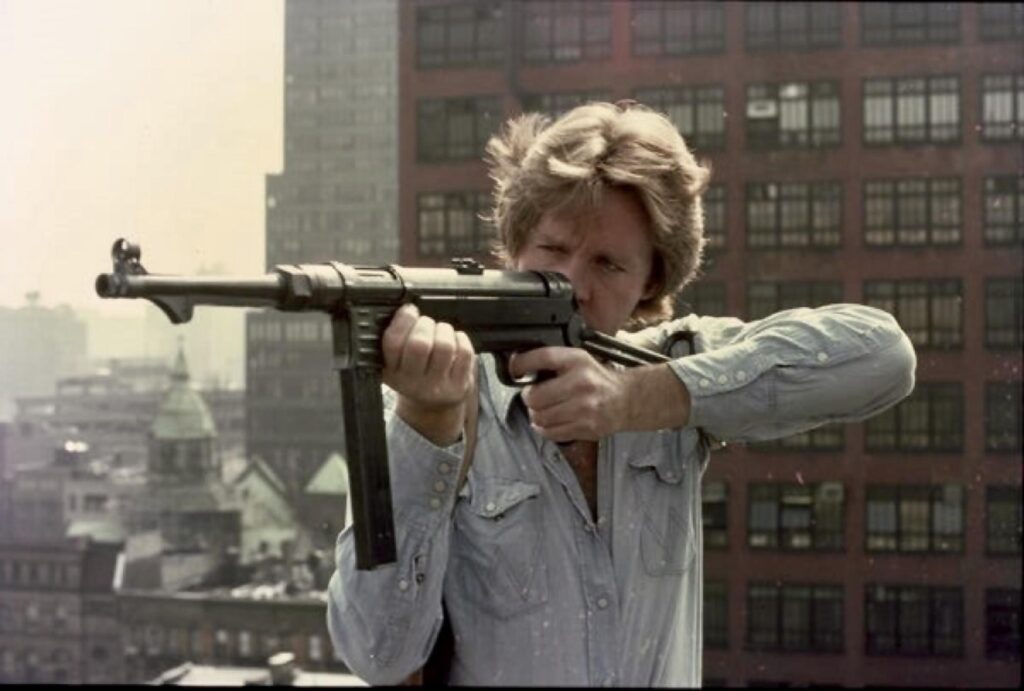
Eastland soon abandons proportionate revenge, employing military-grade torture—beheading a gang leader with a meat cleaver, feeding a corrupt politician to rats, and using flame throwers on petty thieves – to dish out the roughest kind of justice imaginable. By the end of The Exterminator, Eastland is a terrorist who executes people without trial, forcing the police and FBI to treat him as a national security threat.
…Or Completely Indifferent to Its Fate
The character of Dr. Jonathan Hemlock in The Eiger Sanction, which Clint Eastwood both starred in and directed, doesn’t even pretend to be motivated by revenge. Hemlock is an art professor who finances his illegal collection of masterpieces by working as a government assassin (i.e. a “sanctioner”).
Hemlock exhibits textbook narcissistic personality traits. He treats women with contempt, regularly resorts to blackmail, and kills targets not out of moral conviction, but because his handler threatens to report his art collection to the IRS! Hemlock’s motives are entirely material and selfish; he is a cultured hitman who happens to be the protagonist.
There are definite patterns and recurring tropes at work here: the traumatized Vietnam vet, characters who are betrayed by institutions, revenge as a justification for barbaric acts. In one form or another, Sam Peckinpah, Michael Winner, Clint Eastwood, Charles Bronson and a small but overlapping group of screenwriters and producers were involved in the making of these films.
These patterns didn’t appear by accident. Audiences weren’t invited to admire the new breed of heroes despite their anti-social qualities. There were invited to admire inverted heroes because of them.
IV. A Seismoc Shift in Moral Architecture
The vigilante films of the 1970s represented a profound shift in the moral structure of storytelling. That shift continued into the 1980s and 1990s with films such as Vigilante (1982), First Blood (1982), Commando (1985), the later Death Wish films, Lethal Weapon 2 (1989), Hard Target (1993), The Rock (1996), Payback (1999) and The Boondock Saints (1999).
Classic heroes had asked whether extraordinary ability could remain subordinate to virtue. Tragic antiheroes explored what happens when virtue collapses under the weight of human weakness.
The Inverted Hero asks a different question altogether: what if virtue is no longer necessary for admiration? What if effectiveness alone is enough?
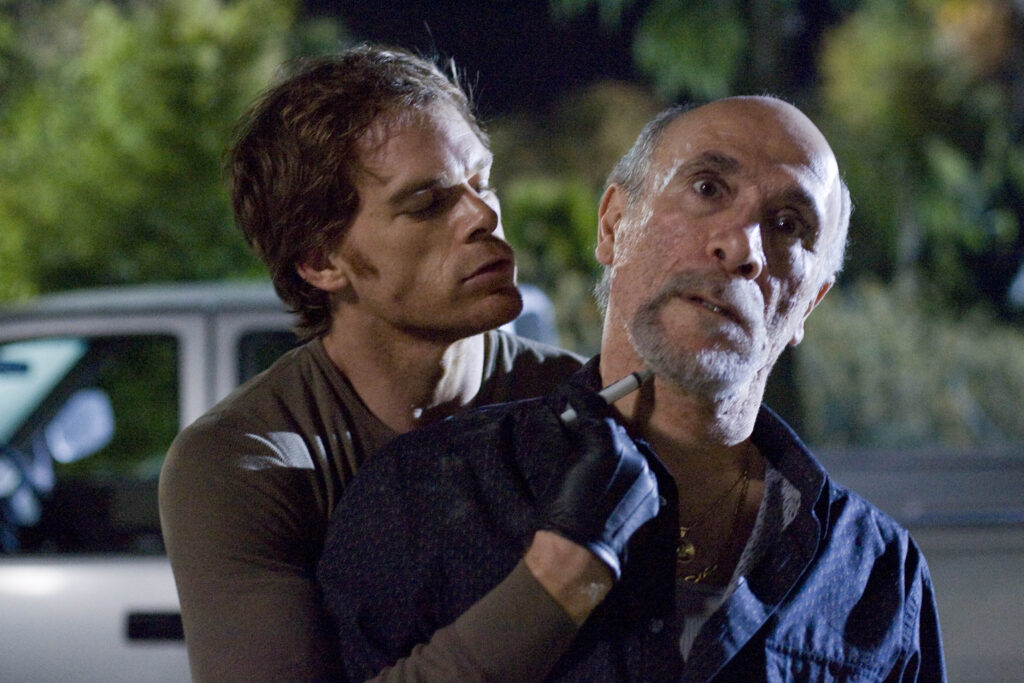
The Inverted Hero generally possesses an internal moral ‘code’ that substitutes for conventional ethics. He may refuse to harm children, remain loyal to a select group of friends, or punish only those whom he views as deserving. Recent examples include Dexter Morgan from the TV series Dexter (2006-2013) – surely, the world’s first serial killer hero – and Sylvester Stallone’s character, Dwight Manfredi, in the prestige TV series Tulsa King (2022-2026).
Such limited moral codes reassure audiences that these characters remain “better than the really bad people” opposing them. Yet they also permit viewers to celebrate conduct that earlier generations would have viewed as fundamentally villainous.
The result is neither ‘moral ambiguity’ nor moral realism — it is moral inversion.
This transformation didn’t occur overnight, nor did it eliminate the classic hero altogether.
But once Hollywood discovered that audiences could be persuaded to identify not only with flawed individuals but with morally inverted ones, the center of gravity in American storytelling shifted. The consequences of that shift would soon extend far beyond crime, espionage and action dramas into every genre of popular entertainment.
Until next time, we are —
Greymantle
To be continued in Part 3