In Part 1 of this two-part series, the author presented the first half of a personal reminiscence of Sudan in the early 1980s, starting with his journey by ferry across Lake Nasser, through an unplanned stay in the town of Wadi Halfa, a four-day journey by truck across the eastern Sahara, and a brief stop in Khartoum where the author bought a ticket for the aptly-named ‘slow train to Wau’, which unceremoniously deposited him and his fellow passengers in the distant hamlet of Abu Zabad.
Roughing It in Abu Zabad
Abu Zabad, a town surrounded by the flat, dusty plains of West Kordofan, presented a more favorable situation for me than had Wadi Halfa a week or so earlier. At least I had my Sudanese friend, Alfonse, a member of the Bari tribe heading home to Juba for his summer holidays, to speak with.
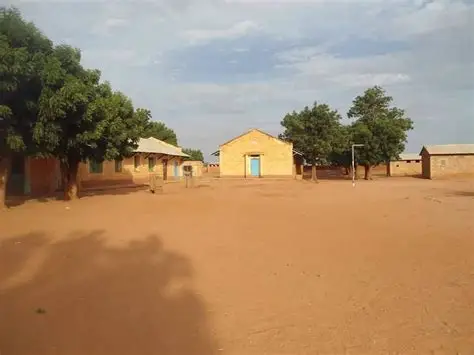
Abu Zabad didn’t have much more than Wadi Halfa— there was dust, a few sparse bushes and a small number of low, mudbrick buildings that sold essentials like tea, chunks of soap and hard boiled eggs. The train station consisted of nothing but a few train sidings and a concrete shack or two. I remember getting water from a hand pump near those buildings. It was a place to gather and gossip about the day’s events.
As in Wadi Halfa, most passengers camped outside, building fires and sharing food. Alfonse and I had a choice of either sleeping in the train (uncomfortable) or getting some fresh air by sleeping outside with most of the other passengers, which we did.
Fellow passengers sometimes asked Alfonse and I to join them for their meals, all sharing a pot and no one taking more than the one morsel of meat – typically goat – per person (give or take) and treating each other to hard boiled eggs. Good manners were prevalent among the Sudanese – both northern and southern, either Arab or African. Their hospitality — and curiosity about me — felt genuine and boundless.
From my perspective, it was difficult to understand how such good and courteous people could participate in such on-again, off-again brutal wars against each other. But then, the people I met were civilians, the people who were always caught in the middle.
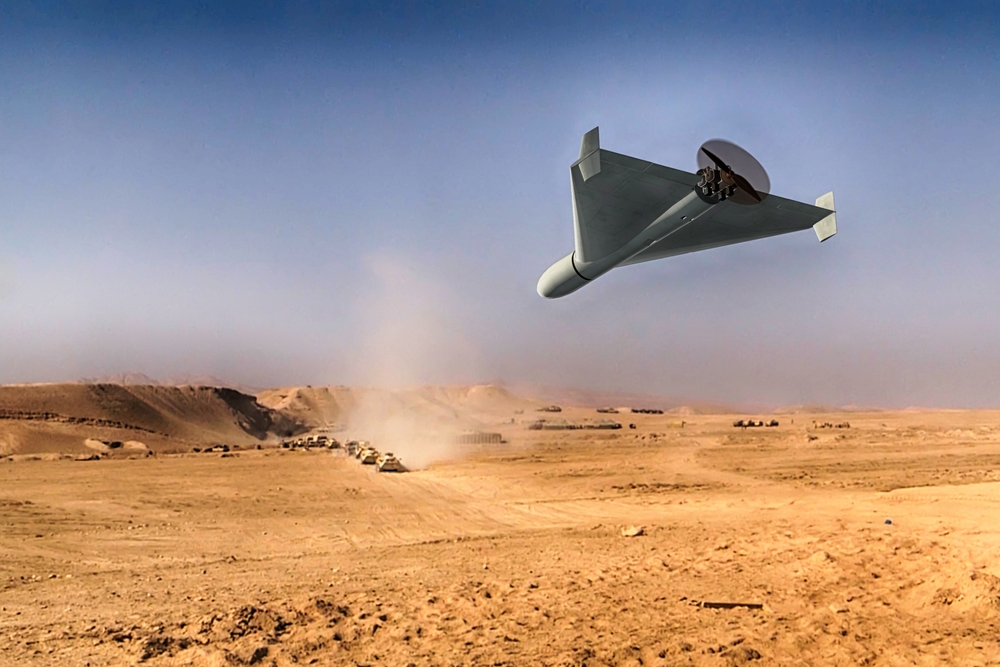
I just recently saw in the news that Abu Zabad, during what is now the Third Sudanese Civil War (sparked in 2023 by the Rapid Support Forces’ attempt to seize power from the Sudanese Armed Forces), underwent a severe drone attack on March 8 that killed at least 34 people, mostly women and children.
The town is now located on the front lines in the fighting between the RSF and SAF for control of North Sudan. News of this atrocity struck me extremely hard.
How I Came to a Realization
I don’t know the exact number of days we spent in Abu Zabad. What I do know is that Abu Zabad is where it finally sank in for me that travel in Sudan involved a risk I did not like: that I might end up somewhere that I could never—for eternity—find a way to leave, like the unfortunate traveler in Evelyn Waugh’s short story ‘The Man Who Liked Dickens’.
Stuck indefinitely in some unstable backwater, there was a possibility that I could die from some random cause – an infected cut, getting caught in the middle of some arbitrary knife fight, whatever – and no one back home would ever know. The moment this realization hit me is when my bottom-class, hippy-style travel through Sudan stopped being fun. I have to admit it: I was scared.
I believe the locomotive didn’t come back for at least a week, but I may have added some days here remembering how slowly time seemed to pass in Abu Zabad.
When the locomotive did return, it attached itself to the other side of the train – the back end. The tracks ahead were indeed no good and had been washed out by the torrents of the rainy season to the south. We were headed back to Khartoum.
At that point, I was thrilled just to be moving again.
In the city of El Obeid – Arabic gum capital of the world— I faced a decision. Most people on the train were planning to get off in Kosti and wait for the slow ferry to Juba. I determined that mentally and physically I could not do this — wait for a ferry that might not come for a month.
In El Obeid I found a truck that would take me back to Khartoum by morning. I said goodbye to Alfonse, who was planning to wait for the ferry in Kosti. I did not know it then, but this would be the last time I would see or communicate with any of my southern Sudanese friends.
I told Alfonse I’d see him in Juba soon. He told me to look for him in Little London.
A Kenyan Interlude
Back in Khartoum, I once again asked about direct flights to Juba but was told that I was once again out of luck: there was still no fuel at the Juba airport. So, as an alternative, I booked a flight to Nairobi, Kenya. From there, I surmised, I could easily find a truck willing to take me to Juba. How hard could it be?
Once in Nairobi, I found out to my delight that the Juba airport was open for business again: a fuel delivery had been received. I booked a return flight to Khartoum, with a stopover in Juba, for early August. With getting to Juba now a sure thing – practically ‘in the bag’ – I decided I could relax and spend some time in Kenya, a country used to tourists and easy to get around.
In all, I spent close to a month in Kenya, joining a camping safari that went to several game parks, climbing Mt. Kenya as high as a lack of technical gear and a bout of horrible altitude sickness – which nearly leveled me – allowed. I managed to stagger up to about 16,000 feet, then called it a day.
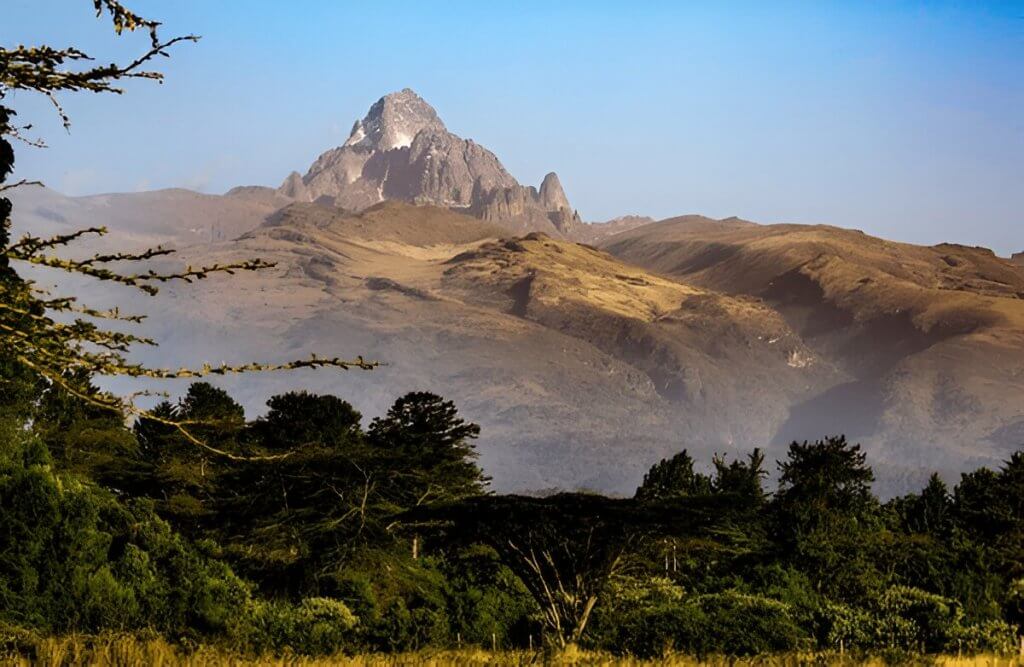
I also managed to see “the snows of Mt. Kilimanjaro” and surprised an African buffalo while I was taking a walk one morning by myself, receiving a fierce admonishment from our guide who said the buffalo could have easily charged and killed me—to speak nothing of the lions around. It was wonderful to enjoy a land with at least some tarred roads and uniformly friendly people.
Kenya would make up about a third of my three-month journey. Whenever I passed through Nairobi, I’d stop at the Sudanese Airways office to make sure the Juba airport still had gas. I was repeatedly assured that it did.
Unwelcome Company
In Nairobi I stayed in the youth hostel. One evening, who should walk in but the young German couple from the train to Wau (described briefly in Part 1 of this article). They said the slow ferry had been waiting in Kosti and left the morning after our train had arrived there. By proceeding directly on to Khartoum to book my flight to Nairobi, I had just missed the ferry to Juba.
The Germans also said that Juba, in a surprising and unwelcome use of American idiom, was “a shithole” and that I had missed absolutely nothing by not waiting for the slow ferry.
I didn’t ask if they had gone to the Little London bar and seen the beautiful women. Somehow, I was sure they hadn’t and, in any event, I found their perspective on Juba both unsurprising—plenty of people had warned me that Juba was dirty and undeveloped–and highly regrettable.
It would be the good people of Juba that would make Juba a worthwhile destination for my travels, and these two travelers had clearly missed all that.
On the morning that I was to fly to Juba I went to the Sudanese Airways office downtown to check on the status of my flight before heading to the airport. They didn’t have to tell me—I already knew what had happened — no more fuel. I had felt it in my bones as soon as I walked into the Sudanese Airways office. The Juba airport was closed again.
I asked the Sudanese Airways staff if I could possibly fly directly to Khartoum. They cheerfully said ‘of course’. The plane that I took did encounter some engine trouble that delayed the flight for a day, but by the next afternoon I was safely back in Khartoum.
Khartoum the Beautiful
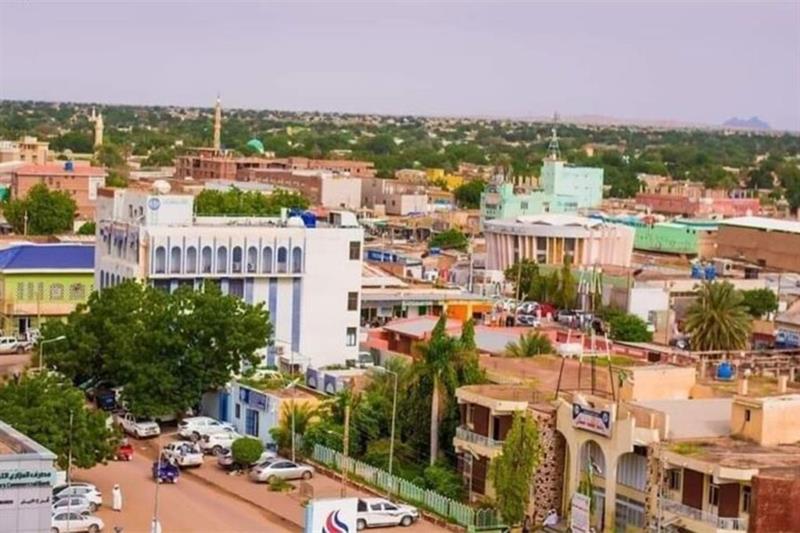
I grew to like sleepy, dusty Khartoum—now by all accounts basically leveled by Sudan’s Third Civil War (2023-present). With a population of just under half a million, Khartoum in 1981 felt more like a town where everybody knew each other than a big city.
You could walk to the youth hostel from the airport. You could also easily walk downtown or to the market from the youth hostel, which fortunately had no limit on the number of days you were allowed to stay. One added bonus was the new Hilton Hotel downtown, which had an all-you-can eat breakfast buffet that would fill me up for the entire day (other youth hostel residents had gotten themselves banned for stealing food).
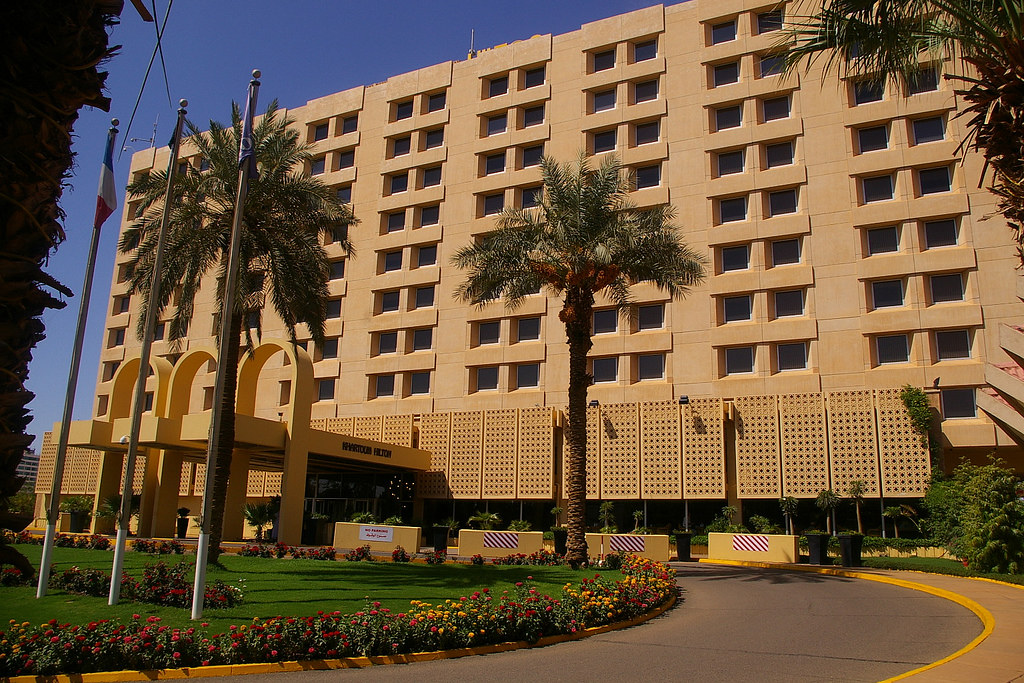
Khartoum didn’t have much in the way of official tourist sites back then, but that was part of its charm. Meanwhile, I had books to read and correspondences to catch up on.
Everybody at the youth hostel said I should go see the two giant tortoises at the Khartoum Zoo. What was extraordinary about the pair, I was told, was that they were always copulating. The other youth hostel guests, barely suppressing giggles, strongly encouraged me to go ‘see them in action’.
As it happened, I was far more interested in Khartoum itself than in the exhibits at the Khartoum Zoo, however titillating or amusing they might be.
Khartoum in 1981 was a mixture of traditional mudbrick and conventional, functional colonial and post-colonial concrete, little of it more than four or five stories tall. Tradition said the British had imposed a street plan on Khartoum that resembled the Union Jack: it had a grid with several avenues that ran diagonally across it.
Many of Khartoum’s most notable buildings were found along a wide boulevard that led to the bridge overlooking where the White and Blue Niles merged: several government buildings, the Al Kabir Mosque, as well as the Grand Hotel and the Khartoum Hilton.
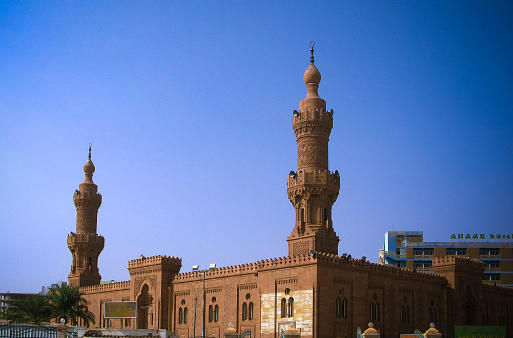
Here was also the glass and steel Friendship Hall, a conference center the Chinese government had financed and constructed, and which had been finished only five years before in 1976 but already looked dusty and seedy. Khartoum’s signature modern building, the Burj Al-Fateh – a hotel that resembles a giant blue egg – wouldn’t be built there for another thirty years.
Less formal was the main city market a short walk away, brightly lit at night and usually filled with the music of the Sudanese pop masters coming from boomer boxes, a welcome change from the admittedly hypnotic songs of the Egyptian tarab master, Oum Kulthoum, that was always playing everywhere in Egypt.
Friday Evenings with the Dervishes
On Friday evenings, it was possible to cross the river into the neighboring town of Omdurman to see the dervishes perform their ritual dances. I did this on two occasions.
How shall I describe the experience? Perhaps the simplest way is to say that you knew you were watching something important to the participants but which you didn’t really, and perhaps could never possibly, understand.
The British had called the followers of the Mahdi ‘dervishes’, assuming they were crazy to be rebelling against them, but that nickname was a complete misnomer. These genuine Sudanese dervishes had nothing whatsoever to do with the Mahdi or his 1880s uprising.
The Sudanese dervishes that I met styled themselves as local “wise fools” who dressed in green, the color of Islam and of Sufi Islam in particular. Their focus wasn’t political or military. It was purely spiritual.
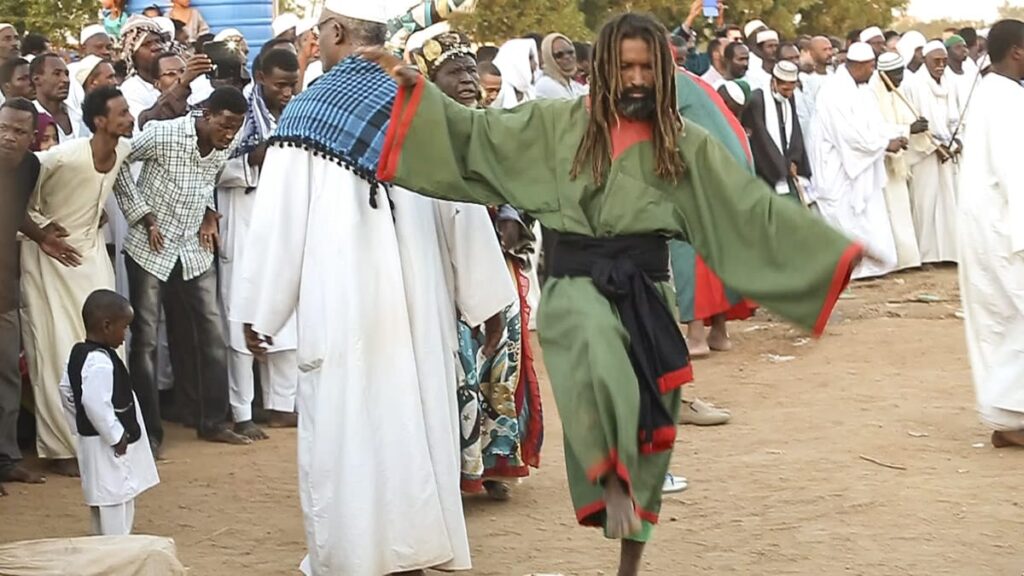
The dervishes’ dance took place in a cemetery in Omdurman in front of the tomb of a Sufi saint whose name I can’t recall. His was one of the few tombs in the cemetery to be decorated with elaborate touches such as a gold leafed dome.
When the events began, men of all ages – and not only the dervishes – gathered in a big circle. They pounded walking sticks, stomped their feet, banged on drums and chanted.
The dervishes gradually entered the circle and hopped and twitched as much as they danced, and only occasionally did they actually spin around in ecstatic circles of whirling movement. These were entirely homegrown North African dervishes – they were not at all like the high-hat dervishes with flowing white skirts you see in Turkish tourist brochures.
The whole thing, I suspect, had a similar energy to that of a Jewish Kabbala service, or a Pentecostal service in Appalachia where people are moved to speak in tongues. It was also a big community event, a kind of Friday evening Islamic rave and an important tradition in the region.
Khartoum the Terrible
During my brief foray there, I was able to enjoy Khartoum for what it would largely remain until pretty recently, I am told, when the three civil wars its elites had instigated finally came home to roost and basically level the place to the ground between 2023 and 2025 (see my April 25 article on this topic).
During the 1970s and 1980s, Khartoum had a reputation as one of the safest – and possibly the safest — city in Africa, home to some of the most pleasant and courteous people in the world, it was generally agreed, and not only by other Africans, but by many Europeans and Asians, as well (and even a few Americans!).
During my sojourn in Khartoum, I certainly saw no violence and experienced no incidents of crime whatsoever. This was true of the other places in which I stayed in Sudan, as well. My wallet remained safely in my back pocket when not in use. My passport stayed in my breast pocket for the entire journey, unmolested.
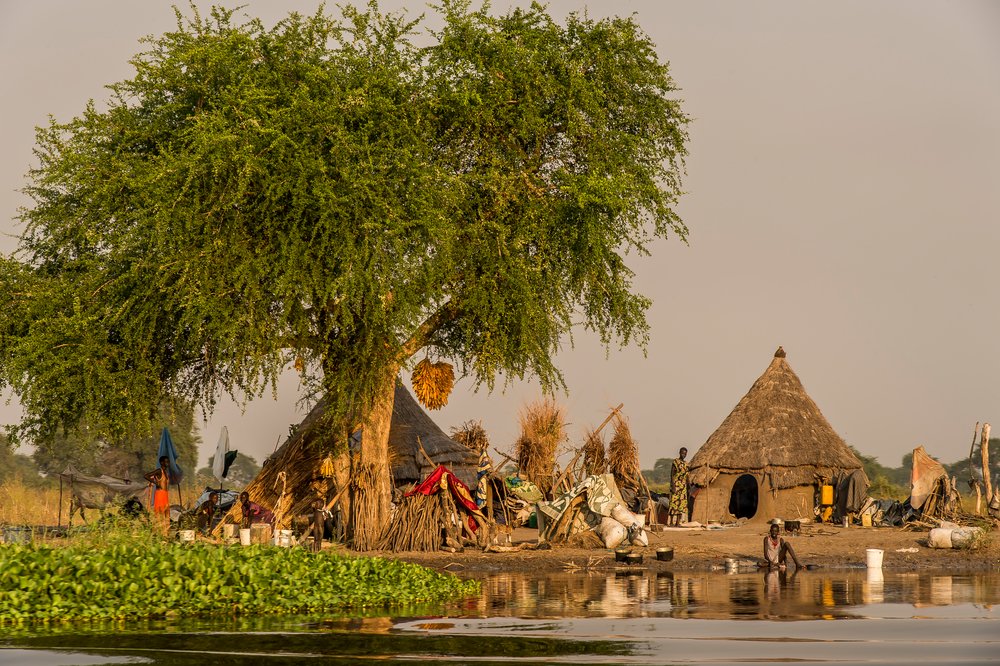
But Khartoum’s darker history was always hovering in the background. It would come bubbling up to the surface only two years after I left. Khartoum’s public slave market was long gone by 1981, but the ancient practice of kidnapping and selling human beings – common in Sudan for millennia – was soon to be revived by what became known as the Janjaweed militias.
My friends from the slaving grounds in what is now South Sudan were partly protected from this horror: they were college educated, elite, and the leaders of their tribes. But some of their kinsfolk were soon to again become living, breathing booty in a nightmare campaign of terror and domination. The Arab northern Sudanese had enslaved African southern Sudanese off and on for centuries. They were poised to do it again.
I am relieved that I didn’t see people being openly bought and sold in Khartoum, or anywhere else in Sudan. I was also relieved that I could buy a beer, which would become impossible two years later in 1983, when Jaafar al-Nimeiry, the then-Sudanese leader, would become “sharia curious” and dump every bottle of alcohol he could lay his hands on into the Nile River.
Nimeiry would also, as I mentioned in an earlier Greymantle article on the history of Sudan’s civil wars, reintroduce public executions that were televised in the mid-1980s. Fearful for what was sure to follow, Sudan’s Christian and Animist southern provinces soon took up arms, restarting the civil war that President Nimeiry had ended back in 1972.
There Be Dragons
Eventually – after perhaps two weeks in Khartoum – I bought a ticket for the train back to Wadi Halfa. It was the middle of August and summer was winding down. It was time to head back to Egypt.
For some reason, I was unable to reserve a seat on the train. No matter, I thought. I found a comfortable spot outside the doorway into the railroad car, on a little platform above the couplings politicians used to make speeches from. I even had good company here—a young medical student from Oxford, who was heading back to school after his summer holiday.
Near us a young boy—nor more than eight or nine—sat with his feet dangling over the side of the train as we sped through the countryside. He liked to kick his legs back and forth and sing. The boy was alone – there was no sign of an adult accompanying him – and wore a blue gallabiyah.
All was fine until we pulled into a station that had a platform—Atbara, I think.
His foot caught against the side of the platform and off he flew. He had a startled, “Oh shit” expression on his face that I’ll never forget. When the train stopped, the medical student felt obliged to find out what happened to him. The good news: the boy was alive. The bad news: both his legs had been run over by the train, and his feet had been severed.
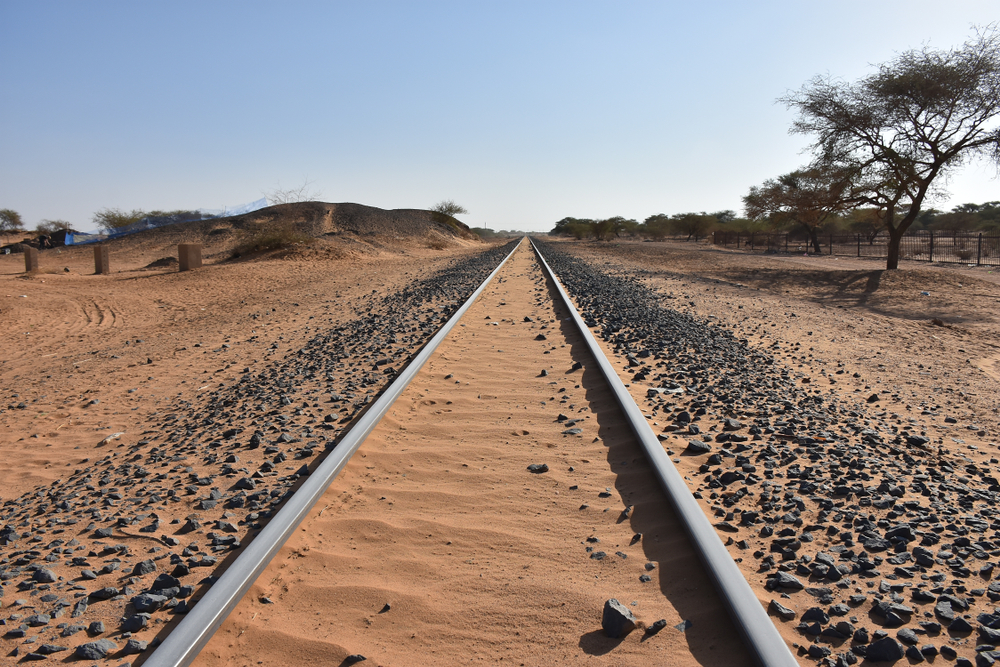
The medical student and I didn’t talk much for the rest of the ride to Wadi Halfa. Like with so much of the misfortune in Sudan, there was little to say. I just felt lucky I hadn’t had one of my own legs dangling over the side of the train.
Strangely, I don’t believe the boy’s accident delayed the train at all. I was on the Lake Nasser ferry by the next day and safely back in Egypt a few days later.
The Lake Nasser ferry—the one bit of travel infrastructure touching Sudanese soil that I had found to be reliable—would make the news two years later: a fire would break out in its kitchen, and it would sink. It was carrying 627 passengers, more than half of whom would perish.
Most of the bodies would never be recovered and were presumed to have been eaten by the lake’s considerable population of crocodiles. By the early 1980s, Lake Nasser already had a fearful reputation for crocodiles, whose numbers had built up because they could not cross the Aswan High Dam to migrate upstream, but remained stuck in Lake Nasser.
They now fill the lake.
In that part of the world, there be dragons indeed.
Until next time, I am –
Robert Cox