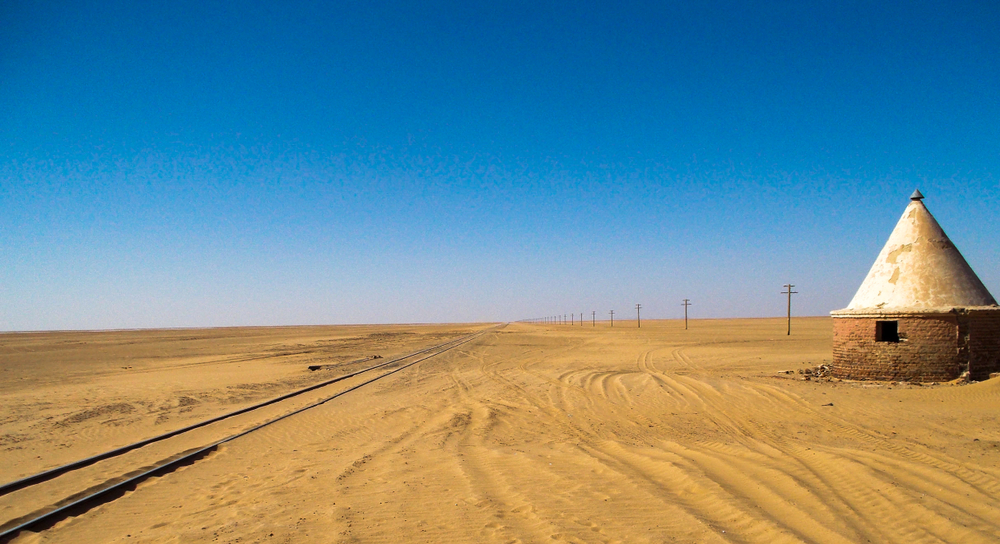
It looked so easy on a map—a river called the Nile connected the two cities: Cairo and Juba. Only a single country—Sudan— and 1,750 miles as the crow flies stood between them.
My plan was simple: First, I’d take a train to Aswan from Minia, and from there book a ferry down Lake Nasser — the 300-mile-long artificial lake created by the Aswan High Dam — to the Sudanese border outpost of Wadi Halfa. From there, I’d take a second train 600-miles southeast to Sudan’s capital city of Khartoum. Once I reached Khartoum, I could select from several different modes of travel for the last 700-odd miles of the trip.
Chief among those options was either the “fast” ferry or the “slow” ferry – as they were termed by the locals – up the White Nile from the nearby city of Kosti through the last navigable stretch of the river; alternatively, I could catch a train from Kosti to the town of Wau (pronounced “Wow”), from which Juba was, I was confidently told, an easy two-day truck ride. Traveling to Juba by the slow train seemed a viable option.
There was a third option: I could fly to Juba from Khartoum on a Sudan Airways flight and be there in under two hours. But that didn’t seem very adventuresome.
My closest North African friends would be in Juba for the summer, and I was eager to be in their company away from the university atmosphere in which we had met.
Traveling in a Time of Peace
The month and the year were June 1981. I had just finished a stint teaching English at El Minia University in central Egypt (i.e. ‘Upper Egypt’ as the Egyptians think of their geography), where these friends of mine were foreign exchange students from what is now South Sudan.
On paper we had nothing in common: They’d grown up during a brutal civil war, in places, for the most part, without electric light or running water, and where wealth was measured in cattle. In spirit, though, we were quite compatible: they were of an easy-going disposition and quite sophisticated. All spoke numerous languages and were accepting of different cultures: Arabic, African, European, etc.
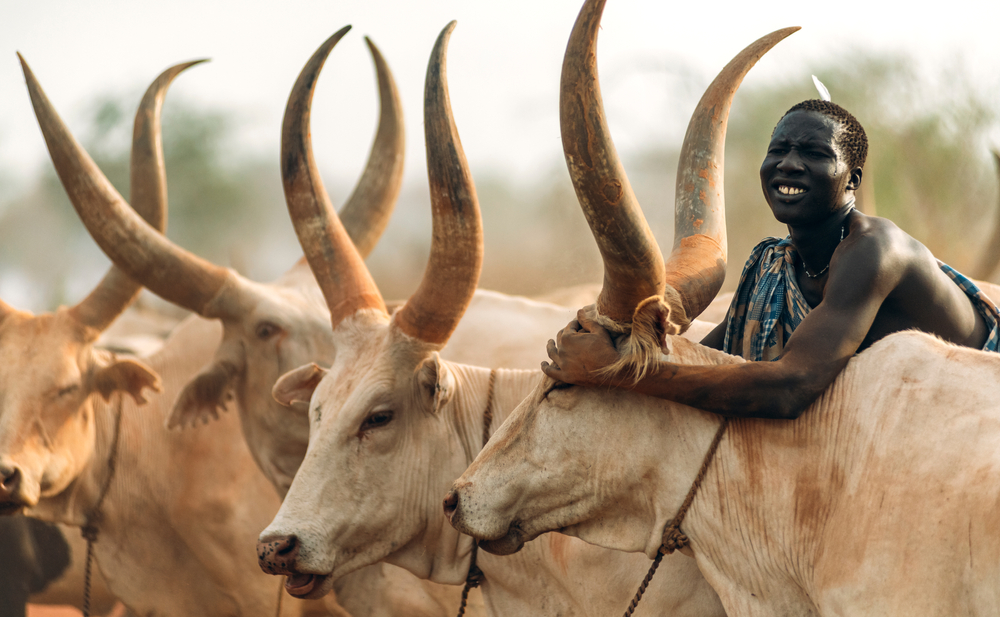
My Sudanese friends were Christian and Animist southerners who had been sent to college in Egypt to be “Arabized,” which is to say: to learn the ways of Arab culture so they’d “work better” with the Arab and Muslim northerners who dominated Sudanese government and politics.
But they were having none of it—in fact, they’d all be back in the bush fighting for independence from the North in a few years. I have little doubt that most, if not all, of them died violent deaths during Sudan’s Second Civil War (1983-2005).
But in 1981 that was still in the future.
The year of my travels in Sudan happened to coincide with the longest period of internal peace that post-independence Sudan has ever known. It came near the end of an 11-year period of relative calm lasting from 1972 — when the Addis Ababa Accords that ended Sudan’s First Civil War (1955-1972) were signed – until 1983, when the first rumblings of Sudan’s Second Civil war began to be heard.
The plan for that summer was for me to join my Sudanese friends at their favorite bar in Juba, a place intriguingly named Little London. The women I would meet there would be exceptionally beautiful, I was told. The most beautiful women in the world.
I was twenty-four and game for anything. Or so I thought.
The Twilight of “Hippy Travel”
I was far from completely naïve about what travel across Sudan might be like.
By the age of 24, I had already done my share of cheap, rock-bottom travel through large swathes of Asia and parts of Europe: hitching rides on trucks and sleeping on the luggage racks of third-class train carriages. Sleeping in the open whenever possible.
This kind of backpacker “hippy travel” had flourished during the 1960s and 70s for young people eager to see the world on the cheap, or to find enlightenment by traveling on foot to the Far East. By 1981, however, that kind of romantic travel had fallen into a rough patch. In Central Asia, the Soviets had invaded Afghanistan. The Shah had fallen in Iran.
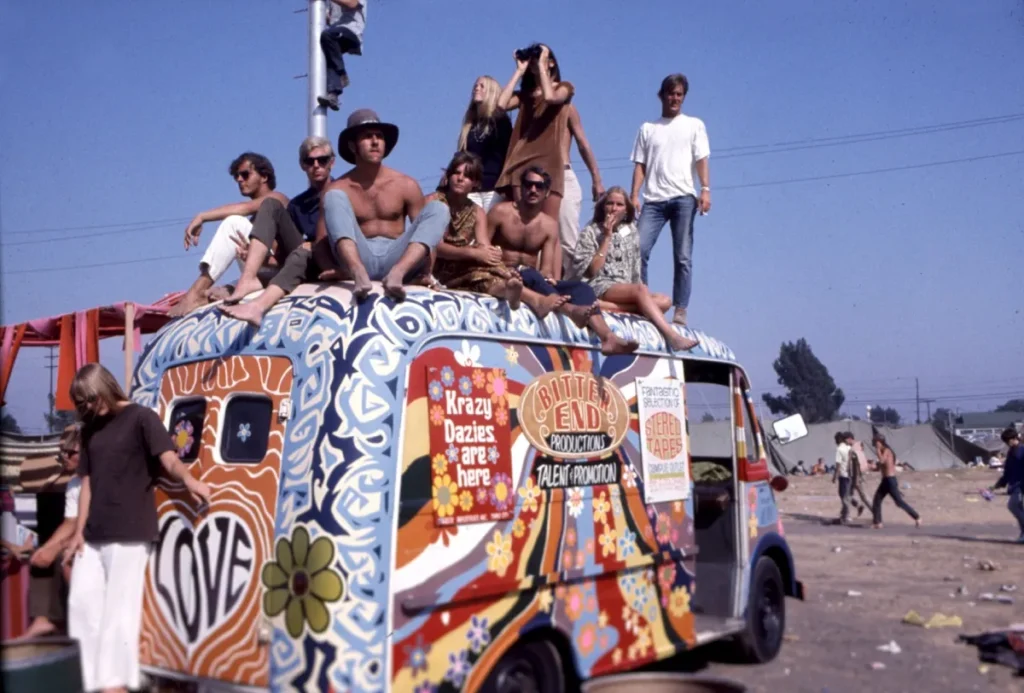
The “magic bus route” of the late 1960s between Istanbul and India was no more. The respective turmoils of Afghanistan and Iran had sealed the route connecting Pakistan to Turkey.
I had made that trip in 1978, and it was an absolute breeze compared to what I discovered traveling through Sudan to Juba, despite what looked so easy on a map.
Just follow the Nile, right?
The Hottest Place on Earth
After a comfortable journey across Lake Nasser on an Egyptian-run ferry, during the course of which I mostly camped out on the upper deck in my sleeping bag, I discovered that Wadi Halfa boasted an unusual feature: it had no shadows, at least not in mid-June just days before the summer solstice.
When I arrived, the name Wadi Halfa rang a bell. I had seen it in The Guiness Book of World Records we had growing up in Brooklyn. It was cited as having the highest land temperature ever recorded – 127.4 degrees Fahrenheit (circa 1967). So, it was literally the hottest place on Earth — especially in June.
During the solstice, the sun hits its zenith at noon over the tropic of cancer, where the town is located. There wasn’t very little shade: there was no shade whatsoever. I experienced this phenomenon directly several times because I was obliged to camp out in the open in Wadi Halfa for several days.
That is because when I arrived, the Sudanese railway workers had just gone on strike, which meant there would be no trains running from Wadi Halfa to Khartoum until the strike was settled. No one had any idea how long the strike would go on. It was impossible to take a bus out of town because there were no actual roads leading out of Wadi Halfa.
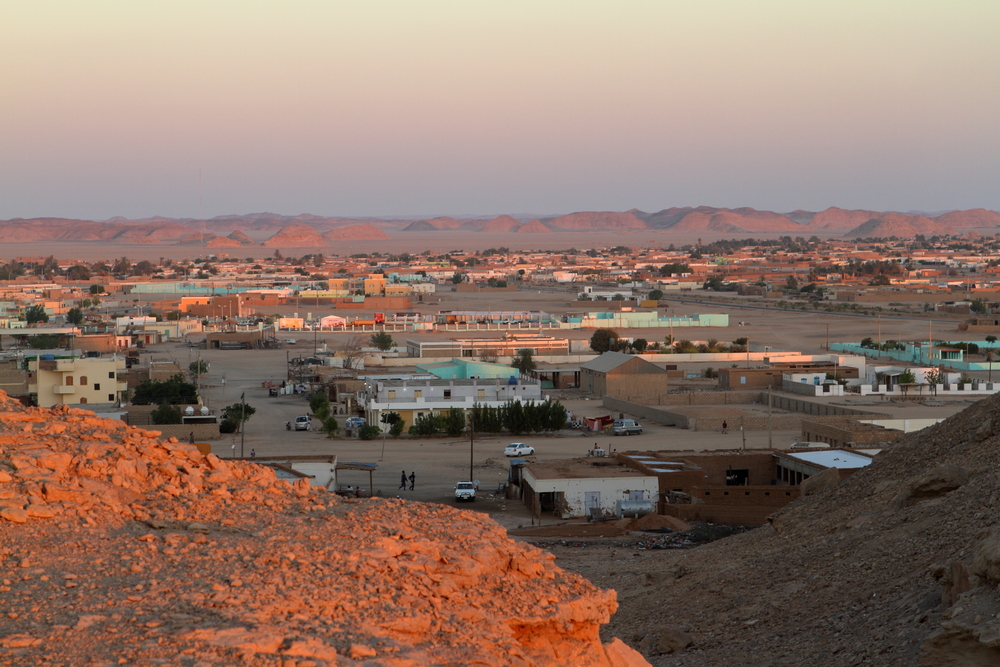
Wadi Halfa had a police station, and not much else. But at least the police station had water and some semblance of a toilet. As to accommodations, I had no choice but to sleep out in the open: there was no hotel to speak of.
There was, however, an impromptu market, with items for sale laid out on sheets on the ground. Nearby lines in the sand marked out a small area for the five-times-a-day Muslim prayer. A red plastic bucket full of water stood at one corner of that area, for the pre-prayer ablutions.
Living in A Furnace
Because of the intense heat, I moved around Wadi Halfa as the sun moved, trying to catch what little shade the police headquarters building afforded. Around noon, when there was no shade anywhere, there was nothing to do but move as little as possible and try to fall asleep.
The key to maintaining sanity during my week or so in Wadi Halfa, I found, was to take long walks in the early morning and late afternoon, when it was relatively cool out. For food, I subsisted principally on mangos, and after several days of this diet decided that I never wanted to see another mango in my life.
The countryside surrounding Wadi Halfa consisted of pristine desert scenery—nothing living, only rolling hills of what amounted to rubble and scenic views of the endless blue expanse of Lake Nasser stretching away to the northern horizon.
The middle hours of those summer days were pretty much unbearable. In Wadi Halfa, I experienced air so hot that the barest sniff of it dried out my nostrils and made them tingle, the way that only a blast of air from a hot oven can.
When a truck arrived on the next Lake Nasser ferry and offered to drive me from Wadi Halfa to Khartoum, I eagerly got on.
A River Runs Through It. So Does A Desert.
It was myself and maybe a half dozen other young, stranded Western “travelers” in the back of the truck. Navigating by compass like a ship on the ocean, the truck crossed roadless desert most of the way between Wadi Halfa and Khartoum. We frequently had to get out and help push when the truck would wallow and get stuck in sand.
And, although the landscape was mostly rock and rubble, like the bottom of a dried-up sea, there was still a lot of sand. The region between Wadi Halfa and Khartoum lies in the eastern Sahara. The temperature was over 100 degrees, and being the Sahara Desert, it was as dry as you might expect. We had to endure a sandstorm, which turned the world a ghostly orange and caked everything, including ourselves, with a layer of grit.
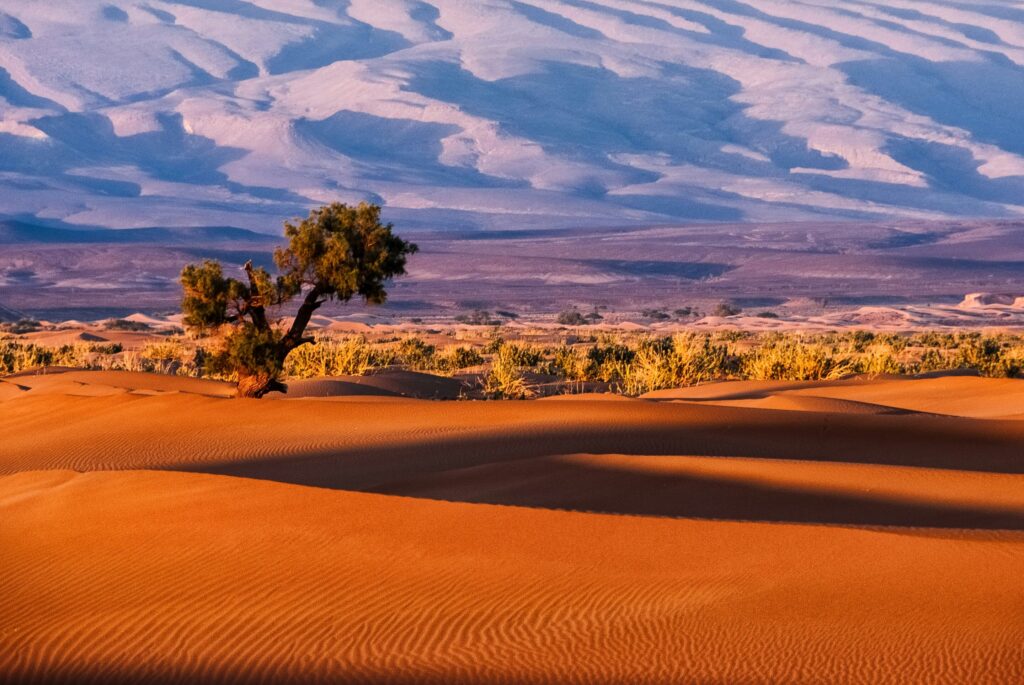
It was a relief to finally feel out of the wilderness of the desert and hit some tarmac. This happened after about 600 miles of open desert, five or so miles outside Khartoum.
Ironically, we later learned that a relief train had pulled into Wadi Halfa just as we were leaving on the back of the truck. The relief train could (and did) take passengers from Wadi Halfa to Khartoum in two days. Our drive across the desert took four.
Just Head Up the Nile
My first stay in Khartoum – the first of three stops I was to make in Sudan’s capital during my trip – was short and focused exclusively on getting to Juba. After arriving in Khartoum, I went immediately to the Nile Navigation Office to inquire about the next leg of my journey.
The fast ferry from nearby Kosti to Juba generally took only four days, but the fast ferry had recently encountered a very serious problem—it had sunk. As for the slow ferry, that took about two weeks and didn’t run on any regular schedule. It was a strictly ‘catch as catch can’ affair.
I asked if this meant that it was theoretically possible for me to miss the ferry in Kosti and be obliged to wait another month for it to return from Juba. I was told the answer to that question was an unequivocal ‘yes’.
After receiving this dispiriting news, I began to investigate direct flights from Khartoum to Juba, but Juba’s airport, as it turned out, had just run out of fuel. No planes were stopping in Juba, because no plane that landed would be able to fly out again until there was a fuel delivery. No one knew when that might occur.
As an alternative, I strolled over to the Khartoum train station to inquire about buying a ticket to Wau, which I knew was the end of the line and the town with train access closest to Juba. Happily, the rail workers’ strike was over and trains were running again.
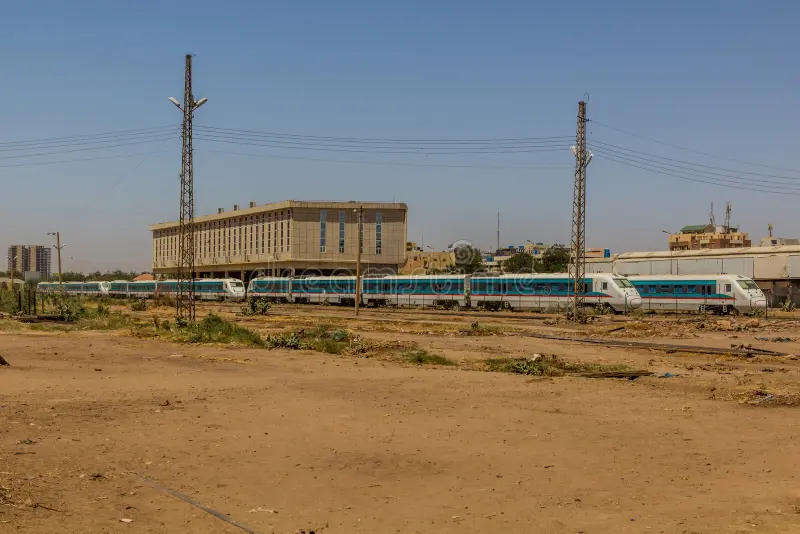
Not wanting to risk sitting in the town of Kosti for something like a month, I decided the train to Wau was the way to go. It was literally called ‘the slow train to Wau’ by Sudanese. There was no fast train.
I splurged maybe an extra dollar for a reserved seat because I had a strange feeling that I might be on the train for a long time. At the station I was told the journey could take upwards of a week. It turned out that buying a reserved ticket was a wise investment.
The Slow Train to Wau
When the train pulled into Khartoum station, thousands were waiting to get on. I showed my ticket and boarded with the other reserved-seat passengers as the railroad employees struggled to control the vast crowd of both ticketed and un-ticked travelers.
The crowd was so large and unruly that I don’t think I could have gotten on the train at all without waving my reserved seat ticket at the conductor. He wasn’t messing around with the other people trying to get on—he was literally threatening them with a whip!
One of my southern Sudanese friends from El Minia University happened to make it onto the train; he sat in the corridor that ran outside my compartment. His name was Alfonse. From the Bari tribe, Alfonse had grown up in Juba and attended a mission school run by Catholic Verona Fathers. He was traveling back to Juba for his summer vacation.
Alfonse explained the situation to me: the train workers were northerners who would essentially be treating the passengers—nearly all southerners—like slaves. This wasn’t just a figure of speech. The conductors were using bullwhips to drive back the crowds.
Not that I saw anybody actually get whipped. The whips were brandished about by the conductors to make it clear who was in charge.
Bullwhips were not the only means by which the train crew, made up of northerners, asserted its dominance. Because we traveled during the Muslim holy month of Ramadan, the train kept to a strict Islamic schedule, stopping at sunset for the iftar, the meal breaking the fast. It also stopped for the pre-dawn meal, and each of the five daily prayers, despite few of the passengers being Muslims.
That meant a minimum of five sometimes lengthy stops each day on our journey south.
These stops at least allowed people to get off the train and stretch their legs. I was obliged to climb through the carriage window to stretch my legs as there was no way of getting out via the crowded corridor.
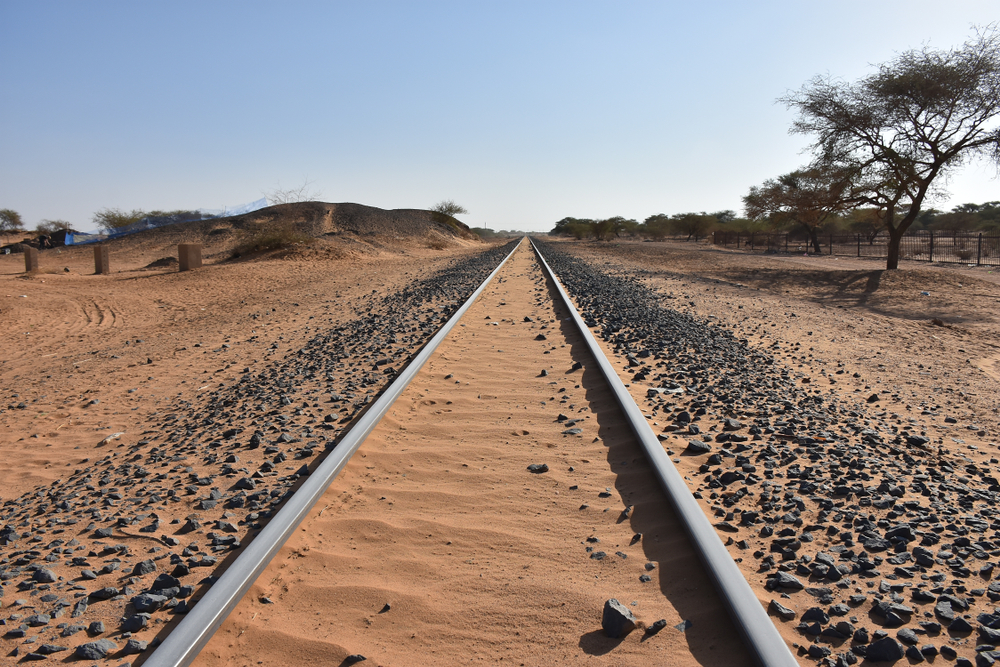
During our first day out from Khartoum, I was surprised to see I wasn’t the only white person on the train—there was also a young German couple traveling to Wau. For some reason, we avoided each other. I had my friend Alfonse to hang out with during stops, for one thing. I think they were a little disappointed, as was I, that they couldn’t say truthfully, afterwards, that they had been the only white, European people on the train.
On the third day out from Khartoum, having covered about half of the 900 miles between Khartoum and Wau, the train lurched to a halt yet again. This stop was different because when I got off the train to see what was happening, I saw that the locomotive had been decoupled from the passenger cars and was heading down the tracks. It soon disappeared over the horizon.
Among the passengers, one school of thought had it that the crew was escaping because they were worried that the passengers had had enough ill treatment and were planning an uprising against them. Alfonse assured me that the crew had only gone up ahead to inspect the tracks.
It was the rainy season in South Sudan. The tracks might well be washed out. It was a frequent occurrence in those days and might still be, for all I know. Back in 1981, rail passengers in Sudan were prepared to adapt to such situations, so adapt we did.
To be continued in Part 2 of this series on Saturday, September 12.
Robert Cox is a writer who publishes both fiction and non-fiction. He is a graduate of Harvard College with honors degrees in history and literature. Robert has traveled extensively in Asia, Europe and Africa. His previous articles for Greymantle’s Politics and Culture have focused on student radicalism, U.S. immigration policy, artificial intelligence, and armed conflict in Sudan and South Sudan.