Key Takeaways
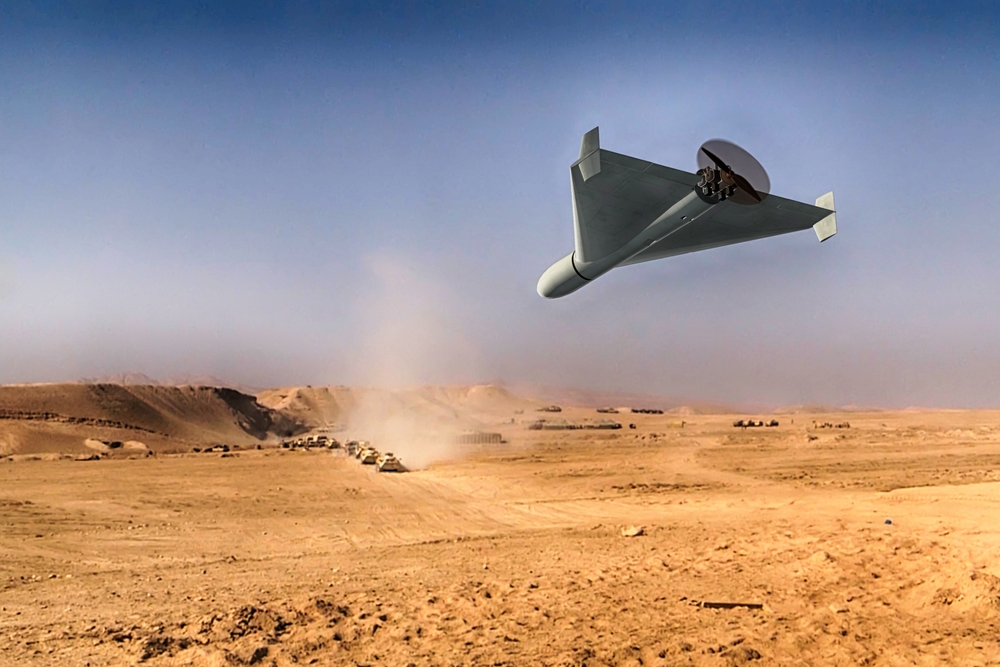
- Taiwan is sharpening its “porcupine” strategy. Rather than attempting to defeat a Chinese invasion through conventional force-on-force combat, Taipei is increasingly looking to asymmetric weapons—including thousands of drones—to make an amphibious assault prohibitively costly for Beijing.
- The “Hellscape” option could turn Taiwan’s coastline into a layered kill zone. The strategy envisions successive belts of aerial, surface, and underwater drones, mines, missiles, and other unmanned systems designed to attrit Chinese forces from the moment they leave the mainland.
- The technology is advancing faster than Taiwan’s doctrine. Taipei is building an increasingly sophisticated drone arsenal, but its counter-drone capabilities, operational concepts, and ability to employ AI-enabled autonomous systems at scale still lags behind China’s.
- The biggest obstacle may not be technological—it may be political. Taiwan’s legislature is set to decide on August 20 whether to fund key elements of the proposed drone buildup. Even with the right weapons, however, Taiwan will need the doctrine and political will to use them effectively.
The last decade has seen Taiwan’s national defense efforts begin a shift (nudged by the Americans) from a conventional resistance model toward a so-called “porcupine strategy” — that is, an asymmetric defense made up of many small ‘pricks’ that inflict damage on the enemy via multiple means on land, sea and air—rather than with dug-in Taiwanese artillery and combat troops attempting to repel an all-out amphibious assault by China’s army and navy steaming ashore along Taiwan’s coastline.
Such a “porcupine” approach tries to maximize risks and costs for the mainland Chinese invasion forces to such a degree that China’s military leadership will conclude that further direct military aggression against Taiwan is not worth pursuing. One way to sharpen the porcupine’s quills is to maximize Taipei’s ability to integrate the latest techniques of drone warfare into its existing defensive layers.
Obviously, this inexpensive new form of weaponry has already proven its ability to frustrate the ambitions of other superpowers in the battlefields of Ukraine and on the waters of the Hormuz Straits. Why shouldn’t such unmanned mechanisms be able to compound the dangers of a highly uncertain amphibious attack by China?
After all, Chinese President Xi Jinping MUST win a Taiwan-invasion gamble outright. The more risk involved, the greater the possibility for absolute disaster, at least for Mr. Xi’s regime and perhaps for the Communist Party’s leadership of China itself.
Taiwan Considers the “Hellscape” Option
In June 2026, Taiwanese President Lai Ching-te’s government proposed spending $6.6 billion to purchase about 211,000 locally manufactured drones to prepare for a potential Chinese invasion. This proposed package would comprise 208,200 air attack, 1,446 reconnaissance, and 1,320 naval drones.
The President’s political party – the Democratic Progressive Party (PPP) – vigorously supports the Republic’s continued independence from Beijing. There can be no doubt that the Lai administration is taking drone warfare very seriously.
A recent Wall Street Journal article states that “Taiwan’s newly established Littoral Operations Command will make its Han Kuang [an annual defense exercise] but this year, demonstrating its mission to prevent Chinese forces from reaching Taiwan’s coast using assets such as anti-ship missiles, sea mines and drones…The use of drones will also be a focus, Taiwan military officials said.”

In light of its attention to drone warfare, Taipei’s leadership has also taken notice of a detailed defense strategy proposed in a 2026 CNAS (Center for New American Security) report, provocatively titled Hellscape for Taiwan: Rethinking Asymmetric Defense.
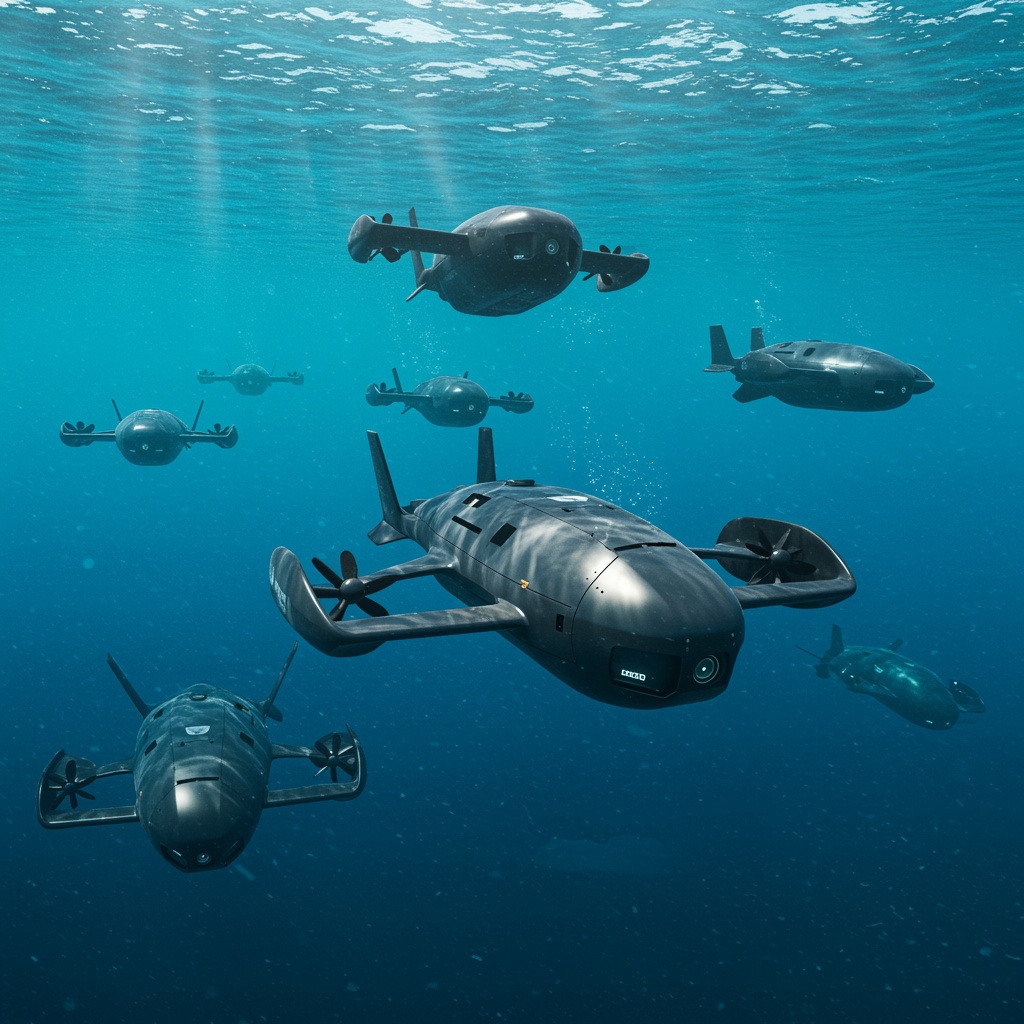
The report’s authors, Dr. Stacie L. Pettijohn and Molly Campbell, present a “Hellscape” concept that entails layered zones of aerial, surface, and undersea drones (plus mines) – all designed to steadily attrit People’s Liberation Army (PLA) amphibious forces throughout their fraught journey from China’s coastal seaports to the island’s beaches.
The authors place much trust in the enhanced capabilities that this new style of warfare offers. They propose that Taiwan add fleets of long-range “kamikaze” drones, Unmanned Surface Vessels (USVs), Unmanned Underwater Vessels (UUVs), loitering Surface-to-Air Missiles (SAMs), multirotor drones, First-Person View (FPV) attack drones, and interceptors to their existing defense arrays.
These munitions can apply diverse payloads –including warheads, torpedoes, rockets, and mines, and even “suicide” impacts– to frustrate PLA assaults and defenses in the event of a full-scale amphibious attack.
“If adopted,” the authors conclude, “…the Hellscape option… could strengthen Taiwan’s asymmetric defense and guide the nation’s approach to drone production, operational concepts, and force design.” (p.16)
They add: “The Hellscape concept is grounded in Taiwanese self-sufficiency and seeks to identify a theory of victory that is not reliant on the United States.” (p.16) This latter assumption appears wise in light of U.S. President Trump’s obvious reluctance to commit to Taiwan’s defense after this year’s meeting with Xi Jinping in Beijing.
Making Drones Smarter
A further consideration within the “Hellscape Option” strategy is determining how The Republic of China (ROC) (i.e., Taiwan’s official name) could make greater use of artificial intelligence (AI) directed drones and other autonomous weapons in the proposed defensive zones.
AI-enabled drones are on the verge of transforming battlefield dynamics by eliminating the lag of human operator decision-making – a change that raises significant ethical questions. Autonomous systems are being designed to saturate defenses, operate through heavy electronic jamming, and process battlefield data at machine speed, significantly accelerating the pace of battlefield initiative and response timing.
At this point, however, the integration of artificial intelligence into the Republic of China’s (ROC) drone forces is not as advanced as it is in those of the Chinese, Russians, Americans, and Ukrainians.
“Our drone and counter-drone efforts started relatively late, and initially we were trying things out as we went along,” Lt. Gen. Huang Wen-chi, the director general of strategic planning for the Taiwanese Defense Ministry, adding “that has begun to change over the past two years.”
The Four Operational Layers of “Hellscape”
As the authors of the “Hellscape” Option paper conceive it, Taiwan would have to decide when an attack was imminent. This moment might be a difficult one to discern precisely. Greymantle has previously hypothesized that a full-scale amphibious assault by China—while hard to conceal—might well be preceded by weeks of an ever-tightening naval blockade or air-sea drills.
Nevertheless, it will be practically impossible to mask the preparation and launch of the type of fleet needed for such an amphibious invasion.
Layer One: Over-the-Horizon Disruption
The ROC’s military would begin its “Hellscape” operations in a zone beginning around 80 km out from the coast. Intensity of fires would keep increasing as the enemy moves through each successive layer. The authors contend that “Chinese naval forces would mass in this location. The flotilla would be outside the range of all but the PRC’s longest-range land-based SAMs, making it a lucrative target for Taiwanese strikes.
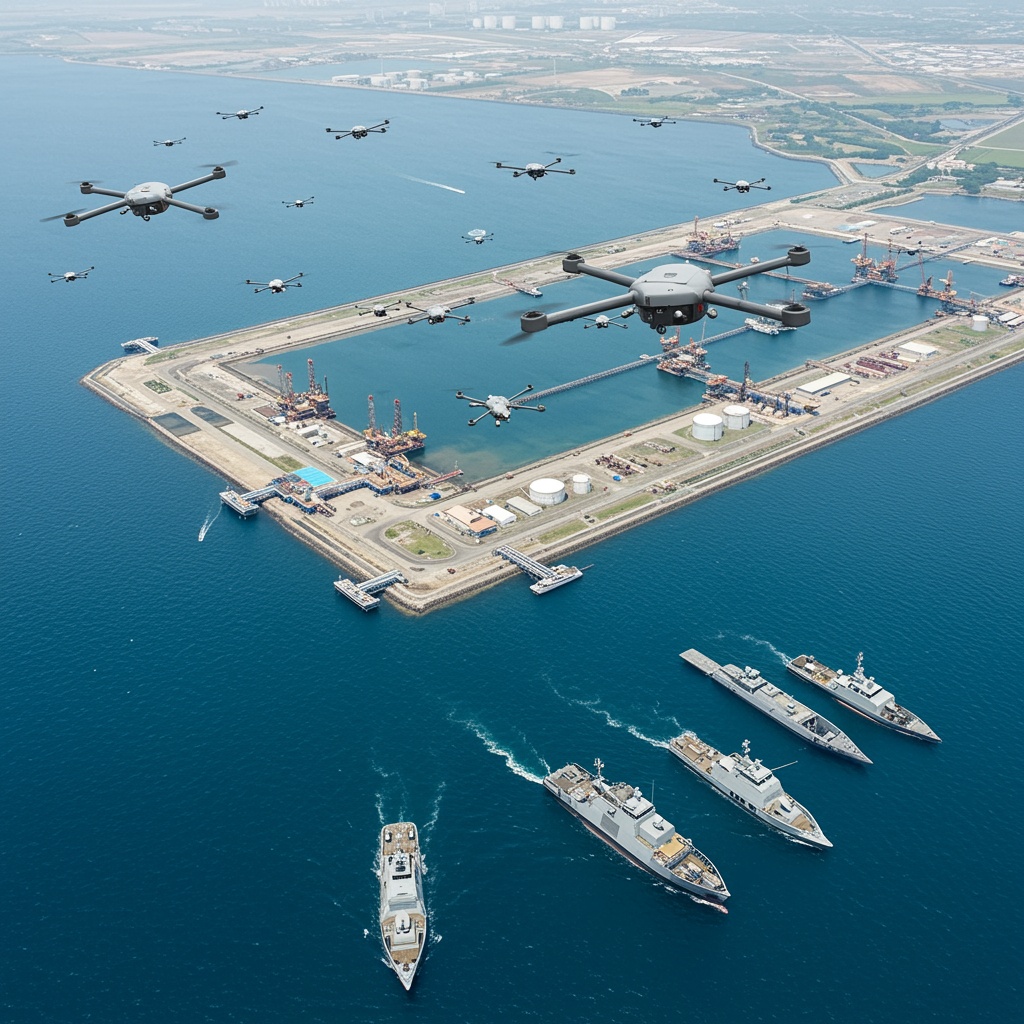
The elite troop carriers and Chinese combat vessels would be targeted with long-range drones, USVs, and UUVs. These would have to be autonomous (i.e. AI enabled) in order to form swarms and to be impervious to PLA electronic jamming. Their missions would be to create coordination confusion, deplete air defenses, and destroy or damage the powerful warships and transports for marines that form the tip of the landing spear.
Layer Two: Minefields and Aerial Defense
This zone ranges from 40 km to 5 km offshore. This zone should already be replete with thick minefields and loitering SAMs. The report’s authors propose that uncrewed systems should be used to reseed mines, create aerial minefields, and challenge the inevitable incoming PLA attack aircraft and drone swarms.
One Taiwan strategy involves using drones to distract China’s expensive precision weaponry, with the goal of creating gaps for Taiwan’s missiles to strike targets such as warships, according to the WSJ article.
Layer Three: The Invader’s Run to Taiwan’s Shoreline
In the last 5 km, the Chinese will concentrate all shipboard artillery and aerial missile fires to overwhelm defenders and protect their elite troops being readied for a shock landing. This off-shore fire zone is where the attrition of spearhead PLA forces can prove most devastating.
Surviving coastal Taiwanese forces would employ line-of-sight weapons, FPV drones, rockets, and small missiles. Incoming landing craft would be greeted with suicide drones that feature autonomous AI guidance and multiple attack profiles. This is the essence of the “Hellscape” option in a nutshell.
Layer Four: Boosting Beach Defenses
Here, the report emphasizes obstacles, minefields, and numerous small suicide drones to stop or slow PLA landings. At this point, the coastal forces should be employing direct fire weapons, UGVs (Unmanned Ground Vehicles, if developed), and dispersed missile launchers to inflict heavy losses on the vulnerable landing forces.
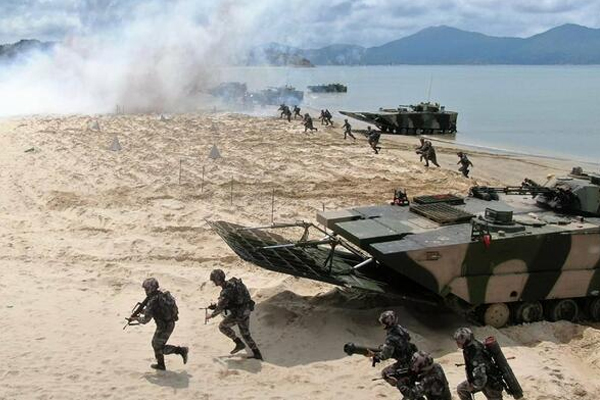
If the PLA were to lose approximately 40% of its high-value men and material while attempting to breach the island’s multi-layered defenses, then the command and combat effectiveness of its landing forces would be severely degraded, according to one estimate.
This conclusion was that of Chieh Chung, a researcher at the Association of Strategic Foresight.
Assessing Taiwan’s Current State of Readiness
As of mid-2026, Taipei already has placed some elements of the Hellscape strategy in place: certain USVs (Unmanned Surface Vessels), coastal missiles, and ISR drones. The latter’s primary mission is Intelligence, Surveillance, and Reconnaissance—meaning that they can see, hear, and communicate what is happening on the battlefield, rather than only fire at enemies.
Nevertheless, the ROC military cannot yet deploy a full, dense, multilayered kill web in quantities sufficient to contend with a projected Chinese mass attack.
This defense gap is what President Lai’s new special budget proposal is trying to close. As mentioned, he proposes to fund about 208,200 attack drones, explicitly aimed at creating an “unmanned shield” against invasion.
Taiwan’s drone force is presently organized into three major groupings:
1. Strategic / Medium-Altitude Long Endurance UAVs (long-range, Long-endurance)
2. Loitering munitions (suicide or “kamikaze” drones)
3. Tactical UAVs (battalion / brigade levels)
This structure mirrors what Ukraine, Israel, and the U.S. have adopted—persistent-reconnaissance machines at the top, mass tactical drones in the middle, and expendable strike UAVs at the bottom. Overall, Taiwan is rapidly building an offensive drone ecosystem.
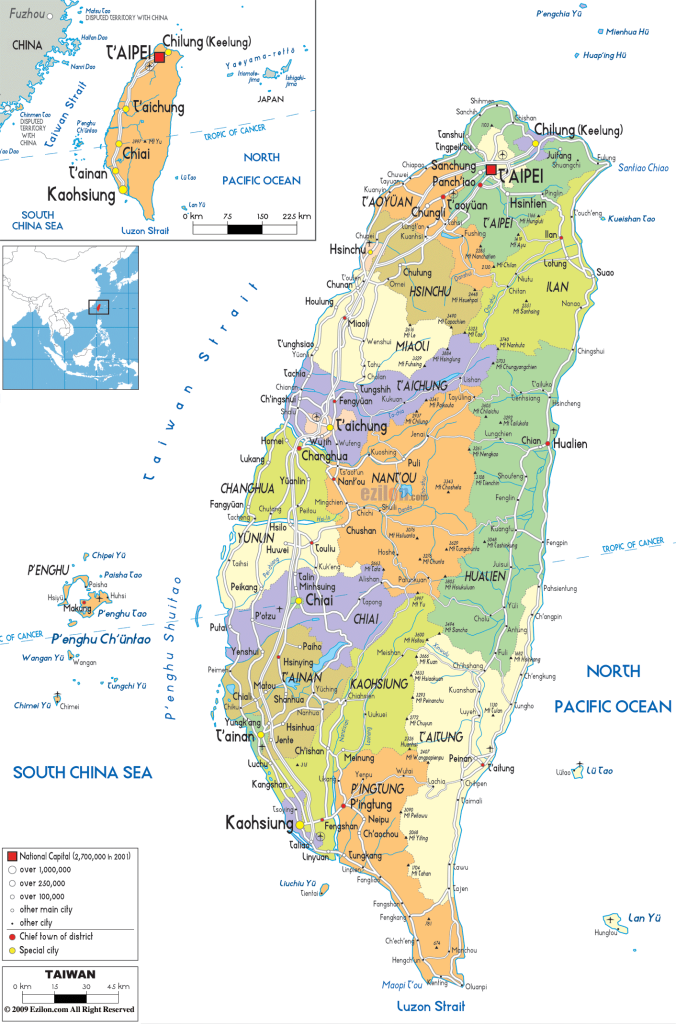
However, Taiwan’s defensive grid (to stop PLA drones, their swarms, and heliborne/air-insert forces) is still comparatively thin. This is a serious weakness in light of China’s reportedly intense focus on AI-directed drone-swarm conflict. In general, defenses against drone assaults have not yet matched their offensive value.
Taiwan’s Current Drone Posture (July 2026)
| Domain | What Taiwan Has Now | Main Gaps vs PLA Threat |
| Aerial (UAV) | Growing fleet of recon and attack drones; anti-radiation loitering munitions; MQ‑9 SeaGuardian incoming | Limited numbers in service today; still building doctrine, networking, and counter‑UAV layers |
| Naval (USV/UUV, coastal) | Plan for >1,300 unmanned surface vessels; coastal missile forces and mines integrated with drones | Early stage for mass USV ops; undersea drones and smart minefields not yet at “Hellscape” scale |
| Counter‑drone (defensive) | Some EW, air defenses, and emerging drone intercept concepts | Not yet a dense, layered counter‑UAV grid over beaches, ports, and key bases |
Strategic Medium Altitude Drones
Built by General Atomics, a U.S. company, the MQ-9B SeaGuardian is a maritime variant of the long-range U.S.’s MQ-9 Reaper family intended for ISR over ocean areas. In other words, this drone can monitor ships, submarines, and coastal activity for 30-40 hours at a time. It is also quite useful for targeting. Taiwan’s military is contemplating the purchase of hundreds more of these drones.
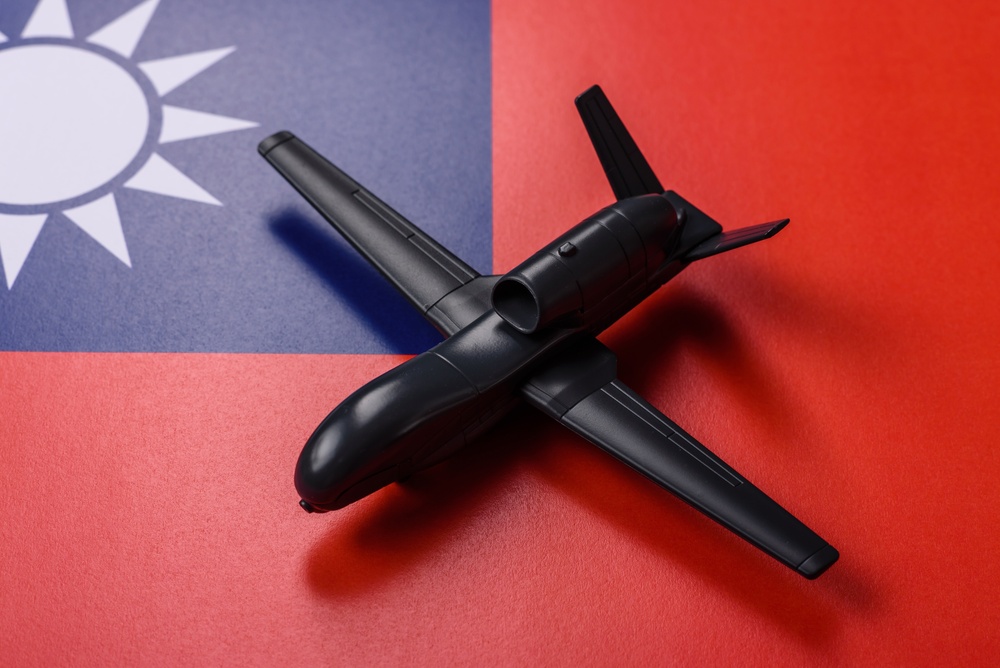
The Teng Yun (or “Cloud Rider”) is Taiwan’s home-made aerial reconnaissance version of the famous U.S. Reaper. This “Medium‑Altitude Long‑Endurance (MALE)” UAV was developed by the National Chung‑Shan Institute of Science and Technology (NCSIST), the island’s primary military research and weapons development organization.
Variants are now being tested that are also combat-capable, and suitable for delivering precision strikes on enemy targets using missiles. These will range in the hundreds of miles, and can function for up to 24 hours.
Loitering Munitions (Kamikaze Drones)
Taiwan intends to rapidly expand the kamikaze-drone category for asymmetric defenses. Such machines will be a particularly useful device countering a massive amphibious incursion of the island’s coast.
The primary variant developed by Taiwan is the Chien Hsiang (or “Harpy‑class”) anti‑radar loitering UAV. Its cruise speed is 185 kilometers an hour, its endurance is five hours, and its max range is 900 kilometers. This type of drone is relatively slow, but it is small, makes little noise, and emits no electronic signals. The last factor makes it jamming-proof, as well as difficult to spot and shoot down by opposing forces.
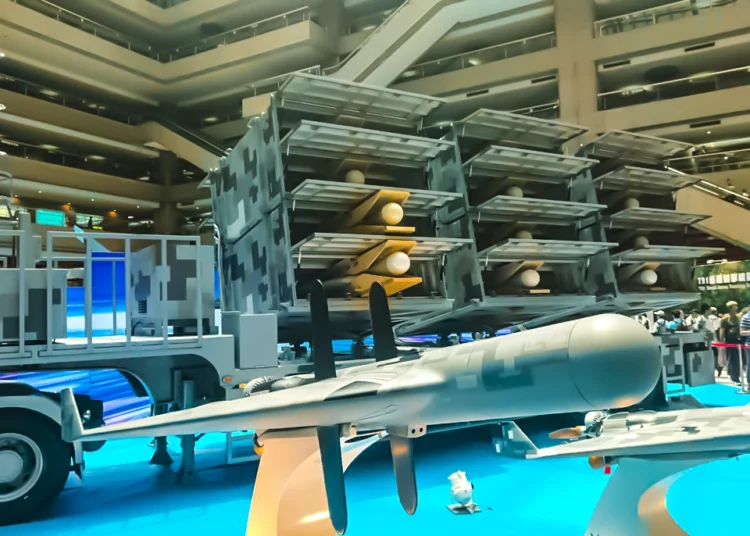
The Chien Hsiang’s guidance system consists mostly of sensors that detect signals from specific radars. In addition, the drone contains is a video apparatus that uses an image library to identify which enemy assets to attack. The drone then dives, directly smashing into its target at hundreds of kilometers an hour.
Mounted on a trailer or on a ship, groups of Chien Hsiang drones can be launched in rapid succession, thus forming a swarm. Their guidance systems can handle intricate swarm management, enabling multiple UAVs to search an area; when a target is found, several or all units converge to collide with the target.
Status: Mass production of Chien Hsiang drones is currently underway.
The ROC’s inventory also includes the impressive Altius‑600M, a U.S.-made (Anduril Industries), long‑range loitering munition capable of 440 kilometers of flight, carrying a high‑explosive warhead, and performing both ISR and strike missions. Tube‑launched, the Altius-600M can be launched from ground vehicles, ships, helicopters, and aircraft. This version carries a warhead.
Most significantly, the Altius is capable of autonomous or operator‑directed precision attacks on high-value distant targets, while also relaying live feeds and battle damage assessments. Best of all, it is designed to operate in coordinated groups, which permits saturation attacks, multi‑axis hits, and distributed sensing.
Tactical UAVs (Army, Marines, Coast Guard, Special Forces)
These drones operate at the battalion and brigade level, providing reconnaissance, targeting, and battlefield awareness. The indigenous Cardinal class UAVs, developed by NCSIST, are now being widely deployed.
With ranges of 10-15 kilometers and an endurance of up to an hour and a half, the Cardinal class drones are easily portable and used for artillery-spotting as well as real‑time day/night scouting.
A battlefield loitering-munition sub-class of Cardinal drone is available: the Fire Cardinal. A mere 15 lbs in weight, this twin-propellered variant is an air-to-ground assault “kamikaze” drone. It is equipped with EO/IR sensors and onboard target‑recognition systems.
The Albatross (also called “Chung Shyang II”or “Sharp Kite”) is a medium unmanned aerial vehicle (UAV), with a range of 250 kms and an endurance of 12 hours. It was developed indigenously in Taiwan for maritime surveillance, reconnaissance, target acquisition, and coastal patrol.
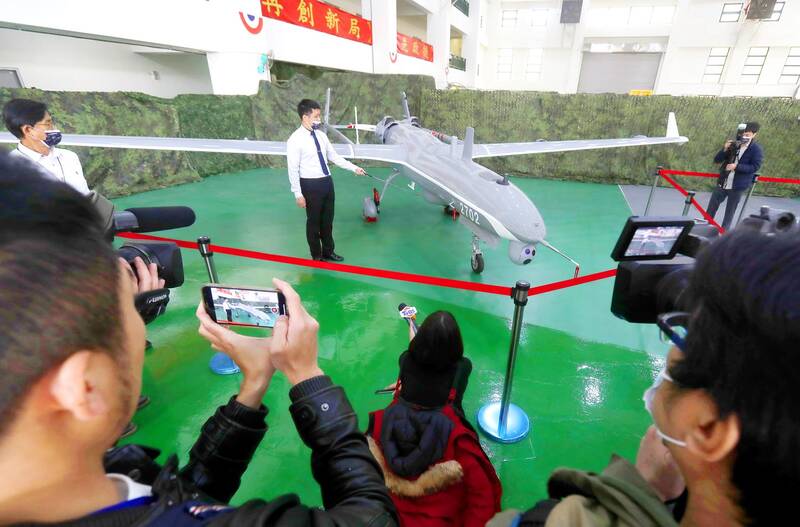
Taiwan has also mass‑produced recon quadcopters and small fixed-wing FPV (First-Person View} drones. The military deploys them like their sister Ukrainian tactical models— i.e., they are meant to be cheap, numerous, flexible, and expendable.
Coastal Unmanned Systems
President Lai’s proposed budget includes funding for 1,320 uncrewed surface vessels, which will enhance maritime-domain awareness and will engage in “Run-to-Shore” and “Beachhead” strikes against amphibious landing groups and supporting warships.
A major integration of these uncrewed vessels with the ROC’s existing coastal- missile systems is in the works. The USVs and UAVs are meant to inform and complement anti‑ship missile brigades and fast-attack craft to make Taiwan’s outer layers of defense more effective and deadly for any massed strike force.
High Hurdles: Politics and Doctrinal Reform
This article has provided a brief overview of Taiwan’s current posture and intentions in the developing realm of drone warfare, as well as outlining the elements of a convincing defensive strategy (‘Hellscape’) that has recently been proposed by two American strategists.
Their idea is to deploy the island republic’s growing drone assets to enhance and supplement concentric rings of defenses to thwart an attempted Chinese invasion of the island republic. There are many steps to take, however, before the “Hellfire” concept can be effectively implemented. The hardest and longest step appears to involve sheer politics.
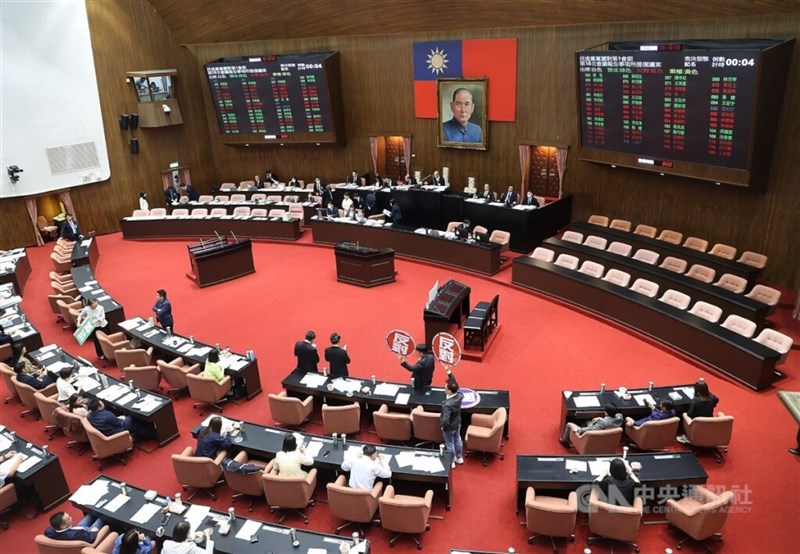
Despite President Lai and his party’s willingness to embrace the asymmetric warfare outlined in the CNAS, which focuses on drones, missiles, and distributed defense systems, the opposition parties in the nation’s legislature (the Kuomintang (KMT) and Taiwan People’s Party (TPP)) see things differently.
Their leaders argue against this approach to Taiwan’s challenge and want to only fund the US arms package. Moreover, they fear that developing a domestic drone industry might set the stage for corruption. Their counter-budget cuts 40% of funding for several key elements essential to implementing a “Hellfire” strategy: uncrewed surface vessels; AI-enabled craft; and joint R&D between Taiwan and the United States, among other things.
The issue goes to a vote in the legislature very soon – August 20, 2026. If the opposition wins the vote, it will be a severe blow to the initiation of a drone-warfare defense that has been so successful elsewhere.
A second crucial step is doctrinal development.
Dr. Pettyjohn and Ms. Campbell, who wrote the invaluable outline for the “Hellscape” strategy, urge President Lai Ching-te to direct the Ministry of National Defense and the General Staff to review existing operational concepts for drone warfare.
This review should include consideration of how “uncrewed technology can replace or complement existing capabilities and missions, as well as urging Taiwan’s military planners to devise new missions for these systems.”
The researchers also urge a conceptual revamping of Taiwan’s current situation: “The Taiwanese military also lacks clear doctrine and operational concepts for its asymmetric defense strategy. Without this foundation, military planners struggle to justify procurement decisions, commanders cannot develop realistic training scenarios, and units lack a shared understanding of how they would actually fight.”
“The result is a force that may possess the right equipment but lacks the intellectual framework to employ it effectively.”
One obvious conclusion at this point: A sharp drone-tipped quill in the “porcupine” defense needs to be in place sooner rather than later if it is intended to give Xi Jinping second thoughts about reaching out for Taiwan.
Richard Jupa
Mr. Jupa is an independent naval analyst and editor of Greymantle’s Blue Water page.