Key Takeaways
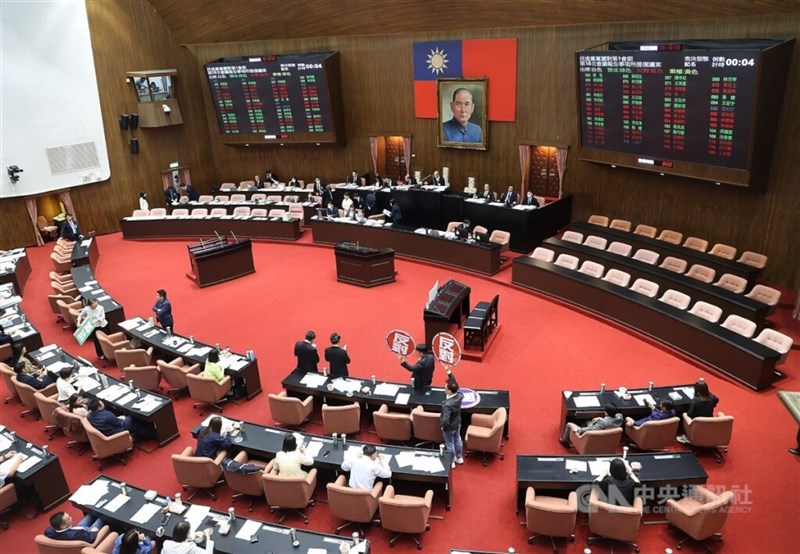
- Taiwan’s legislature on August 20 rejected supplemental funding sought by President Lai Ching-te for an enhanced drone warfare strategy to deter China.
- The decision could slow Taiwan’s development of autonomous drones, counter-drone systems, and non-Chinese supply chains.
- Relying on U.S. weapons imports may leave Taiwan vulnerable to Chinese blockade; conventional weapons alone will not support Taiwan’s “porcupine strategy.”
- Taiwan’s political divisions are sending mixed signals about its commitment to asymmetric defense.
There were plenty of smiles in Beijing on August 20, 2026.
That is when the pro-China-ish opposition parties controlling Taiwan’s legislature adopted a defense budget that omits supplemental funding that President Lai Ching-te of the Democratic Progressive Party (DPP) had requested.
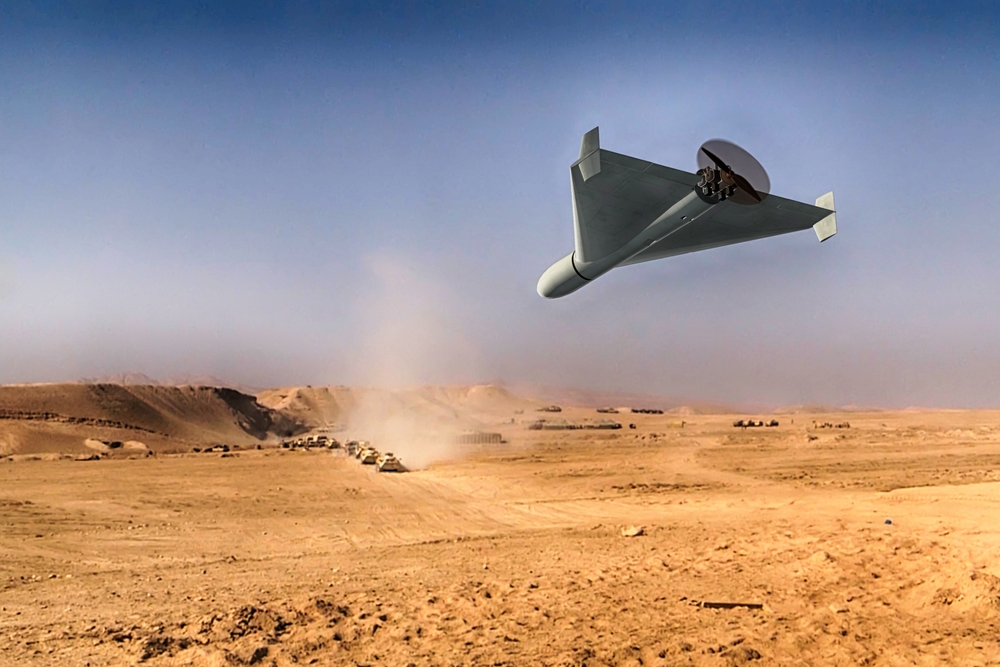
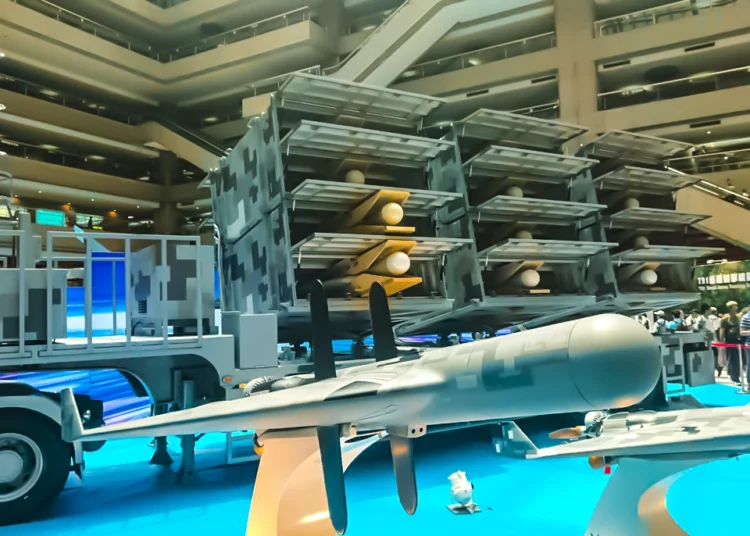
President Lai had wanted the money to fund an asymmetrical defense plan heavily reliant on a drone-warfare defense guided by the military. The strategy was nicknamed “Hellscape” in a U.S think-tank’s proposal earlier this year.
A version of the national security budget pushed by the opposition Kuomintang (KMT) and Taiwan People’s Party (TPP) passed instead. Hence the need for this “Hellscape” update. The opposition-passed budget caps defense spending at an admittedly high level. And, in fact, the opposition did pass an earlier drone-focused budget supplement on August 14th.
That alternate budget included “funding for development of Taiwan’s drone industry and miscellaneous procurement for various Cabinet agencies but does not…fund lethal military drones,” according to the U.S. think tank Institute for the Study of War.
Nevertheless, Taiwan’s latest budget vote specifically excluded the extra money requested by President Lai for his forward-thinking drone-warfare strategy – one designed to make a Chinese invasion of the island republic much more costly.
The Drone Warfare Revolution has already humbled two superpowers, and President Lai was convinced that it could also discourage a third one (i.e. China) from invading Taiwan.
The details of such a “Hellscape” strategy, as well as the strategic and tactical thinking behind it, were reviewed in Greymantle’s earlier article on August 15. This serves as a follow-up to our prior essay analyzing Taiwan’s drone program.
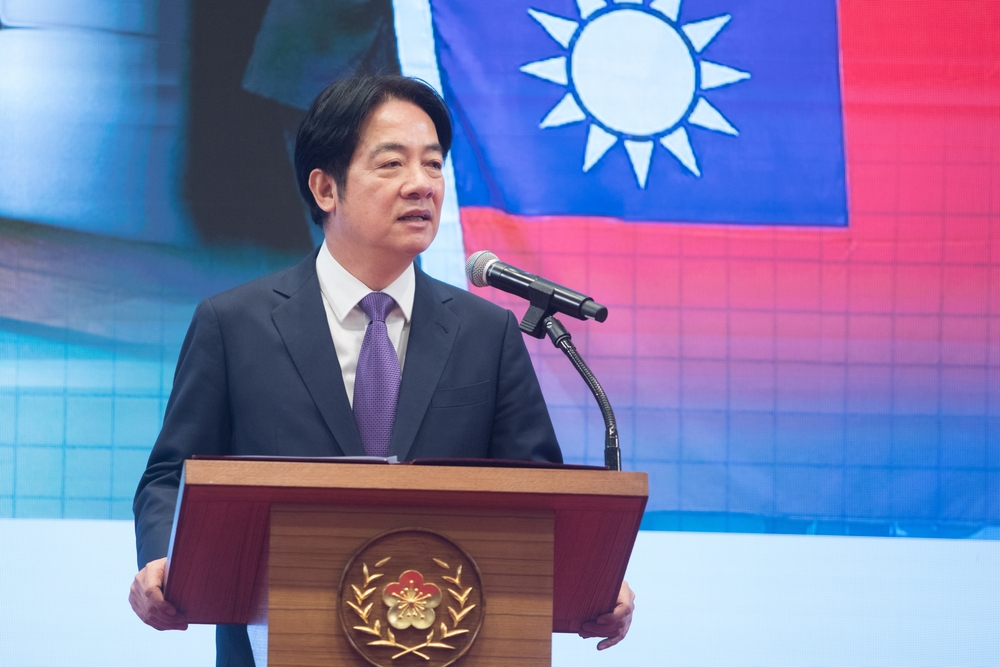
Most of President Lai’s major initiatives were disregarded by the KMT-TPP’s latest funding vote.
- Domestic drone production
- Counter‑drone platforms
- Unmanned surface vessels and other uncrewed options
- AI targeting systems
- An integrated air-defense architecture
- “Non‑red” supply‑chain development (i.e., avoiding Chinese components)
The point of these programs was to eventually deploy numerous cheap, expendable autonomous drone fighting platforms aimed at swarming incoming PLA warships and transports, their sea-staging areas, and predictable landing zones along Taiwan’s coast.
Taiwan’s Defense Ministry Snubbed
The August 20 vote essentially stymied any military‑supervised drone programs run by the Ministry of National Defense (MND).
The DPP originally pushed for a supplemental budget appropriation amounting to NT$210 billion over six years, to be spent only by the MND. These resources would have likely been applied to the manufacture and control of (a) coastal surveillance and attack drones, (b) uncrewed one‑way strike boats, and (c) any other military unmanned programs.
Absent the creation of President Lai Ching-te’s special drone fund, drone production will now depend almost entirely on Taiwan’s annual national budgets, which are slower, more heavily politicized, and far easier to cut or stall than supplemental budget items.
Moreover, Taiwan’s Ministry of Economic Affairs will now dominate much of the nation’s drone effort, sidelining the defense ministry. This will fragment the necessary back-and-forth feedback vital to coordinating efficient defense production and field application.
In effect, the crucial development of doctrine, training, and integrated kill chains –the intangible “software” that makes drones so effective in combat — will be slowed considerably.
Taiwan could still wind up fielding a drone force of some size; however, its military may be unable to proficiently deploy as many integrated, battle‑ready drone swarms that are synchronized with external sensors, AI targeting, and joint fires as its military had wanted (and still wants).
Dependence on U.S. Arms – Still a Safe Bet?
The opposition parties passed a budget that will be mostly used for U.S. arms purchases.
The adopted bill allocates funds for the purchase of several U.S. weapons systems that can contribute to asymmetric defense: e.g., M109A7 self‑propelled howitzers, anti‑armor systems, and HIMARS — a truck‑mounted rocket precision-artillery system, which can also fire one long-range missile.
Future U.S. arms packages focused on the purchase of counter-drone and anti-air systems could still be approved, if done so within a year.
“Well, what’s wrong with that?”, some might ask.
Nothing really, except that these U.S. weapons don’t add much punch to Taiwan’s oft-discussed “porcupine strategy”, which is intended to cost China dearly if it launches an amphibious invasion of the island republic. Meeting such an attack with costly conventional weapons, such as armor and shore-based artillery, may not be enough to deter the far more numerous invaders.
But the thought of many, many “quill pricks” — in the form of autonomous drones attacking PLA forces both before and after a landing — might well dissuade China, however…and this is where an inexpensive drone-warfare program could come in quite handy.
Of course, the unspoken reality here is that the Trump administration appears less committed than any of its predecessors to supporting the island republic. POTUS apathy might well result in delays in the delivery of the scheduled arms.
In any event, arms imports would be impossible under a mainland blockade, a scenario that Greymantle has analyzed in several past articles in 2025 and early 2026. Without a robust domestic manufacturing base, Taiwanese weapons supply would dry up quickly.
Mixed Signals All Around
Based on the August 20 budget vote, both Xi Jinping and Washington might readily conclude that Taiwan’s political majority is unwilling to commit sufficient effort into the “porcupine strategy” to make it truly effective.
Across the Strait on the mainland, however, the potential of drone warfare is not being ignored.
Rather, it is being vigorously pursued.
In an upcoming article, Greymantle will explore the impressive strides in this area that are being made by the People’s Republic of China, which already produces 70% of the planet’s UAVs and their parts. Look for that article in the fourth quarter of 2026.
Until next time,
Richard Jupa
Richard Jupa is an independent military analyst specializing in naval strategy. He is a former naval officer with numerous published articles to his credit. He is author of the book Gulf Wars, published in 1992.